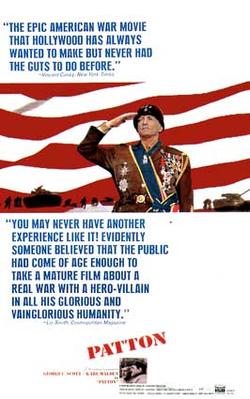

I
have to apologize for the delay in this post but I ran into an embarrassing
problem in preparing for it. I had
forgotten that “The Desert Fox” is not really a biopic like “Patton” is. It is basically focused on Rommel’s role in
the assassination attempt on Hitler.
There is very little in the movie that deals with Rommel’s leadership
style. Luckily, I encountered a book
entitled Patton and Rommel by Dennis Showalter. I decided to read the book before doing this
post so some of the Patton analysis comes from the book and most of the Rommel
analysis.
1. Compare the leadership styles
It would be hard to find two
WWII generals who were more similar than Patton and Rommel. Both men believed in leading from the front
and often put themselves in harm’s way.
In the case of Rommel, he was almost killed in a strafing incident and
Patton looked upon being shot at as a proof of manhood. They believed in seeing things for
themselves, although Rommel spent more time sharing the hardships of his men. Both were flexible in their tactics and could
adjust to changing situations although both could be a bit stubborn when
committed to an objective. Both combined
surprise, shock, and mobility. Both were
risk takers who lived by Napoleon’s maxim “toujours l’audace”. Most importantly, both believed that speed
and shock would save lives in the long run over cautious preparation and mass
(embodied by Montgomery).
Two interesting areas to compare
them in are logistics and dealing with superiors. Rommel has been faulted for
his lack of interest in logistics. He
liked to complain about his terrible logistical situation in North Africa, but
he did little personally to adjust to the reality of it. Part of this problem was due to the German
army’s lack of emphasis on this art.
Patton’s logistical problem was different. In France, Patton’s Third Army was affected
by difficulties in getting supplies to the front line units. He complained just as much as Rommel and was
less understanding, but he did a good job of adjusting to diminished fuel. As far as superiors, Rommel had to deal with
an increasingly delusional Hitler, but was a favorite of the Fuhrer’s until the
end. In “The Desert Fox”, he gets a “hold
at all costs” order from Hitler that would have meant the destruction of the Afrika
Korps. At first, he plans to loyally
obey it, but soon realizes he must countermand the order. Patton had trouble with Eisenhower and
Bradley mainly because of stumbles by Patton.
He brought his dysfunctional relations with his superiors upon
himself. However, it is amazing to
contemplate how similar the Rommel/Hitler and the Patton/Eisenhower dynamic
was. Also, the Rommel/Rundstadt and
Patton/Bradley for that matter.
Each had weaknesses that keep
them from being ranked among the Great Captains. Rommel, besides his logistics myopia, relied
too much on spontaneity and luck.
Although commendably brave, he continued to appear at the tip of the
spear even when he was no longer commanding on a divisional level. When you are indispensable, this type of “lead
by example” is foolish. Patton’s
greatest weakness was obviously his inability to control his emotions. The slapping incidents accurately portrayed
in the movie are evidence of this. He
sometimes pushed his “shock solves all problems” philosophy beyond the limits
of his soldiers.
As far as leadership, both were
charismatic and inspirational. They also
both were strict disciplinarians.
Everyone knows this about Patton from the movie, but although the movies
do not depict this side of Rommel’s leadership, it certainly was there. “Old Blood
and Guts” relied on respect from his men whereas it was more love for “The
Desert Fox”.
2. Who was the better leader?
Here is an interesting fact
about the reputations of both men. Both
were admired more by their foes than their comrades. Rommel was resented by other German generals
for being sort of a “teacher’s pet”.
Patton was disliked mainly because of his personality. Bradley was offended by his language, among
other things. Both men were considered
to be glory hounds by their comrades.
Choosing between the two is
difficult. It comes down to this. I feel that if you switched their situations,
Rommel would have been more successful than Patton. He could only dream of the logistical
problems Patton faced. Just as Patton could
only have dreamed of the Wehrmacht’s leniency on generals’ abuse of soldiers. Patton could certainly have duplicated Rommel’s
successes in France (1940) and North Africa (1941-42), but once the tide turned
one can only imagine the frustration that would have pounded his unstable
personality.
What
say you?
JULY
WATCHALONG: Pork Chop Hill vs. Zulu
1. Compare the leadership of Lt. Clemons to Lt.
Chard
2. Compare the tactics used in the two battles

