Wednesday, August 5, 2020

CONSENSUS #38. El Cid (1931)


SYNOPSIS: "El Cid" is the tale of a legendary Spanish medieval hero during the period when the Moors controlled parts of Spain. El Cid is a Christian knight who is the epitome of chivalry. He gets in trouble with the King when he treats some Muslim foes fairly. An accusation of treason leads to a duel to maintain his family's honor. He ends up killing his fiancé's father which puts a damper on her love for him. He then gets in trouble with the new king for accusing him of conspiring to kill his brother. This gets El Cid exiled. He is brought back to capture and then hold a key port. A villainous Muslim leader lands an army and attempts to take the city.

BACK-STORY: El Cid is an historical epic about the legendary Spanish medieval hero Don Rodrigo Dial de Vivar, known as El Cid. It was released in 1961 and was directed by Anthony Mann. It is in the same genre as Ben Hur and similarly stars Charleton Heston. His co-star Sophia Loren had a $200/week hairdresser allowance. The film was shot mostly in Spain. It was nominated for Academy Awards for Art Direction, Original Music Score, and Best Song. The movie was a box office hit and was well received by critics.

TRIVIA:  Wikipedia, imd

1.  The Moors (Spanish Muslims) called Rodrigo Diaz de Viver “El Cid” which means “the lord”.  Christians called him El Campeador (“the one who stands up in the battlefield”).

2.  Loren’s salary included $200 per week for her hairdres

3.  The film used 7,000 extras, 10,000 costumes, and 35 ships.

4.  Heston and Loren did not get along.  In love scenes Heston had a hard time looking her in the eye.  The main conflict was over her high salary.  Heston later admitted that he had been a jerk.


Belle and Blade  =  N/A

Brassey’s              =  4.0

Video Hound       =  N/A

War Movies         =  N/A

Military History  =  #63

Channel 4             =  #86

Film Site                =  yes

101 War Movies  =  no

Rotten Tomatoes  =  no


OPINION: El Cid was better than I thought it would be. Although I am a big fan of Ben Hur, most of the old-school historical epics seem so outdated and overblown. This movie has some of those characteristics, but it is highly entertaining and accurate enough to pass the sniff test. Its strengths overcome its flaws.

Some of the flaws include a sappy love story and twirl your mustache type villains. Heston and Loren do not have much chemistry and the ups and downs are not realistic. I doubt Herbert Loms Ben Yusuf is considered politically correct in todays Muslim-tolerant atmosphere. However, the movie is surprisingly even-handed in its depiction of the Moors. There is a nice balance of evil and good Christians and Muslims. The main flaw is El Cid is too perfect. He is unbeatable as a warrior, at one point he defeats a dozen knights virtually singlehandedly. He is totally loyal to his lords, even when they are corrupt and trying to kill him. He is the perfect mate, being understanding when his fiancé despises him and tries to have him killed.

The strengths include the wonderful (if too brightly lit) castle interiors and the Ben Hur style score that does a great job setting the mood. The 70mm Technicolor is vibrant. The action is crisp and is three for three with the duel, the trial by combat, and the beach battle. The ending is memorable, even though its ridiculous.

El Cid is a spectacle in the grandest sense of the word. It is epic in its scale. It is old-school Hollywood at its best, not its worst.  However, it is overrated at #38.  It might belong in the greatest 100, but not this high.  Plus, it is not firmly in the war movie genre.


Sunday, August 2, 2020

BOOK/MOVIE: The Good Shepherd (1955) / Greyhound (2020)


                C.S. Forester published “The Good Shepherd” in 1955.  It was the last novel he published before his death.  The novel was personal to him.  Although he is most famous for his novels involving British protagonists, like the Hornblower series, “The Good Shepherd” is about an American ship captain.  Forester had moved to the U.S. early in WWII and worked for the British Ministry of Information.  He played a role in convincing America to enter the war.  The novel was his attempt to give credit to the efforts of the U.S. Navy once it entered the war as Britain’s ally.  I am a fan of the Hornblower novels, but I was not familiar with this book until I began reading about the making of “Greyhound”.  I got the book on Kindle, but waited to read it until after I watched the movie.  This is my usual policy when it comes to books adapted into movies.  I don’t want to know the plo of the movie and reading the book after watching the movie gives me more details than could be shown in a movie.  As my readers know, I usually find that the movie is better than the book.  I believe that the screenwriter has the advantage of having the book as a template that he or she can improve on.  In this case, the screenwriter was Tom Hanks himself.  Let’s see how he did.

                When I learned that this American movie was based on a book by Forester, I immediately assumed the movie had changed the ship to American and changed the plot substantially.  (Think “U-571”)  I was wrong on both counts.  The USS Keeling is an American Fletcher class destroyer (in the book it is a Mahan class).  They were named after Navy and Marine heroes.  Not going with the title of the book was probably a marketing decision or an attempt to dilute the overt religiousity of the book. 

                The mission of the Keeling (code-named Greyhound) is as outlined in the novel.  It leads a group of four escorts in shepherding a convoy across the North Atlantic in 1942.  For two days, while crossing the area the movie calls the “Black Pit”, the convoy is without air cover and prey to a German wolf pack.  The novel covers only this period of the voyage.

                Although the movie is just 91 minutes long, it covers the book tidily.  The book starts with the convoy approaching the Black Pit (a term not used in the book) and ends with the Keeling freed to head to port.  In between, the film includes most of the incidents covered in the book.  It does skip over the first u-boat contact, but that is because it involves the Viktor and James working over a u-boat.  From this point on, the movie adheres to the book closely.  There are basically five encounters in the movie.  In the first, Krause (Hanks) tricks the sub (and rattles his crew) by reversing course to sneak up on the submarine.  In the movie, oil and debris confirm the kill, but in the movie there is no proof.  The sub is actually sunk when the Viktor joins and they depth charge in tandem.  The second movie encounter is when Greyhound joins the Cadenna in going to the rescue of a sinking cargo ship.  It does avoid a torpedo as in the book.  Third, they fire at the sub and miss and then rush to the front of the convoy to face a wolf pack.  Later, the Keeling again fires on a surfaced sub and misses.  It gets hit by friendly fire and is fooled by the “pillenwerfer” (in the book, Krause is not clueless about this type of decoy).  Krause does make the decision to pick up survivors from the oil tanker.  After this incident, the book covers a seven-hour cat-and-mouse duel with a sub.  This ends in frustration.   For the fourth combat scene, the movie picks up towards the end of the seven hours.  The movie mimics the book closely in the sinking of the broached sub.  (It apparently had a stuck bow plane due to a depth charge explosion.)  The movie enacts the funeral.  At this point, the remaining hours until reinforcements arrive are fairly uneventful with no u-boat activity involving the Keeling.  Hanks added the scene where the Greyhound has to dodge torpedoes from two subs and one torpedo glances off the side.  The book does not have a second sinking of a u-boat using deck guns.  And there is no PBY sinking of the other.  Hanks also added the cheering by the convoy.

                What you get in the book is you get inside Krause’s head.  You also get more background that explains his personality.  Hanks does an excellent job as the laconic and imperturbable captain, but Forester tells you why he is the way he is.  The movie barely touches on the fact that Krause’s career had stagnated before the war offered him the opportunity for command.  The phrase “fitted and retained’ is mentioned, but the audience probably did not pick up that Krause had gotten less than stellar performance reviews and had been passed up for command.  Of course, it would be hard to guess that because the movie Krause is a u-boat fighting savant even thought it is his first combat.  In the book, we learn that he is not as perfect and has his moments of doubt.  But, most importantly, the reader has access to his thought-processes.  He weighs the pros and cons of each major decision.  This is fascinating because you can make up your mind what you would have done in his shoes.  For instance, would you have stopped for the survivors when other ships were under attack?

                Hanks makes major changes with Krause’s back-story.  He throws in the superfluous flashback to Krause’s jilted proposal to Evelyn to give Krause a reason to come back alive.  In the book, Krause is more of a bitter man, having been married and divorced from Evelyn.  She cheated on him, but he recognizes that he was part of the problem by placing the service ahead of her (a common war movie trope that Hanks was perhaps avoiding).  Hanks did not invent the religiousity the movie is noted for.  The book Krause is the son of a minister and quite devout.  Forester throws in quotes from the Bible throughout Krause’s inner monologues.  Hanks does a good job of getting this aspect of his personality across unobtrusively, as when he says grace before eating.  What Hanks is not able to clearly portray in 91 minutes is the sheer exhaustion that Krause goes through.  The bleeding feet have to stand in for his whole body.  The man was on his feet with little food and no sleep for 48 hours.  It makes you wonder how many battles in history were decided by poor decisions based on exhaustion.  Not that Krause makes any really bad decisions. 

                Hanks wisely develops the character of Cleveland, the mess mate who tries to get the captain to eat and later perishes helping pass ammunition to one of the guns.  In the book, the character is Filipino and he is not one of the dead.  A less wise, but undoubtedly entertaining, move by Hanks is the taunting German (voiced by Thomas Kretschmann!).  This cheekiness evolved from a brief mention in the book of a German making rude comments over the radio to one of the other escorts.  But overall Hanks was loyal to the book, which was smart because the novel is very good and easily adapted.  Most of the dialogue, especially the nautical stuff, is straight from the novel.

                So which is better?  I would have to say the movie.  I liked the changes and additions Hanks made, mostly.  He adheres to the book admirably and throws in an extra combat scene.  He develops an African-American character.  Obviously, if you are not proficient in naval warfare, the movie makes it easier to follow what is happening and you can literally see the effects of navigational orders.  However, if you like to understand what makes characters tick and what their motivations are, you should definitely read the book.  It is a good blend of character study and action.  It puts you in the slippers of the commander better than the movie.

Book =  A

Movie =  A 


Thursday, July 30, 2020

THE LAST FULL MEASURE (2019)


                The last year has been good for war movie lovers.  “1917”, “Danger Close”, “Da 5 Bloods”, “The Outpost”, “Greyhound” to name a few.  Did the trend continue with “The Last Full Measure”?  On first glance, it was doubtful.  It took twenty years to film because no studio wanted to finance it.  Writer and director Todd Robinson was persistent and finally got it made for $20 million, but it only made $3 million.  It must have been tough to hear “I told you so” about such a personal project.  In doing research for another film, Robinson had run across the story of William Pitsenbarger.  He was intrigued by the tale of a pararescueman who was awarded an Air Force Medal posthumously for actions saving 60 grunts in Vietnam and then had it upgraded to a Medal of Honor many years later.  Robinson assembled a cast of veteran actors and was able to film the Vietnam segments in Thailand.

                The movie gets off to a roaring start with an American unit from the 1st Army Division being ambushed over the credits.  From 1966 South Vietnam, we jump to Washington in 1999.  Scott Huffman (Sebastian Stan) works at the Department of Defense for the Secretary of the Air Force.  He is handed the folder of William Pitsenbarger.  Pits’ comrades have been pushing for years to have his Air Force Medal upgraded to the Medal of Honor.  Huffman reluctantly accepts the shitty, hopeless task.  He is not at all interested in justice for Pitsenbarger, since he is a Hollywood stereotype of the amoral bureaucrat.  Huffman goes on an odyssey to interview grunts who were impacted by the pararescueman’s efforts.  These awkward encounters are intercut with the ambush. 

                The veterans Huffman interviews are stereotypes too.  Tully (William Hurt) was a comrade of Pits who is determined to get his buddy the Medal of Honor because he personally knows the sacrifice he made.  Takoda (Samuel L. Jackson) has guilt issues from the ambush.  Mott (Ed Harris) rants about the brass sending them out as bait.  Burr (Peter Fonda in his last role) is just plain nuts.  Kepper (John Savage) lives a monastic existence in Vietnam and has a butterfly garden on the spot of the ambush.  If that’s not enough heavy-weights for you, throw in Christopher Plummer and Diane Ladd as William’s saintly parents.  They supported his going.  If not their son, whose?  It takes a while, but Huffman is eventually ready to risk his upward bound career for justice.  Now that he has overcome his own lack of compassion, he has to overcome his own bureaucracy.  And we’re not just talking about the brass, we’re also talking about politicians.  Double military justice villains!

                I know I have been a bit snarky about the movie, but it actually is better than you would expect.  Yes, it has tropes common in Vietnam veteran and military justice movies.  Although the veterans are stereotypes, Robinson has great actors playing the roles.  Which is bad news for the unknown actors playing their younger selves.  Big combat boots to fill.  Plus you get Christopher Plummer as the father.  I haven’t even mentioned yet that Dale F’in Dye appears as the general who used the unit as bait.  Yet, you’ll be surprised by his character.  The movie does not hammer an anti-Vietnam War or anti-military theme.  It is not lazy on PTSD.  Tully and the others earned their demons. 

                The combat is generic and a bit overblown.  But the unit did suffer 80% casualties, so it seems realistic in a Hollywood sort of reenactment.  You definitely get the impression that Pitsenbarger did something extraordinarily brave when he waved off his helicopter.  The spider holes and snipers in trees are nice touches.  Pits marks an M for morphine on a wounded grunts forehead.  You can tell Dale Dye was on set.

                The movie deserves credit for sincerity.  The orchestral music backs this up.  But it does not cross the line into cloying.  However, you might want to have some tissues handy.  It jerks tears effectively.  Mr. Pitsenbarger is dying of cancer and Tully has survivor’s guilt.  In the hands of these actors, prepare to have your emotions manipulated, in a good way.  Speaking of, it is apparent that this movie and “Da 5 Bloods” has solved the problem of making a Vietnam War movie with a veteran ensemble by setting it in the present day and flashing back with a bunch of star wannabes.

                The whole Huffman half of the movie has the feel of Hollywood enhancement for plot purposes. It is very predictable.  The reason to watch the movie is the accuracy with which it portrays the action of one of the bravest men who served in Vietnam.  William Pitsenbarger was involved in 300 rescue missions before his death.  On April 11, 1966, he saved sixty men’s lives at the cost of his own.  He was recommended for the Medal of Honor and an Army general downgraded it to an Air Force Medal.  He was the first Air Force enlisted man to receive that award.  That was quite an honor, but the downgrading (apparently due to lack of documentation) added injustice to the story and made it cinema-worthy.  This movie does an admirable job bringing his story to the screen.  By the way, stick around, after the final credits there are interviews with some of the men.

GRADE =  A-  


Tuesday, July 28, 2020

PICTURE, MOVIE, QUOTE #87


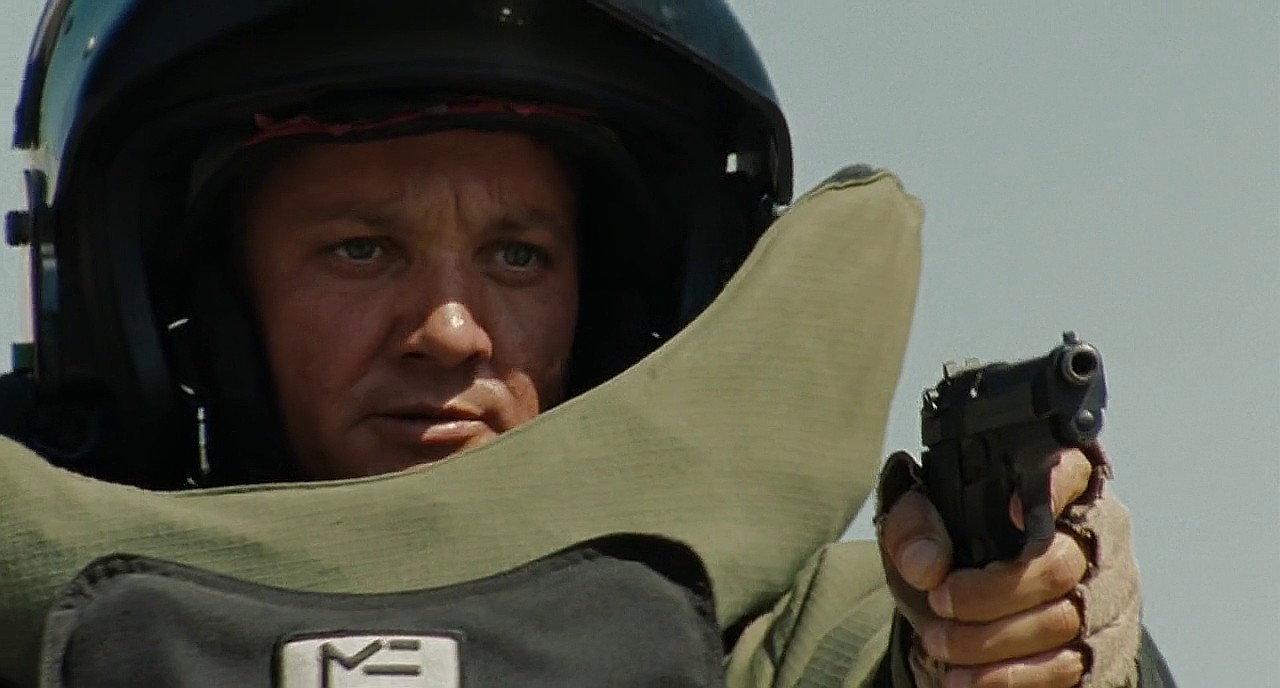
1.  What movie is the picture from?

2.  What movie is this quote from?  

“Graduation is only a few days away, and the recruits of Platoon 3092 are salty. They are ready to eat their own guts and ask for seconds. The drill instructors are proud to see that we are growing beyond their control. The Marine Corps does not want robots. The Marine Corps wants killers. The Marine Corps wants to build indestructible men, men without fear.”

3.  What movie is this?

It is a war movie set in London during the Blitz of WWII. It was directed by John Boorman and was based on his own experiences as an eight year old boy. It was a British-American endeavor that was released in 1987. It was nominated for Academy Awards for Best Art Direction, Cinematography, Original Screenplay, Director, and Picture. It won the Golden Globe for Best Musical or Comedy.