Showing posts with label The Third Man. Show all posts

Friday, May 31, 2019

CONSENSUS #71 - The Third Man (1949)


SYNOPSIS: "The Third Man" is set in post- WWII Vienna. An American novelist (Joseph Cotton) visits to see a childhood friend (Orson Welles). He finds out the friend is dead, but the circumstances are suspicious. He hooks up with his friend's girl. He finds out that his friend was a racketeer responsible for selling tainted penicillin on the black market.  The authorities are still looking for the charismatic profiteer which culminates in a famous chase through the sewers.

BACK-STORY: “The Third Man” is a classic film noir released in 1949. It foreshadowed the boom in that genre in America in the 50s. It is a British film, however. It was directed by the acclaimed Carol Reed and is considered his greatest film. The screenplay is by Graham Greene. The British Film Institute in 1999 designated it the greatest British film of the 20th Century. It was awarded the top prize at Cannes and won an Academy Award for Cinematography (a no-brainer) and was nominated for Director and Editing. It was set and filmed in Vienna, including the scenes in its famous sewer system. The remarkable score is done with a musical instrument called a “zither”. The opening theme (“The Third Man Theme”) was an international hit. The movie was a hit with both critics and audiences. The rumors that Orson Welles actually directed are not true. He did have a lot of influence over the dialogue of his character, however.

TRIVIA:  Wikipedia, imdb, TCM

1.  Reed shot in Vienna for six weeks.  Because of time constraints, he ran three camera crews – daytime, nighttime, and sewer.  He worked twenty hour days, with the aid of Benezedrine.

2.  Welles worked only one week on the film and his character has only five minutes of screen time.  When he arrived in Vienna, he took one whiff of the sewer and declined to work in it.  He eventually opened to the idea, but still much of his footage is of body doubles or was filmed on a sound stage in Britain.  The final iconic image of his hands on the grate is actually Reed’s hands.

3.  Reed got a Vienna fire brigade to water down the streets at night to get a proper glistening look.

4.  Reed wanted James Stewart, but producer David O. Selznick had Joseph Cotten on contract.  Robert Mitchum was considered until his arrest for marijuana possession.  Selznick proposed Noel Coward for Lime, but common sense prevailed.

5.  Greene based Lime on the infamous double agent Kim Philby.  Philby had been Greene’s superior in British Intelligence.

6.  Because of the popularity of the movie, Vienna created a tour of the sewer locations called “Der Dritte Man Tour”.

7.  “The Adventures of Harry Lime” was a series of 52 half-hour radio episodes starring Orson Welles.  He wrote some of the scripts.

8.  Although it is clearly a British film, it was placed at #57 on AFIs original list of 100 Greatest Films.  In 2008, it was ranked #5 in the mystery category.  It was #75 in the list of 100 Thrills.  Lime was #37 on the Greatest Villains list.  In 1999, the British Film Institute named it the greatest British film.

9.  Greene was inspired by a trip to Vienna where he was told about the special police unit that patrolled the sewer system.  He wrote a novella which became the basis for the script.  The main difference between the treatment and the final screenplay was the ending.  In the novella, Martins and Anna hook up and live happily ever after.  Reed insisted on the downbeat ending of the film and although Greene argued against it, he later admitted Reed was right.

Belle and Blade  =  N/A
Brassey’s              =  N/A
Video Hound       =  5.0
War Movies         =  N/A
Military History  =  #80
Channel 4             =  not on list
Film Site                =  yes
            101 War Movies  =  no
            Rotten Tomatoes =  no

OPINION: I do not care what anyone says, this is not a war movie by any stretch of the definition. It is a movie set in post-war Vienna, true. I can accept movies set on the home front during the war, but not after the war. I make exceptions for movies like “The Best Years of Our Lives” because they deal with the after effects of a war on warriors. Neither Martins nor Lime appear to have fought in the war and even if they had, it is immaterial to the movie. The movie could be described as a Cold War movie, but then a ton of spy movies would have to be included as war movies. I cannot agree to that.  With that said, this is undoubtedly one of the great movies of any genre. The score, the cinematography, the setting, the acting - all great.  Do not watch this movie because it is a great war movie. Watch it because you love movies and want to be able to say you have seen one of the masterpieces of film history.

Saturday, December 11, 2010

#80 - The Third Man


BACK-STORY: “The Third Man” is a classic film noir released in 1949. It foreshadowed the boom in that genre in America in the 50s. It is a British film, however. It was directed by the acclaimed Carol Reed and is considered his greatest film. The screenplay is by Graham Greene. The British Film Institute in 1999 designated it the greatest British film of the 20th Century. It was awarded the top prize at Cannes and won an Academy Award for Cinematography (a no-brainer) and was nominated for Director and Editing. It was set and filmed in Vienna, including the scenes in the famous sewer system. The remarkable score is done with a musical instrument called a “zither”. The opening theme was an international hit. The movie was a hit with both critics and audiences. The rumors that Orson Welles actually directed are not true. He did have a lot of influence over the dialogue of his character, however.
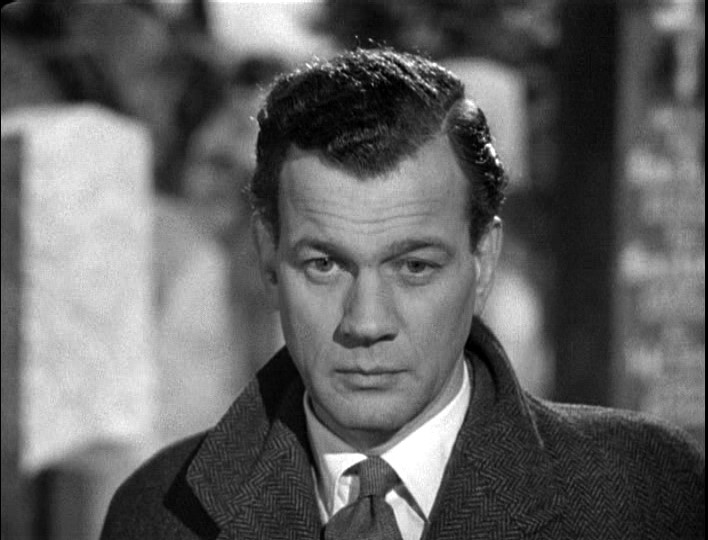
Holly Martins (thanks C)
OPENING SCENE: A narrator explains that the American novelist (pulp Westerns) Holly Martins (Joseph Cotten) has come to Vienna to meet his old friend Harry Lime (Welles). Martins arrives at a train station and goes to Lime’s home to be told he is dead from being hit by a lorry. He goes to the funeral and there is an intriguing female there (naturally). A British Major Calloway (Trevor Howard) gives him a ride back to town and Martins reveals that he and Lime had been childhood BFFs. Calloway breaks the news that his BFF was a notorious black marketer. “He was about the worst racketeer that ever made a dirty living in this city”.

SUMMARY: Martins meets a creepy “Baron” who describes the accident, but Holly is suspicious. Later, he hooks up with Lime’s girlfriend Anna (Alida Valli), the female at the funeral. She thinks his death was not an accident. An eye-witness ( a porter) tells them there was a “third man” at the death which contradicts the Baron. Holly now suspects murder.

     Meanwhile Anna is taken back to Calloway’s office because she has false papers that allowed her to move from the Russian zone to her present apartment. She is grilled, but released. They go to a bar where they encounter the Baron and a guy named Popescu (the second man) who insists there was no third man. The porter tells them to see him later that night and he will tell them more. Surprise, he is murdered right before Holly and Anna arrive and they have to flee a menacing crowd after a little boy fingers them. Holly is whisked off in a car which leaves the audience feeling he is being taken for a ride – he is, but just to a lecture he has agreed to give. He has to flee again when Popescu implies that he better stop his snooping. He runs through the bleak streets of Vienna. (There is a lot of running in this movie.)

     Holly goes to Calloway with his story, but being a typically arrogant British officer, he is unreceptive. He goes into detail about Limes racketeering. It seems that Harry was selling stolen penicillin and to make it worse, he diluted it leading to deaths and mental illnesses. A slide show convinces Holly that Harry is evil.

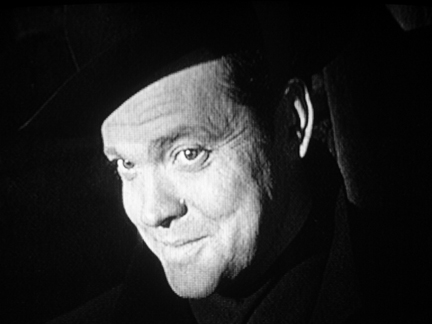
Harry Lime
     Holly goes to Anna’s. Her cat leaves. Anna says it only liked Harry. Holly follows the cat and in one of the great moments in film history, the cat goes to a smiling man in the shadows of a doorway – it’s Lime making his first appearance in the movie. Lime runs away (of course) and Martins loses him. It turns out that Harry has a secret entrance to the sewer system and he travels through the tunnels under the city.

     Calloway now believes Lime is alive and it is proven when his body is exhumed and it is someone else. Anna is arrested to coerce her into revealing Lime’s whereabouts, but she refuses to cooperate. Martins and Lime meet at the famous Vienna Ferris Wheel that dominates the sky-line. They talk while riding. It turns out that Harry is a sociopath. He wants Holly to join his enterprise and when Holly shows pangs of morality, Harry points to the dots of people below their feet and asks why should they care about them. He is charming, but creepy and menacing. He sums up the situation in the war-ravaged Vienna in a classic quote (added by Welles). “You know what the fellow said; in Italy, for thirty years under the Borgias, they had warfare, terror, murder, and bloodshed, but they produced Michelangelo, Leonardo Da Vinci, and the Renaissance. In Switzerland, they had brotherly love, they had 500 years of democracy and peace – and what did they produce? The cuckoo clock”. Good point – if it wasn’t for WWII we would not have penicillin (or the atomic bomb). They part unamicably.

     Martins makes a deal to rat out Lime in exchange for the release of Anna. When she finds out what her freedom cost, she leaves Holly at the train station. Harry is having second thoughts so Calloway brings him to a hospital to show him child victims of the tainted penicillin. He is back on board as their “dumb, decoy duck”.

the Vienna sewers
FINAL SCENES: Anna warns Harry when he comes to the rendezvous with Holly and he flees to his lair. The police are ready for this and the noose tightens as Harry runs through the tunnels in one of the most famous scenes in movie history. In one brilliant take, Lime stops and listens to the echoes of footsteps to try to decide which tunnel to take. Harry is like a caged animal and he shoots a British sergeant before being shot himself by Calloway. Lime tries to pry open a grate to get out and we see his fingers (actually Reed’s since Welles refused to film in the sewers) touching freedom, but no more. Martins reaches him and Harry nods as if to say “go ahead, finish it”. Holly does.
     In the final scene, Martins waits for Anna at the funeral, but in a refreshing departure from the typical Hollywood ending, she walks past him without acknowledging him.

RATINGS:
Action - 5
Acting – 10
Accuracy – N/A
Realism – 7
Plot – 8
Overall – 9

WOULD CHICKS DIG IT? It depends on whether your significant other is into film noir or mysteries or great acting or excellent film-making. If she hates war movies, have no fear because this is not a war movie. Convince her it is on a list of great war movies, let her enjoy it and then you might get her to watch a few real war movies before she figures out they are not like “The Third Man”.

CRITIQUE: I do not care what anyone says, this is not a war movie by any stretch of the definition. It is a movie set in post-war Vienna, true. I can accept movies set on the home front during the war, but not after the war. I make exceptions for movies like “The Best Years of Our Lives” because they deal with the after effects of a war on warriors. Neither Martins nor Lime appear to have fought in the war and even if they had, it is immaterial to the movie. The movie could be described as a Cold War movie, but then a ton of spy movies would have to be included as war movies. I cannot agree to that. It is my opinion that Military History magazine made a bad decision to include this movie.

     With that said, this is undoubtedly one of the great movies of any genre. The score, the cinematography, the setting, the acting; all great. The contrast of the main characters is fascinating. Martins is a naïve, bumbling gumshoe wannabe. Lime is a charmingly amoral villain. He reminds me of the current Bernie Madoffs of the world. Or, cinematically, Gordon Gecko. Our modern Harry Limes do not scuttle around in the sewers, however. Anna is in love with a dead man and then still loyal to his resurrected but evil real persona. Theirs is a doomed love triangle. Calloway is the dogged, proper British officer who needs to bring sick children into the picture to convince Martins and the audience to turn its back on the disarming Lime.

     One major negative – there is no way Harry Lime walks into that ambush. When he last talked to Holly it was obvious Holly was not going to join him. For the script to build him up as a criminal mastermind and then have him naively put himself in jeopardy is not realistic!

ACCURACY: Accuracy is not really an issue in this movie. The setting is true to life. Vienna was divided, like Berlin, into four occupation zones. The city was in sad shape and a thriving black market undoubtedly existed. I am sure there were unscrupulous racketeers like Harry Limes. It has been posited that Greene based his character on the real-life British spy named Kim Philby. Philby turned out to be a Soviet double agent that defected to the Soviet Union. The fictional Limes bears little resemblance to Philby, however. No big deal.

     In an interesting historical touch, Vienna did have a special police unit that patrolled the sewer system hunting criminal activities. The producers of the film used some of these off-duty officers in the sewer chase scene.

CONCLUSION: Do not watch this movie because it is a great war movie. Watch it because you love movies and want to be able to say you have seen one of the masterpieces of film history. Enjoy the weird camera angles and zither music. Try finding another movie that has both of those.

Next:  #79 -  "Run Silent, Run Deep"