August 23, 480
B.C. is the suggested date for the start of the Battle of Thermopylae.There have been two movies about it.“The 300 Spartans” was a B-movie that has its
fans, but “300” was a huge box office success.It has been criticized for its supposed historical inaccuracies, but the
narrative is based on a story being told by a Spartan (Dilios) who is firing up
the men before the Battle of Plataea.Just like a bedtime story, it has some fantasy elements, so don’t carp
about the war rhinos.Here is a rundown
of the “facts” the movie presents and how accurate they are.“Histywood” means it’s semi-historical.
HISTORY or HOLLYWOOD - 300
1.When the Persian emissary talks to Leonidas,
Leonidas takes counsel from his wife.The Persian asks “why are Spartan women able to rule men?” and Gorgo
responds “because we are the only ones who give birth to men”.HISTYWOODGorgo did say that, but it was in
response to a comment made by an Athenian woman.Spartan women did have considerable
influence.
2.Leonidas sneeringly describes the Athenians as
“philosophers and boy-lovers”.HOLLYWOODCertainly the Spartans considered the Athenians to be cultured
wimps, but it would have been hypocritical to diss their pederasty considering
they had a similar “mentoring” system for their young men.
3.The Persian emissary’s demand for “earth and
water” results in him being kicked into a well.HISTYWOODThe Spartans did throw Persian emissaries
into a well, but the incident occurred ten years earlier and under a different
king.Also, as tough as the Spartans
were with their kids, I still doubt they had a huge well that was flush to the
ground!
4.Leonidas killed a wolf as the final stage of
the agoge training.HISTYWOODBecause he was not
the heir to the throne, Leonidas did go through the agoge, but the culminating
rite of passage would have been to hunt down and kill a helot.Interestingly, Xerxes had a similar
experience involving a lion and a locked room.
5.The Ephors were disease-ridden priestly
perverts who were in the pockets of the Persians and tried to prevent Leonidas
actions by using the Carneia as an excuse.HOLLYWOODThe 5 Ephors technically had supreme
power, but they were not priests.They
were elected annually and served only one year.They did not live on a mountain and did not have a beautiful
oracle.They did not stand in his
way.There is no evidence that there was
any fifth column in Sparta.It is
unclear why he was able to take only 300 warriors with him.It was most likely an advanced force to show
the rest of Greece that the Spartans were not submitting.The Corneia may have been a factor (as it was
in keeping them from the Battle of Marathon.)
6.The oracle used the Corneia as the reason for
not going to war.HOLLYWOODThe Oracle of
Delphi weighed in on the discussion by predicting that if Sparta was willing to
sacrifice one of its kings (they had two), it would avoid Persian
destruction.This is the most likely
explanation for why Leonidas insisted on fighting to the death.
7.Leonidas left with only 300 men and they had
to have a son to qualify.HISTYWOODLeonidas did leave with 300 elites who had to have sons, but they
were accompanied by about 1,000 helots and 1,000 perioeci (foreigners) as
auxiliaries.
8.A unit of Arcadians joined along the
way.HISTORYMore important than
the Arcadians were the 700 Thespians and 400 Thebans.The total Greek force was 4,000-7,000.
9.Ephialtes was a spurned, disabled Spartan who
told Xerxes about the path.HOLLYWOODEphialtes was the traitor, but he was not a Spartan.He was a local farmer who did it for the
money.
10.For the first two days, the Spartans
slaughtered everything Xerxes threw at them.HISTYWOODThe slaughter was accurate, but the
Persians did not use cavalry, rhinos, monsters, or elephants.Or grenades.The Immortals were simply his best soldiers who got the name from the
fact that the unit was always kept at 10,000.
11.The Spartans would leave the phalanx to fight
melee style.HOLLYWOODThe Spartans would
never have left the phalanx.The movie
neglects to depict their famous use of feigned retreat in the battle.
12.Gorgo played politics to get the support of
the Council.HOLLYWOODThe Theron
character is totally fictitious.There
is no evidence sending reinforcements was debated.
13.Xerxes and Leonidas negotiated and Leonidas
attempted to kill Xerxes.HOLLYWOODThey never met.Xerxes
watched the battle from a throne on a hill.By the way, he was not considered to be a god.
14.The battle ended with the Persians using the
path to surround the Spartans and arrows were used to finish off the 300.HISTORYThe movie neglects to mention that the
700 Thespians and 400 Thebans stayed and died, too.That is one of the most egregious omissions
of the movie, but is consistent with history’s neglect of these valorous
warriors.Leonidas was probably killed
in the middle of the fight leading to a scrum over his body.
15.Delios was sent back to preserve the
story.HOLLYWOODOnly one Spartan
survived.A “coward” named Aristodemus
bowed out of the final battle due to an eye injury.He may have carried the story back to Sparta
where he would not have gotten a very receptive audience.He died making a suicide attack at the Battle
of Plataea.
Leonidas
did say “Tonight we dine in hell (hades actually)”.Leonidas did answer the Persian demand to lay
down their weapons by saying:“Come and
get them.”It was Dienekes who responded
to the threat of a hale of arrows by saying:“Good, then we shall fight in the shade.”
Xerxes
was much shorter and had a beard.
Leonidas
probably had a house to live in, but his men would have lived in barracks.
All
of the Spartans would have had plumes on their helmets, not just Leonidas.
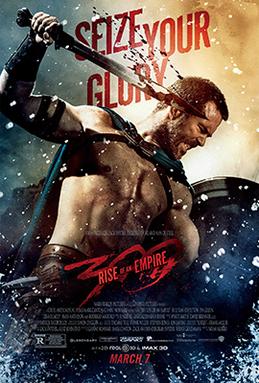
I recently rewatched “300: Rise of an Empire” to see if my first impression from seeing it in a theater was
reasonable. I am a big fan of the first
movie and, like most, found the sequel
to be a disappointment. But I was not surprised because “300” was so groundbreaking
and the vibe was impossible to recreate.
So Hollywood did what it is known for, it tried to give the audience the
same, but bigger.I have already reviewed it based on
that trip to the multiplex, so it is not my intention to tweak that
review. Instead, let’s have some fun
doing something the movie was never designed to withstand – fact checking. Now don’t get all pissy about how you can’t
expect the movie to be a history lesson.
“It’s just entertainment!” I
would be the first to admit that bringing a graphic novel to the screen makes
it bullet proof when it comes to historical accuracy quibbles. But since we’re unlikely to get a more
serious take on the Persian Wars any time soon, let’s look at what the viewers
of this film came away with. With the
caveat that the movie cannily structures much of the narrative as a tale being
told by Queen Gorgo so you could argue that what you are watching is a Spartan
bedtime story and you know how accurate bedtime stories are.
1. Let’s start with the title. Who dreamed that up? You would have to stretch quite a bit to
imagine that they are referring to the Delian League (sometimes called the
“Athenian Empire”) which was created after the war. Since Athens basically became an arrogant
bully which forced other city-states to join and remain in its self-serving
alliance, this would seem to clash with the movies theme of the war being
fought for Greek freedom. A much better
title would have been “300: The Fight
for Freedom”.
2. Battle of Marathon - The movie wastes little time (4 minutes) to
get to the Battle of Marathon. It is a
nice touch to reach back to cover the most famous battle of the Persian
Wars. It would have been nicer if there
were a little truth in this segment.
Gorgo may have been told that the Persians were attacked as they
disembarked on the shore, but in reality they had been camped there for several
days before Themistocles convinced the Athenians to attack. The movie does show the Athenians running
toward the surprised enemy, but there is no reference to the famous tactical
decision to weaken the center of the phalanx and double envelop with the
wings. In fact, as per the two films,
the Greeks are shown fighting as individuals, not shields overlapping. They do not run through a kill zone of
Persian arrows. In fact, the movie is
very shaky on weapons. Hollywood much
prefers sword play to spear thrusting.
There would have been no horses available to squash a man’s head. (Not that I would want that image removed
from the film.) Do I need to tell anyone
that Themistocles did not hit Darius with an arrow? Darius was not at the
battle. Nor was Xerxes.
3. Artemesia -
The Greeks loved to wet their beds over strong female warriors (that’s
why they invented the Amazons), so I can see why they would have enhanced
Artemesia to super villainous proportions.
Although Herodotus does not do this and he never felt constrained. The fact is that she was a Greek queen who
threw in her lot with the Persians. This
was most likely an attempt to bet on a winning horse and certainly not to
avenge her family. She apparently was an
advisor to Xerxes, but he seldom listened to her. She was famously proven right. Her role in making Xerxes into a god is
fantasy. Do I have to tell you that she did not have a steaming hot sex tryst with Themistocles? I'm not saying they should not have included that scene.
4. the Athenian Assembly - It would have met outdoors, not in a
building. The movie glosses over
Themistocles’ remarkably persuading his fellow citizens to rely on the fleet
and evacuate the city.
5. the invasion - Nice job depicting the pontoon bridge across
the Hellespont. (Props please,
historians!) However, no war elephants.
Sorry.
6. Gorgo -
If you think Artemesia was some male screenwriters fantasy, why stop
there? Although Spartan women had more
influence than any other women in Greece, the portrayal of Gorgo as co-ruler
with her husband and then sole ruler after his death is ahistorical. Since she is telling the story, we can assume
she is clearly delusional.
7. Battle of Artemisium - The movies has three separate naval bouts
representing the actions at Artemisium that happened coincidental with
Thermopylae. The first movie covered the
gale that cost the Persians a third of their fleet. This movie takes huge liberties in depicting
the subsequent fighting. There is a
brief glimpse of the outnumbered Greeks in a circular defensive formation, but
soon abandons this accuracy for a melee version of the movie’s infantry
tactics. By the way, normally the
triremes would carry ten hoplites for defense and boarding. The movie really ups the number and gives
them incredible balance as they stand on the decks. I guess the triremes were like giant surf
boards. The trio of battles builds to
the cataclysmic Greek fire soaked inferno (replete with sea monsters!). In reality, the main battle was something of
a draw, but the Greeks retreated after word of the failure of Leonidas to hold
the pass. There is no reason to believe
Greek fire was used in the battle.
8. Athens is burned – True, but the city had
been abandoned by everyone except the idiots that interpreted “rely on the
wooden walls” to mean the walls around the citadel. I suppose the movie fairly accurately depicts
what happened to them.
9. Themistocles uses Ephialtes to sucker Xerxes
into attacking near Salamis - The movie
insists on bringing back every actor except Gerard Butler so what to do with
Ephialtes? Have him fill the role of Themistocles’
slave who was sent to Xerxes camp with word that the Greeks were planning on
fleeing, so hurry up and attack them in the narrow strait. Pretty please. In reality, Artemesia
advised Xerxes not to fall for the trap. In other words, exactly the opposite of what the movie depicts.
10. Battle of Salamis - Xerxes did watch from the cliff (on his
throne with his ass-kissers). That’s
where the accuracy ends. Well, there was
a lot of ramming and boarding, but it was not the land battle asea that the
movie depicts. Artemesia famously read
the handwriting on the sail and rammed a Persian ship to make her escape. ONce again, the exact opposite of
what the movie showed. Xerxes supposedly
witnessed this action sans binoculars and remarked “my men fight like women and
my women fight like men”. (Or as the
movie would have it: “my men fight like
human blood splatter emitters, and my women fight like psychotic she-bitches.”)
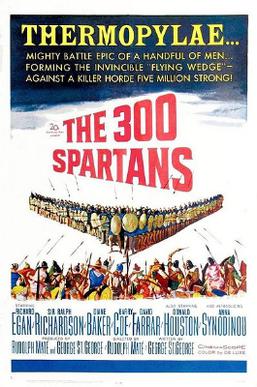
Now that I have seen and reviewed "300: Rise of an Empire", I
thought it would be appropriate to review the movie that inspired Frank Miller
to create the graphic novel.“The 300
Spartans” was made with the cooperation of the Greek government which provided
5,000 soldiers.The film was shot near
the site of Thermopylae.It was directed
by Rudolph Mate.It was his only war
movie.
The credits roll over shots of the Acropolis.The Persian Emperor Xerxes (David Farrar)
marches into Greece with a variety of units.A captured Greek spy sasses Xerxes about freedom versus slavery.Cold War analogy.A Greek traitor named Demaratus is an advisor
to the Emperor.He is also accompanied
by a Greek queen named Artemisia (Anna Synodinou).She is more than just an advisor, if you get
my drift.
The Greeks are meeting at Corinth to discuss the
invasion.Themistocles (Ralph Richardson)
argues for unity.When a foe quotes the
first Delphic prediction about blood running from the roofs, Themistocles
counters with the second prediction referring to the “wooden walls”.Later Themistocles and Leonidas (Richard
Egan) discuss strategy using a model of Greece.The Spartans will hold at the mountain pass of Thermopylae and Themistocles will bring the
fleet.Unfortunately, the Spartan
council refuses to allow the Spartan army to go to war during a religious
festival.Leonidas defies them by taking
his bodyguard of 300 men.
Phyllon (Barry Coe) is the son of a traitor, but
engaged to the niece of Queen Gorgos of Sparta.He wants to prove himself, but Leonidas refuses to take him along
because of his father and to set up a redemption arc.Phyllon and Ellas (Diane Baker) tag
along.The Spartans are joined by 700
Thespians.The Greeks arrive at the pass
and begin to fortify it.
Leonidas leads a surprise night attack on Xerxes
camp.Phyllon sneaks into the group to
begin his redemption.They catch Xerxes
with his pants down as he is canoodling with Artemisia.As a result of the ass-whipping,Xerxes executes all the camp followers to
motivate his men.Meanwhile, Leonidas
gets the unwelcome news that the Spartan army will not be coming.They are on their own.
In the first Persian assault, the infantry advances
in lines and the Spartans await in lines.The Persian cavalry attacks through the infantry and the Spartan front
line ducks!The horsemen are trapped
between the first and second lines and a melee results.After this initial fight, Leonidas meets with
Xerxes second in command.“Our arrows
will blot out the sun.”Leonidas:“Then we will fight in the shade.”
On day two the Persians send in chariots which are
dealt with by archers and javelinmen.Next it’s the Immortals with their wicker shields and short spears.The Spartans fight in a phalanx.Phyllon has pretended to be dead and then
sets fire to hay behind the Immortals.War epics love fire!
A Greek traitor named Ephialtes visits Xerxes to tell
him of a goat path to get behind the Spartans.Leonidas sends Phyllon back to Sparta to inform them of the
situation.The Thespians stay thinking
they will become famous for their sacrifice.Oops!Note the title of the
movie.
Spoiler alert if you are so ignorant that you don’t
know the outcome of the battle.Xerxes
leads the final attack in his white chariot (shouldn’t it be black?).Leonidas advances in a wedge shape.Leonidas is killed and the remnants carry his
body to a hill and form a circle around the corpse.Xerxes offers them their lives if they give
up the body.They prefer a barrage of
arrows.Remember Thermopylae!
I was pleasantly surprised at how accurate “The 300
Spartans” is.You get the basic facts
about the battle from the film, but a lot of the details are fudged.The background is the strongest section.Xerxes did march into Greece with a huge
multi-ethnic army.Greeks like
Themistocles did view the struggle as freedom versus slavery (as posited by Herodotus).The main characters are based on actual
personages and are not caricatures.Their relationships are Hollywoodized.There is no evidence that Artemisia and Xerxes had an affair, but it is
not beyond possible.Themistocles and
Leonidas did not meet to discuss strategy, but the strategy discussed is fairly
close to what actually happened.The
movie does an admirable job fitting in the most famous quotes from
Herodotus.For example, the “fight in
the shade” line.
The movie veers away from history and military sense
in the battle itself.The raid on the
Persian camp was crap, of course.But
necessary to redeem Phyllon.There is no
record of Xerxes killing the camp followers.The battle is laughable in its tactics.The narrowness of the pass did not lend itself to lines of
infantry.Plus the Spartans would have
been in a phalanx anyway.Given the
nature of the terrain there would have been no use of cavalry or chariots by
the Persians.The Immortals are
accurately dressed, but the Spartans look like legionaries.The fire surprise is pure bull shit, just as
it was in “Spartacus” and “Braveheart”.The role and motivation of Ephialtes is fine and certainly closer to the
truth than in “300”.Xerxes may have had
a white chariot, but he did not participate in the battle.The death of Leonidas is as per
Herodotus.Overall I would give the film
a C for accuracy.
“The 300 Spartans” is surprisingly not sucky.Egan and Richardson do a good acting job, but
the rest of the cast is low rate, especially the females. However, nobody embarrasses themselves.The romantic subplot is lame and
perfunctory.The dialogue is average,
but gets points for borrowing from the ancient sources.It was cool hearing the famous quotes.Although the tactics are shaky, the action is
pretty good.The hand to hand is well
done and the deaths are not laughable.
“The 300 Spartans” is a fun companion to “300”.It is entertaining in an early 1960’s B-movie
sort of way.Watching it and then
comparing it to “300” could not be a bigger contrast between an Old School war
movie and whatever the Hell “300” is.
There are three different types of sequels.Some, like “Godfather II” and “The Empire
Strikes Back”, continue the story with the same quality.Others, like “Aliens” and Terminator II”, go
in a different direction than the original and make a mark of their own.And then we have sequels like “Hangover II”
and “Home Alone 2” which simply exist to remind viewers of what they loved in
the original.“300:Rise of an Empire” is firmly in that
category.The plot template was dusted
off and ramped up to please its target audience.Mission partly accomplished.
The film picks up at the time of the Battle of Thermopylae,
but a flashback covers the Battle of Marathon from ten years previously.Themistocles (Sullivan Stapleton) not only
conceives the strategy and leads the 300esque slaughtering and
blood-splattering, but kills the Persian Emperor Darius.In the interim before the Persians return for
their second attempt at conquest, Darius’ “warrior protégé” Artemisia (Eva
Green) goes beyond making a man out of his son Xerxes.She makes a god out of him and then sees to
it that she is the power behind the throne. She also commands the fleet. Why would a
Greek queen side with the Persians?The
rape and murder of her family by the Greeks and her subsequent years as a sex
slave have made her one vengeful female and she’s been trained Batman/Matrix/Kill
Bill style.
Meanwhile, back in Greece, Themistocles is organizing
the defense of Greek FREEDOM.His trip
to visit Queen Gorgo (Lena Headey) finds her in mourning and in no mood to join
a united Greece.It looks like the
Spartans will sit out the sequel.They
have decided “been there, done that”.So
much for those awesome infantry battles.How about if we substitute land warfare on the sea?This could work!Just tweak the plot a bit and…
While the events of “300” are transpiring on the same
screen eight years ago, Themistocles is fighting the Battle of Artemisium to
gain time and block Artemisia’s fleet.It’s
a three round heavyweight bout that has cut-men babbling insanely in their
corners.There is some ramming, but
mostly boarding.You’ve got to be
impressed with ancient footwear as I did not see a single combatant slip on the
gallons of blood spilled on the decks.For that matter, I don’t recall anyone tripping on the numerous severed
limbs.
Between rounds, as the audience is supposed to be
catching its breath, comes the soon to become iconic scene in teenage boydom.Themistocles visits Artemisia and they “negotiate”.Or as a three year old who wanders into his
parent’s bedroom would assume, they were wrestling.Extreme wrestling.Eva Green seals her place in war movie
history with this scene.
Since round three has to top the other two that means
it’s time for some anachronistic explosions.What’s the one thing “300” lacked?Fire!Do you remember the ninja
zombies and war mastodons from the original?Here we get human-bomb frogmen and corpse-eating sea monsters.
Spoiler alert to the historically illiterate:Xerxes sacks Athens.Themistocles paltry fleet, sans the suddenly
wimpy Spartans, are waiting at Salamis for the rematch.Artemisia urges the uncharacteristically
cautious Xerxes to rush in and finish the Greeks.What could go wrong in a battle where it
looks like the Persians outnumber the Greeks by 500 ships against 5?
In typical sequel fashion, “300:Rise of an Empire” is not up to the
original.This is not surprising
considering the uniqueness of the original.The sequel to “Sin City” will have the same problem.This does not mean they shouldn’t be
made.Fans demand a rematch just like
after a great boxing match.Noone complained
when Ali and Frazier punched each other again in the “Thrilla in Manilla”.With that caveat, this sequel is not unusual
in lacking the “charm” of the original. It just does not have the flair.This can partly be attributed to the battles
not being as interesting as Thermopylae.Plus the sequel can repeat much of the structure of the original, but
even a rote sequel is not going to be able to repeat the Spartan culture that
laid the groundwork for the first film.
The sequel reflects others of its ilk by ramping up
the violence.There is more blood, more
dismemberments, more of everything that made the original so visceral.If you hated “300” you will undoubtedly hate
this movie.I guarantee you no critic
who did not like the original will like this one instead.Well, possibly some feminists might be swayed
by Eva Green’s performance.She is the
one original thing about the movie and the Artemisia character prevents the
movie from being “Hangover II”.(In this
respect she reminds of adding Joe Pesci to Lethal Weapon 2.)It will be hard to forget two of her
scenes.One is when she kisses the
decapitated head of a captive.And the
other isn’t.Go see the movie.The rest of the actors are satisfactory, but
not as appealing as the originals.Stapleton is sturdy, but I doubt he will get the bounce that Gerard
Butler got.Such a bounce that he is the
only significant no show in the sequel.
The biggest problem is (drum roll please) the raping
of history.I had complimented “300” for
being admirably accurate for a movie based on a graphic novel, especially when
it did not have to be accurate at all.The sequel does not even attempt to adhere to the facts.Where you got the basic gist of the Battle of
Thermopylae, here we have little that is recognizable.This is especially true of the portrayal of
Artemisia.I will do a later post on the
specific mistakes, but in many ways the movie is exactly the opposite of
reality. Speaking of reality, it would be dickish to insist on it in a movie
such as this.All you can ask is that you
not be brought to laughter.There were
two moments in the film where I could not keep from laughing.One involved Themistocles riding a horse
across the flaming decks.Sometimes what
is meant to be awesome ends up being awful.
In short, if you loved “300” you will like “300: Rise
of an Empire”.It is more of the same,
including bare chests.It should please
all the sexual orientations.
Appropriate,
right?I had not planned it this way,
but I had not reviewed it yet and when I realized I was approaching my 300th
post it made perfect sense.“300” was
based on the graphic novel by Frank Miller and Lynn Varley that was published
in 1998.It was directed by Zac Snyder
in Montreal with almost all the shots taking place in front of a blue screen. The
film took 60 days to shoot, but spent over one year in post-production.The movie cost $60 million and was considered
a big risk by Warner Brothers.The film
was shockingly successful and made $210 million in the U.S. alone.The critics were not as kind as the public,
however.The public was right, the
critics were wrong.
“300” is a fantastical retelling
of the Battle of Thermopylae.The main
character is King Leonidas (Gerard Butler).The film is narrated by one of his men, Delios (David Wenham).He flashes back to Leonidas’ upbringing which
is implied to be typical of a Spartan boy.The baby is deemed fit by the state (avoiding being thrown off a cliff)
and at age seven is taken from his mother to be raised in the state-run agoge.There he is forced to fight and steal to
survive.This culminates in his “time in
the wild” where he achieves manhood via a lupine encounter that is the first
taste of how faithful the film is to the plot and visuals of the comic.
Persian emissaries arrive in the
only shot filmed outdoors.They demand
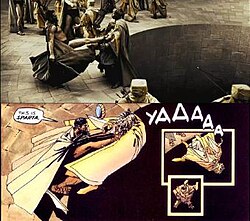
“earth and water” symbolic of Sparta’s submission to Persian rule.They get both in the form of a well.“This is Sparta”, says Leonidas.“This means war” says Xerxes, off
camera.Knowing he has acted a bit
provocatively, Leonidas visits the Ephors (“priests of the old gods”) in their
mountaintop temple.They consult their
oracle babe who, in a scene filmed under water, prophesizes that the Spartan
army must “respect the Carneia” (a religious festival coming up).Persian gold encourages their red light.
In both the movie and the comic,
Sparta was a very unsafe place for toddlers or drunks
Leonidas decides to go for a
hike with his 300 man body guard.Their
destination is a narrow mountain pass that the Persian army must pass through.They are joined by amateurs from
Arcadia.Along the way they get an idea
of what they are facing when they encounter a devastated village with a tree of
death.The gods seem fickle because this
atrocity is followed by the destruction of the Persian fleet by a storm.
A deformed Spartan exposure
escapee named Ephialtes wants to be #301.Leonidas turns him down because he can’t hold a position in the
phalanx.Boy is Ephialtes going to be
pissed when he sees how the Spartans actually fight!It turns out that when the Persians send
their horde, the Spartans start in a phalanx, but quickly decide it is too
confining (like clothing).Plus
one-on-one melee action is way cooler.A
blizzard of arrows allows the Spartans to “fight in the shade”.After the first day’s battle, Leonidas
celebrates by munching on an apple while his men kill the Persian wounded.(See Iranians, they are not depicted as
perfect angels.On the other hand, maybe
your soldier ancestors shouldn’t have been so killable.)
Phalanx? We don't need no stinking phalanx!
Xerxes (Rodrigo Santoro),
one-upping the Spartan beefcakeness by adding some bondage accessories, visits
Leonidas and offers him the overlordship of Greece.Leonidas would never stoop (or kneel) to
ruling other people (other than the slave-like helots of Sparta, of
course).It’s game on so Xerxes sends
in his elite Immortals.They are Ninja
monsters and so good that they actually kill some of the Spartans!Unfortunately, for the three or so they kill,
they lose thousands.Their hideous,
drooling goliath takes a good sword to the bicep and spear head to the eye, but
is a bit weak in the neck muscles.
"Your red cloak is no match for my chains"
It’s kitchen sink time on day
2.War rhino.Black powder urns.War elephants.(How did an actual animal weapon make it into
this movie?)Now that Xerxes has emptied
his sink, it’s beginning to look like 300 men in skirts can actually defeat a
million pants-wearers.If only Xerxes
could discover a way to get around that pesky pass.
Meanwhile back in Sparta, Queen
Gorgo (Lena Headey) is forced to negotiate with the loathsome Theron (Dominic
West).This corrupt politician is a
Persian lackey who is constantly trying to undermine Leonidas’ efforts.Gorgo allows Theron to do to her what
Leonidas is doing to the Persians in order to win his support at the Council
meeting.Theron proves to be an
untrustworthy rapist, but Gorgo is a woman not to be trifled with. However, her positive intervention is way too
late to overcome Ephialtes’ negative intervention.
Ephialtes visits Xerxes tent of
temptation which looks like it inspired Caligula.Ephialtes tells Xerxes about a path behind
the Spartans.When Leonidas learns of
this treachery he realizes that “we just might win this thing” vibe was
premature.He sends off the only verbose
Spartan in history, Delios, to carry the story back to Sparta.It’s Delios flowery and fantastical retelling
that we have been watching.Blame him
for the rhino, etc.He doesn’t let the
truth get in the way of a good story.
Spoiler alert: all the Spartans
are killed.(If you did not know that
already, enjoy “The Alamo”.)Xerxes
gives Leonidas one last chance to kneel, but his incredible forbearance is
rewarded with a spear to the cheek.Too
bad the Spartans do not stay in their cozy testudo because there’s a hard rain
coming.Leonidas does his best Elias
from “Platoon” impression and the movie cribs from “Pearl Harbor’s” feel-better
Doolittle Raid ending.
Love it or loathe it, “300” is
an eye-popping spectacle.It’s
definitely a generational thing, but I am from the John Wayne generation and I
love the movie.As my readers know, I am
strict about accuracy, but the complaints about the film’s fidelity to history
are ridiculous.Hell, it’s based on a
graphic novel!In fact, as you will see
in the “History or Hollywood” section below, the movie is surprisingly accurate.But more importantly, the generation that
made the movie a huge hit certainly learned something they did not have a clue
about.If they now also believe that
there were monsters at Thermopylae, at least they know the basics of the Battle
of Thermopylae.As a Western Civ
teacher, I call that a fair payoff.
It would be cool if they would make a movie that is a prequel to this
Snyder deserves a great deal of
credit for bringing the novel to the screen.He replicates the feel of the novel in his cinematography which used the
new super-imposition chroma key technique.Almost the entire film was shot on a sound stage using blue screens.The CGI effects are amazingly seamless.The plot may appear cheesy to some, but the
visuals are not.
The Spartan warriors look so
buff that the movie was popular in the gay community.That was not CGI. Those abs were real.The actors were put through a very rigorous
regime by a personal trainer.They
bought in to this and although I would not argue that acting is a tough
profession, those guys sacrificed for their art.Being fit also helped with the fight
choreography which looks like it was strenuous.It’s not usual to talk of choreography in a war movie, but it is crucial
to most of the fight scenes here.
The acting is over the top, but
appropriate for the nature of the film. Butler earned his career boost.West is gleefully hissable.Headey perfectly channels a strong Spartan
female.Gorgo is one of the strongest
female characters in war movie history.And, amazingly, the character is not fictional!The supporting cast is game and does not have
to wear names on their helmets like in “Black Hawk Down” to identify themselves.They take off those confining helmets as much
as possible.
Andrew Tiernan(and his ten hours of make-up) played Ephialtes
The music is of the epic variety.Tyler Bates mixes techno, Middle Eastern, and
hymnal.It’s on the restrained side and
not as pompous as would be expected.Unfortunately, Bates got in trouble because he “borrowed” quite a bit
from Elliot Goldenthal’s score for “Titus”.
The main thing people take from
the movie is the extreme action.The
movie certainly has a higher percentage than most war movies, although it
periodically mellows out with trips back to the home front.The violence is graphic and there is plenty
of CGI blood splattering.When I saw the
movie in the theater, the people in the first row were given raincoats.(Don’t let truth get in the way of a good
story.)Someone counted 585 deaths.That includes three beheadings.
“300” conforms to my theory that
a movie should be better than the book it’s based on.It faithfully covers almost every scene in
the novel, but more importantly Snyder adds to the plot mainly through the
Theron – Gorgo subplot.Gorgo only
appears briefly in the novel and Theron not at all.Once the 300 leave, you don’t see Sparta
again.Snyder also made the awesome
decision to include the Goliath-like monster and the rhino (the elephants are
in the book).Kudos.Most of the dialogue is straight from the
novel via Herodotus.Some of it is sappy
– graphic novel sappy.Was Snyder
supposed to Shakespeare it up?Some of
the lines that critics complain about are actually direct quotes from
historical sources.For instance, “come
back with your shield or on it” and “we will fight in the shade”.You can certainly criticize Delio’s
narration.The Spartans were not exactly
known for storytelling, but a key concept of the movie is Delios is
embellishing the story.Like Snyder
needed an excuse for including the rhino!
Few movies have such a gulf
between the critics and the viewers.The
film gets a 60% on Rotten Tomatoes from critics and an 88% from the
audience.Some of the critics were
absolutely brutal, using words like boring, stupid, puerile, absurd, and
ass-crack ugly.That last one tends to
inspire my belief that some critics might have felt their sexuality was challenged
by the movie.I think a vast majority of
viewers had to be informed by the “intelligentsia” that the movie was
“gay”.I certainly did not leave the
theater thinking that.After so many
recent blockbuster bombs, are we seriously going to credit Warner Brothers with
consciously creating Spartan warriors who would appeal to straight and gay
males as well as straight females?
In conclusion, feel free to
dislike the movie because it’s not your cup of tea, but don’t fault it because
it doesn’t fit your idea of what a war movie should be.The best modern war films are those that put
a new spin on the genre.Films like
“Patton”, “MASH”, “The Dirty Dozen”, “Platoon”, “Saving Private Ryan”,and “Waltz With Bashir” to name a few.Here’s another way of looking at it.One year after “300” was released, “Valkyrie”
came out.It was a traditional type of
war film with a huge star.It was also
admirably accurate.It made $75
million.“300” was a graphic
novelization with no star.It tweaked
accuracy for entertainment purposes.It
made $210 million. GRADE = A Coming soon: "The 300 Spartans" review
HISTORY or HOLLYWOOD
1.When the Persian emissary talks to Leonidas,
Leonidas takes counsel from his wife.The Persian asks “why are Spartan women able to rule men?” and Gorgo
responds “because we are the only ones who give birth to men”.HISTYWOODGorgo did say that, but it was in
response to a comment made by an Athenian woman.Spartan women did have considerable
influence.
2.Leonidas sneeringly describes the Athenians
as “philosophers and boy-lovers”.HOLLYWOODCertainly the Spartans considered the Athenians to be cultured
wimps, but it would have been hypocritical to diss their pederasty considering
they had a similar “mentoring” system for their young men.
3.The Persian emissary’s demand for “earth and
water” results in him being kicked into a well.HISTYWOODThe Spartans did throw Persian emissaries
into a well, but the incident occurred ten years earlier and under a different
king.Also, as tough as the Spartans
were with their kids, I still doubt they had a huge well that was flush to the
ground!
4.Leonidas killed a wolf as the final stage of
the agoge training.HISTYWOODBecause he was not
the heir to the throne, Leonidas did go through the agoge, but the culminating
rite of passage would have been to hunt down and kill a helot.Interestingly, Xerxes had a similar
experience involving a lion and a locked room.
5.The Ephors were disease-ridden priestly
perverts who were in the pockets of the Persians and tried to prevent Leonidas
actions by using the Carneia as an excuse.HOLLYWOODThe 5 Ephors technically had supreme
power, but they were not priests.They
were elected annually and served only one year.They did not live on a mountain and did not have a beautiful
oracle.They did not stand in his
way.There is no evidence that there was
any fifth column in Sparta.It is
unclear why he was able to take only 300 warriors with him.It was most likely an advanced force to show
the rest of Greece that the Spartans were not submitting.The Corneia may have been a factor (as it was
in keeping them from the Battle of Marathon.)
6.The oracle used the Corneia as the reason for
not going to war.HOLLYWOODThe Oracle of
Delphi weighed in on the discussion by predicting that if Sparta was willing to
sacrifice one of its kings (they had two), it would avoid Persian destruction.This is the most likely explanation for why
Leonidas insisted on fighting to the death.
7.Leonidas left with only 300 men and they had
to have a son to qualify.HISTYWOODLeonidas did leave with 300 elites who had to have sons, but they
were accompanied by about 1,000 helots and 1,000 perioeci (foreigners) as
auxiliaries.
8.A unit of Arcadians joined along the
way.HISTORYMore important than
the Arcadians were the 700 Thespians and 400 Thebans.The total Greek force was 4,000-7,000.
9.Ephialtes was a spurned, disabled Spartan who
told Xerxes about the path.HOLLYWOODEphialtes was the traitor, but he was not a Spartan.He was a local famer who did it for the
money.
10.For the first two days, the Spartans
slaughtered everything Xerxes threw at them.HISTYWOODThe slaughter was accurate, but the
Persians did not use cavalry, rhinos, monsters, or elephants.Or grenades.The Immortals were simply his best soldiers who got the name from the
fact that the unit was always kept at 10,000.
11.The Spartans would leave the phalanx to fight
melee style.HOLLYWOODThe Spartans would
never have left the phalanx.The movie
neglects to depict their famous use of feigned retreat in the battle.
12.Gorgo played politics to get the support of
the Council.HOLLYWOODThe Theron
character is totally fictitious.There
is no evidence sending reinforcements was debated.
13.Xerxes and Leonidas negotiated and Leonidas attempted
to kill Xerxes.HOLLYWOODThey never
met.Xerxes watched the battle from a
throne on a hill.By the way, he was not
considered to be a god.
14.The battle ended with the Persians using the
path to surround the Spartans and arrows were used to finish off the 300.HISTORYThe movie neglects to mention that the
700 Thespians and 400 Thebans stayed and died, too.That is one of the most egregious omissions
of the movie, but is consistent with history’s neglect of these valorous
warriors. Leonidas was probably killed
in the middle of the fight leading to a scrum over his body.
15.Delios was sent back to preserve the
story.HOLLYWOODOnly one Spartan
survived.A “coward” named Aristodemus
bowed out of the final battle due to an eye injury.He may have carried the story back to Sparta
where he would not have gotten a very receptive audience.He died making a suicide attack at the Battle
of Plataea.