Showing posts with label Francis Ford Coppola. Show all posts

Thursday, September 14, 2023

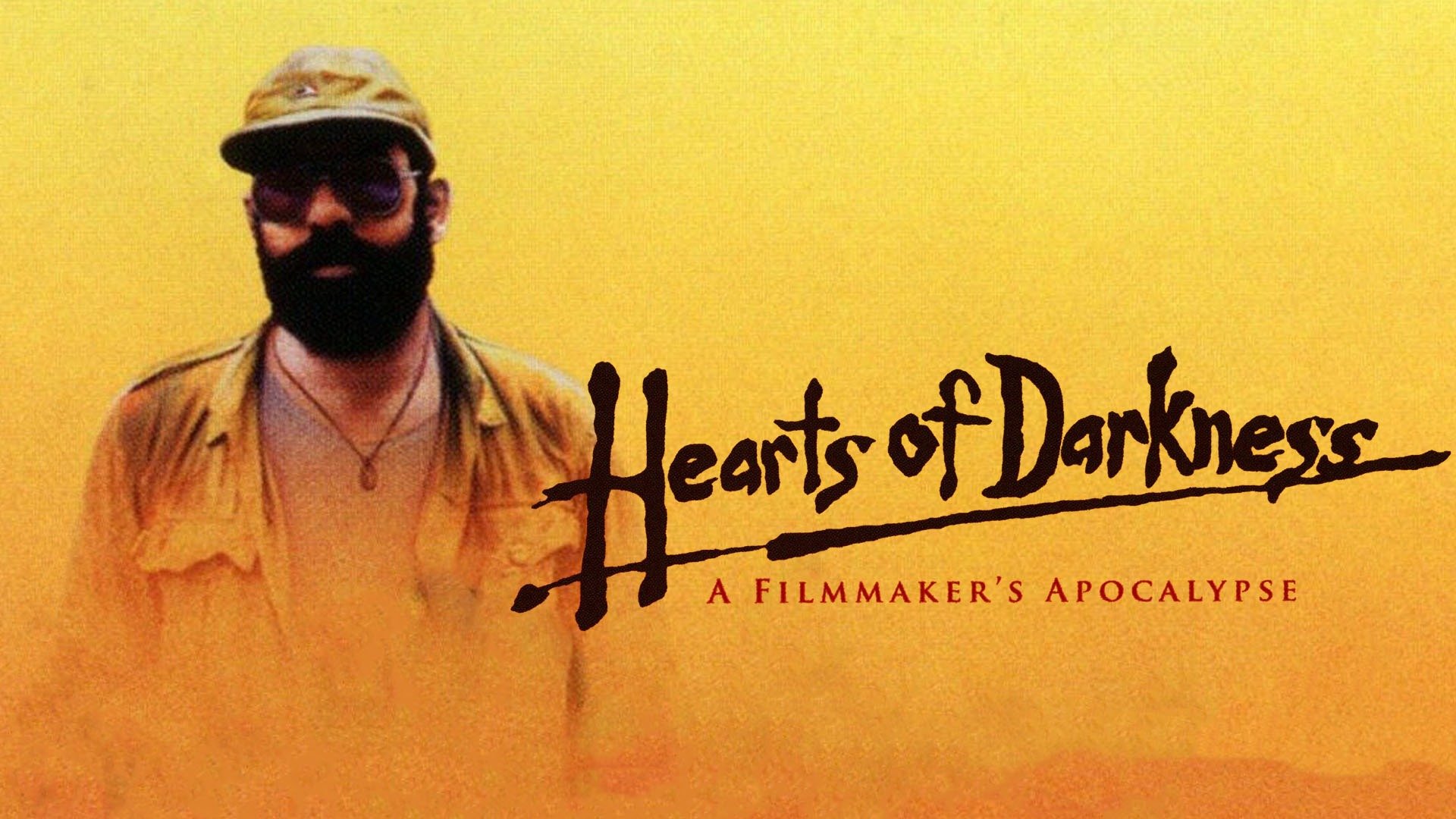
Hearts of Darkness: A Filmmaker’s Apocalypse (1993)


            This remarkable documentary on a remarkable film began with Francis Ford Coppola’s wife Eleanor filming behind the scenes at the fraught production of the classic.  Francis brought their three kids.  The documentary covers the epic problems like the storm that decimated the sets, the heart attack of the star, problems with an overweight superstar, etc.  It also chronicles the descent into darkness of her husband whose career was riding on producing his masterpiece.  Eleanor’s footage was turned over to George Hickenlooper and Fax Bahr who converted it into the documentary.  They added interviews, but not with Marlon Brando because he insisted Coppola owed him $2 million.  The documentary debuted at the Cannes Film Festival.  That was a good choice because Cannes awarded the movie with the Palme D-Or even though Coppola just showed a rough cut.

            The following are some notes I made while watching the documentary.

1.  Coppola describes the filming as being like the war.  It took place in a jungle (in the Philippines).  Too much money and too much technology led to insanity.

2.  The movie took 16 months to reach theaters.  The shooting took 238 days.

3.  The documentary includes the destruction of the last set (Kurtz’ base).

4.  Coppola likens the film as an odyssey.  Willard is Odysseus.  Kurtz is the Cyclops.  The Playboy bunnies are the Sirens.

5.  Coppola took John Milius’ original script and tweaked it so it was closer to Joseph Conrad’s novel Heart of Darkness.

6.  There was lots of drug use by the cast and crew.  Especially by Sam Bottoms (Lance).  I bet he excused it as method acting.

7.  Sheen shot the hotel room scene on his 36th birthday.  He really was drunk.  When he hit the mirror, he cut his hand badly, but he insisted on continuing.

8.  Sheen was given last rites when he had his heart attack.

9.  Coppola had to overcome fear of failure, fear of death, and fear of insanity.

10.  At times during the production, Coppola insisted the movie was going to be a disaster.

11.  Brando was paid one million a week for three weeks.  He was given a one million dollar advance and he had to be talked into showing up instead of just pocketing the million.  When he showed up, he had not read “Heart of Darkness” and wanted to change the character drastically.

12.  Fishburne talks about Vietnam being “fun”.

13.  Fernando Marcos rented out his entire helicopter force, but he could pull them out if they were needed to fight rebels.  In the middle of shooting the village assault, some of the choppers were called away.

14.  600 people worked building Kurtz’s base.  They were paid a few dollars a day

15.  Replacing Keitel cost the production a few weeks.  He was replaced because he just wasn’t right for the part.

16.  Sheen felt old at age 36.  He was smoking three packs of cigarettes a day.  His heart attack removed him from the production for 5 weeks.

17.  The encounter with the bunnies (which was cut) was filmed during the typhoon.

18.  It took two months to rebuild the sets.  The cast was sent home.

Thursday, July 16, 2015

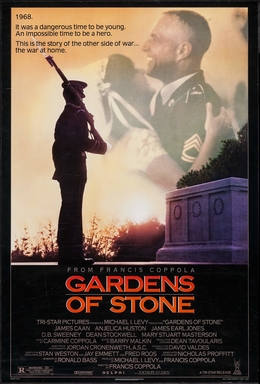
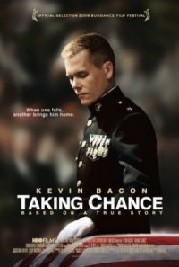
DUELING MOVIES: Gardens of Stone (1987) vs. Taking Chance (2009)


VS.


                 There are so many war movies that we actually have two that deal with U.S. military death rituals.  “Gardens of Stone” is set in the Vietnam War and dramatizes the role of the Old Guard in the burial of servicemen at Arlington National Cemetery.  “Taking Chance” is the story of the transfer of a victim of Operation Iraqi Freedom to burial by his family.  Both movies are sincere attempts to enlighten on a topic that is rarely the aftermath of all the celluloid bloodshed.

                “Gardens of Stone” is a Francis Ford Coppola film that came eight years after “Apocalypse Now”.  An eight year period of forgotten films.  The movie was based on a novel by Nicholas Profitt.  It takes its name from a nickname for Arlington National Cemetery.  Coppola had a vastly different experience dealing with the Pentagon on this film.  Because of the sincerity of the project, the military gave total cooperation including filming at Fort Myers and technical advice to assure the accuracy of the rituals.  The script was readily accepted with just the usual quibbling about profanity.  James Caan came out of semi-retirement (he had not made a movie in five years due to a bad experience in the making of “Kiss Me Goodbye”) to play the lead.   As though the production was not somber enough, Coppola’s eldest son was killed in a boating accident during the filming.  The boat was piloted by a drunken cast member.
 
                The movie is set in 1968 at the height of the Vietnam War, around the time the war was souring in America.  Sgt. Hazard (Caan) is a veteran of Korea and Vietnam who is moldering as part of the Old Guard at Fort Myers.  He knows the war is fouled up.  “It’s not even a war.  There’s nothing to win and no way to win it.”  (Not a bad analysis.)  He longs to be transferred to a training position so he can use his wisdom to save a few of the lambs being led to slaughter.  And prevent them from becoming one of the constant stream of corpses his unit deals with every day.  His commanding officer and best friend Sgt. Major Nelson (James Earl Jones) has a bon homme style to balance Hazard’s moroseness.  Some of this is also tempered by his relationship with a liberal lady journalist named Samantha (Anjelica Houston).  Her anti-war philosophy has no effect on their feelings toward each other.  While wooing Sam, Hazard has found a protégé in a new arrival in the unit named Willow (D.B. Sweeney).  If Hazard can’t go to Vietnam or even the training school, he is determined to help the gung-ho Willow survive when he reaches there.  (No need to mention that his death is the most obvious in war movie history since the movie opens with his funeral.)
Nelson and Hazard discuss how to
win the Vietnam War
                “Gardens of Stone” is not based on a true story, but it does honor the 1st Battalion, 3rd Infantry Regiment. Known as the Old Guard, the unit is in charge of Arlington National Cemetery and the Tomb of the Unknown Soldier.  As such, it does a reverential job in depicting the service of these men.  The stress of such a job is clearly shown.  The movie is educational about military burial procedures and if you have seen “Born on the Fourth of July”, it will have you pondering the gulf between treatment of the wounded and the dead during the Vietnam War.

                Coppola’s string of misfires did not end with this movie.  The strong cast and fine acting cannot lift a mundane script.  It is the opposite of “Apocalypse Now” in verve.  That is best seen when you compare Col. Kilgore from “Apocalypse” to Hazard - the culturally and socially sensitive warrior who collects Persian rugs and acts as a father figure to Willow.  The plot was so unimpressive that the military vetters went so far as to suggest some creative changes (along with their concerns with the potty mouths).  The somber music by Coppola’s father does not help.  Neither does the ripe dialogue and the two unrealistic romantic subplots.  Hazard’s relationship with Sam survives his punching out a mouthy pacifist friend of hers.  Even this does not lead to any meaningful debate on the war between the two.  Meanwhile, Willow is courting a girl that threatens to break it off if he insists on going to the Nam, but when he plays the duty card, she backs down immediately.  The biggest problem is in Coppola’s lack of focus as far as the theme.  Although clearly anti-war, the movie takes no stand on the Vietnam War itself.  Coppola claimed the real theme of the film is the family nature of the military and the traditions and rituals that are so admirable even to most doves.

                “Taking Chance” covers similar ground but without the melodrama.  The movie was based on an essay written by Lt. Col. Michael Strobl.  Strobl was a Persian Gulf War veteran who was consigned to a desk job during Operation Iraqi Freedom.  His mixed feelings about choosing family over a tour led to his volunteering to escort the body of Chance Phelps back to his home in Montana.  The diary he kept of the week led to the essay and it was optioned by HBO.  Strobl co-wrote the screenplay and won a Writers’ Guild of America award.  The movie was so well made that it was shown at the Sundance Festival.  It premiered on HBO to the highest audience for an original film in the previous five years.  It was nominated for ten Emmies and star Kevin Bacon won the Golden Globe and Screen Writer’s Guild awards for acting in a miniseries or television movie.  The movie was so well received that Secretary of Defense Robert Gates admitted that it was a factor in allowing the press access to the transfer of bodies at Dover Air Force Base.

                The movie opens in April, 2004.  A black screen does not distract from the noises of combat that resulted in the death of a PFC Phelps near Riwadi in Iraq.  (He was on a machine gun in a Humvee escorting a convoy  when he was hit during an ambush.)  Two Marines arrive at a rural home in Montana.  After that subtle set-up, we meet Strobl.  He is languishing pushing paper while his brethren fight and die for their country.  The least he can do is honor their sacrifice.  He volunteers to escort Chance’s body.  The movie has almost a documentary feel as it walks us through all the steps of the process.  Strobl is our framing agent as he goes where the corpse goes and encounters the respectful public along the way.  The movie culminates with the funeral with all its military trappings.
 
                The word that best describes “Taking Chance” is sincere.  You will not get a better tutorial on how the military treats a fallen hero in the modern age.  This realism is at the sacrifice of drama, however.  I have no reason to believe the movie is not very accurate.  In that case, can you complain about the absence of false theatrics?  No, but there is absolutely no conflict in the movie.  The movie skips the scene where the parents learn about their son’s death.  It also does not flashback to Chance’s death.  No one utters a negative word.  Every person, even strangers, is properly respectful.  The movie is apolitical and has nothing to say about the war Phelps died in.  There is no attempt to question whether Strobl was wise to stay home with his wife and kids.  It is not cut from the modern war movie style.  Compare it to “In the Valley of Elah”, for instance.  Unlike most war movies about America’s post-WWII wars, there is no theme of our dead soldiers deserve better or Americans do not care about their sacrifices.  It is not an overtly emotional movie.  Bacon won some acting awards, but to tell the truth it was an easy role.  He plays a Marine (with no PTSD) returning a dead body.  ‘Nuf said.

                These are two radically different movies on similar subjects.  Both are worth viewing so you can see the rituals involved in military funerals.  “Gardens of Stone” burdens the tutorial with a melodrama that is not strong.  “Taking Chance” is almost a docudrama and is straight-forward.   “Gardens of Stone” has the added burden of being a perplexing misfire from a supposedly great director.  “Taking Chance” was an overachiever.

GARDENS OF STONE  =  C

TAKING CHANCE  =  B