Showing posts with label Gregory Peck. Show all posts

Thursday, September 15, 2016

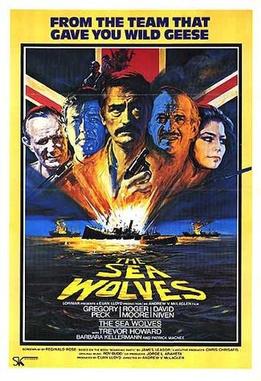
The Sea Wolves (1980)


                “The Sea Wolves: The Last Charge of the Calcutta Light Horse” is an action adventure movie directed by Andrew McLaglen (“The Devil’s Brigade”).  He also had directed “The Wild Geese” and the original plan was for him to reunite with Richard Burton and Richard Harris.  Instead he got Gregory Peck and David Niven.  Ironically, they had been passed on for “Force Ten from Navarone” because of age two years before “Sea Wolves”.  Peck was 63 and Niven was 68.  Watch the movie and decide for yourself whether they were too old for action.  The movie was based on a true story of a mission that was classified until 1978.  The movie was originally going to be titled “Boarding Party” after the novel by James Leasor.  The movie had four German survivors who gave advice and Lewis Pugh was a technical advisor.  The film was dedicated to Lord Mountbatten who had been assassinated by the IRA a year earlier.

                U-boats have been sinking merchant ships in the Indian Ocean based on information being provided by a German freighter in a neutral port.  The British military cannot go after the freighter because of the neutrality.  Col. Pugh (Peck) is the head of Special Operations Executive in New Delhi.  He and Capt. Stewart (Roger Moore) hatch a plan to use the old coots from the local Calcutta Light Cavalry chapter to participate in a mission to destroy the ship.  Meanwhile, Stewart is having a Bondesque tryst with a German spy named Agnes Cromwell (Barbara Kellerman).  They hijack a boat and sail to the site.  They arrange for a big soiree for the German officers and a carnival with free whores for the crew to distract the freighter.  All this leads to the boarding of the ship and our geriatric tumult.

                “The Sea Wolves” is an average movie from the special mission subgenre.  It does stand out a bit due to the casting which could be described as a stunt casting.  It is a hoot to watch the coots, but their wrinkles are distracting and sad.  In this respect it reminds of “The Wild Geese”, but at least this all-geezer affair is true to the story of recruiting old soldiers.  That does not explain the casting of two sixty year olds as the SOE officers.  But aside from my ageist comments, the movie just simply lacks suspense.  The Stewart/Cartwright scenario is straight out of a Bond movie.  Moore wears a tuxedo, gambles in a casino, and has sex with a mysterious female spy. ( He made this movie between two Bond films.)  He even gets to do some Bondian ass kicking.  But the most interesting character is Cartwright.  She was 30 at the time of the shooting.  (Moore was 52.)  Cartwright is a stock character, but she is a Nazi so she brings some nastiness.  The big set piece is a mindless, preposterous excuse to blow things up and set things afire.  Fortunately, the lame-ass plan for the boarding is abandoned for no other reason than it would not provide enough fireworks.  By the way, stick around for the end credits if you want to hear a bizarre romantic song, “Precious Moments”.

                “The Sea Wolves” is nice escapism and it is fun watching Peck, Niven, Moore, and Howard pretend to be dashing again.  And kudos to the screenwriter for sticking fairly close to the historical tale.  Naturally, as you can read below, there are explosions and bloodshed added.

GRADE  =  C

HISTORICAL ACCURACY:  Leasor’s novel was based on Operation Creek.  British intelligence determined that the reason why twelve merchant ships had been sunk by u-boats in the Indian Ocean in March, 1943 was due to communications about Allied naval movements that were coming from a German freighter named the Ehrenfels in the harbor of Mormugao in the Portuguese territory of Goa.  SOE took on the clandestine mission to violate Portuguese neutrality to eliminate the transmitter.  Col. Pugh of the SOE was in charge of the operation.  The mission was to board the ship, disable the transmitter, and sink the ship.  Members of the Calcutta Light Horse were asked to participate and a number volunteered under retired Capt. Grice.  The Calcutta Light Horse was similar to a social club and the men, although veterans, were all middle aged and out of shape.  The 18 men sailed from Calcutta on a barge called the Phoebe.  They did not steal the ship.  When they arrived, Jock Cartwright arranged a festival, including loose women, to distract the German crews.  Mission accomplished.  At 2:30 A.M., the commandos boarded the ship.  The death to the captain early caused the skeleton crew to put up a poor defense, but someone did manage to open the sea valves.  When the ship began to list, the boarders returned to the barge and escaped.  The other two Germans berthed nearby were scuttled.  These were the only explosions.  The Brits suffered only minor casualties.  The mission was successful as only one ship was sunk in the rest of the month and only three in April.  The old vets were not decorated for the mission because of its sensitive nature and the public did not learn of it until the publishing of Boarding Party in 1978.  

Monday, July 11, 2016

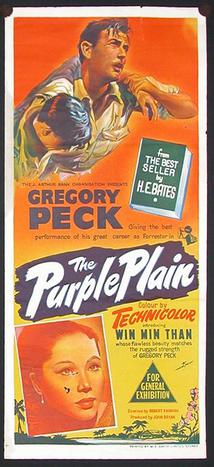
ANTIQUE or CLASSIC?: The Purple Plain (1954)


                “The Purple Plain” was a British film that was released in 1954 and did pretty well at the box office.  Gregory Peck and the fact it was in color probably were responsible for some of the success.  It was directed by Robert Parish from a novel by H.E. Bates.  The movie was shot in Sri Lanka and used some of the sites later used in “Bridge on the River Kwai”.  The Royal Air Force cooperated with the use of authentic Mosquitoes.

                We are in Burma in 1945.  Squadron Leader Forrester (Peck) is suffering from mental instability due to the death of his wife in the “Blitz”.  He has a death wish and everyone thinks he is a “raving lunatic”.  Everyone except the base doctor who refuses the base commander’s wish to have him relieved.  There’s a nice twist!  Instead the doc takes him to a Burmese village where Forrester meets a beautiful girl named Anna (Win Min Than).  Love will conquer his mental problems.  The relationship develops very briskly with Anna pressuring him to commit.  Another twist.  Forrester promises to always come back to her, thus eliminating any suspense over whether Gregory Peck’s character will die with his romance unrequited.  (Like there was a good chance of that otherwise.)  Forrester is a changed man and his brain is fixed.  Unfortunately, his engine is not and he crashes on the very next mission.  Imagine the odds!

                The crash is well done which is at odds with the rest of the movies shoddy effects.  Forrester, Flight Officer Blore (Maurice Denham), and wounded navigator Carrington (Lyndon Brook) are far from safety.  Forrester wants to press on, but Blore insists on staying with the wreckage.  Peck points out to Denham which one of them is the big star so they move on.  Excellent decision plot-wise.  Plus we get some nice scenery and the emoting you get when three desperate men have to make a trek.  Will Forrester be true to his promise to return to Anna?  Check out the year the movie was released for a clue.

                This is an interesting movie.  I had never heard of it and I am a Gregory Peck fan.  It is not one of his more famous roles.  It came between “Roman Holiday” and “Moby Dick”.  He dominates, but Denham was nominated for a BAFTA for Best Actor.  I think this was Win Min Than’s only movie.  It is obvious she was an amateur, but she holds her own and does the opposite of scene-chewing.  The plot is a bit predictable, but the movie is comfortable for a 1950s audience.  Not surprisingly, the PTSD issue is handled in too simplistic a way.  Anna is one great therapist!  Good thing due to the doctor’s bizarre lack of concern that an insane, suicidal officer is leading men into combat.  The cinematography stands out with a lot of close-ups.  Too close actually and too many.  Other than the crash, the effects are those of models being pummeled by fake flak.

                Antique or Classic?  Neither.  Just a mildly entertaining trifle.

GRADE = C+  

Saturday, November 29, 2014

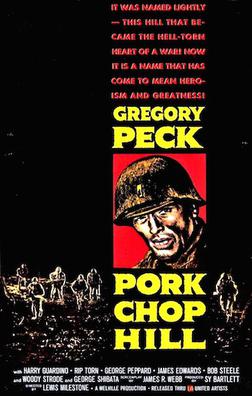
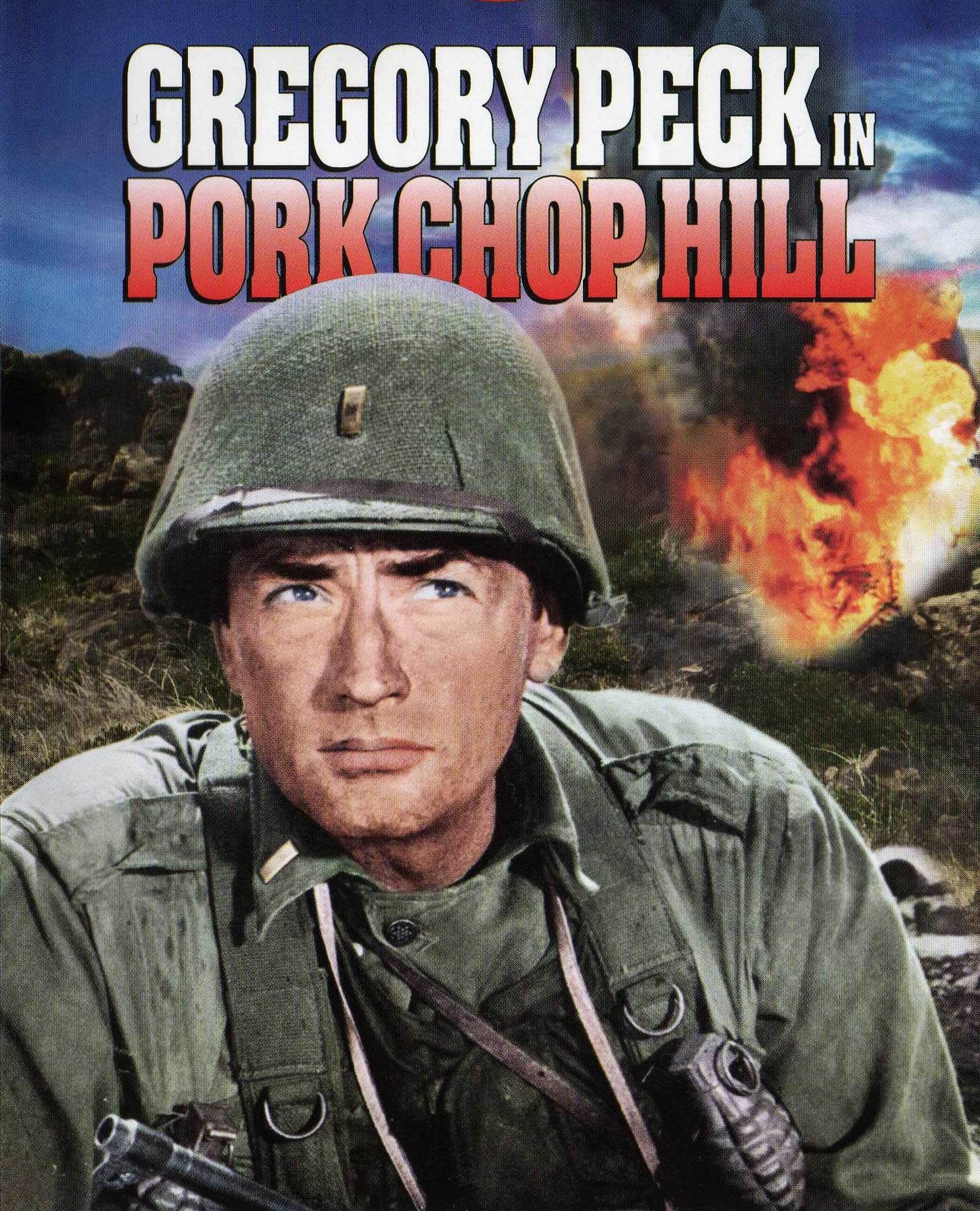
HISTORY or HOLLYWOOD: Pork Chop Hill (1959)


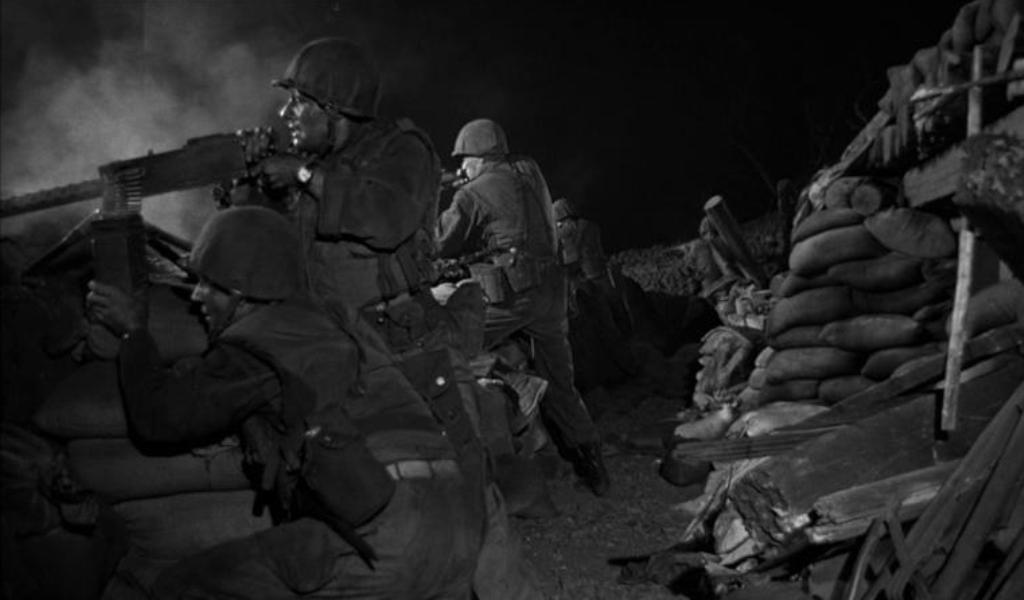
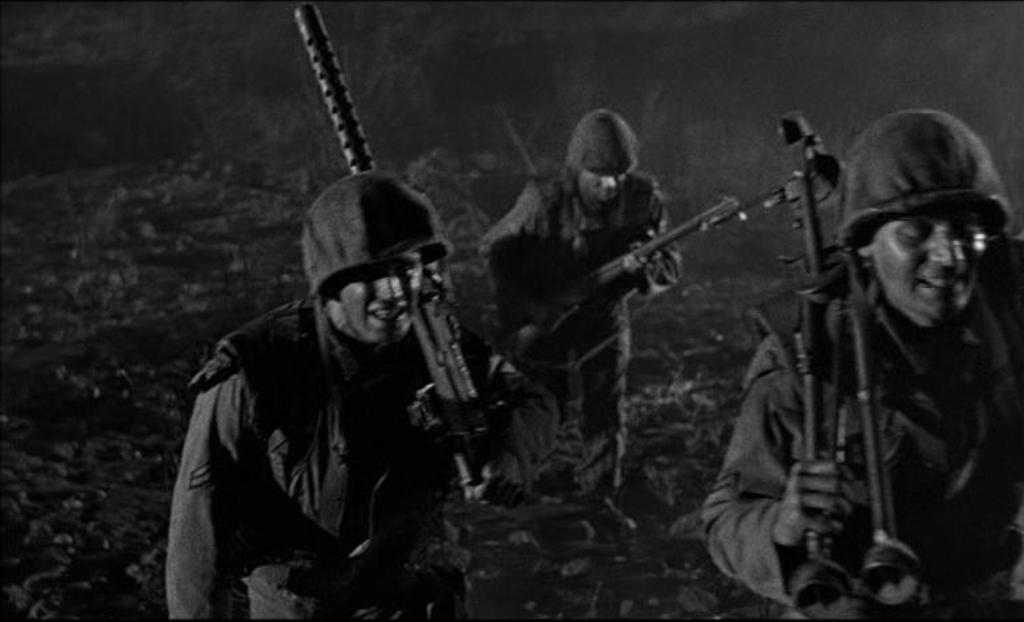
1.       The plan was to frontally assault the hill with two platoons from King Co. with one platoon in reserve.  The artillery barrage was to be lifted and the assault force was to proceed rapidly up the hill.

2.        The Chinese artillery hit behind them.

3.        They ran into concertina wire and some Americans threw their bodies on it to serve as bridges.

4.        The Chinese were armed with bolt-action rifles, machine guns and grenades.

5.        American spotlights illuminated the Americans until Clemons radioed for them to be doused.

6.        Clemons had to deal with a soldier (Franklen) trying to avoid fighting.

7.        The Chinese evacuated the front line trenches.

8.        Survivors from Easy Co. were found in a bunker and the gathering was almost immediately hit by what was most likely friendly artillery fire.

9.        The remnants of Love Co.  arrived on the flank with only 12 men.

10.     Golf Co. arrived and was commanded by Clemons’ brother-in-law.

11.    Golf Co. was forced to withdraw because higher command thought the hill was under control.

12.    A public information officer arrived to get pictures of the “victory”.

13.    Gen. Trudeau decided not to reinforce failure.

14.    Clemons decided to make a last stand centered on the command bunker.

15.    A Chinese loudspeaker counted down the time left before their assault.

16.    The Chinese attacked in a human wave and the remaining Americans barricaded themselves in the bunker.

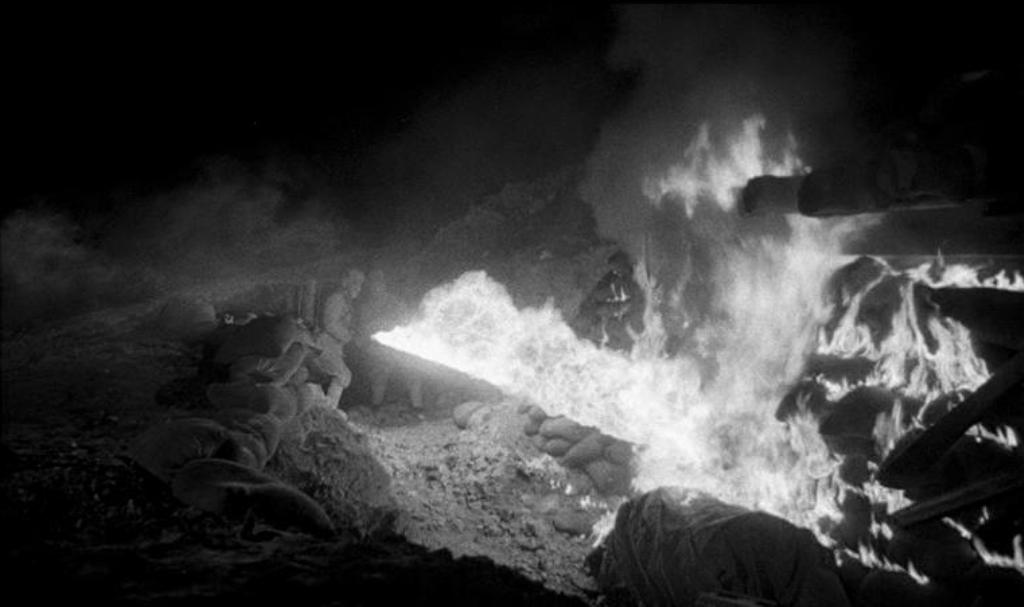
17.    The Chinese used a flamethrower on the bunker.

18.    Gen. Trudeau sent reinforcements that arrived in the nick of time.


1.        The plan was to frontally assault the hill with two platoons from King Co. with one platoon in reserve.  The artillery barrage was to be lifted and the assault force was to proceed rapidly up the hill.  HISTORY

2.        The Chinese artillery hit behind them as they advanced up the hill.  HISTORY   This was partly due to the speed of the American assault which unfortunately exhausted the Americans.

3.        They ran into concertina wire and some Americans threw their bodies on it to serve as bridges.  HISTORY

4.        The Chinese were armed with bolt-action rifles, machine guns and grenades.  HISTORY  They were famous for their notoriously inaccurate “burp guns” and weak grenades.  They used a huge number of grenades in the battle. 

5.        American spotlights illuminated the Americans until Clemons radioed for them to be doused.  HOLLYWOOD  Spotlights were used to light up hillsides, but I found no evidence of this incident.

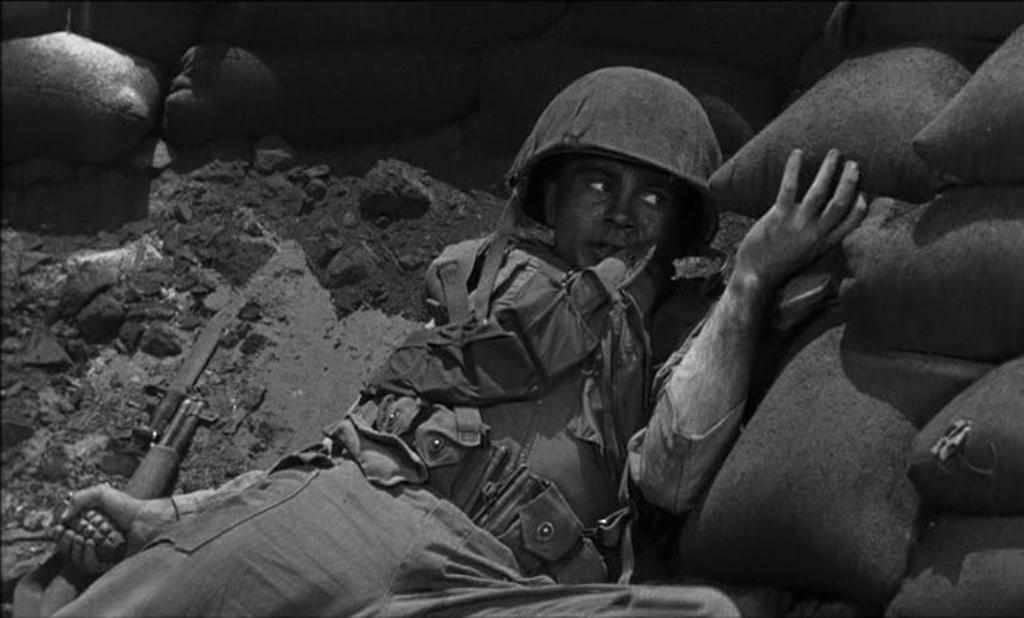
6.        Clemons had to deal with a black soldier (Franklen) trying to avoid fighting.  HISTYWOOD  Franklen was a fictional character, but some Americans did show a lack of enthusiasm for the fight and there were incidents of panic.  The use of a black soldier to represent these men could be considered offensive.  Actually, the worst culprits were the ROKs attached to the American units (none of whom are shown in the film).

7.        The Chinese evacuated the front line trenches once King Co. reached them.  HISTYWOOD  It was not that simple.  The Americans had to work down the trenches to root the Chinese out of bunkers.

8.        Survivors from Easy Co. were found in a bunker and the gathering was almost immediately hit by what was most likely friendly artillery fire.  HISTORY

9.        The remnants of Love Co.  arrived on the flank with only 12 men.  HISTORY

10.     Golf Co. arrived and was commanded by Clemons’ brother-in-law.  HISTORY

11.    Golf Co. was forced to withdraw because higher command thought the hill had been “mopped up”.  HISTORY

12.     A public information officer arrived to get pictures of the “victory”.  HISTORY

13.     Gen. Trudeau decided not to reinforce failure.  HISTORY

14.     Clemons decided to make a last stand centered on the command bunker with some of the men in shallow craters in front.  HISTORY  The movie does not do a good job portraying the sheer exhaustion of the men since early in the battle.

15.     A Chinese loudspeaker counted down the time left before their assault.  HISTYWOOD  Although the Chinese did use loudspeakers, it was mainly to demoralize the Americans.  It is unlikely they welcomed King to the hill or counted down the assault.

16.     The Chinese attacked in a human wave and the remaining Americans barricaded themselves in the bunker.  HISTYWOOD  Before this, reinforcements arrived so there were more than 25 men left.  This attack was mainly broken up by American artillery.  Later when Trudeau committed another company, Clemons and King Co. were withdrawn.  The “Alamo” scene occurred later.

17.     The Chinese used a flamethrower on the bunker.  HOLLYWOOD  Americans used flamethrowers, I found no evidence that the Chinese used one against the bunker.
        18.    Gen. Trudeau sent reinforcements that arrived in the nick of time.  HISTORY

RATING  =  .78

CONCLUSION:  "Pork Chop Hill" is one of the most historically accurate war movies that I have seen.  In fact, since i have been doing this History or Hollywood series, it has the highest rating of any theatrically released war film.  This is mainly attributable to its fidelity to SLA Marshall's book.  The involvement of Clemons (Peck's character) as a technical adviser also added to the accuracy. Overall, you are not going to get a more accurate view of the trench type warfare that dominated the last year of the Korean War. Specifically, it is as accurate a depiction of one of the most famous battles of the Korean War as you could ask for. 

For the original review, go to:
Pork Chop Hill


Tuesday, May 15, 2012

#39 - PORK CHOP HILL


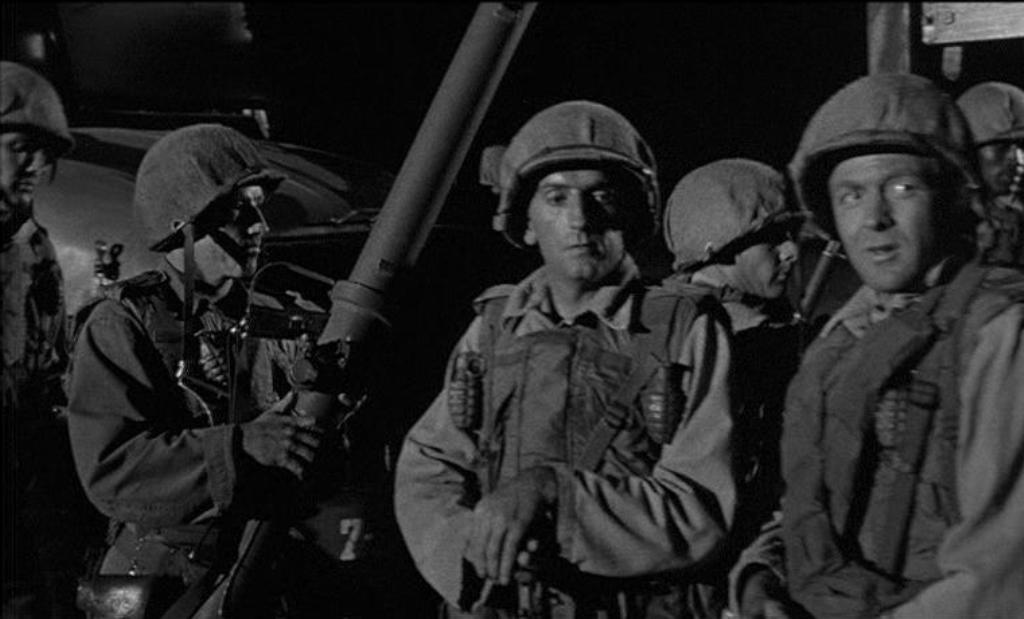
BACK-STORY: “Pork Chop Hill” is arguably the most famous and best movie about the Korean War. It was directed by Lewis Milestone of “All Quiet…” fame.  PCH was his last war movie. It was released in 1959. The screenplay is based on the nonfiction book by the famous war author S.L.A. Marshall (SLAM). Gregory Peck’s character (Joe Clemons) acted as technical adviser on the film. Clemons was awarded the Distinguished Service Cross for the battle. The movie is populated by many familiar actors from the 1960s and includes a small role by Barry McGuire of future “Eve of Destruction” one hit wonder fame.


OPENING: GIs are listening to a Chinese propaganda broadcast coming over a loudspeaker system. They are living in trenches similar to WWI. The Chinese broadcaster promises if they give up, the Chicoms will quit, too. Screenwords tell us we are at a reserve position near Pork Chop Hill which is seventy miles from the peace talks being held at Panmunjom. The year is 1953.

SUMMARY: In the battalion command bunker, Lt. Clemons (Peck) gets orders to prepare his King Company for an assault on Pork Chop Hill. It has recently been lost to a Communist attack and the powers that be want it retaken. It will be his first command.

King Company wondering why it's always King Company
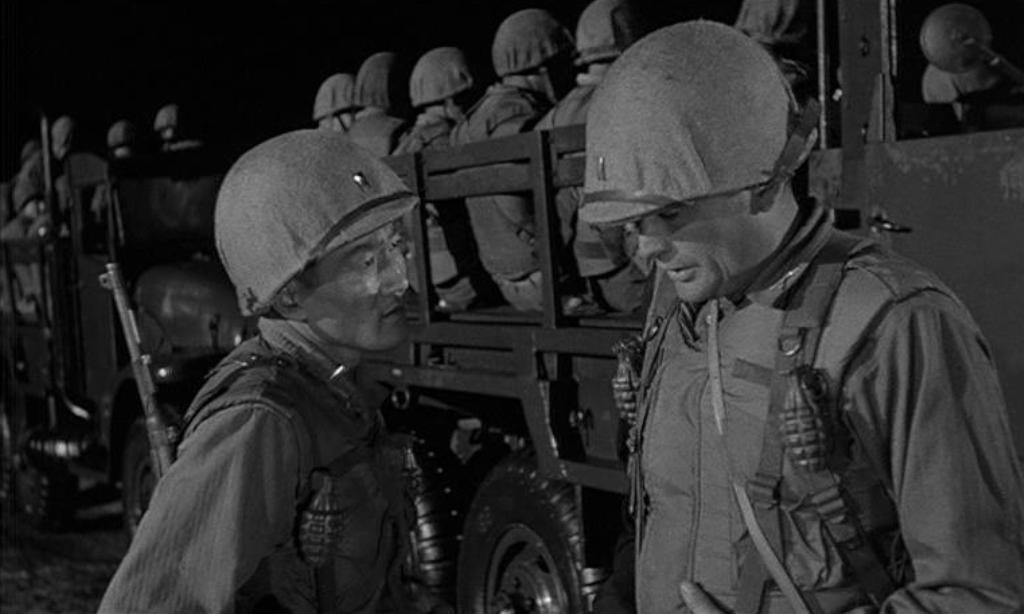
        Clemons’ men are understandably fixated on the peace talks. They are all anticipating the imminent armistice. One of Clemons’ men, Pvt. Forstman (Harry Guardino), is insistent that he has enough points to be rotated out of combat. No such luck, pal. Dead meat alert! Now they get this lousy assignment. Why is it always them to get the crap details?

Ohashi and Clemons
        The plan is to make a two platoon frontal assault up the hill in the dark with the third platoon held in reserve. Standard tactics. Clemons is assured that the preliminary artillery barrage will destroy all the concertina wire barriers. He’s also told he will be supported on his right flank by Love Company. Piece of cake! It may be easy as pie, but is it worth it? Clemons tells his skeptical executive officer Ohashi (George Shibata) that Pork Chop Hill is “a chip in the game at the peace talks. We have to convince [the Commies] we’re not going to give up any more chips.” That’s a pretty accurate analysis of the politics of it. In another piece of refreshing truth, Clemons comments that the Chicoms are good soldiers, especially at night. (That line would not have been used in “The Steel Helmet” which was made during the war.) The enemy is not demonized in this movie.

enemy in the trenches
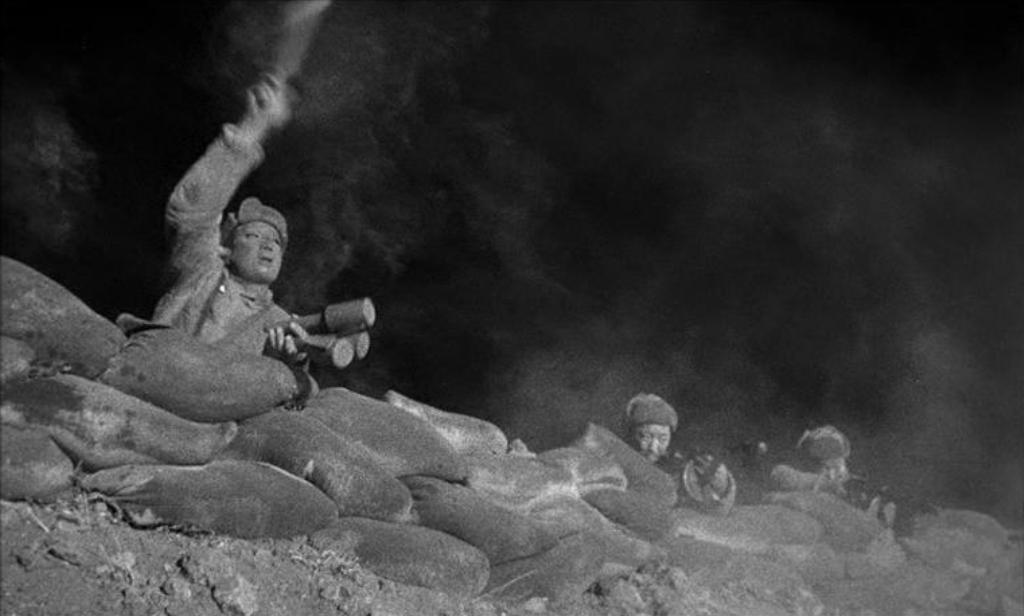
         The assault is classic American bullheadedness. In line with bayonets fixed. The deaths are random. The terrain is like no man’s land. The soldier chatter is terse. The Chinese Tokyo Rose taunts King Company by name, welcomes them to “the meat grinder", and plays taps. The men begin to wonder how tasty that piece of cake is going to be. A black soldier named Franklin (Woody Strode) “twists his ankle”. Clemons is not buying that and forces the sullen soldier to proceed. When they reach the wire, surprise! It’s intact. To make matters worse, the Chinese open fire with bolt action rifles, burp guns, and potato masher grenades. Some of the men throw themselves on the barbed wire so their buddies can run over them. Could things get worse? American spotlights suddenly illuminate them from the rear. A desperate radio call gets them doused. Not only that but where the hell is Love Company?

Robert Blake as Pvt. Velie


         There is an awkward transition to daylight. Weirdly, they are now further from the Communist trenches than they were in the previous scene. The Chinese now give way too easily. The Chicoms launch a flank attack that fizzles for no apparent reason. King Company occupies the trenches tenuously having lost a large percentage of its men. They have a joyful reunion with the survivors of Easy Company who had taken refuge in a bunker. The reunion is cut short when an artillery round smashes into them. C’est la guerre.

Catch, Yankee dogs!
         Love Company finally arrives – all twelve (oops, artillery round – make that ten) of them. Clemons calls in his reserve platoon which uses a well staged bayonet charge to take the crest. Things calm down enough for some exposition from the stoically cynical Clemons. His discussions with his subordinates are realistically fatalistic. His radio calls to the rear demanding support are appropriately frustrating as the brass are clueless to the actual situation. This is hammered in by the arrival of a publicity officer sent to get the story of the glorious victory.  He brings a "Mission Accomplished" banner to put up.  Just kidding.

        Things seem to be looking up when Clemons’ brother-in-law Lt. Russell (Rip Torn) arrives with George Company. The back-slapping ends abruptly with word that the rear has ordered George to withdraw because they don’t want to lose any more men on the hill! Clemons is left with only 25 men to defend the whole hill. One of those men is Franklin who is still a reluctant warrior and in a confrontation with Clemons threatens to shoot him. Clemons tries to shame the coward into fighting alongside his comrades. Gregory Peck + 1950s movie + black guy can’t remain a coward + redemption theme = Franklin mends his ways.

        Meanwhile, back at Panmunjom, the inscrutable Chinese are obviously testing our strength with this fight over a worthless knoll. They are willing to expend lives over nothing. Are we? Clemons finds out the answer is yes when his requests for withdrawal or reinforcements are turned down. The Chinese broadcaster tells them the attack is coming in 45 minutes. Tick tock.


last stand
CLOSING: The fort is about to be swarmed by Indians. I mean the trench line is about to be assaulted by a Chinese horde. The Americans pull back to the keep, I mean the bunker. They bunker in, but the Chinese have a flamethrower. Unfair! This would be a good time for the cavalry to arrive. Sure enough (although they’re not on horses) reinforcements arrive and save our band of brothers (one of whom is alive meat Forstman). We win! We win! We get to possess the worthless hill!  (Hamburger Hill veterans can empathize with them.) “Millions live in freedom today because of what they did.” Seriously? Way to pull your punches, Milestone.

RATINGS:


Acting - 8


Action - 8


Accuracy - 9


Plot - 8


Realism - 8


Overall - 9

WILL CHICKS DIG IT? No. It is totally a guy movie. In fact there is only one woman in the entire film. A Chinese woman brings a note to the propaganda dude.  She's wearing a negligee.  Not really.

HISTORICAL ACCURACY: The movie could have used more background, complete with maps. The action portrayed in the movie took place after the fall of a more strategic hill called Old Baldy. That loss left Pork Chop Hill sticking out like a sore thumb in front of the main line of resistance and dominated by higher hills. This information would have been cogent to the plot because attempting to hold PCH was strategically and tactically unsound. The defense was purely to make up for the loss of Old Baldy and avoid another propaganda debacle. This makes the final post script ridiculous.

         The pre-battle situation and plan are accurately depicted. The attack itself is pretty close to the real deal which is to be expected given Clemons’ involvement as the technical advisor. They did cross the barbed wire on soldiers’ bodies. However, they were not under fire until they reached the trenches unlike in the movie. The discovery of survivors in a bunker and the subsequent short round did happen. The arrival of Love with only a dozen men and the later arrival of George led by Clemons’ brother-in-law are authentic. The withdrawal of George is correctly represented as brainless, but the movie does not make it clear that part of the fault was Clemons not mentioning the shortage of men when he begged for resupply.

        There were many more grenades thrown by both sides than shown in the movie and the artillery was also short-changed. This battle involved more artillery fire by our side than almost any American battle in history. It was almost continuous through the two days. Speaking of weapons, the movie is outstanding in that respect. Even the Chinese are using appropriate weapons. The movie does a poor job of portraying the incredible exhaustion of the men. In fact, this plus the lack of water meant that before the final enemy assault the Americans did not talk due to parched throats. Hollywood could not abide with that!

Hollywood loves fire
         The final scene is problematical. There was no dramatic rescue of King. The surviving seven were withdrawn before it happened. It was mainly Fox Company members that were laid siege to in the bunker. I found no evidence that a flame thrower was trying to cook them. You can’t fault Hollywood too much for this one. Simplification for dramatic effect.

         Overall, you are not going to get a more accurate view of the trench type warfare that dominated the last year of the Korean War.  Specifically, it is as accurate a depiction of one of the most famous battles of the Korean War as you could ask for.

CRITIQUE: “Pork Chop Hill” has been described as the best Korean War B-Movie. That’s not as impressive as it sounds considering the quality of those other Korean War B-Movies. (BTW why are almost all the Korean War movies low budget?) With that said, it is very good for what it is. The acting is solid. Not surprising considering the cast. Peck is Peck. Did he ever make a bad movie? Harry Guardino, Rip Torn, George Peppard, Robert Blake, the great Woody Strode. ‘Nuf said. The cinematography is a crisp black and white. The scenes are shot close. You seldom see more than a few men in the shot. The sound effects are realistic. The sound track is sparse and is not used to set moods. In spots, it reminded me of music from the series “Combat!” The sets are well done for a low budget effort. The dialogue is refreshingly cynical in its commentary on war.

Fedderson and Forstman
        The movie is clearly anti-war, but dilutes its message with the optimistic coda. It is gritty and authentic in its depiction of the randomness of death in combat. Forstman and Fedderson (George Peppard) are doing a fine impression of Rivera and Friedman (also machine gunners) from Milestone’s "A Walk in the Sun" before Friedman is blown up. The deaths are bloodless, but not old school. Noone signals touchdown as they twirl around and fall. It is not propagandistic or overly patriotic. In fact, the Chinese propaganda broadcaster is not a hissable villain nor is he comical.

         PCH is one of the best company level movies ever made. It is not a small unit dynamics movie ala “Platoon”. There is little dysfunctionality other than with Franklin (who is a fictional character). One fault of the movie is because it concentrates on such a small picture that some of the actions defy reality. Why do the Chinese who vastly outnumber the Americans give up so easily at times? It is hard to justify the American success given what we see on the screen.

           The biggest strength of the film is its historical accuracy. It is one of the best movies covering a battle. Considering the war is known as the “Forgotten War”, it is nice that a typical battle gets the featured treatment. It reminds one of “Hamburger Hill” in its battles-can-be-futile theme. It also has a similar take on how command decisions based on political factors can result in unnecessary squandering of lives.

CONCLUSION: “Pork Chop Hill” is underrated at #39. It is one of the most realistic battle films and one of the best small unit movies. Considering when it was made and the budget, it is clearly a classic. It holds up very well and if it had been made with the modern sensibilities that allowed for the realistic violence and language in "Hamburger Hill", it would be superior to that movie. It also deserves credit for representing the “Forgotten War” well.

the trailer

Chinese propaganda dude


Saturday, February 19, 2011

#72 - Twelve O'Clock High


BACK-STORY: “Twelve O’Clock High” is a war movie dedicated to American bomber crews and command in England in 1942. It is based on the novel by Sy Bartlett and Beirne Lay, Jr. It was made with the full cooperation of the Air Force which provided several B-17s and combat footage including from the Luftwaffe. The movie was a hit with the critics and won two Academy Awards (Jagger for Best Supporting Actor and Best Sound Recording) and was nominated for two others (Best Picture and Peck for Actor). It takes its name from the slang for enemy fighters being spotted above and straight ahead.


OPENING : The film opens in 1949 with a Major Stovall (Dean Jagger) in London. He spies a Robin Hood mug in a store and immediately buys it. It inspires him to visit his old air base at Archbury. To the tune of “Don’t Sit Under the Apple Tree” (the movie does a good job of including some vintage songs), he strolls the weed-covered runways and flashes back to 1942.

SUMMARY: Bombers are returning from a mission. One has to make a “wheels up” belly landing (done by acclaimed stunt pilot Paul Mantz for the unprecedented sum of $4,500). The pilot, Bishop, is later awarded the Medal of Honor for this act of heroism. The unit is the 918th Bomber Group and it has a reputation as a “hard luck’ outfit having sustained substantial casualties in America’s new daylight bombing campaign. Its commander, Col. Davenport (Gary Merrill), feels the unit is being pushed too much. When he hears that they have to go on a fourth mission in as many days and at a dangerously low altitude, he goes to headquarters to visit his friend Col. Savage (Gregory Peck) to complain. Savage reports to Gen. Pritchard (Milliard Mitchell) that Davenport is “overidentifying” with his men and is about to crack.

     In a visit to the base, Pritchard confirms Savage’s diagnosis as Davenport refuses to can a navigator who was incompetent. Pritchard remarks that “a man has only so much to give and you have given it”, so he relieves Davenport and replaces him with Savage. Savage is told that the success of daylight bombing is hanging in the balance and he must shape up the unit pronto. Savage decides on a tough love approach and immediately starts pushing the men to the limits. (Reminiscent of Patton’s arrival in that film.) He is one tough bastard. When he learns the navigator committed suicide, he doesn’t even flinch. Savage reams the slacker executive officer Gately and assigns him to a bomber full of misfits which will be named “Leper Colony”.

     When Savage meets with the crews he tells them that they will be better off by realizing they are already dead and should stop making plans for the future. In a meeting with the unit’s doctor, Savage accuses the doctor of coddling the men and insists that any man who is physically capable of flying must go up. The doctor is appalled by Savage’s lack of sensitivity and unconcern for the mental aspect of combat. Savage believes that what the men need is not a shoulder to cry on but pride and grit. The unit’s initial reaction to Savage’s discipline is close to a mutiny. Even Bishop requests a transfer. Savage sneakily slows the transfer process to give his tough love approach time to bear fruit. Stovall, the group adjutant, dislikes his new boss, but gradually warms to him. Jagger does a great job as the good angel on Savage’s shoulder.


     At one point, Savage disobeys orders to turn around and goes on to successfully bomb a target when all the other groups had turned. However, the pilots (represented by Bishop) continue to question the bombing of German targets in broad daylight which is akin to suicide in the long run of trying to survive 25 missions. Savage plays the duty card, but with seemingly no effect. The Inspector General arrives to meet with the pilots about the transfers and Savage packs his bags. Surprise, the men have changed their minds! (cliché #19 war movie cliches) Savage’s reaction is relief and a quick return to being a hard-ass.

     The movie now begins to focus more on the missions. We get the familiar ground crews awaiting the return of their charges and the ground personnel (including Stovall) stowing away on board for a little combat action (cliché #36). Bishop’s bomber gets blown up, but Savage can’t show any emotion although it obviously tears him up. Gately redeems himself by flying several missions in terrible pain from an injury (cliché #2). Savage visits him in the hospital and, in a refreshing scene, they have a very awkward conversation during which Savage cannot bring himself to apologize. Surprisingly (but realistically), Gately does not thank Savage for forcing him to be a man.

     The first combat scene comes in a mission to destroy a ball-bearing factory. The integration of archival footage is flawless. There is realistic radio chatter. There is no intrusive sound track and the actual sounds of air combat justify the Academy Award for Sound. Numerous bombers go down, but the target is hit. Upon return to base, Savage is strangely cheery and does not react to the death of his second in command Cobb. Stovall is drunk and laments that he “can’t see their faces” referring to his deceased comrades. A return mission is scheduled for the next day, but Savage cannot lift himself into the cockpit and suffers a breakdown that leaves him so catatonic that he refuses a cigarette! (There is a lot of smoking in this movie, naturally.) The doc remarks that a lightbulb is always brightest before it burns out.

CLOSING: Savage sits in a daze awaiting the return of the mission. As the number ticks up to 19 of 21 successfully back, he comes out of it. His mission is accomplished as the unit has been able to carry on successfully without their belt-wielding daddy. He is put to bed and tucked in by none other than Davenport. We are left to wonder about his fate.

RATINGS:

Acting – 9


Authenticity – 9


Accuracy – 8


Action – 5


Plot – 8


Overall – 8

WOULD CHICKS DIG IT? Probably. It has no graphic violence. It is a character study and the issues of stress and leadership are interesting. The actors are appealing. However, there is no romance and not a single female character (a romantic subplot in the novel was decided against by the producers). It should lead to a good debate after because most men will probably side with Savage and most women will lean toward Davenport.

ACCURACY: The screenwriters, Bartlett and Beirne, were associated with the 8th Air Force during the period the movie is set in so they know of what they wrote. This gives the movie a special authenticity. Most of the main characters (with the notable exceptions of Stovall and Gately) are based on real people. Davenport was Col. Charles Overacher who was removed from command of an underachieving 306th Bomber Group. The writers treat Davenport better than his real-life counterpart deserves, ironically. It appears that Overacher was actually a poor leader and disciplinarian (the scene where Savage is not saluted or identified when he visits the base is based on an actual incident). His last straw was turning back from a mission for no good reason. He was shipped back to the states after criticizing Gen. Eaker (Pritchard in the film).

     Savage is close to Col. Frank Armstrong who did take on the task of straightening out the 306th. Like his character in the film, Armstrong had earlier led the first B-17 strike in Europe. A major departure from the truth is that the real Armstrong did not suffer a nervous breakdown. The incident was based on another respected commander. After his short ship-up task was accomplished, Armstrong returned to headquarters. By the way, in the book, after his breakdown Savage is promoted to command of 2nd Air Force. Bishop was based on John Morgan who won the Medal of Honor for a landing similar to that shown in the film. That’s the only similarity, however. For you history buffs, Cobb resembles Paul Tibbets of “Enola Gay” fame.

CRITIQUE: “Twelve O’Clock High” is the best movie of its type ever made. Of course, there are not that many movies about leadership and stress in WWII bomber operations. But you can compare it to the inferior 1948 “Bomber Command” starring Clark Gable to gauge its quality. You might also want to compare it to “Memphis Belle” to see how newer is not necessarily better. (“Belle” does make a good companion piece to “High” because it gives more of a crew perspective). TOH is so good at its subject that for years it was shown in American officers’ courses as a study in leadership. The military calls the ability of a leader to send young men to their deaths for the greater cause “moral courage”. Savage is meant to exemplify this command trait. The contrast between Davenport’s style and Savage’s is instructive and can lead to productive discussions on how to handle an underperforming unit in a stressful environment.

     The movie gets the little details right. Eglin Air Force Base in Florida is a good stand-in for the fictional Archbury and the producers found a weedy old tarmac in Alabama for the take-offs and landings. The use of B-17s in the filming is a big plus and is obviously preferable to CGI. In a related note, Technicolor was available for the movie, but the makers wisely decided to go with a crisp black and white so they could blend in the combat footage.

     The acting is outstanding across the board, especially Peck and Jagger. The story of a hard-ass that drives himself to a breakdown seems possible. The complete change of attitude of the transfer-requesting pilots is a bit pat, but typical of a movie plot. The cliché of the desk-bound officer (Stovall) stowing away on a mission is to be expected and is based on reality.

     The movie is admirably nonpatriotic. This is probably a reflection of the timing of its production. The war had been over for four years and the soul-searching could begin. The mental toll of the war on the warriors could be examined. However, the movie was made too soon after the war to reflect the later questioning of the daylight bombing strategy. The movie basically accepts the Air Force line that the daylight, precision bombing of Germany was a war-winning proposition. Recent scholarship has called this into question. The Davenports have had the best of the recent arguments.

CONCLUSION: “Twelve O’Clock High” is the gold standard for movie about the stress of command. It is well-executed and based on actual events and people. This makes it not only authentic historically, but also true to human nature. It pulls no punches with several main characters perishing and the protagonist suffering a nervous breakdown. Although not overtly patriotic, it does give Americans a sense of pride in what our boys went through in the aerial war with Germany. If you ever wondered why air crews were allowed to go home after 25 missions whereas the infantry were in it for the duration, this movie clues you in to the role of stress on combat effectiveness. It also makes it clear that 25 was an unreachable goal for many.


Next:  #71 - The Big Red One

Saturday, September 4, 2010

#93 - The Guns of Navarone


BACKSTORY:

            “The Guns of Navarone” was released in 1961 and was the top box office attraction of that year. It is based on the popular novel (1957) by Alistair MacLean, although the characters underwent major changes by screenwriter Carl Foreman ( for instance, there are no major female characters in the book ). At $6 million, the film was one of the most expensive up to that time. It paid off as the movie was a smash hit and critically acclaimed. It served as a template for the James Bond series with its mixture of action, characters, and exotic locale. It is often linked with similar movies from that time period, specifically with “Bridge on the River Kwai”, “The Longest Day”, and “The Great Escape”. It was nominated for 7 Academy Awards and won for Best Special Effects. It was awarded the Golden Globe for Drama. One of the Oscar nods went to Foreman for his first credited screenplay since being blacklisted as a Communist. The movie was filmed mostly on the island of Rhodes which hosted an all-star cast. One of whom, David Niven, almost died during filming because of immersion in a pool of water for the explosives on the elevator shaft scene.

OPENING SCENE:

                In a tutorial similar to “A Bridge Too Far”, a narrator explains that it is 1943 and 2,000 British soldiers have been marooned on the Aegean Island of Keros. They have a week to live because the Germans plan to invade the island and wipe them out as a show of force to intimidate Turkey into entering the war. The only way to rescue them is for a fleet to pass by the island of Navarone. Unfortunately, Navarone has some big-ass cannons mounted in a cave on a cliffside which are capable of sinking the rescue flotilla. You are about to watch a movie featuring those forgotten titans of naval warfare – the shore guns! (For the average viewer: a shore gun was a long-range, large caliber gun guarding the entrance to a harbor. They would outrange any enemy ships plus they usually had an altitude advantage which made them unhittable by warships. It was close to suicidal to take them on).

"Who wants to go on a suicide mission?"
            The first day begins at an airfield where a famous mountain climber named Mallory (Gregory Peck) meets the head of the secret mission Franklin (Anthony Quayle). A group of bomber pilots angrily claim that trying to take out the guns by air bombardment is a “bloody” waste of time and lives. Mallory believes the alternative of doing it with a commando group is suicidal. When Franklin points out 2,000 men are depending on him, he still refuses to go. Just kidding. A team is put together which includes Miller (Niven) as the explosives expert, “Butcher” Brown (Stanley Baker) as the knife guy, and Spyros Pappadimos (James Darren) as the young gangsta and singer of songs. This places the movie firmly in the suicide mission sub-genre. This means you can place your bets on how many of the team members are going to be killed. (All those betting either none or all, get real!)

SUMMARY:

            There is still one more member of the team to be revealed. Mallory meets a survivor of the Greek army named Stavros (Anthony Quinn) in a hotel. Mallory and Stavros had been on missions together, but there is obviously bad blood between them. The team leaves via fishing boat in disguise. Of course the voyage includes an encounter with a snoopy German patrol boat. The team opens fire on the boarders and kills all the Germans and even blow up the German ship. Even though the ships are next to each other, the fishing boat suffers no damage or casualties from the massive explosion.

           During the trek, Mallory reveals to Miller that Stavros is planning to kill him after the war for inadvertently causing the deaths of his family. It’s going to be a tense mission. Mallory weighs in on warfare with “the only way to win a war is to be just as nasty as the enemy”. (This anti-war theme is going to fly over the heads of most moviegoers.)

"I will not let you kill yourself"
             They reach the island during a terrible storm and crash into the rocks. In one of the wettest scenes in movie history, they wade ashore. There is no dialogue, just the stormy sound effects for 14 minutes of screen time! Nice touch. (Note the scene-stealing Anthony Quinn with his red shirt.) They then have to scale the cliffs. At one point Mallory slips and guess who grabs his arm – Stavros. (He wants him alive so he can kill him later.) Mallory and Stavros reach the top where Stavros knifes a German on guard duty. The German’s last thought – “what the hell am I doing patrolling the top of an unscaleable cliff in the midst of a storm?” Franklin slips and badly damages his leg. They debate what to do with him. Stavros wants to silence him, others want to leave him to the German’s to care for. Mallory insists on bringing him, arguing that capture would lead to Franklin talking about the plan under torture. Later, Mallory prevents Franklin from committing suicide.

           They escape a German patrol by taking refuge in an old temple. In some ways the movie is more of a chase film than a war film. There they are joined by Pappadimos’ sister Maria who is a resistance fighter. She is accompanied by Anna, a pretty blonde who is mute due to torture by the Gestapo.

           On the fourth day, they escape strafing by Stukas and enter the town to seek help for Franklin. Stavros, Maria, Franklin, and Brown are captured at the doctors. The others try to blend into a wedding party. A Greek sings a Greek folk song which of course is the cue for James Darren to join in ala Ricky Nelson in “Rio Bravo”. The Germans recognize his singing voice as that of an American pop star (jsut kidding) and they are captured, too.

           At German headquarters, the team is questioned by a “good cop” German officer and then a blonde hair, blue eye (naturally) S.S. officer arrives to be “bad cop”. Stavros pretends that he is a reluctant participant and plays the sniveling coward which distracts the Germans although they know exactly who he is (they have his picture for God's sakes!). The act works and they disarm the Germans and put on their uniforms. They have to leave Franklin behind but Mallory has planted a false invasion story so when Franklin gets truth-serumed, he will tell the Germans a different plan. They steal a vehicle and go to a monastery. Miller goes off on Mallory for “using” Franklin. Miller represents the conscience of the group, although earlier he was in favor of leaving Franklin to the Germans with the plans for the mission intact in his head which would have gotten them all killed. Later, Mallory and Anna spoon.

             The last day starts with smoke from the town indicating retribution for sheltering the commandoes. The Nazis are evil. They arrive at the fortress-town and see the guns for the first time. Meanwhile, Franklin talks and the Germans rush out of the fortress to counter an expected invasion. Unfortunately the lack of defenders is matched by the team’s sudden lack of explosives since someone has tampered with them. Miller suspects Anna and demands to see her scars from the torture. The 1961 audience gets to be titillated by the bare, unscarred back of Anna. If that is not shocking enough, Anna is also not mute! She is a collaborator who switched sides because “I can’t stand pain”. Miller insists Mallory do his duty, but Maria shoots the traitor before Mallory can do it. Interestingly, the no dialogue scenes have now been balanced by some very verbose ones.

the big-ass cannons
            Stavros and Pappadimos start the diversion by ambushing Germans and Mallory and Miller sneak into the fort as German tanks (obviously not actual WWII German tanks) are leaving. Mallory and Miller enter the gun emplacement and lock the massive doors behind them. The Germans will have to cut their way through. Meanwhile, Maria and Brown steal a boat but ironically Brown gets knifed to death (“live by the knife, die by the knife”). Pappadimos dies in a machine gun duel with a German right out of the Old West (if they had had machine guns).

             Miller places explosives (where did he get them?) on the guns, but figuring they will be found he also places some at the bottom of the elevator shaft to be triggered by the descending elevator. Mallory and Miller go over the cliff by rope and then swim to the boat. They pick up Stavros with Mallory offering him a hand up like in the earlier scene. The Germans find the explosives on the guns using metal detectors that are apparently not distracted by all the metal in the vicinity.

FINAL SCENE:

                The elevator keeps coming down, but not down enough to trigger the explosives! We are on the edge of our seats, but I have to admit I did want to see those guns fire at least once. Our wishes are granted as the guns fire twice at the sitting ducks British armada before the inevitable explosion occurs. It’s a big one! The entire top of the mountain is blown up and the guns plunge into the sea. The fleet lets loose with its horns and the crews cheer. If there had been high-fiving in 1961, audiences would have been out of their seats. I guess they settled for a rousing “Bravo!”

              Stavros decides to let bygones be bygones as he stays behind with Maria who he has fallen in love with. Did you think they would spend the rests of their lives sad and lonely? They will now be happy together killing Germans. It’s very romantic. Miller apologizes to Mallory for being something of a British twit distracted by human feelings. They arrange to meet again for “Force Ten from Navarone”, but few cared.

RATINGS:

Realism - 6

Action - 8

Acting - 9

Accuracy - 5

Plot - 8

Overall - 7

WOULD CHICKS DIG IT?

              It is not really a date movie, although the box office receipts indicate women did go to see it. There is a strong female character (Maria) and Foreman must have changed two male characters’ gender to make the story more female-friendly. Plus, James Darren was a teen idol type probably chosen to appeal to a female audience. (Certainly he does not sing for the males in the audience!) The movie is more character driven than many war movies. It is not graphically violent. It is not pure action and if you like talking (some women do), there are some very talkative scenes.

ACCURACY:

                The book and movie are loosely based on the Battle of Leros. In 1943, after the Italian government capitulated, the British seized several Aegean islands in the Dodecanese Campaign. It was a classic case of overreach, however. The Germans had a preponderance of forces in the area and did not sit back. They regained the islands including taking back Leros in an amphibious assault that resulted in the loss of the British occupiers who were not rescued as the movie implies. MacLean built his story around this incident, but he obviously did not mean for it to be a history lesson. In fact, you have to dig a lot to discover that there is any link to an actual event.

CRITIQUE:

             Although considered one of the great manly films, “Guns” is probably a bit overrated. It has some ridiculous moments like the escape from the German arresters and Pappidamos’ machine gun duel. Not to mention squeezing a song into a war movie! It also has several standard movie clichés like Stavros finding a woman in the end to restart his life. The Germans are depicted as not so much evil as stupid. The movie is also a little slow and talkie at times. When compared to a similar MacLean inspired movie, “Where Eagles Dare” (which did not make the list), it comes up short in almost every way.

             However, as an example of an old school action movie set in war, it is pretty good. It has the old-fashioned soundtrack, stellar acting, and the twist of the mute collaborating girl. Most people will not see that coming. I also appreciated the scenes where the action did the talking. Speaking of talking, another nice touch was the Germans spoke German without subtitles. The audience is left to figure out what they are talking about. Imagine that. Of course, today most viewers are probably just thankful they don’t have to read and to hell with what they are saying.

              By the way, if you bet that 3 of the 6 team members would die (assuming the Germans kill Franklin), you win! 50% - not bad for a cinematic suicide mission.

CONCLUSION:

              I suggest you watch "Inglourious Basterds" along with this movie to see how suicide mission war movies have evolved over the years.  I think you will find that the modern version is quite a bit more extreme.  I would argue audiences today want more bang for their buck from their war movies.  "Guns" seems very tame today.  I am not sure this is a good trend.  However, when it comes to standard fare like "Saving Private Ryan" we may find in our cinematic journey that modern war movies are generally better than the old school types like "All Quiet on the Western Front".  We shall see.