Showing posts with label Hiroshima. Show all posts

Tuesday, November 7, 2023

THE 100 BEST WAR MOVIES - #87. Barefoot Gen (1983)


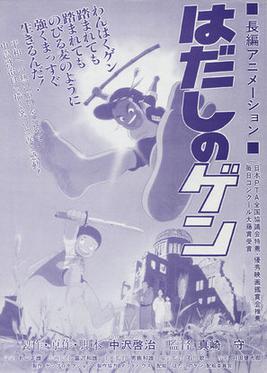
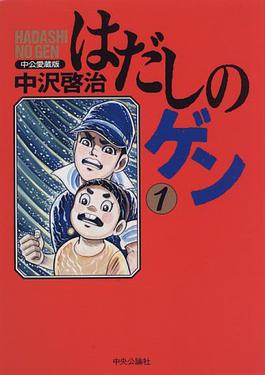
                “Barefoot Gen” is a Japanese war anime.  It is loosely based on the manga series of the same name by Keiji Nakazawa.  He wrote the screenplay.  As a young boy, Nakazawa survived Hiroshima and he based the series on his experiences.  The movie was part of the wave of nuclear war movies that came out in the 1980s.  This subgenre includes “The Day After”, “Threads”, and “When the Wind Blows”.  It is a subgenre that you can watch if you want to get very depressed.  “Barefoot Gen” was directed by Mori Masaki.

                The movie begins a few days before the bombing of Hiroshima.  A narrator informs us that B-29s have been bombing Japanese cities with fire bombs.  These have been “the most devastating attacks against civilians ever.”  Yet, Hiroshima has not felt the destruction.  Is it just charmed?  Gen’s father, who is not a supporter of the war effort, has a feeling that the city is being spared for something worse.  He calls the leaders “mad men” for continuing the war and tells his kids “sometimes it takes a lot more courage not to fight.”  But this is balanced with other Japanese who are still patriotic.  Gen’s family is suffering like most of the Japanese common people.  They lack food, but they are happy because they have each other.  Gen and his brother Shinji are typical preteens.  They help their father in the wheatfield and scrounge around for food.  Food is the driving force in their lives because their mother is pregnant and malnourished.  At one point, they attempt to steal some carp from an old man’s pond.  Although they sometimes get into trouble and quarrel, the duo is very appealing.  So much so that the audience gets a vibe that what is coming is going to be very hard to watch.  Get the tissues ready.

ACTING:                      B

ACTION:                      N/A

ACCURACY:                  A

PLOT:                           A

REALISM:                    A

CINEMATOGRAPHY:   old school anime

SCORE:  some Japanese songs                      

BEST SCENE:  the bomb

BEST QUOTE:  Gen:  “Maybe this is what hell is like.”

                 If you are only familiar with the history textbook facts of the atomic bombing, be prepared to see what it was like for a typical Japanese family.  The explosion is awesomely rendered and what happens to the family is as harsh as you will encounter in a war movie.  In fact, we have entered horror movie territory at this point.  Although told from the perspective of Gen, the movies chronicles most of the gruesome aspects of an atomic explosion.   The movie depicts the “black rain”, the walking dead, the symptoms of radiation sickness (Gen loses his hair).  I learned that after drinking water that they begged for, the victims would die because the desire for water was the only thing keeping them alive.  It’s that kind of informative movie.  Plus we have the narrator to fill us in on the big picture.  This movie is one that people should see if they have seen “Oppenheimer”.  In fact, the narrator mentions Oppenheimer by name.

                “Barefoot Gen” is a roller coaster ride.  And like a roller coaster ride, you might want to have a barf bag handy. The movie is hard to watch at times.  There are some gut punches. It is definitely not a kids’ movie.  It sets you up by making Gen a very likeable character.  You bond with him and suffer with him.  His relationship with his family and, especially with his brother Shinji, reminds you that the Japanese may have been the “bad guys” in the war, but the Japanese common people were much like the people of the countries they fought.  Knowing what is coming makes what the family experiences more visceral.  You can’t help but think of your own family now that we live in a world with ICBMs.

                The anime is wonderful.  If you are not familiar with the style, you owe it to yourself to catch this movie.  The movie is vibrantly colorful and then switches to a more drab look after the explosion.  Animation allows for a surreal horror that a regular movie could not depict.  That includes a scene involving his family that is one of the most heart-breaking in war movie history.  Just because it’s a “cartoon” does not mean it cannot pack an emotional wallop.  With that said, it could have been even more bleak.  You are not jelly by the end.  This conforms to the theme propounded by Gen’s father.  He urged his children to be like the wheat.  You might get knocked down, but you can get back up.  To follow this theme, the movie has too much of a happy ending, but considering what it puts us through, we deserve it.

                “Barefoot Gen” is a must-see to understand the human dimension of what happened to Hiroshima.  It may cause you to rethink your position on whether the bombing of Hiroshima was justified.  I considered the more acclaimed “Grave of the Fireflies”, but I find this movie is more historical and does not have long stretches where little happens like in Fireflies.

Sunday, July 23, 2023

Above and Beyond (1952)


                Beirne Lay, Jr. flew B-24’s out of Great Britain during WWII.  After the war, he became a writer.  Along with Sy Bartlett, he wrote the novel “Twelve O’Clock High”.  He went on to write the screenplay for the movie and others like “Strategic Air Command” and “The Gallant Hours”.  As his screenwriting career took off, he was still a Colonel in the Air Force Reserve.  One day, he suggested the idea for a movie about Paul Tibbetts to the commander of the Strategic Air Command, Curtis LeMay.  LeMay, who was concerned about the high rate of divorce among his personnel, saw the movie as a morale booster.  Lay prepared an outline and turned the project over to Melvin Frank and Norman Panama.  The duo wrote, produced, and directed movies.  They wrote the screenplay and it got full cooperation from SAC which provided an air base and technical advisers.  It was originally entitled “Eagle on His Cap”.  The movie was a hit and was nominated for Oscars for Best Original Story (Lay) and Best Score.  Star Robert Taylor had been a U.S. Navy Flight Instructor in WWII.  He did some of his best work in the movie and considered it one of his best roles.

                The opening of the film sets one of the themes as Lucy Tibbets (Eleanor Parker) is waiting and wondering about her husband.  It is obvious we will be treated to the stale cliché of the warrior having to choose between his profession and his spouse.  If you know war movies, you already know how this ends.  The movie flashes back to 1943 North Africa.  Tibbets is a scheduled to lead a bombing mission against Bizerte.  His superior insists on a dangerously low bomb drop and Tibbets refuses.  A general overhears the argument and on a hunch chooses Tibbets for a special mission that will be dangerous to his welfare and his marriage.  He won’t be seeing Lucy and his son much.  He placates her with perfume, but the scent won’t linger forever.  The mission is to help develop a new long-range heavy bomber called the B-29 Superfortress.  He then is tabbed to command the secret bombing unit that will drop the atomic bombs.  His security officer Maj. Uanna (James Whitmore) suggests the wives and families be allowed to live on the base.  Unfortunately for the male viewers, Lucy is included.  The intercutting between their lives now intersects for some tedious home scenes.  This being a 1950s movie, they sleep in separate beds and trips in between are interrupted by baby cries.  She gets increasingly bitchy about the “cloak and dagger” stuff.  The movie should have concentrated just on the mission and cut the soap opera bull shit.  But then it would not be a morale booster for overcoming marital problems.  The male scenes chronicle the steps leading up to and including the bombing of Hiroshima.

                “Above and Beyond” is not a biopic, but Tibbets dominates.  Or rather, Paul and Lucy dominate.  Their relationship is apparently accurate, but it certainly breaks no new ground for a war movie.  The romantic/dysfunction episodes bring the film down and it does not help that Parker is weak in a stereotypical role.  Taylor’s performance was acclaimed, but his Tibbets is unemotional.  While probably true to the man, it means the home scenes fall flat.  The movie makes a case for the pressures military marriages had to endure.  However, this focus means that you come away from the movie thinking Tibbets was a poor husband and father.  On the other hand, it does not make a case for him being the best pilot in the Army Air Force, which is what he was considered to be.  It also does not cover the development of the bomb. I would argue that would have been a wise substitute for the romance.  The Lucy and Paul arc also prevents any coverage of the personnel.  We don’t get to know the crew of the Enola Gay.  Shame.

                The movie is not overly patriotic.  It is not a commentary on the Cold War.  Parts of it feel like a docudrama about the Hiroshima bombing.  On that, it makes the case that civilians sometimes are acceptable collateral damage in war, but it does not debate the decision to drop the bomb.  It is more interested in a straight-forward history lesson.  That lesson is acceptably accurate.  (See below)  The movie does not enhance the narrative for entertainment purposes.  I feel like a hypocrite for saying this, but the movie could have used more dramatic license because it is boring in stretches.  The bombing mission pays off pretty well and sticks to the facts for the most part.  The footage was actually from the 1947 movie “The Beginning or the End” and it works as the explosion is impressive.  (This footage works better than the scene where Lucy learns the dangers of her husband’s job by witnessing footage of a B-17 crashing.  Shut up, aviation buffs!)

                “Above and Beyond” is a pre-“Patton” biopic.  It is much closer to Lays’ Halsey movie “The Gallant Hours”.  Tibbets may come off as a bad spouse, but the movie is not interested in delving into whether he was a war criminal.  It is just a standard war pic that does a good job covering Tibbet’s role in the Hiroshima bombing with a heavy dose of his marital life.  Guys might want to fast forward through those scenes.

GRADE  =  C

HISTORICAL ACCURACY:  The movie does not give much background on Tibbets’ career.  He was  originally stationed in Great  Britain as part of the 8th Air Force.  He was already considered one of the best pilots.  He led the first bombing mission over France.  Tibbets was selected for the secret missions of flying Gen. Mark Clark and then Ike to Gibraltar.  His unit was then transferred to Jimmy Doolittle’s 12th Air Force in North Africa.  After 18 missions there, he was appointed assistant for bomber operations under Col. Lauris Narstad (Brig. Gen. Roberts in the movie).  He did complain about the 6,000 foot altitude for the Bizerte mission, but unlike in the movie, he got his way and it was changed to 20,000.  His promotion was vetoed by Narstad, but it was because Narstad was jealous and felt Tibbets was moving in on his turf.  It was Doolittle who recommended him to head of the Army Air Force Gen. Hap Arnold.  Arnold was looking for someone to help develop the B-29. He was very successful at that and was the logical choice to head the secret 509th Composite Group which would train to drop the bomb.  It was his decision to allow families to Wendover Air Base.  It did put pressure on his marriage as he had to lie to Lucy about the Manhattan Project.  He did call engineers “sanitation workers” when they had to do some work in his house.  I do not know if he refused to tell Lucy even the bare-bones of why he had to be so secretive.  The movie implies he was just doing what he had to do, but if Ike could tell reporters about plans and trust them to keep it a secret, it seems like Tibbets was overly secretive with his wife.  They divorced three years later, by the way.  As far as the mission is concerned, the movie is close enough.  Tibbets did have the name and image painted on the day before.  Hiroshima was chosen because of cloud cover over the primary target.  The mission was uneventful as shown.  Tibbets did make a hard turn after dropping.   However, he and his crew would not have had an above view of the explosion like the perspective in the movie.

Wednesday, August 15, 2018

Barefoot Gen (1983)


                “Barefoot Gen” is a Japanese war anime.  It is loosely based on the manga series of the same name by Keiji Nakazawa.  He wrote the screenplay.  As a young boy, Nakazawa survived Hiroshima and he based the series on his experiences.  The movie was part of the wave of nuclear war movies that came out in the 1980s.  This subgenre includes “The Day After” and “When the Wind Blows”.  It is a subgenre that you can watch if you want to get very depressed.  “Barefoot Gen” was directed by Mori Masaki.
 
                The movie begins a few days before the bombing of Hiroshima.  A narrator informs us that B-29s have been bombing Japanese cities with fire bombs.  These have been “the most devastating attacks against civilians ever”.   Yet, Hiroshima has not felt the destruction.  Is it just charmed?  Gen’s father, who is not a supporter of the war effort, has a feeling that the city is being spared for something worse.  He calls the leaders “mad men” for continuing the war and tells his kids “sometimes it takes a lot more courage not to fight”.  Gen’s family is suffering like most of the Japanese common people.  They lack food, but they are happy because they have each other.  Gen and his brother Shinji are typical preteens.  They help their father in the wheatfield and scrounge around for food.  Food is the driving force in their lives because their mother is pregnant and malnourished.  At one point, they attempt to steal some carp from an old man’s pond.  Although they sometimes get into trouble and quarrel, the duo is very appealing.  So much so that the audience gets a vibe that what is coming is going to be very hard to watch.  Get the tissues ready.

                 If you are only familiar with the history textbook facts of the atomic bombing, be prepared to see what it was like for a typical Japanese family.  The explosion is awesomely rendered and what happens to the family is as harsh as you will encounter in a war movie.  In fact, we have entered horror movie territory at this point.  Although told from the perspective of Gen, the movies chronicles most of the gruesome aspects of an atomic explosion.  The leadership of the United States and North Korea would be well-served if they were to watch this movie.  The movie depicts the “black rain’, the walking dead, the symptoms of radiation sickness (Gen loses his hair).  I learned that after drinking water that they begged for, the victims would die because the desire for water was the only thing keeping them alive.  It’s that kind of informative movie.  Plus we have the narrator to fill us in on the big picture.

                “Barefoot Gen” is a roller coaster ride.  And like a roller coaster ride, you might want to have a barf bag handy. The movie is hard to watch at times.  There are some gut punches. It is definitely not a kids’ movie.  It sets you up by making Gen a very likeable character.  You bond with him and suffer with him.  His relationship with his family and, especially with his brother Shinji, reminds you that the Japanese may have been the “bad guys” in the war, but the Japanese common people were much like the people of the countries they fought.  Knowing what is coming makes what the family experiences more visceral.  You can’t help but think of your own family now that we live in a world with ICBMs.

                The anime is wonderful.  If you are not familiar with the style, you owe it to yourself to catch this movie.  The movie is vibrantly colorful and then switches to a more drab look after the explosion.  Just because it’s a “cartoon” does not mean it cannot pack an emotional wallop.  With that said, it could have been even more bleak.  You are not jelly by the end.  This conforms to the theme propounded by Gen’s father.  He urged his children to be like the wheat.  You might get knocked down, but you can get back up.

                “Barefoot Gen” is a must-see to understand the human dimension of what happened to Hiroshima.  It may cause you to rethink your position on whether the bombing of Hiroshima was justified.  And whether the simple solution to the North Korean problem would to nuke them.  Most families in North Korea are in the same situation that the Nakaoka family was in.

GRADE  =  B+