Showing posts with label The Dawns Here Are Quiet. Show all posts

Tuesday, November 19, 2024

THE 100 BEST WAR MOVIES: 29. The Dawns Here Are Quiet (1972)


                “The Dawns Here Are Quiet” is a Soviet film released in 1972. The title has a similar irony to “All Quiet on the Western Front”.  It was nominated for the Best Foreign Language Film Oscar (losing to “The Discreet Charm of the Bourgeoisie”).  Director Stanislav Rostotskiy was determined to make a movie honoring females who served in the Great Patriotic War. A nurse helped him survive being run over by a tank in the war. The screenplay was based on the book by Boris Vasiliev. It was a bestseller in 1969. The book is considered one of the last “lieutenant prose”. These were books by lower-level officers who had served in the war. He wrote two other books highlighting patriotic contributions by female soldiers. Filming was done on the Karelian peninsula. It still showed signs of war damage and most of the crew had been in the war. The shoot was very difficult with cold temperatures and having to film in a swamp and forest. To better portray exhaustion, the actors put bricks in their backpacks.

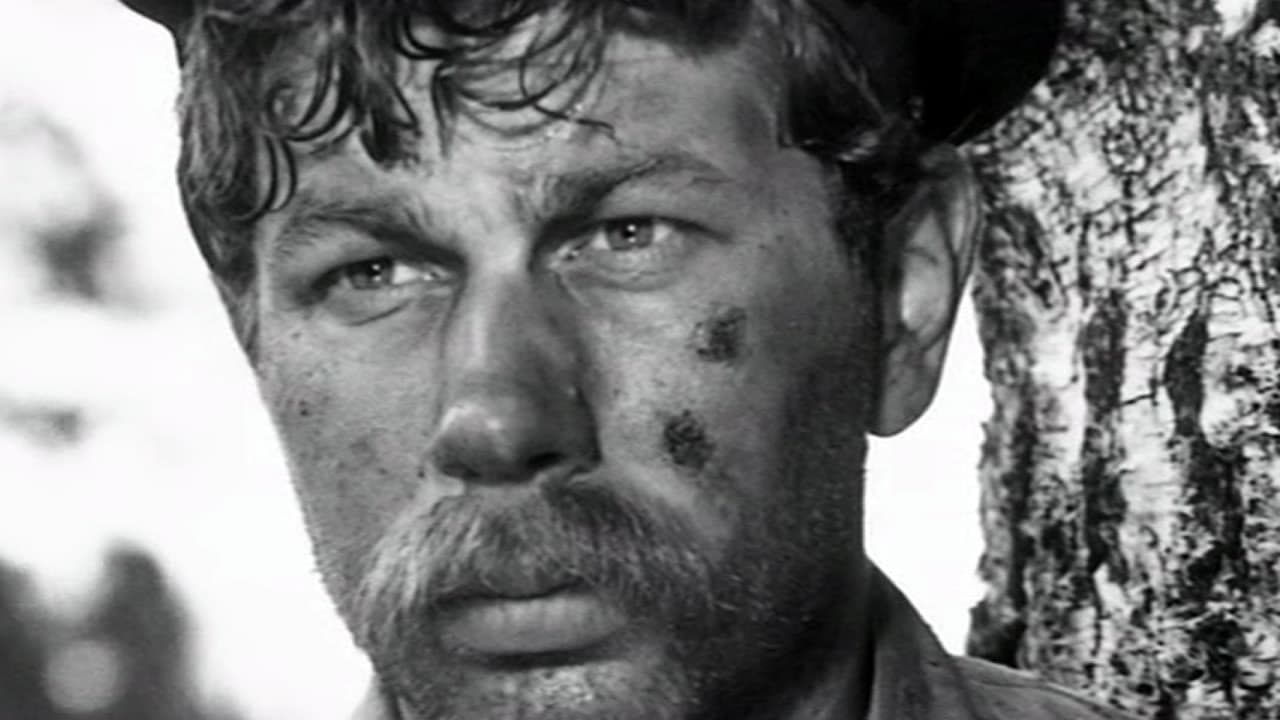
              It is set in a village near Finland in 1942.  Sergeant Vaskov (Andrei Martynov) is in command of a unit that is noted for drunkenness and fraternizing with the village females.  His superior solves the problem by taking away his men and sending an anti-aircraft unit to replace them.  An all-female ack-ack unit!  Hey audience, Russian women could do men’s work. The girls laugh at Vaskov’s insistence on following regulations.  The village becomes like a girls summer camp.  They sleep together in a barracks.  They sing songs.  They dance with each other.  They take a steam bath together (with nudity, guys!).  But when there is an air raid, they kick ass.  They efficiently use their KPV multi-barreled heavy machine gun and shoot down a bomber.  Rita (Irina Shevchuk) coldly stitches a parachutist

            The first half of the film is entitled “In the Second Echelon”. There is a tonal shift from comedy to drama in the second half which was called “A Minor Local Fight” to stress that the movie is not about a significant incident. Lisa spots two German paratroopers in the woods and Vaskov decides to take her and four others to track them down before they can do whatever sabotage they are tasked for.  They cross a swamp and set up a strong defensive position to ambush the pair. Unfortunately, the pair turns out to be eight pairs.  Vaskov sends Lisa (Yelena Drapenko) back through the swamp for reinforcements. He and the remaining four will attempt to delay the Germans.  The movie now shifts to “who will survive?” mode. Get ready for some heart-tugging deaths.

ACTING:   B                 

ACTION:   C  (6/10)

ACCURACY:  N/A          

PLOT:  A-                     

REALISM:   A (there were female anti-aircaft batteries)          

CINEMATOGRAPHY:    A

SCORE:   C             

SCENE:  shooting down the German plane

QUOTE:  Vaskov:  War does not mean shooting better than the others. It means thinking better.

                “The Dawns Here Are Quiet” is not as renowned as other Soviet films like “Come and See” and “Ballad of a Soldier”.  The opening scenes seemed to confirm this.  Vaskov is a buffoon and the girls are giggly.  I was wondering if it was a comedy and whether it was truly a war movie.  Not that the first part isn’t entertaining.  The ladies are fetching and some are hot.  How often do you get a nude frolic in a steam bath in a war movie?  (A Soviet war movie at that.)  The director had to pursuade the actresses to perfom nude. He convinced them the scene would emphasize that when bullets hit them the bullets would be hitting female bodies. The same bodies that gave birth. Actually, only a war movie about the Red Army in WWII could realistically portray female soldiers like this movie.

  The air raid is a seriously good combat scene, but appeared to be an aberration in an otherwise fluffy movie.  Not that the movie was standard up to this point.  Early on a series of striking flashbacks kicks in.  The movie is crisply black and white, but the flashbacks are in color and slightly surreal.  They are used to give back-stories to the main characters.  For instance, Zhenya (Olga Ostroumova) had an affair with a married officer.  The cast is an ensemble and they are excellent, although only Ostroumova was famous at the time. By the end of the film, the five women who go on the mission have had their characters developed well.  It is a heterogeneous group.  There is the slut (Zhenya), the revenge-minded widow (Rita), the mousy (Lisa), the poetry lover (Galya), and the timid (Sonia).  More important is the character evolution of Vaskov.  He goes from a buffoon to a crafty leader.  He also shows commendable empathy for his charges in a big brotherly way.  And he turns out to be quite a warrior, as do the girls.  They participate in fire-fights using their Mosin Nagant rifles and captured German MP40s.

Director Rostotsky served in the army in WWII and went on to become a decorated film-maker after the war.  The movie is technically proficient.  The decision to show the flashbacks in a different style added pizazz to the movie.  The cinematography in the forest scenes is remarkable.  The biggest accolade I can bestow is that you do not realize without reflection how difficult it must have been to smoothly film the running about in the forest.  There is some POV and even some hand-held.  The lensing contributes to the fog of war aspect of forest fighting.  Rostotsky’s themes are apparent.  Female soldiers could be feminine and yet serve the Motherland effectively.  The movie is an homage to them.  They deserved it.

“The Dawns Here Are Quiet” is a must-see for anyone interested in Soviet war movies.  It belongs in the discussion about which is the best of this subgenre. It is no surprise it is beloved in Russia. It was at the top of the box office in 1973 (66 million Russians saw it) and polls have shown that it is the most popular film about WWII. This certainly can be credited to being very appealing to female viewers. But that is not because it pandered to women. It was based on actual heroism by females in the Red Army.

Saturday, November 30, 2019

MINISERIES: The Dawns Here Are Quiet (2015)


                        The Soviet Union made a lot of good WWII movies like “Come and See” and “Ballad of a Soldier”.  My favorite is “The Dawns Here Are Quiet” which came out in 1972.  The movie was very popular and was nominated for Best Foreign Language Film by the Academy Awards.  It was based on a novella by Boris Vasilyev.  Vasilyev was a veteran of WWII. He volunteered in 1941 and was first in a “destruction battalion” which was a paramilitary unit under the control of the NKVD (basically the Soviet Gestapo).  Later he served in an airborne division until he was wounded in 1943.  He became a writer after the war and was noted for writing “lieutenant prose”.  This referred to novels written by lower ranking officers.  Usually the protagonist was a junior officer (like the author) and the plots involved brave acts in the face of bad conditions.  The subgenre was not overly patriotic and tended to remark on the hellish aspects of the war.  A new version of the classic was released in 2015 in theaters and then an extended version was shown on Russian TV in four 45 minute segments.

                        The movie is set in Karelia (near Finland) in probably 1942.  Sgt. Major Vaskov (Pyotr Fyodorov) is in command of an anti-aircraft unit in a small village.  He was wounded at the front and assigned this unglamorous job.  His men don’t take it seriously and do a lot of wining and wenching.  He complains to his superior and asks for replacements that don’t drink or screw around.  Be careful what you ask for.  He receives a half platoon of women.  Vaskov is thrown for a loop by his new subordinates who love pushing his buttons.  He insists on discipline, but you can’t simply treat them like they are men.  For instance, he has to build an outhouse for them.  A scene with the women in a steam bath will point out to the audience that they are definitely not males.  But they are soldiers.  When a German reconnaissance plane passes over the village, they competently shoot it down with their anti-aircraft gun.  A few days later, two German paratroopers are sighted in the forest.  Vaskov is ordered to take five of the women and track down the suspected saboteurs.  They set off and are shocked to discover that the two Germans are actually part of a sixteen man unit.  Vaskov decides their mission will be to keep the Germans from reaching their destination.  What started off as something of an adventure for the girls, becomes deadly serious.  But Vaskov is willing to teach and they are willing to learn.   The odds are very bad, however.

                        It must have been a risky idea to remake the beloved original, but Renat Davletyarov (director, producer, and co-writer) pulls it off.  He does not tamper with the plot much and most of the dialogue is retained.   Because he has more time to play with, he is able to flesh out the six characters more.  The original used flashbacks to give back-stories for the five women.  This version does more flashing back and is able to fill in information  where the original made you fill in the gaps yourself.  The original used a surreal approach to the flash-backs.  They were filmed in color and mostly on a spare sound stage.  Davletyarov wisely did not try to copy that.   Other than providing more information, this version is faithful to the point that the younger generation does not really need to see the original.  All of the deaths are very similar to the movie and just as poignant.  The strongest point of both versions are the unpredictable and memorable deaths.  I also commend the movie and miniseries for not forcing romance into the plot.  The dilemma the six are placed in develops comradeship and respect, not physical love.

                         The Soviet Union has to be third behind the U.S. and Great Britain when it comes to quality WWII movies.  That tradition seems to be continuing in Russia today.  Granted, this movie is not original, but it is technically sound.  The cinematography is good and the forest terrain is used effectively.  It is not as showy as the original, but you’ll notice it.  The acting is excellent.  Pyotr Fyodorov has some big shoes to fill in the role made famous by Andrey Martynov and I think he does an even better job as Vaskov.  The actresses playing the quintet of females are great.  The personalities of the five are well-defined and all are appealing figures.  By the end of the movie, you really care about them.  I had to fight back tears at times.  As an homage to all the women who served the Fatherland in WWII, the movie is very effective.  Even the original is not overly patriotic or propagandistic, but I would think women who see either film will be proud of their gender.

                        If you have Amazon Prime, take advantage of its nice collection of foreign war movies and series.  Don’t let the subtitles scare you away.  “The Dawns Here Are Quiet” is an outstanding movie.  It improves on the great original by expanding the story to cover the five women in more detail.  They deserved it.  Although in the tradition of the heterogeneous small unit on a suicide mission subgenre, it is not cliché-ridden.  In fact, it is a pretty unique movie. 

GRADE =  A


Tuesday, December 30, 2014

BEST SOVIET WAR MOVIE: The Dawns Here Are Quiet (1972)


                “The Dawns Here Are Quiet” is a Soviet film released in 1972.  It was nominated for the Best Foreign Language Film Oscar.  It is set in a village near Finland in 1942.  Sergeant Vaskov (Andrei Martynov) is in command of a unit that is noted for drunkenness and fraternizing with the village females.  His superior solves the problem by taking away his men and sending an anti-aircraft unit to replace them.  An all-female ack-ack unit!  The girls laugh at Vaskov’s insistence on following regulations.  The village becomes like a girls summer camp.  They sleep together in a barracks.  They sing songs.  They dance with each other.  They take a steam bath together (with nudity, guys!).  But when there is an air raid, they kick ass.  They efficiently use their KPV multi-barreled heavy machine gun and shoot down a bomber.  Rita (Irina Shevchuk) coldly stitches a parachutist.
                Lisa (Yelena Drapenko) spots two German paratroopers in the woods and Vaskov decides to take her and four others to track them down before they can do whatever sabotage they are tasked for.  They cross a swamp and set up a strong defensive position to ambush the pair.  Unfortunately, the pair turns out to be eight pairs.  Vaskov sends Lisa  back through the swamp for reinforcements. He and the remaining four will attempt to delay the Germans.  The movie now shifts to “who will survive?” mode.

                I went into this movie with very low expectations.  I had never heard of this movie as it had not been mentioned as a noteworthy Soviet film like “Come and See” and “Ballad of a Soldier”.  The opening scenes seemed to confirm this.  Vaskov is a buffoon and the girls are giggly.  I was wondering if it was a comedy and whether it was truly a war movie.  Not that the first part isn’t entertaining.  The ladies are fetching and some are hot.  How often do you get a nude frolic in a steam bath in a war movie?  (A Soviet war movie at that.)  Actually, only a war movie about the Red Army in WWII could realistically portray female soldiers like this movie.

  The air raid is a seriously good combat scene, but appeared to be an aberration in an otherwise fluffy movie.  Not that the movie was standard up to this point.  Early on a series of striking flashbacks kicks in.  The movie is crisply black and white, but the flashbacks are in color and slightly surreal.  They are used to give back-stories to the main characters.  For instance, Zhenya (Olga Ostroumova) had an affair with a married officer.  By the end of the film, the five women who go on the mission have had their characters developed well.  It is a heterogeneous group.  There is the slut (Zhenya), the revenge-minded widow (Rita), the mousy (Lisa), the poetry lover (Galya), and the timid (Sonia).  More important is the character evolution of Vaskov.  He goes from a buffoon to a crafty leader.  He also shows commendable empathy for his charges in a big brotherly way.  And he turns out to be quite a warrior, as do the girls.  They participate in fire-fights using their Mosin Nagant rifles and captured German MP40s.

Vaskov
Zhenya's flash back
Director Rostotsky served in the army in WWII and went on to become a decorated film-maker after the war.  The movie is technically proficient.  The decision to show the flashbacks in a different style added pizazz to the movie.  The cinematography in the forest scenes is remarkable.  The biggest accolade I can bestow is that you do not realize without reflection how difficult it must have been to smoothly film the running about in the forest.  There is some POV and even some hand-held.  The lensing contributes to the fog of war aspect of forest fighting.  Rostotsky’s themes are apparent.  Female soldiers could be feminine and yet serve the Motherland effectively.  The movie is an homage to them.  They deserved it.
“The Dawns Here Are Quiet” is a must-see for anyone interested in Soviet war movies.  It belongs in the discussion about which is the best of this subgenre.  Having seen several of the most lauded films, I can say it is easily in the top 5. It could even make my 100 Best War Movies list.
GRADE =  A
SOVIET WAR FILMS
 1.  The Dawns Here Are Quiet
 5.  Come and See