Wednesday, February 20, 2013

Enemy at the Gates


               Okay, let’s get this over with right now.  For you haters out there, I like this movie.  I can hear all the groans and I don’t care.  And it’s not one of those unexplainable WTFs that you get when you read some critic inexplicably give a positive review to a terrible movie.  In order to positively review a movie like “Battleship”,  you must be watching it while eating a gallon of ice cream to compensate for being dumped by your girlfriend and it has to be that you are not rewatching the movie.  I am quite sane, was not under mental distress, and I have seen the movie several times.

                “Enemy at the Gates” grew from the tiny seed of a few pages in the eponymously entitled non-fiction book by William Craig about the Battle of Stalingrad.  (A book I read in high school.)  Director Jean-Jacques Annaud took that seed involving a sniper’s duel in the rubble of the City of Stalin and grew a movie out of it.  The movie was to be Europe’s answer to “Saving Private Ryan”.  It was, at the time, the most expensive non-American movie ever made.


cannon fodder
                The story opens with Vassili Zaitzev (Jude Law) learning how to hunt from his grandfather.  Hunting wolves is a lot like sniping, so this teaching will serve him well.  Years later, with war raging in Russia, Vassili is shipped with other cannon fodder to Stalingrad.  The film’s equivalent to the opening of SPR has the new recruits crossing the Volga under attack by Stukas and then having to make a suicidal frontal attack on an entrenched German position.    The crossing could be described as “the fog of arrival” as the Stuka attack generates chaos, confusion, and fear.  The CGI is okay and the wounds are graphic.  Very similar to when the ramp goes down in the Higgins boat in SPR.  Upon reaching shore every other soldier is handed a rifle.  “The one with the rifle shoots, the one without the rifle follows him.  When the one with the rifle gets killed, the one who is following picks up the rifle and shoots.”  This is probably inaccurate, but certainly gives a realistic impression of how Soviet soldiers were used by their superiors.  The cinematography for the charge puts the audience in the middle.  There are hand-held and slo-mo.  Blood splatters on the camera lens.  Very intense with non-ridiculous deaths.
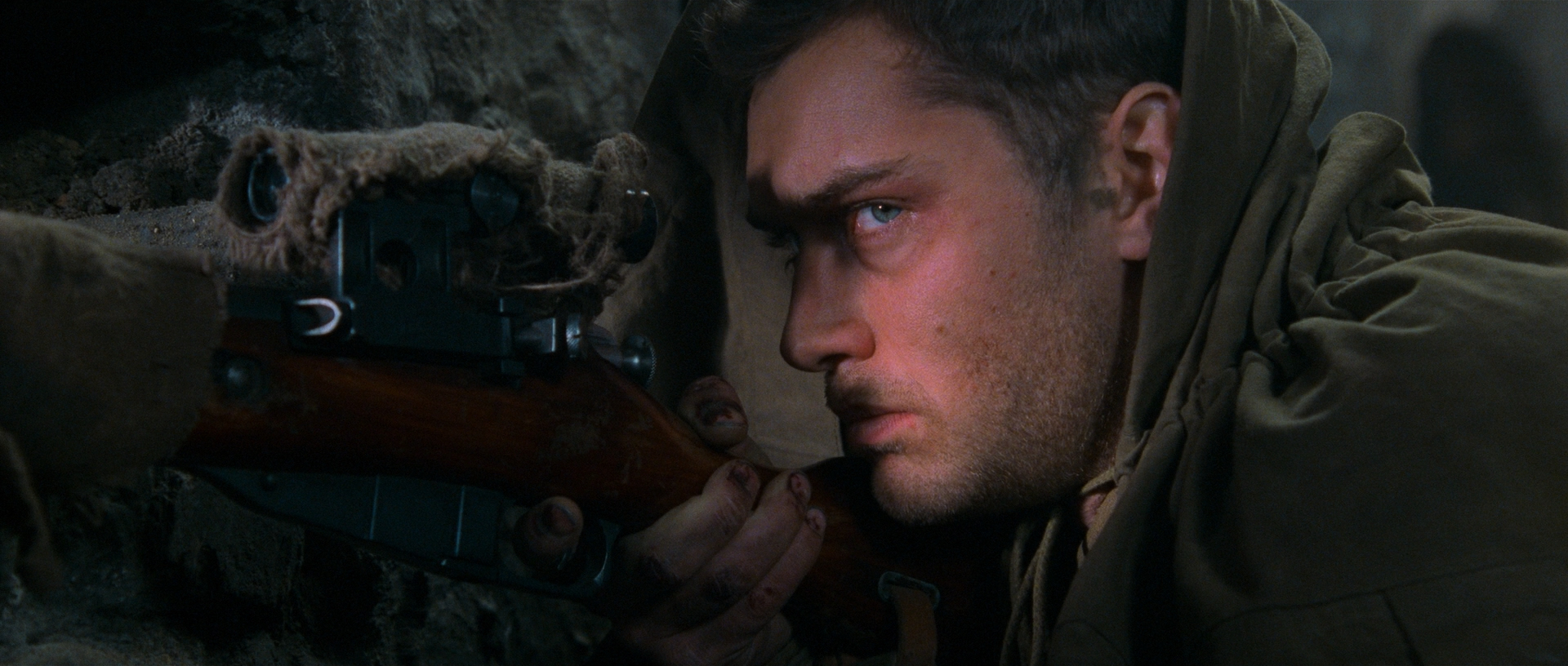
Vassili
                Vassili meets his soon to be BFF when Danilov (Joseph Fiennes) takes refuge in the corpse-strewn fountain Vassili is playing dead in.  5 bullets + 5 targets =  a hero is born.  The transition from the mass charge to individual action is cool.  Danilov becomes Vassili’s press agent after he convinces the newly arrived Khruschev (Bob Hoskins) that all the Soviets need is a hero.  Vassili is reluctant about becoming a celebrity, but boy is he damn good at sniping (as a montage of articles about his kills shows). 

                A romantic subplot kicks in as the duo are introduced to the comely Tania (Rachel Weisz) who wants to kill Germans to avenge her Jewish parents.  That’s one triangle.  The other evolves upon the arrival of the Great Nazi Hope.  Col. Konig (Ed Harris) has been sent from his sniper school to shut down this Soviet morale-booster.  He is aristocratic, cocky, and very cunning – in other words, a Hollywood Nazi.  The third leg of this triangle is a twelve year old Russian boy named Sasha who imagines himself a double agent.  It’s an extremely small world in Stalingrad.  He shines Konig’s boots and for chocolate is willing to sell out his idol Vassili. Or is he?  Thus begins the cat and mouse.
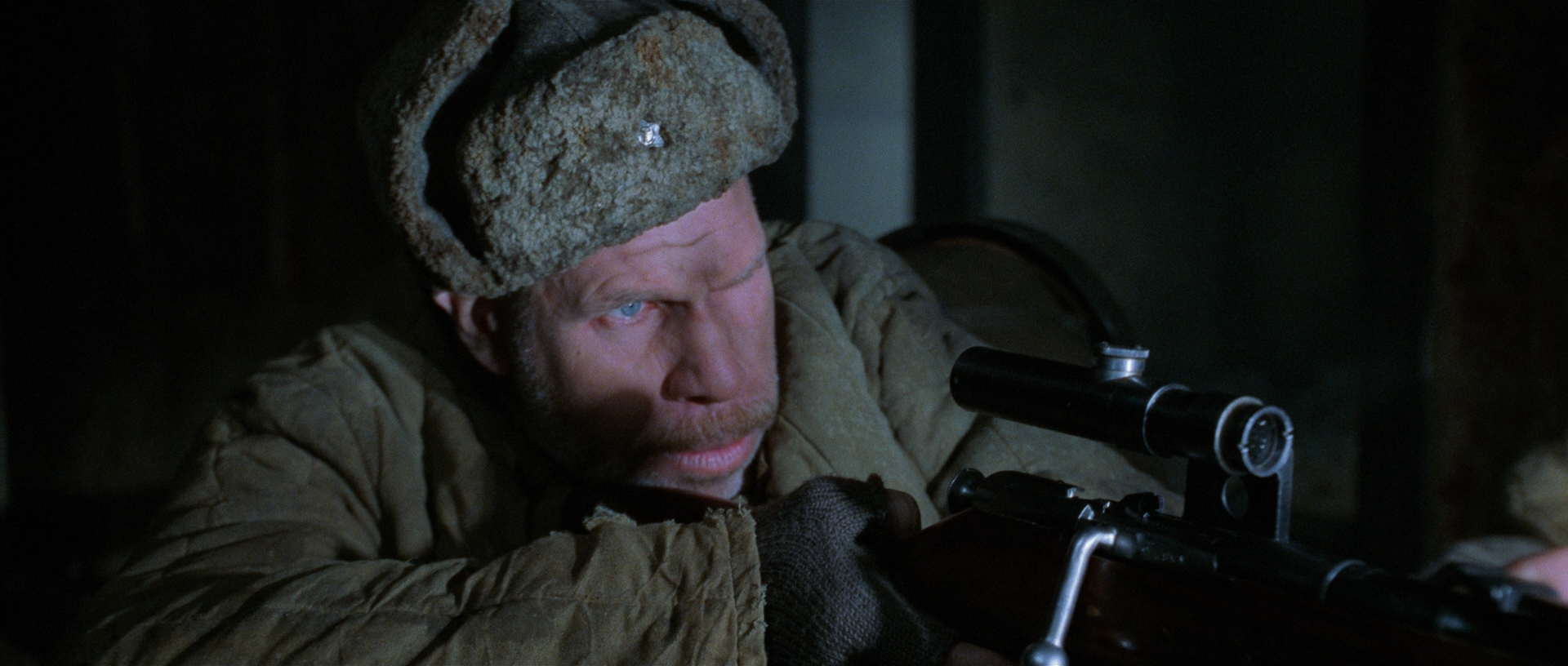
Kulikov
                Konig is arguably a better sniper than Vassili.  This being a movie, Vassili has to be the underdog.  He becomes the stalkee and has several well-staged close-calls.  The scenes are your basic “this might have happened to some human at one time on planet Earth”, but surely not to the same person.  Except in a movie.  Still, the scenarios are entertaining.  The death of Vassili’s comrade Kulikov (Ron Perlman) is particularly awesome.  That Nazi dude is good.

Tania
                Meanwhile, romance blooms in the rubble.  Tania becomes a sniper and Vassili teaches her more than how to shoot a gun.  We get the most erotic, nonnudity, sleeping bag tryst in war movie history.  (I fast-forwarded through that scene in my Military History class).  Unfortunately for the BFFs, Danilov has taken a shine to Tania (she being the only beautiful Soviet woman in Stalingrad and possibly the whole country) and is now jealous enough to wish his meal ticket dead.  Women!  But a woman with a gun, screw the bromance.  Konig gets jilted, too – by Sasha.  We are going to lose a leg of both triangles.  Who wants to predict the result of the final duel?  A better question would be: will Vassili and Tania live happily ever after and breed super-snipers?
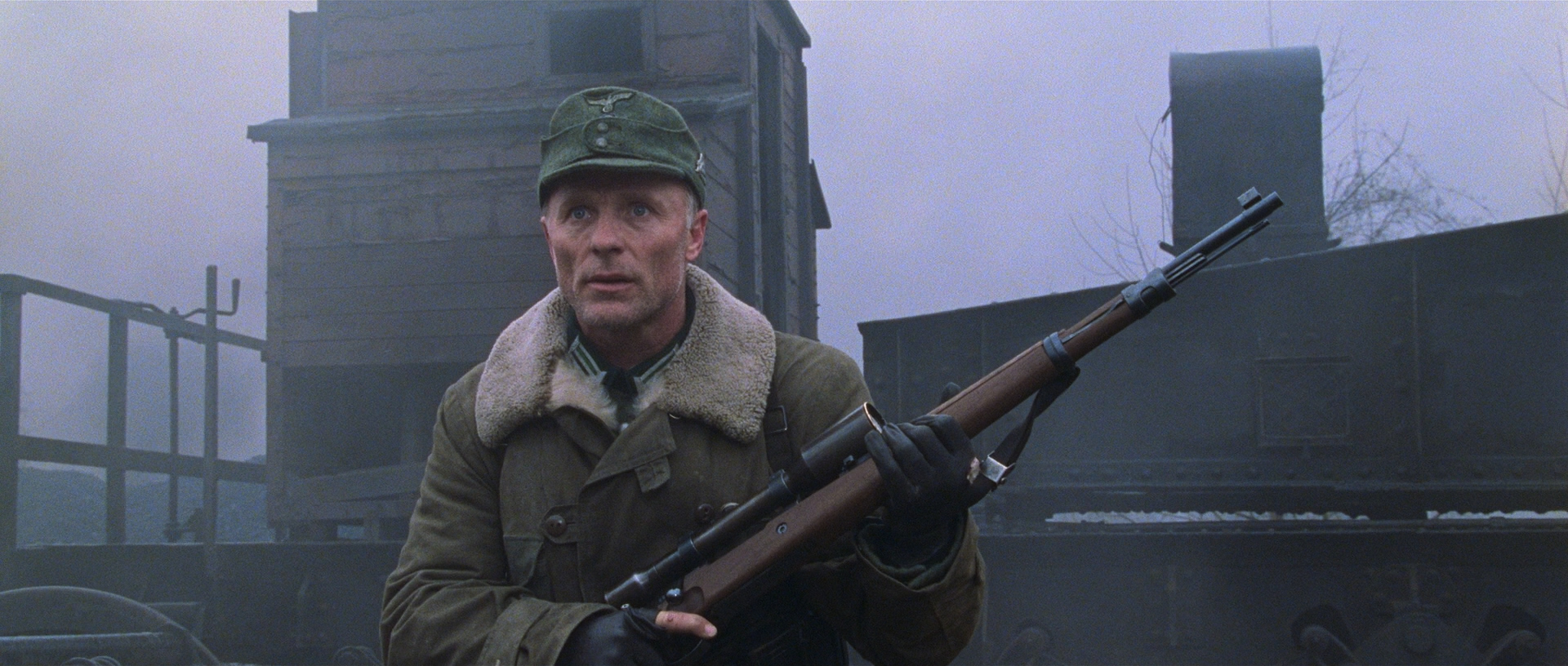
Konig
                Let’s address the accuracy issue first.  The movie has a legion of detractors.  When it was released, Red Army veterans of WWII demanded that it be banned.  It was also not well-received in Germany.  Historians have come down hard on the duel.  Craig apparently swallowed Soviet hero-creation propaganda hook, line, and sinker.  Anthony Beevors in his book Stalingrad debunked the whole Zaitsev versus Konig (sometimes identified as Thorwald).  There was a Vassili Zaitsev and he did fight at Stalingrad and did score a huge number of kills.  However, the duel with a top notch German sniper was exaggerated at the least by Soviet propagandists (abetted by Zaitsev).  Zaitsev even provided Konig’s rifle scope for a Russian museum.  By the way, the “official” version of the final confrontation was (of course) a lot more mundane than the movie version.  Zaitsev and Konig/Thorwald eyed each other’s potential lairs for days before Kulikov poked up his helmet and then feigned death to get the Nazi to reveal his position for a kill shot by Vassili.

                The most amazing thing about the characters is that there actually was a Tania and even a Sasha.  Before I researched the movie, I would have bet anything that those two were screenwriters inventions.  Tania was an American-born Russian who returned to the home land to be with her grandparents after the invasion.  When they were killed she became a vengeance-minded partisan and ended up in Stalingrad.  She apparently hooked up with Zaitsev although there is debate on whether the hook up got to the sleeping bag stage.  Officially, it did.  She was wounded during the latter stages of the battle, as was Vassili later.  Both thought the other dead, so the Soviet government was not able to stage a royal wedding.  Sasha was basically as depicted sans the relationship with Konig.  His death was by hanging for espionage.

                My loyal followers know that I put a high premium on historical accuracy, especially when the inaccuracies make a mockery of history (as in “Braveheart”, for example).  “Enemy at the Gates” does little harm to history (other than the laughable poster line “A single bullet can change history”).  Craig might have been suckered, but the movie is obviously not a propaganda piece.  The Zaitsev seed may have been fertilized with a ton of Soviet manure, but it makes for good entertainment for war movie lovers and more importantly for civilians (especially women).  Plus, like with most fact based war movies, it can lead to fascinating fact-checking.

                “Enemy at the Gates” is a fine example of a modern war movie.  (I haven’t come up with a name for what I am talking about yet.)  It does retain some of the elements and cliches of old school movies, but adds modern pizzazz and technology.  The movie is surprisingly unpredictable to go along with its predictability.  The action scenes are kinetic and the suspense is palpable.  The acting is good, especially Hoskins (he chews the scenery – just like Khrushchev did) and Harris.  I know Caroline will complain about the accents and I’ll not defend them, but they are not a deal breaker for me.  Weisz is not particularly good (and her hair does not act at all), but her character is a very rare strong female character in a war movie.  Appreciate that.

              The cinematography is excellent as are the sets.  A lot of money went into rubble.  The musical score is memorable and repeats a strong motif for impending suspense.  The sound effects are also top notch.  The theme of a manufactured hero is reminiscent of “Flags of Our Fathers”.  The other theme of conflicting cultures is a bit simplistic with the aristocratic, stoical German versus the proletarian, emotional Russian representing their countries, but not unbelievable.

                The biggest weakness is the romantic subplot, but the trio do have some chemistry and it’s not sappy.  Just highly implausible.  Does anyone seriously think that a producer that expends over $60 million on a film should not try to bring females into the theater?  Besides, if I can stomach it …  (If you liked “Braveheart” and complain about this romance, you have some ‘splainin to do.)

                Is it “Saving Private Ryan”?  Definitely not.  It’s a game try and you can’t seriously expect Europeans to duplicate an American epic.  (Sorry, I didn’t mean that.)  Did it belong on the 100 Greatest list?  Are you kidding me, did you see some of the movies on the list?!  Will it crack my 100 Best?  It’s my list, so yes.

grade =  B+
 
the trailer
 
 
Please offer comments.  I would love to hear what you think.


Thursday, February 14, 2013

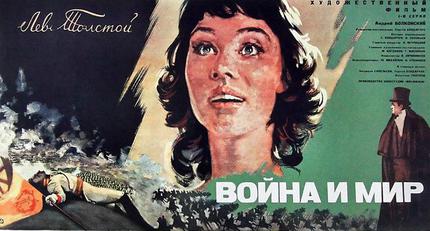
#20 - War and Peace (1968)


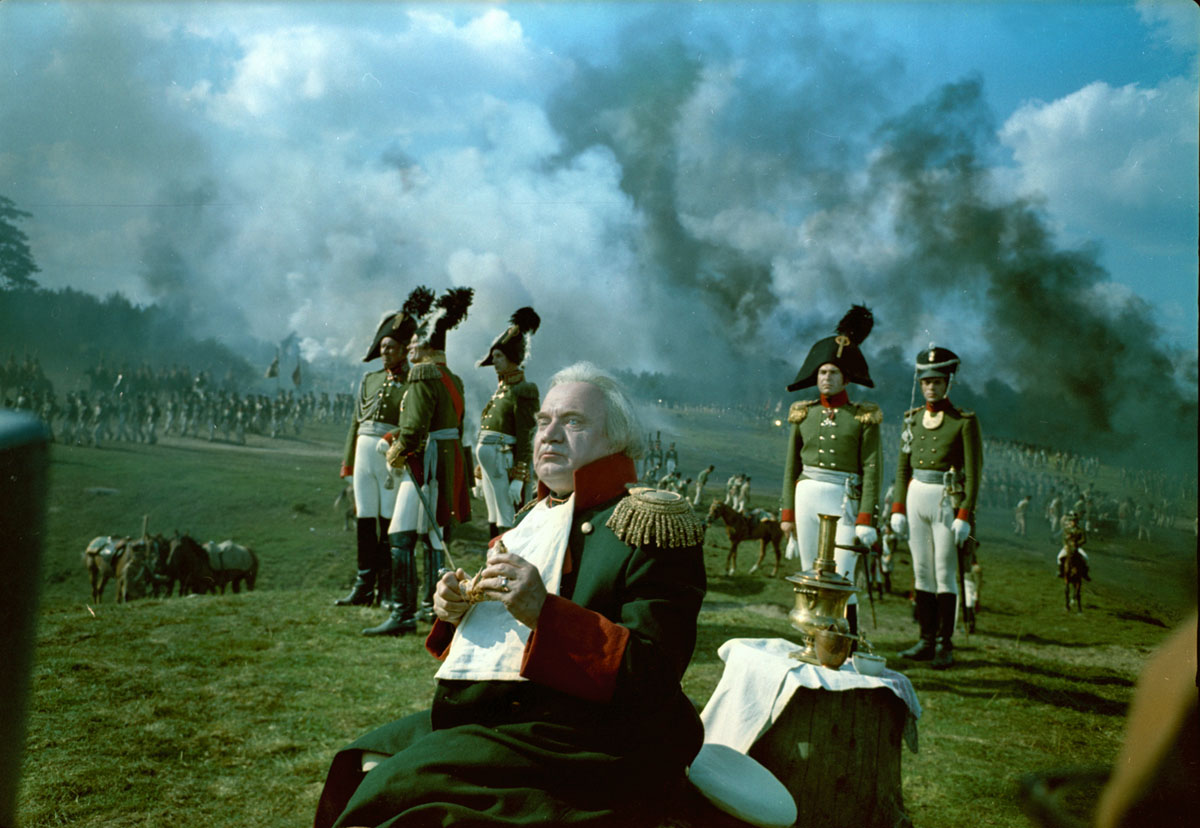
BACK-STORY:  Would you believe one of the longest novels was made into one of the longest movies?  Sergei Bondarchuk’s version of Tolstoy’s novel is 431 minutes long, divided into four parts, and took six years to finish.  There are 300 speaking characters.  It was the most expensive Soviet film ever made.  The Soviet government funded the film as a matter of national honor after the King Vidor version released in 1956 achieved some critical acclaim.  The Soviet Army provided technical advisers and thousands of extras.  Over 40 museums loaned historical artifacts.  60 Napoleonic era cannons were cast for the film.  Bondarchuk took advantage of the Khrushchev Thaw to craft a new style Soviet film.  The movie was a big success and won Best Foreign Film at both the Golden Globes and the Academy Awards.  It is the longest film to win an Oscar.

OPENING:  A camera pans over a countryside with sounds of battle in the background.  A narrator tells us that because corrupt people unite, honest people must also.  The year is 1805 and we are in St. Petersburg at an upper class “soiree”.  There is discussion of the “anti-Christ” Napoleon.  The camera moves around as we peep in at various converstaions.  A woman named Lisa is complaining about her husband deserting her to go off to war.  “Why can’t men live without wars?” 

SUMMARY:  Okay, how much do you want to know?  Don’t worry, this will not be four times as long as my usual summary.  Basically the movie is the story of a love triangle.  Pierre (Bondrachuk) is the illegitimate son of a wealthy count who is a social outcast and is looking for purpose in his life.  His best friend Andrei (Vyacheslav Tikhanov) is the son of a famous general who is unhappy with his loving, but shallow wife.  He leaves her behind to become an aide-de-camp for General Kutusov in the lead up to the Battle of Austerlitz.  Natasha (Lubmila Savelyeva) is the flirtatious daughter of the Rostovs.  The Rostovs live in Moscow and enjoy life and hosting parties.  Their lives will intertwine in the events leading up to Napoleon’s occupation of Moscow.

                When Pierre’s father dies he inherits the estate and now is high in society.  He gives up his days of debauchery with military types like the dangerous Dolokhov (Oleg Yefremov).  He marries a woman named Helene (Irina Skobtseva – Bondarchuk’s wife) because dude’s gotta marry, right?  Meanwhile, Andrei drops his pregnant wife off at his tough-love father’s home before he goes to war.  His dad tells him to come back with his shield or on it.

                The Russian army marches to join Gen. Mack’s Austrian army.  As the ranks march by, the camera picks up eachs soldier talk.  “Singers to the front!”  The army lustily belts out a folk tune.  Gen. Mack himself informs Kutusov to not bother joining him.  "I have no army".  Gen. Bagration (with Andrei tagging along hunting for glory) fights a rearguard action at Schongrabern.  Smoke clears to reveal French columns approaching.  A Russian column marches to meet them.  Drums beat.  “Left, left.”  Marching feet.  Now here comes the cavalry.  Natasha’s brother Nicolai is part of it.  POV.  He’s down.  We hear his thoughts.  I’m going to die.  Not if I run.  Camera follows him through foliage.  (It's a little silly.)  It’s now the artillery’s turn (the cannons recoil!).  Tushin’s battery holds out to the last.  Hellish aftermath of a losing battle.


Kutusov spectates

                Next comes the Battle of Austerlitz.  The Czar orders Kutuzov to begin the attack prematurely.  Amateur!  The cavalry charge results in numerous riderless horses leaving the battlefield (are you telling me noone was just wounded?)  Andrei leads a counterattack carrying a flag and is wounded.  He awakes with Napoleon gazing on him.  “That’s a beautiful death” says the Little Corporal.  A bird’s eye view shows the cavalry forces circling like a maelstrom.  Get it?

                Pierre is being cuckolded by Dolokhov.  He challenges him to a duel.  What an incredible scene!  Andrei’s wife dies giving birth and before he can beg forgiveness for being such a huge jerk.  However, he meets the vivacious Natasha at a grand ball.  The cinematography is masterful.  The camera flows through and around the crowd (the cameramen were on roller skates).  Sometimes the shot is blocked by people in the crowd.  Down in front!  Andrei proposes, but gives Natasha a year to think about it.  Big mistake.

                It is now 1812 and Napoleon’s Grande Armee invades Russia.  Kutuzov is back in command and Andrei commands a regiment.  Here comes the Battle of Borodino!  Pierre shows up at the site dressed as a dandy.  He visits Andrei and tells him that he thinks the left flank is too weak!  Thanks, armchair general.  Andrei guarantees victory because the Russians want it more.

                The battle lasts 33 minutes of screen time.  Most of our time is spent with Pierre who hooks up with an artillery unit in a redoubt.  The cannons are firing in two directions.  WTF, but makes for some great tracking shots.  Andrei’s regiment is being held in reserve and stoically takes losses as they sit and wait.  Cavalry attacks massed artillery.  Crescendo of violence.  Overhead view of squares.  Buildings on fire.  Andrei is wounded by a shell and has his leg amputated.  Pierre gets his green coat dirty.

                It’s a moral victory, but Napoleon marches into Moscow.  Pierre has not joined Natasha’s family and the rest of the evacuees.  Suddenly, the city is aflame and Pierre is in the middle of it.  Soot is flying like a blizzard.  Chaos.  Drunkenness.  Looting.  Pierre is arrested as an arsonist.  The music gets increasingly bizarre to match the vibe.  For no apparent reason Pierre is spared execution.  He is taken along when the French retreat.

CLOSING:  The Grand Armee disintegrates.  Somehow Pierre escapes and returns to a rebuilding Moscow.  He is reunited with Natasha.

RATINGS:

Acting =  B-
Action =  7/10
Accuracy =  B 
Plot =  B
Realism =  B

Overall =  A-

WOULD CHICKS DIG IT?  They’ll like the peace parts and their man will like the war parts.  Something for everyone.  Natasha is a great character and the romance aspects are strong.

HISTORICAL ACCURACY:    Tolstoy got into a lot discussion about how historically accurate the novel was.  He argued that the “artist” deserves some latitude in historical fiction.  Besides, he added, even historians make choices on what to emphasize in their non-fiction.  With that said, the movie conforms closely to the book and the book is accurate enough considering Tolstoy did not intend it to be a history lesson.  His main characters are fictional and he places them in historical events.  However, the film and book are giving a personal view of the events, not a view from command.

                The main focus historically is the battles and Tolstoy does not try to give the big picture.  To tell the truth, historians are still debating exactly what happened in the three battles.  The first, the Battle of Schongraben, is simplified in the film, but it gets the essentials right.  Bagration was ordered by Kutusov to fight a delaying action.  The battle did take place at night and was chaotic.  Several French assaults were beaten off in six hours of fighting before Bagration made an orderly withdrawal.  It is unclear whether the Tushin battery incident was based on fact.

                At Austerlitz, the film is accurate in showing Czar Alexander ordering Kutusov to advance when he was not prepared.  What the film does not make clear is the fact that the Russians were being ordered to leave the strategically dominant Pratzen Heights.  The huge cavalry action did take place, but it was towards the end of the battle not the beginning.  The French did empty a lot of Russian saddles, but not all of them.

                Borodino opened with a cavalry attack.  Maybe Tolstoy got them confused.  The Russians had left their left flank underdeveloped, as Pierre correctly pointed out.  The action at the Raevsky Redoubt is handled well.  The Russians had 19 twelve-pounders there.  Apparently, it did have to defend itself from attacks from both sides.  The movie does give a correct impression of the high level of losses on both sides.

                As far as the burning of Moscow, Tolstoy and the film imply it was accidental whereas historians believe it was the ultimate example of the Russian scorched earth policy.

CRITIQUE:  “War and Peace” is a remarkable work of cinema.  Parts of it are amazing and the credit goes to Bondarchuk who pulled out all the stops in making it.  The variety of techniques that are used make it a must for any film class.  There are off-center shots, fades, POVs (including a wolf’s – hell, we hear the wolf’s thoughts!) , double exposures, split screen,  hand-held (on roller skates), and more.  There is even a surreal dream sequence based on Bondarchuk’s experience from being “dead” for four minutes after a heart attack.  When he depicts the meeting of Napoleon and Alexander at Tilsit he even throws in a three screen look in homage to the classic “Napoleon”.  The balls are shot literally from within the crowds.  There are lots of outdoor scenes that are shot through and of foliage (which reminded me of Malick’s “The Thin Red Line”).  The only fault I have with the cinematography is it seems as the story gets weaker, the “bells and whistles”  increase in compensation.  Also, some of the cinematic flourishes get tedious at times.  For example, the things waved in front of the camera during the ball scenes.

                The acting is average.  Lubmila Savelyeva is the stand-out as Natasha.  She captures the mercurial nature of the young woman perfectly.  The rest of the cast is adequate, but not outstanding.  No one embarrasses themselves, even Bondarchuk.

                The plot is based on one of the greatest novels ever written and is faithful to the book.  Thankfully, the movie leaves out some periphery characters and a lot of Tolstoy’s philosophizing.  I read the chapters about the Battle of Borodino and the movie does a great job recreating the novel.  It is interesting to note that the film omits most of the book’s coverage of Napoleon.   The movie not only summarizes the book so you do not have to read it, but is a good historical and cultural experience.  Bondarchuk includes the balls and the wolf hunt for local color.  The religiousity of the Russian people is highlighted.  In general, the film is very strong in depicting upper class life in Russia at the time.  It is less firm in recreating  military aspects.  The strategy and tactics are either too unclear or too simplistic.  The “fog of war” could be applied to the recreations of the battles.  Perhaps this was Bondarchuk’s goal.  The staging of the battle scenes is amazing, however.  The Battle of Borodino is certainly one of the greatest cinematic  battles.

                One theme is the effects of war on civilians, especially wives.  A corollary to that is war’s effect on the environment.  There are shots of beautiful countryside that pan over to a ravaged countryside.  Of course, the movie means to be anti-war and it is, but not as overtly as you would think.  At one point, Andrei swears off war but returns and seeks glory.  His death is meant to overshadow this and return emphasis to the theme.  Pierre also cannot resist the lure of combat.  Tolstoy may be hard on the generals, but he lauds the Russian soldiers that saved his country.

                The film is not perfect.  There are some plot flaws.  The Natasha elopement was implausible.  Andrei swings from warrior to pacifist back to warrior.  Why does Helene become evil?  Why isn’t Pierre executed along with the other arsonists? (Probably so he can travel with the bedraggled Grand Armee and then return home.)  Not too bad for a movie that is 431 minutes.

CONCLUSION:  If you don’t want to read a book that is 1351 pages long, this production of “War and Peace” will do the trick.  Not only will you get a summary of the remarkable novel, but you will see one of the outstanding cinematic achievements in history.  I am so glad that this blog project forced me to buy the DVD set and watch the film.  And I have to admit that even though I have been a fan of military history since a teen, I never had any intention of reading the book or watching a 431 minute movie based on it.  I still don’t plan on reading the book, but the chapters that I read about the Battle of Borodino were entertaining.  I wonder if you could find an edited version entitled “War Without Peace” on the Internet.  Just the cool chapters.  None of the mushy stuff.

                Does the movie belong at #20?  That is debateable because it is unclear whether it should have been considered.  The panel of experts responsible for Military History Magazine’s 100 Greatest War Movies list obviously precluded made-for-TV movies and miniseries, so there were limits on what films they considered.  “War and Peace” is unique among the 100 chosen because it is actually a theatrical miniseries.  I would not have included it, but if you allow it in the door, it certainly belongs in the top twenty.

Saturday, February 9, 2013

WATCHALONG and BEST OF 2012


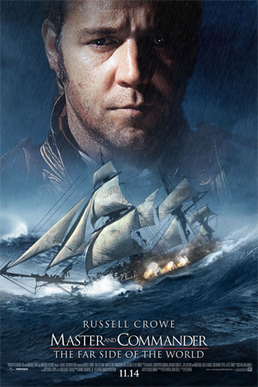
      Our War Movie Leadership Watchalong for February is "Master and Commander".  Here are the questions to be considered and discussed:

1.  How would you describe Aubrey's leadership style?

2.  Is Aubrey motivated more by pride or duty?

3.  Contrast the philosophies of Aubrey and Maturin?  Who is right?


        Well another year has passed and I have to admit it was not a great year for war movies at my house.  When I looked back at my list of the Best and Worst of 2011, I was envious of that year.  I saw some truly wonderful movies.  Unfortunately, although I watched 80 war movies this past year, the quality was much less.  Plus I had to watch a lot of movies I had already seen as I worked my way to the top of the 100 Greatest list.  No movie came close to the amazing “Waltz With Bashir”.  Don’t get me wrong, I still love doing this blog and will continue my journey, but it just was a blah year for war movies.  Here’s hoping 2013 will be better.  And it will be because I plan to watch more movies that have the chance to wow me.  By the way, please send me suggestions.  What are your “wow” movies?

                Last year I had limited my choices to movies I had not seen in five years.  This year I have decided to waive that rule.  Even if I had seen some of them before, it was not with a critical eye.  Plus I could not get a decent list if I limited it.

                Here we go:

10.  The Lost Battalion – although made for TV, the best WWI movie in years;  accurately tells a story that needed revival;  graphically realistic battle scenes

9.  Enemy at the Gates -  nicely builds on the seed of a true story;  a war romance for guys;  well-acted;  what modern war movies for the general public need to be like

8.  Spartacus -  a spectacular epic that shames wannabes like “Braveheart”;  everything is big – the acting, the sets, the score;  similar to “Enemy at the Gates” because it fleshes out the facts into robust entertainment

7.  Zulu -  a classic battle movie;  great acting;  lots of action

6.  Pork Chop Hill – very similar to “Zulu”; another movie that brings attention to a battle that deserves it;  both interesting studies in command

5.  Kanal – remarkable Polish film that is set in the Warsaw uprising; masterfully directed and lensed; one of the slimiest and grimiest movies you will ever see

4.  Tropic Thunder – a comedy for war movie lovers because we get more jokes than the general public;  scathingly satirical for intellectuals and silly enough for average people;  winner of my March Madness tournament to determine the greatest war comedy

3.  Downfall – a near perfect blend of accuracy and entertainment;  humanizes a monster without being offensive;  incredible indoor and outdoor sets

2.  Courage Under Fire -  2012’s “Three Kings” – a pop war movie that is not ridiculous;  multi-layered examination of the fog of war, the effects of stress in combat, post-traumatic stress disorder, dysfunctionality in a small unit;  bravura acting;  “A Few Good Men” with action

1.  Schindler's List -  I know it’s a boring choice, but a near perfect movie;  it meets all my requirements to be a great war movie   1.  admirably accurate  2.  tells a story that needs to be told  3. great in all the technical aspects  4.  great acting  5.  highly entertaining;  throw in that it works for both males and females and it has pizazz (e.g., filmed in black and white)

                Now for the dogs:

5.  Gods and Generals – how could this be associated with the excellent “Gettysburg”?!;  some excellent battle scenes don’t make up for an offensively pro-South and pro-slavery plot

4.  Red Dawn (1984) –  only foggy nostalgia by teenage boys who saw it in theaters can explain this movie’s continued popularity;  everything about it is ridiculous

3.  The Boys in Company C – another movie with an inexplicable following;  has all the weaknesses of “Red Dawn” with the added defect that it can be compared to many very superior Vietnam war movies

2.  To the Shores of Tripoli -  there are many movies made during WWII that are not overly patriotic or propagandistic – this is not one of them;  terrible acting and a plot that makes no sense;  patriotic bull shit

1.  Sabre Jet -  set in the Korean War and released in 1953;  this movie actually was supported by the U.S. Air Force;  laughable clichés and abysmal acting;  treacly score;  gun camera footage includes shooting down a Stuka!

                There you have them.  Ten must-sees and five must-avoids.  Enjoy all of them.

Saturday, February 2, 2013

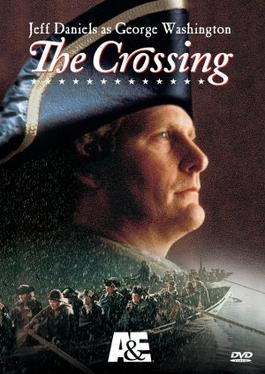
WAR MOVIE LEADERSHIP WATCHALONG: The Crossing


                “The Crossing” was a made for TV movie produced by A&E in 2000.  It is based on the book by Howard Fast and depicts events involving the Battle of Trenton.  The movie won a Peabody Award for excellence.  Jeff Daniels portrays George Washington in the film.

                The movie begins with the Continental Army at a low moment in the war.  It has just lost New York City and has been forced to retreat across New Jersey.  What’s left of the soldiers are dispirited and sickly.  All seems lost when they reach the Delaware River with the British in hot pursuit.  Washington orders Col. Glover to round up some boats and the army crosses the river into Pennsylvania at the last minute.

                Washington meets with his subordinates and proposes a daring plan to recross the river and surprise the Hessian garrison at Trenton.  The officers are shocked at the audacity of the plan.  Col. Glover is put in charge of the crossing which runs behind schedule, but is successful.  The march to Trenton is uneventful until Alexander Hamilton is tasked to take out an outpost.  The attack takes the Hessians by surprise and they are quickly surrounded in a meadow.  The Hessian commander is mortally wounded by the only musket fired by the Americans. Washington reluctantly meets with Col. Rall before he expires and then is informed of the amazingly low casualty figures for his men in the victory.

                The movie is quite good considering its low budget nature.  Not much was spent on the actors, other than Daniels.  All the others are B-list, but they acquit themselves well.  Daniels is outstanding and gets Washington’s personality right.  He portrays his dignity and barely controlled temper well.  The soldiers appear to be re-enactors, which is actually a plus.  The weapons and equipment appear to be authentic.  The camp life rings true, but the movie concentrates on command.  The plot does tend to be simplistic on tactics.  It makes a point of the necessity of using the bayonet due to wet powder and then emphasizes this with literally only one soldier firing his musket.  The strategy looks flawless when in reality Washington tended to make his plans too elaborate and rely too much on precise timing.  Although the Battle of Trenton was less complicated than many bigger battles, it was not as orderly as the film portrays.

On to the discussion:

1.  What leadership traits are portrayed?  Washington has moral courage.  He is willing to risk his men when he realizes doing nothing could result in the end of the Revolution.  He inspires his men during very trying times.  Although not known for a sense of humor, Washington lightens the tension by making a joke at Gen. Knox’s expense.  Washington is a hands-on general.  He does his own reconnoitering of Trenton and formulates the plan on his own.  Once he develops the plan, he refuses to back off on it.  The movie doesn’t mention it, but the password was “Victory or Death”.

2.  How does he handle his subordinates?  Washington is depicted as firmly in control of his officers, but willing to listen.  When Glover questions the boldness of the plan, Washington first praises his services and then tells him to do what Washington wants.  When Gates insults the plan and Washington himself, Washington controls his seething temper and orders the malcontent out of the camp.

3.  What adversities are overcome?  The film begins at one of the lowest moments of Washington’s career.  The army is down to less than two thousand men and they are a whipped group.  Many are planning on going home when their enlistments are up in the next couple of months.  He keeps their spirits up, but knows a victory is imperative.  They will be facing the dreaded Hessians, but Washington’s confidence and the surprise nature of the plan cancels out his men’s fears.  The weather is an adversity that is overcome by sheer willpower and the sturdy backs of Glover’s Marbleheaders.

                When you watch “The Crossing”, you are made aware that Washington was indeed the “indispensable  man”.  If the movie ended with his death instead of Rall, America as we know it would be very different.  He was not a great general, especially tactically, but he was a great leader and the perfect person for the situation.

               What say you?