Showing posts with label Master and Commander. Show all posts

Wednesday, December 18, 2024

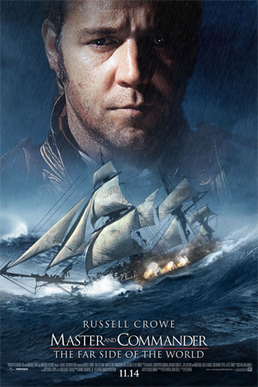
THE 100 BEST WAR MOVIES: 24. Master and Commander (2003)


                Someone finally had the nerve to try to bring Patrick O’Brian to the screen.  For you non-literary types, O’Brian was an acclaimed writer of nautical fiction.  He wrote a series of novels set in the Napoleonic Wars.  The main characters were a British captain named Jack Aubrey and a ship’s doctor/espionage agent named Stephen Maturin.  They are best friends although of very different personalities.  In the novels, there relationship takes precedence over traditional plotting.  O’Brian had a way with words that resulted in a legion of fans.  Peter Weir (“Gallipoli”) took on the task of adapting O’Brian.  He wisely decided to start in the middle of the series with book 10 – “The Far Side of the World”.  He also wisely decided to stick to a traditional narrative structure. 

            The effort that went into the film is truly incredible.  Weir was able to convince the studios to invest $150 million in a movie that had a sketchy market.  In the cinematic world of “Fast and Furious”, who wanted to see a movie about fighting frigates?  Thankfully, enough to make a profit, but not enough to warrant a sequel.  Much of the cost went into Weir’s obsession with making the movie as perfect a depiction of Napoleonic naval warfare as possible.  Weir bought a replica ship called the “Rose” for $1.5 million and then had extensive changes made to it to portray the HMS Surprise.  It was used for the sailing scenes.  A full scale model on a gimbal in a giant water tank (the same one used for “Titanic”) was also used in the filming.  27 miles of rope were on the model.  The costume department made 1,900 pairs of shoes, over 2,000 costumes, and around 2,000 hats.  The prop department was fixated with getting even the tiniest details accurate, including items that would not even make it onto film.  The efforts paid off as the movie was rewarded with ten Academy Award nominations including Best Picture and Best Director.  It won for Best Cinematography and Best Sound Editing.

            “April, 1805, Napoleon Is master of Europe and only the British fleet stands before him – oceans are now battlefields.”  The HMS Surprise is cruising off the coast of Brazil.  It is a 28-gun frigate commanded by Capt. Jack Aubrey (Russell Crowe).  His crew of 197 call him “Lucky Jack” because he has always brought them success.  His mission is to intercept a French privateer named the Acheron which has been raiding British commerce.  The French frigate is American made and has 44 guns.  In naval combat, it was all about the number of guns and America made some very stout warships.  For this reason, the Surprise is the underdog.  It doesn’t help that in their first encounter the Acheron surprises its hunter and kicks its butt.  This battle takes place within the first ten minutes of the movie.  So much for developing the Aubrey/Maturin relationship.  Weir will let us figure it out as we go along.  One thing we learn early about Aubrey is he is not the type to give up after an ass-whipping.  Instead of returning to port for repairs, they will continue pursuit and repair themselves along the way.  As far as Maturin (Paul Bettany), we learn that he is a way better doctor than you would expect on a warship. (In other words, he is not a drunken hack.)  He is also a man of the Enlightenment and not enamored with the ways of the Royal Navy.  This is the key difference between him and his warrior best friend.  The only thing they really have in common is love of music.  Aubrey plays the violin and Maturin plays the cello.

            The movie is not just a buddy film.  It also has a touch of the chase film in it.  You know the chase is going to end in a show-stopping duel, but to get to that scene we get some entertaining subplots.  The Surprise survives a horrific storm, although not every character survives.  Midshipman Hollum (Lee Ingleby) gets a reputation as a Jonah (the naval equivalent of a jinx) and this has to be resolved to continue the voyage.  Maturin has to operate on himself after an accident on board.  The operation takes place on the Galapagos Islands!  Join the Royal Navy (or get impressed into it) and see the world.  And kill people.  That last is a reference to the climactic battle which is well worth the wait. And lasts seven minutes. That might not sound like a lot, but it is for war movie.


ACTING:   A+                 

ACTION:   A+  (7/10)

ACCURACY:N/A         

PLOT:  A                 

REALISM:   A+

CINEMATOGRAPHY:   A  

SCORE:   B


SCENE:  the boarding


QUOTE: Capt. Aubrey:  To wives and sweethearts.

Officers: To wives and sweethearts.

Capt. Jack Aubrey: May they never meet.


            The attention to detail in “Master and Commander” is astounding.  This is one movie that I have to praise the suits for allowing Weir to make the movie his way.  I would guess the movie could have been made for $50 million less and still have been good.  And much of this effort was to impress the rather small community of Napoleonic naval warfare nuts.  It is a shame that the average viewer did not have a clue what went into making the film.  Unless you did research, you would not have known that the movie used a replica, a full-scale model in a tank, and a smaller model.  We just assume CGI these days.  I defy you to tell which is which in the movie.  The sets are authentic to the time period.  The verisimilitude is noteworthy.  This is especially true for below decks.  (With one caveat, the ceilings were a lofty five feet, which was higher than on an actual frigate.)

            The cast bought into Weir’s vision.  They went through a two-week boot camp that included gun training, swordsmanship, and practice in working the ship.  That included going up the rigging.  The speaking roles were given to mostly British stage actors that Americans would not recognize, but they are uniformly excellent.  (Weir’s decision to confine the movie to the ship resulted in no speaking roles for women.  This is the rare nautical film with no romance.) The script gives fair treatment to the tars as well as the officers.  Several characters get to shine, including two of the young midshipmen.  Special mention must be made of the extras.  The casting director combed the world for faces that would reflect the cosmopolitan nature of a British crew.  They knew their roles as crewmen of a frigate and they knew their actions on the peripheries of scenes would enhance instead of detract from the authenticity of the movie.  With this said, clearly the movie depends on the performances of the two leads. 

            Crowe was the perfect choice for Aubrey.  He has the commanding presence of a captain.  Aubrey is one of the great characters of literature and Crowe is up to it.  (By the way, he does not look like the literary Lucky Jack.) I learned new respect for Crowe when I discovered he learned how to play the violin for his role.  He has the physicality for the action scenes.  Bettany is a match.  Maturin is the more intriguing character as he is unique on board the ship.  The man of science amongst the military men.  The scenes in the officer’s mess are great for the banter of seamen, but also because Maturin squirms and sometimes makes cynical remarks about the military ethos.  A subplot involves Aubrey and Maturin’s disagreement about the dictatorial nature of a captain’s power.  The movie does take the time to provoke some thinking.  As in the tradition of cinematic captains, is Aubrey too reckless?  Bettany shines and gets some show-stopping scenes like when he traverses one of the Galapagos Island searching for specimens.  (The movie was the first non-documentary to be allowed to film there.)  He takes acting honors with his self-surgery for a bullet wound.  (A scene that appears in the novel “HMS Surprise”.) 

            “Master and Commander” closes with one of the great combat scenes in war movie history.  It is almost seven minutes of total mayhem.  The exchange of cannonballs is followed by a boarding that is a melee.  The choreography must have taken weeks.  It’s all very believable and graphic.  This is followed by a twisty ending that left fans expecting a sequel which has sadly not materialized.




Saturday, June 3, 2017

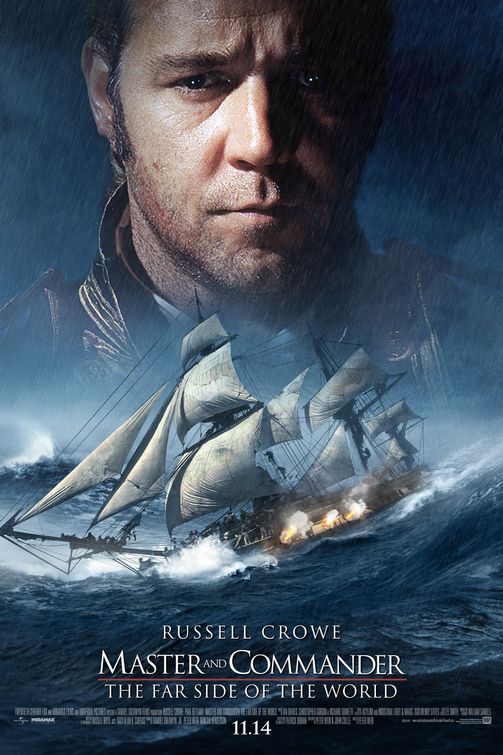
Master and Commander (2003)


                Someone finally had the nerve to try to bring Patrick O’Brian to the screen.  For you non-literary types, O’Brian was an acclaimed writer of nautical fiction.  He wrote a series of novels set in the Napoleonic Wars.  The main characters were a British captain named Jack Aubrey and a ship’s doctor/espionage agent named Stephen Maturin.  They are best friends although of very different personalities.  In the novels, their relationship takes precedence over traditional plotting.  O’Brian had a way with words that resulted in a legion of fans.  I am not among them.  This is surprising because I am a big fan of Napoleonic naval warfare fiction.  I love the Horatio Hornblower series, for instance.  I have never been able to get into O’Brian, although I have read the first book.  I guess I just prefer traditional plotting.  And more ship-to-ship combat.  Peter Weir (“Gallipoli”) took on the task of adapting O’Brian.  He wisely decided to start in the middle of the series with book 10 – “The Far Side of the World”.  He also wisely decided to stick to a traditional narrative structure. 

                The effort that went into the film is truly incredible.  Weir was able to convince the studios to invest $150 million in a movie that had a sketchy market.  In the cinematic world of “Fast and Furious”, who wanted to see a movie about fighting frigates?  Thankfully, enough to make a profit, but not enough to warrant a sequel.  Much of the cost went into Weir’s obsession with making the movie as perfect a depiction of Napoleonic naval warfare as possible.  Weir bought a replica ship called the “Rose” for $1.5 million and then had extensive changes made to it to portray the HMS Surprise.  It was used for the sailing scenes.  A full scale model on a gimbal in a giant water tank (the same one used for “Titanic”) was also used in the filming.  27 miles of rope were on the model.  The costume department made 1,900 pairs of shoes, over 2,000 costumes, and around 2,000 hats.  The prop department was fixated with getting even the tiniest details accurate, including items that would not even make it onto film.  The efforts paid off as the movie was rewarded with ten Academy Award nominations including Best Picture and Best Director.  It won for Best Cinematography and Best Sound Editing.

                “April, 1805, Napoleon is master of Europe and only the British fleet stands before him – oceans are now battlefields.”  The HMS Surprise is cruising off the coast of Brazil.  It is a 28-gun frigate commanded by Capt. Jack Aubrey (Russell Crowe).  His crew of 197 call him “Lucky Jack” because he has always brought them success.  His mission is to intercept a French privateer named the Acheron which has been raiding British commerce.  The French frigate is American-made and has 44 guns.  In naval combat, it was all about the number of guns and America made some very stout warships.  For this reason, the Surprise is the underdog.  It doesn’t help that in their first encounter the Acheron surprises its hunter and kicks its butt.  This battle takes place within the first ten minutes of the movie.  So much for developing the Aubrey/Maturin relationship.  Weir will let us figure it out as we go along.  One thing we learn early about Aubrey is he is not the type to give up after an ass-whipping.  Instead of returning to port for repairs, they will continue pursuit and repair themselves along the way.  As far as Maturin (Paul Bettany), we learn that he is a way better doctor than you would expect on a warship. (In other words, he is not a drunken hack.)  He is also a man of the Enlightenment and not enamored with the ways of the Royal Navy.  This is the key difference between him and his warrior best friend.  The only thing they really have in common is love of music.  Aubrey plays the violin and Maturin plays the cello.

                The movie is not just a buddy film.  It also has a touch of the chase film in it.  You know the chase is going to end in a show-stopping duel, but to get to that scene we get some entertaining subplots.  The Surprise survives a horrific storm, although not every character survives.  Midshipman Hollum (Lee Ingleby) gets a reputation as a Jonah (the naval equivalent of a jinx) and this has to be resolved to continue the voyage.  Maturin has to operate on himself after an accident on board.  The operation takes place on the Galapagos Islands!  Join the Royal Navy (or get impressed into it) and see the world.  And kill people.  That last is a reference to the climactic battle which is well worth the wait.

                The attention to detail in “Master and Commander” is astounding.  This is one movie that I have to single out the suits for allowing Weir to make the movie his way.  I would guess the movie could have been made for $50 million less and still have been good.  And much of this effort was to impress the rather small community of Napoleonic naval warfare nuts.  It is a shame that the average viewer did not have a clue what went into making the film.  Unless you did research, you would not have known that the movie used a replica, a full-scale model in a tank, and a smaller model.  We just assume CGI these days.  I defy you to tell which is which in the movie.  The sets are authentic to the time period.  The verisimilitude is noteworthy.  This is especially true for below decks.  (With one caveat, the ceilings were a lofty five feet, which was higher than on an actual frigate.)

                The cast bought into Weir’s vision.  They went through a two-week boot camp that included gun training, swordsmanship, and practice in working the ship.  That included going up the rigging.  The speaking roles were given to mostly British stage actors that Americans would not recognize, but they are uniformly excellent.  (Weir’s decision to confine the movie to the ship resulted in no speaking roles for women.  This is the rare nautical film with no romance.) The script gives fair treatment to the tars as well as the officers.  Several characters get to shine, including two of the young midshipmen.  Special mention must be made of the extras.  The casting director combed the world for faces that would reflect the cosmopolitan nature of a British crew.  They knew their roles as crewmen of a frigate and they knew their actions on the peripheries of scenes would enhance instead of detract from the authenticity of the movie.  With this said, clearly the movie depends on the performances of the two leads. 


                Crowe was the perfect choice for Aubrey.  He has the commanding presence of a captain.  Aubrey is one of the great characters of literature and Crowe is up to it.  (By the way, he does not look like the literary Lucky Jack.) I learned new respect for Crowe when I discovered he learned how to play the violin for his role.  He has the physicality for the action scenes.  Bettany is a match.  Maturin is the more intriguing character as he is unique on board the ship.  The man of science amongst the military men.  The scenes in the officer’s mess are great for the banter of seamen, but also because Maturin squirms and sometimes makes cynical remarks about the military ethos.  A subplot involves Aubrey and Maturin’s disagreement about the dictatorial nature of a captain’s power.  The movie does take the time to provoke some thinking.  As in the tradition of cinematic captains, is Aubrey too reckless?  Bettany shines and gets some show-stopping scenes like when he traverses one of the Galapagos Island searching for specimens.  (The movie was the first non-documentary to be allowed to film there.)  He takes acting honors with his self-surgery for a bullet wound.  (A scene that appears in the novel “HMS Surprise”.) 

                “Master and Commander” closes with one of the great combat scenes in war movie history.  It is almost seven minutes of total mayhem.  The exchange of cannonballs is followed by a boarding that results in a melee.  The choreography must have taken weeks.  It’s all very believable and graphic.  This is followed by a twisty ending that left fans expecting a sequel which has sadly not materialized.

                Will “Master and Commander” crack my 100 Best War Movies list?  After reading this review, what do you think?  It is certainly the best movie for teaching details about Napoleonic naval warfare.  See below.

GRADE  =  A

Napoleonic Warfare Details from “Master and Commander”

1.       Cannons on Royal Navy ships had nicknames like “Jumping Billy” and “Sudden Death”
2.       They used a lead weight to measure fathoms and a rope with knots to measure the ship’s speed.
3.       “Beat to quarters” meant prepare for combat.
4.       Young boys called “powder monkeys” had the job of bringing powder bags to the cannons during battle.
5.       Before a battle, the captain’s valuables would be put In boats towed behind the ship.
6.       The “weather gauge” was important.  It meant your ship was upwind of its opponent.
7.       Corpses were stitched up in their hammocks for burial at sea.  The last stitch was put through the nose to be sure they were dead.
8.       Plates for food were square (as in “square meals”).
9.       Men kept their possessions in sea chests.
10.    Sailors saluted by touching their knuckles to their forehead.
11.    Sailors were given a ration of “grog” which was a mixture of rum and water.
12.    Some of the sailors were “impressed” which means they were forcibly enrolled into the service or tricked into it.
13.    “Boarding pikes” were used by boarding parties.
14.    Capt. Aubrey inspires his crew by saying “For England, for home, and for the prize”.  “The prize” is a reference to capturing an enemy ship which when returned to England would result in the crew sharing in “prize money”.
15.    Boarding parties used grenades. 
16.    One of the boarders carries a Nock gun which is a multi-barreled flintlock smoothbore with one hell of a kick.
17.    A surrendering captain would offer his sword.
18.    A “prize crew” consisting of one of the officers and a few of the men would sail the captured ship back to a friendly port.

19.    Sailors could be badly wounded or even killed by splinters created by cannon balls hitting the wooden ships.

Saturday, February 9, 2013

WATCHALONG and BEST OF 2012


      Our War Movie Leadership Watchalong for February is "Master and Commander".  Here are the questions to be considered and discussed:

1.  How would you describe Aubrey's leadership style?

2.  Is Aubrey motivated more by pride or duty?

3.  Contrast the philosophies of Aubrey and Maturin?  Who is right?


        Well another year has passed and I have to admit it was not a great year for war movies at my house.  When I looked back at my list of the Best and Worst of 2011, I was envious of that year.  I saw some truly wonderful movies.  Unfortunately, although I watched 80 war movies this past year, the quality was much less.  Plus I had to watch a lot of movies I had already seen as I worked my way to the top of the 100 Greatest list.  No movie came close to the amazing “Waltz With Bashir”.  Don’t get me wrong, I still love doing this blog and will continue my journey, but it just was a blah year for war movies.  Here’s hoping 2013 will be better.  And it will be because I plan to watch more movies that have the chance to wow me.  By the way, please send me suggestions.  What are your “wow” movies?

                Last year I had limited my choices to movies I had not seen in five years.  This year I have decided to waive that rule.  Even if I had seen some of them before, it was not with a critical eye.  Plus I could not get a decent list if I limited it.

                Here we go:

10.  The Lost Battalion – although made for TV, the best WWI movie in years;  accurately tells a story that needed revival;  graphically realistic battle scenes

9.  Enemy at the Gates -  nicely builds on the seed of a true story;  a war romance for guys;  well-acted;  what modern war movies for the general public need to be like

8.  Spartacus -  a spectacular epic that shames wannabes like “Braveheart”;  everything is big – the acting, the sets, the score;  similar to “Enemy at the Gates” because it fleshes out the facts into robust entertainment

7.  Zulu -  a classic battle movie;  great acting;  lots of action

6.  Pork Chop Hill – very similar to “Zulu”; another movie that brings attention to a battle that deserves it;  both interesting studies in command

5.  Kanal – remarkable Polish film that is set in the Warsaw uprising; masterfully directed and lensed; one of the slimiest and grimiest movies you will ever see

4.  Tropic Thunder – a comedy for war movie lovers because we get more jokes than the general public;  scathingly satirical for intellectuals and silly enough for average people;  winner of my March Madness tournament to determine the greatest war comedy

3.  Downfall – a near perfect blend of accuracy and entertainment;  humanizes a monster without being offensive;  incredible indoor and outdoor sets

2.  Courage Under Fire -  2012’s “Three Kings” – a pop war movie that is not ridiculous;  multi-layered examination of the fog of war, the effects of stress in combat, post-traumatic stress disorder, dysfunctionality in a small unit;  bravura acting;  “A Few Good Men” with action

1.  Schindler's List -  I know it’s a boring choice, but a near perfect movie;  it meets all my requirements to be a great war movie   1.  admirably accurate  2.  tells a story that needs to be told  3. great in all the technical aspects  4.  great acting  5.  highly entertaining;  throw in that it works for both males and females and it has pizazz (e.g., filmed in black and white)

                Now for the dogs:

5.  Gods and Generals – how could this be associated with the excellent “Gettysburg”?!;  some excellent battle scenes don’t make up for an offensively pro-South and pro-slavery plot

4.  Red Dawn (1984) –  only foggy nostalgia by teenage boys who saw it in theaters can explain this movie’s continued popularity;  everything about it is ridiculous

3.  The Boys in Company C – another movie with an inexplicable following;  has all the weaknesses of “Red Dawn” with the added defect that it can be compared to many very superior Vietnam war movies

2.  To the Shores of Tripoli -  there are many movies made during WWII that are not overly patriotic or propagandistic – this is not one of them;  terrible acting and a plot that makes no sense;  patriotic bull shit

1.  Sabre Jet -  set in the Korean War and released in 1953;  this movie actually was supported by the U.S. Air Force;  laughable clichés and abysmal acting;  treacly score;  gun camera footage includes shooting down a Stuka!

                There you have them.  Ten must-sees and five must-avoids.  Enjoy all of them.

Wednesday, January 9, 2013

2013 WAR MOVIE LEADERSHIP WATCHALONG


         I have decided to lead my first watchalong in the year 2013.  I have chosen the topic of war movies that have something to say about leadership.  There are many good war movies that deal with this topic.  We will do one (sometimes two) per month.  I will pose a few general questions to focus on when you view and then we will discuss at the end of the month.  Everyone is welcome.  Thanks to the gang at Armchair General Forums for some excellent suggestions.

January -  The Crossing
February -  Master and Commander
March -  12 O’Clock High
April -  Waterloo
May -  Platoon
June -  Patton and The Desert Fox
July -  Pork Chop Hill and Zulu
August -  Lawrence of Arabia
September -  Letters from Iwo Jima
October -  Glory
November -  Operation Petticoat
December -  The Cockleshell Heroes
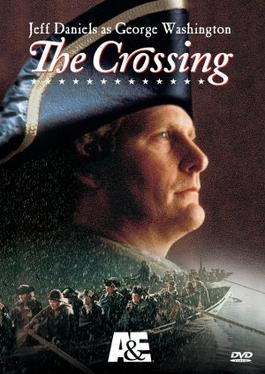
          First up – “The Crossing”.  The true story of Washington’s crossing of the Delaware and the Battle of Trenton.

1.  What leadership traits does Washington display?
2.  How does Washington handle his subordinates?
3.  How does he deal with adversity?
           Below is the full movie!
     

Saturday, April 9, 2011

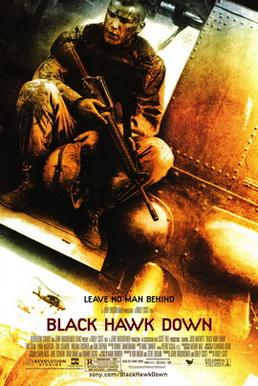
FINALS: Master and Commander (6) vs. Black Hawk Down (4)


Enough analysis. Let’s go to the point totals and see who wins the title of Greatest American War Movie of the 21st Century. And truthfully, I did not know the winner until I got out the calculator.


                                                    MASTER                      BLACK HAWK

Acting                                                 9                                        9

Realism                                            10                                        9

Accuracy                                           10                                       9

Entertainment Value                          9                                       9

Character Development                    9                                       7

Dialogue                                             9                                        9

Plausibility                                          8                                      10

Plot                                                      9                                        9

Action                                                  7                                      10

Sound and Visuals                             10                                      9

Soldier Behavior                                 9                                       9

Educational Value                               8                                      10

TOTALS                                         107                          109

Congratulations to you “Black Hawk Down” fans. You really know your war movies.