Showing posts with label Bosnian War. Show all posts

Sunday, September 7, 2025

Quo Vadis, Aida? (2020)


            “Quo Vadis, Aida?” (“Where Are You Going, Aida?”) is a Bosnian film written, produced, and directed by Jasmila Zbanio. It is a true story about the Srebrenica Massacre which occurred during the Bosnian War. Over 8,000 Bosniak men and boys were killed in act of genocide by Serbian troops.

            Aida (Jasna Duricic) is a schoolteacher who works as a translator for the UN. The Serbian army is on the march in the region of Srebrenica. NATO tells the Bosnians to remain in their homes in the city because they will be safe! Soon, tanks move in and the civilians are rounded up. Many are killed, the rest are sent to a refugee camp run by the UN. Aida is in the camp, but her husband and sons are on the outside. She manages to get them in, but then the war criminal Serbian General Mladic arrives and offers to bus the refugees to another city. Don’t get on that bus!

            “Quo Vadis, Aida?” assumes the audience has basic knowledge of the massacre. That was a big assumption when it comes to American viewers. You don’t have to be well-versed on the Bosnian War to understand that the movie deals with a vicious conflict between ethnic and religious groups. When you throw in the well-meaning but toothlessly naïve United Nations, you get a massacre. You won’t trust the UN and NATO to safeguard you if you are ever in a refugee situation. However, the movie does a good job indicting those two organizations, but it does not do a good job demonizing the Serbians who committed the first legally recognized genocide since WWII. There are plenty of Holocaust movies that bring that genocide to viewers. “Quo Vadis, Aida?” botches its opportunity to enrage viewers. It is not nearly as harsh as movies like “Son of Saul”. It does not hit hard enough. Mladic is serving a life sentence as a war criminal. The movie does not make him a villain. All it depicts him as is a liar. Duricic is outstanding as Aida, but the character is not much of a heroine. She is not tormented that she aided the massacre. And the ending of the movie dilutes the impact of her experience.

            Movies about genocide should leave you drained. You should question humanity. They should not end with kids performing for parents. They should not soften war criminals. “Quo Vadis, Aida?” The movie needed to be “Why, Aida?”


GRADE  =  C

Saturday, December 8, 2018

Shot Through the Heart (1998)


                “Shot Through the Heart” is a made-for-HBO movie about two snipers in the Bosnian War.  It was directed by David Attwood.  It was based on an article entitled “Anti-Sniper” by John Falk.  It was well-received and won a Peabody Award.  The movie is set in the siege of Sarajevo during the war.  Until the war broke out, Muslims, Serbs, and Croats were living peacefully with each other.   The movie shows how quickly pre-war fraternity can quickly evaporate when ethnic groups are involved.

                The movie is based on the experiences of Vlado Sarzinsky (Linus Roache).  He was a Croat married to a Muslim woman.  Vlado was a stable family man.  His best friend was Slavko Simic (Vincent Perez).  Slavko was a bachelor, ladies’ man.  The two were like brothers and had been teammates on the Yugoslavian Olympic team.  They were sharpshooters.  You can see where this is heading from a mile away.  Things are fine in Sarajevo until the war comes to town.  Slavko gets called up into the Bosnian Serb army.  He tries to convince Vlado to evacuate for the safety of his family, but Vlado is overconfident that the Serbs would never open fire on the city.  Plus, he refuses to become a refugee.  This is our home!  Yada, yada, yada. 

                The decision to stay looks shaky when a lone artillery shell hits the Sarzinsky apartment.  He decides to join the militia and is not man enough to get his wife to flee.  “If you’re staying, I’m staying.”  Okay, dear.  Meanwhile, Slavko has gone over to the dark side and is training a sniper team.  And not just training, why let your pupils have all the fun?  Serbian snipers, including Slavko, are targeting civilians.  Vlado witnesses the deaths of children and recognizes the style and ability of his former friend.  He decides to do something about this situation.  Only one of these buddies is going to survive this duel.

                “Shot Through the Heart” is based on a fascinating story.  A story that you would assume is fictional if you did not find out it is based on fact.  Since I could not get hold of the article, I cannot vouch for how accurate the movie is.  I have to assume that because the plot is predictable and lays it on thick, the movie has probably enhanced the story for entertainment purposes.  Before the artillery hits the fan, these two guys are the stereotyped best friends.  The movie takes them from one extreme to the other, as movies often do.  This means the character arc of Slavko is hard to swallow.  This likeable fellow becomes a child-killing sociopath?  Nothing in the movie justifies this change of personality.  That is not the only unrealistic aspect of the film.  The resolution of the conflict is weak, but to be expected from a movie that is cookie-cutter.

                Everything about the movie is average.  The actors are average. Roache and Perez are not exactly A-Listers. The cinematography is not noteworthy.  The soundtrack is bland.  The plot is unrealistic and does not give a clear impression of the hellish nature of the siege.  There is little artillery bombardment, for instance.   I’m not saying you should avoid the movie.  It is an entertaining premise and is competently done, but it is not going to challenge you.  Don’t watch it if you want to learn the basics of the Bosnian War.  That is not what the movie is designed to do so don’t make this the first movie about this war that you watch.

                Cracker?  Nope.
 
GRADE  =  C

Thursday, June 28, 2018

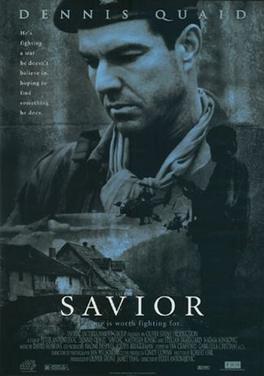
CRACKER? Savior (1998)


                “Savior” is another movie set in the Bosnian War.  In fact, it was the first movie shot in Serbia after the war ended.  Director Predrag Antonijevic, who was a political prisoner during the war, attempted to bring the dysfunctional nature of the war to Western audiences.  To gin up interest, the movie stars Dennis Quaid. 

                Quaid plays Joshua Rose.  Joshua is a State Department official stationed in Paris.  His wife (the second-billed Natassja Kinski) is killed by Islamic terrorists before Kinski’s name appears in the credits.  Joshua responds in a human way by going to a mosque and opening fire on Muslims.  Then it’s off to a new life and new name (Guy) in the French Foreign Legion.  Six years pass and he is a mercenary sniper for the Bosnian Serbs.  He lives to kill Muslims and Bosnia in 1992 is the best place in the world to do that.  He is soulless and does not shirk from shooting kids.  He would be unredeemable if this was not a movie.  In a bombed out town, he and his Bosnian partner Goran encounter a Serbian woman named Vera (Natasa Ninkovic).  She has been impregnated by a Muslim soldier which means Bosnian Serb men consider her to be dishonored.  Guy regains his humanity and starts his redemption arc when he saves Vera from being murdered by his partner.  He then delivers the baby.  At this point the movie becomes a road picture and a chase film.  Guy and Vera’s odyssey to a safe zone brings them into contact with the type of characters you find in a civil war.  They are helped at one point by an old Serbian/Croat couple.  The old  man sums up the war:  “I am Croat, my wife Serb.  Before the war – no difference.  Now… stupid”.  The chase involves Goran’s vendetta-minded relatives (assisted by Vera’s father).  Through this hellscape, Guy and Vera bond, of course.  If you think they are going to get married and live happily ever after, think again.

                “Savior” is a grim movie that informs an American audience about the mess that was the Bosnian War.  Quaid’s participation brought it some recognition, but the brutally honest take on the war was not exactly box office magic.  Quaid is excellent as the broken Joshua.  He behaves the way I could see myself behaving given what happens to his wife.  The redemption cliché is stale, but necessary.  Natasa Ninkovic holds her own.  She won several best actress awards at various festivals.  There is chemistry between the leads, but thankfully the movie is not a traditional romance.  There are some despicable villains including a Chetnik leader who carries medieval weapons in a golf bag.  There are some powerful scenes, none more gut-wrenching than when that villain massacres a group of civilians while Guy watches in hiding with the baby.  The movie is not without flaws.  It tends to get melodramatic is spots.  It is sometimes difficult to tell the Serbs from the Croats (but maybe that was intentional for a war that had no good guys).  And it has a weird and unsatisfying ending. 

                Will it crack the 100 Best War Movies?  Nope, but it is not a bad movie and deserves a watch.  Especially if you have not seen a movie about the Bosnian War.

GRADE  =  B

Friday, April 27, 2018

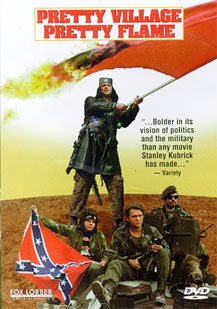
SHOULD I READ IT? Pretty Village, Pretty Flame (1996)


                “Pretty Village, Pretty Flame” is a Serbian film about the Bosnian War.  It was directed by Srdan Dragojevic.  It was very popular in Serbia. It is based on a true story and attempts to explain why groups of Serbians turned against each other.

                The movie opens with the dedication of a tunnel connecting Bosnia with Herzegovina.  The ribbon cutter slices himself and bleeds profusely.  Rather crude foreshadowing, no?  Nine years later, two best friends stand in front of the abandoned tunnel entrance, but refuse to go inside because they are afraid an ogre is inside.  A metaphorical ogre, yes. Milan is a Bosnian Serb and Halil is a Bosniak Muslim. Would you believe they end up on opposite sides of the conflict?

                The plot is nonlinear, but is structured around Milan and some comrades being trapped in a tunnel under assault from Bosniak Muslims that include Halil.  The movie flashes back to life in Yugoslavia before the conflict and forward to Milan in a hospital.  The tunnel scenes are basically of the frontier fort under Indian attack variety.  Milan’s comrades are a heterogeneous lot.  They include a criminal, a druggie, a teacher, a family man, and a female reporter.  Apparently, Serbian filmmakers are aware of small unit tropes.  Naturally, this dysfunctional group gets picked off one by one.

                “Pretty Village, Pretty Flame” is an interesting little movie.  It effectively depicts the insanity of a civil war.  Neighbors turn against each other.  Best friends can end fighting each other.  War is hell and civil war is especially hellacious.  The movie is well acted and the dialogue is realistic for soldiers in their situation.  The nonlinear structure works fairly well.  There is some character development through the flashbacks.  What keeps the movie from being better are the unreal tactics.  Much of the incidents in the tunnel defy reason.  For example, the trapped group do not flee deeper into the tunnel and the attackers do not attack after dark or use the RPGs that they clearly have.  But hey, what fun would it be if the defenders were wiped out quickly?
 
                Should you read it?  Don’t put it high on your TBW list, but get around to it someday.

GRADE  =  B-

Tuesday, March 29, 2016

Behind Enemy Lines (2001)


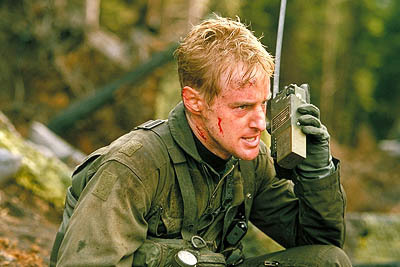
                “Behind Enemy Lines” is a war action movie that is loosely based on the story of Scott O’Grady.  You know as soon as the O’Grady incident had a happy ending, Hollywood was drooling over the potential entertainment value of the tale.  Unfortunately, the facts of O’Grady’s adventure were pretty tame.  What’s a screenwriter gonna do?  Hollywood did not invent the phrase “loosely based on a true story” for nothing.  Screenwriters Hussein Saade and Hadi Kaiss took the seed of the story and added a lot of water and manure to grow an action epic.  Director John Moore knew better than to let logic interfere with his debut.  The result was a crowd-pleaser that was moderately successful.

                The movie is set in the Bosnian War, so there is absolutely no danger that an American audience will recognize any historical inaccuracies.  On board the aircraft carrier U.S.S. Carl Vinson, the pilots learn about the Cincinnati Accords which will result in NATO pull-out from the conflict.  Damn, as though patrolling a no-fly zone against a Stone Age air force was not boring enough! Especially if you are a Hollywood hot shot like flight officer Lt. Chris Burnett (Owen Wilson).  He channels his inner Maverick frfom "Top Gun" to use the catapult to kick a football.  (Which, by the way, would actually destroy the football.)  This, plus the pulsating rock takeoff sequence, had me wondering if the movie was “Hot Shots! Part Trois”.  I was not totally wrong. 

                Admiral Reigert (Gene Hackman) calls Burnett in to talk him out of leaving the Navy.  Burnett is tired of being a traffic cop and the routine is boring.  Instead, he wants to be an airline pilot.  Reigert does not make Burnett cry by pointing out that a flight officer is not qualified to fly an airliner.  (Why wasn't the Burnett character made a pilot?)  Reigert tells the maverick to use his last two weeks to ponder his decision.  Perhaps something will happen to make his life less routine.
Hackman to director:  "I don't need no
stinking script!"
 

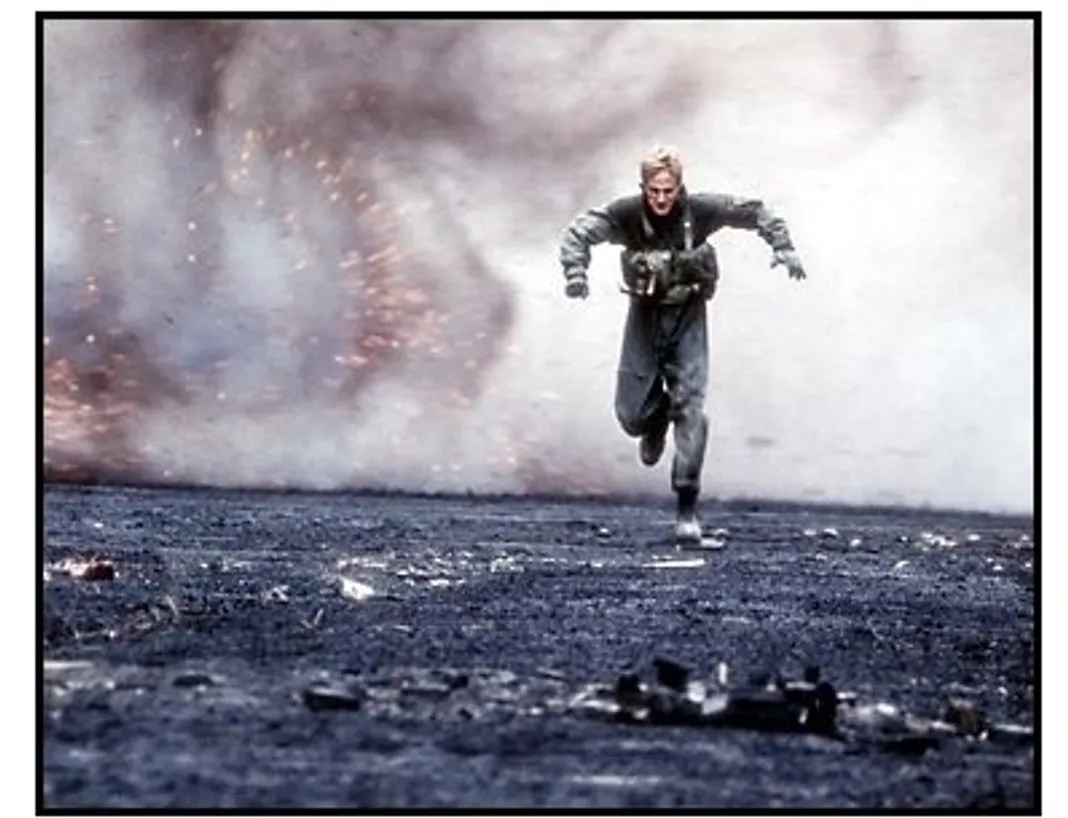
                In an attempt to get the movie into the Christmas movie genre, Burnett is sent on a photo-reconnaissance mission on X-Mas.  Burnett’s F-16 is shot down by two SAM missiles that chase his plane like a dog chasing a sausage flavored butterfly.  For plot purposes, pilot Lt. Stackhouse doesn’t use standard procedures to avoid the missiles so down goes the plane.  The missile firers are a Serbian paramilitary led by the Dastardly Lokar.  (As students of the Bosnian War know, the Serbian militia leaders were called Dastardly instead of General.)  Lokar has an evil lackey named Sasha that does his dirty work when his head-chopping arm gets weary.  Before you can say “chase movie”, the now solo Burnett is on the run.  (Owen Wilson must have gone to cross country boot camp to prepare for this movie.)  Would you believe that there are complications in rescuing him?  It turns out NATO is not really keen on it.  You know how politicians are in war movies.  That’s a shame because Burnett literally stumbles upon proof of war crimes.  While being chased by Lackey (actual rank) Sasha who happens to be a sniper who can’t hit Burnett when he is literally sitting on a rock.  (The script must have deflected the bullet.)  For those of you who are saying you just as soon watch the latest “Fast and Furious” if you are going to watch a chase movie, does that movie have the main character running through a booby trapped factory and then participating in a battle?  It does?  Never mind.
"What do you mean you can't pick me up because
it would be too easy?"

                It looks like the only way our insubordinate hero will be rescued is for his commander to get his insubordinate on, too.  You didn’t think Gene Hackman was going to keep his cool, did you?  And did you think the U S of A was going to let one of our boys be put through all this without some major payback?  Needless to say the movie has a patriotically happy ending, unless you are a Serb.  (The movie was accused of being too anti-Serbian war criminals.)  In fact, the release date was moved up to tap in to the desire to see Americans kick ass after 9/11.

                I will admit that the film does not claim to be based on a true story, although it clearly was inspired by the O’Grady incident (known as the Mrkonjic Grad Incident).  O’Grady certainly thought so as he sued 20th Century Fox for making it without his permission.  He particularly objected to the Burnett character's insubordination and potty mouth. ( I would like to say that O’Grady was right, but after “Top Gun” recruiting and its spawn – the Tailhook Scandal, Burnett might actually be a typical flyer.  He is certainly Hollywood's idea of a pilot. )  The suit was settled out of court.  I hope the studio did not pay him much because it is obvious his story simply gave them the idea for an action flick.  
Scott O'Grady probably did some running,
so there is that similarity

             You would have to really be up on your current events to tell what parts of the movie correspond to actual events.  (Although taking the default position that everything in the movie is bull shit would be a good idea.)  Scott O’Grady was piloting an  F-16 Flying Falcon over a no fly zone during the Bosnian War.  The no-fly zone was initiated by NATO to control the mostly Serbian forces that were battling the newly created country of Bosnia.  The Lokar character is based on a paramilitary unit leader (Zeljko Raznatovic aka Arkan) who committed war crimes.  O’Grady (he had no co-pilot) was shot down by a SAM.  He evaded capture for a week, but without the bells and whistles of the movie.  He was rescued by the Marines without incident until the outbound helicopters were missed by two shoulder-fired missiles and took some small arms fire.

                It’s easy to make fun of a movie like “Behind Enemy Lines”, but it is the type of entertainment that knows no shame.  Fourteen year old boys do not read reviews.  Mindless people and people who wants some time with their minds turned off also don’t care about reviews.  This is why the movie was successful.  It takes the tried and true action template and places it in a war setting.  It is not the first war movie to do this.  It has been done better in films like “Three Kings”, but usually the formula results in hair-pulling for war movie lovers like myself.  This is not to say the movie is terrible.  I enjoyed watching it.  Although I have to admit that part of the enjoyment was from condescension.  At one point, Burnett says that he was going Mach 3 when the missile hit.  Yeah, right!  To me it is a silly movie that keeps topping itself.

                The acting is serviceable.  Wilson and Hackman don’t have to stretch themselves.  Wilson is playing his “aw shucks” character and Hackman is military Hackman.  The villains are cartoons so the actors simply had to channel Snidely Whiplash. John Moore’s directorial debut is competent.  He makes use of the scenery of Slovakia well.  He decided to have the final scenes snow-covered so he had to use effects to achieve the look.  (This explains why the snow suddenly appears.)  He uses music to set the tone and he prods the audience continually with it.  The movie has very little slack time when it comes to the soundtrack.  He shows off with a variety of cinematography.  He has a similar kitchen sink approach to the plot as well.  One thing you can say is the action sequences are not redundant.  In the action movie community, avoiding repetition is considered the mark of an auteur.  The problem is that the movie tends to get more outlandish as it goes along.  My head was shaking by the final scene.  Surprise, Moore went on to make “A Good Day to Die Hard”.
   
                Will “Behind Enemy Lines” crack my 100 Best War Movies list?  Clearly, no.  It is a nice time waster and achieves its moronic check list of action tropes.  At least the viewers learn there was a Bosnian War and there were some terrible atrocities and evil individuals.  The Scott O’Grady incident is by far the most famous incident for America.   From the movie you learn the historical fact that we had a pilot shot down, he evaded capture, and was rescued.  Don’t file away anything else you “learn” from this movie.  Being the only American shot down during Operation Deny Flight might be a bit embarrassing for O’Grady.  If I was him, I would tell my grandchildren that the movie is a documentary.


GRADE  =  C-


Wednesday, December 29, 2010

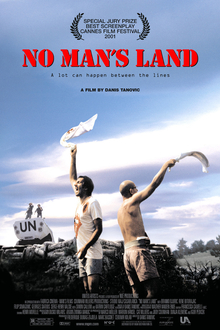
SHOULD I READ IT? "No Man's Land"

    
     “No Man’s Land” is a Bosnian war movie set in the Bosnian War. Most Americans are not familiar with this terrible war that broke out after the break-up of Yugoslavia. The confict, which raged from 1992-1995, is complicated. Basically, it was a war between the Bosnian Muslims of the newly created Bosnia-Herzegovina and the Bosnian Serbs who were supported by the country of Serbia which had desires for territory in Bosnia. Anyway, before your head starts spinning – you do not need to understand the conflict to enjoy the movie. The story is a universal one of enemies thrust together and forced to coexist. It could have taken place in any war (in movies anyway).


     The movie opens with a squad of Bosniaks (Bosnian Muslims) getting caught in a fog and wandering close to Serbian lines. They are wiped out in a sudden and graphic rain of violence. One (Ciki) survives, but he is stuck in a trench in no man’s land. The Serbs send out two men to check on the situation. The Bosniak hides in a dugout and kills one of them and wounds the other (Nino). They argue over who is to blame for the war. It is a war that featured ethnic cleansing, mass rapes, and even genocide. Of course, it’s the other side that is evil.

     To make matters more interesting, a companion of Ciki suddenly awakens from the dead. The problem is that Nino’s partner had placed a Bouncing Betty mine under his body earlier as a booby trap and now he cannot move without disastrous results. Ciki and Nino make an uneasy truce. They manage to signal both lines and the U.N. peacekeeping force (called “smurfs” because of their blue helmets) is called in. Before Lt. Marchand and his comrade can rescue the men, they are given an order by the U.N. commander to withdraw immediately. Nino is going to go with Marchand, but Ciki shoots him in the leg to keep him in the trench as insurance against a Serbian attack.

     At this point, the international press in the form of an intrepid female reporter (Jane Livingston) sniffs out the story. She intimidates the U.N. commander into allowing Marchand to go back with her in tow (and the rest of the press – so much for her exclusive!). In a nice and necessary touch, a news report chronicles the war up to this point (an important tutorial for the ignorant American audience). Fearing adverse press coverage, the U.N. now decides to save the men including sending in a bomb disposal expert. They arrive just in time to save Ciki from being knifed by Nino.

      The bomb guy is appropriately sweating and in a tense scene (with no music), he discovers that the bomb cannot be defused. I won’t give away the rest.

     “No Man’s Land” is highly acclaimed. It won the Best Foreign Film Oscar in an upset over the popular “Amelie”. It won a total of 42 international awards. The set (the trench) is realistic. The situation is believable, if a bit contrived. It is full of surprises. In a normal movie, the bomb would be defused. The rapprochement between Ciki and Nino would bear fruit.

      Did you guess the movie is anti-war? It is also instructive of how horrible most civil wars are. It takes some legitimate swipes at the press, stressing its desire for sensational stories. The indictment of the U.N. high command is a bit cliché. We’ve seen corrupt, Machiavellian officers in plenty of movies.

      “No Man’s Land” is a bit overrated (possibly out of sympathy for the Bosnians), but still well worth the viewing. Watch it for the interesting dilemma it revolves around and watch it so you won’t feel so guilty about sleeping through a war that killed at least 200,000 people and featured many atrocities.