Showing posts with label Non-English Combat Film Tournament. Show all posts

Monday, December 21, 2020

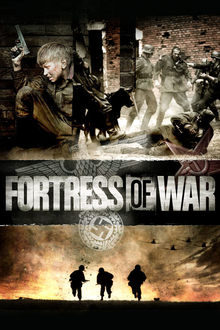
FINAL: The Unknown Soldier (1917) vs. Brest Fortress


                Well, we’ve reached the final match-up of the Non-English Combat Film Tournament.  It has been a lot of fun for me (and hopefully entertaining for you).  I watched 16 foreign war movies (some more than once) for the tournament.  I had not seen only two of them before (Battle of Neretva and 1944), but I still enjoyed watching all of them while concentrating on the categories.  I already knew there are a lot of very good subtitle movies, but I was pleasantly surprised to discover that I was able to find 16 non-English movies that fit the criteria of being combat films.  I would have had a hard time finding a 17th film, but the ones I watched are all good films.  There were a few upsets due to the IMDb ratings being off on some of the films, but for the most part the right films advanced throughout the tournament.  And I do think the two best films made the finals.  As with all my tournaments, the final match is simply an accumulation of the two films’ category scores.  (This is mainly because it is hard enough to come up with 12 categories, 16 is impossible.)  As you will see, the final was as close as you can get.  I do believe the best movie won, but I actually prefer the other movie.  I don’t think many will be upset with the final result.  The winner is a very highly regarded movie.


PLOT                                                                      Unknown   A (9)                               Brest  A (9)

ACTING                                                                Unknown  A  (9)                               Brest  A  (9)

CLICHES                                                               Unknown  B  (8)                               Brest  A  (9)

COMBAT                                                              Unknown  B  (8)                               Brest  A+  (10)

REALISM                                                              Unknown  A  (9)                               Brest  A  (9)

CHARACTER DEVELOPMENT                       Unknown  A  (9)                               Brest  C  (7)

SOLDIER BEHAVIOR                                        Unknown  A  (9)                               Brest  B  (8)

ENTERTAINMENT VALUE                              Unknown  A  (9)                               Brest  A  (9)

EFFECTS                                                               Unknown  B  (8)                               Brest  A  (9)

DIALOGUE                                                          Unknown  B  (8)                               Brest  C  (7)

STRATEGY AND TACTICS                               Unknown  A  (9)                               Brest  A  (9)

AMOUNT OF COMBAT                                   Unknown  A  (9)                               Brest  B  (8)

TOTAL                                        104                            103

Sunday, December 20, 2020

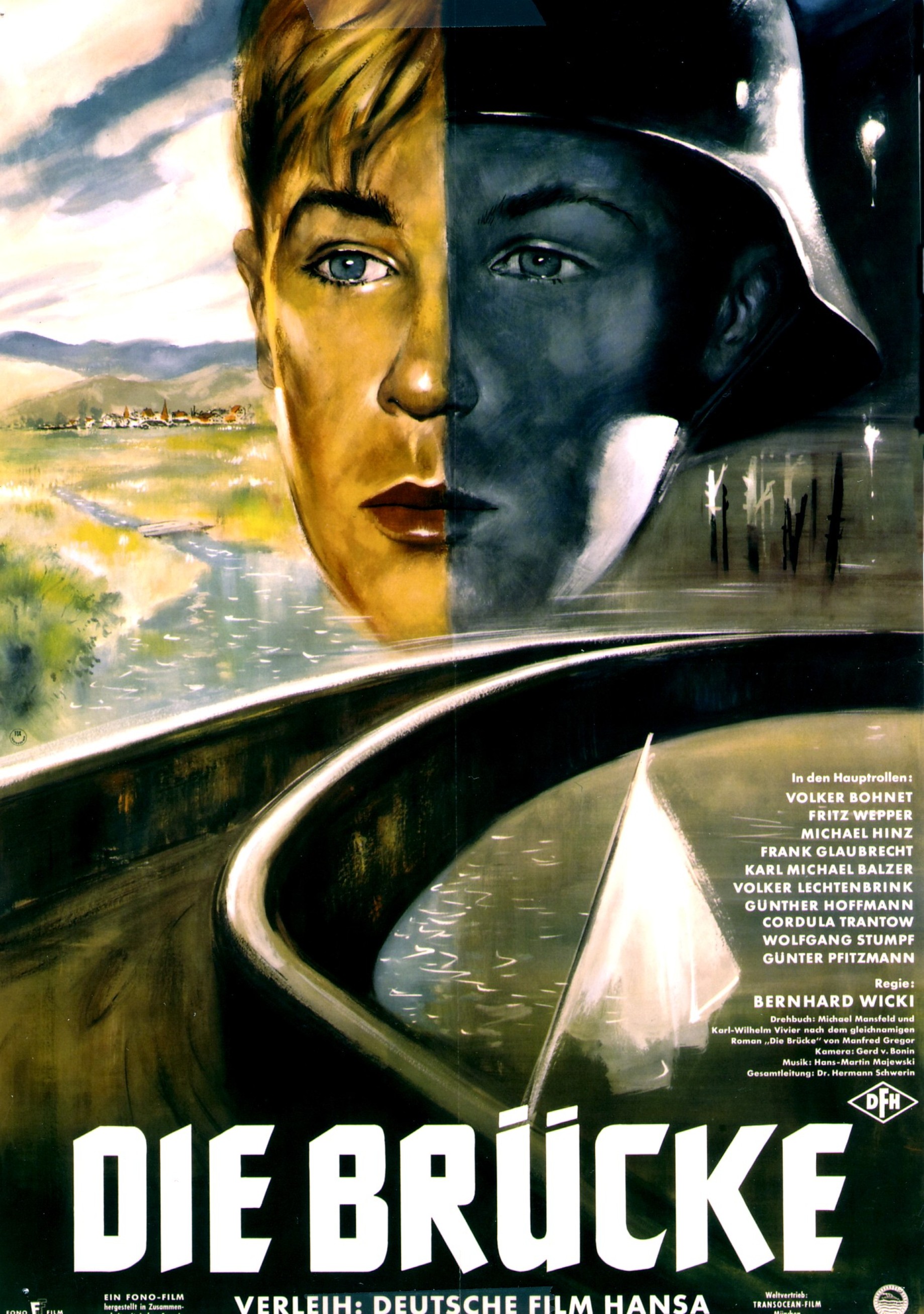
SEMI-FINAL: The Bridge (2) vs. The Unknown Soldier (2017) (3)


EFFECTS:

                “The Unknown Soldier” is a modern combat movie.  It follows a Finnish company of soldiers in the Continuation War from 1941-1944.  It covers the unit from the early bloom of victory to the late bust of a retreat.  It was the most expensive Finnish production at the time of its release, so you would expect the effects to be good.  Although CGI could have been afforded, the movie eschews it.  The special effects coordinator was very good with explosions.  The artillery bombardments are top notch.  The bullet effects make full use of squib technology.  War movie lovers underestimate the development of squibs in the mid-50’s.  It gives movies like “The Unknown Soldier” an advantage in realistic wounds over old school movies like “The Bridge”.  “The Unknown Soldier” also throws in the more recent development of blood sprays.  The sound effects are great, too.   GRADE  =  B  (8)

                “The Bridge” is on the other end of the spectrum when it comes to budget.  This applies to its effects as well.  There was no CGI in 1959, but that is not a problem because it is a movie that is not trying to be grandiose.  It is more a character study with a battle as the big pay-off and theme punctuation.  There is an embarrassingly fake tank (look for the wheels) in that battle.  The explosions that result from tank rounds are not realistic.  And it appears that as the explosions occurred, someone would throw dirt on the actors.  There is a plane attack that could have used CGI.   The other weapons are authentic, including a panzerfaust and an MG42.  Even though squibs were first used in 1955, they are not used here.  It is a low budget film with low budget effects, but that is part of the charm.  GRADE  =  C  (7)  

STRATEGY AND TACTICS:

                One of the strengths of “Tuntematon Sotillas” is the realistic portrayal of the relationship between the enlisted and the officers.  The common soldiers, especially if influenced by a cynical veteran like Rokka, have a tendency to do what they think is right for survival.  This means it is hard to determine if the strategy and tactics are sound.  Often the unit does not do what it is ordered to do.  For instance, during the retreat they are ordered to make a stand.  It is unclear if the order is correct or insane.  The soldiers decide it is insane.  Their tactics indicate that the technical adviser was hands-on.  They dig in to hold.  They get flanked.  There are preliminary artillery bombardments before attacks (although too brief, as in all war movies).  They use covering fire.  A soldier takes out a bunker with an explosive.  In an assault on an enemy trench, they throw grenades before rounding corners.  Most refreshing, these men run when they are being beaten. GRADE  =  A  (9)

                “Die Brucke” probably did not have a military adviser.  It is not that kind of movie.  It aimed at a general audience and was not focused on a realistic depiction of a battle.  The main strategy is to slow down the American advance.  The tactic is to defend the bridge.  There are problems with this scene.  It is understood by the boys’ commanding officer that the defense is merely a sham to keep the boys out of action.  The actual plan is to blow up the bridge.  If so, the bridge would have been rigged for demolition long before a team shows up to set the explosives.  Their plan calls for letting American tanks cross the bridge before blowing it.  That would be a questionable tactic although the Germans might have planned on isolating the tanks and taking them out with panzerfausts.  There is no evidence they had a solution for tanks rampaging through the town.  And if infantry accompanied the tanks that would have been a big risk.  The final battle does have tanks cooperating with infantry.  The tanks do fire their machine guns (a pet peeve of mine), but the shells they fire have no rhyme or reason.  It’s just random blowing up of things.  Surprisingly, the boys put up a decent defense of the bridge.  One is in an observation post (their old tree fort).  They make use of trenches.  They flank the tanks.  Not bad for kids who were in English class the day before.    GRADE  =  C  (7)

DIALOGUE:

                “The Unknown Soldier” is a bit more talkie than many war movies.  The dialogue is not forced and since the movie is not patriotic, the soldiers don’t spout propaganda.  Their banter feels right.  Rokka gets some great cynical lines.  “We’re not here to die.  We’re here to kill.”  When asked by a superior about his recent experiences, he says:  “Nowadays I model for the gun industry.”  An anachronistic comeback, but still cool.  GRADE  =  B  (8)

                “The Bridge”, since it is a character study, has a lot of dialogue to sketch out the characters.  The boys talk like teenage boys.  No matter the country or the war.  The screenwriter does not give them flowery speeches to make.  Their parents don’t give them speeches, either.  The only stereotype is the general who gives the “battle, victory, or death” yada, yada, yada harangue.  “Forward for the Fuhrer, the people, and the Fatherland.”  But the other officers are more realistic about the war situation.  When the teenage recruits arrive, their sergeant comments:  “They belong in kindergarten, not the army.”  GRADE  =  A  (9)

AMOUNT OF COMBAT:

                “The Unknown Soldier” has 38 minutes of combat.  That’s a lot, but the movie is 179 minutes long, so that is 21%.  GRADE  =  A  (9)

                “The Bridge” saves its combat for the end.  The defense of the bridge lasts 15 minutes.  That is 14% if the running time.  GRADE  =  C  (7)

FINAL SCORE:  The Unknown Soldier  34

                           The Bridge  30

ANALYSIS:

                Like with the other two semi-finalists, I love both these movies.  And I am not the only one.  “The Bridge” was big hit in West Germany when it came out and got worldwide recognition.  It was nominated for Best Foreign Language Film by the Academy Awards.  “The Unknown Soldier” was the third movie based on a popular Finnish novel.  The other two movies were well-received, but the 2017 version is considered by most to be the best of the trio.  Although, I do think it is a better combat film than “Die Brucke”, I have to admit the categories hurt the German film.  I was uncomfortable assigning C’s to an A movie, but that’s the way it goes.  In a combat movie tournament, it is no shame for “The Bridge” to bow out right before the finals.  It’s proof that you don’t have to rely on combat to be a great combat movie.  However, in a tournament to determine the best non-English combat film, “The Unknown Soldier” belongs in the finals.

Friday, December 18, 2020

NON-ENGLISH COMBAT FILM SEMI-FINALS


Well, we’re down to the final 4 and they are all great war movies.  Two are modern and the other two are black and white classics.  Two are German and the others are from Finland and Russia.  I don’t think I would have predicted all four would make it this far, but I don’t consider any of them to be a surprise.  One matchup is between the #2 and #3 seeds, but the other has two not so highly rated movies.  Any would be a worthy winner, so let’s see who will come out on top.

Fortress of War (8) vs.  Stalingrad:  Dogs Do You Want to Live Forever  (12)

The Bridge  (2)  vs.  Unknown Soldier  (3)

Any thoughts on which one should win the tournament?    

Here are the categories:

EFFECTS

STRATEGY AND TACTICS

DIALOGUE

AMOUNT OF COMBAT

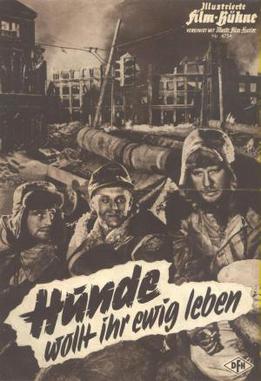
Brest Fortress (8) vs.  Stalingrad:  Dogs Do You Want to Live Forever?  (12)

EFFECTS: 

                “Brest Fortress” has outstanding effects.  The artillery bombardment is one of the best of any war movie.  These are not the cheap gas explosions you see in a lot of war movies.  The results of the bomb explosions and the bullets hitting is top notch.  Buildings really catch hell in this movie.  The combat is graphic with realistic wounds.  Whoever was in charge of dead bodies did a bang-up job.    The sound effects sync up with the battles to provide an assault on the senses that almost puts you on the receiving end.  The film does have some CGI aircraft that are just average, but at least not laughable.  The Stuka bombing scene is cool.  There is also a titanic explosion from a two-ton bomb.  GRADE  =  A  (9)

                “Stalingrad:  Dogs…” was made before CGI and modern special effects.  It uses real footage seamlessly.  Western audiences got to see “Stalin’s Organs” in their dreadful glory.  The bomb effects are above average.  Stalingrad is authentically rubbleized.  It is not a movie that relies on effects.  GRADE  =  C  (7)

DIALOGUE:

                There is nothing special about the dialogue in “Fortress of War”, but it is not hammily propagandistic like most Soviet films before the Thaw.  No one gives a speech, although the situations lend themselves to soap boxes.  No one gives a death monologue.  There are few memorable lines.  One soldier describes war as “ordinary and terrible.”  The movie has narration by Sashka as an old man.  It’s effective in setting the tone.  GRADE  =  C  (7)

                “Stalingrad:  Dogs…” is terse in its dialogue.  There’s no speechifying.  The men are appropriately laconic for well-disciplined soldiers who are facing death.  The grumbling seems right for men trapped in Stalingrad.  “This is the asshole of the world”.  There are a few good lines.  When Wisse talks about how he was taught to not rely on God, Kasselbach responds:  “Until you blow a tire.”  The chaplain chides a disbeliever with:  “Sometimes God only reveals himself in Hell.”  The narration is documentary style and gives a great overview of the military situation.  GRADE  =  B  (8)

STRATEGY AND TACTICS:

                “Brest Fortress” is based on a true story, so the strategy and tactics are supposedly accurate.  The Germans send an infiltration unit dressed as Soviets to cut water and electricity.  They open the battle with an artillery bombardment and try frontal assaults at first, until heavy losses cause them to settle into a siege.  Air attacks by Stukas are used to weaken the defenses.  The Germans wait for the desperate defenders to attempt to break out and then ambush them.  The Soviets are on the defensive for the most part.  They maintain heavy fire on the bridge leading into the fortress.  At one point, one Soviet group meets a German infantry/tank assault by charging to close the distance so the tanks can’t be as effective.  This was a bit shaky.  Overall, nothing happens that is head-scratching.  GRADE  =  A  (9)

                “Stalingrad:  Dogs…” is not based on a true story, but the big picture information about the battle is accurate.  The movie does an outstanding job informing the audience about the pincer movement that got the Germans surrounded.  Although a movie that concentrates on just a few German soldiers, there is coverage of the decision making by von Paulus.  The audience learns that the German commander disregarded sound advice from his subordinates because he was too loyal to Hitler.  It does a great job on the Hoth offensive which failed to break through.  On the micro level, the movie does give a taste for the house-to-house aspect of the battle, but you do not get a good feel for how desperate the fighting was.  There is the rare appearance of artillery spotting, but the Germans are low ammunition so we don’t actually see the tactic in operation.  GRADE  =  B  (8)

AMOUNT OF COMBAT: 

                “Brest Fortress” has a total of about 18 minutes of combat.  That is about 13% of the total.  GRADE  =  B  (8)

                “Stalingrad:  Dogs…” has 10 minutes of combat which is about 11% of the movie.  GRADE  =  C  (7)

FINAL SCORE:  Brest Fortress    33

                           Stalingrad:  Dogs  30

ANALYSIS:

                Although the quantity of combat is similar, “Brest Fortress” is much more of a combat movie than “Stalingrad:  Dogs Do You Want to Live Forever?”, so given the goal of the tournament, it is the more worthy entrant.  I love both movies and have seen both multiple times.  I do tend to think modern movies have advantages in portraying realistic combat, so “Brest Fortress” has an advantage that it does not waste by going overboard like some combat porn movies do.  In fact, neither of these movies fits in the combat porn subgenre.  Ironically, the two movies tread similar ground.  Both cover sieges from the losing side.   The Battle of Stalingrad lasted for months and the movie covers the second half of it.  It was such a huge battle that although the movie is excellent in giving the big picture, it is limited to showing the effects on a few men.  “Fortress of War” covers a siege that lasts for days instead of months and takes place in a small area.  It is much more a battle movie than “Stalingrad: Dogs…”  and is able to cover not just individuals, but also groups of soldiers.  Once again, the better movie had moved on.