Showing posts with label Norwegian Resistance. Show all posts

Wednesday, January 8, 2025

Number 24 (2024)


                “Number 24” (“Nr 24”) is a new Netflix war movie. It is a resistance movie set in Norway during WWII. The film is the true story of one of Norway’s greatest heroes – Gunnar Sonsteby. It was directed by John Andreas Andersen. 

                The movie uses the framing device of Gunnar giving a speech and then he answers of college students. The film jumps from the elderly Gunnar (Erik Hivju) discussing his resistance career to the main thread of the young Gunnar (Sjur Vatne Brean) leading a resistance cell called the Oslo Gang. When Norway was invaded in 1940, Gunnar (who was aware of and upset about the concentration camps) joined the militia, but they are overwhelmed by German troops. He shifts to the resistance. He is trained by British intelligence and given the code name Agent 24. His first mission is to “borrow” plates for making Norwegian currency. He asks the banker if he wants his grandchildren to speak German. However, as he explains to the college students, his motivation was the fight for freedom.

                He becomes the leader of his group, which includes Max Manus (who is not a character in the movie). His missions include sabotage and assassination of collaborators. This includes the head of the Norwegian version of the Gestapo. The movie reaches another level when a young lady in the audience asks about a relative of hers that was assassinated by the resistance for offering to help the Gestapo arrest Gunnar and others. Gunnar flashes back to his pre-war best friend who took the opposite path of Gunnar. The movie concludes with Gunnar arresting Vidkun Quisling. Sweet! He ends the war as the most decorated Norwegian in WWII.

                I started the movie a little upset that it established early that Gunnar survived the war. This was obviously going to lower the suspense because in most resistance movies, you wonder who will survive. Secondly, the fact that he lived and is not as famous as Max Manus gave the impression that Gunnar was a second tier hero. However, the flashbacks and narration compensated for those omissions. The structure works very well. It contrasts the reflective Gunnar with the courageous young Gunnar. The elderly Gunnar was teaching the young people about how they should act if Norway ever was in a similar situation. He does not pat himself on the back, but he is not haunted by what he did. Or so he insists. The movie emphasizes the conflict between morality and justice in an occupied country. However, the assassinations are all totally justified. Gunnar tells the audience that he did what he had to do and had no regrets. He does not have PTSD, which does not fit what some the young people expected.

The younger Gunnar is actually more circumspect about his actions. He was a success because he was careful and unflappable. And very lucky because even though he was the most wanted man in Norway, he passed through a number of German checks. Brean is excellent as the younger Gunnar and he is matched by Hivju. The rest of the cast is adequate. The movie concentrates so much on Gunnar that there is little development of his team.

                The film avoids some resistance movie tropes. There is only brief torture, but enough to remind everyone how bad the Gestapo was. In one scene, the German Gestapo head shows the evil Norwegian Gestapo leader how its done. The film also does not focus on Nazi reprisals. Gunnar does not agonize over the fact that killing one man will result in the deaths of numerous innocent Norwegians. It also avoids the usual close calls seen in movies of this type. I assume that is truthful, so the movie did not enhance the suspense by inventing tight scrapes.

                I have seen a lot of resistance movies and the best ones, according to the critics, are usually overrated, in my opinion. I am thinking of movies like “Army of Shadows” and “Max Manus”. I did not expect much from a Netflix movie. Surprisingly, it is a good movie. I would put it in the upper half of resistance movies. It is better than the two movies I just mentioned, but not better than “Flame and Citron” and “Army of Crime”.   

                How accurate is it? Gunnar Sonsteby did fight against the German invaders and then joined the resistance. He did go to Great Britain where he joined the SOE (Special Operations Executive). They gave him his code name. He was sent to Sweden where he was arrested and held by Swedish police for three months. He eventually convinced them that he was not Gunnar Sontseby. Back in Norway, he was captured by the Gestapo and escaped. (I have not idea why this was left out of the movie.) He did return to Great Britain where he was trained as a saboteur. The movie chose to highlight his smuggling of the currency plates, the blowing up of the office building which was coordinating the conscription of Norwegian men to be sent to the Eastern Front, and the destruction of an armaments factory. The screenwriter chose not to include the sabotaging of ships in Oslo harbor (this was covered in “Max Manus”), blowing up an oil storage depot, and damaging railways. And numerous other sabotage incidents. He did assassinate Karl Marthinson and was involved in the deaths of many collaborators. I did not find any evidence for the killing of his friend. Nor was I able to confirm that he was involved in the arrest of Quisling.

Sontesby is considered Norways greatest hero of the war. He was awarded the War Cross with three swords. He was the only one to receive three swords. He explained after the war that he was never caught because he was a master of disguise, never slept more than a day at the various apartments he had access to. He had a bland face which which might explain why he was not arrested when stopped by Germans to check his papers. He did carry a hand grenade, just in case.

After the war, Sontesby became a successful businessman. He did a lot of talks to young people to stress the dangers of fascism.  The movie is a good tribute to this remarkable man who died in 2012.


GRADE  =  B

Monday, September 5, 2016

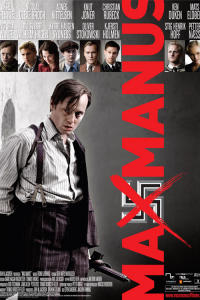
SHOULD I READ IT? Max Manus: Man of War (2008)


                “Max Manus:  Man of War” is a Norwegian film about a famous Norwegian hero.  It is a biographical war movie that is based on Manus’ biographies and other historical research.  The film was a major production and used 1,800 extras and 2,000 people behind the cameras.  Parts of Oslo were adapted to represent the 1940s including flying Nazi Germany flags above public buildings.  The movie was a big hit in Norway and won numerous awards.  It was Norway’s submission for Best Foreign Film for the Oscars.

                The movie opens with Manus (Aksel Hennie) fighting in the Winter War in Finland.  He is in the middle of a battle.  The movie then jumps to him in a hospital bed.  The plot is nonlinear and will return to the Winter War battle as a framing device.  When he returns to Norway, Manus joins the Resistance.  He and his buddies form a group and put out a propaganda paper.  They are like frat boys enjoying the adrenaline rush.  Many of those friends will not survive the war.  After being captured by the Gestapo, Max escapes to Great Britain.  In Scotland, he is trained in sabotage.  In particular, the new unit targets German shipping in Oslo harbor.  Operation Mardonius involves sneaking around the harbor after dark to lay Limpet mines.  The mines would be hand-placed below the waterlines.  Every superhero needs a supervillain.  Gestapo agent Fehmer plays this role.  He hounds Manus and his Oslo Gang.  The pressure wears on Max and he shows symptoms of PTSD.  He is still able to go for one last big score.  The target is a munitions ship called the Donau.  Even a Norwegian movie needs a huge explosion, right?

                Based on my research, the movie appears to be accurate.  Of course, much of this depends on the veracity of Manus’ recollections.  Some have called into question whether he actually fought in the Winter War, but the consensus is that he did.  This is fortunate because the scenes flashing back to the battle juice up the film and are a good framing device.  The rest of Manus’ acts are believable.  His superhero actions are balanced with some luck.  For instance, he is lucky that the Gestapo was incompetent.  At one point he is left virtually unguarded in a hospital and he is able to escape.  This in spite of his being one of the most wanted men in Norway.  The sabotage efforts in the harbor take advantage of laughable security.  These missions must have been accurate, otherwise the screenwriter would have added more suspense to the film.  His trips back and forth to England are not fraught with tension.  Most of the tension in the movie comes from Manus’ reaction to the loss of friends.  One theme of the movie is survivor’s guilt.  Hennie does a good job portraying this.  The acting overall is fine.
 
                “Max Manus” is a middle of the road Resistance movie.  It is certainly inferior to its closest relative “Flame and Citron”.  This does not make it a bad movie.  There is some interesting cinematography.  The dialogue is fine, if unmemorable.  As a history fanatic, the accuracy is a big plus, but is also a weakness since the movie lacks suspense.  To tell the truth, after watching the movie, I wondered why Manus is such a national hero. 


GRADE  =  B-

Tuesday, June 21, 2016

SHOULD I READ IT? Max Manus: Man of War (2008)


                “Max Manus:  Man of War” is a Norwegian film about a famous national hero.  It is a biographical war movie that is based on Manus’ biographies and other historical research.  The film was a major production and used 1,800 extras and 2,000 people behind the cameras.  Parts of Oslo were adapted to represent the 1940s including flying Nazi Germany flags above public buildings.  The movie was a big hit in Norway and won numerous awards.  It was Norway’s submission for Best Foreign Film for the Oscars.

                The movie opens with Manus (Aksel Hennie) fighting in the Winter War in Finland.  He is in the middle of a battle.  The movie then jumps to him in a hospital bed.  The plot is nonlinear and will return to the Winter War battle as a framing device.  When he returns to Norway, Manus joins the Resistance.  He and his buddies form a group and put out a propaganda paper.  They are like frat boys enjoying the adrenaline rush.  Many of those friends will not survive the war.  After being captured by the Gestapo, Max escapes to Great Britain.  In Scotland, he is trained in sabotage.  In particular, the new unit targets German shipping in Oslo harbor.  Operation Mardonius involves sneaking around the harbor after dark to lay Limpet mines.  The mines are hand-placed below the waterlines.  Every superhero needs a supervillain.  Gestapo agent Fehmer plays this role.  He hounds Manus and his Oslo Gang.  The pressure wears on Max and he shows symptoms of PTSD.  He is still able to go for one last big score.  The target is a munitions ship called the Donau.  Even a Norwegian movie needs a huge explosion, right?

                Based on my research, the movie appears to be accurate.  Of course, much of this depends on the veracity of Manus’ recollections.  Some have called into question whether he actually fought in the Winter War, but the consensus is that he did.  This is fortunate because the scenes flashing back to the battle juice up the film and are a good framing device.  The rest of Manus’ acts are believable.  His superhero actions are balanced with some luck.  For instance, he is lucky that the Gestapo was incompetent.  At one point he is left virtually unguarded in a hospital and he is able to escape.  This in spite of his being one of the most wanted men in Norway.  The sabotage efforts in the harbor take advantage of laughable security.  These missions must have been accurate, otherwise the screenwriter would have added more suspense to the film.  His trips back and forth to England are not fraught with tension.  Most of the tension in the movie comes from Manus’ reaction to the loss of friends.  One theme of the movie is survivor’s guilt.  Hennie does a good job portraying this.  The acting overall is fine. 

                “Max Manus” is a middle of the road Resistance movie.  It is certainly inferior to its closest relative “Flame and Citron”.  This does not make it a bad movie.  There is some interesting cinematography.  The dialogue is fine, if unmemorable.  As a history fanatic, the accuracy is a big plus, but is also a weakness since the movie lacks suspense.  To tell the truth, after watching the movie, I wondered why Manus is such a national hero. 

GRADE  =  B-