Showing posts with label Gestapo. Show all posts

Wednesday, October 3, 2018

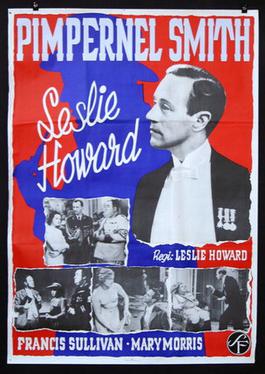
CLASSIC OR ANTIQUE? Pimpernel Smith (1941)


                In 1934, Leslie Howard made a classic movie called “The Scarlet Pimpernel”.  It was the tale of a British aristocrat who used his quick wits and disguises to rescue Frenchmen during the Reign of Terror of the French Revolution.  Seven years later, he revisited the premise and applied it to the situation in Europe right before the outbreak of WWII.  Howard was inspired by the story of the rescue of an anti-Nazi Hungarian leader.  He worked on the project for three years and ended up producing and directing.  The film was a big hit in Great Britain.  It was released in America as “Mister V” (I have no idea why they renamed it).  Churchill chose to show it to the officers of the HMS Prince of Wales on his way to meeting FDR for the conference that resulted in the Atlantic Charter.  When Raoul Wallenberg saw it in Sweden, it inspired him to rescue numerous Jews from the Holocaust.  The movie has some major street cred.  The movie claims to be a fantasy based on real people and events, but you should view it as preposterously entertaining propaganda.

                Howard plays Horatio Smith.  Smith is a professor of antiquities at Cambridge University.  He is absent-minded and anti-female.  No one would guess he is the daring “shadow” who has been sneaking Nazi targets out of Germany.  The mission portrayed in the movie is to rescue a German pianist who is anti-Nazi.  He plans to do this via a Nazi approved archeological dig that he tells them will prove the German civilization has Aryan beginnings.  So, if you’re wondering how a British professor has the opportunity to be rescuing right under Nazi noses, there you have it.  Don’t overthink.  The professor takes six of his students with him, including a brash American (I know that is redundant) named David (Hugh McDermott).   They will piece things together (the clue comes from a wound Smith gets while masquerading as a scarecrow!) and end up teaming up with their prof.  Smith’s nemesis is a Goering-like Gestapo chief named von Graum (Francis Sullivan).  He is pompous, but not buffoonish.  However, he does not get snark well.  He suspects Smith and their interplay is the highlight of the movie.  The movie has a running joke about von Graum’s claim that Shakespeare was German.  At the end of one of their exchanges, Smith says “Parting is such sweet sorrow.”  When Von Graum asks “what is that?”, Smith responds with “One of the most famous lines in German literature”.  To show the level of intelligence of the script, Smith refers to the theory that the Earl of Oxford wrote Shakespeare’s plays.  Von Graum sics  Ludmilla (Mary Morris) to flirt the truth out of the Professor and provide us with romance. 

                “Pimpernel Smith” is an entertaining propaganda piece from WWII Britain.  It is a showcase for the wonderful Leslie Howard.  He made it because he felt he needed to weigh in on the Nazi threat and show Brits what they were fighting for.  It was one of the first movies to reference the concentration camps, although the scene in one of them is ludicrous and far from showing the horrors of the Holocaust.  The movie’s theme is more of a fist in the face of the Nazis.  The movie closes with the obligatory speech by Smith which concludes with him promising Von Graum:  “I shall be back.  We should all be back.”  That is a bit trite, but most of the dialogue is crisp and there are some humorous lines.  Smith describing a skeleton uncovered at their dig:  Buried with all his weapons, you see, presumably, in the belief that there might be a rearmament program in the hereafter, eh, Mr. Spencer? An ancient Teuton.”  Howard dominates the movie.  He has a bravura scene where he goes to Gestapo headquarters in disguise and snarks the hell out of them.  (The scene reminds of “To Be or Not to Be”.)  The rest of the cast is average, except Sullivan who makes Von Graum a worthy adversary.  He is atypical for a comedy Nazi.  Otherwise the movie is predictable, but you expect that.

                “Pimpernel Smith” is available on You Tube and is well worth a watch.  Although not particularly well known, it is a classic and it stands the test of time well because the dialogue is intelligent.  The words balance the silliness and Howard moves it to a B.

GRADE  =  B

Monday, March 12, 2018

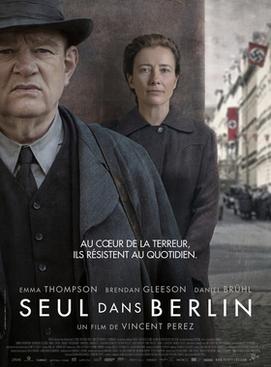
Alone in Berlin (2016)


         “Alone in Berlin” is a movie about resistance to the Nazis.  It was directed by Vincent Perez.  The movie is based on the novel Every Man Dies Alone by Hans Fallada.  Fallada was inspired by the story of Otto and Elise Hampel which he learned of through their Gestapo file.  The book was published posthumously in 1947.  It has been made into a West German movie in 1962, an East German miniseries in 1970, a movie in 1975, and a Czech miniseries in 2004.

                Otto (Brendan Gleeson) and Anna Quangel (Emma Thompson) are a working class couple living in Berlin.  Their lives change when they receive word of their son’s death fighting in France.  Otto takes it stoically and resumes his factory work seemingly unaffected by the death.  However, he decides to channel his anguish into an act of civil disobedience against the Nazis, who he blames for his son’s death.  He starts writing post cards with messages denouncing the war effort.  His first says “Hitler murdered my son.  He will murder your’s, too.”  He leaves the post cards around town for strangers to pick up.  Anna joins in and their moribund marriage is rekindled.  A police detective named Escherich (Daniel Bruhl) takes on the case which he calls “Operation Hobgoblin”.  He is a professional who appreciates the challenge, but soon he comes under pressure from the Gestapo to catch the traitors.
 
                “Alone in Berlin” is based on a story that needed to be told.  We have so many Holocaust movies, but so few movies covering the brave Germans who resisted against the Nazi regime.  The Quangels exemplify the resisters.  Their story is well told here and is not as enhanced as you often see with most resistance films.  Although this is commendable, the movie ends up being a bit slight and predictable.  It follows the usual template for this type of cat and mouse plot.  Unfortunately, there is a lack of suspense as the mouse has no truly close calls.  It is not a movie that will have you on the edge of your seat. 

                The characters are stereotypical.  Otto is the stoical average Joe who fights the system.  Anna is his partner in a dull marriage, who insists on sharing his derring-do.  A shared cause restores their love for each other.  The leads are what separates the movie from a made for TV movie.  Gleeson and Thompson are perfect as the pair, but their unemotional characters leave little opportunity for emoting.  Gleeson, in particular, never seems to change emotions.  This may be appropriate for a factory worker, but it reduces the suspense of the movie.  The movie comes off as stolid as he is. It does not jerk tears as it clearly could have. Escherich is the most fascinating character as he goes from pride in his profession to disillusionment with law enforcement in the Third Reich.   He is not the villain, the movie adds a loathsome SS officer for us to hiss at.  The movie also feels it is necessary to throw in a Holocaust subplot involving an elderly Jewish neighbor of the Quangels.  It seems the screenwriter felt it was not enough that some Germans risked their lives against the Nazis because they launched a war that killed thousands of young German men.  However, the subplot is entertaining and the movie would have been too short without it.  Then again, the movie could have been longer if it had covered the home front.  We really get no impression of how the war is affecting other German common people. We also are unaware of the effects of the post cards until the end.

                “Alone in Berlin” is worth the watch and informative.  It is historically accurate, in general.  The liberties that are taken with the original Gestapo file are acceptable to flesh out the story and bring it to the screen. 

GRADE  =  B-

HISTORICAL ACCURACY:   Otto Hampel was a factory worker.  His wife Elise was a domestic servant who was a member of the National Socialist Women’s League.  It was her brother who was killed in the war and motivated them to leave the post cards.  The movie made a good decision to change the dead relative to their son.  This allowed for the marital dynamic which is surely not accurate.  There were over 200 post cards from September, 1940 to the autumn of 1942.  The statements on each card covered ideas like don’t donate money to the Nazi regime, refuse military service, avoid cooperation with the government, and overthrow Hitler.  The Jewish subplot is probably fictional, but certainly could have happened.  In reality, the Hampels were caught when they were turned in by a neighbor.  The movie version is more entertaining.  They were found guilty of treason and beheaded.


Tuesday, June 21, 2016

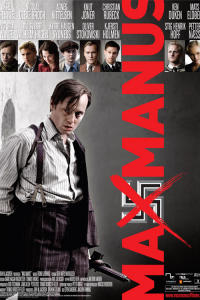
SHOULD I READ IT? Max Manus: Man of War (2008)


                “Max Manus:  Man of War” is a Norwegian film about a famous national hero.  It is a biographical war movie that is based on Manus’ biographies and other historical research.  The film was a major production and used 1,800 extras and 2,000 people behind the cameras.  Parts of Oslo were adapted to represent the 1940s including flying Nazi Germany flags above public buildings.  The movie was a big hit in Norway and won numerous awards.  It was Norway’s submission for Best Foreign Film for the Oscars.

                The movie opens with Manus (Aksel Hennie) fighting in the Winter War in Finland.  He is in the middle of a battle.  The movie then jumps to him in a hospital bed.  The plot is nonlinear and will return to the Winter War battle as a framing device.  When he returns to Norway, Manus joins the Resistance.  He and his buddies form a group and put out a propaganda paper.  They are like frat boys enjoying the adrenaline rush.  Many of those friends will not survive the war.  After being captured by the Gestapo, Max escapes to Great Britain.  In Scotland, he is trained in sabotage.  In particular, the new unit targets German shipping in Oslo harbor.  Operation Mardonius involves sneaking around the harbor after dark to lay Limpet mines.  The mines are hand-placed below the waterlines.  Every superhero needs a supervillain.  Gestapo agent Fehmer plays this role.  He hounds Manus and his Oslo Gang.  The pressure wears on Max and he shows symptoms of PTSD.  He is still able to go for one last big score.  The target is a munitions ship called the Donau.  Even a Norwegian movie needs a huge explosion, right?

                Based on my research, the movie appears to be accurate.  Of course, much of this depends on the veracity of Manus’ recollections.  Some have called into question whether he actually fought in the Winter War, but the consensus is that he did.  This is fortunate because the scenes flashing back to the battle juice up the film and are a good framing device.  The rest of Manus’ acts are believable.  His superhero actions are balanced with some luck.  For instance, he is lucky that the Gestapo was incompetent.  At one point he is left virtually unguarded in a hospital and he is able to escape.  This in spite of his being one of the most wanted men in Norway.  The sabotage efforts in the harbor take advantage of laughable security.  These missions must have been accurate, otherwise the screenwriter would have added more suspense to the film.  His trips back and forth to England are not fraught with tension.  Most of the tension in the movie comes from Manus’ reaction to the loss of friends.  One theme of the movie is survivor’s guilt.  Hennie does a good job portraying this.  The acting overall is fine. 

                “Max Manus” is a middle of the road Resistance movie.  It is certainly inferior to its closest relative “Flame and Citron”.  This does not make it a bad movie.  There is some interesting cinematography.  The dialogue is fine, if unmemorable.  As a history fanatic, the accuracy is a big plus, but is also a weakness since the movie lacks suspense.  To tell the truth, after watching the movie, I wondered why Manus is such a national hero. 

GRADE  =  B-

Wednesday, January 6, 2016

QUEUE CLEANSING: Man Hunt (1941)


                “Man Hunt” was one of the first anti-Nazi movies to come out of Hollywood before U.S. entry into WWII.  It was directed by Fritz Lang ("Ministry of Fear").  Lang was born in Austria and although raised Roman Catholic, he was classified by the Nuremberg Laws as a Jew.  He emigrated to America and resumed his movie-making career in Hollywood.  It was his choice to film the novel Rogue Male by Geoffrey Household.  The novel got positive reviews for its taut and exciting spy chases.  The movie also did well for the same reasons.  It is propagandistic, but Lang does not let his personal feelings ladle it on too thick.  By the way, Daniel Zanuck tried to keep Lang from having editorial control for fear the movie would be too harsh on the Nazis.  Lang secretly edited it anyhow which partly explains why the movie manages to violate the Hays Office rule of having some good Germans to balance the bad ones.

                Walter Pigeon plays renowned big game hunter Alan Thorndike.  The movie opens with him stalking Hitler at Berchtesgaden.  When der Fuhrer appears in his sights, Thorndike at first pulls the trigger on an empty chamber.  He then puts in a live round, but before he saves the world, he is captured.  After being tortured off screen because the Hays Office refused to allow the showing of Nazi brutality, Thorndike is interrogated by a monocled Nazi named Maj. Quive-Smith (George Sanders).  Thorndike insists he was just doing a “sporting stalk” (a better title for the movie) and had no intention of killing Hitler.  Monocle wants Thorndike to sign a confession that he intended to kill Hitler and he was working for the British government.  He, of course, refuses. Option two is to throw Thorndike off a cliff.  He survives the fall and a chase straight out of a Mississippi chain gang film.  Thorndike stows aboard a Danish ship where he is aided by a cabin boy named Vaner (Roddy McDowell in his first role – he had been evacuated to the States from Blitz-ravaged London).  Back in England, Thorndike is tailed by a sinister “walking corpse” named Jones (John Carradine acting by muscle memory).  Thorndike takes refuge with a cockney lass named Jerry (Joan Bennett).  She’s a prostitute except that the Hays Office insisted a sewing machine be placed in her flat so maybe she is a seamstress or something.  Jerry and Alan have their own theme music – “A Nightingale Sang in Berkeley Square”.  It’s both of their ring tones.  Jerry introduces him to fish and chips and eating with your fingers and he shows her how a gentleman pulls a chair out for a lady.  Thorndike uses the word “minions” to describe his pursuers who are so persistent that he ends up hiding in a cave.  This does not stop Monocle from finding him and coercing the confession out of him.  Thorndike is in the cross hairs like all the innocent animals he has slaughtered.  Unlike all his victims, he has the ability to fashion a weapon out of a bed slat, a belt, and poetically justified pin he had given to Jerry.


                “Man Hunt” was meant to be fun entertainment by a top-flight director, and it may have been for a 1940s audience.  However, I found it preposterous and too Old School to overcome its ridiculousness.  I recognize that the plot centering on a big game hunter stalking was not meant to be taken seriously, but reality seldom intrudes anywhere in the script.  Much of it makes no sense.  Why wouldn’t the Gestapo put him on trial?  Surely, this would have been more damaging to Great Britain than a confession.  Kudos for jumping right into the woods outside Hitler’s lair.  That at least spared us getting him to that locale. I am not looking forward to a prequel.  The movie also deserves credit for not subtitling the Germans so we are not clear on what their plans are.  Monocle talks in English, of course.  There are some interesting twists, including the death of a major character, but some of the twists are used to advance to the exciting conclusion in a way that could only happen in a movie where a big game hunter tries to kill Hitler, escapes back to England, and then is tracked down to his cave hiding place.  Speaking of which, the movie is full of stereotypes.  Besides the monocled villain, we also get the “seamstress” with a heart of gold, the cadaverous hit man, and the suave upper class Brit.  The actors are game and Bennett brings a lot of verve to her role.  There is a cute interlude between Jerry and an upper class woman.  The truth is that without her, the movie would be unmemorable (other than the absurd plot).  It is also a kick seeing Roddy McDowell.

                I am sure there are fans of “Man Hunt”.  You know who you are – Fritz Lang fan boys and girls.  I don’t mind fantasy in my war movies.  Give me a monster rhino in “300” any day. Stick around for the last ten minutes of the movie and tell me it is not more fantastical than “300”.  In those last ten minutes you will witness the silliest killing of a Nazi in any WWII movie.  And the post script – hilarious!  I would like to see the sequel.


 GRADE  =  D

Thursday, August 20, 2015

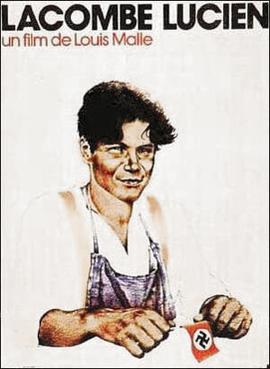
SHOULD I READ IT? Lacombe, Lucien (1974)


                “Lacombe, Lucien” is a Louis Malle (“Au Revoir Les Enfants”) film set in Vichy France in WWII.  It was nominated for the Best Foreign Language Film at the Academy Awards.  The film was co-written by Malle and the acclaimed novelist Patrick Modiano.  The movie is noteworthy for the casting of two rookie actors.  Aurore Clement was making her first movie.  Malle wanted an amateur in the main role.  Pierre Blaise was a highly unconventional choice.  He came too late for the open call audition and Malle got a certain vibe from him.  Blaise told him he did not want to be in the film and was only there because his mother forced him to go.  Blaise wanted to quit after a few days of being ordered around.  Malle solved this problem by telling everyone to treat Blaise like a star actor.

                The movie is set in a town in Southwestern France in June, 1944.  A radio broadcast from the Vichy government refers to Gaullists as communist dupes.  A teenage boy named Lucien mops floors in a hospital, but takes the time to shoot a bird with his slingshot.  Even before the credits roll we know the main character is warped.  Later, he knocks a chickens head off with his hand and I’m not talking about a CGI chicken.  This is a boy looking for a tipping point.  It comes when his teacher who is in the Resistance declines his request to join the Maquis.  In that case, how about the other side?  The den of collaborators operate from a hotel.  He rats out the teacher to join their gang.  He fits in well because the hotel is home to many despicable characters.  

                 Through one of his new friends, he meets a Jewish tailor named Albert Horn (Holger Lowenadler) who is being extorted by his friend.  Lucien is smitten by Albert’s daughter France (Aurore Clement) and although her father and grandmother always have that “what’s that smell?” look when he is around, she is apparently intrigued by his expressionless maliciousness.  He moves in with them.  Albert’s solution to this awkward situation is to go to the hotel to discuss things.  So much for maintaining a low profile.  Meanwhile there is some ambush and counter-ambush action involving Frenchmen who  think Hitler is the new Napoleon versus Frenchmen who want anything but fascism. 
  
                  Malle tries to tell a controversial story based on the dynamics in Vichy France.  Some French citizens fought against the Nazi regime and some collaborated with the fascists.  The group Lucien joins represents the Milice Francaise.  The Milice were a paramilitary unit created by the Vichy government to fight the French Resistance.  It used executions and assassinations. It also had a penchant for torturing to obtain information and confessions.  It helped round up French Jews for deportation.  There was a lot of tit for tat with the Resistance as the Resistance targeted Malice members for death.  Malle was taken to task by some French critics for exposing the seamy side of French national success in WWII.  Surprise, some Frenchmen bet on the wrong side!  Lucien’s friends are like 1920s gangsters.  There is even a Bonnie and Clyde couple.

                The main problem is the main character is not likeable.  I think we are supposed to be sympathetic towards a seventeen year old who falls in with the wrong crowd, but it is obvious from the beginning that this kid is a creep.  This dilutes the central themes that power corrupts and war destroys childhood innocence.  There seems little reason to believe that if there had not been a war, Lucien would not have been a petty criminal.   As played by the amateur Blaise, he does the opposite of scene chewing.  He does throw in some teenage giggling to remind us he is not a cyborg.  That said, the cinematographer does have a penchant for close-ups of expressionless faces.  Otherwise the camerawork is interesting.  If you know Blaise is a rookie, it does make the movie more palatable.  (The reluctant actor went on to make three more movies in the next year before dying when he crashed his new car.)  The rest of the acting is average, with the exception of Lowenadler.  He is riveting as the Jew constantly wondering how it is that he has to kowtow to his intellectual and moral inferiors.  He is the only interesting character. 

                The movie has some long stretches where nothing really happens.  When you get to some action, it is usually truncated.  And yet, there is not a lot of dialogue in a movie that has little action.  Worse, some of the plot makes no sense.  Why would France be attracted to such a loathsome character?  She certainly can perceive that he is a threat to her father’s safety.  And she stays with him after her father is taken!  That must have been some great sex.  Speaking of which, why would Albert go into the lion’s mouth?   
                 
                I have seen some awesome foreign films as part of this blog and I have seen some critically acclaimed foreign films that left me shaking my head.  “Lacombe, Lucien” fits into the second category.  It is a very French film and I do not mean that in a good way. ( If you want to see some good foreign war movies I would suggest Russian and South Korean.)  If you like strange and plodding, this movie is for you.


GRADE  =  C+

Sunday, October 12, 2014

SHOULD I READ IT? A Man Escaped (1956)

 
                “A Man Escaped” is a French black and white film directed by Robert Bresson and released in 1956.  It is the true story of a member of the French Resistance who was captured by the Germans  in WWII.  The main character Fontaine (Francois Leterrier) is based on Andre Devigny who was arrested by the Gestapo and sent to the inescapable Montluc Prison.  7,000 men died at this prison.
                In the movie, Fontaine is arrested when he tries to escape in a car and he is beaten and thrown into a cell at the prison.  He discovers that with the help of a purloined spoon he can loosen some of the door panels and get into the corridor to make contact with the other inmates.  The prison has a shocking lack of security.  Colonel Klink ran a stricter prison camp.   The cells are never searched even though the authorities threaten it.  Fontaine gets a package which allows him to make ropes and he hatches a plan to climb out of the prison.  This becomes an absolute necessity when he is condemned to execution.  To complicate matters, a German deserter is thrown into his cell.  The dilemma is whether he should trust this young man named Jost (Charles La Clainche).  He decides to take him along. 
                “A Man Escaped” is a highly regarded movie.  It was shown at Cannes.  It got good reviews.  It is historically accurate in portraying Devigny’s experiences.  The movie does simplify a bit as he made numerous escape attempts with the subsequent tortures.  Some of the tortures were by the infamous Klaus Barbie.  The escape itself is very close to the actual escape.  That may be part of the problem.  The movie is lacking in suspense and has long stretches of boredom.  Surprisingly, the treatment depicted is not very harsh.  You certainly do not get the impression that 7,000 men died in the prison.  The acting is okay with Leterrier solid in the main role.  The soundtrack stands out because it uses Mozart.
                “A Man Escaped” is overrated.  Devigny deserved a movie and the movie does a good job as a documentary, but it is just too slow moving for me.  And I think the same would be said by most war movie lovers.
 
Grade  =  D  

Monday, October 1, 2012

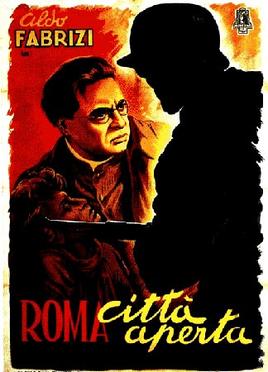
#25 - Rome, Open City (1945)


BACK-STORY:  “Rome, Open City” is a cinematic masterpiece by acclaimed director Roberto Rossellini.  It was set and filmed in Italy in 1945 during the waning days of Nazi occupation.  It was shot in the streets of Rome.  The crude look to the cinematography was the result of the lack of funding, the damaged studio, and the circumstances.  It was nominated for an Academy Award for Best Adapted Screenplay and won the Palme D’Or at Cannes.  It is a landmark in the Italian neorealist movement.  These films were noted for a general atmosphere of authenticity, immediacy as in being shot on location, use of nonprofessionals in roles, documentary style cinematography, and children in major roles.

OPENING:  The situation is established as German soldiers are marching and singing through the streets of Rome.  Soldiers come to arrest Resistance leader Manfredi (Marcello Paglieri).  He escapes.

SUMMARY:  Manfredi meets with a Catholic priest named Don Pietro (Aldo Fabrizi).  He asks the father to meet a contact and deliver some money which lets us know Don Pietro is part of the underground.  Also part of the movement is a pack of young boys who blow things up in acts of sabotage.

                 While some daring Romans fight the occupiers, most Romans try to lead normal lives.  This group is typified by Pina (Anna Magnani).  She is the pregnant fiance of a communist Resistance member named Francesco (Francesco Grandjacquet).  They are getting married the next day.  Pina’s son Marcello (Vito Annicchiarico) is the leader of the young saboteurs. 
the truck's view
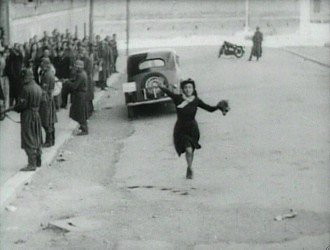
                The Roman police chief meets the Gestapo head who looks like Pee Wee Herman’s evil father.  He is effete and slimy.  They are working together to nab Manfredi.  Manfredi is hiding at Pina’s (way to go Einstein – hide at the pregnant soon-to-be-married’s place).  Suddenly the building is surrounded and Manfredi and Francesco are arrested.  As they are taken away in a truck, Pina chases and is gunned down in a powerful scene made more shocking by its proximity to the comic relief of Don Pietro hitting a talkative grandpa over the head with a frying pan to shut him up.   

                In a brief and unrealistic scene, the Resistance ambushes the truck and rescues the duo.  Francesco and Manfredi take refuge with a tart named Marina (Maria Michi).  Another unwise choice for a host because Marina is on drugs and her dealer is a lesbian German agent who is so stereotypically villainous you would cross the street if you saw her approaching on the sidewalk.  (Unless, of course, you’re into evil lesbians.)  The lesbian keeps Marina in the type of clothes an Italian floozy wears.

                Don Pietro is arranging for Manfredi to hide in a monastery when the Gestapo arrive and they are arrested.  Marina gets a new coat.  At Gestapo headquarters, Manfredi is taken to the torture room by Pee Wee’s father and Don Pietro is forced to watch, but we don’t get to.  Boo!  All we hear is moans and then suddenly a brief shot of a flame.  Manfredi dies pretty easily for a hardened Resistance leader.  Meanwhile, Germans in the adjacent lounge are playing poker and listening to a piano.  Get it?  One agent refers to the Italians as a slave race.  Manfredi will talk because he is inferior.  A sophisticated German named Hartmann (Joop van Hulzen) disagrees and contends that all Germans want to do is kill.  This hatred will destroy Germany and there is no hope.  He is apparently channeling Rossellini.
torturer and torture room

CLOSING:  Don Pietro is taken to the execution site.  His last words are “It’s not difficult to die, it’s difficult to live.”  The Italian firing squad misses because they are an Italian firing squad.  Just kidding.  They miss because they don’t want to shoot a priest.  You have to draw the line somewhere.  Hartmann kills Don Pietro.  All this is witnessed by the sabotage boys.  They walk off into the brighter Italian future.

RATINGS:
Acting =  C
Action =  4/10
Accuracy =  hard to say
Realism =  C+
Plot =  C

Overall =  C

WOULD CHICKS DIG IT?   Certainly, if they are a cinephile.  It is not a hard core war movie.  It has no graphic violence or language.  It has some strong female characters and is balanced in portraying the effects of the war on Italian women.  Unfortunately, two of the three women are stereotypically loathsome.

HISTORICAL ACCURACY:  The movie is supposedly based on real events as told to Rossellini by actual Resistance members.  This makes it hard to verify.  Let’s assume the events in the film actually happened.  That is plausible.  The movie does not depict anything that is obviously ridiculous or improbable.  Even the young boys sabotaging the German war effort is based on reality.

                One of the characters (Don Pietro) is clearly based on a real person.  Don Pieto Morosini was a Catholic priest who was part of the Resistance.  My research could not confirm any of his actions in the movie, but the death scene is close to his execution.  The last words are authentic.  The firing squad did miss.  The killing was actually done by an Italian officer, not a German.  A telling decision by Rossellini?  He does have characters that are collaborators, but overall the movie is lenient toward the Italian public.   

CRITIQUE:  “Rome, Open City” is a cinematic classic and deserves its fame.  It has an immediacy to it that makes it unique, especially for back then.  It has been best described as looking like a newsreel.  The cinematography is not jaw dropping, but if you know the back-story, it’s remarkable.  Rossellini had to overcome such obstacles that you have to admire the finished product.  The blending of film stocks is a standout feature.  Rossellini had to use what was available.  However, there’s the rub.  If you don’t know the full story behind the production, the movie does not have the same impact.

                The acting is what you would expect from a production like this.  Fabrizi is the top performer.  His Don Pietro is humane, humorous, and a hero.  He provides the comic relief like the frying pan silencing.  There is also a whimsical scene involving a naked statue.  Without him, the movie would have been too bleak.  The rest of the cast is average and many are playing stereotypes.  For a movie of such consequence, it is perplexing why Rossellini would include such sore thumbs like the Gestapo chief and the lesbian agent.  You would not expect hissable villains.  But I suppose if I had lived through the Nazi and fascist days, I might put a vampirish lesbian and an effeminate torturer in also.

                The themes are basic.  Good versus evil.  Normal people doing heroic things because the situation calls for it.  Civilians trying to live their lives in wartime.  Freedom is worth dying for.  None of this is ground-breaking.  The plot does not match the production.  If it did, this would be a masterpiece.  As it is, the movie could have done with more concentration on the more unorthodox elements like the children saboteurs.

CONCLUSION:  Once again I am confronted with a movie that must be highly rated by critics because of its historical importance moreso than its actual quality.  It is assuredly a must-see for anyone interested in the history of cinema and specifically Italian neorealism, but purely as a war movie it is nothing special.  I admire what Rossellini went through and the movie is truly a great accomplishment.  This must have been a large part of the reasoning by the Military History magazine panel of experts.  It could be argued that it is the #25 most important war movie ever made, but you cannot replace” important” with “greatest” or “best” and even put it in the Top 100.  It will not make my list of the 100 Best because I am not judging the films on importance.  I am looking at two main factors:  historical accuracy / realism and quality.  “Rome, Open City” does not make a case for itself in either area.  I would not put it ahead of the other Resistance movies I have reviewed:  Army of Crime, Flame and Citron, Black Book, and Army of Shadows (none of which made the Greatest 100).  All of those are more entertaining than "Rome, Open City".
             For those upset with this review, I am not a trained movie critic and did not go to film school.  However, I am true to what I call myself and I will not bow to the film intelligentsia.
 
 the beginning
        

Saturday, July 21, 2012

SHOULD I READ IT? Flame and Citron


                “Flame and Citron” is a Danish film directed by Ole Christian Madsen and released in 2008.  It was the most expensive Danish film to date.  It is a fictional retelling of the Danish Resistance heroes Jorsen Haagen Schmith and Bent Faurshoud-Hviid.  The movie was nominated for numerous awards and is critically acclaimed.
                The movie is set in Copenhagen during World War II.  It is “based on actual events”.  When Denmark fell to the Nazis, most Danish wanted to cooperate with the occupation and not makes matters worse.  Some even collaborated and Danish Nazis “came in out of the dark”.   A few wanted to resist, but this resistance mainly took the form of revenge against collaborators.  Jorsen, nicknamed Citron (Mads Mickelson), and Bent, nicknamed Flame (Thure Lindhardt), are assassins for a Resistance group.  Flame, the 23 year old red head, is the shooter.  We first meet him as he splashes a guy’s brains over a portrait of Hitler.  He is cold blooded, but his narration indicates a need to justify his actions.   Citron, the schlubby family man who sweats a lot, is the driver.  He is a terrible husband and father because he is obsessed with the cause.  He starts off as  a reluctant killer.  The first time he volunteers to kill a woman, Bent has to finish her off.  The movie pulls no punches in its violence.  They have a bête noir in the local Gestapo chief Hoffman (Christian Berkel).

Flame
                                                              
                Things get complicated when they are ordered by their superiors to start targeting Germans.  Previously all their victims had been “traitors”.  To make matters fuzzier, Flame meets a possible femme fatale named Ketty (Stine Stengade) who may be a double (or triple) agent.  Some of the killings are messy and some create doubts in their minds.  Are some of the victims innocent?  Are they being used?  Who can they trust?  When the killings of Germans results in retaliatory executions of civilians, their handlers order them to stop, but Flame and Citron are determined to get revenge.  The cat and mouse with Hoffman continues.  Members of their cell are being ratted out by an informer.  Is the informer Ketty?  Spoiler alert: the last paragraph picks up from here.

Hoffman and Flame
                “Flame and Citron” is a welcome addition to the WWII Resistance subgenre.  It tells the story of a duo who are famous in Denmark, but probably unheard of in most other countries.  I know I had never heard of them even though President Truman posthumously awarded Flammen the U.S. Medal of Freedom in 1951.  I am partial to movies that shed light on people or events that deserve recognition, especially if they don’t mess with the facts much.  It is hard to judge the accuracy of the movie.  My research did not find enough details to weigh in on all the incidents.  Some of the scenes seem far-fetched.  The idea that Flame would be sent to kill his known girlfriend Ketty seems like a ludicrous decision.  Their escape from the Gestapo strains credulity.  Ketty’s relationship with Hoffman is too predictably a love triangle.  Flame did have flaming red hair, but I find it hard to believe that one of the most wanted men in Denmark walked the streets with impunity like in the movie.
               There was a Resistance group called Holger Danske.  It was started by veterans of the Winter War in Finland.  They did concentrate on Danish collaborators and killed over 200.  They also participated in around 100 acts of sabotage.  At least 64 members were executed by the Gestapo during the war.
                The movie is thought provoking.  Bent is sent to kill a man named Gilbert.  Gilbert opines that there are three reasons to fight in a war:           1.  Career opportunity.  These types do not make good soldiers because they are very interested in survival.  A good soldier should be willing to give up his life.  2.  Patriotism or ideology.  These types tend to burn out, but the fanatics make good soldiers.  3.  Hatred of the enemy.  “Hate seduces you into doing things you never thought yourself capable of.”  (This may foreshadow why when Ketty says that she just wants to survive later in the movie, it’s a sign that she was in it for the money.)
                The basic theme is the lack of black and white in war, especially in resistance efforts.  Flame and Citron may have killed innocent people.  Some of what they did may not have been justified.  It is interesting how they react to this.  Bent begins to have doubts and Jorgen gets more hardline.  Or is this due to Flame’s love life progressing and Citron’s marriage collapsing?  Another theme is you can’t trust anyone, except maybe your best friend.
                The movie is well made.  Kudos to Madsen.  The cinematography is part of the entertainment.  You are aware of the craftsmanship.  Many shots are off center.  It is not pretentious.  The lighting is also noticeable.  The score is understated and fits well.  The acting is very good.  Both leads have great presense and chemistry.  The movie is a bit wordy, but the dialogue is realistic.  The action is consistent and has some graphic violence.
Grade -  B+
                In conclusion, “Flame and Citron” is one of the best of the Resistance subgenre.  Often compared to “Army of Shadows”, it is a better movie.  Of the movies of this type that I have reviewed since launching this blog, here are my rankings:

1.        Army of Crime

2.        Flame and Citron

3.        Black Book

4.        Army of Shadows           

                CLOSING:  Flame and Citron are arrested on the way to another try on Hoffman.  Jorgen tries to jump a fence and is shot, Bent walks away in the confusion.  Jorgen pulls a gun and somehow gets away from the ambulance and next we see him at a safe house.  Cut to Bent who is in a similar situation and both are surrounded by the Germans.  Bent takes cyanide, but Jorgen gets to have a bullet-infested shootout.  He’s Butch Cassidy without the Sundance Kid.  Don’t ask why the Germans unstealthily, prematurely open fire.  He does not win, but takes a lot with him.  They have come full circle from Flame being the enthusiastic assassin and Citron having never killed anyone.   As a postscript and to make it perfectly clear, Hoffman gives Ketty the $20,000 reward.  As to the historical accuracy of the ending, it is substantially correct.  The deaths are authentic.  Madsen’s decision to take a firm stand on the “did she or didn’t she” issue seems to be on firm ground based on research he did.
POSTER:  Doesn't really tell you what the movie is about, but I suppose Danes would already know.  Flame lighting a cigarette is certainly a preview of a common visual.   B
trailer

TRAILER:  Excellent.  A+