Sunday, April 6, 2014

THE DEER HUNTER (4) vs. PLATOON (5)


vs.


CHARACTERS
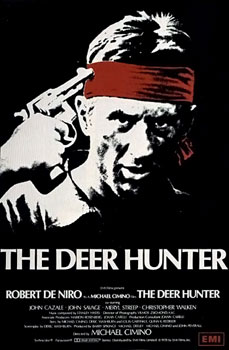
The Vietnam War sections feature only two characters but they are iconic. Mike (DeNiro) was born to lead and was in his element in the Nam. He comes up with the plan to save the trio from captivity and then tries to hold together the group afterwards. DeNiro is perfect in the role and the character represents the guys who cannot be blamed for us losing the war. As tough as he is, he comes back damaged goods. The other dominating character is Nick. Christopher Walken won a Best Supporting Actor award for his searing performance. Nick is the PTSD poster boy. They represent two extremes in a movie that is not noted for subtlety. The problem is the movie tells us nothing about the characters from enlistment to captivity. B

“Platoon” is also dominated by two characters – Elias and Barnes. Elias is the disillusioned older brother and Barnes is the alcoholic uncle. However, it is definitely an ensemble piece. The roles run the gamut of soldier types. In that respect it reflects the standard small heterogeneous unit with Taylor playing the cherry who has to learn quickly to survive. His character arc is the central outline of the film. The movie has several other memorable characters – the psychotic Bunny, the ass-kissing O’Neill, the stolid Rhar. Repeat viewings reward because some of the characters are indistinct at first. The key to the film is the division of the platoon into the competing cliques of the dopers and the boozers. Although a bit heavy-handed, the use of the two factions is a useful metaphor for the hawks and doves. A

FIRST QUARTER SCORE

The Deer Hunter = 8
Platoon = 9


BEHAVIOR

It is problematical to discuss TDH in terms of soldier behavior because when we first see Mike, Nick, and Steven in Vietnam they have been there for several months and are immediately captured. The movie is not interested in portraying the soldier experience. It does a seemingly good job depicting the behavior of typical young males from a steel town before and after their experience (provided their experience is uniquely horrible). I’m going to go with a default C for this one. C

“Platoon” was lauded for its realistic representation of Vietnam soldiers when it was released. The praise was too strong, but the film deserves a lot of credit for being one of the best tutorials on grunts. There are many things the viewer can learn about soldier life from the film. Some examples are: the treatment of new guys, the use of drugs in rear areas, the role of sergeants. Most importantly, the movie depicts the different ways soldiers reacted to stresses. The camaraderie and banter is not forced like in other Vietnam War films. A

HALF TIME SCORE

The Deer Hunter = 15
Platoon = 18


WEAPONS AND TACTICS

As with the behavior category, TDH is hard to grade here. There is a very brief segment where Mike is participating in either attacking or defending a village. He uses a M2 flamethrower to roast a NVA regular. That seems an unlikely weapon for him to use. The soldiers that arrive soon after, including Nick and Steven, are all armed with M16A1s. As far as tactics, there are none shown. This would be an appropriate place to mention that the enemy tactic of forcing captives to play Russian roulette for sport was bull crap. D

“Platoon” has a variety of weapons as would be typical of a platoon. Most of the men are armed with M16A1s and King has a “Pig” (M-60). One messup has the sergeants armed with the Colt Model 653P in an apparent attempt to arm them differently than their charges. This model was not used in Vietnam. The movie does a good job featuring Claymores. Tactically, the movie has several scenes that show a variety of tactics. The night ambush is fine. The search and destroy that results in the location of the tunnel and the subsequent activities in the village fit the war. Sending the platoon back in as bait to make contact with an enemy force and having them walk into an ambush is true to the war. The big battle at the end is similar to several in the war and includes a “broken arrow” reference. B

THIRD QUARTER SCORE

The Deer Hunter = 21
Platoon = 26


ACCURACY

TDH is totally fictional and it is more of a character study than a war movie. The scenes set in Vietnam have some accuracy problems. I already mentioned that there is no evidence that the VC forced their captives to participate in Russian roulette tournaments. In fact, there is little evidence that Russian roulette was played even in the anything goes atmosphere of Saigon. Not to mention that Nick would have been playing for years by the time Mike returns during the fall of the capital. D

“Platoon” is also fictional, but supposedly semi-biographical from Oliver Stone’s experiences in the 25th Infantry. Some of the vignettes are supposedly based on incidents that he witnessed or had happen to him. The most that can be said is that everything that happens in the film probably did happen to some platoon at some time. It’s the accuracy of the portrayal of the soldier experience that makes the movie accurate. B

FINAL SCORE

The Deer Hunter = 27
Platoon = 34


ANALYSIS

This is an upset only to Rotten Tomatoes reviewers. Keep in mind that most critics reviewed “The Deer Hunter” as a movie, not a Vietnam War movie. It is undoubtedly a cinematic masterpiece, but as a war story it has weaknesses. It tells you very little about the Vietnam War and some of what it tells is false. It is much better as a home front movie which means the categories that I have chosen were not its strengths. I questioned whether it should have been in the tournament to begin with but included it because I could not get some more obvious choices (like “A Rumor of War”) and it is hard not to include one of the most famous Vietnam War movies. On the other hand, “Platoon” is still the Vietnam War movie for most of the public. Both films won the Best Picture award (the only Vietnam War films to do so), but I think it is clear that “Platoon” is the superior film.

Saturday, April 5, 2014

HAMBURGER HILL (1) vs. GO TELL THE SPARTANS (9)

          The first round is completed and we have 8 movies moving on. There were no major upsets, but the upcoming matchups look intriguing.

Hamburger Hill (1)
Go Tell the Spartans (9)

The Deer Hunter (4)
Platoon (5)

Apocalypse Now (2)
84 Charlie Mopic (7)

Full Metal Jacket (3)
Casualties of War (6)
 
 
vs.


CHARACTERS
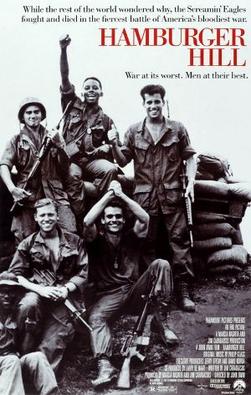
“Hamburger Hill” is balanced in its characters. There is a good mix of whites and blacks, veterans and replacements. The unit is heterogeneous, but not in a blatantly clichéd way like you see in 1940s and 1950s WWII movIes. No one is from Brooklyn. The movie concentrates on the five cherries, but the rest of the men are developed fairly well. Sgt. Frantz (McDermott) exemplifies the leadership of most Vietnam War sergeants. Doc aptly represents the stressed out medics who had to contend with the horrors inflicted on their charges. Biletsky is the FNG who has to grow up fast tempered by the cauldron of combat. A

“Go Tell the Spartans” is also a small heterogeneous unit movie, but it is much more clichéd. Col. Barker (Lancaster) is one of the top ten Vietnam War characters. He is the grizzled colonel who is a great leader, but not adept at playing the promotion game. Courcey is an interesting figure. He starts off as an enigmatic intellectual who appears to be out of place, then he goes native, but turns out to be a competent warrior. The rest of the men are stereotypes and badly written ones at that. The green, gung-ho LT, the druggie medic, the burned out vet. The most intriguing character is Cowboy – an ARVN corporal who is ruthless in dealing with any Vietnamese he assumes are VC. The twist to this odious guy is he is usually right. He is a portent to how Americans will come to view VC suspects”. C

FIRST QUARTER SCORE
Hamburger Hill = 9
Go Tell the Spartans = 7


SOLDIER BEHAVIOR

HH tries hard to be realistic in its portrayal of soldier life. The movie uses the replacements to tutor the audience in Vietnam War 101. The dialogue tries too hard to jam slang into every conversation. The unit dynamics are a strength. The movie has a good feel for black/white relations in a combat unit. There is tension, but they realize they depend on each other in the bush. The men evidence a fatalism that is reflected in the unit’s pet phrase: “It don’t mean nothing.” The men are not enthusiastic about the war, but they do their jobs. B

GTS is a bit anachronistic. Set in 1964, the attitudes of most of the main characters are more appropriate for later in the war. Barker is too pessimistic about the war, for instance. It is also jarring to have a drug addict in the unit. Lt. Hamilton does behave like the typical shavetail who thinks what he was taught in Officers Training School actually could be applied to that unconventional war. The film does not overdo the slang. C

HALF TIME SCORE
Hamburger Hill = 17
Go Tell the Spartans = 14


WEAPONS AND TACTICS

HH is based on an actual battle in Vietnam in 1969. The movie equips the actors with appropriate weapons, but several are armed with a later model of the M-16 than was available in the battle. Others are armed with M-60s and M-79 grenade launchers. The enemy are armed with AK-47s. There are no recoilless rifles even though in the actual battle they were keys to neutralizing the enemy bunkers. As far as tactics, the film is true to the frontal attacks that were forced by the American general that insisted on capturing the hill in spite of the fact that the terrain negated American mobility and fire support. B

GTS is not based on a real battle. The weaponry is circa 1964. Lt. Hamilton carries a Thompson, as do some of the ARVN. Barker is armed with a M3 grease gun. Most of the Americans have M1 Carbines and the ARVN mostly use M1 Garands. These weapons appear to be spot on (although I question the Thompsons in the hands of Vietnamese grunts). One discrepancy is the use of mortars to hit targets ten yards away. The movie makes a point of questioning American tactics explicitly (unlike the implicit criticism of HH). Barker is flummoxed by higher command’s desire to garrison an unimportant base in the middle of enemy controlled territory. The tactics used in defending the outpost are simplistically depicted, but not far off. Patrols are sent out and the enemy assault is a typical frontal attack at night that is defeated by firepower. C

THIRD QUARTER SCORE
Hamburger Hil =l 25
Go Tell the Spartans = 21


ACCURACY

HH is a micro view of the Battle of Ap Bia Mountain (Hill 937). The movie does not try to give the big picture and the audience is left in the dark about the strategy necessitating what is depicted on the screen. The recreation of the battle is as close as you could ask for. It even has one (there were at least three) of the friendly fire by choppers incidents (although in reality the fire was rockets, not machine guns and less men were killed). Although the movie exaggerates the death rate (what war movie doesn’t?), the battle was actually very brutal and costly. One inaccuracy is between assaults, the men sit around in safety when in reality the battle was noted for having no front line and the enemy did a lot of infiltrating. B

GTS attempts to replicate the advisory period of U.S. involvement. It is based on a novel which was written by a war correspondent who was in S. Vietnam during the time period. He went on a mission to evacuate a village which was discovered to be abandoned and then imagined what it would have been like if the village had been converted into an outpost and had then come under enemy attack. One can question the accuracy of the attitudes at this stage of the war. The U.S. was arming and training the ARVN and local defense militias were incorporated. The corruption of S.V. high command is accurate as is the overconfidence of American leadership. The big problem is that the attitudes of most of the Americans is more appropriate for 1968 than 1964. C

FINAL SCORE

Hamburger Hill = 33
Go Tell the Spartans = 28


ANALYSIS

“Go Tell the Spartans” is a movie that was overshadowed by two other Vietnam War movies when it came out in 1978 (“The Deer Hunter” and “Coming Home”). It could definitely be argued that it is superior to those two bloated epics. It is hampered by its low budget and some shoddy acting, but its heart is in the right place and has a cogent comment to make about the quick sand that the war devolved into. “Hamburger Hill” is the better movie overall because of superior acting, action, and accuracy. Interestingly, HH is more graphic in its combat, but less anti-war than GTS. By going micro, it fails to illuminate the misguided strategy involved in the battle. In this respect, it fumbled the chance to be an “after” to GTS’s “before” perspective.


Thursday, April 3, 2014

APOCALYPSE NOW (2) vs. TUNNEL RATS (15)


VS.


ACTING
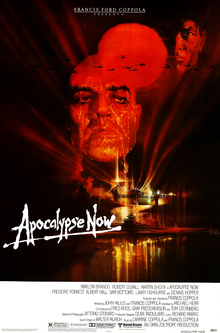
The acting in “Apocalypse Now” is top notch overall. Martin Sheen is perfect as Willard. It’s easy to overlook his narrative readings which added greatly to the film. He portrays Willard as a weary assassin who is good at his job and aware of its moral ambiguities. The supporting cast is strong. Duvall shows the range that made him one of our great actors. His performance is iconic and he dominates his screen time. The PBR crew is solid. However, Fishburne does come off as a rookie actor and Bottoms was only partially acting since he was literally on drugs for most of the shoot. As far as Hopper, the film did revive his career, but you get the impression he is simply playing himself. The elephant in the room (get it?) was Brando. He almost drags the last part of the film down. B

“Tunnel Rats” has a cast of some of the best stars ever to appear - in a Uwe Boll film. In other words, the actors are terrible. The only halfway recognizable name is Michael Pare. His previous movie before this one was “Ninja Cheerleaders”. Nuff’ said. The rest of the cast is now working at McDonalds. D

FIRST QUARTER SCORE
Apocalypse Now = 8
Tunnel Rats = 6


PLOT

The plot of “Apocalypse Now” is based on Joseph Conrad’s “Heart of Darkness”. The protagonist, Willard, is sent deep into the tiger-infested bush to terminate the Montagnard command of the off the reservation, formerly team-player Col. Kurtz. The first two-thirds of the film are mesmerizing. The odyssey format works well and the flow from exposition to intense action is fine. The vignettes are bizarre. The movie builds eerily to arrival at the final act. There is suspense and pathos. Most of the scenes are unforgettable. Unfortunately, the final act stumbles around in search of an ending. B

“Tunnel Rats” is exactly the opposite. There are no frills in its plot. It is a straight-forward march to oblivion for all the characters. The arc involves the attempts by an “elite” American force to ferret out the enemy in their tunnel system near their jungle base camp. The haunted house / “Saw” approach to the tunnel scenes are joined by a rip-snorting VC assault on the camp. The numerous deaths do have a variety to them. Much of what happens is preposterous, but the movie does flow in a “what do you expect from a movie like this?” sort of way. D

HALF TIME SCORE
Apocalypse Now = 16
Tunnel Rats = 12


COMBAT

“Apocalypse Now” is not really built around combat, but it does have one of the great combat scenes in cinema. The helicopter assault on the Viet Cong village to the tune of “Ride of the Valkyries” is unmatched. While it is search and destroy on steroids, it does accurately reflect the ability of the Air Cavalry to rein death on relatively stationary enemy positions. Its moments like this that made Americans think we were winning the war. The other two scenes that could be called combat are too surrealistic to be taken seriously. The bridge that is rebuild during the day and blown up night in an LSD haze and the ambush of the gun boat via arrows and one spear are allegorical. B

“Tunnel Rats” is combat porn. It has cursory banter and character development so we will care when the Americans die. The violence is extreme and the second half Is full of it. The movie is a little outside the box because a lot of the combat is underground in the tunnels. This action is fairly interesting. As far as the above ground action, quantity is the only goal. It is the firing M-60s from the hip style. The deaths are the type you see when the actor feels this may be his last acting performance so let’s make it memorable. With this said, after seeing so many Vietnam War movies that don’t put much emphasis on combat, you have to credit the film for having plenty of it. B

THIRD QUARTER SCORE
Apocalypse Now = 24
Tunnel Rats = 20


REALISM

Although Coppola claimed that his film was reality, no one believes that. It cannot really be judged fairly in this category. The central premise of an American officer being frustrated with the war effort and going off to create his own private army is clearly fantasy. Would the Army have sent out an assassin? I would not discount that considering what we know about the Phoenix Program. As far as the various vignettes, you cannot take them seriously. Other than the use of speakers to blast Wagner at the village, the helicopter assault is ramped up but realistically depicts the mobility and firepower of the U.S. Army in Vietnam. Surfing during an artillery barrage? Come on, dude. C

There are people who claim that “Tunnel Rats” is the most realistic Vietnam War movie. [Insert snarky comment.] They cannot be serious… or sane. There should have been a good movie made about the remarkable men who volunteered to go down into the tunnel complexes, but you don’t put it in the hands of Uwe Boll. If you interviewed all the men who went down into the tunnels, you would find no equivalence to most of the incidents depicted in the film. The fact is that Boll did not care about reality. I doubt he did any research and it is telling that there was no technical adviser for the film. Who does not know that base camps were not located in the middle of the jungle with no fields of fire? Who hires tall actors to portray tunnel rats? F

FINAL SCORE
Apocalypse Now = 31
Tunnel Rats = 25


ANALYSIS

Even though the last two categories were not strong ones for “Apocalypse Now”, it still comfortably won this match-up. I was not familiar with Uwe Boll’s reputation as one of the worst directors until I started researching his film. I have not seen any of his other movies, but most who have believe “Tunnel Rats” is a cut above his usual product. This sounds about right because the movie is entertaining in a brainless way and is not the worst Vietnam War movie ever made. However, Boll versus Coppola – you can’t get more extreme than that! “Apocalypse Now” is a flawed masterpiece and has its detractors, but no one can argue that “Tunnel Rats” deserved to win this matchup.

Wednesday, April 2, 2014

FULL METAL JACKET (3) vs. PLATOON LEADER (14)


VS.


ACTING
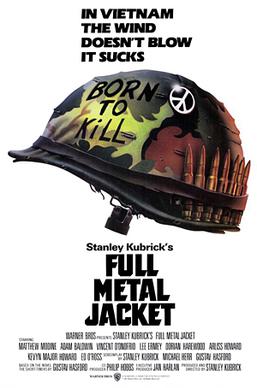
The acting in “Full Metal Jacket” is great, especially considering that the cast is far from all-star. Modine does a good job as the main character and he is likeable and witty. D’Onofrio as Pyle owes his career to this movie. For a debut, he knocks it out of the park. His transition from grinning buffoon to malevolent nutcase is amazing. Although Ermey had acted before (starting with 1978’s “Boys in Company C”), FMJ was his breakthrough. He completely dominates all his scenes. Watch him closely – the dude never blinks! It is important to note that he is not really acting. As far as Baldwin, he is perfect as Animal Mother and should still be kissing his agent’s ass for getting him the part. A

Now for something completely different. “Platoon Leader” stars Michael Dudikoff as Lt. Knight. The best that can be said for the perpetual B movie star is he performs well in comparison to the rest of the cast. There is some truly abysmal acting going on here. Some of the overwrought reactions to comrades’ deaths are painful to watch. F

FIRST QUARTER SCORE
Full Metal Jacket = 9
Platoon Leader = 5


PLOT

FMJ is divided into three parts. The first is the justifiably famous boot camp sequence. It is brilliant in every way and the rest of the film cannot ascend those heights again. Not that the rest of the film is weak. The second part finds Joker (Modine) is Vietnam as a Marine correspondent. He goes off to Hue to get a firsthand look at the Tet Offensive. It is there that he hooks up with Cowboy’s Lust Hog squad. Here we get the bonding of veterans as opposed to the virgins of boot camp. The third part is the duel with the sniper. This part hammers the war is hell theme and the loss of innocence. B

“Platoon Leader” has a trite plot and breaks no new ground. Knight is the green lieutenant that has to win the respect of his men. His men are misfits who need to be shaped by combat and good leadership. There are clichés at every turn. The movie is predictable all the way to the reunion of battle-bonded buddies in the last frame. The only redeeming factor is the predictably low budget, over-the-top combat. The plot is not going to tax your brain and sometimes it needs a rest. D

HALF TIME SCORE
Full Metal Jacket = 17
Platoon Leader = 11


COMBAT

FMJ is not really a combat movie. There is a brief scene where Joker helps defend his base against a sapper attack at the opening of Tet. It’s a night scene and has some fun pyrotechnics. The takeaway is the look of exultation on Joker’s face as he enjoys American firepower. The action in Hue builds from scenes of the results of urban combat to combat itself. It is the micro view as the Lust Hogs appear to be the only American fighting in the city. The sniper scene is intense and suspenseful. A group of comrades lose their faux swagger in the maelstrom. It may be one against eight, but it is a fair fight. C

“Platoon Leader” is not the first Vietnam War movie to choose quantity of combat over quality. Not that quality was an option given the production. You could blame the low budget, but they spared no expense when it came to blanks and explosions. There is a commendable variety. We get the patrol that encounters a sniper, a tunnel, and a booby trap. The trifecta. We get the ambush / ambushed scene. Have you ever seen six men throw 30 grenades onto chilling Congs? Naturally we get the reenactment of the Alamo as the sneaky hordes try to get gooks in the wire. And it’s on to the big “it sucks to be a villager” climax. You’ll smile as you shake your head. C

THIRD QUARTER SCORE
Full Metal Jacket = 24
Platoon Leader = 18


REALISM

FMJ is not surrealistic like “Apocalypse Now”, but it does not try to be a realistic. Surprisingly, the boot camp scenes are actually the most realistic of the film. People ignorant of the Marine Corps methods of molding men found this part of the movie to be exaggerated, but in reality Ermey was basically reenacting his own experiences. If anything the abuse is toned down. Joker’s stint as a correspondent dueling with the military’s puff machinery is true to the official coverage of the war. The soldier interactions accurately reflect the macho attitudes of young Marines who mask fear with bluster. The Hue set is appropriately rubbleized. The attitudes of the young Americans seasoned by their descent into Hell rings true. The sniper’s tactics are realistic although the duel spins off into fantasy. B

“Platoon Leader” is based on an excellent memoir by an officer in the war. The screenplay veers far from the true story which is a pity because a closer adaptation would have been superior to the finished product. The movie throws in characters and incidents that screenwriters who are ignorant of the war think are true to its nature. Nothing happens that could not have happened, but not all to the same unit and in such poorly executed fashion. C

FINAL SCORE
Full Metal Jacket = 32
Platoon Leader = 25


ANALYSIS

A match between the two books would have been much closer and more intriguing. The battle between was a foregone conclusion. Unlike some of the other lambs led to the slaughter (like “Siege of Firebase Gloria”), “Platoon Leader” has no delusional fans who argue for its greatness. “Full Metal Jacket” is similar to “Apocalypse Now” in its polarizing nature, but even with its uneven three act structure it is clearly one of the best Vietnam War movies. Is it the best? That is what this tournament will determine. Stick around.