Monday, September 30, 2019

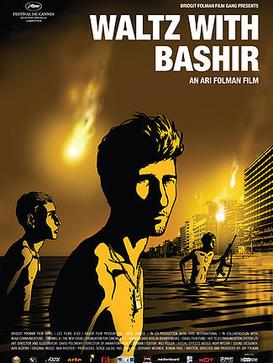
MUST-SEE: Waltz with Bashir (2008)


            The movie I am going to write about is not only a foreign film, but the best war film I have seen since I started my blog.  It reinforced my belief that modern war films can and should be superior to old school war movies, even the classics.  Technology and experience are huge advantages for modern war movie makers. “Waltz With Bashir” is an Israeli film released in 2008.  The movie blew me away because it hit several of my buttons.  It is historically accurate, I learned about an event that I knew little about, it is realistic in its depiction of the military and combat, and it is striking in its cinematography.

            Writer and director Ari Folman spent four years creating what he calls an “animated documentary”.  If not the first of this type, it is still ground-breaking.  It won numerous awards and was critically acclaimed. The film is autobiographical.  Folman takes as his theme the effects of war on memory.  The movie begins with a jaw-dropping three-dimensionally animated scene of a pack of dogs running through the streets to a man’s apartment building.  The dogs represent a memory flashback for a friend of Ari.  The friend tells Ari each dog represented the 26 dogs he sniped during the Lebanon War of 1982.  This conversation causes Ari to confront the fact that he has holes in his memory of his experiences in Lebanon.  That very night he has his first flashback which involves himself and some naked comrades coming ashore on a beach at the city of Beirut.  Another friend theorizes that people sometimes fill in gaps in their memory with fiction.  He encourages Ari to try to fill in those gaps with the truth.  Don’t fear opening those doors, “memory takes us where we want to go”.  He assures Ari he cannot get hurt by learning the truth.

            Ari goes on a quest to talk to comrades he served with and other veterans of the invasion.  Their individual stories are vignettes that powerfully depict the nature of modern war.  Several universal truths about warfare and young soldiers shine through.  The adrenalin-fueled fear in a firefight is followed by the overwhelming silence of death.  Soldiers tend to fire their weapons at nothing and nowhere when traveling through enemy territory.  Soldiers are clueless pawns of the brass and the pols.  Surviving members of a unit suffer guilt feelings.  Unlike some anti-war movies, “Waltz with Bashir” does not glamorize the appealing aspects of armed combat.

            The movie and Ari’s quest builds to the infamous Sabra and Shatila refugee camp massacre.  Ari’s unit is sent into western Beirut after the assassination of the Christian Phalange leader Bashir Gemayal.  The film takes its title from an incident in which a member of Ari’s unit waltzes with a machine gun in the middle of a Beirut street while under fire from snipers and RPGs and as Lebanese civilians spectate.  Time seems to stand still as he twirls amidst the bullet casings and ricochets.  The dance symbolizes Israel’s relationship with Bashir.

            The film concludes with the Israeli Defensive Forces allowing vengeance-minded Christian Phalange militia to enter the Muslim camps.  The individual Israeli soldiers exhibit cognitive dissonance as they are slow to grasp what is clearly taking place before their eyes, abetted by their lighting the night skies with flares.  It takes three days for an Israeli general t
o order a stop to the killings.  The movie makes it clear that the Israeli government (Defense Minister Sharon and Prime Minister Begin) was complicit in the massacre, but Folman is not on a crusade.  He lets the audience connect the dots.  The memory theme comes full circle as Ari realizes that he had filled in the black hole of his memory of being near the atrocity by imagining that he and his comrades were instead at a beach.  The movie closes with real footage of the massacre victims as though to remind the audience that although animated, the story is true.

            I love war movies because I love Military History.  I have been attracted to war stories since I was a child because of the action, but also because war brings out all the emotions and character traits in human beings.  I prefer war movies that have action and are true to human nature.  They don’t have to be historically accurate, but I insist they not be ridiculous and unrealistic.  When you have seen as many war films as I have, you also are impressed when the movie takes a different approach to telling a war story.  “Waltz with Bashir” fits this description (as do “300” and “Oh! What a Lovely War”).  Movies like these prove that although the war movie genre (starting with “Birth of a Nation”) is almost a century old, there are still new ways to tell a war story.

            “Waltz” looks very different from every other war film I have seen.  Folman uses a variety of animation.  The movie is mostly a blend of cut-out and classic animation.  It is influenced by graphic novels and has a scene reminiscent of Japanese animation.  He includes some three-dimensional scenes, but used the technique sparingly and only for spectacular shots.  His use of color varies depending on the mood of the scene.  The war scenes tend to be monochromatic.  The home front scenes are much more vibrant.  (He makes the point that although he was fighting only twenty minutes away, at home the public was unaffected by the war and life went on as usual.)  The shading and shadows are amazing.  The look is mesmerizing.  Blu-ray was made for movies like this.

            The movie is true to human nature mainly because these are real people who Ari interviewed and built the story on.  From my reading of men in combat, I have a good idea of how men behave under that stress.  For those vast majority of people who do not want to read extensively in this difficult area, movies can serve the purpose of educating civilians about what their young warriors go through.  This is important because these young men deserve to be understood.  Civilians need second-hand memory.  Undoubtedly, some Israelis were offended by what they saw in “Waltz”.  The fact is that atrocities happen on both sides in every war.  Good war movies like this show what really happens in war, but also provide the why.

            As an American, I admit to being ignorant about most modern non-American wars.  My blog experience and Caroline’s influence have opened up my eyes to several conflicts that I would have remained clueless about.  I have watched movies on the Bosnian War (“No Man’s Land”, “Pretty Village, Pretty Flame”), the First Chechan War (“Prisoner of the Mountain”), and the Lebanon War (“Beaufort”, “Lebanon”).    They are all good movies that taught me something and encouraged me to research the war.  My modus operandi when I read books is usually to read books that I can learn from.  I am not as strict with movies, but it’s an added bonus when the movie is instructive.

            In conclusion, we war movie lovers all have our reasons for loving this genre.  But don’t forget it is a genre with many fascinating subgenres.  Be willing to sample from them all, even the ones where you have to read.  And try out the newest one – animated war documentary.

GRADE  =  A+


Thursday, September 26, 2019

PICTURE, QUOTE, MOVIE #68


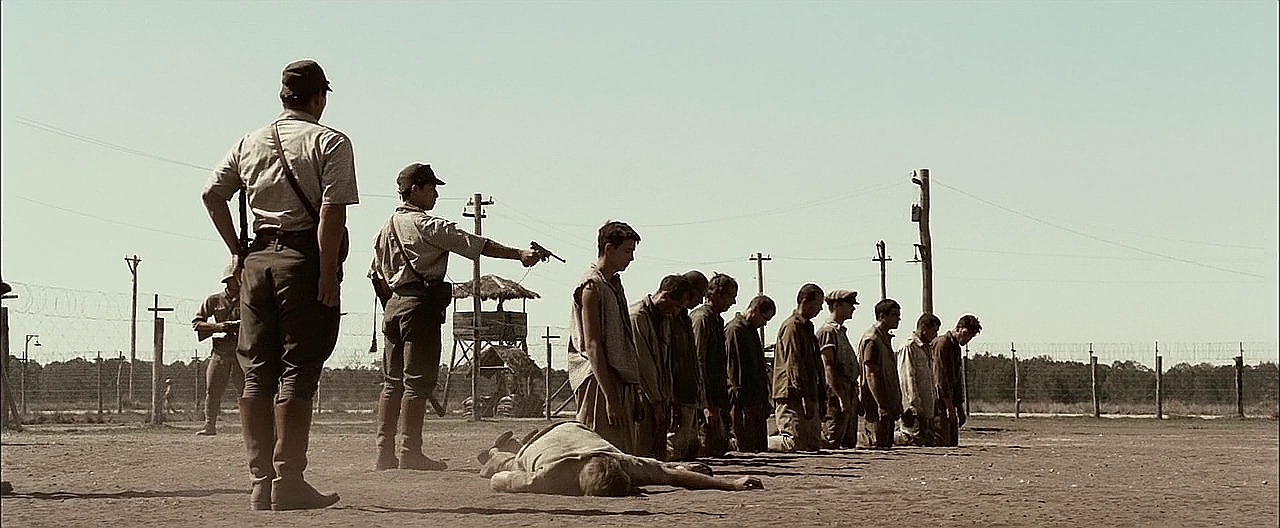
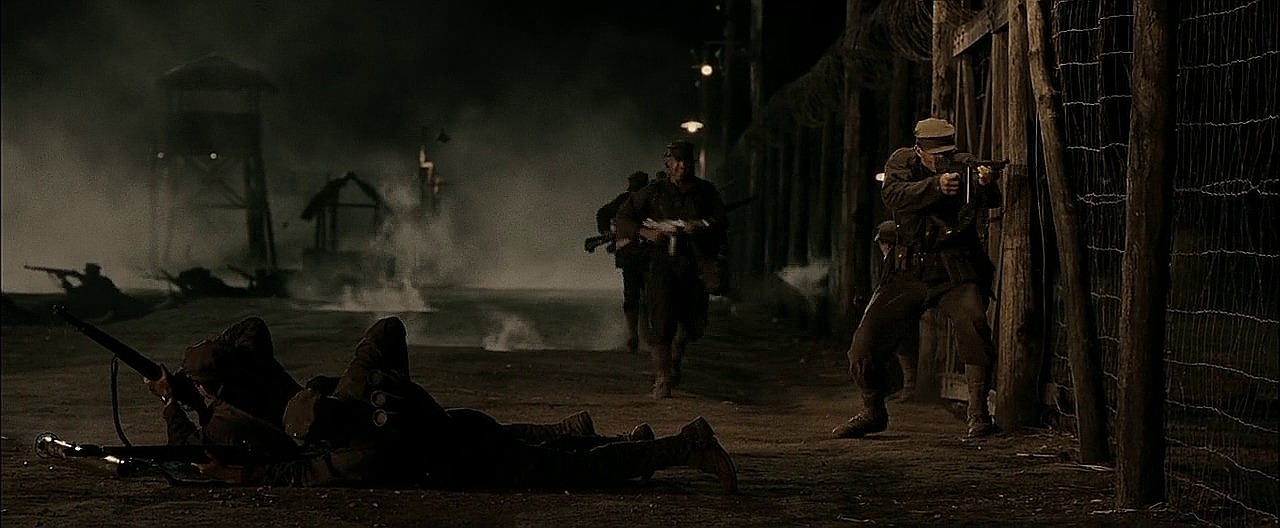
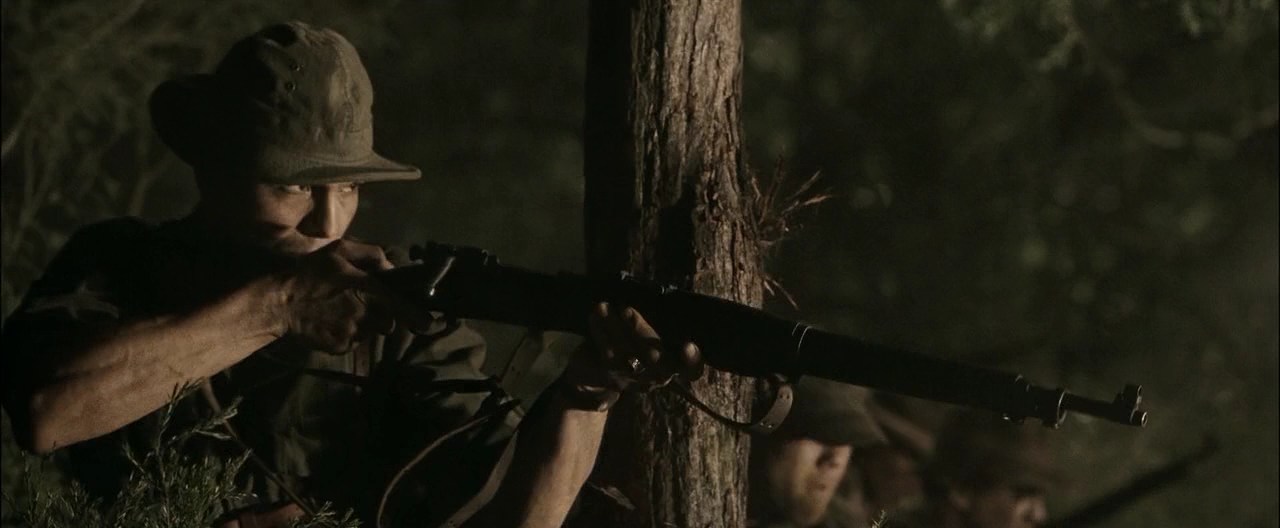
1.  What movie are the three pictures from?

2.  What movie is this quote from?

"It's Hebrew, it's from the Talmud. It says, 'Whoever saves one life, saves the world entire.'"


3.  What movie is this?

 It is based on the bestseller by James Bradley and Ron Powers.  It is the rare Hollywood production that not only came in under cost ($55 million compared to a budget of $80 million), but was filmed in almost half the time scheduled.  Seventy six year old directors apparently don’t like to waste time or money.  The beach scenes were filmed in Iceland.  The film did well with critics, but performed weakly at the box office.  It is a companion piece with another movie made by the same director about the same battle. It was nominated for Academy Awards for  Sound and Sound Editing.


Sunday, September 22, 2019

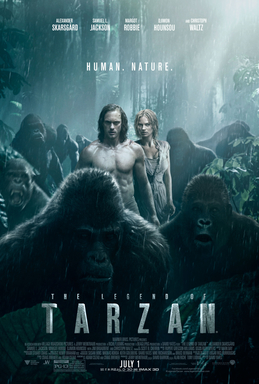
Tarzan Goes to War, Again: The Legend of Tarzan (2016)


                        Recently I watched an old Johnny Weismuller Tarzan movie entitled “Tarzan Triumphs” (1943).  Tarzan battles Nazis in that one, which makes it the rare Tarzan movie that is a war movie.  “The Legend of Tarzan” can be deemed a war movie too, if you stretch the definition a bit.  In this case, the apeman fights Belgian mercenaries.  Before you say this is a step down from Nazis, the Belgians are led by Christopher Waltz.   The movie was directed by David Yates, he of the last four Harry Potter movies and the Fantastic Beasts series, so you know there was no intention to make a retro Tarzan movie.  In fact, it is quite the opposite of “Tarzan Triumphs”.  For instance, the swinging Tarzan is CGI.  However, that body of Alexander Skarsgard is the real deal, ladies.  He trained and dieted for four months for the role.  The first choice, Michael Phelps, would not have had to do that, but his hosting stint on Saturday Night Live ended that thought of stunt casting.  Emma Stone was considered for the Jane role before Margot Robbie got it.  Sorry fellas, Skarsgard is the only one who takes his shirt off.  The screenplay started out being based on the Burrough’s books The Return of Tarzan and Tarzan and the Jewels of Opar.  However, the final screenplay bore little resemblance to those novels.  The film had a $180 million budget and made around $360 million worldwide, which in the wacky world of Hollywood accounting, was not enough to warrant a sequel.  Let’s see if the movie itself warranted a sequel. 

                        In 1884, at the Belgian Conference, the European powers divided up the Congo.  King Leopold of Belgium claimed the Congo basin with its abundant ivory, minerals, and apes.  Five years later, he was in debt and needed the legendary diamonds of Opar.  He sends his sinister agent Leon Rom (Waltz) to get them.  Rom and his mercenaries do the Tarzan movie trope of slaughtering natives, but since this is a 21st Century Tarzan movie, they get counter-slaughtered.  Rom survives for plot purposes and makes a deal with the Opar chief.  If Rom can seduce Tarzan to leave his cushy British life and get him back to Africa for a revenge killing, the diamonds are Belgium’s.  It seems the chief’s son was killed by Tarzan so he wants payback.  And the movie needs to get Skarsgard out of his clothes.  (By the way, ladies, you can fast forward to the 1:10 mark, if that’s what you came for.  Be aware, this Tarzan does not wear a loin cloth, but I don’t think you will be too disappointed.  Do the words “eight pack abs” intrigue you?)  The now totally civilized Lord Greystoke (he doesn’t grunt like in the movie “Greystoke”) is not falling for any free trip to Africa offer from the Belgians, but he does agree to accompany an American named George Washington Williams (Samuel L. Jackson) in order to save the slaves.  At this point the periodic flashbacks kick in.  These pretty much conform to the basic Tarzan biography.  The rest of the story does not.  Tarzan brings Jane along because Victorian ladies always got their way, right?  They get separated with Jane playing feisty damsel in distress (she’s captured twice!) and Tarzan (with help from his Azeem -  Robin Hood – Prince of Thieves) swinging and slinging.  Tarzan has to fight not only apes, but the natives.  (Both these groups stand in for Native Americans, like in Avatar.  To hammer the analogy in, Williams makes a point of mentioning his role in the conquest of the American West.)   For a hero, Tarzan sure has a lot of enemies.  This all culminates in the type of over the top set piece that you would expect from a 21st Century Tarzan movie.  (Note the wildebeest charge straight out of Avatar.)

                        These days rebooting does not mean going back to the basics.  It means reanimating Edgar Rice Burrough’s series and pumping it full of adrenaline.  And shrinking the brain.  This movie has more action and mayhem than five Weismuller movies combined.  But that’s what audiences want, right?  Few people today have seen even one of the old Tarzan movies.  If they had, they would have demanded a Cheetah!  In fact, there is little humor in this overly serious film.  It’s kind of hard to be light with slavery.  There is a wink-wink moment when Skarsgard does the Tarzan yell and Rom says:  “It’s rather different than I thought.”  Williams gets to say “Me Tarzan, you Jane” which is the first time that iconic line has been used in any Tarzan movie!   The actors are fine and Skarsgard makes a good Tarzan.  He certainly invested in the role and I’m guessing the ladies liked the choice.  Waltz is continuing to work on getting typecast.  He’s a suave Nazi, I mean Belgian.  The movie throws in a more cartoonish villain in the mercenary leader and then doesn’t bother to flesh him out or give him a cheer-worthy death.  The CGI is fine, especially for the apes.  Tarzan’s fight with his “brother” is amazing.  We have reached the point where Skarsgard did not have to swing on a vine.  That was CGI.  You wouldn’t know it, but the movie was filmed in England with only helicopter views of the gorgeous landscape of Gabon.  Unfortunately, the availability of CGI encourages directors to have silly, unrealistic set pieces like what swamps the movie at the end.

                        “The Legend of Tarzan” was not a misfire.  It is better than the last attempt to revive the series – 1984’s “Greystoke”.  The problem is that it is not as good as the better Weismuller entries.  More is not better.  Our modern penchant for adding more and more action scenes that defy reality and then topping them off with a showstopping and brain cell reducing set piece results in a movie that made $360 million, but barely turned a profit.  Considering the glut of superhero movies, it is hard to see Tarzan becoming a franchise.  Burrough’s novels might be too intellectual for today’s comic book weaned audiences.  When you aim your Tarzan movie at a comic book audience, you lose the quaint childlike wonder of the old Tarzan movies.  But no studio is going to make a movie like that, so watch one of the Weismuller movies.  Johnny didn’t have eight pack abs, but he did his own swinging and swimming.  And he had Cheetah.

GRADE  =  C+

Wednesday, September 18, 2019

CONSENSUS #59 The African Queen


SYNOPSIS: During WWI in Africa, a feisty missionary (Katharine Hepburn)  and a crusty riverboat captain (Humphrey Bogart) team up to try to sink a German warship.  Romance and adventures ensue as they encounter rapids and an uncooperative Mother Nature on their trek down the river.

BACK-STORY: The African Queen had one of the most famous productions in cinema history. Director John Huston insisted on filming half the movie on location in Uganda and the Congo.  The Katharine Hepburn later wrote of enjoying the experience, but had to overcome dysentery, drunken pranks from Bogart and Huston, and Hustons unique directing style. (Clint Eastwood later made a film about the production entitled White Hunter Black Heart.) The movie was a big hit with audiences and critics. It turned out the suits that thought an action / romance about an older couple would be icky were wrong. Bogart won the Best Actor Oscar and the film was nominated for Director, Adapted Screenplay, and Actress. In the most recent AFI ranking of the best movies it placed #65.


TRIVIA:  Wikipedia, imdb, making of documentary
 1.  It is based on a novel by C.S. Forester. 
2.  It has a 100% on Rotten Tomatoes.
3.  Allnut was supposed to have a cockney accent, but Bogart could not pull it off so the character wasmade a Canadian. 
4.  The boat is now a tourist attraction in Key Largo, Florida.
5.  Bogart won his only Best Actor Oscar.  (Bogart was so sure he would not win he did not prepare remarks.) 
6.  The cast and crew were often sick in Africa (usually from dysentery from the water), but not Bogart and Huston because the only water they drank was with their copious amounts of scotch.  Teetotaler Hepburn had to make runs to puke in a waiting bucket during the church scene.
7.  Lauren Bacall accompanied her husband Bogart of Africa and served as movie mom for the cast and crew.  She nursed and cooked. 
8.  For the rapids scene, an eight foot model was used. 
9.  Huston was concerned about the overly serious tone of Hepburn’s performance so he counseled her to channel Eleanor Roosevelt, specifically her “society smile”.  Hepburn later said it was the best advice she ever got from a director.
10.  Bogart hated Africa, Hepburn loved it.
11.  Originally when the book was mentioned as a potential movie, Bette Davis and David Niven were considered for the leads.  Later, it was going to be Davis and James Mason.
12.  Huston was going to go on location in Kenya until he learned that big game hunting was illegal there.  He switched to the Congo.  Huston spent a lot of time hunting during the shoot. 
13.  Bogart and Huston played numerous pranks on the prim Hepburn.  They would write dirty words on her mirror with soap.
14.  All of the scenes with the actors in the water were shot in Great Britain because the water in Africa was dangerous.
15.  Distributors hated their first look.  They complained about Bogart’s unshaven look and thought Hepburn looked old.
16.  The novel White Hunter, Black Heart by Peter Viertel was a thinly veiled story about the making of “The African Queen”.  Viertel was one of the screenwriters on the film.  Later, Clint Eastwood directed the movie version and played the Huston character.

Belle and Blade  =  N/A
Brassey’s              =  4.0
Video Hound       =  N/A
War Movies         =  5.0
Military History  =  #32
Channel 4             =  no
Film Site                =  yes
101 War Movies  =  no
Rotten Tomatoes  =  no 

OPINION:   “The African Queen” is one of the classic movies of any genre.  While not 
definitively a war movie (as you can see above), it seems well-placed at #59.  I personallywould not have it in my top 100.  It is old fashioned entertainment. It’s an almost perfectblend of adventure and romance. There is suspense in each of travails they go throughand it builds to a surprising and satisfying ending (which is much better than in the novel).Although a little stodgy, the plot holds up better than some other supposed classics.The acting by the two leads could not be better. This is probably Bogart’s best performanceand Hepburn matches him.