Showing posts with label Audie Murphy. Show all posts

Wednesday, April 5, 2023

Battle at Bloody Beach (1961)


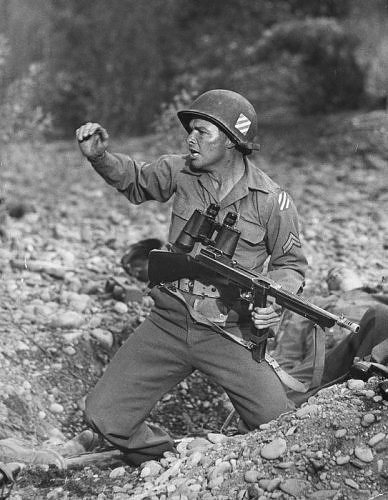
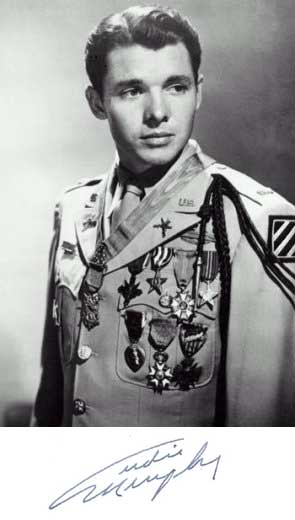
                I’ve looking over my list of movies I have watched and not reviewed.  There are quite a few, so it’s time to knock some reviews off.  The B-movies will be short reviews, because that is all they deserve.  I’m starting with one that stars Audie Murphy.  For Baby Boomer men, he is a part of our childhood.  Murphy finished WWII as the most decorated American soldier.  He went to Hollywood and with the help of Jimmy Cagney, he became an actor.  He made a lot of westerns and eventually starred as himself in “To Hell and Back”.  It was a huge hit, but he remained a second tier actor.  “Battle at Bloody Beach” was a typical low budget affair for him.  It’s doubtful he enjoyed making it. 


                Murphy plays Craig Benson.  Benson is a civilian who is tasked with hooking up with Filipino guerrillas in the occupied Philippines.  He has weapons for them.  He has an ulterior motive and that is to find his wife Ruth (Dolores Mitchell).  They were separated when the Japanese invaded.  The guerrilla band he meets is led by a shady American named M’Keever (William Mims).  His unit is more thieves than warriors.  M’Keever wants those weapons.  And so does a rival band of legit guerrillas led by Julio (Alejandro Rey).  Guess who is with him.  Ruth is now a guerrilla.  Before you get done shaking your head over the swelling harp music, Ruth proclaims that she is “not the same girl you married.”  She side-eyes Julio.  Awkward!  Perhaps battle with the Japanese will solve this love triangle by killing one third of it.  You know that battle is coming since it’s the title of the movie.


                “Battle at Bloody Beach” must have played in drive-in theaters.  It is typical of that kind of war movie.  It is a clinic on bad acting.  Not Audie, of course.  The rest of the cast is low rent, but we do get Ivan Dixon (of “Hogan’s Heroes” fame) in a minor role.  Dolores Michaels looks worthy of a row.  Her relationship with Craig is odd as she is not shamed by her adultery with a hunky Filipino and she and Craig drip hatred.  Their relationship is predictable unless you think Audie Murphy is going to end the film as a pathetic cuckold.


                We are promised a battle and we get a hip-shooting finale. Japanese are slaughtered as they attack the Alamo (a beached ship).  The mortar bombardment is decent as even low budget films can do bombardment better than bullets.  There’s no blood, no holes, no wounded.  This is 1961, after all. 


                With all that said, the movie is not terrible.  It is not campy.  The dialogue doesn’t elicit many groans and the action is crowd pleasing.  Of course, if you did see it at a drive-in, you may not have been watching when the movie got to the bullet-slinging.  You had better things to do, right?  And only 1 hour and 25 minutes to do them.  But there was probably another feature coming up.


GRADE  =  C  

Monday, November 26, 2018

CONSENSUS #97 To Hell and Back


SYNOPSIS: "To Hell and Back" is the Audie Murphy story starring the hero himself. It is essentially Murphy's "greatest hits" and covers the major incidents in his career starting in Sicily and leading up to the climactic Medal of Honor moment in Southern France.  Although a biopic, the movie does have a squad feel to it as Murphy leads a typical cinematic heterogeneous unit.  There are several good battle scenes.

BACK-STORY: To Hell and Back is an autobiopic released in 1955. It is based on the book by the same name. It stars Audie Murphy as himself. It was his 16th movie. He had come to Hollywood after WWII at the urging of his friend James Cagney. This movie was his biggest hit in a career dominated by B westerns. He also starred in the acclaimed war movie version of The Red Badge of Courage. Murphy was reluctant to play himself because it smacked of self-promotion. He wanted Tony Curtis for the role. Studio execs and friends convinced him to take the part. They were right.

The movie was a critical and box office success. In fact, it was Universals biggest hit until Jaws. It was not a hit with Murphy, however. He felt that even though he had acted as technical adviser and tried to get things right, the studio sanitized the blood and gore of combat. He also felt the movie muted the unpleasantness of war and the negative emotions it brings out. He noted that the climate conditions that he actually fought in (mud, rain, snow) were usually depicted as nice, sunny weather.

TRIVIA:  imdb, Wikipedia, TCM
1.  In the Medal of Honor scene, Murphy was actually on a M10 tank destroyer, not a M4 Sherman.
2.  Murphy did not want to play himself because he thought it would come off as too egotistical.  He wanted his friend Tony Curtis.
3.  The production used 50,000 rounds of ammunition, 300 pounds of TNT, 600 pounds of blasting powder, and 10 cases of dynamite for the battle scenes.
4.  The movie was a huge hit and was Universal Pictures top film until “Jaws”.
5.  Audie Murphy in “To Hell and Back” was the inspiration for Rambo.
6.  The movie popularized the term “dogface”.
7.  It is still the only biopic that stars a movie star as himself.
8.  Murphy wanted to make a sequel called “The Way Back”, but could not get the financing.
9.  It was Murphy’s sixteenth film.
10.  Murphy was the technical adviser and was very hands-on in getting everything realistic.
11.  Murphy did not like the finished product and referred to it as a “Western in uniform”.  He was angry about the battle scenes being filmed in nice weather when the reality was worse.  He did not want the film to close with the Medal of Honor ceremony.  (He had left it out of the book.)  He generally felt the movie was not gritty enough and did not explain why he suffered from PTSD.
12.  Murphy was tabbed to be the villain in “Dirty Harry” when he died in the plane crash.

Belle and Blade  =  4.5
Brassey’s              =  2
Video Hound       =  3.8
War Movies         =  3.8
Military History  =  #77
Channel 4             =  not on list
Film Site                =  yes
101 War Movies  =  no


OPINION:   “To Hell  and Back” is a classic WWII movie.  Although it is rife with the usual clichés and stock characters, it is special because of the involvement of Audie Murphy.  Murphy, the most decorated American soldier of the war, deserved to have his story told and the fact that he stars as himself is unique.  It was a huge hit, but now seems a bit outdated in comparison with the more realistic and gritty films that began to hit the screen in the 1960s.  For instance, you get little of the reasons why Murphy was haunted by PTSD the rest of his life. 

Wednesday, June 28, 2017

CLASSIC? The Red Badge of Courage (1951)


                In 1930, Lewis Milestone took the greatest war novel and made possibly the greatest war movie.  In 1951, John Huston took the greatest American war novel and thought he had done the same.  Huston decided to make a film based on The Red Badge of Courage by Stephen Crane.  He felt that he had achieved his finest movie up till then, but then the studio intervened.  Louis B. Mayer (the head of MGM) hated the production.  He did not think a war film that questioned war would be successful during the Korean War.  He did not think Audie Murphy was a big enough star.  He did not like the fact that there were no women in the film.  And the test screenings seemed to back him up.  (He may have rigged them.)  As a result of his belligerence and Huston being distracted by his next project which was “The African Queen”, the studio drastically cut the film down to 70 minutes (from an original two hours) and added a narrator.  To pile on, the studio released the movie as a B-picture and it bombed.  We’ll never know how good the movie could have been because the cut footage was lost in the 1967 MGM vault fire of 1967.  What about the movie we are left with?

                *** SPOILER ALERT:  Because the story is so famous, I’m going to analyze the whole plot.  (You’re welcome, high school students who do not want to read the book.)  The movie starts off with James Whitmore (the narrator) telling us what we should be able to figure out for ourselves.  Plus, we are dealing with a pretty famous novel.  The pompous narration (some of which comes directly from the novel) puts us in Henry Fleming’s (Murphy) head.  The Army of the Potomac is camped on the Rappahannock River in Sept., 1862.  (That would coincide with the Battle of Antietam.  The book is unclear about the battle, but is more likely the Battle of Chancellorsville.)  The soldiers are sick of all the drilling and want to get into their first battle.  Tom Wilson a/k/a the Loud Soldier (Bill Maudlin) hears a rumor that they are going to march up river and come in behind the Rebels.  Everyone hopes this is true, but Henry Fleming is nervous about how he will respond to combat.  He feels out his tentmate Jim (John Dierkes) who tells him he reckons he will stand and fight as long as everyone else does, but if everyone else runs, well…  This does not really comfort Henry because he thinks he might lead the stampede.  On sentry duty that night, a Reb warns him to avoid getting a “little red badge”.

                Wilson takes a lot of ribbing about his prediction, but it turns out to be true and the 304th  Regiment marches toward the sounds of battle.  The men are enthusiastic, but sober up upon sight of the first corpses.  They are positioned behind breastworks and a Yankee unit retreats through their position, but even Henry sticks round for the show.  Through the smoke comes the Rebel Yell and the rebels yelling it.  The opposing units exchange volleys for a while until the Johnnies retreat.  Henry and his mates have "seen the elephant" and have acquitted themselves honorably.  Now let’s go have a beer.  Wait.  Those pesky rebels haven’t learned their lesson and come again.  This time Henry has his self-fulfilled prophecy and he runs.  He runs like the dickens in a long tracking shot.  He encounters a line of wounded soldiers and slides in.  One of the wounded is Jim, who describes the battle as “law, what a circus, by jiminy”.  Jim runs off to have one of the great death scenes in war movie history.  Henry goes on to get his “red badge” when he is cold-cocked by a soldier doing what Henry had done.  He is roused from unconsciousness by the Cheery Soldier (Andy Devine) who escorts him back to his unit while spouting homespun about the fog of war and accepting death.  Henry lies to Tom about his wound and no one questions his bravery what with all the chaos of the battle.  He wakes the next morning more blustery than contrite.
 
                Surprisingly, he backs up the bluster by charging out in front of their line in their next battle.  He is scolded by his lieutenant for taking on the hull durn Reb army.  During a lull in the fighting, Henry and Tom overhear a general describing their regiment as a bunch of “mule drivers” who he is going to send in because he’s got nothing else.  The men are excited about taking it to the Rebs for a change and Henry is incensed about the general’s aspersion.  In the climactic charge, Henry grabs the flag and leads the unit to victory.  The cherry on top is his capturing a Rebel flag.  They march off abandoning the hard-won ground.  One of the men opines:  “After all the trouble we went to getting that wall, I’d like to set by it for a while.”   A sentiment that Vietnam War veterans can relate to.
    
                Considering the tortured back-story, you would expect to see what the test audiences apparently shit all over.  In fact, the movie that opened for Esther Williams’ “Texas Carnival” is quite good.  We can assume that Huston’s uncut version would have been better, but what we ended up with a classic anyway.  It’s hard to imagine what was cut because the movie covers all the important scenes in the book and even adds some.  We do know for sure that the scene after Jim’s death where Henry continues on with the Tattered Soldier (Royal Dano) ended up on the cutting room floor.  Trust me, no big loss.  Perhaps the combat scenes were fleshed out more, but they are already some of the best from a 1950s Civil War movie perspective.  Huston uses plenty of smoke and lots of pyrotechnics.  It’s not “Glory” or “Gettysburg”, but it’s pretty visceral.  The actors load their muskets properly and the tactics are fine (although Huston is big on two-line volley firing).  You feel the confusion and trepidation Henry faces.  You can see why he runs.  Unfortunately, the weakness of the movie is it’s hard to believe he completely changes overnight.  But that’s the novel’s fault.  (I’ll discuss the novel versus the movie in a later post.)

                It’s hard to fathom what a 1951 audience would have found to loathe in this movie.  The acting is not the problem unless you are requiring all-stars.  Maudlin, Dierkes, and Dano were making their debuts.  Maudlin is amazingly good for a cartoonist.  He was a natural in the role as the “Loud Soldier”.  He made only one more movie.  The key is clearly Murphy’s performance.  It was his first significant role and first non-Western.  Most critics consider it his best performance.  He got the role because Hedda Hopper pushed Huston to give him a chance.  The role is difficult because the character in the novel goes through so many moods.  He does as well as anyone could have (and much better than Richard Thomas from the 1974 version).  The dialogue should not have been a problem.  It’s less hokey than you would expect for 1951.  A lot of it is from the novel and if you haven’t read the book, you might shake your head.  There’s a lot of dialect, but it’s realistic for soldier banter.  The very first line starts with “well, I reckon…”  There are some memorable lines and some of them are quite witty.   Normally in a war movie from the 1950s I might comment on how sanitized the language is compared to a modern script.  Here is the rare exception.  One of the soldiers tells the following joke:  “A woman, a dog, and a walnut tree – the more you beat em’, the better they be.” (That line does not appear in the 1974 version.) The big caveat to the dialogue is the terrible narration.  It may be mostly quotes from the novel, but it insults the audience.

                Supposedly, Mayer sabotaged the test screenings by implying the movie was a comedy.  That is hard to believe, but the movie is not without humor.  After Wilson spreads his rumor, but before it comes to fruition, his mates rag him mercilessly in formation.  In another scene, a general passes by several units boosting morale by promising to come by and eat “hard tack and sowbellies” with them.  When he passes the 304th one of the men yells: “Having supper tonite with us, General?”  He responds with “go to blazes, corporal!”  That exchange wittily tells you a lot about command in the Civil War.

                “The Red Badge of Courage” deserves a reassessment.  It is not even out on DVD.  You can see it on You Tube and I encourage American History teachers to show it in class.  After all, it’s only 70 minutes long.  Just check with the English teachers first.  They may be assigning the book.

GRADE  =  B+


Friday, December 31, 2010

#77 - To Hell and Back


BACK-STORY: “To Hell and Back” is an autobiopic released in 1955. It is based on the book by the same name. It stars Audie Murphy as himself. It was his 16th movie. He had come to Hollywood after WWII on the urging of his friend James Cagney. This movie was his biggest hit in a career dominated by B westerns. He also starred in the acclaimed war movie version of “The Red Badge of Courage”. Murphy was reluctant to play himself because it smacked of self-promotion. He wanted Tony Curtis for the role. Studio execs and friends convinced him to take the part. They were right.


     The movie was a critical and box office success. In fact, it was Universal’s biggest hit until “Jaws”. It was not a hit with Murphy, however. He felt that even though he had acted as technical adviser and tried to get things right, the studio sanitized the blood and gore of combat. He also felt the movie muted the unpleasantness of war and the negative emotions it brings out. He noted that the climate conditions that he actually fought in (mud, rain, snow) were usually depicted as nice, sunny weather.

OPENING SCENE: General Bedell Smith opens the movie with a monologue. He points out that soldiers have to adjust from civilian life to military life. Some of these men go beyond the call of duty. The movie is the story of the foot soldier as seen through the eyes of one of them.

SUMMARY: The movie begins in 1937 in rural Texas. Audie is part of a poor family in the Depression and things get worse when his father abandons them. Audie has to drop out and get a job. His mom dies and his siblings are put in an orphanage. He enlists, but is turned down by the Marines, Navy, and paratroopers because of his puny stature. He ends up as a lowly grunt. He is only 17.

     In an interesting decision, the movie skips the obligatory boot camp scenes and plops Murphy down in North Africa as a replacement. He is acting sergeant. We are not told how he got this promotion. In a scene that appears out of sequence, his commanding officer calls him in and wants to transfer him to a noncombat role because he is not cut out to be a soldier (why did he get promoted then?). Audie convinces him that he wants to be in combat.

     Murphy sees his first combat in Sicily. They walk into an ambush which the Germans inexplicably spring long before the unit is in the kill zone. Three themes have reared themselves at this point. One, soldiers in this movie do not die realistically. They die like soldiers in a 1940/1950s war movie – twirling, arms outstretched, bloodless, and overly dramatic. (War Movie Cliché #29)  War Movie Cliches Two, Murphy likes to charge into danger, but not for glory. Instead, he does it for the good of his men. Third, Murphy (and his comrades) do not want to be promoted. They like being regular “dogfaces”. He is promoted to Second Lieutenant anyway.

first base only, dogface!
     In Italy, the squad sees more action. They engage the enemy along the Volturno River. Murphy continues to get promoted due to battlefield valor. It’s not all fighting. Since this is an old school war movie, we have to have the bar scene where they encounter another branch and a fight breaks out. Surprise! (War Movie Cliché #15) The unit gets some R&R in an Italian town which allows for some chaste interaction with females. One soldier hires a prostitute to listen to him rhapsodize about his girlfriend! Audie hooks up with a nice girl (but terrible actress) who takes him home for a home-cooked meal. The scene closes with a kiss.

     One good set piece is an attack on a farm house. We get more overly dramatic deaths with no visible wounds. When Johnson (Marshall Thompson) gets hit in a C-Ration can, he actually says “well I’ll be a dirty word”.  I bowel movement you not. They take the farm house and inside Murphy shoots his own image in a mirror. This obvious nod to combat stress is not explored in the film. One of the men gets killed when the stove he was just bragging about gets caught on some barbed wire he is crawling through. Add that to things not to do in a war movie – do not brag about your girlfriend or your stove! Murphy unrealistically takes out a German tank with a grenade launcher (why not a bazooka?). A point is made that veterans do not want to get friendly with new guys because it is too gut-wrenching when they buy it.

     They leave Italy for southern France. They are ambushed again and Murphy goes forward with his BFF (who he has been protecting throughout the movie) to take out the machine gun nest. His friend, Brandon (Charles Drake), actually says “they can kill us, but they can’t eat us – that’s against the law”. What? That is one bizarre line. Brandon gets killed when he assumes the Germans are surrendering and he exposes himself for them to treacherously blast him. At least there’s some blood this time. With revenge music swelling, Audie Murphy goes Rambo on several German machine gun nests. They messed with the wrong Ami.  The scene actually simplifies this remarkable action which resulted in the Distinguished Service Cross.

FINAL SCENE: The final combat scene is the famous Medal of Honor performance. This takes place during the Battle of Holtzwihr in a forest in France. His squad encounters a large German force of infantry and tanks coming across a field. Murph sends his men back for reinforcements and stays as the forward observer to call in artillery. The incoming rounds scare off the tanks, but the infantry keeps coming, so our hero jumps on an abandoned Sherman tank and uses its .50 caliber machine gun to slaughter a host of krauts. The tank is on fire, but he keeps firing away until he jumps off right before it blows up.  (This one man battle actually lasted about two hours!) The reinforcements arrive and he launches the counterattack before collapsing from a wound that ends his military career.

     The movie closes with his Medal of Honor ceremony which is observed by ghostly images of his buddies (in an homage to the end of “All Quiet”?).


RATINGS:

Action - 7/10

Acting - C  (Murphy is good, the others are not)

Accuracy - B

Realism - C

Plot - C

Overall - C

WOULD CHICKS DIG IT? There is nothing offensive in this movie. It is pretty tame for a war movie. If your significant other cannot stomach modern war films like “Saving Private Ryan” because of their grit and gore, a 40/50s war film like THAB might be her cup of tea. The cast is likeable and Murphy has a lot of charisma. There is the one romantic scene which your grandma might like.

ACCURACY: You would think that with Audie Murphy starring as himself in a movie based on his autobiography, accuracy would not be an issue. Unfortunately, either Murphy was not insistent enough or the studio overrode some of his objections. Based on his comments after release (“ a western in uniform”), it was the latter. You cannot really fault him for losing some of these battles. He was being paid as an actor, not historian. Plus, the studio bosses knew what elements of a war movie sold tickets in the 1950s. For instance, the book stops before the Medal of Honor ceremony, but the movie includes it. That does not excuse the producers for bending the facts.

     The main events are accurate. The film covers two of Murphy’s medal-winning exploits (but skips his two Silver Star exploits) and other than the sanitized nature of the scenes, they appear to be close to what happened. One small fudge was the use of a Sherman tank instead of a tank destroyer in the Medal of Honor scene. The deaths of several of his friends are authentic, if overly dramatic.

     What are inaccurate are the small details. The soldier banter, complaining, and ragging are very lame. Soldiers do not talk like the characters in this movie. The combat environment is usually too pristine. But hey, it’s a 50s war movie. What do you expect?

CRITIQUE: “To Hell and Back” has everything you would expect in a 50s war movie. You get the clichéd bar room brawl and the lame attempts at humor. You also get the deaths with no bullet holes or blood. The special effects are primitive. It is obvious the artillery explosions are charges placed in the ground. The burning tank looks fake. It is sincere, but quaint.

     The editing leads one to believe a lot ended up on the cutting room floor, perhaps to control the length of the film. There are several scenes that end early. These scenes leave the audience wondering what happened next and do not bridge well to the next scene. There is little attempt at character development, even for Murphy. Why do the vets accept the baby-faced Murphy as their leader? How does one of the youngest members (Murphy) become mother to these hardened veterans? Some themes are underdeveloped. Examples being Murphy is young, but overcomes it and don’t befriend new guys. More bizarrely, the movie uses maps to trace the movements of the unit, but does not do this for the invasion of southern France.

     The squad is stereotypically heterogeneous. There is a ladies’ man, Polish guy, Indian, jokester, Italian, country boy (Murphy), etc. Their banter is forced and interaction is not realistic. No WWII G.I. would use the phrase “I’ll be a dirty word”! This is a PG movie before there was such a thing.

     On the positive side, the movie is refreshingly not overly patriotic or propagandistic. The sound effects are good. There is plenty of old school action. The acting is adequate with Murphy carrying the load well. He dominates every scene even though several quality actors like Marshall Thompson share the screen. This was probably his best work along with “Red Badge of Courage”. You cannot downplay the kick you get from seeing a great warrior play himself in a war movie. That is pretty unique!

CONCLUSION: I hate to do this to one of my heroes, but “To Hell and Back” is very overrated at #77. If Murphy did not make the movie special by playing himself, it would be run of the mill. It would be an average 1950s combat film. It has many of the clichéd elements of that decade.

     What is disappointing is it could have been much better. Murphy should have stuck to his guns (sorry, pun not intended) and insisted the film explore the themes he wanted examined. As a victim of post traumatic stress disorder (he slept with a gun under his pillow), he could have easily portrayed the effects of combat and the deaths of friends. Supposedly one of the combat scenes caused him to have a flash back where he thought the scene was real. He was an advocate for recognition of PTSD as a disease, so you would think he could have used the platform of the movie.

     Murphy also knew better when the movie sanitized soldier life and combat. That would have been a harder battle to win with the studio given that the movie was meant to be a family film. This movie would be radically different if remade today. in other words, this movie is pre-“Patton” in psychology and pre-“Cross of Iron” in realism.

     With that said, watch it because it teaches you about the most decorated American soldier of WWII.  Audie Murphy really gets into the characters head.  It's like he knew the guy.  I heard he spent years preparing for the role.