“I
Was a Male War Bride”is a Howard Hawks
/ Cary Grant romantic comedy released in 1949.The exterior scenes were filmed in Heidelberg, Germany.Terrible weather resulted in illnesses to
much of the cast and crew.Grant
suffered from hepatitis and jaundice which pushed back production for three
months.He had to regain thirty pounds
to finish the movie.The movie took a
total of eight months to complete.It
was worth it as the film was a box office success and ended up being Hawks’
third highest grosser after “Sergeant York” and “Red River”.It is actually based on a biography by
Grant’s character, but I would assume it is highly fictionalized.
A woman in pants on a motorcycle!
The
movie is set in post-WWII Germany.Grant
plays a French soldier named Henri Rochard.He is paired with the very feisty Lt. Catherine Gates (Anne
Sheridan). She's a WAC.They had been paired before
on missions to locate stolen art treasures.Working together has not led to fondness and in fact they dislike each
other immensely.Imagine that.Their banter is vicious even for the
1940s.He calls her a “bubblemouth” and
she calls him a “blistering idiot”.This
being the good ole days before feminism, Henri threatens that he is “going to
kick [her] bowlegged".She is bossy and
he is mean.They have what the movie
calls “sex antagonism”.Do you think
they will get together before the end of the movie?
Spoiler alert: they get together
Their
route to matrimony begins with a feverish motorcycle with a sidecar adventure
with Catherine donning slacks to drive.Sheridan did some of the stunts which included the accidental demise of
a goose.As in all romantic comedies of
this time period, they end up in the same hotel room and misunderstandings
ensue to postpone the inevitable coupling.Oh, and they are supposed to be on a mission to bring in a valuable lens
maker who is now a black marketeer.They
find him and love.Their first kiss is
in a hay stack.Three weddings later
(don’t ask), we get to see Anne Sheridan in a night gown.She fills it nicely.They would have lived happily ever after
except that Catherine gets orders back to the States and would you believe the
law covering military spouses assumed they would be females?So here comes the big payoff for sitting
through this long snooze fest – the sight of Cary Grant in drag!Go back in a time machine so you can get a
thrill out of this.
Trust me, this is actually Cary Grant
Cary
Grant enjoyed making this movie and is quoted as saying it was the best comedy
he had done up till then.Sure!And “The Green Berets” was John Wayne’s best
war movie.The movie is terrible no
matter what Grant said in his hepatitis induced delirium.It feels like it is lasting longer than the
war when it is actually only 105 minutes.Parts are redundant and all of it is predictable (except the stunning
sight of Grant in drag).The movie gets
worse as it goes along.Just when you
think it can’t get any more tedious, it does.The acting is average.Sheridan
is game and holds her own, but Grant appears to be going through the motions
and does not even attempt a French accent.I did not find they had much chemistry.The biggest problem is the movie is just not that funny.I smiled a few times, but never laughed out
loud.Apparently audiences howled at the
sight of Cary as a female.And they
guffawed over Milton Berle in a dress back then, too.Different times.Back when war brides were topical I suppose
the movie was humorous.However, if you
want to see a WWII comedy that holds up, watch “The Miracle of Morgan’s Creek”.
“Air Force” is an homage to the
branch by director Howard Hawks who was a veteran of the Air Corps in WWI.Hawks had already made “The Dawn Patrol” and
“Sergeant York”.Hawks had the
cooperation of the Army Air Force which provided several B-17s and other planes
to depict Japanese aircraft.The movie
is essentially a small unit patrol film.It covers the bleak early days of the war by following a B-17 bomber
named “Mary Ann” and its plucky crew.The bomber makes stops at Pearl Harbor, Wake Island, the Philippines,
and Australia.The bomber is meant to be
the star of the film.The movie was a
big hit and was critically acclaimed at the time.It won an Academy Award for Editing and was
nominated for Cinematography, Original Screenplay, and Special Effects.It was one of the first great war movies made
during WWII.
The film opens with an excerpt
from the “Gettysburg Address” to make it quite clear this will be a patriotic
movie.The date is Dec. 6. 1941. The “Mary Ann” is headed for Hawaii with eight
other B-17s.The crew is
heterogeneous.The gallant captain and
co-captain, the naïve rookie, the crusty crew chief, the dude with daddy
issues, the comic New Yorker, and the bad egg.This last role is played by the biggest star – John Garfield.Sgt. Winocki is the malcontent tail gunner
who holds a grudge against the pilot Capt. Quincannon (John Ridgely) who washed
him out of flight school.He is going to
be a pain in the ass.
The “Mary Ann” arrives at Hickam
Field on a day that will live in infamy.When they pick up the attack on the radio, one of the crew says “I’ve
still got a throwing arm.I’ll heave a
wrench if any of those monkeys comes
close.”There is a cool aerial view of
Pearl Harbor in flames.They are fired
on by local Japanese.When they land at
Hickam and see the destroyed P-40s lined up on the field they are told “three
vegetable trucks smashed their tails”.What?The movie passes on the
canard that there were Japanese fifth columnists and saboteurs that
participated in the attack.The Hickam
set is appropriately damaged.
It’s on to Wake Island for a
visit with the valiant defenders.“Send
us more Japs” they say.Since there are
no orphans on the island, they pick up a dog named Tripoli.Its schtick is it barks whenever anyone
mentions Mr. Moto (for those less than eighty years old, Mr. Moto was a
Japanese detective who appeared in several movies before the war).How cute and racist is that?
They land at Clark Field in the
Philippines.The stress of being at war
has changed Wanicki’s attitude and now he is a gung-ho member of the
team/family.The crusty crew chief White
(Harry Carey, Sr.) finds out his fighter pilot son has been killed.He takes it stoically, but the audience
doesn’t.Jap basterds!When they take off, they fight off a swarm of
Zeros until they get hit and the crew has to bail.Capt. Quincannon is badly wounded so Winocki
takes the controls and makes a belly landing.Redemption accomplished!The
captain dies in the hospital in a scene written by an uncredited William
Faulkner.End of movie, right?Wrong.Not happy enough.
The crew works feverishly to
repair the “Mary Ann” with the Japanese just down the block.Crewmen holding Browning machine guns like
Rambo take on a Japanese air attack by Zeros dropping bombs they don’t
have.(Why do filmmakers think fighter
planes can drop bombs?)Meanwhile the
rookie is off volunteering as a gunner on a scout plane.It gets shot down and when he bails out a
dastardly Jap strafes him and then finishes him off when he hits the
ground.Revenge would be so sweet.Request accepted.They shoot down the Jap and then machine gun
him as he gets out of the wreckage.Sweet!This is an exciting scene although completely
ridiculous.The sound effects are good
and the effects of the crashing Japanese planes are well done.
With Japanese soldiers closing
in (and eating lots of lead), the “Mary Ann” takes off just in the nick of
time.They are headed for Australia when
they sight a Japanese fleet and call for reinforcements.Amontage of all available aircraft (actual footage) arrive at exactly the
same time.I think I saw the “Spirit of
St. Louis” in the mix.Patriotic music
swells.They blow up a battleship.Japanese fighters attack and they shoot one
down which crashes into a ship.Kharma
is a bitch.Then they sink an aircraft
carrier.These Americans never
miss.Just like the B-17s at the Battle
of Midway.That fleet gets totally
f***ed up.We are so gonna win this
war.Buy war bonds!
"I heard you just fly right above the ship and drop the bomb - piece of cake!"
“Air Force” claims to be based
on a true story.Bull shit.The only thing true about it is B-17s arrived
at Pearl Harbor in the middle of the attack.Everything after that is total fiction.None of those B-17s went on to Wake Island or the Philippines.The big naval battle could be based on the
Battle of the Coral Sea.The
similarities end with there being water involved.As far as I know, no B-17s sank any warships
during the war in the Pacific (although they tried at Midway).It is painful to watch the film accuse
Japanese in Hawaii of participating in the Pearl Harbor attack.By the way, the producers of the film
publicized the fact that the real “Mary Ann” was lost in the Pacific after the
film was finished.This has been proven
to be false.I’ll stop short of calling
this despicable.
the star of the film - please, no autographs
“Air Force” is not bad
considering it is overtly patriotic and propagandistic.There are some exciting action scenes.The special effects are decent if you keep
reminding yourself that it was made in 1942.The blending of the footage is well-intentioned but far from seamless.The Editing Oscar was probably deserved.The use of real bombers helps with
authenticity.This is diluted a bit by
the use of AT-6 Texans and P-43 Lancers for Japanese Zeros, but what could you
expect?The interior shots are
realistic.Just as good as a submarine
movie.
The acting is satisfactory.Nobody makes a fool of themselves, but noone
stands out.This was partly purposeful
as Hawks wanted the bomber to be the main star.The crew may be stereotypical, but they are likeable and the chemistry
is there.The banter is not forced or
corny.Some of their actions are.Shooting down planes with hand-held
Brownings.Come on!
You can’t watch the film without
being aware of its purpose.It was meant
to fire up American audiences to continue the fight on the battlefields and on
the home front.It appeared in theaters
when the war was still up in the air.The film makes the case that our quality will defeat the Japanese
quantity.I guess in 1943 our
quantitative advantage was not so obvious yet.
In an earlier post I examined
WWII combat movie clichés by looking at “Wake Island” and “Bataan”.“Air Force” is a companion to those two Old
School flicks.They helped establish the
template for Old School WWII movies.“Air Force” is dedicated to a branch of the armed services.It has a hero (the bomber) and a
mission.The small unit is heterogeneous
and includes a mascot (Tripoli).The
episodes alternate between action and preparation for the next move.Conflict within the group (Winocki) is
resolved by external pressure (the war).A member of the group gets redemption.
In conclusion, “Air Force” is a
difficult movie to review.You can go on
the Internet to read reviews that were contemporaneous and give a feel of what
experts felt about it when it came out.But this is 2013.The movie is
entertaining, but just that.It is
terrible history, but not terrible cinema history.It is undoubtedly a classic.It is a must-see for war movie lovers.Will it make my 100 Best list?Possibly.
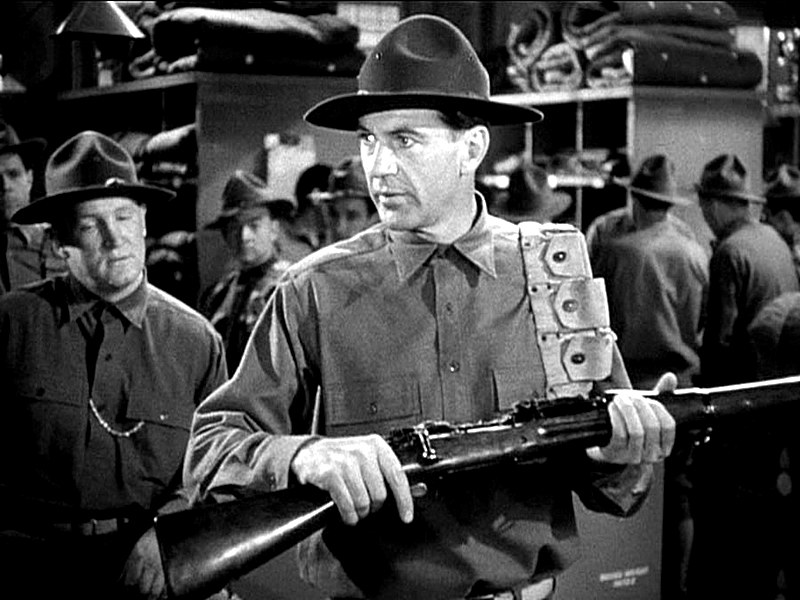
BACK-STORY:“Sergeant York” is one of the
great American classic war movies.It
was directed by Howard Hawks (“Air Force”,the original “Dawn Patrol”) and
starred the biggest Hollywood star of that time – Gary Cooper.It was the first major American biopic that
told the story of a living person.The
desire to avoid law suits and controversy led to great efforts by the studio to
keep the film accurate and authentic.Of
course, the main effort was to keep Alvin York happy.York (true to his portrayal at the end of the
movie) was not interested in taking advantage of his fame.However, persistence on the part of producer
Jesse Lasky eventually wore York down.York drove a hard bargain and insisted on veto power over the screenplay
and would accept only Cooper playing him.The movie was a huge success and was the highest grossing film of
1941.(The studio insisted on the
outrageously high ticket price of $2.20!)The movie was also critically acclaimed and garnered eleven Academy
Award nominations, winning for Best Actor (Cooper over Welles in “Citizen
Kane”) and Editing.
OPENING:The national anthem plays over
the credits.Words tell us we are in the
Cumberland Mountains in Tennessee in 1916.A church congregation’s hymn is interrupted by the drunken carousing of
Alvin York and his drinking buddies.York uses a pistol to etch his initials in a tree.
SUMMARY:A scene in the town general store
establishes that the townspeople are isolated hillbillies.Mention of the hostilities in Europe evinces
puzzled looks and “What war?” remarks.As far as their opinion, it is summed up with “t’ain’t none of our
business”.They may be isolated but they
represent the prevailing opinion of the American public at the time the movie
began production.
"You want me to do what with this?"
York
and his buddies (Ward Bond and Noah Beery, Jr.) go to their favorite bar.It straddles the Tennessee – Kentucky line so
Tennesseans can step into “wet” Kentucky to get a drink.Naturally, a humorous bar fight breaks
out.It seems that York will fight if
pushed.File this away for later.The cinematography puts the audience in the
middle of the fight and the piano player literally controls the tempo of the scene.York returns home to his saintly, put-upon ma
(Margaret Wycherly).She enlists the aid
of the sagely pastor played by Walter Brennan.Pastor Pile tries unsuccessfully to reform the hell-raising York who is
only willing to concede that he will be open to the idea in the future.The pastor predicts that religion “may come
like a bolt of lightning”.Spot on
prediction!
Isn’t
there supposed to be a romance somewhere in this 1940s movie?York reacquaints himself with the girl- next-farm named Gracie (Joan Leslie).She is
16 and he is 28.Before you cry
“creepy”, remember these are hillbillies.Before York can properly court Gracie, he must become the
stereotypical American landowner.A
montage portrays his efforts to raise the cash to buy some bottom land.In the montage is rail-splitting, of
course.The last of the cash comes from
York’s victory in a turkey shooting contest.All he has to do is get the bird to pop its head up and it’s over.(I wonder if this would work with humans.)Would you believe the property owner has sold
the plot to York’s Gracie competitor?York
gets drunk and has bloodshed is on his mind when the Lord intervenes with that
predicted lightning bolt.The Lord adds
sound effects in the form of a hymn from the nearby church just in case York is
thick-headed.York takes the hint and is
born-again.He even teaches Sunday
school.Redemption accomplished.What is left?
"Is the target that huge circle?"
War!It comes in the form of a speeding rider and
bold-faced headlines.The bumpkins
quickly agree that now it is our business, except holy-roller York who has a
fundamentalist belief that thou shalt not “tech someone off”.He refuses to be drafted, but even with the
help of the pastor he cannot get an exemption which accurately reflects the
niggardliness (look it up in a dictionary before you have a cow) of draft boards in WWI.He ends up at Camp Gordon in Georgia.It’s like a fantasy boot camp for adult men!York makes friends with a guy from, you
guessed it, Brooklyn.Pusher (George
Tobias) is the urban opposite of the rural York.He teaches York what a subway is and York
teaches him to kill the last turkey in a line first and work your way to the
front.Their tough drill sergeant curses
York out for his pacifist leanings.Just
kidding, instead of curses he uses snide remarks.That changes when York impresses everyone at
the rifle range with his Robin Hoodesque prowess.Damn it, this guy could be a killing machine
if not for those pesky morals.
York’s
commanding officer (who gets a commission for every dead German killed by his
unit) tries to get through to York.He
gives the dead-eye a civics lesson that must have had the audiences
nodding.He unfairly throws in a
reference to Daniel Boone. That was below the belt!York holds his own with his adherence to the
Fifth Commandment (that’s the one about killing, you heathens).However, he agrees to go on a ten day furlough
to contemplate the commander’s duty trumps religion argument.York takes along an American History
textbook.It’s God versus country.On a hillside with his dog, York struggles
until:1.the wind blows the Bible open to the “render
unto Caesar” passage 2.the dawn comes
up3.patriotic music swells.(The
Founding Fathers say “I see your lightning bolt and raise…”)
At
the 1 hour 37 minute mark, we are finally off to war.A trench episode introduces our
soon-to-be-hero to bombardment.Brit: “
If one has your name on it, there’s nothing you can do.”One has the name of a comrade on it so York
is introduced to death.From here on,
he’ll be putting the names on.
"Gobble, gobble"
On
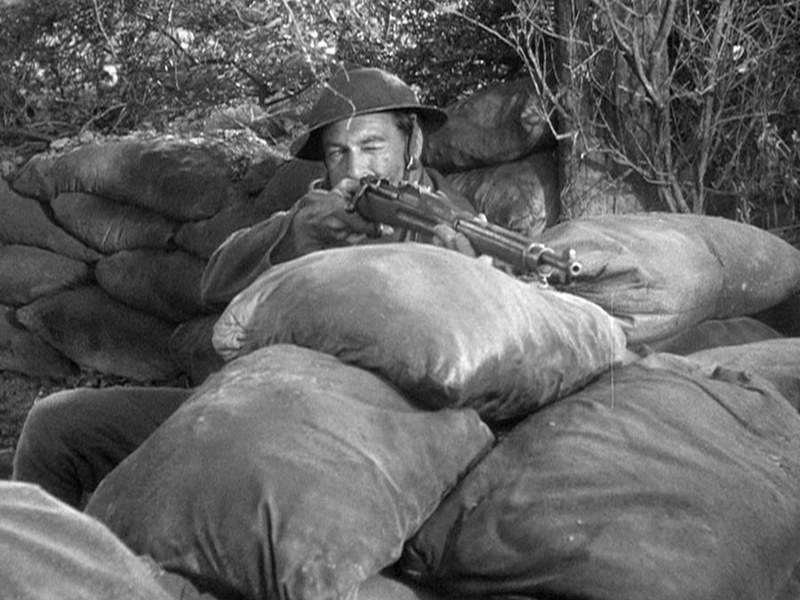
Oct. 8, 1918, York’s unit goes over the top (to “Yankee Doodle Dandy”) in the
Meuse-Argonne Offensive.The mission is
a frontal assault on a machine gun infested hill.The trip across no man’s land is fraught with
touchdown signaling deaths.The camera
keeps us informed of York’s progress as well as that of his generic comrades. When the assault stalls, York and 17 others
are ordered to flank the ridge.In the
process, they surprise a group of Germans at breakfast and take them captive.Unfortunately, this draws the interest of two
machine gun nests on the hill which proceed to spray the area pinning down captors
and captive alike.
York
takes it upon himself to rectify the situation.He becomes the killing machine his commanders had hoped for.The quartermaster also loves his not wasting
bullets on missed shots.His turkey hunting
experiences come in handy with is appropriate because everyone knows the
Germans are the turkeys of Europe in intellect. (Germnas don't read this blog, do they?)Oddly, six Germans charge York in a row instead of the line he had
outlined in the barracks.No matter,
York “techs them off” in random order with his captured Luger.Picking off the others from front to back
results in the surrender of the entire unit.York gathers up the prisoners, one of whom dastardly kills Pusher with a
grenade.(WWI or WWII – they are still
evil!)York (and the seven surviving
Americans) returns to American lines with 132 prisoners.He is an instant hero.
CLOSING:York recounts his exploit to his
commanding general to verify for the audience that his superhuman feat was
indeed the real deal.When asked what
motivated him, York simply says that the machine guns were killing his men and
gave him no alternative.York receives
several medals including the Medal of Honor from Gen. Pershing.He is thus rewarded for fighting for his
country.He declines all endoresement
offers and refuses to profit from his fame.His returns home to a brass band playing at the train station.(A scene brilliantly parodied in “Hail the Conquering Hero”.)The state of
Tennessee rewards York and his new bride with an idyllic farm and they live
happily ever after
RATINGS:
Acting =A
Action =6/10
Accuracy =B
Plot =B
Realism = B
Overall =B+
WOULD CHICKS DIG
IT?It depends on
their tolerance for corn.Certainly
there is nothing offensive in it.The
combat is 1940s intense and has only a brief glimpse of blood.The romance is appealing and not
schmaltzy.Cooper is charismatic and
likeable.A patriotic American woman
should enjoy the plot and it won’t hurt if they are religious.I would think non-American females might be
left cold by it.What say you, Caroline?
HISTORICAL
ACCURACY:“Sergeant York”
is admirably accurate.That’s what you
get when you have an American icon and his persnickety peers watching over your
shoulder.Plus the producers had to be
aware of a backlash from the isolationists if they laid it on too thick.If you stick to the facts, you are on safe
ground.The screenplay was based on
York’s diaries and he was hands on in his and Gracie’s depiction.However, he did bow to some Hollywood tweaks.
The
movie is strongest in the authenticity area.The country store, the York home, the church, and the border bar are all
rendered with an attention to period details.The portrayals of the common folk are also strong.Warner Brothers provided a great company of
hillbilly-looking character actors.Older viewers will recognize many of them (or so I was told).The accents ring true.Cooper is in a league with Meryl Streep
here.The faces are truly rural
American.Wycherly hardly has to speak
to communicate.
As a
biopic, you certainly get the gist of the York story and if he was happy with
it, who are we to complain.With that
said, allow me to complain.First, the
things the movie does not tamper with.York was wild and alcoholic in his early life.He did get in bar fights and was actually
arrested several times (not shown in the movie).He did become born-again before U.S.
entry.He did claim exemption as a
conscientious objector and was aided by Pastor Pile.He did refuse to kill until talking with his
commander and pondering on a furlough.Most importantly, the Medal of Honor incident is substantially depicted
as it was.The post war epilogue is
fine.He did refuse endorsements and was
given a farm.Lastly, all but the Pusher
character are real people who demanded they be accurately portrayed.
There
are a few Hollywood touches.York was
the third of eleven children and after his father’s death he helped raise the
younger eight.The movie has only room
for two.This is understandable as is
the decision to simplify his conversion story.There was no lightning bolt.York
gradually moved to redemption and it was capped off by a revival meeting.There also was no rifle range
revelation.Speaking of rifles, the
movie has York using a 1903 Springfield and a German Luger.In fact, he was armed with a 1917 Enfield and
a Colt .45.It was Hawks who came up
with affectation of licking his sight before aiming.A nice touch.And to be overly picky, the German officer did not use a bugler to call
in more Germans to surrender, but used a whistle.
There’s
a weird moment when York returns to America and is staying at the Waldorf
Astoria.He flicks the light switch
several times as though astounded by electrical lighting.Are we to believe that he encountered no
lights at Camp Gordon or in France?None
of this is egregious.The very end
approaches that status, however.The postcard-worthy
farm house and farm are a great exaggeration.There was no farm house and the farm was heavily mortgaged which caused
the York’s financial problems for years.If I was York I would have vetoed this cruel joke.
CRITIQUE:“Sergeant York” could not have
been much better considering when it was made.It is definitely in the top rank of black and white war films.It is technically masterful.The sets are obviously painstakingly
prepared.The no man’s land set was
constructed by 300 workers and entailed the use of five tons of dynamite and
the defoliating of 400 trees.The indoor
sets are particularly commendatory.Look
around the rooms for the little details on the walls.The lighting is often mentioned by
critics.The score by Max Steiner makes
use of patriotic songs, folk tunes, and hymns.We hear “Give Me That Old Time Religion” several times in the
background.This could have been
cringe-inducing, but the music is not used to ham up the emotions.It just matches the already clear theme of
the scene.The cinematography is
fine.Nothing artsy.
The
acting is a strength.Cooper is at his
best and said it was his favorite role (ironically, he was reluctant to play
it).He is a master of underacting.He deserved the Oscar, although Welles’ fans
might dispute that.Brennan and Wycherly
were nominated for Supporting Oscars.The rest of the cast is perfect for their roles.Such great faces, especially Wycherly.(Watch for her portrait in York’s Waldorf
Astoria room – there were no roaches in that room!)
The
screenplay is a marvel of achieved themes.The film can be viewed as two parts.The first part takes York from disdain for religion to Bible-thumping
.In general, the dynamic is between the
religious people (exemplified by Mrs. York and the Pastor) and the hell-raisers
(York and his compadres).The second
half has him make the shift from fundamentalist belief in the Old Testament to
love of country, duty, and honor.His
evolution from pacifism to interventionism mirrored York’s actual feelings in
the 1930s.He began the decade, as did
many Americans, disillusioned with the results of WWI and the machinations of
the bankers and weapons makers to get us involved.However, partly through conversations with
Lasky and his experiences with the movie, he switched to pushing for U.S. entry
and even went on publicity campaigns for the movie.His involvement in the Fight for Freedom
organization was the opposite of Lindbergh with America First.In this respect, the movie York and the real
York stand in for the American public.The post script adds the third theme of reward for serving your country
well. Oh, and throw in "killing for your country is not a sin". So go to it, guys.
The combat scene lasts less than fifteen minutes, but is quite good. I show it to my American History classes to prep them for their letter from the trenches which requires them to go over the top into no man's land. (The other clips I use are from "Paths of Glory" and "The Lost Battalion".) I have to admit that my students laugh at some of the deaths which include a rare 360 degree twirl while signalling a touchdown (which is shown from a different angle seconds later - why waste acting like that?). See it in the clip below. The action is well done and it helps that it closely parallels the actual event. It is superior to the Medal of Honor scene in "To Hell and Back".
The
film is in many ways typical of the war films made during that era.However, it does have an two interesting
diversions.First, the American officers
are portrayed in a positive light.They
are not martinets, uncaring, or incompetent.York’s CO and his second speak to him almost as an equal and are
sympathetic to his dilemma.The movie is
refreshingly lacking in military cliches.More significantly, this was the first movie about WWI that did not have
a strong pacifist vibe.This was clearly
due to the motivation of the producers to encourage U.S. intervention and was a
distinct gamble when you consider the predominately pacifist feelings of the
public not long before the movie was released.Pearl Harbor could not have come at a better time for this movie.You could make a case that “Sergeant York” is
the rare significant war film that is not anti-war.Compare it to “All Quiet…” and “Paths of
Glory” to see what I mean.
CONCLUSION:Does “Sergeant York” belong in
the top twenty?It depends on how you
define “greatest”.If you read it as
“most important”, then you can make a case for it.It’s effect went beyond simple entertainment.
It is a very entertaining film, but it
also tells an important tale of a warrior that deserved the coverage (similar
to Audie Murphy’s “To Hell and Back”).More significantly, it played a role in American intervention in
WWII.The most popular film of 1941
encouraged Americans to see the positive aspects of involvement in the world
conflict.The attack on Pearl Harbor
seemed to confirm that theme.
To see clearly the evolution of war movies, compare "Sergeant York" (1941) and "To Hell and Back" (1955) to their modern equivalent "Born on the Fourth of July" (1989). We've come a long way, for the better.

_04.jpg)


.jpg)