“The
Last Legion” is a Dino De Laurentis production. For those of my generation,
that used to mean the film was likely a bloated all-star epic, like “Battle of
the Bulge” and “Anzio”.It was one of
the last movies that he produced. The film was directed by Doug Lefler, who
only had a few television episodes to his credit. It was based on the novel by
Valerio Manfredi who helped co-write the screenplay. The story combines two
legends because two is better than one, right?Those legends are the legend of King Arthur, specifically the sword in
the stone, and Rome’s Lost Legion.
A narrator tells us the movie is set
in the waning days of the Roman Empire. A sword made for Julius Caesar had been
passed down from emperor to emperor until Tiberius had it hidden upon his
death. The sword has magical powers and Rome could sure use them as it is being
threatened by barbarians led by Odoacer (Peter Mullan). Rome is pulling back
its legions, including the ones in Britain. A Roman general named Aurelius
(Colin Firth) has returned to guard the emperor, a boy named Romulus Augustulus
(Thomas Brodie-Sangster). When the Goths capture Rome, Romulus is taken
captive, but Aurelius escapes. Ambrosinus (Ben Kingsley) is a Merlin-like
(actually closer to Obi Wan) advisor who convinces Odoacer to exile Romulus
rather than kill him. The suddenly sympathetic barbarian agrees. Aurelius and
Mira (Aishwarya Rai) rescue Romulus, who has discovered the sword hidden in
Tiberius’ villa. He who finds it is destined to rule (or in this case rerule).
The motley crew go on an odyssey that leads to Britain where they hook up with
the Lost Legion. The legionaries had stayed in Britain and are now farmers.
They will come out of retirement as Romulus is being chased by Goths and they
hook up with an evil Britannic chieftain. Let the clanging continue!
How could such a good cast make such
a bad movie? Clearly, the problem was in the script. By trying to combine two
totally unrelated legends, we get a mish-mash that is mostly mush. Trying to
jam the Arthur legend into the fall of the Roman Empire requires too much
reality suspension. And, in spite of the unique attempt to combine the legends,
the movie still ends up predictable. Everything that happens has been done in
other medieval movies. The villains are mustache-twirlers. The heroes are
saintly. Their dialogue is trite and embarrassing for thespians like Firth and
Kingsley. I wonder if they were told beforehand that the movie was going to
premiere in Abu Dhabi. That should have caused some second-thoughts about
signing on, but then again, they have nobody to blame but themselves since they
had access to the script. Maybe they were in it for the free trip to Abu Dhabi.
Typical of a De Laurentis
production, the action scenes are second-rate. The CGI is terrible. The
soundtrack is Disneyesque. The action scenes look like they are copying a Bruce
Lee movie. The combat keeps trying to top itself with more and more ahistorical
weapons. For example, we are treated to a multi-arrow launcher. The
choreography is brainless and derivative. On the plus side, the 9th
Legion “rides to the rescue” in a testudo.
“The Last Legion” was the first of
three movies that featured Roman legionaries in Britain. The others were
“Centurion” in 2010 and “The Eagle” in 2011. I am a big fan of Roman history,
in particular the Roman army. It is always nice to see movies on that subject,
but we have not been too blessed with these movies. “Centurion” is a B movie
and “The Eagle” is a C. Both are entertaining, if disappointing. “The Last
Legion” is just an embarrassment.
I just finished showing the movie "Spartacus" for the thirtieth time or so in my Western Civilization classes. Obviously, I am a huge fan. It is one of the great historical epics and one of my favorite war movies. I show it, not so much because of its accuracy, but more because of its entertainment value plus its historical value. I have done a lot of research on the movie and want to share some of it. So what follows is a series of threads on this remarkable movie. You might want to start with my review of it at "Spartacus". HISTORY OR HOLLYWOOD: SPARTACUS 1. Spartacus was a Thracian who was born a slave. 2. Spartacus was bought by Batiatus from a salt mine and trained at his gladiator school near Capua. 3. Spartacus was trained at a gladiator school in Capua. 4.Spartacus’ “wife” was a slave from Britainia who he met at the gladiator school. 5.Gladiators did not fight to the death at the schools. 6.Crassus demanded a show which led to the rebellion. 7. The rebellion broke out in the kitchen. 8.Spartacus vowed to never witness a gladiatorial combat again. 9.Spartacus was the leader of the rebels. 10.Spartacus turned down the suggestion of crossing the Alps and opted for marching south to hook up with pirates 11.The rebels set up camp on the slopes of Mt. Vesuvius and were joined by thousands of slaves. 12.Glabrus came after them with the Roman garrison, but the slaves surprised his unfortified camp. 13.Spartacus’ plan was to move to the southern tip of Italy and hire Cilician pirates to transport them back to their homes. 14.The slave army defeated several Roman armies. 15.Crassus was appointed First Consul by the Senate and made commander in chief with the purpose of putting down the rebellion. His plan was to establish order. 16.Crassus was trying to force Spartacus to march on Rome by having Pompey and Lucullus sandwich him. 17. The pirates were bought off by Crassus and betrayed Spartacus. 18. Spartacus decided to march on Rome for a decisive battle and set all the slaves free. 19. Spartacus used fire rollers in the final battle. Spartacus fought on horseback. Crixus was killed in the battle. Crassus won because Pompey and Lucullus arrived as reinforcements. 20. Spartacus and the survivors were crucified along the road to Rome. 21. Crassus took power and exiled Gracchus. Gracchus committed suicide.
1.Spartacus was a Thracian who was born a slave. HOLLYWOOD Although he was from Thrace, Spartacus was probably an auxiliary in the Roman army. He was probably in the cavalry. For some reason, he deserted and became an outlaw. He was then captured. He was probably about 30 years old at the time. 2. Spartacus was bought by Batiatus from a salt mine. HISTYWOOD Most likely Spartacus was bought at a slave auction in Rome. The Batiatus of the film was based on Spartacus’ owner Lentulus Batiatus (sometimes Vatia). 3. Spartacus was trained at a gladiator school in Capua. HISTORY Batiatus’ school was located in Capua, as were many other schools. Most of his gladiators were Thracians with the second most being Gauls. The training would have been similar to what was depicted in the movie. 4.Spartacus’ “wife” was a slave from Britainia who he met at the gladiator school. HOLLYWOOD Spartacus was probably married, but to another Thracian. It is possible that she was some type of priestess who played a role in developing Spartacus’ reputation. The Romans had not conquered Britainia at the time of the revolt. 5.Gladiators did not fight to the death at the schools. HISTORY Gladiators were valuable property and their lives would not have been risked at the school. In fact, even in the arena, it was not common for the matches to end in death. 6.Crassus demanded a show which led to the rebellion. HOLLYWOOD There is no reason to believe that Crassus ever visited Batiatus. If he had, it is most likely that his party would have put thumbs up, not down, to indicate they wanted Draba to finish off Spartacus. Draba fights as a Retiarius, which was a gladiator armed with a net and a trident. Spartacus fights as a Thracian with a sword (it should have been curved) and a small, round shield. 7. The rebellion broke out in the kitchen. HISTYWOOD It did start in the kitchen. The slaves used cleavers and spits to break out. It did not start because of resentment about the fights to the death. Most likely the cause was general mistreatment. 74 gladiators got away and they lucked into finding a wagon load of gladiator weapons on the road nearby. 8.Spartacus vowed to never witness a gladiatorial combat again. HOLLYWOOD Spartacus was not the humane individual of the movie. After one of his victories over the Romans, he made a point of having some of the captives fight to the death. 9.Spartacus was the leader of the rebels. HISTYWOOD Spartacus was the most respected of the triumvirate that included the Gauls Crixus and Oenamus. There were disagreements on strategy between Spartacus and the other two. 10.Spartacus turned down the suggestion of crossing the Alps and opted for marching south to hook up with pirates. HOLLYWOOD This is the opposite of the fact that Spartacus’ original plan was to exit Italy via an Alpine pass When they approached the pass, Crixus and his followers refused to leave the plunder-rich Italian countryside. Spartacus acquiesced to this for reasons unknown. 11.The rebels set up camp on the slopes of Mt. Vesuvius and were joined by thousands of slaves. HISTORY From there they accumulated recruits, trained, and made raids on the countryside. 12.Glabrus came after them with the Roman garrison, but the slaves surprised his unfortified camp. HISTORY Glabrus is based on Claudius Glaber who was a praetor. There is no evidence that he was an ally of Crassus. He did not take six cohorts from the Roman garrison. Actually, his force consisted on 3,000 ill-trained militia. He proceeded to block the road leading to the rebel camp with the intention of starving the into submission. Spartacus and his men used vine ropes to climb down the cliffside and surprise the camp which was not fortified. 13.Spartacus’ plan was to move to the southern tip of Italy and hire Cilician pirates to transport them back to their homes. HOLLYWOOD It appears Spartacus plan was to escape Italy by way of the Alps. 14.The slave army defeated several Roman armies. HISTORY On word of Glaber’s defeat, the Senate appointed Varinius praetor and sent him after the rebels. He recruited on the march. Spartacus ambushed two wings of his army. The slave army then moved south as Varinius regrouped. In the ensuing battle, Varinius’ army performed poorly and he was badly defeated. After this battle, Spartacus had some of the captured legionaries duel and others were crucified. It was after this victory that the rebels marched north to the Alps, but decided not to cross. Part of the army broke away led by Crixus with their main goal being plunder. Two Roman armies destroyed his force in the Battle of Mount Garganus. Spartacus got revenge by defeating the two Roman armies and at funeral games for Crixus had thousands of captives fight. Once again Spartacus headed north, but again decided not to cross the Alps. 15.Crassus was appointed First Consul by the Senate and made commander in chief with the purpose of putting down the rebellion. His plan was to establish order. HOLLYWOOD Crassus was one of the richest men in Rome but he was not ostentatious about it. He lived in a nonluxurious home. He was popular with the common people because he catered to them politically. He was a private citizen at the time that the Senate gave him emergency powers to deal with the emergency. He was a logical choice because he was a gifted recruiter, wealthy enough to foot a lot of the bill, and had already had military success in Spain and with Sulla. 16.Crassus was trying to force Spartacus to march on Rome by having Pompey and Lucullus sandwich him. HOLLYWOOD As Spartacus moved southward, Crassus sent part of his army under Mummius to trail him but with strict orders not to engage. Mummius got overconfident and disobeyed the orders resulting in a bad defeat that featured some Roman units to panic and run. Crassus used decimation to punish the offending units and restore discipline. 17. The pirates were bought off by Crassus and betrayed Spartacus. HISTYWOOD After defeating Mummius and losing a detachment to Crassus, Spartacus proceeded to the toe of Italy. He did try to make arrangements with Cilician pirates for transport to Sicily, but they abandoned him. This betrayal was most probably due to them being untrustworthy pirates. An attempt by the rebels to construct rafts and float to Sicily was a dismal failure. 18. Spartacus decided to march on Rome for a decisive battle and set all the slaves free. HOLLYWOOD Crassus tried to trap Spartacus in the toe by building entrenchments blocking the rebel army in. Spartacus attempted twice to break through, but failed. He crucified a Roman prisoner in no man’s land to emphasize to his followers that it was victory or this. On a snowy night, a good bit of Spartacus’ army managed to escape the trap. Some of the Gauls broke off and were ambushed by the Romans. Spartacus arrived in the nick of time to save them, but a few days later Crassus used a diversion to occupy him and finished off the Gauls. Spartacus moved on and at one point turned on Crassus vanguard and gave it a nice whipping. He may have been heading for Brundisium hoping for some type of shipping when he heard that Lucullus army had landed. He decided to turn and face Crassus. 19. Spartacus used fire rollers in the final battle. Spartacus fought on horseback. Crixus was killed in the battle. Crassus won because Pompey and Lucullus arrived as reinforcements. HOLLYWOOD Spartacus provoked the Battle of Silarus by attacking some Roman soldiers who were digging a trench. The two armies then formed up. The two sides were similar in numbers, but not quality. Before the fight opened, Spartacus made a show of killing his horse. During the battle, Spartacus attempted to cut his way to Crassus. He killed two centurions in the process, but was himself slayed after he was hit in the thigh by a javelin. 20. Spartacus and the survivors were crucified along the road to Rome. HISTYWOOD Spartacus died in battle, but 6,000 slave survivors were crucified along the Appian Way. 21. Crassus took power and exiled Gracchus. Gracchus committed suicide. HOLLYWOOD Not only did he not become dictator, but Crassus did not even get credit for the victory. The remnants of Spartacus’ force ran into Pompey’s army and were finished off. Pompey got back to Rome first and claimed the lion’s share of the victory. The two men eventually shared power with Julius Caesar in the First Triumvirate. Gracchus was a fictional character based on any number of Senators who defended the Republic.
I am trying something new with this one. It’s called a “Live Review”. As I watch the movie, I jot down my feelings and observations. I suppose it works best for the reader of this blog if you have already seen the movie. You then can agree or disagree with my take. Roll it!
Words on screen – “recent archeological evidence sheds light” – oh, good, this is going to be historically accurate! Narration with map – Rome is greedy. They conquer the Sarmations (never heard of them) and force their young ‘uns to be in their cavalry. The narrator is Lancelot. The year is 452. I don’t think Rome controlled Eastern Europe at that time. Epic music. Now we are in Britain. Beautiful scenery. Now we meet Arthur (Arturius - Clive Owen). His father was a commander in the Roman army.
It’s 15 years later. That would be 467 (Rome fell in 476) – wow, that’s very close to the end. Was Rome still in Britain? Arthur and his “knights” are watching a Roman convoy from the woods. Is this a Robin Hood movie? Woads (never heard of them) attack the train (it carries a bishop). Graphic violence. Each knight gets kill coverage. Frenzied. Some slo-mo. One of Arthur’s men has a composite bow (very unlikely) and shoots a guy in the eye! Arthur spares one of the enemy. Will he meet him again? Duh! The Woads were sent by Merlin. Wait, he’s a bad guy? A reference to Excalibur. The bishop was disguised as a Roman soldier, so he survived.
They return to a Roman castra (fort). There is talk of them getting their discharges and returning to Sarmatia. This is going to be a short movie. Arthur wants to make a trip to Rome and see the Pope. He is religious. Lancelot (Ioan Gruffudd) is a ladies’ man. Bors is gruff. Gawain and Galahad are buddies. Tristan is weird. Dagonet is sensitive. Will something prevent their discharge? Duh! Arthur has a round table with many vacancies. The bishop back stabs them and orders them on a suicide mission to rescue the next pope north of Hadrian’s Wall. They are upset, but realize we will not have a movie if they don’t go. Lancelot argues against it, but remains loyal to his BFF. He asks that his body be cremated if he is killed. Crap, Lancelot is dead meat! Now we have a suicide mission movie on our hands. Who will survive?
Who’s this Viking looking dude? He’s a Saxon and he is mean and a racist (no raping British women, only killing). He does some things to prove it. He has a evil lackey son with a weird chin rat-tail. Our heroes are off on their quest. Dead guess – all but Arthur and Bors (he has a family). They are ambushed in the woods, but the woads don’t do anything to them. Why? Will Arthur link up with them to fight the greater of two evils? Duh!
They arrive at a walled estate north of Hadrian’s Wall. What are Roman’s doing north of the wall? Ridiculous! The Roman noble is a jerk who abuses his serfs. Will he get his just reward? Duh! Arthur puts a stop to the abuses. Free will, blah, blah, blah. His priests are torturing pagans. One of them is a woman. It’s Guinevere (Kiera Knightley)! Arthur decides to take all the serfs along back to Roman safety. He's humane. He does not belong in the Dark Ages.
Trek music. It’s snowing. It has to get cold so a lake will freeze. It freezes very rapidly. Guinevere is a woad! She and Arthur make a connection over dislocated fingers. Romantic. She accuses Arthur of going Roman. There is tension, will they get married? Duh! There is a traitor advising the Saxon king. Will he get his? Duh! Lancelot sees Guinevere bathing. Here we go! Lancelot and Guinevere flirt. She asks him if he is from the Black Sea. Guinevere knows her Roman Empire geography. Will this become a love triangle? Duh!
Merlin offers an alliance. Apologizes for killing Arthur’s mother. Flashback: during Woad attack, boy Arthur pulls Excalibur from his father’s gravesite. Will Arthur hook up with the woads? Duh! The evil noble seizes a boy in order to kill one of Arthur’s knights. Wait, why? It gives Guinevere the chance to kill him with an arrow thus revealing her badassness (and remarkable recovery from her torture stint).
The knights fight a rearguard action against chin rat-tail on a frozen lake. The constant creaking tells us the ice is unstable. All of Arthur’s knights are great archers! Jacks of all trades. They shoot the wings to get the Saxons to mass their weight in the middle. Genius! But it doesn’t work. Dagonet runs out and uses his axe to break the ice. Literally. Will he die nobly in the process? Duh! One down. Cool shots from below the ice and then of the ice breaking. Mass chaos. Arrows hitting Saxons under the water. Hello, “Saving Private Ryan”. Suddenly, they are back at home. Only one dead on the suicide mission. I am stunned. They get their discharges. The bishop was not lying! Is the movie over? Meanwhile, the Saxon king demotes his son and slashes his cheek and chuckles. Hiss!
Arthur and Guinevere start pawing each other. Damn, Saxon interruptus! Arthur decides to stay and fight the entire Saxon army by himself. His men are determined to leave with the rest and enjoy their freedom. Who can blame them? Will they change their minds? Duh! The drums of war. Horses paw the ground. Looks exchanged, but no words. Next thing we know they are all dressed as cataphracts (except Tristan who is a Mongol) and riding with Arthur. Game on! 5 versus 1,000. Sounds fair. Parley with Saxon king. They are both badasses. I think one of them will not survive. The battle opens with Tristan shooting an arrow over the wall to kill the traitor who is in a tree. Come on! LOL Most ridiculous moment in the movie.
Arthur lures the Saxon infantry through the open gate while the Saxon king waits where he cannot see what will transpire. Convenient. Someone magically closes the door behind them. The fields have hay stacks on fire. Why? How will 5 guys take them? Wait, Guinevere and her boys (and girls) launch a blizzard of arrows. The knights swoop in and slash away in the smoke from the fires. (Oh, now I get the fires) Blood spraying. No good guys wounded, all bad guys killed.
The rest of the Saxon army charges through the gate. There is no big pileup. They are very polite. After you, no I insist. What exactly was the purpose of that wall? I thought it was to keep barbarians out. The Saxon army is undefeatable unless Arthur has something up his sleeve. Does he? Duh! In the grand tradition of Hollywood epics (Spartacus, Gladiator), it’s fire! The pitch spread on the battlefield is set afire by fire arrows. Fire – the great equalizer. Let the melee begin. Guinevere (nice costume, but boy is she flat-chested) and the Woads switch to swords. Mucho slashing and splashing. This is not your usual Guinevere. Cue the fireball throwing trebuchets. Explosions – check! Quick cuts between the heroes hewing. Now they start taking wounds, but fight on. Guinevere takes down the second in command (with the help of her girlfriends). Tristan versus the king. There is no way Tristan will win – doesn't he know the king’s death is reserved for Arthur? Two down. Lancelot rides to the rescue of Guinevere, but chin rat-tail uses a crossbow (not a manly weapon) to mortally wound him. Lancelot throws a sword to impale him. Three down. No sequel.
Saxon king versus Arthur. Clang, clang! Repeat numerous times. Round one: Arthur. Round 2: Saxon. Round 3: Arthur. Round 4: Saxon. Round 5: Arthur. Suddenly the battle is over. Lancelot is cremated. Narrator mentions the Battle of Badon Hill. Wedding of Arthur and Guinevere. Woads and Britons unite. Arthur is proclaimed king. Three horses running free. Sappy! Death rate of knights – 50%.
“King Arthur” purports to be a more accurate historical retelling of the Arthur legend, but much of it is as hard to swallow as the legendary tales. The plot is predictable, with a few interesting surprises like the suicide mission being less than suicidal. There are numerous clichés. For example, Lancelot has to die nobly to clear the way for the wedding. The villains are all very hissable, although the Saxon king has some gravitas.
The movie is not bad as an action epic. The violence is graphic and intense. The acting is very good. The dialogue is fine, if a bit trite and these people speak very well for early medieval types. Arthur also has a very liberal view of democracy for someone who will be a king. He is too good to be true. The characters are pretty well developed. They get their moments although Gawain and Galahad are short-changed. The music is typical for an epic which is not bad.
I know it may not come across, but I actually liked the movie. It is fun and I like taking the legend and removing the magic (kind of like "Troy"). It is a good companion to "Excalibur", although I like "Excalibur" better.
Rating - 7/10
How historical is it?
1. It is set in the Early Middle Ages which is appropriate. No knights in plate armor.
2. Arthur being based on a Romano-Briton chief is based on the best estimate we have.
3. Rome was out of Britain by 410.
4. The Picts were not called Woads.
5. The Anglo-Saxon Chronicle mentions a Saxon Cedric and his son Cenric coming to England (but southern England, not north of the wall) and establishing the kingdom of Wessex. However, they were not killed at the Battle of Badon Hill.
6. The Sarmatians were Roman auxiliaries in Britain. They were equipped as cataphracts (roughly what they are depicted as in the last battle). The theory that Arthur and his knights were Sarmatians is disputed.
7. Saxons did not use crossbows and trebuchets were not in Britain then. There were no stirrups yet.
8. Archbishop Germanus actually died twenty years earlier and was actually a holy man.
9. The opening claim that recent archeological evidence has cleared up some of the legend is a stretch.
10. Knightley's breasts are not as big as on the poster.
BACK-STORY: “Spartacus” is a famous historical epic released in 1960. It is based on the book by Howard Fast. Kirk Douglas was fascinated by the novel and wanted to ease his disappointment over losing the starring role in “Ben Hur”. He recruited Olivier, Laughton, and Ustinov. When Fast proved unable to make the jump to screenwriter, noted commie Dalton Trumbo was brought in. This was a daring move as Trumbo was, at that time, blacklisted as a member of the Hollywood Ten. He had run afoul of the House Unamerican Activities Committee during McCarthyism and was writing screenplays under pseudonyms. After completion of the film, Douglas insisted Trumbo be credited by his real name – a move that ended the blacklisting movement. Kudos! The first director (Anthony Mann) did not meet Douglas’ standards so he was replaced by Stanley Kubrick. It was not exactly smooth sailing after the change. The massive egos of the stars made each scene difficult. Kubrick looked back on the film with far from fond memories. Based on his recollections, you would think the movie was terrible. He wanted the movie to be more gritty and less a hagiography. He wanted more battle scenes, but test audiences reacted negatively (boo!). The movie was the most expensive to date ($12 million).
OPENING: A Roman lanista (gladiator school owner) named Batiatus (Peter Ustinov) arrives at a mine in Libya and buys a slave named Spartacus (Douglas) who is not only rebellious, but has good teeth. Perfect gladiator material.
Draba versus Spartacus
SUMMARY: At the gladiator school in Capua, Spartacus begins training under the brutal Marcellus (Charles McGraw). We get a training montage. Spartacus makes a love connection with a servant named Lavinia (Jean Simmons). Crassus (Laurence Olivier), the richest man in Rome, arrives with two “ladies” who insist on watching pairs fight to the death. Spartacus loses to “the big black one” Draba (Woody Strode) who inexplicably tries to kill Crassus and is himself dispatched by a “brilliant dagger stroke”. The resulting bad blood leads to a rebellion in the kitchen with Marcellus finding out the soup is not always good food.
Spartacus halts the pairing of Roman nobles, swearing he will never witness a gladiator match again. He convinces the rebels to form an army and battle their way out of Italy. Slaves join up from the countryside and the “army” encamps on the slopes of Mt. Vesuvius. When six cohorts of the Roman garrison approach under the command of Crassus’ boy Glabrus (John Dall), Spartacus ambushes his unsecure camp (off screen unfortunately).
Back in Rome, Crassus has dreams of bringing law and order to the untidy democracy of the late Republic. A dictatorship would be more efficient and guess who he thinks the dictator should be. Representing that democracy is the portly Senator Gracchus (Charles Laughton) whose hedonistic lifestyle represents the immorality of democracy. He is determined to thwart the power-hungry Crassus.
The slaves are on the move and defeat several Roman armies off screen. Spartacus and Varinia smooch enough to get Varinia pregnant. A pretty slave youth named Antoninus (Tony Curtis) who does magic and sings songs joins them. He had escaped Crassus’ villa after deciding that he does not like snails and oysters.
The rebels make contact with Cilician pirates and make a deal to get passage out of Italy. In Rome, Crassus wins the power struggle with Gracchus and gets himself appointed dictator to deal with the slave menace and restore patrician authority. He pays off the pirates to abandon the rebels at the port of Brindusium. When Spartacus learns of the betrayal, he determines the only strategy is to march on Rome and confront the lion in its den. He gives a heartfelt speech to his mob emphasizing the value of freedom. The scene jumps back and forth to a speech given by the pompous Crassus to his robotic legions. He lauds the old Roman virtues of discipline and patricianness and promises the head of Spartacus.
Spartacus is not about to stab his horse
The climactic battle is epic. Kubrick used 8,000 Spanish soldiers for the legionaries. They ominously approach the mass of rebel warriors (men and women) in their famous checkerboard formation. The rebels are supposed to be intimidated, but they have a trick up their tunics. Fire rollers! (Future epic movie makers take note. Fire is cool.) The velites panic and then Spartacus leads a mass assault that threatens to swamp the legion. While Crassus leads from the rear, Spartacus is in the thick of the fighting and even severs a soldier’s arm in the only graphic moment in the scene. Things take a turn for the worse when two other Roman legions arrive to doom the rebels. Cut to a field strewn with corpses.
Crassus woos Varinia
Varinia is taken by Crassus and shipped to his villa. He is determined to identify Spartacus and feature him in his triumph. An offer of leniency to the slave who fingers Spartacus results in the iconic “I am Spartacus!” scene. They refuse to name names (“get it?”, says the blacklisted Trumbo) so the survivors will be crucified along the Appian Way. Gracchus (his name is at the head of a list of the “disloyal”) also refuses to kowtow and kiss Crassus’ ring (“get it?”, says Trumbo). Before he has a rendezvous with a dagger and a bathtub, he gets Batiatus to rescue Varinia and her baby.
CLOSING: Crassus is upset that Varinia is not charmed by his wealthy good looks so he decides to pair off Spartacus and Antoninus. One of them is better than him and preferred by Varinia and the other did not want to eat his snails. Spartacus and Antoninus decide to both avoid the crucifix by stabbing each other. Just kidding, how unHollywood would that have been? Those of you who bet on the magician/singer – you lose. Spartacus wins the right to be crucified. In the last scene, Varinia comes upon the dying Spartacus and he gets to meet his newborn who will grow up free.
RATINGS:
Acting - 10
Action - 7
Accuracy - 6
Realism - 7
Plot - 9
Overall - 9
WOULD CHICKS DIG IT? Definitely! Partly because it is not really a war movie. Note the cutting of the battle scenes. There is plenty of romance and scantily clad gladiators. There is a strong female character who tells her soulmate that he’s “strong enough to be weak”.
HISTORICAL ACCURACY: There are a lot of gaps in the historical record concerning Spartacus. This should allow Hollywood to fill in the gaps. Unfortunately, Hollywood takes some of the known facts and changes them. We do not know exactly who he was before the rebellion, but most likely he was a Thracian soldier who deserted from the Roman army and possibly became a bandit until he was captured and sold at a slave auction in Rome. He was purchased by Batiatus and trained at his gladiator school in Capua. The training was probably similar to that depicted in the movie. The rebellion did break out in the kitchen, but the cause is unknown.
The rebels did make camp on the slopes of Vesuvius and they were joined by local slaves. A Roman unit (a hastily recruited militia, not the Roman garrison) led by Glaber was sent to put down the rebellion and did leave its camp undefended. The movie does not specify how the slaves surprised the Romans, but in reality they made vine ropes to climb down the slope. The original plan was to march north to escape over the Alps, but Crixus argued for staying and continuing to plunder Italy. Spartacus acceded, but remained in command. The movie does not clearly depict the disagreements between Spartacus and Crixus.
In the second year of the war, the army split with most going northward under Spartacus and the rest staying in southern Italy under Crixus. Crixus was defeated and killed. At the funeral games for Crixus, Spartacus honored him with gladiatorial bouts between Roman prisoners. This is just one example of how Spartacus was not as saintly as the movie would have you believe.
Spartacus defeated a Roman army on the way to the Alps, but again he turned back for reason unknown. After yet another Roman defeat, the Romans turned to Crassus who raised an army of six legions. Crassus’ motivations were not as broad as the movie suggests. He was mainly interested in the power that would come with rescuing Rome from the slave menace. After a subordinate violated orders and allowed part of the army to be brought to battle and got his ass kicked, Crassus used decimation (killing one-tenth of an embarrassed unit) to show his men he meant business. Crassus defeated Spartacus, but not decisively. Spartacus did negotiate with Cilician pirates for passage to Sicily, but they took the money and sailed off. Most likely they were not bribed by Crasssus, but simply were being pirates. A desperate attempt to build rafts to float to Sicily ended in failure.
Meanwhile, Crassus constructed a line of fortifications to trap Spartacus in the toe of Italy. Spartacus had a Roman prisoner crucified in no man’s land to show his men what awaited them if they gave up. The stalemate caused the Senate to recall Pompey from Spain and Lucullus from Macedonia (a strategy alluded to in the film). On a snowy night, Spartacus launched an attempt to break through the Roman line. This was only partially successful with less than half his army reaching safety on the other side. For some reason, the slave army splintered again and the non-Spartacus part was caught by Crassus and had to be rescued by Spartacus. A second surprise attack on the splinter group resulted in its destruction a few days later.
Spartacus headed for Brundisium, but Lucullus landed ahead of him. The slaves spanked the van guard of Crassus’ approaching army and overconfidently insisted on a pitched battle with Crassus. Spartacus must have expected the worst because before the battle he made a show of killing his horse in a victory or death analogy. In the subsequent Battle of Silarus, there is no reference to fire rollers, of course. And the movie does a poor job on Roman weaponry as it does not have the Romans using their pila (javelins). Also, Crassus won the battle with no intervention by Pompey or Lucullus. Spartacus apparently was trying to cut his way to Crassus when he was killed. (How did Hollywood resist that?) In one version, he was abandoned by his retinue and surrounded. In another, he was wounded in the thigh after dispatching two centurions and was finished off as he fought from one knee. Obviously he was not crucified and in fact his body was not identified.
The movie does accurately show the crucifixion of 6,000 survivors along the Appian Way. In a post script neglected by the movie, Pompey finished off the fleeing remnants of the army and was able to falsely claim the lion’s share of ending the slave threat instead of it going to Crassus. Crassus does not go on to become dictator as the movie implies, but instead joins Pompey and Caesar in the First Triumvirate. The movies prediction that Spartacus’ rebellion would inspire slaves to eventually overthrow the empire was fantasy. In reality, the Spartacus rebellion was the last serious slave rebellion in Roman history.
As far as the love story, there is little evidence to base it upon. Varinia is almost pure fiction. It is possible Spartacus was “married’, but his spouse would have been a Thracian. (In fact, Rome had not conquered Varinia’s Britain at this point.) She may have been a priestess. They probably knew each other before the rebellion. There is no evidence of a child. It seems very unlikely that he was the sensitive lover the movie depicts.
CRITIQUE: “Spartacus” is one of the all-time great epic films. It has all the ingredients necessary for grand entertainment. It has action, suspense, romance, and a little humor. The acting is stellar and the score is outstanding. The plot is well thought out. The dialogue is crisp.
With a cast such as it is, no surprise the acting is great. Kirk Douglas is perfect in the role and it is obvious he put his soul into the role. The heavyweights (Olivier, Ustinov, and Laughton) do not disappoint and they chew the scenery less than you would expect. Ustinov is especially effective as Batiatus. He justifiably earned the Best Supporting Actor trophy. Some of the minor characters shine. Charles McGraw is great as the menacing trainer. Woody Strode brings gravitas to a key role. The only sour note is provided by John Dall as Glabrus. It appears they ran out of salary money and grab a guy off the streets.
The soundtrack by Alex North is one of the best ever. He was a six time Academy Award winner, but was only nominated for this one. The music is epic as befits the movie. He used antique instruments for a unique feel. The music attached to the lead-up to the last battle is awesome.
For those not familiar with the Third Servile War, the movie is suspenseful because it is not clear what the outcome will be. It’s a great movie to be seeing for the first time. It is unorthodox in that the hissable villain survives and thrives. If you end up depressed by this, try reading up on the rest of Crassus’ life. You’ll feel better, trust me.
The romance is well done. I’m not much for mushy stuff, but if Kirk Douglas is okay with the script – fine with me. Jean Simmons is excellent as Varinia. Their opening scene is powerful and although unrealistic. It introduces the characters well. Compare their chaste relationship to the sexual escapades on the recent Starz series (which I am a big fan of) if you want to see how far morals have come since 1960. That series clearly answers the question “what would Hollywood do with Spartacus if it was remade today?” Conversely, how about that “snails and oysters” scene? There is an example of how Hollywood was too prudish in 1960.
One flaw in the movie is the lack of actual combat. Spartacus fought numerous battles with the Romans, but only one is depicted. It is pretty standard in an epic of this type to have a victory in the first half and a loss at the end. The skipping over the attack on Glabrus’ camp is head-scratching. As much as I despise “Braveheart” (Gibson clearly was inspired by “Spartacus”), it does a better job on this. Another problem is that the final battle is overrated. It has ridiculous elements (the fire rollers) and does not accurately depict Roman tactics.
CONCLUSION: “Spartacus” is great entertainment, but is it a great war movie? It does not fall comfortably into that genre, but it is certainly a better fit than “Ben Hur”. It’s closest comparison would be to “Braveheart” which it is infinitely superior to. “Spartacus” is a good example of how you can tamper with history and not make it ridiculous.
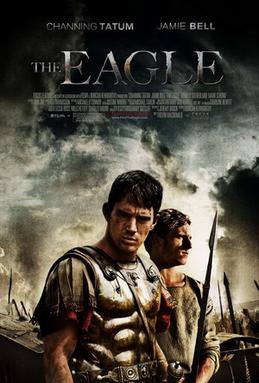
“The Eagle” is a war movie that is currently in theaters. It is based on the novel “The Eagle of the Ninth” by Rosemary Sutcliffe. It stars Channing Tatum as Marcus Flavius Aquila (the Roman word for “eagle”). It is set in 140 A.D. in Northern England. As background, we are told that twenty years earlier the 9th Legion was wiped out in the area of Scotland and its eagle standard was lost to the barbarians. Marcus’ father was in command (as a centurion – what?) and thus was his family’s honor besmirched. The movie accurately reflects that the Romans would actually be more concerned with the loss of a standard than with the loss of 5,000 legionaries. Sutcliffe bases this foundation on the disappearance of the 9th from the historical records after its expedition into Caledonia and the finding of a broken eagle in an archeological dig. However, the loss of an entire legion would have been clearly chronicled and the eagle turned out to have been from a statue so the premise is shaky.
Marcus gets assigned to command of a castra (fort) near Hadrian’s Wall (which the movie implies was built as a result of the loss of the 9th) even though he is just a centurion and younger than all the other officers. The castra is authentic looking, but unfortunately the movie does not spend much on camp life. We get a paltry training and repairing montage.
The first set piece is a surprise night attack which is not a surprise because Marcus hears in his sleep something that none of the guards hear so he calls out the garrison. The assault is in the new cinematic chaotic battle scene style. It does give you the impression of the “fog of war”. I was surprised how non-graphic the action was. There was no blood spurting that we have come to expect with movies involving swords. The movie is rated PG-13. This being a movie about Roman warfare there has to be the obligatory use of fire (see “Spartacus” and “Gladiator”, for instance). I guess since you cannot logically have explosions, fire is the next best thing. The imaginative (read: not historically accurate) use of fire in “The Eagle” involves pouring oil into the ditch surrounding the fort so it can be set ablaze during the assault.
Our next action scene revolves around the capture of a Roman patrol. The Celts arrive outside in a large and belligerent mob led by a crazed chieftain who proceeds to behead a prisoner (off camera) to provoke a Roman attack. Marcus obliges by leading a unit out (without their pila – what?). His big tactic is to convert into a testudo upon contact with the enemy. The Romans form the “tortoise” and survive the enemy literally throwing themselves onto it. This is military nonsense as the testudo was designed to be used against missile attacks, not shock charges. Besides, this formation would have been easily carved up by a mob of warriors because the sides and back of the formation were completely exposed. The Romans manage to reach the captives and rescue them, I think, but have to retreat when scythed (inaccurate) chariots (accurate) attack. Marcus is wounded and ends up under the care of his Uncle Aquila (Donald Sutherland acting rings around Tatum).
Marcus meets his to-be-bonded-with mate when he witnesses a gladiator show in the local amphitheater. The slave Esca (Jamie Bell) refuses to fight a nasty cuss and the crowd demands his death. For some reason, Marcus takes a liking to this coward and convinces the blood-lusting crowd of yahoos to reverse their thumbs to the upward position. Realistic? Not. Since Marcus saved his life (the same life that he did not want to fight for), Esca is now beholding to Marcus and must do whatever his despised Roman master wants. This is mighty ethical for someone whose family was killed by the Roman army.
Since Marcus has been given an honorable discharge due to his wound, he has nothing better to do but go across Hadrian’s Wall to find the needle (eagle) in the haystack (Scotland). And by the way, the haystack is full of very hostile barbarians. It’s doable because he has Esca as his guide and interpreter. Rogue warriors ambush them at their campfire resulting in a good, but brief, frenetic action scene. Later, the buddies encounter a survivor from the 9th named Guern. He knew Marcus’ father and describes the ambush which is basically the Battle of Teutoberger Forest set in Britain. In a bit of foreshadowing, Guern mentions the worst of the ambushers were the Painted Warriors of the Seal People who liked to eat human hearts. If you are wondering if Marcus and Esca will encounter them, you have not seen any movies.
Sure enough, the boys are captured by the Painted Warriors, but Esca claims that Marcus is his slave and they buy it. They are taken to a village that is straight out of an American western. The kids have very little resemblance to their fathers which implies the wives have been very naughty, but since there is no DNA testing… When all the men get drunk and dance like some Indians, Marcus spots the eagle and runs to it only to be knocked out. When he comes to, he finds that being knocked unconscious by a club is an advantage over being knocked out by whatever these dudes were drinking. He and Esca rescue the eagle and kill the evil king in the process. The audience is supposed to cheer his death and overlook that he is simply trying to preserve his peoples’ way of life under threat of extermination by the Romans.
The chase is on as our horse-riding heroes cannot open a gap with their foot-bound painted hunters. At one point, Esca skins a rat and they eat it raw. Believe it or not, this is the grossest visual in the movie. Marcus cannot go further because of his old wound so he sets Esca free. Will Esca abandon this Roman or go get help? He decides to abandon his ex-master. Just kidding. Esca returns with not only Guern, but a whole band of 9th veterans who see this as their opportunity to restore their honor after they ran away rather than have their hearts eaten in a hopeless battle. Cowards! You’ll have to watch the movie to find out what happens next, but don’t expect to be shocked.
I was sure this movie would be better than its closest counterpart – “Centurion”. I was wrong. It actually got some good reviews, although most of the reviews have been bad. Looking at it from an historical point of view, it does not hold up well. It does not appear that Sutcliffe or the screenwriters bothered with much research. Even the slightest reading would have revealed that a centurion would not be in command of a legion! I have pointed out several other historical inaccuracies. These would be excusable if the story was good, but it isn’t. The script is implausible and the acting is bad. Sadly, it is not even a guilty pleasure.