”Two
Women” was co-written and directed by Vittorio de Sica (“Bicycle Thieves”). It
was based on the novel The Woman from Ciociaria. It was originally to
star Anna Magnani with Sophia Loren playing her daughter. Magnani did not want
to play mother to Loren and backed out. Loren was recast as the mother although
she was only 25 years old at the time. This means she would have been 13 when
she gave birth. Her performance was lauded and she became the first actress or
actor to win an Oscar for a foreign language film. Jean-Paul Belmondo was cast
because French investors insisted on a French actor playing a prominent role.
His voice was dubbed for the Italian release. The film was a big hit.
The
film starts in Rome in 1944. The Allies are nearing the capital. It is coming
under increased air bombardment. Cesira (Sophia Loren) is a war widow who runs
a shop. She decides to leave with her 12-year-old daughter Rosetta (Eleonora
Brown). The walk to Cesira’s hometown of Ciociaria which is in the mountains.
Along the way they are strafed by a plane, but the town is a calm in the storm.
She meets the local intellectual. Michel (Belmondo) falls in love with Cesira.
He is a pacifist, but will be dragged into participation with tragic results.
The war finally comes to the idyllic town and the two women decide to return to
Rome, which has been liberated by the Allies. That rape scene that the movie
has been forewarning about will occur on this journey.
“Two
Women” is a dominated by Loren. She is outstanding in what may be her best
performance. She won 22 international awards, including the best performance
award at Cannes and the Best Actress award at the Academy Awards (an event she
did not attend because she feared she would faint when her name was called). Belmondo
and Brown are fine. The film is best enjoyed as an acting showcase. It is very
much a woman-oriented war movie. Cesira represents all the women impacted by
war atrocities. In particular, Italian women who were commonly subjected to
rape by both sides. You also get a taste of civilian life in war-torn Italy. In
this respect it is a companion to “Rome, Open City” and gives the rural
perspective.
The
movie is appropriately titled because it is the story of the relationship
between two women and how they are impacted by war. Cesira and Rosetta are very
close, so you dread what is coming for them. It is clear that something is
going to happen to them because the movie is strongly anti-war. You just don’t
know when the trauma is coming or how it will occur. In fact, aside from two
strafings, the two manage to avoid the war until deep into the film. When it
happens, the movie takes a jarring turn. The two women react differently to the
trauma. One theme of the film is the loss of innocence as portrayed by the
Rosetta character.
Although
not a true story, the movie is based on the Maroccinate. This term applies to a
series of mass rapes by Moroccan Goumiers. They were French colonial troops who
developed a reputation for horrible atrocities against Italian civilians, women
and men. The most infamous incidents occurred after the Battle of Monte
Cassino. In the aftermath of the battle, the Goumiers took the harshness of the
battle out on villages in the vicinity. The movie comes nowhere near the
incredible debauchery committed by these undisciplined soldiers. While possibly
exaggerated, the atrocities undoubtedly occurred. The movie gives no context to
its rapes. It appears to be a wrong place at the wrong time situation. I
theorize that the French investors were not keen on financing a movie that
emphasized atrocities by French troops. But black French colonial troops…
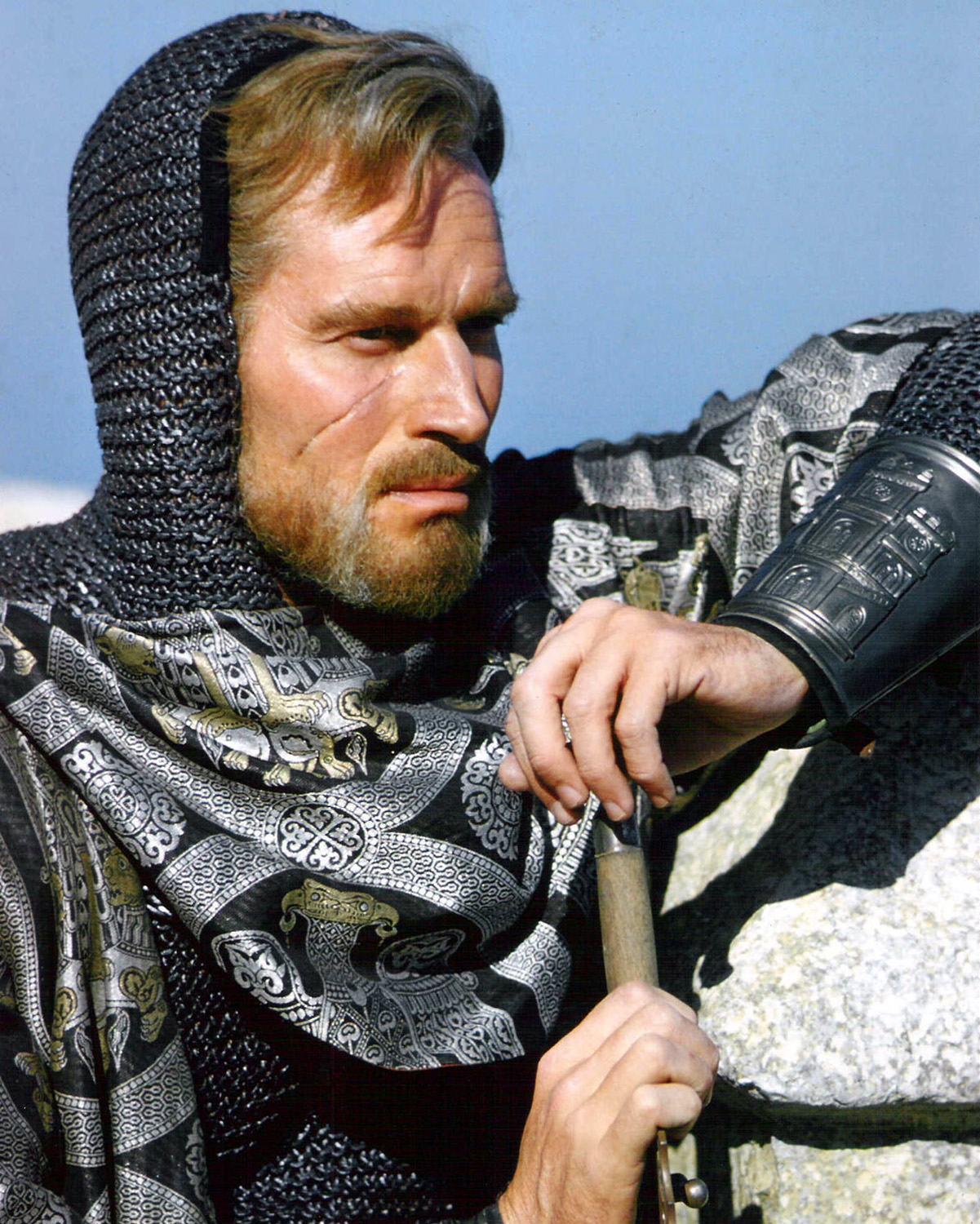
BACK-STORY: “El Cid” is an historical epic about the legendary Spanish medieval hero Don Rodrigo Diaz de Vivar, known as El Cid. It was released in 1961 and was directed by Anthony Mann. It is in the same genre as “Ben Hur” and similarly stars Charleton Heston. His co-star Sophia Loren had a $200/week hairdresser allowance. The film was shot mostly in Spain. It was nominated for Academy Awards for Art Direction, Original Music Score, and Best Song. The movie was a box office hit and was well received by critics.
OPENING: The setting is Spain in 1080. The narrator explains that the Iberian Peninsula is divided between Christians and Moors. The evil Emir Ben Yusuf (Herbert Lom) scolds his fellow Muslims for being wimps and vows to conquer Spain, Europe, and then the world! We first meet El Cid as he rescues a cross from a burning church. How Christ-like of him, but not surprising from the most loyal, chivalric, and talented knight of medieval Spain.
SUMMARY: On his way to his wedding, Don Rodrigo captures two Moorish emirs in battle, then refuses to turn them over to the king’s representative. Instead, he sets them free with their promise not to take up arms against the king. One of them, Al-Mutamin, later saves Rodrigo’s life and becomes his friend. When he reaches the court, Rodrigo is charged with treason. He is reunited with his fiancé Jimena (Sophia Loren) and we get the corny romantic interlude typical of movies like this. He gets into a duel with Jimenez’ father and kills him in one of the best duels in filmdom. Lots of clanging. Jimenez is a hot-blooded Spanish senorita who naturally now hates Rodrigo and wants him dead.
ready for the joust
When another king challenges Ferdinand to combat of champions to resolve a border dispute, Rodrigo volunteers to redeem himself. The charge of treason apparently having been forgotten, the king accepts. The joust is awesome. Possibly the best ever filmed. Guess who wins? Back in the king’s good graces, Rodrigo marries Jimena even though she still dreams of his death (it’s an honor thing).
When Ferdinand dies, he is succeeded by his oldest son Sancho. Younger brother Alfonso and sister Urraca scheme for the throne. In a ridiculous scene, Sancho is assassinated by a traitor working for Urraca. Rodrigo forces Alfonso to swear he did not have anything to do with the killing, thus earning banishment by the new king. On his way into exile, the Cid helps a leper. What a guy.
Several years pass before El Cid is recalled by Alfonso because Ben Yusuf is coming and the people of Spain demand their champion return. The tension with Alfonso is still apparent and the king refuses Rodrigo’s advice to avoid battle and instead lay siege to the key city of Valencia. They part company with El Cid heading for Valencia on his own. On the way he visits Jimena and his twin daughters (who he has never seen) at the nunnery. They have been living there during his exile. She loves him now. He is also joined by his Moorish friend Al-Mutamin.
Alfonso gets his ass kicked off screen and then holds Jimena hostage to get El Cid to come to him. A previously villainous noble helps Jimenez escape and they join the Cid at Valencia. The impending arrival of Ben Yusuf’s fleet forces Rodrigo to hasten the siege. He catapults bread over the walls to incite a rebellion by the starving populace. They kill the evil Emir Al – Kadir and evict his minions, the Black Guard (this is one of those movies where all the bad guys where black).
Now in control of the city, the Cid decides to sally forth and a huge, well-staged battle ensues. El Cid is wounded by an arrow in the chest.
CLOSING: The doctors tell Rodrigo he must have the arrow removed if he wants to live, but the recovery will prevent him from leading the morrow’s attack. Or he could leave it in and lead the attack, but die. After explaining his noble reasons to Jimena, he opts for choice number two. Alfonso arrives that night, he has seen the light and reconciles with El Cid. The Cid dies happy having remained loyal to this jerk of a king.
The next morning, the Cid is tied to his horse and leads his army out the front gate causing panic in the Moorish attackers who believe either it’s a ghost or the live Cid, either way they are toast. It is easily the best acting of Heston’s career. If he were still alive, the Cid would have killed Ben Yusuf in single combat, but since he’s dead it’s left to his corpse-laden horse to trample Ben Yusuf to death. In Hollywood-think, that’s the next best thing. El Cid goes riding off into the sunset and into the mists of legend.
RATINGS:
Action - 8
Acting - 7
Accuracy - 6
Realism - 6
Plot - 8
Overall - 8
WOULD CHICKS DIG IT? Of course. It’s a romance with two superstars. The interiors are breath-taking and so are the costumes. El Cid is a chivalric dream. The perfect man. The action is nongraphic. Plus, it’s not really a war movie, so sell it as an historical romance.
ACCURACY: The problem is that although Don Rodrigo Diaz de Vivar is a real person, El Cid is a legendary figure. The movie is definitely based more on the legend than the person. The historical consultant was Spanish historian Ramon Menendez Pidal who relied on the Poema de Milo Cid which is a medieval chansons de geste that has dubious historical value. The movie alters and simplifies the story. This is acceptable because the real Don Rodrigo was a complex individual. He probably was more chivalric than most knights, but he basically was a soldier-for-hire. In fact, he often served Moorish masters against Christians.
Spain was divided along the lines presented in the movie. Ben Yusuf was a powerful emir from North Africa who invaded Spain. There is no evidence that Don Rodrigo paroled two emirs to earn the enmity of Ferdinand, but he did fight a trial by combat similar to the movie’s. He did not kill Jimena’s father. The whole dysfunctional marriage was Hollywood. In fact, Jimena was a niece of King Alfonso and it was apparently a political marriage.
There was a power struggle between the siblings and the assassination was similar to that depicted in the film. El Cid did force Alfonso to swear innocence, but his banishment was more likely the result of his having been loyal to Sancho and resentment of his popularity. It is during this exile that he hires out, mainly for emirs like Al Mutamin. He did lay siege to Valencia and took control of it, but not for the good of Spain. He wanted his own fiefdom. He and Jimena ruled for three years before Ben Yusuf arrived. By that time, El Cid had died of natural causes. Also, the city ended up falling when Alfonso decided it was not worth the trouble.
CRITIQUE: “El Cid” was better than I thought it would be. Although I am a big fan of “Ben Hur”, most of the old-school historical epics seem so outdated and overblown. This movie has some of those characteristics, but it is highly entertaining and accurate enough to pass the sniff test. Its strengths overcome its flaws.
Some of the flaws include a sappy love story and twirl your mustache type villains. Heston and Loren do not have much chemistry and the ups and downs are not realistic. I doubt Herbert Lom’s Ben Yusuf is considered politically correct in today’s Muslim-tolerant atmosphere. However, the movie is surprisingly even-handed in its depiction of the Moors. There is a nice balance of evil and good Christians and Muslims. The main flaw is El Cid is too perfect. He is unbeatable as a warrior, at one point he defeats a dozen knights virtually singlehandedly. He is totally loyal to his lords, even when they are corrupt and trying to kill him. He is the perfect mate, being understanding when his fiancé despises him and tries to have him killed.
The strengths include the wonderful (if too brightly lit) castle interiors and the “Ben Hur” style score that does a great job setting the mood. The 70mm Technicolor is vibrant. The action is crisp and is three for three with the duel, the trial by combat, and the beach battle. The ending is memorable, even though its ridiculous.
CONCLUSION: “El Cid’ is a spectacle in the grandest sense of the word. It is epic in its scale. It is old-school Hollywood at its best, not its worst. It is not firmly in the war movie genre, but that makes it more appealing to a broader audience. Its placement at #63 seems about right. It is certainly better than most of the movies behind it and I suspect it will be superior to many of the movies ahead. One thing is for sure, it will be the only one where a dead hero wins a battle.