Showing posts with label The Front Line. Show all posts

Saturday, August 10, 2024

THE 100 BEST WAR MOVIES #47. The Front Line (2011)


Let me state from the start, I love South Korean war movies.  They are always entertaining.  Turn off your filters, sit back, shake your head, and enjoy.  These directors know how to film balls to the wall action that makes “Saving Private Ryan” look like a documentary.  Remarkably, I have yet to see one that does not treat the Korean War as a mess.  There is no patriotism in these films and a lot of sympathy for the enemy.  Compare this to Hollywood’s take on the war and remember that South Korea has a much better reason to pump up the patriotism and demonization of the enemy.  The  recent appearance of these types of movies starting with “Joint Security Area” (2000) clearly shows how far the country has come down the path of democracy.  It was not that long ago that the director of a movie like this would have been thrown in prison.  I read the other day that you could argue that in terms of positive results the Korean War was our most successful war.  That may be a stretch, but when you see where South Korea is today (and specifically Korean cinema as an example of this), you can see where this theory comes from. It won Grand Bells (equivalent to the Academy Awards) for Best Lighting, Best Cinematography, and  Best Film. It was nominated for Cinematography, Director, Supporting Actor (Ryu Seung-Ryong), New Actor (Lee Je-Hoon), Screenplay, Editing, Costume Design, Visual Effects, and Sound Effects.

            “The Frontline” is set on the eastern front is the last month of the war.  The Alligator Company (named after the fact that baby alligators have a low survival rate) is tasked with capturing Aerok (look at it in a mirror) Hill before the Armistice locks in the border.  The hill has changed hands 30 times in 18 months.  The hill is an amazing set.  The company is low in morale and has recently had a change in command via fragging.  The interim commander is a morphine addict.  Kang (Shin Ha-kyun) arrives from the C.I.C. (Counterintelligence Corps) to investigate the murder and suspicions of collaboration in the unit. (The C.I.C. was created to ferret out communists in the ranks.)  He is shocked to be reunited with his best friend Kim (Go Soo).  Kim had been taken captive early in the war and was presumed hors de combat.  Kim is now a cynical anti-hero.

            When the latest order to take the hill comes the unit reluctantly saddles up, shrugs, and sallies forth.  The result is SPRish with hand-held, quick cuts, close-ups pulling back, and even a tracking shot.  If you’ve seen Tae Guk Gi, you know the Korean style.  Kang takes part in the attack.  Did I mention Korean directors are not big on reality?  Being in the thick of it allows Kang to discover that there is a bunker in no man’s land that acts as fraternization central.  Whenever it changes hands, the dispossessed side has left “gifts”.  The South leaves America cigarettes and chocolate and the North leaves rice wine.  More significantly, the communists leave letters for relatives in the South. The movie taps into the dislocation of relatives when the 38th Parallel was used to separate the north from the south.  There is a really cool montage of a few more assaults as seen by a stationary camera to push the time frame ahead.  A key subplot involves a North Korean sniper called “Two Seconds”.  A “Full Metal Jacket” type of “I dare you to rescue him” scene is followed by a FMJesque revelation. Another subplot involves the raw nerves of the platoon. Kang traces this back to an incident at Pohang early in the war.  Flashback time.  An amphibious assault goes terribly wound. All the survivors have PTSD. Just when you think things could not get worse, here come the Chicoms. And both sides really want that hill, especially since the armistice is coming and each side wants as much territory as possible.  They even fight over a hill that is devastated.

            It turns out there are 12 hours of war left.  Who really wants that moonscape of a hill?  The generals.  This actually accurately reflects the battle for the hills (ex. Pork Chop Hill) that closed the Korean War.  Who wants to stage a grand set piece to close his movie?  Jang Hoon.  Leave the kitchen sink in the trailer, but bring everything else.  Air bombardment by fighters that drop bombs they don’t have (learned from American war films).  Slo-mo.  Elegaic music.  Hand-to hand.  A stabbing death that reminds of Mellish’s from SPR.  Graphic wounds.  Intense violence. 

ACTING:                    A

ACTION:                     A  (10/10)

ACCURACY:                N/A

PLOT:                            A

REALISM:                      C

CINEMATOGRAPHY:   A

SCORE:                         C

SCENE:  the last assault

QUOTE:   North Korean officer:  Did you expect to survive this war?

            “The Frontline” was a huge hit in South Korea.  Apparently South Koreans do not like their war movies coated with sugar.  (They don’t mind a whiff of bull shit, however.)  The movie was critically acclaimed and a big hit at the box office. It is undoubtedly entertaining in a macho male demographic way.  I don’t think females will be as enamored, but there is a significant female character which is something to commend it for.  Hint:  think “Enemy at the Gates”.

            The movie is very well acted.  The leads are good and typically sincere for Koreans.  There are some interesting plot devices like the bunker in no man’s land.  The themes of brotherhood, rivalry, and sympathy for the enemy (although a bit heavy-handed) are nicely laid out. There are a few poignant deaths.  The film is more anti-war than most war movies. The Korean War was hell, especially in the last year when both sides were in a throw-back to WWI.  These themes have been explored before in Korean movies, so there is nothing new here.  Also not breaking new ground is the “it’s a small world” nature of many of the character arcs.  And the ending is on the trite side.

            I have seen all the major Korean war movies and I believe this is the best one. The use of the fraternization bunker, the friendly fire incident, and the female sniper make it stand out from the other war movies.When you add those subplots to the assaults on the hill, you get a well-rounded film.  

Sunday, December 6, 2020

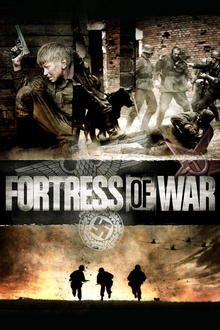
FORTRESS OF WAR (8) vs. THE FRONT LINE (9)


PLOT

                “Fortress of War” (“Brest Fortress”) is a Russian film released in 2010.  It chronicles the defense of Brest Fortress in the early days of Operation Barbarossa in June, 1941.  It frames the siege around the efforts of a teenage boy named Sashka who spends the movie searching for his girlfriend in the chaos of several days.  The movie focuses on the leaders of the four defense positions and their families.  The Germans keep coming and the movie has a very high amount of combat.  The Brest Fortress Museum vetted the script and the movie is accurate and entertaining.  GRADE  =  A  (9)

                “The Front Line” is a South Korean film set in the closing days of the Korean War.  It is similar to “Pork Chop Hill” because it covers attempts to capture a hill.  The battle scenes are connected by several subplots.  An army investigator named Kang is sent to investigate the fragging of an officer and possible collaboration by a unit that includes his best friend.  The unit is suffering from collective PTSD from an incident earlier in the war.  There is a female enemy sniper working for the communists that the unit has several confrontations with.  Most interestingly, there is a bunker on the hill that both sides use for fraternization since the hill changes hands numerous times.  That’s a lot of threads but the movie flows smoothly and the subplots blend with the gonzo combat well.  The themes of brotherhood, rivalry, and sympathy for the enemy (although a bit heavy-handed) are nicely laid out.   The film won the Grand Bell Award for South Korea’s best picture.  GRADE  =  A  (9)

ACTING

                “Brest Fortress” is an ensemble affair and the cast is strong.  Special recognition has to go to Aleksey Kooashov as Sashka.  He is great in what may be his only movie.  Most of the rest of the cast is unknowns as well.   They are all solid.  The movie is not propaganda, so their stolid performances match the Soviet people in a crisis like this.  GRADE  =  A  (9)

                “The Front Line” has strong performances across the board.  Ryu Seung-ryong was nominated for Best Supporting Actor and Lee Je-hoon for Best New Actor.  Several others were nominated for awards besides the Grand Bells.  There is some meaty drama for them to chew on but the performances do not match the exuberance of the combat.  GRADE  =  A (9)

CLICHES

                “Fortress of War” is not laden with cliches.  It does have one of the leaders looking at a picture of his family when the attack begins.  There is one guy who tries to warn that the shit is about to hit the fan, but no one believes him.  The movie is firmly in the last stand subgenre and is the Russian equivalent of “The Alamo”, but with civilians thrown in.  GRADE  =  A (9)

                “The Front Line” does not have a standard combat movie plot, but it does have a few cliches.  It does have the newbie death.  The naïve officer gets hardened.  The soldiers are pawns.  The mission is futile.  There is a flashback worthy incident that effects the men.  GRADE  =  B (8)

COMBAT

                  Although the movie does a great job personalizing the siege, the movie is most memorable for its quantity and quality of combat.  The opening air bombardment is the best I have seen.  The first fire fight sets the stage with slo-mo, graphic wounds, hand-to-hand, and extreme action.    It reminded me of the Korean style of movies like “Tae Guk Gi”, but it is also similar to the Russian film "9th  Company”.  There are several frenetic action scenes.  Unlike many war movies, the deaths are not ridiculously unrealistic.  And if you like explosions, this movie blows things up real good.  There is even a two-ton kilogram bomb that results in a humongous explosion.  The German use of flamethrowers is not for the squeamish.   GRADE  =  A+ (10)

                “The Front Line” is a typical Korean war movie and has their distinctive combat porn style.  Given the complex nature of the plot, there is not as much combat as in others, like “Tae Guk Gi”.  Although the framing device is the assaults on the hill, most are handled by a montage.  The movie does close with a big set piece battle.  This scene has all the bells and whistles.  Air bombardment by fighters that drop bombs they don’t have (learned from American war films).  Slo-mo.  Elegaic music.  Hand-to-hand.  A stabbing death that reminds of Mellish’s from SPR.  Graphic wounds.  Intense violence.  GRADE  =  B  (8)

FINAL SCORE:  Brest Fortress  37  The Front Line  34

ANALYSIS

                I was not looking forward to writing up this match.  I love both these movies and I am upset that my system using IMDB ratings had them facing off in the first round.  I would not have had that happen if I seeded them based on my opinion.  Both are underrated at #8 and #9.  Still, the 8/9 matchup in a tournament is supposed to be between two evenly matched competitors.  This is certainly true for these two.  In fact, I was not sure which one had won until I typed this up.  It turns out that “Brest Fortress” is clearly the better movie, given these categories.  It is less clicheish, but more importantly, it holds its own in the combat porn department and has more of it.  I’m sorry to see “The Front Line” get bounced because it is better than some of the movies that will move on to the second round, but them’s the breaks.

Thursday, May 15, 2014

SHOULD I READ IT? The Frontline (2011)


                Let me state from the start, I love South Korean war movies.  They are always entertaining.  Turn off your filters, sit back, shake your head, and enjoy.  These directors know how to film balls to the wall action that makes “Saving Private Ryan” look like a documentary.  Remarkably, I have yet to see one that does not treat the Korean War as a mess.  There is no patriotism in these films and a lot of sympathy for the enemy.  Compare this to Hollywood’s take on the war and remember that South Korea has a much better reason to pump up the patriotism and demonization of the enemy.  The  recent appearance of these types of movies starting with “Joint Security Area” (2000) clearly shows how far the country has come down the path of democracy.  It was not that long ago that the director of a movie like this would have been thrown in prison.  I read the other day that you could argue that in terms of positive results the Korean War was our most successful war.  That may be a stretch, but when you see where South Korea today (and specifically Korean cinema as an example of this), you can see where this theory comes from.

                “The Frontline” is set on the eastern front in the last month of the war.  The Alligator Company (named after the fact that baby alligators have a low survival rate) is tasked with capturing Aerok (look at it in a mirror) Hill before the Armistice locks in the border.  The hill has changed hands 30 times in 18 months.  The company is low in morale and has recently had a change in command via fragging.  The interim commander is a morphine addict.  Kang (Shin Ha-kyun) arrives from the C.I.C. (Counterintelligence Corps) to investigate the murder and suspicions of collaboration in the unit. (The C.I.C. was created to ferret out communists in the ranks.)  He is shocked to be reunited with his best friend Kim (Go Soo).  Kim had been taken captive early in the war and was presumed hors de combat.  Kim is now a cynical anti-hero.

                When the latest order to take the hill comes the unit reluctantly saddles up, shrugs, and sallies forth.  The result is SPRish with hand-held, quick cuts, close-ups pulling back, and even a tracking shot.  If you’ve seen Tae Guk Gi, you know the Korean style.  Kang takes part in the attack.  Did I mention Korean directors are not big on reality?  Being in the thick of it allows Kang to discover that there is a bunker in no man’s land that acts as fraternization central.  Whenever it changes hands, the dispossessed side has left “gifts”.  The South leaves America cigarettes and chocolate and the North leaves rice wine.  More significantly, the communists leave letters for relatives in the South.

Dammit!  They left us some mouth wash.
                There is a really cool montage of a few more assaults as seen by a stationary camera to push the time frame ahead.  A key subplot involves a North Korean sniper called “Two Seconds”.  A “Full Metal Jacket” type of “I dare you to rescue him” scene is followed by a FMJesque revelation.

                Another subplot involves the raw nerves of the platoon. Kang traces this back to an incident at Pohang early in the war.  Flashback time.  In an amphibious assault gone bad, the Alligators were attempting to withdraw when another platoon decided their Higgins boat could handle double capacity.  A .50 caliber machine gun ended the boarding attempt and the incident was covered up, but the mental scars did not heal.  Soldiers in Korean movies must suffer physically and psychologically.

Who else thinks this is sexy?
                Just when you think things could not get worse, here come the Chicoms.  A human wave attack in the driving rain results in Kim countermanding the new commander’s decision to follow orders and hold by putting a bullet in his head.  What the frag?!  Kang threatens court-martial.  He just does not get it.  Guess who doesn’t live to stand trial?  Kang carries the body back only to learn the war is over.  To emphasize this, Kang runs into the sniper’s band at a stream and they exchange nods and waves.  Good game.  Bittersweet and satisfying ending right?  But wait, most of the cast is still alive.  This violates Korean war cinema doctrine.

                It turns out there are 12 hours of war left.  Who really wants that moonscape of a hill?  The generals.  This actually accurately reflects the battle for the hills (ex. Pork Chop Hill) that closed the Korean War.  Who wants to stage a grand set piece to close his movie?  Jang Hoon.  Leave the kitchen sink in the trailer, but bring everything else.  Air bombardment by fighters that drop bombs they don’t have (learned from American war films).  Slo-mo.  Elegaic music.  Hand-to hand.  A stabbing death that reminds of Mellish’s from SPR.  Graphic wounds.  Intense violence. 

                “The Frontline” was a huge hit in South Korea.  Apparently South Koreans do not like their war movies coated with sugar.  (They don’t mind a whiff of bull shit, however.)  The movie was critically acclaimed and was awarded the Korean equivalent of the Best Picture Oscar and was nominated as South Korea’s representative for Best Foreign Film for the Academy Awards.  It may be a bit overrated relative to that.  However, it is undoubtedly entertaining in a macho male demographic way.  I don’t think females will be as enamored, but there is a significant female character which is something to commend it for.  Hint:  think “Enemy at the Gates”.

                The movie is very well acted.  The leads are good and typically sincere for Koreans.  There are some interesting plot devices like the bunker in no man’s land.  The themes of brotherhood, rivalry, and sympathy for the enemy (although a bit heavy-handed) are nicely laid out.   These themes have been explored before in Korean movies, so there is nothing new here.  Also not breaking new ground is the “it’s a small world” nature of many of the character arcs.  And the ending is on the trite side.

                If you have never seen a Korean war movie, this would be a good place to start.  Don’t start with “Tae Guk Gi” because then you may be let down by the others.  I would begin with “Joint Security Area”.  Regardless, pop some popcorn and dive in.

grade =  B-