Showing posts with label When Trumpets Fade. Show all posts

Monday, August 12, 2024

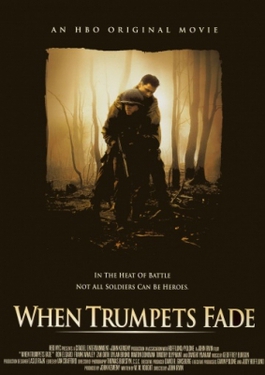
THE 100 BEST WAR MOVIES #46. When Trumpets Fade (1998)


               ‘’When Trumpets Fade” is the best movie ever made about the Battle of Hurtgen Forest.  It is also the only movie about the battle.  Anyone familiar with the battle knows a good movie will be bleak if it’s realistic.  That was one fucked up battle.  It is the type of movie that could not have been made before its time.  It is one of the best examples of what I call the VioLingo School of modern war movies.  Vio refers to realistic violence and Lingo refers to realistic soldier life and language.  This school also often features an anti-hero.  “When Trumpets Fade” has one of the most memorable.  The film was directed by John Irvin (“Hamburger Hill”) for HBO.  This was before HBO became the creative force that it is today.  The film was a preview of great things to come.

                The movie opens very strongly with Pvt. Manning (Ron Eldard) carrying a buddy  through a burned out landscape.  The mortally wounded soldier begs to be put out of his misery and Manning complies.  Manning is an odd mixture of Audie Murphy (“To Hell and Back”)  and John Yossarian (“Catch-22”).  He may be a bit anachronistic because he realizes he is suffering from PTSD and is not ashamed to admit it.  When he tries to get a Section 8 (mentally unfit due to combat stress), Capt. Pritchett’s (Martin Donovan) counter offer is to promote him to squad leader and hand him replacements. Shit flows down.  One of them is a fat guy with glasses named Sanderson (Zac Orth) who in a typical war movie is the deadest of meat.             

                On their first patrol, through a foggy forest, Manning puts Sanderson on point seemingly to get the cliché accomplished as fast as Gardner in “Platoon”.  Sanderson gets separated from the squad, but does encounter the face of Nazism in the form of a German sergeant.  Manning, ever the self-preservationist, leaves Sandy behind.  Sandy (having never seen a war movie) does the WTF move of surviving. 

                The big picture is the Americans have to take a bridge crossing “at all costs”.  The big push starts with the cannon fodder gingerly moving through the mine-laden forest until… the German artillery opens fire.  Tree bursts.  Graphic wounds.  Decapitations.  Chaos. The movie is excellent at showing the randomness of death in war, especially when it comes to mines and artillery fire. There are now some openings in command.  Manning keeps getting promoted in spite of himself.  You’ve heard of the Peter Principle, I suggest the Manning Principle defined as “being promoted despite not wanting it”.  Manning is promised his Section 8 if he takes out a battery of 88s.  When one of his charges panics and it catches, Manning shoots him. This is the right thing to do, but only adds to his reputation of being a dick.  Sandy goes all flame-thrower on the battery - mission accomplished.  Unfortunately, Pritchett has snapped due to a hellacious river crossing assault, so no deal.  In fact, how about another promotion?

ACTING:                    B

ACTION:                     B  (8/10)

ACCURACY:                N/A

PLOT:                            A

REALISM:                      B

CINEMATOGRAPHY:   B

SCORE:                          C

SCENE:  the flamethrower

QUOTE:   Manning:   [looking at bodies at the side of the road] Why do they leave them there like that?

Medic Chamberlain: Fucking brass. They don't wanna waste the trucks on the dead, they still got more guys to haul in for the slaughter.

Manning: No more room in hell.

Chamberlain: What are you talking about? There's plenty of room. All they gotta do is stack'em higher.

                “When Trumpets Fade” is a great movie and yet relatively unknown.  It got lost in the publicity over “Saving Private Ryan” and “The Thin Red Line”.  While not as good as SPR, it is definitely superior to TRL.  Factor in the low budget and the film is amazing.  There are few war films that are this sincerely anti-war and anti-authority.

The acting is outstanding with Eldard the quintessential anti-hero.  He could be the poster boy for the archetype.  He is unlikable and does not care.  Manning is in my top five all-time war characters.  Eldard does his best work as does Orth.  The supporting cast is eclectic and includes Dwight Yoakam as the loathsome Lt. Col. Rickman.  You know what kind of film it is when Manning’s buddy at the beginning is played by Jeffrey Donovan.  We also get Timothy Olyphant and Frank Whaley.  The film is the anti-all-star epic.  (I’m looking at you “Thin Red Line”.)  The cinematography is noteworthy with a blend of hand-held, low angle, and plenty of close-ups.  The colors are muted to fit the mood.  The action is much better than most war movies.  The film is violent, gritty, and graphic.  This is very much a guy movie (although I know at least one discerning female who loves it).  The soldier talk and behavior are authentic.  The men are scared, not confident. The commanders are clueless.  The movie admirably and surprisingly avoids clichés.  It is not really a small unit movie as the men aside from Manning and Sanderson are not developed much.  It sets up nodding expectations and then does not go there.  The only thing predictable is it will not have a happy ending.  The tactics are realistic for small units in WWII Europe.  The tactical decisions reflect the unfortunate lack of creativity that made the Battle of Hurtgen Forest such a tragedy.

As far as accuracy, the movie is dedicated to the American soldiers who went through the meat grinder of the Hurtgen Forest.  It was fought from September – December, 1944.  It was the longest battle in American History.  Although it resulted in 33,000 casualties, it has been completely overshadowed by the more glamorous Battle of the Bulge. However, it makes no attempt to instruct about the battle. In truth, the film could be about any WWII battle where the general decides to use frontal tactics to bludgeon his way to an objective.  In some ways, it reflects the “American way of war” as enacted by incompetent, uncreative leaders.  Not every American Army commander was George Patton.  Some were Courtney Hodges.  Hodges determined that the Hurtgen had to be taken at all costs to pin down German forces and to avoid a salient threatening his drive into Germany.  Any basic understanding of the principles of war would have called for by-passing the hellish terrain.  Any foot soldier (e.g. Manning) could see the tactics were futile.  The Germans could hardly believe anyone would launch an offensive through terrain that they had incorporated into the Siegfried Line and which was so densely forested that they could not even consider it for threatening the American drive on Germany.  The movie does a fair job of replicating the terrain, but the Hungarian locale is not quite as dense and creepy as the real deal.  With its low budget, it attempts to recreate the dragon’s teeth, but its low scale.  It is more realistic in the mud and grime department.  It also does a fair job with the tree bursts and mines. I am a proponant of random deaths in war movies. In most battle reenactments, the main characters survive the bombardment and/or mines. In reality,they have as much chance of dying as an extra. Related to that is the depiction of men reaching their breaking point. I could find no evidence that what the characters in the movie went through was based on any particular part of the battle.  Their experiences were generic, but Hollywood enhanced.  Enhanced to the point where the movie is among the most anti-war films ever made.  What better battle to advance the theme that war is Hell.

In 1998, three significant war movies came out that were set in WWII.  “Saving Private Ryan” used the talents of Steven Spielberg to take war movie entertainment into the 21st Century.  “The Thin Red Line” brought  an environmental and philosophical approach to war plotting.  And “Where Trumpets Fade” helped develop the anti-hero, anti-cliché, truly anti-war film. 

Tuesday, January 28, 2014

When Trumpets Fade (1998)


                ‘’When Trumpets Fade” is the best movie ever made about the Battle of Hurtgen Forest.  It is also the only movie about the battle.  Anyone familiar with the battle knows it will be bleak if realistic.  That was one fucked up battle.  It is the type of movie that could not have been made before its time.  It is one of the best examples of what I call the VioLingo School of modern war movies.  Vio refers to realistic violence and Lingo refers to realistic soldier life and language.  This school also often features an anti-hero.  “When Trumpets Fade” has one of the most memorable.  The film was directed by John Irvin (“Hamburger Hill”) for HBO.  This was before HBO became the creative force that it is today.  The film was a preview of great things to come.

                The movie opens very strongly with Pvt. Manning (Ron Eldard) carrying a buddy through a burned out landscape on his back.  The mortally wounded soldier begs to be put out of his misery and Manning complies.  Manning is an odd mixture of Audie Murphy  and John Yossarian (“Catch-22”).  He may be a bit anachronistic because he realizes he is suffering from PTSD and is not ashamed to admit it.  When he tries to get a Section 8 (mentally unfit due to combat stress), Capt. Pritchett’s (Martin Donovan) counter offer is to promote him to squad leader and hand him replacements.  One of them is a fat guy with glasses named Sanderson (Zac Orth) who in a typical war movie is the deadest of meat.
If you are smoking a cigarette in a 1998 war
movie you are either bad or a badass

                On their first patrol, through a foggy forest, Manning puts Sanderson on point seemingly to get the cliché accomplished as fast as Gardner in “Platoon”.  Sanderson gets separated from the squad, but does encounter the face of Nazism in the form of a German sergeant.  Manning, ever the self-preservationist, leaves Sandy behind.  Sandy (having never seen a war movie) does the WTF move of surviving. 

                The big picture is the Americans have to take a bridge crossing “at all costs”.  The big push starts with the cannon fodder gingerly moving through the mine-laden forest until…  Plus the German artillery opens fire.  Tree bursts.  Graphic wounds.  Decapitations.  Chaos.  There are now some openings in command.  Manning keeps getting promoted in spite of himself.  You’ve heard of the Peter Principle, I suggest the Manning Principle defined as “being promoted despite not wanting it”.  Manning is promised his Section 8 if he takes out a battery of 88s.  When one of his charges panics and it catches, Manning shoots him. This is the right thing to do, but only adds to his reputation of being a dick.  Sandy goes all flame-thrower on the battery - mission accomplished.  Unfortunately, Pritchett has snapped due to a hellacious river crossing assault, so no deal.  In fact, how about another promotion?


                Manning has fought the system unsuccessfully and now it’s time to play the game.  He assembles a crack trio that includes Sanderson and the fighting medic Chamberlain (Frank Whaley).  The idea is to eliminate some German tanks so the next brainless frontal assault on the river crossing will succeed.  Better to die on a suicide mission.  Who will be the “Lone Survivor”?

                “When Trumpets Fade” is a great movie and yet relatively unknown.  It got lost in the tumult over “Saving Private Ryan” and “The Thin Red Line”.  While not as good as SPR, it is definitely superior to TRL.  Factor in the low budget and the film is amazing.  There are few war films that are this sincerely anti-war and anti-authority. 


The acting is outstanding with Eldard the quintessential anti-hero.  He could be the poster boy for the archetype.  He is dislikable and does not care.  Manning is in my top five all-time war characters.  Eldard does his best work as does Orth.  The supporting cast is eclectic and includes Dwight Yoakam as the loathsome Lt. Col. Rickman.  You know what kind of film it is when Manning’s buddy at the beginning is played by Jeffrey Donovan.  We also get Timothy Olyphant and Frank Whaley.  The film is the anti-all-star epic.  (I’m looking at you “Thin Red Line”.)  The cinematography is noteworthy with a blend of hand-held, low angle, and plenty of close-ups.  The colors are muted to fit the mood.  The action is much better than most war movies.  The film is violent, gritty, and graphic.  This is very much a guy movie (although I know at least one discerning female who loves it).  The soldier talk and behavior are authentic.  The men are scared, not confident, and clueless.  The movie admirably and surprisingly avoids clichés.  It is not really a small unit movie as the men aside from Manning and Sanderson are not developed much.  It sets up nodding expectations and then does not go there.  The only thing predictable is it will not have a happy ending.  The tactics are realistic for small units in WWII Europe.  The tactical decisions reflect the unfortunate lack of creativity that made the Battle of Hurtgen Forest such a tragedy.


As far as accuracy, the movie is dedicated to the American soldiers who went through the meat grinder of the Hurtgen Forest.  It was fought from September – December, 1944.  It was the longest battle in American History.  Although it resulted in 33,000 casualties, it has been completely overshadowed by the more glamorous Battle of the Bulge. However, it makes no attempt to instruct about the battle. In truth, the film could be about any WWII battle where the general decides to use frontal tactics to bludgeon his way to an objective.  In some ways, it reflects the “American way of war” as enacted by incompetent, uncreative leaders.  Not every American Army commander was George Patton.  Some were Courtney Hodges.  Hodges determined that the Hurtgen had to be taken at all costs to pin down German forces and to avoid a salient threatening his drive into Germany.  Any basic understanding of the principles of war would have called for by-passing the hellish terrain.  Any foot soldier (Manning) could see the tactics were futile.  The Germans could hardly believe anyone would launch an offensive through terrain that they had incorporated into the Siegfried Line and which was so densely forested that they could not even consider it for threatening the American drive on Germany.  The movie does a fair job of replicating the terrain, but the Hungarian locale is not quite as dense and creepy as the real deal.  With its low budget, it attempts to recreate the dragon’s teeth, but its low scale.  It is more realistic in the mud and grime department.  It also does a fair job with the tree bursts and mines.  I could find no evidence that what the characters in the movie went through was based on any particular part of the battle.  Their experiences were generic, but Hollywood enhanced.  Enhanced to the point where the movie is among the most anti-war films ever made.  What better battle to advance the theme that war is Hell?

In 1998, three significant war movies came out that were set in WWII.  “Saving Private Ryan” used the talents of Steven Spielberg to take war movie entertainment into the 21st Century.  “The Thin Red Line” brought  an environmental and philosophical approach to war plotting.  And “Where Trumpets Fade” helped develop the anti-hero, anti-cliché, truly anti-war film.  One of the trio is in the Greatest 100 and does not belong and one is unheralded and does belong among the best war movies ever made.  Guess which.

Cracker?  Hell, yes.  Possibly in the top twenty.

 grade =  A


Sabotan's "Unbreakable"
 

Thursday, January 16, 2014

BEST and WORST: 2013


                Another year has passed by and since I have no social life I managed to watch 95 war movies.  That means there were 95 times this past year that I sat and watched a movie without doing school work – pretty amazing.  It was a polarizing year in war movies because I am getting to the end of the Greatest 100 list which means that the movies have been better, with some notable exceptions (ex.  “Soldier of Orange”).  However, I also managed to watch some incredibly bad war movies.  So bad that I expanded my “worst” list to ten.  Keep in mind that I am referring to movies that I watched this year.  Most of the great ones, I had already seen, but not for this blog.

THE BEST

10.  Lawrence of Arabia -  an epic in every way, but especially in vistas and score  / great acting  /  fairly accurate portrayal of a fascinating personality

9.  300 -  it has its flaws, but it is so ballsy (the one part of the body we don’t see) and visceral that I love it /  plus it is actually more accurate than most war movies!

8.  Apocalypse Now-  a flawed masterpiece with a weak closing act, but when you factor in the back-story it is a fascinating work  /  the best take of the Vietnam War on drugs

7.  Full Metal Jacket -  see above  /  two movies for the price of one – part 1 is the best boot camp movie ever made and part 2 is a well-done (but not great) combat sequence

6.  Zero Dark Thirty-  similar to the above two in that it has two parts, except that in this cases it closes strongly;  a movie that has its haters, but they are wrong.  A movie was going to be made about the killing of Bin Laden and the fact is that the topic could not have been done better than this movie.

5.  When Trumpets Fade -  the only made for TV movie (HBO) on the list.  Features one of the great anti-heroes in war movie history and it is one of the most clearly anti-war movies I have seen

4.  The Longest Day -  the granddaddy of the all-star epic battle movies and still the best

3.  Black Hawk Down-  probably the movie with the most action I saw this year.  Admirably accurate retelling of a battle that would have unrecognized by most Americans if not for this movie.  A tour de force in movie making.

2.  Platoon -  it has its detractors, but it is the best Vietnam War movie and that is with strong competition.  A great study in unit dynamics and leadership so it goes beyond the usual war movie plotting.  Great ensemble acting.  People forget what a huge splash the movie made when it was released.

1.  Glory -  what’s not to like -  fantastic acting, an iconic score, two great combat scenes, amazing dialogue, etc.  Most importantly, it tells a story that needed to be told and it does it with admirable accuracy and its very entertaining


THE WORST

10.  Warbirds – a made for ScyFy creaturette which manages to integrate Japs, babes, dinosaurs, and the atomic bomb and yet still sucks!

9.  Attack on the Iron Coast -  a lame addition to the suicide mission subgenre with wooden acting, preposterous scenario, and plenty of clichés

8.  Shining Through -  Melanie Griffith as a spy in Nazi Germany – ‘nuff said!

7.  Battle of the Bulge -  the Ardennes without snow, now you’re just messing with us.  One of the most inaccurate battle movies ever.

6.  Anzio -  another epic-wannabe that gets it all wrong.  And I don’t mean just the history.  Plus, who wants to see a movie on this battle?  Are there that many Albert Kesselring fans?

5.  Hellcats of the Navy -  Ronald Reagan and the future Mrs. Reagan – their courtship would have been more entertaining.  Has every submarine cliché imaginable and all are poorly done.

4.  Welcome to Dongmakgol -  Korean War movie made by a Korean hippie.  Tarnishes the excellent reputation of Korean war movies.  The opposite of Tae Guk Gi.

3.  Darby’s Rangers -  a terrible disservice to the unit.  About ten minutes of unrealistic action.  More than one pitiful romantic sub-plot.

2.  Pathfinders:  In the Company of Strangers -  sometimes you can not overcome a low budget, unprofessional actors, a script typed by a monkey, lack of knowledge of warfare, etc.  However, there are some truly (unintentionally) hilarious moments in it

1.  The Black Brigade -  Before there was “The Miracle at St. Anna”, there was this abomination.  The worst of the “Dirty Dozen” rip-offs.  An offensive portrayal of African-Americans.  Painful to watch and not even campy.

Thursday, April 11, 2013

THE FINAL FOUR

SAVING PRIVATE RYAN (1) vs.
WHEN TRUMPETS FADE (9)

SOUND AND VISUAL EFFECTS:

         “Saving Private Ryan” won Academy Awards for Cinematography, Sound Effects Editing, Sound Mixing, and Film Editing. It won BAFTAs for Best Sound and Best Special Effects. The opening combat scene is a tour de force. Spielberg used amputees to realistically depict dismemberments. The most amazing shots are the underwater shots which included men being hit by bullets. The sounds of battle have seldom been better done. Listen for the bullets ricocheting off the beach obstacles. The monstrous roar of the Tiger tanks in the final battle is straight out of a horror movie. It could be argued that SPR has the best sound and visual effects of any war movie.

         “When Trumpets Fade” was a low budget film and was on the opposite end of the spectrum with regard to money available for effects. With that said, they got a lot of bang for their bucks. The film came out in 1998 (the same year as SPR), so you can not accuse the director (John Irvin of “Hamburger Hill” fame) of cribbing. Irvin gets the environment right. The men are wallowing in mud or moving through a foggy forest landscape. The most impressive effects are the explosions from mines and artillery. It is the first movie I can recall that has realistic tree bursts. (Later topped in “Band of Brothers”.) The hellish landscape of the river crossing is perhaps overdone, but still impressive.

 
FIRST QUARTER SCORE:
Saving Private Ryan 10
When Trumpets Fade 8


CHARACTER DEVELOPMENT:

          SPR is a small unit dynamics movie. The ensemble is an interesting one and of average clicheness. One interesting aspect of the character development is the mystery of Capt. Miller’s background which is held until a dramatic moment in the film. Before we learn Miller was a teacher, we subtly learn he suffers from combat stress and does not follow orders without being cynical about them. He also is human and makes mistakes (e.g., the assault on the radar station and allowing the German to live). None of the other squad members gets a back-story, but they all get their moments to flesh out their characters. I would not call them multi-dimensional, but they are not cardboard. Their deaths are all heart-tugging because we know enough about each to care.

          WTF (oops, I’ll call it “Trumpets” from here on) also concentrates on a small unit, but includes some second tier characters from the officer class (Capt. Pritchett is particularly intriguing). Manning is the main character and we learn little about why he has the type of personality he has. There are clear implications that his cynicism and anti-authority attitude was based on losing his previous squad and best friend. Other than Manning, the other characters are pretty one-dimensional, but do represent some interesting types. Each character develops in relation to Manning.


HALF TIME SCORE:
Saving Private Ryan 18
When Trumpets Fade 14


DEATHS:

           SPR set the gold standard for war movie deaths. It is firmly in the tradition of the patrol unit / “who will survive?” trope. This type of thing has been done many times before and doubtless will be done again. One thing that sets SPR apart from a movie like “Cross of Iron” is the gut-wrenching quality of the deaths of the unit members. The stand-out here is the death of the medic Wade. Not only is the acting terrific by Giovanni Ribisi, but the scenario is unique. Even Vin Diesel gets a death scene not worthy of his acting skills. Mellish’s death is very powerful and tough to watch. The movie concludes with one of the great surprise deaths in war movie history.

          “Trumpets” opens with a scene that is opposite in style to the opening of SPR. In SPR we get an inspired choreography of death, “Trumpets” features the death of one man – Manning’s buddy Bobby (Jeffrey Donovan of “Burn Notice”). It is poignant and has some similarities to Wade’s. Another death has Manning shooting a squad member who is panicking. Not as powerful, but thought provoking. The movie comes full circle in the end to mirror the opening scene which is a bit heavy-handed, but effective.


THIRD QUARTER SCORE:
Saving Private Ryan 28
When Trumpets Fade 22


IMPLAUSIBILITIES:

          The one major weakness of SPR is the implausibilities in the plot. I am not referring to the overall construct of a mission to rescue a single soldier after the deaths of his brothers. That fantasy is firmly backed by the actual story of the Nieland brothers and besides, the movie is clearly fictional. It is plausible that the high command (in this case Gen. Marshall himself) would have ordered the mission. With that said, there are several Spielsbergian moments in the film that were obviously put in to advance the plot. Someone has to die in Neuville to establish the “who will survive?” theme. It was wise to kill off Vin Diesel early, but having him take the little girl was ridiculous. Miller’s decision to assault the radar station can only logically be explained as a way to kill Wade, start the evil German arc, and introduce some unit dysfunctionality. In reality, the reason Miller gives for going off-mission to lead an attack that would certainly get at least one of his group killed would only make sense if Miller was incompetent and clueless. After developing the idea that Miller was grudgingly following orders to accomplish a mission he disagreed with, it made absolutely no sense for him to risk the mission like he did. Worse, the scene begins the extremely implausible arc that has the freed German killing two members of the squad and himself being killed by his biggest supporter. Can you say IRONIC? Pure Spielberg! Pure bull shit.

 
           “Trumpets’ is also fictional and also manipulative of the audience. The opening and closing scenes are supposed to be ironic. The central construct that a reluctant and openly insubordinate warrior would be promoted by men who obviously disdain his attitude is ridiculous, but clearly necessary for plot development. The decision of the trio (all of whom dislike Manning) to go on a suicide mission with him strains credulity. Sanderson’s (the fat guy) survival is not likely, but you have to give credit for breaking the “fat guy always dies” cliché. Where SPR would still be great without its implausibilities, “Trumpets” could not exist without its Hollywoodisms. By the way, “Trumpets” also has a recurring German character, but his limited appearances do not seem forced.

FINAL SCORE:
Saving Private Ryan 34
When Trumpets Fade 30


COLOR ANALYSIS:

           It was a nice run for the Cinderella “When Trumpets Fade”, but it just did not have the power to overcome such a heavyweight. The performance of “Trumpets” does give hope to all those low budget war movies out there. It is possible to go toe-to-toe with the megamovies. However, it is extremely important to have a great script and great acting if you want to stand out and “Trumpets” has those ingredients. It helps to be different. With that said, SPR is the superior movie and deserved to win. It has its detractors and some will feel that “Trumpets” should have pulled the upset, but SPR overcomes its implausibilities with brilliance in many other categories and money does buy great effects, great actors, and a great director.
 
THE LONGEST DAY (2) vs. A BRIDGE TOO FAR (5)

SOURCE MATERIAL AND TECHNICAL ADVISERS:

          Both movies are based on books by Cornelius Ryan. They are both classics. I consulted Amazon and found that TLD has a rating of 4.8 compared to ABTF’s 4.7. As far as military consultants/technical advisers, TLD had 24. The standouts were Gen. Blumentritt, Lt. Gen. Gavin, Maj. Howard, Col. Priller, Maj. Kieffer, and Lucie Rommel. ABTF had 6 consultants. They included Gen. Gavin, Lt. Gen. Horrocks, and Maj. Gen. Urquhart. Of course, ABTF was made in 1977 so fewer participants were still alive.
 
FIRST QUARTER SCORE:
The Longest Day 10
A Bridge Too Far 9


EDUCATIONAL VALUE:

          “The Longest Day” came out eighteen years after D-Day. It was the perfect time to come out with the definitive take on the famous battle. The movie is sometimes described as a docudrama which is a testament to its educational value because it is inaccurate to equate it with a documentary. The brilliance of the movie is in its presentation of the background incidents before the landings. The audience is clearly apprised of allied strategy and German confusion. Amazingly, this preparatory information (the first fifty three minutes of the film) is done in an entertaining manner. Almost seventy years later, there is still no better film for telling the story of D-Day to a movie audience. On a personal note, I have shown this movie to my students and even though it is in black and white and educational, they enjoy it.


         “A Bridge Too Far” is very similar to TLD in structure and goals. It deserves credit for bringing recognition to a much less known campaign. Plus because it was a loss, it took guts to make the movie from a financial stand point. I found that it does not do as good a job of “teaching” the battle. There is much less strategy coverage. More than with TLD, you would need to know more about the subject going in to truly understand what is happening. Still, since most intelligent people had at least a vague idea about D-Day, but few knew anything about “Operation Market Garden”, ABTF certainly did a great service to history.
 
HALF TIME SCORE:
The Longest Day 20
A Bridge Too Far 17


BALANCE:

           This category refers to three things: opposing sides, Allies, and brass to boots. TLD establishes a pattern early of covering both the Anglo-American perspective and the Germans. I did not use a stop watch, but it appears that in the 53 minute opening act the movie gives equal treatment to the leadership of both sides. Obviously, once the landings begin, we get less coverage of the German perspective, but they are still interweaved into the narrative. As far as the Allies, I can’t see where there could have been much complaint from the British about the movie being too “American”. Unlike other American-made war films, this film does not give the impression the Yanks won the war by themselves. The Ste. Mere Eglise scenes are balanced by the Pegasus Bridge sequences. The Omaha Beach scenes are balanced by action on Sword. The French get the attack on Ouistreham and nice coverage of the Resistance. Only the Canadians have a right to complain. Of the seven major events (Pegasus Bridge, Ste. Mere Eglise, Omaha, Sword, Utah, Pointe Du Hoc, Ouistreham) reenacted in the movie, four are American efforts. That seems fair. As far as coverage of command versus soldiers, the movie is very strong. There are numerous “grunts” depicted (Schultz, Steele, Fuller, Pluskat) along with the commanders (Howard, Lovat, Cota, Vandervort).


            ABTF was obviously modeled after TLD. The structure of jumping back and forth between the British command and the German generals who were going to be affected is similar, although the movie does not spend as much time with the Germans. The movie is fairly balanced between the Americans and British. The director was British (Richard Attenborough) and the key audience was American so that is not surprising. It appears he throws in the river crossing to let Americans have some action, to add a grand set piece, and to justify Robert Redford’s salary. The Dutch Resistance gets its due (although it is not comparable to TLD’s coverage of the French and it does not have Janine). When it comes to brass versus boots, “Bridge” is heavily command-centric. There is really only one common soldier character (Dohun) and he appears and disappears in one segment. Whereas in TLD, several grunts are introduced early and then are tracked throughout the film.
 
THIRD QUARTER SCORE:
The Longest Day 30
A Bridge Too Far 25


ACCURACY:

           TLD is based on a well-researched book, but Ryan was not trying to write the definitive history of Operation Overlord. He was writing a history of the battle from the perspective of the participants. The book is a collection of vignettes surrounded by the facts of the invasion. It is macrohistory from a microhistory perspective. Certainly a documentary like the D-Day episode of the “World at War” series is more accurate. However, if you get your history from Hollywood (which unfortunately is the case for most), TLD is as good as it’s going to get and much more entertaining than a documentary. There are some inaccuracies, but most are minor. Some examples include that Rupert was actually a sand-filled dummy and the battle noises were provided by paratroopers that dropped with them. There was no casino any more in Ouistreham (it had been replaced by a bunker) and there were no nuns. The 82nd Airborne had the clickers, not the 101st. Small stuff like that. There is one major howler. In the film, Omaha beach is “won” by blowing a hole in a concrete wall and it’s on to Berlin. This is way too simplistic and short-changes the heroic small group actions that actually got the forces onto the bluff.


           “Bridge” is very similar to TLD on the accuracy front. Not surprising since it came from a book by the same author. It has the same strength of retelling history in an entertaining and informative way with mostly minor Hollywoodisms. One example of the influence of Hollywood is the Dohun scene which tweaks the real story in several ways to make it more entertaining. In comparison, the battle for the Arnhem Bridge is more accurate than TLD’s Omaha Beach reenactment. Plus, you can argue “Bridge” gets more leniency because it chooses to bring light to a fairly obscure campaign. I also think that unlike TLD, “Bridge’s” military consultants were on set to make sure Attenborough did not stray far from reality. Gen. Urquhart described the film as a “reasonably accurate spectacular”.


FINAL SCORE:
The Longest Day 38
A Bridge Too Far 33


COLOR ANALYSIS:

            The father of epic battle reenactments defeated one of his sons. The apple did not fall far from the tree. Of all the war epics that concentrate on a battle, these are the two that are most alike. I would argue that the only movie in the subgenre that is superior to “A Bridge Too Far” is “The Longest Day”. “Bridge” was an admirable effort to duplicate its progenitor, but its subject matter is just not as compelling.


THE FINAL MATCHUP:
Saving Private Ryan (1) vs.
The Longest Day (2)