Niven motions to a soldier at the back of the room and the lights go out as a
slide projector comes on. The picture on the screen is that of a Jewish man in a
prison suit. Niven says "Gentle, ur people, this is Hiram Herschberg. He
recently escaped from a concentration camp and with the help of the French
Resistance made his way to England. The tale he has told is chilling."
McQueen gives a big yawn.
Thomas [sounding like Gardner]: "Col.
Niven, kindly unhand my breast."
Niven plows on: "It seems that among
the Jewish belongings confiscated at the camp was a priceless artifact that for
ages was safely kept by a Jewish family. When they packed it for what they
thought was a relocation, little did they know it would fall into Nazi hands.
Next slide please."
A picture of two ropes connected by a leather pouch
appears. Niven: "Does anyone know what this is?"
Caine raises his knife.
"It appears to be a sling, sir".
Niven nods. "That is correct, but this
is not any ordinary sling. [pauses for effect] This is the Sling of David. Next
slide, Giles."
A photo of Michelangelo's David appears. Followed
immediately by one-liners.
Lancaster: “That cat could use more sun. He
should spend more time at the beach.” 1
Knotts: “I don’t feel so bad about my equipment
now. Thanks, guv’na.”
Ray: “I got no problems going into battle
bare-chested, but I draw the line at full frontal.”
Gardner: "I refuse
to do anything with a statue.”
Niven: "Calm down, Miss Gardner. Your prey
will be very alive, at least when you get them. My point is this: Hitler now has
possession of the most awesome weapon in the world." [laughter from the
rest]
Lancaster: "Is this a joke?"
Niven: "I assure you it is not.
I am sure you all know your Bible. [all the others look down at their shoes]
David slew the giant Goliath with this very sling. No ordinary sling wielded by
a boy could have done that. This sling can kill anyone at any distance as long
as you have a clear line of sight." 2
Thomas [mimicking Lancaster]: "What the jolly
roger does that have to do with us?"
Niven: "OSS has evidence that Hitler
plans to assassinate the King of England during a royal procession. 3 The sling could be easily hidden in an assassin's
clothing and England has plenty of rocks lying around. [slide of a rock] Once
the sling is smuggled into England there will be no way to prevent it being
used. We must get that sling!" He slams his riding crop on the table, awakening
McQueen who wipes some drool off his sleeve.
There is stunned
silence...
Niven: “The mission is simple. We will sneak into Germany,
infiltrate the most heavily guarded mountain- top castle in the world [picture],
steal the sling, and return. Hopefully with no injuries. Piece of cake.”
[picture of a piece of cake]
McQueen [under his breath]: “Piece of turd
cake.”
Niven: “Training begins at 0600 on Monday. If you don’t show up,
I’ll know you are not interested… and I’ll have the MPs track you down and shoot
you like a dog. There will be no unvolunteering.”
Niven’s executive
officer Maj. Peck enters the room with a clip board.
Peck:
“I have the list of potential additions to the squad here, sir. We have an
appointment at the military prison for 1100.”
Niven [glancing at his
pocket watch]: “Dismissed.”
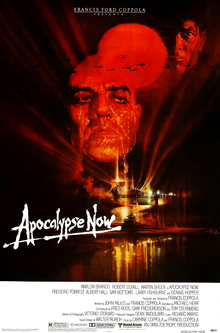
BACK-STORY:Oh my God, where to start?No other film on the list comes close to
having the problems that this film had.It was originally to be produced by George Lucas, but he went on to make
the first “Star Wars”.Francis Ford
Coppola of “Godfather” fame inherited the endeavor and the script by John
Milius.Milius was inspired by Joseph
Conrad’s Heart of Darkness but envisioned the film as more of a standard
action film than Coppola ended up with.In fact, Coppola made lots of adjustments to the script to make it
closer to the novel and deeper.He also
called in John Herr of Dispatches fame to add dialogue and write the
narration by Willard (Martin Sheen).The
film was filmed in the Philippines.This
was partly because the Department of Defense took one look at the script and
said not no, but **** no.Ferdinand Marcos
agreed to give the support of the Filipino armed forces.Coppola got the helicopters he needed, but
sometimes they had to leave a shoot to kill communist guerrillas.It took 238 days of shooting and a total of
16 months from start to finish.The length
of time was due to several factors:it
was way over budget, a typhoon wreaked havoc, Martin Sheen suffered a heart
attack, and Coppola was an obsessed perfectionist.It is absolutely amazing that the movie was
not a colossal failure.
The movie was a
critical success (although it does have its detractors).Coppola did make back his investment (thank
goodness) and won the Palme D’Or at Cannes even though he previewed an
incomplete version.Actually, it shared
the top prize with “The Tin Drum” (I s*** you not!).It won Academy Awards for Cinematography and
Sound.It was nominated for Picture
(losing to “Kramer vs. Kramer”!!!), Director (Coppola lost to the awesome
directing of “Kramer vs. Kramer”!!!) Supporting Actor (Robert Duvall -losing to Melvyn Douglas of “Being
There”!!!), Art Direction, Editing, and Adapted Screenplay.The film is ranked #30 on AFIs list of
greatest movies.
To prepare this post I watched both "Apocalypse Now" and "Apocalypse Now Redux" (Coppola's cut) and Coppola's wife's outstanding documentary on the production entitled "Hearts of Darkness". I also listened to the director's commentary and read the pertinent chapters in a biography of Coppola. Sounds like a lot of work, but the movie and the story behind it is fascinating.
OPENING:To the sound of the Doors’ “The End”, helicopters
swoop by as the jungle erupts with napalm.This transitions to the whirling of a ceiling fan in a seedy Saigon
hotel.A special forces operative named Willard is
going stir crazy.He gets so drunk he
punches a mirror and bleeds all over the bed.(Sheen was actually drunk for this scene and accidentally cut himself –
the cameras kept rolling.)Two
servicemen roust Willard, he asks “what are the charges?”This is one of the greatest openings in movie
history and alone shut up all the carping that had led up to the debut.
SUMMARY:Willard is taken to an air-conditioned trailer
where a general gives him the mission of assassinating a rogue Col. Kurtz
(Marlon Brando).Kurtz is in command of
his own Montagnard army and is fighting the war successfully on his own terms.He has “murdered” three Vietnamese civilans
because he suspected them of being communist operatives (which they undoubtedly
were).Hey, you can’t murder in
war!The brass have decided
he must be “terminated with extreme prejudice”.Willard is given a PBR (riverboat) to go up river into Cambodia to bump off
Kurtz.The crew is heterogeneous in the
best tradition of war movies.The Chief
(Albert Hall) is a no-nonsense skipper.Chef (Frederick Forrest) is a saucier from New Orleans who is just
trying to survive.Lance (Sam Bottoms)
is a drug-addled surfer dude. Clean (a fourteen year old Larry Fishburne) is a
black kid from the Bronx.
The boat hooks up with
the Air Cav to get the boat further up the river. They find the unit in the midst of cleaning up
a battle.There is a news crew (helmed
by Coppola himself in a Hitchcock nod) filming.“Don’t look at the camera”.They
meet the Pattonesque Col. Kilgore (Robert Duvall) who offers his canteen to a
wounded VC and then is distracted by the realization that Lance is a famous
surfer.Taking the PBR up river will
entail taking a very hairy Viet Cong village.Kilgore is reluctant until he finds out the village overlooks a good
surfing area.When told it’s “Charlie’s
point” he responds that “Charlie don’t surf!”
The assault on the
village is a tour de force.It is one of
the most electric scenes in war movie history and is the tipping point to the
greatness of the film.(It is revealing
that Coppola was upset when audiences reacted most positively to this scene.)They come in over the waves with “The Ride of
the Valkyries” blaring over loudspeakers.This is followed by an orgy of violence and action.The editing is absolutely amazing.By the way, there are plenty of innocent kids
in the village.A teenage girl throws a
grenade in a medevacing chopper.“Goddamn savage” the audience is told, but of course it was an act of
bravery in defense of her village.In
order to facilitate the safety of the surfers, Kilgore calls in a napalm
strike.“I love the smell of napalm in
the morning… it smells like victory.” (#12 on AFIs list of greatest movie
quotes.)Tellingly, later Kilgore looks
around at the battle field and wistfully says “some day this war will be over.”
The movie enters
odyssey mode at this point.Chef and
Willard make the acquaintance of a tiger in lieu of a cyclops.“Never get out of the boat!”Next,
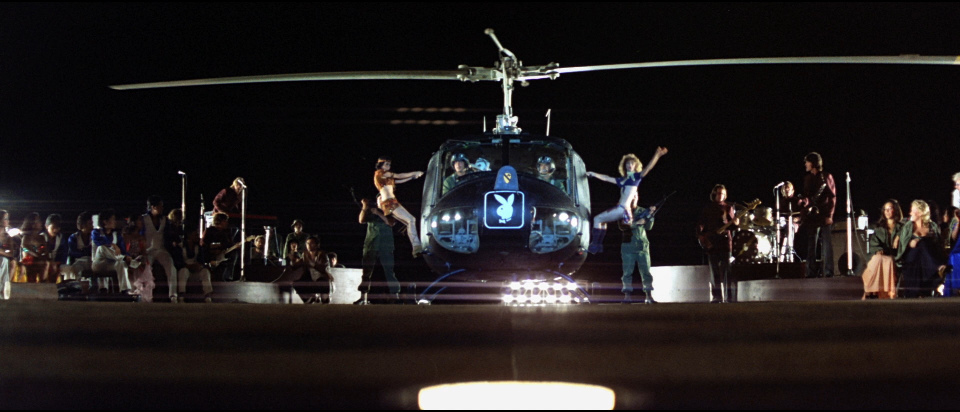
it’s a visit with the Sirens in the form of a Playboy show with an audience of
honny grunts.(In case you’re interested
in doing some “research” that’s Playmate of the Year 1974 Cynthia Wood.) Lance water skis to the Stones’
”Satisfaction” (the Stones and the Doors – this must be a Vietnam movie).The actors convinced Coppola to throw in a My
Lai Massacre scene so the PBR stops a sampan to search it.(This actually makes little sense considering
their mission.)A sudden move by a girl
results in the slaughter of the whole family (except their puppy, that would be
cruel).
They arrive at a
bridge marking the border with Cambodia.Lance is tripping on LSD and so is the movie.He and Willard move through Dante’s Inferno
searching for the commanding officer.When Willard asks a soldier who the CO is, he responds “ain’t you?”The scene is surrealistic and nightmarish.The bridge marks the boundary between
civilization and the primitive, between sanity and madness.
"Hey boys, want to see what you're fighting for?"
After
the bridge scene, the movie enters its “who will survive?” phase.First to go is Clean who is listening to a
cassette tape from his mom (done by Mrs. Fishburne).Next is the Chief who is killed by a spear.A spear.Did I mention primitive?
The
surviving trio (the white guys) arrive at Kurtz’s kingdom.The set is an amazing temple with human heads
lying around (actual extras buried to their necks).They meet a gonzo journalist (Dennis Hopper)
who is a big fan of Kurtz.Willard meets
Kurtz in his lair.Kurtz knows why
Willard is there.He cages Willard and
gives him a little present.Chef will
not be cooking in New Orleans after his tour.For some reason, Kurtz does not kill Willard and instead sets him free
so he can listen to the intellectual pronouncements of a crazy person.(Brando ad-libbed most of his lines, refusing
to follow a script.)Although he’s
obviously nuts, perhaps it takes an insane person to win an insane war.At one point he tells with admiration the
tale of the Viet Cong hacking off the arms of children that had been inoculated by Americans
for smallpox.
"How do you feel about Cleveland?" (obscure "Tootsie" reference)
CLOSING:Willard goes into full assassin
mode and sneaks up on the expectant Kurtz.In parallel shots, the Montagnards hack a water buffalo to death in a
ritual and so does Willard.(Actually
the water buffalo was smaller than Brando.)Before you wonder why they would hack away at the animal (apparently it
was typical for the tribe brought in by Coppola), why not wonder what kind of
assassin machete hacks their victim?Kurtz’s last words:“the horror,
the horror”.(He got that line from
looking in a full length mirror.)Willard grabs Lance (who is still tripping on that last tab from several
days ago – that’s some long-lasting LSD!) and they are allowed to leave because
you know, long live the new king.The
temple complex is then bombed, or it isn’t.
RATINGS:
Acting =A
Action =8/10
Accuracy
=N/A
Realism =C(before I hear complaints about it not being meant to be
realistic, Coppola claimed it was "not about Vietnam, it was
Vietnam.")
Plot =B
Cliches =A
Overall =A
WOULD CHICKS DIG IT?That’s a tough call.There are no
female characters other than the Playboy Playmates and they are very much
objectified.It is definitely not your
standard war movie so that is an appealing aspect.The violence, while intense, is not overly
graphic.The cast is attractive (except
Brando – unless your girl is into water buffaloes).
HISTORICAL ACCURACY:“Apocalypse Now” is not meant to be historically accurate.None of the events are based on actual
happenings.Some bend over backwards to
find historical persons in some of the characters, but that is a waste of time.For instance, the Kilgore character is
attributed to several actual soldiers including George Patton, Jr. Hopper's photographer is clearly based on Sean Flynn, Errol's son who became a photojournalist in Vietnam and had a wild persona.More ridiculously, some try to figure out who
Kurtz is supposed to be.Hello, there is
a Kurtz in the source Hearts of Darkness.It’s not complicated.
As far as realism, the movie is
(according to Coppola) supposed to be what Vietnam was really like.Coppola films it as the rock n’ roll, druggie
war. (Every ignorant American say “right
on, man”.)This is too stereotyped.That’s okay if you want to go over the top
with your surrealism, but don’t con us into thinking this was the way the war
was.No doubt there was drug use, but
not to this extent and seldom on the front lines in a combat situation.It is improbable that a tight-ass like Chief
would have allowed his crew to be doing drugs on a suicide mission.
The set pieces are a mixed
lot.The helicopter assault is
exaggerated, but pretty authentic.It is
a fairly accurate rendition of Air Cav tactics and mentality.On the other hand, the bridge scene is pure
cinema.There was no equivalent to it in
the war.
CRITIQUE:The perfectionism andeffort that went into the movie shows.Knowing the back-story of the problems
Coppola faced makes the film a remarkable accomplishment.Coppola said the production was “very much
like the way the Americans were in Vietnam.We had access to too much money, too much equipment; and little by
little we went insane.” The
cinematography by the famous Vittorio Storaro won the Oscar.Kudos especially for filming and lighting
Brando so we are not distracted by his obesity. (The one full shot of him is of a double.) Sound was also awarded. It is
apparent from the opening sound of the helicopter blades that it deserved the
accolades.The music score was by
Coppola’s father Carmine.It is mostly
synthesizer and fits the surrealist mood of the picture perfectly.The music is restrained and does not push
emotional buttons.The Philippine location shooting
provided some nice scenery.The river
and the jungles look like Vietnam.The
sets are amazing – the USO stage, the bridge (which was an actual bridge blown
up by the Japanese in WWII and rebuilt for the film), the temple.By the way, the temple set was rigged up
with $100,000 worth of pyrotechnics for an explosive ending and then Coppola
decided not to end the film that way.He
still blew it up.
The acting is top notch.Harvey Keitel was the original Willard, but
after two weeks Coppola fired him for not being passive enough on camera.Martin Sheen was brought in and was
perfect.It’s easy to overlook his
narrative readings which added greatly to the film.Much of the voice-over deals with him
periodically going over the Kurtz file.He portrays Willard as a weary assassin who is good at his job and aware
of its moral ambiguities.His trek is a
descent to a lower level of humanity.A
journey into the heart of darkness (get it?).
The supporting cast is
strong.Duvall shows the range that made
him one of our great actors.Keep in
mind that his previous Coppola film was as the uncharismatic Tom Hagen of the
Corleone Family.His performance is
iconic and he dominates his screen time.The PBR crew is solid.However,
Fishburne does come off as a rookie actor and Bottoms was only partially acting
since he was literally on drugs for most of the shoot.As far as Hopper, the film did revive his
career, but you get the impression he is simply playing himself.The elephant in the room (get it?) was
Brando.He almost drags the last part of
the film down.Coppola does a masterful
job getting something better than disaster from him.I felt sorry for Coppola.After surviving a typhoon and his leading
man’s heart attack, the worst was yet to come.
The plot is flawed.The first two-thirds of the film is
mesmerizing.The odyssey format works
well and the flow from exposition to intense action is fine.The movie builds eerily to arrival at the final
act.There is suspense and pathos.Unfortunately, Coppola was frustrated by how
to end the film.The route he chose may
have been the best under the circumstances, but from the arrival at Kurtz’s
base the film goes a bit flat and loopy.Kurtz is a major disappointment after spending two hours to get to
him.He is not a mad genius.He’s just insane and past his prime.You have to blame part of this on the
obstinate and ill-prepared Brando. Throwing in the manic Hopper does not help. The film has drawn most of its criticism for
that final part.However, if you
research the production, Coppola made good decisions on plotting.His decision to adhere more closely to the
novel than Milius intended was wise.Those who find fault with the death of Kurtz should reflect on the fact
that originally the film was supposed to close with Kurtz and Willard battling
shoulder to shoulder against a Viet Cong attack and then Kurtz was to shoot
down an American chopper sent to rescue them.Gag!
The themes of the film include
the idea that the insanity of war drives people insane.This fits into the standard anti-war aim of
most war movies, but you seldom see this take.Kurtz has clearly gone insane under the pressures of command.However, isn’t Kilgore more insane than
Kurtz?Willard is sliding down the
slippery slope of sanity the deeper he goes into the wilderness.Another theme is the question of who are the
good guys in Vietnam?Who is a better
role model?Lt. Gen. Corman (G.D.
Spradlin) sitting in his air-conditioned trailer giving out assassination
orders against a decorated American hero who has gone off the reservation or
Kurtz who has his own private army and effectively kills the bad guys?What aboutKilgore?
CONCLUSION:“Apocalypse Now” is one of the great war
films.It has so many memorable moments,
lines, and scenes.I hate to belabor the
point, but tell me something you remember from “Kramer vs. Kramer” (the
“Shakespeare in Love” of 1980).Normally
I only care about what ends up on the screen, but I have to make an exception
for “Apocalypse Now”.It was fascinating
reading about the production, listening to Coppola’s commentary track, and
watching his wife’s documentary “Hearts of Darkness”.You have to give extra credit for Coppola’s
effort.When you know what went into the
making of the picture, you can cut him some slack for the final part.There is little doubt in my mind that the
film had sustained its momentum to the end, it would have to be considered the
greatest war movie ever.As it is, it
ends up as a flawed masterpiece.
the trailer
Ride of the Valkyries
“APOCALYPSE NOW” TRIVIA
1.There are no credits at the
beginning so for legal purposes “Apocalypse Now” is chalked on a wall in the
temple complex.
2.The only full shot of Brando
(standing in the doorway of the temple) is of a double.A much taller double.
3.Brando was hired for $3 million
and insisted on being available for only three weeks, 5 days a week.He almost did not show up and when he did he
had lied about being familiar with the book.He spent the first few days gabbing about topics unrelated to the movie with Coppola in his trailer.
4.Brando hated working with
Hopper.At one point in the film, he
throws something at him and called him a “mutt”.That was improv.
5.Mrs. Coppola had witnessed a
water buffalo sacrifice and urged her husband to incorporate it.That is a real animal that is being hacked to
death.Coppola refused to do a second
take.
6.Sheen was given last rites after
his heart attack.
7.Coppola lost 100 pounds during
the shoot. Brando didn't.
8.Main scenes that were cut (and
restored for “Apocalypse Now Redux”):
-meeting up with the Playmates and exchanging
fuel for sex
-the French plantation – the PBR stops at a
French plantation in an obvious attempt to bring the odyssey back in time to
the 1950s (to show how perfectionism can border on lunacy, Coppola insisted the
wines served at the dinner scene be chilled at a specific temperature!And then he didn’t even use the shot.)
9.Milius was a hawk and wanted one
theme to be that the U.S. did not put in enough effort to win the war.He was upset that the film ended up being
anti-war.
10.The Huey that air-lifted the PBR
could not have performed that task.
11.Hopper refused to learn his
lines, bathe, or change his clothes.
12.In the 35mm theatrical run,
Coppola ran the exploding of the temple behind the credits.In the 70 mm limited release, that footage
was not used.
13.Coppola hired the Ifugao tribe to come live
on the temple set and live their lives.
I
have to apologize for the delay in this post but I ran into an embarrassing
problem in preparing for it.I had
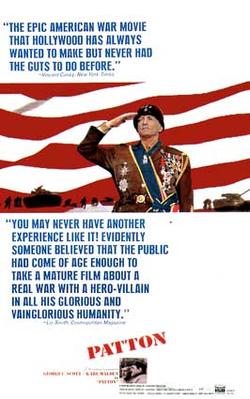
forgotten that “The Desert Fox” is not really a biopic like “Patton” is.It is basically focused on Rommel’s role in
the assassination attempt on Hitler.There is very little in the movie that deals with Rommel’s leadership
style.Luckily, I encountered a book
entitled Patton and Rommel by Dennis Showalter.I decided to read the book before doing this
post so some of the Patton analysis comes from the book and most of the Rommel
analysis.
1.Compare the leadership styles
It would be hard to find two
WWII generals who were more similar than Patton and Rommel.Both men believed in leading from the front
and often put themselves in harm’s way.In the case of Rommel, he was almost killed in a strafing incident and
Patton looked upon being shot at as a proof of manhood.They believed in seeing things for
themselves, although Rommel spent more time sharing the hardships of his men.Both were flexible in their tactics and could
adjust to changing situations although both could be a bit stubborn when
committed to an objective.Both combined
surprise, shock, and mobility.Both were
risk takers who lived by Napoleon’s maxim “toujours l’audace”.Most importantly, both believed that speed
and shock would save lives in the long run over cautious preparation and mass
(embodied by Montgomery).
Two interesting areas to compare
them in are logistics and dealing with superiors. Rommel has been faulted for
his lack of interest in logistics.He
liked to complain about his terrible logistical situation in North Africa, but
he did little personally to adjust to the reality of it.Part of this problem was due to the German
army’s lack of emphasis on this art.Patton’s logistical problem was different.In France, Patton’s Third Army was affected
by difficulties in getting supplies to the front line units.He complained just as much as Rommel and was
less understanding, but he did a good job of adjusting to diminished fuel.As far as superiors, Rommel had to deal with
an increasingly delusional Hitler, but was a favorite of the Fuhrer’s until the
end.In “The Desert Fox”, he gets a “hold
at all costs” order from Hitler that would have meant the destruction of the Afrika
Korps.At first, he plans to loyally
obey it, but soon realizes he must countermand the order.Patton had trouble with Eisenhower and
Bradley mainly because of stumbles by Patton.He brought his dysfunctional relations with his superiors upon
himself.However, it is amazing to
contemplate how similar the Rommel/Hitler and the Patton/Eisenhower dynamic
was.Also, the Rommel/Rundstadt and
Patton/Bradley for that matter.
Each had weaknesses that keep
them from being ranked among the Great Captains.Rommel, besides his logistics myopia, relied
too much on spontaneity and luck.Although commendably brave, he continued to appear at the tip of the
spear even when he was no longer commanding on a divisional level.When you are indispensable, this type of “lead
by example” is foolish.Patton’s
greatest weakness was obviously his inability to control his emotions.The slapping incidents accurately portrayed
in the movie are evidence of this.He
sometimes pushed his “shock solves all problems” philosophy beyond the limits
of his soldiers.
As far as leadership, both were
charismatic and inspirational.They also
both were strict disciplinarians.Everyone knows this about Patton from the movie, but although the movies
do not depict this side of Rommel’s leadership, it certainly was there. “Old Blood
and Guts” relied on respect from his men whereas it was more love for “The
Desert Fox”.
2.Who was the better leader?
Here is an interesting fact
about the reputations of both men.Both
were admired more by their foes than their comrades.Rommel was resented by other German generals
for being sort of a “teacher’s pet”.Patton was disliked mainly because of his personality.Bradley was offended by his language, among
other things.Both men were considered
to be glory hounds by their comrades.
Choosing between the two is
difficult.It comes down to this.I feel that if you switched their situations,
Rommel would have been more successful than Patton. He could only dream of the logistical
problems Patton faced.Just as Patton could
only have dreamed of the Wehrmacht’s leniency on generals’ abuse of soldiers.Patton could certainly have duplicated Rommel’s
successes in France (1940) and North Africa (1941-42), but once the tide turned
one can only imagine the frustration that would have pounded his unstable
personality.
What
say you?
JULY
WATCHALONG:Pork Chop Hill vs. Zulu
1.Compare the leadership of Lt. Clemons to Lt.
Chard
1978 was
an interesting year for major motion pictures about the Vietnam War.It was the first year that Hollywood felt
that enough time had passed since the end of the war to make a commercially
viable movie about it.Holly wood jumped
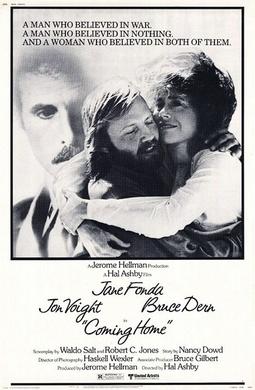
in feet first with “Coming Home” and “The Deer Hunter”.Not only was a barrier broken, but a fierce
competition ensued as the two vied for awards.They also vied for the hearts of the public and critics.
“Coming Home” was loosely based
on the book by George Davis and was influenced by Jane Fonda’s friendship with
Ron Kovic (Born on the Fourth of July).It was a difficult production as director Hal Ashby was something of a
nutcase.It also took several writers to
pen the screenplay (which surprisingly won the Oscar for Best Original
Screenplay).
The movie opens in the spring of
1968 at a Veteran’s Hospital.Actual
vets improvise dialogue as Jon Voight (playing paraplegic Luke Martin) wisely
sits and listens.The war movie trope of
a love triangle develops early as we are introduced to the typical military
couple.Capt. Bob Hyde (Bruce Dern) is a
careerist who is headed for Vietnam so he can earn a promotion and to “see the
elephant”.Sally (Fonda) is the dutiful
wife who according to Bob “doesn’t understand it all, but she accepts it”.They seem to be happily married and Bob promises
to be faithful.
before and after
Sally feels liberated once Bob
is gone and rooms with a hippie type named Vi (Penelope Milford) whose brother
Billy (Robert Carradine) is in the Vet Hospital due to PTSD after only two
weeks in Nam.It only took two weeks to
ruin this American youth’s life.War
sucks!Sally visits the hospital and
literally bumps into Luke.It turns out
they went to the same high school and yet hardly remember each other.This in spite of him being the star
quarterback and her having been the head cheerleader!Credit given for cliché-busting (and reality-defying).They get off to a rocky start as he is
abusively belligerent about the shoddy treatment at the hospital and sees her
as naively clueless.I wondered if they
would hook up because this was the first movie I ever watched. Just kidding.
Sally gets a job at the
hospital.All of the veterans are
saintly as a contrast to the evil government that sent them off to fight a
misbegotten war and then treated them shabbily upon their return.Sally becomes an advocate for them and warms
up to Luke.Bob deserves a cinematic
chance so Sally meets him in Hong Kong.Things are chilly.He is upset
that she is working.He is disillusioned
with the war.“TV shows what it’s like,
but not what it is.”The movie green
lights the affair with Luke.
thank goodness VA hospitals now treat wounded vets appropriately
Luke moves out of the hospital
because how will he have sex with Sally otherwise.Plus we now need the war protesting angle to
kick in.Sure enough, Luke chains
himself to the local Marine Corps gate.Next comes the big sex scene which was groundbreaking due to one
character being a crippled vet.Compare
this to the movies older brother, “The Best Years of Our Lives”.In that movie, Homer does not get past first base
on film.Sally has never felt this way
before (and has apparently never been on top before).She has been liberated.We know this because she no longer wears a
bra.
If only Bob would get himself
killed in Vietnam.Unfortunately he
returns home after accidentally (?) shooting himself while going to the
shower.He carries the extra baggage of
PTSD.Sally and Bob try to return to
their 1950s marriage.This is not likely
since she has evolved and he is now a tightly wound Cro-magnon.“What the Hell did you do to your
hair?!”
When Bob finds out about the
affair, he confronts Luke but discovers that although he can shoot himself, he
can’t bring himself to shoot the hippie who was screwing his wife while he was
off dodging bullets for his promotion (I mean country).Bob leaves because he’s seen enough movies to
know how this ends.Dueling scenes:Luke talks to a high school class and Bob
gets a medal.Luke tells the students
that “[I’m] here to tell you that I have killed for my country or whatever, and
I don’t feel good about it.”(At the
Academy Awards, John Waynepunched
Voight in the nose, just kidding.)Bob
is ashamed for his decoration as we all should be.
The movie does have its
strengths.The period music is
great.Classic rock rules!The acting is outstanding.Fonda, Voight, Dern, and Milford were all
nominated for Oscars.Voight defeated De
Niro (“The Deer Hunter”), but Dern lost to Christopher Walken. This was the year to be physically crippled instead of just emotionally and to be fully psycho instead of just PTSD.The movie was also nominated for Best
Picture, Director, Film Editing and won for Original Screenplay.
The themes are a bit
heavy-handed.The repressed military
wife is emancipated when her traditional husband goes off to war.The antiwar movement also liberates her.A crippled antiwar vet awakens her sexuality.War = bad.Antiwar = good. The plot is rife with clichés and quite predictable. It is extremely obvious that the marriage will not survive Bob going off to war. On the plus side, the Sally character does ring true as a typical military wife who lives through her husband and is rudderless when he goes off to war. Her transformation is not radical and she is realistically torn between the two men when her husband returns. However, there is never a doubt who she will choose. Keep in mind that her husband has been changed for the worst because of his experience and Luke has mellowed as their relationship has developed, so you would have chosen the same way she did. Jane Fonda does an excellent job in a role that meant a lot to her and she could easily have gone overboard in forcing her opinions on the audience. The movie is fairly well constrained.
Looking back, it seems incredible that it was a horse race between "Coming Home" and "The Deer Hunter" for Best Picture. Today one of those movies is considered to be a war movie classic and the other is considered to be a curio. What war movie fan has a copy of "Coming Home" on his shelf? But then again, if I had told you that in 1978 there had been a competition between a movie that was clearly a liberal view of the war and a movie that concludes with the cast singing "God Bless America", which would you have bet on for the Oscar?
Cracker? No. It's a decent movie, but has not worn well over the years and is certainly not one of the 100 Best War Movies ever made. It is not even in the top 5 Vietnam War movies.
 Peck:
“I have the list of potential additions to the squad here, sir. We have an
appointment at the military prison for 1100.”
Peck:
“I have the list of potential additions to the squad here, sir. We have an
appointment at the military prison for 1100.”