Showing posts with label The Desert Fox. Show all posts

Sunday, July 7, 2013

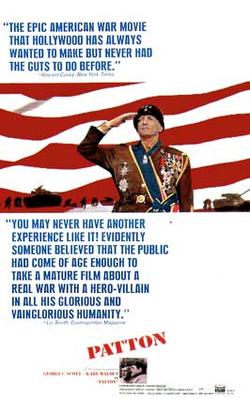
JUNE WAR LEADERSHIP WATCHALONG: Patton vs. The Desert Fox


              I have to apologize for the delay in this post but I ran into an embarrassing problem in preparing for it.  I had forgotten that “The Desert Fox” is not really a biopic like “Patton” is.  It is basically focused on Rommel’s role in the assassination attempt on Hitler.  There is very little in the movie that deals with Rommel’s leadership style.  Luckily, I encountered a book entitled Patton and Rommel by Dennis Showalter.  I decided to read the book before doing this post so some of the Patton analysis comes from the book and most of the Rommel analysis.

1.  Compare the leadership styles

                It would be hard to find two WWII generals who were more similar than Patton and Rommel.  Both men believed in leading from the front and often put themselves in harm’s way.  In the case of Rommel, he was almost killed in a strafing incident and Patton looked upon being shot at as a proof of manhood.  They believed in seeing things for themselves, although Rommel spent more time sharing the hardships of his men.  Both were flexible in their tactics and could adjust to changing situations although both could be a bit stubborn when committed to an objective.  Both combined surprise, shock, and mobility.  Both were risk takers who lived by Napoleon’s maxim “toujours l’audace”.  Most importantly, both believed that speed and shock would save lives in the long run over cautious preparation and mass (embodied by Montgomery).


                Two interesting areas to compare them in are logistics and dealing with superiors. Rommel has been faulted for his lack of interest in logistics.  He liked to complain about his terrible logistical situation in North Africa, but he did little personally to adjust to the reality of it.  Part of this problem was due to the German army’s lack of emphasis on this art.  Patton’s logistical problem was different.  In France, Patton’s Third Army was affected by difficulties in getting supplies to the front line units.  He complained just as much as Rommel and was less understanding, but he did a good job of adjusting to diminished fuel.  As far as superiors, Rommel had to deal with an increasingly delusional Hitler, but was a favorite of the Fuhrer’s until the end.  In “The Desert Fox”, he gets a “hold at all costs” order from Hitler that would have meant the destruction of the Afrika Korps.  At first, he plans to loyally obey it, but soon realizes he must countermand the order.  Patton had trouble with Eisenhower and Bradley mainly because of stumbles by Patton.  He brought his dysfunctional relations with his superiors upon himself.  However, it is amazing to contemplate how similar the Rommel/Hitler and the Patton/Eisenhower dynamic was.  Also, the Rommel/Rundstadt and Patton/Bradley for that matter.

                Each had weaknesses that keep them from being ranked among the Great Captains.  Rommel, besides his logistics myopia, relied too much on spontaneity and luck.  Although commendably brave, he continued to appear at the tip of the spear even when he was no longer commanding on a divisional level.  When you are indispensable, this type of “lead by example” is foolish.  Patton’s greatest weakness was obviously his inability to control his emotions.  The slapping incidents accurately portrayed in the movie are evidence of this.  He sometimes pushed his “shock solves all problems” philosophy beyond the limits of his soldiers.

                As far as leadership, both were charismatic and inspirational.  They also both were strict disciplinarians.  Everyone knows this about Patton from the movie, but although the movies do not depict this side of Rommel’s leadership, it certainly was there. “Old Blood and Guts” relied on respect from his men whereas it was more love for “The Desert Fox”.

2.  Who was the better leader?

                Here is an interesting fact about the reputations of both men.  Both were admired more by their foes than their comrades.  Rommel was resented by other German generals for being sort of a “teacher’s pet”.  Patton was disliked mainly because of his personality.  Bradley was offended by his language, among other things.  Both men were considered to be glory hounds by their comrades.


                Choosing between the two is difficult.  It comes down to this.  I feel that if you switched their situations, Rommel would have been more successful than Patton.   He could only dream of the logistical problems Patton faced.  Just as Patton could only have dreamed of the Wehrmacht’s leniency on generals’ abuse of soldiers.  Patton could certainly have duplicated Rommel’s successes in France (1940) and North Africa (1941-42), but once the tide turned one can only imagine the frustration that would have pounded his unstable personality.

What say you?


JULY WATCHALONG:  Pork Chop Hill vs. Zulu

1.  Compare the leadership of Lt. Clemons to Lt. Chard

2.  Compare the tactics used in the two battles       

Wednesday, January 9, 2013

2013 WAR MOVIE LEADERSHIP WATCHALONG


         I have decided to lead my first watchalong in the year 2013.  I have chosen the topic of war movies that have something to say about leadership.  There are many good war movies that deal with this topic.  We will do one (sometimes two) per month.  I will pose a few general questions to focus on when you view and then we will discuss at the end of the month.  Everyone is welcome.  Thanks to the gang at Armchair General Forums for some excellent suggestions.

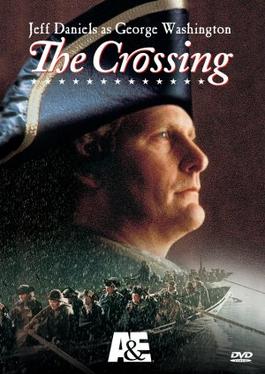
January -  The Crossing
February -  Master and Commander
March -  12 O’Clock High
April -  Waterloo
May -  Platoon
June -  Patton and The Desert Fox
July -  Pork Chop Hill and Zulu
August -  Lawrence of Arabia
September -  Letters from Iwo Jima
October -  Glory
November -  Operation Petticoat
December -  The Cockleshell Heroes
          First up – “The Crossing”.  The true story of Washington’s crossing of the Delaware and the Battle of Trenton.

1.  What leadership traits does Washington display?
2.  How does Washington handle his subordinates?
3.  How does he deal with adversity?
           Below is the full movie!
     

Friday, December 24, 2010

#78 - The Desert Fox


BACK-STORY: “The Desert Fox” is a war movie that was released in 1951. It is a biopic of the last years in the life of the famous German General Erwin “Desert Fox” Rommel. Rommel was a celebrity even during WWII and certainly a likely candidate for film treatment after the war. The movie was controversial because coming only six years after the war, it’s sympathetic portrayal of an enemy commander was greeted with anger by some critics and a number of veterans. One theory that has surfaced to explain the positive spin on Rommel is the U.S. was in the Cold War and there was a need to show that there were good Germans. Regardless, the movie was a big hit and James Mason was lauded for his portrayal. Interestingly, because of the criticisms, Mason’s portrayal of Rommel in “The Desert Rats” several years later is less sympathetic. (See my review of “The Desert Rats” http://warmoviebuff.blogspot.com/2010/09/88-desert-rats.html)


OPENING SCENE: The film is off to a rousing start with a British commando raid on Rommel’s headquarters in 1941. They sneak up and break in, killing a lot of Germans, but having to retreat losing most of their men and all for naught because Rommel was not even there. The scene is very effective and gets the adrenalin flowing without the use of a blaring soundtrack. This scene was ground-breaking because it was the first time a film began with an action scene before the credits. This is, of course, standard today.

SUMMARY: We meet the narrator as a prisoner of the Germans in North Africa. Desmond Young (playing himself) will go on to write a biography of Rommel after the war with emphasis on determining the actual cause of his death. (The German government having perpetuated the falsehood that he died due to injuries suffered when his vehicle was strafed.) The movie flashes forward to Young visiting Rommel’s wife and son after the war. From his interviews with various Germans, he pieces together the true story.


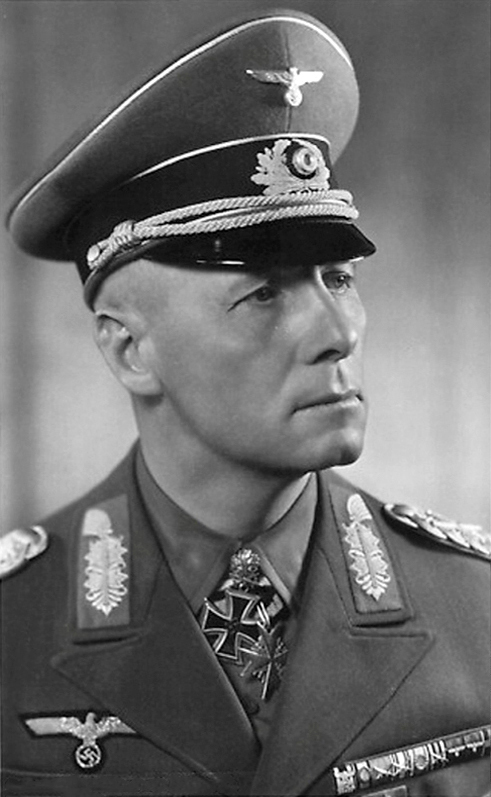
the real Rommel

     The movie flashes back to the aftermath of defeat at El Alamein. Rommel’s Afrika Korps is being starved of supplies and overwhelmed by Montgomery’s 8th Army. The movie intersperses real combat footage (taken from the documentary “Desert Victory”) to good effect. In a crucial scene, Rommel receives a no retreat order (“Victory or Death”) from Hitler. He is stunned at the insanity of the order which is basically ordering the sacrifice of one of the great armies of history. His subordinates argue for disobeying the order and Rommel eventually agrees, but only after giving Hitler the benefit of the doubt and blaming his toadies. The film makes it clear that Rommel is very reluctant to disobey orders from a leader he once admired. After this scene, the movie makes a jarring leap to the German surrender in Tunisia.

     Rommel is not at the surrender. Instead, he has been forced back to a German hospital for health reasons. He is visited by an old friend, Dr. Strolin, who tries to lure him into a conspiracy to remove Hitler. Rommel is not interested.


     Rommel is appointed to defend the beaches of northern France against the anticipated invasion. He meets with the overall commander in France, Field Marshal Von Rundstedt.. They commiserate on the poor state of the defenses. Rundstedt refers to Hitler as the “Bohemian corporal” and denigrates his grasp of strategy. He is very sarcastic and it is obvious Rommel is not ready to go as far in his questioning of Hitler’s sanity and that the two men dislike each other. The portrayal of Von Rundstedt by Leo Carroll is spot on.

     Dr. Strolin makes a return visit and this time is more open about the plot. Rommel is still not interested and is offended by the criticism of der Fuhrer. Rommmel: “A soldier has only one purpose – to obey orders.” The scene is powerful and well acted.

     The D-Day invasion is handled through archival footage (of mostly American soldiers) in montage format. There is no narration, just music (including, bizarrely, the Marine Corps Hymn). In a nice touch, the filmmakers assume the moviegoers do not need to be told the facts about Overlord.

     Rommel meets with Von Rundstedt post-invasion. They discuss Hitler’s refusal to release forces defending Calais even though at this point it is clear the Normandy invasion is not a diversion. Von Rundstedt insists Hitler’s decisions are being made under the influence of his astrologer. Rommel reveals the plot, but the elderly Field Marshal declines saying he is too old to be a rebel.

     Rommel decides to lend his support to the removal (but not assassination) of Hitler, but hopes that by meeting with Hitler he can get him to see reason. At the tension-packed meeting, Luther Adler (a Jewish actor!) plays Hitler with appropriate histrionics. He accuses Rommel of defeatism and not knowing the big picture. The new V weapons will win the war, he rants. Rommel bites his tongue and is now fully on board for the coup d-etat. Unfortunately, soon after he is wounded when his vehicle is strafed. He is in the hospital when the assassination fails three days later. Three months later, his involvement catches up with him while home convalescing.

FINAL SCENE: Gen. Burgdorf, a Hitler lackey, arrives at the Rommel home with an arrest warrant for treason. Hitler, because of his hero status, offers Rommel a state funeral if he takes poison and does not insist on a trial which would result in death by garroting. Rommel leans toward the trial until the loathsome Burgdorf implies that Rommel’s wife and son will suffer the consequences of Rommel embarrassing the regime. The parting of the Rommel’s is touching and realistic. He tells her to be brave. It will be quick and painless. He drives off with Burgdorf. The movie closes with a eulogy by Winston Churchill, a warrior who recognized a noble and worthy opponent.

RATINGS:

Action – 4 (not much after the opening)

Acting - 9 (Mason is awesome)

Accuracy - 9

Realism - 8

Plot - 7

Overall - 7

WOULD CHICKS DIG IT? Since the movie is not your typical action flick and instead is something of a character study, most women would probably like it. Rommel was a good husband and father. Lucie Rommel (Jessica Tandy) has a major role. The movie has its poignant moments. The domestic scenes are well done and ring true.

ACCURACY: “The Desert Fox” is admirably accurate. Mason’s take on Rommel is true to the man. One thing that can be criticized is he does not go far enough in showing how Rommel was quite loyal to Hitler until events caused him to reluctantly break with him. But that is a minor quibble.

     The main events in the movie all happened and pretty much the way depicted. Even the pretense for the movie – Desmond Young’s quest to set the record straight is true. The one exception is the opening action scene which is not based on fact. There was a Dr. Strolin and he did eventually convince Rommel to support the plot. The movie may have exaggerated Rommel’s role a bit, but he definitely lent his name to it. The depiction of the assassination is authentic (except that the actor portraying Von Stauffenburg has his eye patch over the wrong eye).

     The movie implies that both Von Rundstedt and Rommel thought Hitler’s insistence that the invasion would come at Calais as foolish. In reality, Operation Fortitude (the Anglo-American deception effort) fooled most German generals including Von Rundstedt and Rommel. The movie is accurate in reflecting that after the invasion occurred both men were not able to convince Hitler it was not a diversion. It would have been more accurate and interesting if the film had concentrated on their disagreement on where to station the Panzers. Rommel wanted them close to the beaches to stop the invasion cold. Von Rundstedt wanted them further inland to be used to counterattack. Hitler chose a compromise position. We will never know which general was right.

     Rommel’s death is accurately depicted. It was as is shown. In that respect, the movie does Young’s job well in setting the record straight. This is not surprising since Mrs. Rommel served as a technical adviser and Desmond Young was actually in the movie.

CRITIQUE: “The Desert Fox” is your standard 1950s biopic. It stands out because of Mason’s iconic portrayal of Rommel. The acting is uniformly good. Leo Carroll as Von Rundstedt and Luther Adler as Hitler are quite effective. The criticism of the filmmakers for being overly sympathetic is too harsh. Rommel was no saint, but he was a noble adversary and did the right thing in the end for his country. The movie does not sugarcoat his reluctance to turn against der Fuhrer. It accurately portrays his temper and his ethical dilemma when being tugged between obedience and sane tactics.

     The movie does not reach great status and is overrated at #78 partly because it falsely promises more on combat in North Africa in its dynamic opening and then does not deliver. It also would have been better if we got to see Rommel’s rise as well as his fall. We do not find out why Rommel was a military genius. We do find out what kind of human being he was.

CONCLUSION: While a bit overrated, “The Desert Fox” is still a fine movie. As a biography instead of a standard action-oriented war flick, it delivers. It is interesting to imagine what this movie would have looked like if it had been made around the time of “Patton”. A sixties take would have been radically different from the fifties version. Considering the similarity of the subject matter, it is telling that “Patton” is much superior to “The Desert Fox”. Another example of how, in my opinion, modern war movies are generally superior to older ones because they can be more unorthodox.

UP NEXT:  1940s War Movies - Overrated?