“The Army of Crime” is a war movie that fits firmly into the French Resistance sub-genre. It is a French movie directed by Robert Guediguian. He intended it to be an homage to the FTP-MOI branch of the French Resistance. This group consisted mainly of Communist immigrants who conducted missions to kill Nazis in Paris in 1943.
The movie opens with a preview of the end. Members of the group are on their way to torture and execution by the Gestapo. This probably worked well with a French audience which I assume knows the sad result of the Affiche Rouge affair, but for me it ended the suspense of who would survive. The rest of the movie is a flashback to how they got to that police van.
Marcel takes out another Nazi
The movie follows several characters who eventually link up to work together. The leading character is an intellectual Armenian poet named Missak Manouchian (Simon Abkarian) who has a dedicated wife Melinee (Virginie Ledoyen). We first meet him as he is released from Gestapo captivity after he signs a document recanting his communism. Thomas (Gregoire Leprince-Ringuet) is a Jewish student who joins the movement and brings a bomb to a party (in a hollowed out copy of Das Kapital, naturally) full of Nazi officers. Marcel (Robinson Stevenin) is a Jew whose father has been deported. He takes vengeance by offering German soldiers cigarettes and then shooting them. He is a loose cannon, but does not dispute this. They hook up when Manouchian forms a group to carry out terrorist activities.
At first, Missak refuses to kill, but it does not take long for him to get his hands dirty. In a cool scene, he throws a grenade in the midst of some marching German soldiers and then Marcel finishes them off. Later, the group attacks a bus in an orgy of quick and efficient violence.
The movie is consistently somber, but there is some levity in a scene where the crew plans to use a grenade to blow up a brothel frequented by Germans. The first guy returns after refusing to kill teenage prostitutes, then shockingly Marcel wimps out as well. To make matters comical, they lose the grenade pin and have to go home to Melinee to get a sewing needle to disarm the bomb.
Their run of luck ends when Marcel’s girlfriend is bribed by the evil French policeman into ratting out the gang. The various members are rounded up with Missak unrealistically going down without a fight even though he must know he will be tortured and killed. Only Melinee survives. The Nazis put out a poster (Affiche Rouge) to discredit them as communist troublemakers. The title of the film comes from an accusation from the poster.
“Army of Crime” is fairly accurate. The three main characters are actual historical figures and are realistically portrayed. Most of the violent episodes are based on actual events., but I found no evidence for the brothel grenade scene. It also appears that the traitorous girlfriend and her police paramour subplot was fictionalized. More disturbing, it seems that Manouchian was actually the one who turned in the others under torture. The executions and poster are based on fact. One controversial aspect of the film is the accusation that Guediguian makes that the French authorities considered the Communist Resistance to be a bigger threat than the Nazis and thus collaborated with the Germans. The French police are bigger villains in the movie than the Gestapo. The French public is depicted as apathetic about German occupation and even upset with the boat-rocking FTO-MOI. There is also the implication that the ethnicity of the group played a role in their lack of support from average French people. Ironically, these “foreigners” were more interested in dying for “liberte, egalite, fraternite” than the French were. It may be exaggerated, but it feels authentic.
I liked this movie much more than the similarly themed “Army of Shadows”. It does not drag and the action sequences are well-paced. The cinematography is crisp in color. The acting is very good, especially Abkarian and Stevinin. The production design and costumes take us back to wartime Paris.
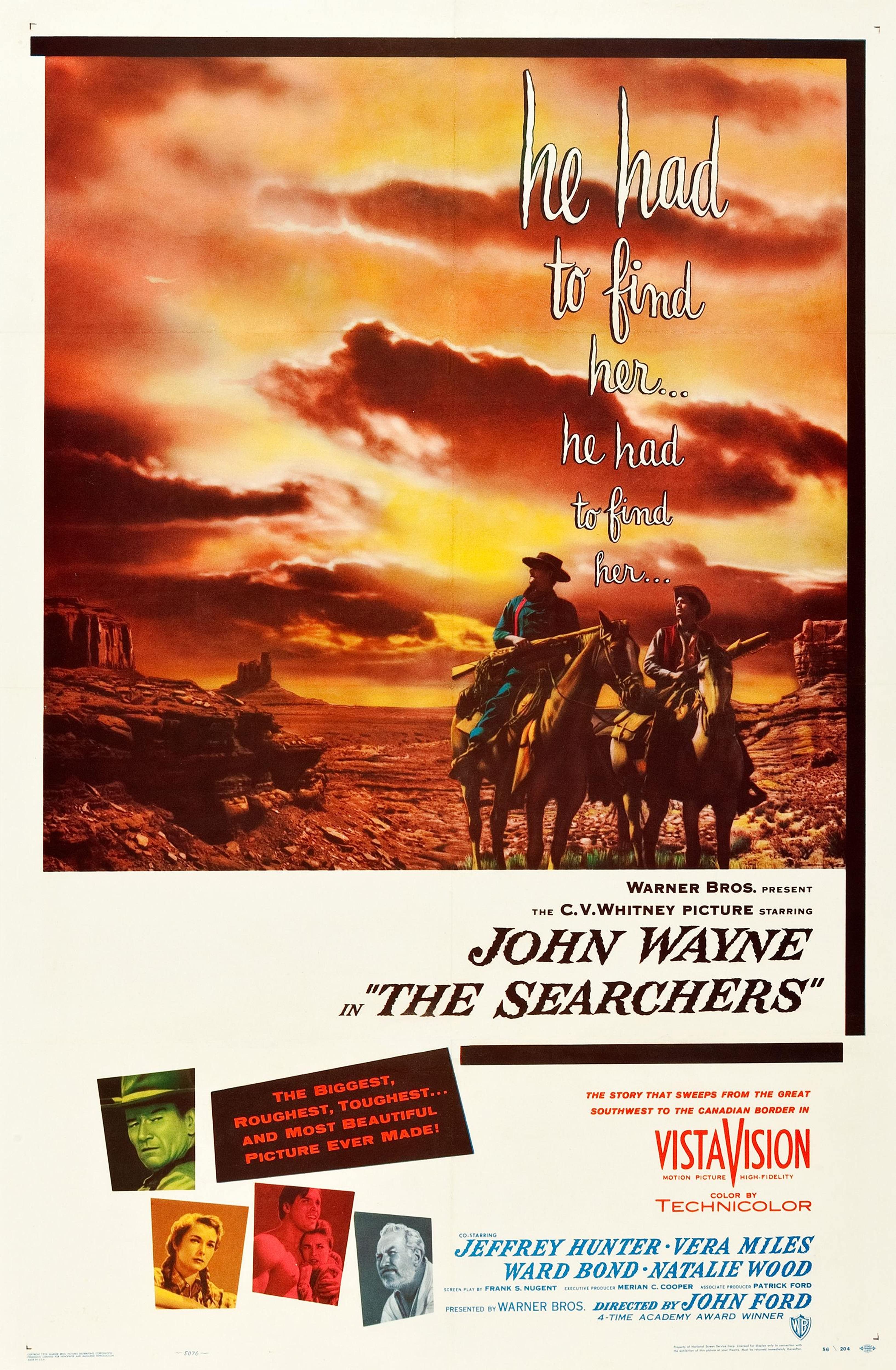
BACK-STORY: “The Searchers” is a “war” movie based on the eponymous novel by Alan LeMay. It was released in 1956 toward the end of the great period of black and white Westerns and is considered by many to be the best movie of that genre. It is marked by peak performances by director John Ford and his perennial star, John Wayne. Shockingly, although the film did well at the box office, it did not get a single Academy Award nomination. The casting was interesting. Natalie Wood’s sister plays the younger Debbie. Natalie was still in high school at the time of filming and you can imagine the stir when Wayne and/or Jeffery Hunter would sometimes come to pick her up at school. Fess Parker of “Davy Crockett” fame was set to play the Martin Pawley role, but Disney would not allow him to. He later said it was the biggest loss of his career. Buddy Holly got the idea for the title of his hit “That’ll Be the Day” from the oft used line in the movie.
OPENING: The film opens in 1868 Texas. A typical old cowboy song plays over the credits. We view the Texas prairie from through a doorway (a frequent motif in the movie) and then the camera moves outside to greet the return of Uncle Ethan (Wayne). This scene sets the theme of the indoors representing civilization and the outdoors standing for savagery. Ethan has been gone for several years. He was on the losing side in the Civil War, but is unreconciled. Where he has been since the end of the war is unclear, but he has a Mexican medal (which he gives to Debbie) and a lot of gold coins. Ethan is out of place in his brother’s home (civilization) and it is obvious from body language that there was something between Ethan and his sister-in-law Martha. Another interesting dynamic is the family had adopted a boy rescued from the Indians by Ethan. Because Martin (Hunter) is part Indian, Ethan is cold towards him which is our first inkling that Ethan is a racist. At one point he calls Martin “blankethead”.
SUMMARY: A posse of Texas Rangers led by Capt. Samuel Clayton (Ward Bond) arrives searching for some cattle thieves. Ethan and Martin join the group. They discover that the culprits are Comanche raiders on a “murder raid” and they have been drawn away from the farm. As Martin spurs his horse back, Ethan stops to rest his horse knowing it’s a long (and probably fruitless) return. He is accompanied by an addled Mose (Hank Worden).
The scene at the farm is fraught with omens. Dusk is coming in reddishly and faux bird calls pierce the air. Aaron and Martha know they are doomed. The emotions of the family vary by age and adulthood. Martha sends Debbie to hide in the family grave plot (next to the tombstone of Ethan’s mother who was killed by Indians). Soon she is covered by the shadow an Indian named Scar.
When Ethan arrives at the farm (he has passed up Martin who is afoot having run his horse to death) it is aflame and he finds what’s left of the family in a shed. What he sees is left to our imagination as the camera focuses on him looking in through the doorway.
look at his eye - acting!
Ethan, Martin, and Lucy’s (the elder daughter) beau go after the two girls. The Rangers are along, too. When they locate the Indian camp, Ethan wants to go charging in (seemingly unconcerned with the consequences to the captives). Clayton insists on using stealth which fails. The tables are turned with the Indians chasing the smaller group of Texans to the river. The Indians use the typical Hollywood tactic of a frontal attack across the river and are predictably mowed down by the repeating rifles. Ethan revels in the killing.
costarring Monument Valley
The trio continue on alone and Ethan discovers Lucy’s body in a canyon. When Brad asks for details Ethan snarls “What do you want me to do – draw you a picture?!” Brad commits suicide by charging into the Indian camp. Once again our imagination is required as all we hear is a series of gunshots.
Time passes and Ethan and Marty return to Brad’s parent’s home. Brad’s sister Lori (Vera Miles) has been pining for her childhood sweetheart although Martin seems clueless about their unofficial betrothal. Brad’s parents have taken his death stoically – they are frontier folk. Ethan tries to leave Martin behind, but Martin insists on coming along because he fears what Ethan will do when he finds Debbie. A trader gives Ethan information about Scar’s whereabouts. That night Ethan sets up Martin as bait for the inevitable campfire ambush by the trader and his cronies. Ethan kills the three.
Some comic relief is thrown in as Martin accidentally “purchases” an Indian wife. Ethan gets a big kick out of this, Lori does not. The wife runs off when they ask her about Scar and later they find her dead body in a village that has been sacked by the U.S. Cavalry. The white girls rescued by the Cavalry are all mentally scarred by their experience as captives, but none are Debbie.
Martin shields Debbie
A Mexican leads them to Scar’s camp to parley and trade. Scar recognizes them as his pursuers and makes a point of showing scalps he has taken to avenge the killings of his sons by whites. It turns out he is a racist, too. Guess who one of his wives is? Except she is not looking like a typical captive. In fact, she looks like she is going to a Halloween costume party dressed as a sexy squaw. Ethan and Martin play it cool and camp nearby. Debbie comes out to meet them to urge them to go. She is content with her situation. Ethan wants to shoot her. Martin shields her with his body and an Indian hits Ethan with an invisible poison arrow. The duo flee and take refuge in a cave where they beat off, you guessed it - a frontal attack. (Indians don’t sneak up on surrounded and outnumbered enemies in most Westerns.) So close and yet so far, they return to the Jorgenson’s.
Lori is fixing to get hitched to a rube named Charlie (Ken Curtis). The traditions of frontier weddings is depicted quaintly. Naturally, Marty and Charlie have to settle this with a fist fight because this is a Western and two guys cannot share one girl. Ethan is about to be arrested for the “murder” of the trader, when word arrives that Scar is camped nearby. Ethan, the Texas Rangers, and the Cavalry (led by Patrick Wayne) head for the camp.
CLOSE: The whites plan an attack at dusk. Ethan hopes Debbie is killed in the attack. Martin sneaks in early to try to save her. He finds her in Scar’s tipi and she agrees to go. This is an unexplained change of heart from the last time they saw her. Scar appears in the doorway and in an anticlimactic moment, Martin shoots him. Done. The gunshot initiates the assault on the village which catches the Indians sleeping, but appears to result in no casualties for either side. Ethan chases Debbie to a cave. She is doomed as her psychotic uncle catches up, but he lifts her in her arms and says “Let’s go home, Debbie.” All those who expected John Wayne to kill his niece in cold blood will be disappointed. In the iconic closing scene, Debbie is taken into the bosom of the Jorgenson home and Ethan is left standing on the porch. Still not civilization-worthy nor wanting to be.
RATINGS:
Acting - 8
Action - 7
Accuracy - 8
Realism - 6
Plot - 8
Overall - 8
WOULD CHICKS DIG IT? It depends on whether they enjoy Westerns. ”The Searchers” is well-balanced. The plot includes some female roles and some gentle humor. Two men fight over the same woman. Women love that. The action is not graphic. The themes should be interesting for women.
Natalie Wood as Debbie
ACCURACY: I was surprised to find that “The Searchers” is based on a true story or stories. Author LeMay did his research on Indian captivities. The one that most closely corresponds to the movie is the story of Cynthia Ann Parker (which happens to be the most famous one). Parker was nine years old when she was taken by the Comanche in 1836. She was taken among others when the Indians took Fort Parker in Texas. Her uncle spent the rest of his life and his fortune searching for her. She was treated much worse than Debbie was apparently treated in the movie. The treatment included torture, but like Debbie she was eventually married to a chief. Unlike Debbie, she gave birth to three children, one of whom became the famous Quanah Parker (the last great Comanche leader). She was not “rescued” until twenty-four years later when Texas Rangers attacked her village. Uncle Parker was not with them, but she was soon reunited with him. She was unhappy living in civilization and once escaped only to be “rescued” again. From the pictures, she does not look like Natalie Wood. Surprise! Another surprising historical accuracy is the loony Mose character. There actually was a half-crazy Mad Mose in Texas who had the reputation of being an Indian fighter and rocking chair lover. By the way, in the book at the end Debbie runs away from the village and Martin only catches up to her days later after she has collapsed from exhaustion.
CRITIQUE: “The Searchers” is a great Western. It has all the ingredients of a classic. The music fits the movie well. So do the typical Ford touches of humor. The directing is robust with Ford at the top of his game. His use of doorways to frame his theme of civilization versus savagery is genius. It’s not the bullshit of an auteur. It is obvious what he is trying to say and you wait for the next use of the motif and nod that you get it. The opening and closing of the movie with the doorway imagery makes it clear you have seen something special. The cinematography is amazing with Monument Valley standing in magnificently for Texas. The outdoors may symbolize savagery, but savagery has never looked so awesome. Admittedly, some of the sound stage scenes have a phony look, but they seem to enhance the scenes set in Monument Valley.
The acting is strong across the board and is anchored by what most consider to be Wayne’s greatest performance (and his personal favorite). Wayne was notorious for avoiding roles that were not heroic, but he made an exception for Ethan (a similar exception was made for “Red River”). Ethan is an anti-hero predating the vogue of the sixties. Ethan’s racism and abhorrence of miscegenation was typical of a majority of white frontiersmen of the time, but still a daring portrayal for the Duke. One has to add, however, that the offensiveness of the character is diluted in the abrupt acceptance of Debbie when he “rescues” her. It appears that Wayne and Ford could only go so far in amending their previous depictions of the West and the Indians. I guess they were willing to settle for Purgatory instead of Heaven.
The supporting actors are good and for lovers of old Westerns have a familiar vibe. Jeffery Hunter is only singed a bit by Wayne’s volatile performance. He does not embarrass himself. Ward Bond, Harry Carey, Jr., Ken Curtis, and Hank Worden are solid, as you would expect. It was probably a fun movie to make.
Martha and her brother-in-law
The best thing about the movie is it is not the usual white hat/horse hero versus either bad guys or Indians. Don’t get me wrong, Scar is a classic villain. But Ford throws in the fact that he is avenging his murdered sons when he takes scalps. This mirrors the motivation of his foe Ethan. Speaking of Ethan, he is a fascinating character. The movie makes you think about issues deeper than your average Western. Should I empathize with an obvious racist? If my mother and the love of my life (Martha) were killed by Indians, would I feel the same obsession with vengeance? What is harder to empathize with is Ethan’s primitive take on miscegenation. It is hard for our tolerant society to fathom why Ethan would search for years for Debbie seemingly just so he could kill her for sleeping with a “buck”. The movie does not make it clear whether Ethan is principally motivated by revenge for Martha’s death or the purifying of his family name by eliminating Debbie. It is interesting to consider what would have happened if Scar had traded Debbie to another tribe. Who would Ethan have searched for then? Critics have introduced the intriguing theory that Debbie is actually Ethan’s daughter (the timing of her birth makes this possible). This just makes his objective more fascinating.
CONCLUSION: While certainly a great movie and possibly the best Western ever made, “The Searchers” is not even close to being a war movie. The editors of Military History magazine should not have included any movie that is a war movie second, another genre first. If they truly felt it was a war movie, it should have been ranked much higher (a similar situation to “Casablanca”).
“Army of Shadows” (“L’Armee des Ombres”) is a French movie by acclaimed director Jean-Pierre Melville. It is based on the 1943 novel of the same name by French Resistance member Joseph Kessel. Originally released in 1969, it was hammered by the French critics for its supposed pro-De Gaulle slant. The backlash ended its chances for U.S. distribution until its reissue in 2006. It became a critical darling and made many critics’ Top Ten lists. Some had it as the best movie of 2006.
The movie opens with a German band marching through the Arc de Triomphe in a long shot toward the stationary camera. (This scene was originally placed at the end of the film.) Nice start. It is October, 1942 and we meet the main character Gerbier (Lino Ventura) who is under arrest for Resistance activities. He is one cool customer. When he is transferred to Gestapo headquarters, he stabs the only guard and escapes. (This will not be the last implausible thing to happen in this movie.) Gerbier is part of a Resistance cell. Their lives are in constant danger, but they patriotically take it in stride. They live by a code and of course the worst violation of the code is to rat on one’s comrades. In one scene, they strangle a traitor because they cannot use a gun. Powerful.
Gerbier recruits a young hot shot pilot named Jardie (Jean-Pierre Cassel). He joins the group that includes agents with cool nicknames like Le Masque and Le Bison. Unfortunately, Gerbier’s best friend Lepercq (Paul Crauchet) gets arrested while Gerbier is in England consulting with the British. He returns, parachuting from one of the most fake airplanes in cinema history. Mathilde (a matronly Simone Signoret) has a plan to rescue Lepercq from deep in Gestapo headquarters. Piece of cake, right? Meanwhile, Jardie takes it upon himself to get arrested hoping that the Germans will suspend logic and put him in the same cell as Lepercq. Mission accomplished! Mathilde’s rescue squad arrives disguised as an ambulance crew, but Lepercq has been tortured to the point of death and he can’t be taken so all this is for nothing. WTF? (And by the way, Jardie’s arrest plays no role in the success or failure of the plan.)
Gerbier (Lino Ventura) trying to stay awake
Later, Gerbier is picked up in a routine raid. He and others are to be executed, but not by firing squad and before he can be tortured like Lepercq (wait, what?) It is not a simple execution thankfully. The victims are told to run down a corridor while a machine gun fires at them from behind. Luckily, Gerbier decides to be a coward and run instead of taking it like a man. I say lucky because Mathilde has somehow learned of the exact time of this bizarre event and is stationed on the roof of the corridor which conveniently has an opening for her to toss some smoke bombs to blind the machine gun and a rope to hoist Gerbier to safety. I am not making this up. Critics undoubtedly fawned over the lighting in this scene.
Gerbier is whisked to a safe house where he must lay low for an incredibly long and boring time. Go use the bathroom and take a nap during this part of the film which feels like it is taking place in real time. While watching the paint dry in the house, Gerbier is visited by Le Grande Fromage who tells him Mathilde has turned her coat to protect her daughter. The code deems her death-worthy and so they do a drive-by on her. A post script tells us she is not the only one of our less-than-merry band to not collect their French Resistance pensions. This is not a feel good movie.
I sometimes disagree with critics, but seldom as vociferously as with this movie. This movie is boring! It drags and is way too long. Some scenes seem to move at a snail’s pace. It is pretentious (which may explain some of the critical acclaim). It also has some ridiculous scenes which I have to assume were the author’s attempt to jazz up a novel that was supposedly about true events. I will admit the acting is good and the cinematography is well done, but that does not overcome the plot (or in this case, the plod). The incredible thing is I am way out on a limb on this one. Virtually no critic had anything bad to say about it. Normally I would admit I need to watch it again, but I’d rather take my chances trying to outrace a machine gun down a long corridor.
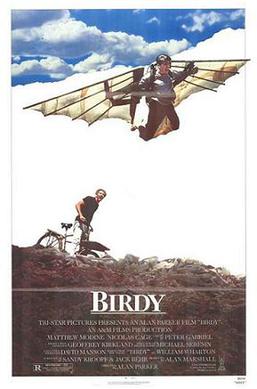
“Birdy” is a different kind of war movie. It was directed by Alan Parker and is based on the novel by William Wharton (the novel is set in WWII). It has an interesting soundtrack by Peter Gabriel. It was awarded the Grand Prize of the Jury at Cannes in 1985. In spite of critical acclaim, it is virtually unknown and made less than $2 million at the box office. It is one of the best examinations of the mental and physical aftermaths of war.
The film is the story of two friends who go off to the Vietnam War and return scarred. Al (Nicholas Cage), who has facial wounds, visits his best friend Birdy (Matthew Modine) in a mental hospital and tries to break through to him. Birdy thinks he is a bird and is unresponsive. There is a striking shot of Birdy perched on his bed.
During their sessions, the movie flashs back to events in their friendship. The vignettes are endearing and include rebuilding an old car and working as dog catchers until they find out the dogs and being made into food. It quickly becomes clear that although Al is an typical urban youth, Birdy is quite strange. He is obsessed with birds and even makes wings and tries to fly! (How did this guy make it into the Army?) The movie includes a remarkable sequence of Birdy dreaming he is flying around. We see this from a bird’s eye view accompanied by cool Gabriel music. This was the first use of a skycam in a feature film. It is the most memorable scene in the movie.
The flashbacks from Vietnam are less effective. There is a confusing scene where Al gets wounded and is on the same helicopter as Birdy. Since they went to war separately, this seems a major coincidence. The copter is shot down and the area is napalmed, but we do not find out what happened to Birdy. The ending is equally weird and I won’t give it away, but it has justly been criticized for not fitting the film.
Forgotten gem? While not a gem, this movie deserves to be seen. It’s a bit bizarre, but it holds your attention. The two leads are better than you would think. They were early in their careers, but you can see the potential. You get the good Nick Cage in this one. It is surprising that he has the less hammy role. Supposedly Modine read for Al, but was given the Birdy role by the director. It is intriguing to imagine how the film would be with the roles reversed. Modine is excellent in a physically demanding role. He does take on the mannerisms of a bird. Most importantly, you care about these two young men.


.jpg)
.jpg)
.jpg)
.jpg)
.jpg)