Showing posts with label Battle of Little Big Horn. Show all posts

Sunday, January 10, 2021

Custer of the West (1967)


         George Armstrong Custer has been the subject of many books, as has his famous defeat at the Battle of Little Big Horn.  There have been several movies about him and the battle.  The most famous is Errol Flynn’s “They Died with Their Boots On” (1941).   In 1967, director Robert Siodmak intended to deliver a similar hero turned martyr treatment.  Siodmak had made a reputation as a director of thrillers and film noirs and you would assume he was tough on his actors.  You would be wrong in this case.  The studio cast Robert Shaw, who was coming off “Battle of the Bulge” two years ago.  He was paid $350,000.  Shaw took one look at the script and felt it was the 60’s, man.  That meant revisionism was in when it came to Westerns.  He rewrote parts of the film to make Custer more of a villain and the Native Americans more sympathetic.  He apparently did not get along with Siodmak and punched him during the big ball room dance scene and walked off the set.  I don’t know if it was a mutual agreement, but Shaw directed the battle scenes.  Speaking of “Battle of the Bulge”, Robert Ryan appeared for free.  He was in the area and felt he owed the producer for reviving his career by casting him in that film.  And like “Battle”, this film was also filmed in Spain.  That and lack of historical fidelity are similarities between the movies.  And for you History nerds, another similarity is the Battle of Washita has no snow.


                    The movie is a biopic that starts with Custer leading a charge in the Civil War.  And then two years later, another charge (the same one reused?).  Thus Custer’s Civil War career is summarized by two charges into the mouths of cannons.  When the war ends, the adrenalin-addicted warrior is called into Gen. Sheridan’s (Lawrence Tierney) tent and given a chance to continue killing. This time it will be Indians in the West.  In the first red flag, Sheridan is identified as the Commander in Chief of the Army of the Potomac, a position George Meade held (poor George, never the credit).  Sheridan pronounces history’s judgment on Custer:  “You could become a living legend or get yourself killed.  Dead men make better legends.”  So, he and Libby Custer (Mary Ure) head west.  The thriller in Siodmak comes out in a ridiculous scene where the Indians strap two miners to a runaway wagon for a ride down a steep road (with POV!).  From here, like for those trappers, it’s all downhill.  Custer meets his command and is immediately on the outs with Maj. Reno (Ty Hardin) and Capt. Benteen (Jeffrey  Hunter).  (The two actors appear on screen together, thus disproving the theory they are the same person.)  The rest of the movie takes some moments in Custer’s biography and mutates them to the point where anyone with knowledge of Custer will get whiplash from shaking their head and nodding at the same time.  Plus, there will be a lot of hair-pulling and jaw dropping.  The movie is a real workout for your head and a real ache for your brain.  For example, Shaw reenacts Custer cracking the whip when he takes command of the 7th Cavalry, but this is exemplified in a ludicrous and ludicrously long scene where he has the men run laps in full gear with Custer leading.  There is a log riding scene that rivals Disneyland’s flume ride and a runaway railway car that crashes off a bridge.  Prepare for more laughs as the movie builds to the climactic battle.  The battle looks like a high school play parody of the Errol Flynn movie.  Or footage from Buffalo Bill’s Wild West Show.


                    “Custer of the West” is an historical atrocity.  It makes “They Died With Their Boots On” look like a documentary.  That movie was bad enough, but it was made in the 1940’s, so what could you expect?  This movie was made twenty years later when scholarship had begun to rectify the hero-worshipping of Custer.  Shaw may have tilted the screenplay toward a less sympathetic view of Custer, but clearly he could have given a damn about the real events in Custer’s life.  He is a bit closer to the real Custer than Flynn, but the movie still gets him wrong.  He is portrayed as the glory hound that he was, but Shaw plays him more as a cynic.  He is not really sympathetic to the Indians, he is more the “just following orders” type.  Custer as a rule follower, interesting… and wrong.  He also gets drunk, which any cursory reading up on him would prove was not a vice of his.  The movie is sloppy like this.  But someone must have done some Encyclopedia Britannica scanning (the equivalent of Wikipedia back then, non-Boomers).  Someone with severe dyslexia.  I can excuse that every Indian and trooper has a repeating rifle, but the other botches are infuriating.  Or perplexing.  For God knows what reason, the Indian foe is Dull Knife!  Not Crazy Horse or Sitting Bull.  The staging of the Battle of Little Big Horn is incredibly ridiculous.


                    So, what if we treated it just as a Western instead of a historical war movie?  It is still a terrible movie.  The acting is poor, even by Shaw.  I am a fan, but he really was miscast. He doesn’t even bother to have long hair!   Nor is he even close to Custer’s personality.  That’s probably a good thing since if you hire Shaw you are certainly not going to ask him to play a long-haired dandy.  His Custer whipsaws from Indian fighter to Indian apologist.  The cast should have been strong (with Hunter and Hardin), but even the Indian extras are bad.  The action is poorly staged with those laughable action scenes standing out.  There are several long, pointless scenes.  It is a movie that starts stupid and just gets stupider. 


                    If “They Died…” is the “Braveheart” of Custer movies, what does that make “Custer of the West”?  The closest I can think of would be John Wayne as Genghis Khan in “The Conqueror”.  It does not anticipate the revisionism of “Little Big Man” which is an immensely better movie.  And it is on the opposite end of the spectrum from “Son of the Morning Star”.  If you have not seen either, please watch “Son” and skip “Custer of the West”.  And for God’s sake, don’t get your history from this movie!


GRADE  =  F


HISTORICAL ACCURACY:  The depiction of Custer leading charges in the Civil War is simplistic, but gets the jist of his Civil War service.  He did make a name for himself in gallant charges and was promoted to the youngest general in the Army of the Potomac.  After the war, Sheridan convinced him to take command of the 2nd Cavalry in Texas.  Sheridan was not commander of the Army, he was commander of the Military District of the Southwest.  One year later, he was given command of the newly created 7th Cavalry.  He did run a tight ship, but the running in full gear would not have happened.  Especially with Custer in the lead.  He was followed by his wife Libby to western forts.  He did have Major Reno and Capt. Benteen as his subordinates.  They did not really disagree on Indian policy, but Custer did have a problem with Reno’s drinking.  The movie gets events out of order.  Sheridan did send him to deal with the Cheyenne, but this was after he was suspended for deserting his men in the field.  In this embarrassing incident, George left his men to rush back to the arms of Libby.  The incident with the deserters was also part of this campaign. The Battle of the Washita occurred in 1868 after Custer had been restored to command under the urging of Sheridan.  It was an attack on an Indian village, but in wintertime in the snow.  Custer would not have been sarcastic in reporting the victory.  In fact, he reveled in it and over-reported the “victory” which, if not a massacre, was certainly unfairly one-sided.  All of the Indian fights in the movie up to the Little Big Horn (other than the Washita) are farcical. 


                      In 1873, the 7th was tasked with protecting a railroad surveying mission (not loggers) in the Black Hills.  The discovery of gold led to the influx of miners.  Custer was not relieved of command, but he was summoned to Washington to testify before a congressional committee.  He did not argue that treatment of the Indians was due to corruption.  His concern was over corruption in the post trading system.  He accused Secretary of the Interior Belknap of getting kickbacks from the traders.  Grant’s brother Orvil was part of the scheme, according to Custer.  This made his relationship with Grant even worse, since earlier Custer had arrested the President’s son Fred for drunkenness.  Grant suspended Custer because of his outspokenness. Custer did not write a letter to Grant, instead he went to see him, but was not allowed to.  It was intervention by Sherman and Sheridan that got Custer restored to command.  The movie has Custer outlining the Little Big Horn campaign on a map.  He says the parts of the army would rendezvous at the river on June 25.  First, it was not Custer’s plan.  Second, it is laughable to have Custer knowing the date and place of the battle.  Even more guffaw-inducing is the idea that the Indians were hoping to push the whites across the Mississippi.  They were simply defending their land and refusing to go to the reservation.  The purpose of the Army’s campaign was to force them onto reservations in the area.  Basically, the government had sided with the miners and Custer had no problem with that.


                    The cinematic battle is a mess.  Custer did divide the 7th.  Reno assaulted the village (there is no village in the movie).  The Indians were surprised.  There was no encounter with Indians before Reno’s attack.  He was repulsed and took refuge in some woods, but Benteen (who had been sent on a wild goose chase) did not join him until he further retreated to a hill.  Custer did not parley with Dull Knife.  His companies rode to the other end of the village, but probably tried to cross at the middle.  He was forced to retreat in the face of Indian pressure.  His men were not really surrounded.  They made a stand in groups and the Indians snuck up on them on foot at first.  They did not circle on horseback.  Some of Benteen’s men (not led by him) did make an attempt to reach Custer, but they were not ambushed.  They turned back when the odds seemed too great.  Meanwhile, Custer’s command was being whittled down.  Some of the Indians had repeating rifles, but most were armed with traditional weapons.  None of the cavalry had repeaters.  They were all armed with single shot 1873 Springfields.  They were breechloaders, but sometimes jammed at the most inopportune times.  Custer would not have fought with a sword.  They had purposely left them behind (as with the Gatling guns).  The Indians were led by Gall and Crazy Horse, with the latter leading a cavalry charge that overwhelmed the few survivors at the end of the battle.  The death of Custer is ridiculous. He almost surely was not the last man standing and obviously had not interaction with Dull Knife (who did not play an  important role in the battle).  There was one horse left (Comanche), but he was not Custer’s horse.  The movie neglects to show the mutilation of the dead bodies.  Although it looks like about 30 men died with Custer, in actuality it was around 200.

Wednesday, June 24, 2020

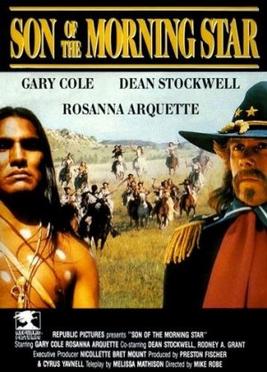
THE BEST CUSTER MOVIE: Son of the Morning Star (1991)


                        “Son of the Morning Star” was an epic made-for-TV miniseries about George Armstrong Custer and the Battle of Little Bighorn.  It aired on CBS in two parts.  It was based on Evan S. Connell’s bestseller.  Part of it was filmed on private property near Little Bighorn National Monument.  A fort was built for $200,000.  400 horses and 150 Native Americans were used.  100 re-enactors participated and served as technical advisers.  CBS considered Kevin Costner to play Custer, but decided that he was not a big enough name at the time.  Ironically, “Dances With Wolves” came out a few months ahead of it.  The movie got low ratings, but won Emmys for Sound Editing, Sound Mixing, Make-up, and Costumes.

                        Spoiler alert:  Custer (Gary Cole) dies in the end.  The movie recognizes that anyone with half an education knows that already and starts (as does Connell’s book) with the aftermath of the defeat.  Capt. Benteen (David Strathairn) sets the theme by stating that “mistakes were made”.  The movie then flashes back to Kansas ten years before the Battle of Little Bighorn.  It is linear from here (unlike the book).  Although it is basically a biopic of Custer, there is an arc for Crazy Horse.  The Custer arc is narrated by Custer’s wife Elizabeth (Patricia Arquette) and Crazy Horse’s is by a Cheyenne named Kate Bighead (narration by Buffy Sainte Marie, role by Kimberly Guerrero).  The two women offer the white and Indian perspectives.  The movie hits the high marks of both men’s careers.  Although the movie is based on Connell’s book, the movie is closer to Stephen Ambrose’s “Crazy Horse and Custer”. 

                        “Son of the Morning Star” is by far the best of the many Custer movies.  It is the opposite of “They Died With Their Boots On”.   The history of the cinematic Custer is one that starts with adulation of Custer as a hero killed by savages (e.g., “They Died…”) to Custer as a villainous poster boy for the mistreatment of Native Americans (e.g., “Little Big Man”).  This movie does not shift the pendulum back, but is more even-handed than recent depictions.  The narration offers a debate between the two views of the man.  Elizabeth Bacon Custer’s is laudatory (which reflects her great literary effort to create his public image after his death) and is in line with movies like “They Died…”  Kate’s is the Native American view and reflects movies like “Dances With Wolves”.  For instance, Kate mentions the unverified claim that Custer had an affair with a Cheyenne woman.  That said, it was probably true.  The movie is amazingly accurate, especially when you compare it to the others.

                        The movie is clearly made-for-TV, but the production values are a bit above the average.  The costumes are excellent and the reenactors and Native Americans brought verisimilitude to their roles.  This reminds me of “Gettysburg” which is a similar movie dealing with a famous battle.  Interestingly, there is a connection between the two.  When “Son” tanked, CBS gave up on its “The Killer Angels” project and Ted Turner picked it up.  The cast here does not match “Gettysburg”.  Gary Cole was criticized for his portrayal of Custer, but I found his megalomaniacal Custer to be realistic.  Custer himself was a bad actor who had delusions of grandeur.  Roseanne Arquette could also be faulted for a weak performance, but Elizabeth was his publicist and worshipped him.  The romance is creepy, as it was in reality.  They clearly were in love and had a partnership which both hoped would end up in the White House.  The supporting cast is TV stock.  David Strathairn was coming off “Memphis Belle” and is excellent as Benteen.  The movie gets the Custer – Benteen dynamic right.  Rodney Grant was in “Dances With Wolves” and does a good Crazy Horse, although given the laconic, mystical nature of the man, it did not require much emoting.

                        The movie flows well as each scene is not allowed to linger.  This is partly due to simplified takes on famous incidents like the Fetterman Massacre.  The movie does an admirable job interjecting the political machinations into the narrative.  The true villains of the movie are Sheridan (Dean Stockwell) and Sherman (George Dickerson) as they manipulate the reluctant Pres. Grant (Stanley Anderson).  These political scenes also allow the movie to show the bipolar nature of Custer as he steps on Grant’s toes by criticizing his Indian policy.  The use of narration to introduce the episodes works well.  It is balanced between the two women and the two viewpoints.  A key moment in the movie is when Elizabeth claims 158 warriors were killed in the Battle of the Washita and Kate admits to 11.  The movie makes it clear that most of the Indian deaths were women and children and Custer was far from holding his men back.  It is reminiscent of the scene in “Little Big Man”.    Most of the combat is saved for an extended recreation of the Battle of Little Bighorn and it is worth the wait.  No movie has better covered the battle.  It is excellent at depicting the chaos of the last stand and although it has to pull its punches, the gore is implied efficiently.  The cinematography is good with some well-positioned slo-mo.  It features some excellent stunt work on horseback.  You will definitely be rooting for the Indians by this point and will be able to list the numerous mistakes that were made.  The movie makes it clear that Custer was a charismatic leader, but not a good one.  There is no question that Crazy Horse is the hero of the movie and Custer is the villain.  Most historians would agree with that.

                        I do not normally consider Westerns to be war movies.  This is one of the rare ones that I put in the war movie genre, because it is the story of a battle.  I am very familiar with the subject as I have read extensively on the Plains Indians, Custer, and the Battle of Little Bighorn.  This movie is as good as you can expect from a made-for-TV production, especially if you want accuracy.  Not only does it recreate many of the seminal moments in Custer and Crazy Horse’s careers, but there are numerous direct quotes filtered in.  It even throws in details that only fanatics like me would recognize, like the regimental flag ominously falling down the night before the battle.

                        The Battle of Little Big Horn has been the subject of many books and a few movies.  Most of the books have tried to offer an explanation for what happened and most of the movies have filmed the legend of Custer’s Last Stand.  This is the first movie to try to be an accurate biopic.  Custer is a fascinating figure and fits well into the modern style of biopics that were inaugurated with “Patton”.  In othe words, we get Custer, warts and all.  And it’s mostly warts.  What makes the film special is not only the accurate depiction of Custer, but the inclusion of a much better role model in Crazy Horse.  “Son of the Morning Star” is an acclaimed (and highly overrated book), but the movie is better and a better history lesson for those not familiar with this very famous battle.  It’s also a great antidote to the ridiculous movies that came before it.  Hopefully, the 21st Century will be marked by this movie’s interpretation of Custer, instead of “They Died With Their Boots On.”

GRADE  =  A    

Sunday, January 20, 2019

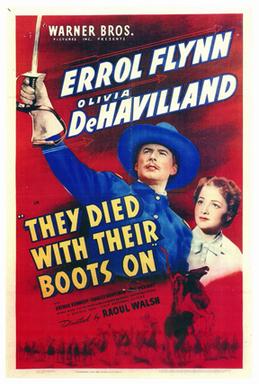
CONSENSUS #87 - They Died With Their Boots On (1941)


SYNOPSIS: "They Died With Their Boots On" is the story of George Custer (Flynn) and his wife Elizabeth (de Havilland). It covers their relationship from Custer's appearance at West Point to his death. The movie is part romance, part biopic, and part Western. The climax is the Battle of Little Big Horn.

BACK-STORY: They Died With Their Boots On is an old school war movie from 1941. It was directed by Raoul Walsh (“Objective Burma!”) and was the eighth and last screen pairing of Errol Flynn and Olivia de Havilland. It was a huge box office hit.

TRIVIA:  Wikipedia, imdb, TCM

1.  Three died during the filming. One fell from his horse and broke his neck.  A stuntman died of a heart attack.  Actor Jack Budlong was thrown from his horse as he rode alongside Errol Flynn and was impaled by his sword.
2.  Only sixteen Sioux were available as extras and were used for the closeups.  The rest of the more than 1,000 extras were Filipinos.
3.  Jim Thorpe was an extra and he got into a fight with Flynn during a break.  Thorpe knocked him down with one punch while Flynn was in uniform.
4.  Louis Zamperini of “Unbroken” fame, was also an extra.
5.  Flynn collapsed from exhaustion during the shoot.
6.  One of the most historically inaccurate war movies ever made.

Belle and Blade  =  N/A
Brassey’s              =  5.0
Video Hound       =  3.1
War Movies         =  N/A
Military History  =  #68
Channel 4             =  not on list
Film Site                =  yes
101 War Movies  =  no

OPINION:  “They Died” is more of a Western than a war movie.  It is a classic and was a big hit, but when you compare it to modern war movies like “Son of the Morning Star”, it is an antique.  The ludicrous historical inaccuracies make the movie hard for history buffs to watch.  And, given the power of movies in the 1940s, it created a misshapen portrait of Custer.  It is on a par with “Braveheart” in accuracy, but at least William Wallace was a legitimate hero.  I strongly disagree with it being in the top 100.


Monday, August 8, 2011

#55 - She Wore a Yellow Ribbon (1949)


BACK-STORY: “She Wore a Yellow Ribbon” is a western/war movie released in 1949. It was the second of John Ford’s cavalry trilogy and the only one in color. The other two were “Fort Apache” and “Rio Grande”. All three starred John Wayne. The movie was set in Monument Valley. Ford used the paintings of Frederick Remington for inspiration and ideas. The title is a song associated with the U.S. Cavalry and alludes to the cavalryman giving his love a yellow ribbon. One of the stars is the horse “Steel” ridden by Ben Johnson. This horse was popular with western stars. The movie was awarded the Oscar for Best Color Cinematography to Winton Hoch. The film was a big hit.


OPENING: The movie opens with the iconic theme song. A narrator informs us the story takes place after Custer’s Last Stand. Word spreads via the telegraph and Pony Express. The Indian tribes are in rebellion and are uniting “in a common war against the U.S. Cavalry”. At Fort Stark, the elderly Capt. Nathan Brittles (Wayne) is only six days from forced retirement. Sgt. Quinncannon (Victor McLaglan) is also near the end. He is Irish so he drinks a lot, but in a humorous way.

SUMMARY: The death of the paymaster by Indians clues the fort in to the fact that the Southern Cheyenne are on the warpath. They know it’s the Southern Cheyenne due to the markings on their arrows. That night Brittles make his nocturnal visit to his wife and kids’ gravesite. In a touching scene, he talks to her. The commanding officer decides his wife Abby (Mildred Natwick) and niece Olivia (Joanne Dru) need to go back east via the stage coach. He orders Brittles to escort the ladies to the stage station and shoo the Indians back to their reservation. Olivia is wearing a yellow ribbon, but for who? Her suitors are Lt. Cohill (John Agar) and Lt. Pennell (Harry Carey, Jr.). Cohill is the career trooper who is not romantic and Pennell is the wooing easterner who is willing to leave the Army for Olivia. The one time they are going to duke it out over her, Brittles breaks it up. Guess which one she ends up choosing? Hint: the one she argues with the most. Snippiness = love in Hollywood.

Cohill and Olivia hating each other
      The mission takes the unit through some beautiful scenery and they even encounter a buffalo herd. The Indians feel the return of the buffalo is a sign that their medicine is working. Brittles sends ex-Rebel Sgt, Tyree (Ben Johnson) and his horse (Steel) to locate a patrol. When asked for his opinion on matters, Tyree famously responds with: “My mother didn’t raise any sons to be makin’ guesses in front of Yankee captains.” Surprise, Tyree runs into a passel of whooping Indians (the Indians whoop a lot in this movie). There is an exciting chase scene that ends with Steel jumping over a canyon. The patrol also gets chased by Indians, but finds refuge with the column. One of the men is wounded which requires a bullet extraction in a moving wagon with the back drop of a lightning storm. This was not part of the filming schedule, but Ford insisted over the protest of Hoch that the situation be used. Great call!

"Troop, halt!"
     The stage station has been raided, so no stage coach for the gals. One of the dead is an ex-Confederate general serving as a private. The U.S. Cavalry was an institution of reconciliation after the Civil War. Brittles and a few others sneak up on an Indian camp to witness the Indian agent selling repeating rifles to the warriors. Things go bad for the villainous whites and Brittles stoically watches the torture of one of them. Does anyone want a chaw of tobacco?

     The mission is a failure and the unit has to cross a river to return to the fort. Brittles leaves Cohill and two squads behind to guard the ford. The unit slogs back into the fort and the next day Brittles awakes to his last day in the Army. The movie needs a dose of humor and fisticuffs so Brittles has Quinncannon put on his “monkey suit” and go to the canteen for a drink and then orders his arrest for being out of uniform and drinking. (I did not quite follow the reasoning behind this – something about Quinncannon would be better off spending the rest of his enlistment in the brig. Anyway, it was an excuse to have a barroom brawl). The Quinncannon versus six fight is entertaining and worth the ridiculous setup.

Brittles with his watch
     Brittles gets a sentimental farewell from Company C that includes a silver pocket watch. Touchingly, he has to pull out his spectacles to read the inscription. He is off to California (with just the clothes on his back?), but ends up joining Pennell who has been sent to rescue Cohill. Cohill doesn’t need rescuing (in a missed opportunity for gratuitous shooting of whooping Indians off their horses), but there is still that Southern Cheyenne problem. Fortunately, Brittles still has four hours available. He rides into the Indian camp to smoke the pipe with old friend Pony that Walks (Chief John Big Tree in an endearingly eccentric performance). The chief tells Nathan that he has no control over the young men. Oh well, enough talk.

     Brittles locates the Indian pony herd and stampedes it through the Indian village that night. Although it is a surprise, the Indian braves come running out of their tepees fully clothed. No troopers are even wounded and I did not see any Indian casualties either. Indians without horses must return to the reservation. Insurrection over.

CLOSING: Brittles rides off into the sunset (literally) which would be an appropriate ending, but a letter arrives promoting him to Lt. Col. of scouts and Tyree rides off to bring him back. His return interrupts the celebration of the engagement of Cohill and Olivia. Brittles goes to update his wife on his promotion.

RATINGS:

Acting - 8


Action - 6


Accuracy - 6


Realism - 6


Plot - 6


Overall - 6

WOULD CHICKS DIG IT? Probably. It is definitely not hard core. What little violence there is, is tame. The love triangle is lame, but it does not consume the movie. Millard Natwick as Abby is feisty and has some good moments (e.g., the wagon operation scene). Joanne Dru is out of her league here, but is adequate.

ACCURACY: The movie is not based on an historical event, but the opening narration could give that impression to a gullible audience. The narration starts the movie off on a shaky historical footing. The only thing it gets right is Custer was defeated. The Indian tribes seem to be randomly selected. The Kiowa, Comanche, and Apache were not involved in the Battle of Little Big Horn and the statement that the various tribes were united against the U.S. Cavalry is laughable considering the inability of the tribes to unite on anything. There was no Indian uprising. The Indians were simply fighting against white encroachment into their lands.. Custer’s Last Stand did not result in tribes leaving the reservations. The ones that were at war either were already off their reservations or, more likely, had never been confined to one (yet). The reference to the Pony Express spreading the word is very sloppy history. It had ceased to exist fifteen years earlier.

     The depiction of the cavalry is pretty realistic, although a bit idyllic. Ford is paying tribute to the “dog faces” and their thankless task of taming the West, but it is a no warts portrayal. All of the troopers are respectful gentlemen who are dedicated to their duty. They all are dressed for parade. There is no salty soldier talk and that’s not just because Quinncannon tells them to “watch them words”. (Followed by an anonymous “watch them grammar”.) There are no negative characters in the unit. The two suitors are respectful of each other. Brittles gets along well with his commanding officer. There is little tension. The ex-Confederates don’t even get teased. Only one trooper is a drinker and he is shown in a positive light. A typical western fort would not have been as “clean” as this.

     As far as the Indians, they are typical John Ford caricatures. They are all dressed for the Hollywood warpath. Lots of reds and war bonnets. These are the best dressed Indians on the Plains. No poverty here. One accuracy is the inability of the elderly chiefs to control the young men. And there is a travois in one scene.

"Is that whiskey on your breath?"
CRITIQUE: “She Wore a Yellow Ribbon” is a good Western. Ford is Ford. Wayne is not Wayne. Both of those statements are a good thing. This being a typical Ford movie, the use of Monument Valley is awesome. The theme of the selflessness of the cavalry is well done, if a bit overdone. The characters are stock, but entertainingly so. The movie does not force a heterogeneous, multi-ethnic unit on the audience (which is actually not realistic to the post-Civil War Army, by the way). Wayne fans will be comfortable with the familiar faces in the cast, especially McLaglan.

     The movie is well acted. Wayne is outstanding in playing against type. He was only 41, yet plays a 61 year old. Brittles is a grizzled veteran, but he has not been hardened by his experiences. He is a father figure to his men. He takes Olivia under his wing and mentors Cohill and Pennell. He is a loyal friend to Quinncannon. He was obviously a caring husband and father. There is no strutting here and in fact Wayne adds nice touches like arthritis in the joints.

     The score is hit and miss. Invariably, when the Indians appear, we get generic Indian music. You could have your eyes closed and be able to tell who is on screen. However, the music is tempoed according to the action which adds to the scenes that have movement. The theme song is effectively used at strategic moments.

     The movie is beautiful to watch. The cinematography is outstanding. The reds are a bit distracting though. The use of the lightning storm was clever and it is ironic that Hoch complained about the lighting considering that scene probably helped win him the Oscar.

     It is commendable that Ford does not go for mindless action and wanton killing of redskins, but he perhaps went too far. Other than the Indian agent, I cannot recall anyone getting killed. He strands Cohill and the forlorn hope at the river crossing with the implication of dread, then there is no payoff. The stampede of the herd through the village is thundering, yet bloodless. Even the fight between Cohill and Pennell is aborted. The only real fight is a comical one.

CONCLUSION: “She Wore Yellow Ribbon” is an entertaining Western, but it is not a war movie and does not belong on this list. I have a problem with taking a movie that is firmly in one genre and then putting it on a list of great movies in another genre. There are few Westerns that I feel can clearly be considered war movies and Westerns. A rare example of this hybrid would be “Son of the Morning Star” which is specifically and accurately about a battle in the Indian Wars (the Battle of Little Big Horn).


Saturday, April 23, 2011

#68 - They Died With Their Boots On


BACK-STORY: “They Died With Their Boots On” is an old school war movie from 1941. It was directed by Raoul Walsh and was the eighth and last screen pairing of Errol Flynn and Olivia de Havilland. It was a huge box office hit. Two stunt men were killed in the filming of charges. One impaled himself on his sword as he fell from his horse.


NOTE: Because of the nature of the film, I have decided to intersperse comments on realism and accuracy throughout the summary rather than wait for the accuracy section.

OPENING: Custer (Flynn) arrives at West Point in 1857 dressed as a European Hussar and leading a pack of dogs. (Custer was poor and would not have looked like a rich boy when he arrived.) He is arrogant and has a prank pulled on him by an upperclassman named Sharp (Arthur Kennedy). After punching Sharp at parade, he is brought before Superintendent Sheridan (He was never Superintendent of West Point.) Sheridan recognizes something special in the plebe and becomes a guardian angel for him. This is useful because a montage highlights some of Custer’s demerits. (Ironically, most of the demerits were for pranks.)

the dashing Hussar

SUMMARY: The Civil War breaks out and Custer graduates ahead of schedule despite poor academics. Before he leaves, he meets the niece of Sheridan, Elizabeth Bacon (There was no relationship between the two and they did not meet at West Point.) Their romance gets off to a rocky start which is 1940s Hollywood’s way of foreshadowing their marriage.

     A chance meeting with Gen. Winfield Scott gets Custer appointment to a cavalry regiment in time for First Bull Run. (Custer’s assignment was normal and did not involve Scott.) Guess who is in command of the regiment – Sharp. Surprise! Custer disobeys Sharp’s orders and leads a charge which gets him wounded and decorated. (Custer did perform bravely, but as a messenger. He did not lead a charge. He did not get a medal and the medal shown in the movie was not created until 42 years later.)

     On leave Custer hears “Garry Owen” for the first time in a saloon and takes a liking to the tune. He insults a gentleman that turns out to be Elizabeth’s pompous father. Later, Bacon throws him out of the house during a visit with Libby. (Mr. Bacon disliked Custer because he was from the lower class.) Custer returns and proposes. They agree to marry when he becomes a general. He’s romantic and ambitious!

Libby and George

     Custer is accidentally promoted from Lieutenant to Brigadier General right before Gettysburg. (The promotion was for gallantry, not accidental. It was from Captain to General.) During the battle he saves the Union flank by leading his regiment against JEB Stuart. No Rebels appear in this scene. We just see Custer leading three charges. It is like watching a tennis match with one player.

     After the war, Custer returns home and gets married that same day with the approval of Mr. Bacon, now the father-in-law of a hero. Unfortunately, the boredom of civilian life causes Custer to become an alcoholic. (Custer actually did not smoke or drink.) Libby visits Gen. Scott and pleads with him to give her husband a western command. Scott promotes Custer over numerous senior officers because “the nation owes him.” (Scott was no longer in command and had nothing to do with the promotion.)

     On the trip to Fort Lincoln, Custer fights a duel with Crazy Horse (“Chief of the Sioux”) and takes him captive. (Do I have to point out this is bull shit?) At the fort, Custer finds his command to be a mess. Surprise! This is due to the post bar run by guess who? Sharp! By the way, Sharp is also openly selling repeating rifles to the Indians. (I am not making this up.) Not to worry, Custer shuts down the bar and teaches the men “Garry Owen” which instills discipline in the unit. Suddenly, the 7th Cavalry is worthy of their great leader.

     Meanwhile, Crazy Horse has escaped and a montage tells us there is a war going on with the whites. The conflict is fueled by discovery of gold in the Black Hills encouraged by Sharp’s railroad company. Custer meets with Crazy Horse (sporting a war bonnet that would shame a cigar store Indian). (Crazy Horse did not believe in showy dress and never met Custer.) Crazy Horse: “We will give up everything but the Black Hills.” (Crazy Horse opposed giving up anything.) Custer: “If the Great White Father gives the word, Long Hair will defend the Indians’ right to the Black Hills.” (Custer led the expedition that discovered gold in the Black Hills and then personally exaggerated the amount of gold leading to a gold rush.)


     Custer goes to Washington to rat out the corrupt Sharp and his cronies who are abusing Indian rights. He is being threatened with court-martial for insubordination, but barges into Pres. Grant’s office and demands reinstatement to his regiment. Of course, Grant agrees. (Custer got in trouble with Grant for testifying about scandals in the Indian bureau which involved Grant’s brother. Grant reluctantly reinstated Custer at the last moment because of prodding from Sheridan and others, not because of a meeting with Custer.)

      Custer can now participate in a campaign against the Indians with the hope of giving them justice. (I am not making this up!) They depart the fort with schmaltzy romantic music swelling and Libby fainting. Guess who he brings along to get redemption? Sharp! Custer to the greedy Sharp: “You can take glory[not money] with you when it’s your time to go.” On the march, Indian scouts spy on them. (The Indians had no idea Custer was coming.) When an old coot reports that Gen. Crook’s unit has been wiped out, Custer realizes that he must sacrifice the 7th Cavalry to prevent the same thing from happening to the main force led by Gen. Terry. (Custer did not know of Crook’s defeat, which was not a wipe-out. He did not think he would lose. He attacked, not to save Terry, but to get the glory before Terry could arrive.)

     Approaching the Indian village, Custer is ambushed by the Indians. (Custer was attempting to ambush a sleeping village and kicked a hornet’s nest instead.) In an epic scene, the soldiers fight on foot against a swarm of Indians (most wearing war bonnets). The music alternates between Indian and cavalry themes. There are the typical bloodless deaths, including the ever popular being-dragged-by-the-stirrups. Some of the troopers have swords. (No one, including Custer, had sabers at the battle.  Oh by the way, Custer had shorn his famous golden locks before the campaign.) Custer is the last white standing, naturally. He is shot by Crazy Horse in a moment of poetic justice. (Custer most likely was killed early in the battle. He was almost positively not the last to die. The chances of Crazy Horse firing the kill shot is approximately one in however number of Indians were participating.)

the last man standing

CLOSING SCENE: Libby Custer visits Gen. Sheridan. She brings Custer’s last letter, which because it has his dying words is considered to be unassailable and admissible in a court of law. He indicts the corrupt railroad company and pleads for fair treatment of the Indians. Sheridan promises to carry out Custer’s dying wishes and guarantees that Crazy Horse can keep the Black Hills. (This is the same Sheridan who famously said “The only good Indian is a dead Indian.” As we all know, Custer’s death was the turning point in treatment of the Indians. They lived happily ever after. I think they still own the Black Hills.)


RATINGS:

Acting – 7

Authenticity – 6

Accuracy – 2

Action – 5

Plot – 6

Overall – 5

WOULD CHICKS DIG IT? What woman can resist Errol Flynn? The movie has a strong romance in it. The action is sanitized. There is definite chemistry between the two leads. It is not a hard core war movie and was obviously very popular with ladies.

ACCURACY:  I have already pointed out the numerous inaccuracies, but let me point out a few accuracies. Custer was a glory hound. He would fit in perfectly in our current celebrity-obsessed culture. He was a poor student and did accumulate a record number of demerits at West Point. He did have influential patrons throughout his career. His marriage to Elizabeth Bacon was one for the story books. He once went AWOL, abandoning his unit, to rush to her side. He did fight Stuart at Gettysburg. He was killed at the Little Big Horn. That’s about it.

CRITIQUE: “They Died With Their Boots On” is a classic example of entertainment trumping historical accuracy. The movie scored well with critics and has an 80% rating on Rotten Tomatoes. Several reputable war movie critics gave it positive reviews. The movie is undeniably entertaining in a 1940s sort of way. It has something for everyone. The romance, the action, the humor, the pompous score,… Flynn and de Havilland. Kudos for the sympathetic, if patronizing, treatment of Native Americans. It is no surprise it was a big hit. What is surprising is that supposed fans of history can overlook the raping of history that occurs in this film. Specifically, how could the editors of Military History magazine place this movie in the Greatest 100, much less at #68?!

      More books have been written about the Battle of Little Big Horn than probably any other battle in American History and yet most Americans probably have a view of the battle and of Custer similar to what is depicted in this movie. And without a doubt many of the generation that grew up with this movie probably viewed it as an accurate retelling of the story. It is bad enough for Americans to learn their history from Hollywood screenwriters, it is inexcusable for people who know history to abet this. The movie should have been crucified by historians. Instead, many of them took the approach that while it is inaccurate, it sure is entertaining. Shame on them.

CONCLUSION: TDWTBO is to old school war movies what “Braveheart” is to modern war movies. Both films are terrible trashings of history. I would have to say TDWTBO is the worst of the two because it brazenly twists a well-chronicled event and person. At least with “Braveheart”, hardly anyone knew about William Wallace and many people were encouraged to find out the truth about him because of the film. He certainly was a positive personality so Gibson’s portrayal was realistic. Wallace really was a hero. Although the two battles in that movie are laughably inaccurate, they were not well known. On the other hand, Custer as portrayed by Flynn is a dashing hero, when in reality he was an egotistical jerk who was an incompetent Indian fighter. He deserved to die, but his men did not. To suggest that he was a friend of the Indians and that his death resulted in better treatment of them is beyond contempt. The simplistic depiction of one of the most famous battles in American History and its aftermath is a disservice to history and to its audience.

     As a defender of the integrity of history as depicted in war movies, I refuse to back down in my view that movies like “They Died With Their Boots On” and “Braveheart” are pitiful movies no matter their supposed entertainment value for the ignorant masses.