Showing posts with label Crimson Tide. Show all posts

Friday, August 18, 2017

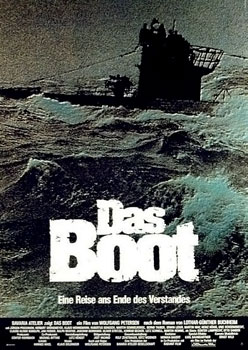
#1 Das Boot vs. #4 Crimson Tide


VS.


CHARACTER DEVELOPMENT:  “Das Boot” is outstanding in this category.  The Captain is enigmatic, but we know why he is cynical and jaded.  He is a veteran of numerous patrols.  Each of the officers is distinct.  They are recognizable archetypes - the fanatical Nazi, the naïve rookie, the well-respected chief engineer, the frat boy Second Watch Officer, etc.  Since it’s a long patrol fraught with boredom broken by intense stress, there is time and opportunity to develop even some of the minor characters.  When the camera pans over the dead at the end, you know these men.  GRADE  =  A

“Crimson Tide” is dominated by Capt. Ramsey and Lt. Commander Hunter.  It is clear through dialogue where each man is coming from.  They are stereotypes, but in the hands of Hackman and Washington, you don’t mind it.  Ramsey is given a dog (which the Navy was not happy about) as part of his character.  Hunter jogs on the sub.  (Try that, u-boat captain!)  Some of the officers get a little development and some of them are interesting, like the Chief of the Boat who idolizes Ramsey but sides with Hunter.  This contrasts with Weps (Viggo Mortensen) who is Hunter’s best friend and yet inexplicably joins the Ramsey faction.  There is virtually no crew development except we know two of them are big Silver Surfer fans.  GRADE  =  C+

FIRST QUARTER SCORE:  Das Boot  =  9
                                             Crimson Tide  =  7

REALISM:  No sub movie comes close to “Das Boot” when it comes to realism.  If you want to know what life was like on a German u-boat in particular and any WWII submarine in general, it is a must-see.  There is not a lot of action, which is appropriate for a typical patrol.  Most people do not realize that most subs returned home with torpedoes unfired.  It is the only sub movie that depicts the role mother nature plays in submarine warfare.  It is the gold standard in showing the effects of life in a cramped setting aggravated by lack of success.  The movie leads off with a title card that points out that the u-boat service had a 75% casualty rate and then proceeds to show you why.  GRADE  =  A+

“Crimson Tide” is based on a far-fetched scenario.  Considering the situation in the former Soviet Union when the movie was made, it is plausible that nuclear weapons could fall into the wrong hands.  However, the U.S. government responding with a preemptive strike goes against established doctrine.  It is also highly unlikely a mutiny as depicted in the movie would take place in the modern U.S. Navy. (The Navy absolutely refused to cooperate with the film.  It did cooperate with “Hunt for Red October”.)  The turmoil that takes place on board the Alabama is classic cinematic license and must be taken with a grain of salt.  GRADE  =  C

HALFTIME SCORE:  Das Boot  =  19
                                   Crimson Tide  =  13

SAILOR BEHAVIOR:  “Das Boot” does an outstanding job in depicting submariner behavior on a u-boat.  The men go through a lot and all of their reactions are genuine.  Other than Bengsch, no one is a hard-core Nazi.  This accurately reflects the make-up of the u-boat service.  These are young men who volunteered for a very dangerous, yet at times exhilarating job.  They run the gamut of emotions appropriate to the various stresses they encounter.  The movie is particularly adept at rendering the crude nature of sailor interaction.  This is the only sub movie that shows someone flicking boogers on a mate.  GRADE  =  A+

“Crimson Tide” requires the officers on a US nuclear sub to divide into two factions to battle for control of the sub.  It is no wonder the Navy refused to cooperate with the movie.   A captain and his exec yelling at each other in front of the crew?  Highly unlikely.  Two groups pointing guns at each other?  Only Hollywood could conjure up such foolishness.  The submarine service has the historical reputation of being a bit lax in discipline, but this movie takes that to an extreme.  As far as exhibiting submariner behavior, the movie concentrates on the officers so we get almost know crew behavior.  They don’t even discuss dames.

THIRD QUARTER SCORE:  Das Boot  =  29
                                              Crimson Tide  =  18

ENTERTAINMENT VALUE:  Although any submarine movie fan will find “Das Boot” mesmerizing, it was not designed to entertain the masses.  It avoids most of the clichés that most sub movies rely on to gin up excitement.  Just like the voyage, there are long stretches where nothing much happens.  The tedium of u-boat life is painstakingly recreated.  If you love great acting in confined spaces, this is the movie for you.  It is far from an action picture, but when it does get hinky it is pulse-pounding.  GRADE  =  B

“Red October” was probably created in a lab where scientists put together all the ingredients that please 18-45 year-old males.  Alpha males, turf warfare, sub duel, clock ticking to an explosion, etc.  And this is all done with a straight face and with no shame.  It is well crafted and if this is what a modern sub movie will have to be like to be made in the modern cinematic universe, so be it.  Better this than an embarrassing throwback like “U-571”.  GRADE  =  A

FINAL SCORE:  Das Boot  =  37
                           Crimson Tide  =  27


ANALYSIS:  “Das Boot” (1981) and “Crimson Tide” (1995) are part of the fourth wave of sub movies.  The first was the rare movie made between the world wars, the second were the ones made during WWII, the third was the fertile 1950s period, and then we have the modern ones that basically began with “Das Boot”.  “Crimson Tide” is a better example of the modern sub film.  It and “The Hunt for Red October” have taken the sub film into the action genre.  Better to be there than nowhere at all, I suppose.  The cramped environment does lend itself to drama.  And with CGI you can even make a sub chase film!  “Das Boot” is the best sub movie ever made because it bridges the third and fourth wave adroitly. It keeps some of the clichés from the third wave and adds technical proficiency.  Some of its tropes are well-worn, but it manages to do them better than ever before.  No surprise it took a foreign film to accomplish this.  No American studio would have greenlit this movie.  

Sunday, August 13, 2017

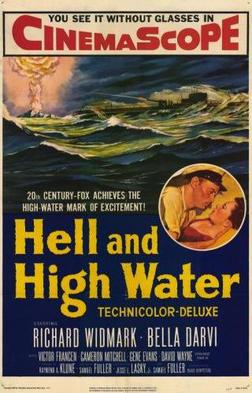
#4 Crimson Tide vs. #12 Hell and High Water


VS.


DIALOGUE:  The dialogue in “Crimson Tide” is not flowery.  It does lack in sailor jargon since the movie concentrates on the officers.  There are some philosophical discussions between Ramsey (Gene Hackman) and Hunter (Denzel Washington) on topics like Hiroshima and von Clausewitz.  The confrontations between the two mutineers (that’s right, each leads a mutiny) are pretty intense.  Quentin Tarantino was brought in to add pop cultural references to the script.  GRADE  =  A 

“Hell and High Water” puts a scientist and his comely assistant on board a boat with a motley crew and a hard-boiled skipper.  Much of the dialogue pits science against the military mind.  There are no memorable lines, but the actors are not forced to embarrass themselves by what comes out of their mouths.  GRADE  =  C

FIRST QUARTER SCORE:  Crimson Tide  =  9
                                             Hell and High Water  =  7

SPECIAL EFFECTS:  “Crimson Tide” had the benefit of cutting edge technology and a big budget.  It did not have the cooperation of the US Navy.  It tends to frown on plots involving mutinies.  The director did manage to film the actual USS Alabama at sea and submerging.  Everything else was CGI.  There is a duel between subs that is better than in “The Hunt for Red October”.  The movie manages to get a fire into a sub movie.  This is truly a Hollywood production.  The sound effects were worthy of an Academy Award nomination.  GRADE  =  A

“Hell and High Water” had a budget of less than $2 million. Denzel Washington was paid $7 million to make “Crimson Tide”.  Not exactly a level playing field.  The littler movie did well with what it had.  The underwater scenes are better than average and the film was nominated for Best Effects.  GRADE  =  B

HALFTIME SCORE:  Crimson Tide  =  18
                                   Hell and High Water  =  15

ACTION:  “Crimson Tide” has a galley fire and a sub duel, but it’s mostly the threat of violence that dominates the latter part of the film.  The level of action would have gone off the meter if all those guns had been used in the final confrontation between the opposing sides.  As it is, we had to be content with verbal fisticuffs.  The movie is more of a thriller than an action movie.  GRADE  =  C

“Hell and High Water” has a tangle with a Chinese sub and two shore landings.  In the sub encounter, they ram the enemy under the water.  Well, that’s different.  The first commando raid is your typical blow things up type.  The second gives the sexy female scientist the chance to shoot a guard.  That is also something you don’t see in every sub movie.  Oh, and they shoot down a B-29.  GRADE  =  B

THIRD QUARTER SCORE:  Crimson Tide  =  24
                                              Hell and High Water  =  23

ACCURACY:  “Crimson Tide” posits a doomsday scenario that cannot be judged for accuracy.  However, the way the sub handles the crisis can be judged based on American nuclear doctrine and procedures.  The scenario involves Russian rebels getting control of some ICBMs and possibly firing them at the U.S.  The clock-ticking nature of Hollywood thrillers requires the missiles to be fueled up before launched when in reality they would be ready to go immediately.  The biggest artistic license is with the central issue of the exec refusing to concur with the launch because he feels a second incomplete message is likely a cancel order.  In reality, the exec has only the power to confirm the authenticity of the message, not stop its implementation.  There were sub veterans, including the technical adviser who had skippered the real Alabama, who insisted the movie was essentially accurate.  A political adviser might have been nice since American nuclear doctrine is against a preemptive strike.  Not that a President might not violate that rule.  (Who are you picturing right now?)  All of the inaccuracies were classic artistic license to enhance the drama.  GRADE  =  C

“Hell and High Water” is totally fictitious.  It is very much a product of the early Cold War.  Although entertaining, it is totally preposterous.  The Red Chinese have a plan to use a purloined B-29 to drop an atomic bomb and blame it on the U.S.  International scientists hire a rogue sub to stop the bad guys.  Surely you read of this in your history textbook.  And a woman scientist in 1954 – come on!   As Capt. Jones says:  “So tell me Professor, what makes a girl who looks like that get mixed up in science?”  GRADE  =  D

FINAL SCORE:  Crimson Tide  =  30
                           Hell and High Water  =  28


ANALYSIS:  I consider myself pretty knowledgeable about war movies, but I have to admit I had never heard of “Hell and High Water” before starting work on this tournament.  When I began to hunt for 16 sub movies that fit my criteria I ran into it.  It almost did not make the cut because I was unsure that I would be able to get a copy.  It is not a well-known movie.  I am glad it worked out because it was an enjoyable movie to watch.  This matchup was one between an obscure B-movie and a blockbuster.  “Crimson Tide” could not be more different.  It is the better movie, but mainly because of all the resources available to it.  Still, “Hell and High Water” put up a good fight and hopefully its performance will encourage others to seek it out.

Wednesday, August 2, 2017

#4 Crimson Tide vs. #13 Torpedo Run


VS.


PLOT:  Crimson Tide” is a post-Cold War submarine flick.  A rogue politician has gotten control of some nukes In Russia and is threatening to launch them.  The USS Alabama is a ballistic missile submarine that the movie makes a point of describing as one hell of a powerful instrument of international relations.   And this weapon is run by the old schooler Capt. Ramsey (Gene Hackman).  Ramsey is breaking in a new exec, Lt. Commander Hunter (Denzel Washington) and they don’t see eye to eye.  Ramsey is a Republican and Hunter is a Democrat, so to speak.  When the sub receives a launch order, it’s time to do what they exist for.  But wait, here comes an incomplete message that possibly rescinds the order to end the world as we know it.  And the clock is running.  Dial up the command dysfunction to ten.  The plot is thought-provoking and fairly balanced except that it’s obvious we are to root for the black guy.  It tends to be your basic action plot of dominoes dropping to build to the desired climax and is a bit redundant with two takeovers of the boat.  It is slickly done, if you like your entertainment that way.  GRADE  =  B

  “Torpedo Run” is a WWII submarine movie.  It also revolves around command dysfunction.   Commander Doyle (Glenn Ford) is best friends with his exec “Archie” Sloan (Ernest Borgnine), but they have a falling out when Doyle decides a Japanese carrier is more valuable than his own family’s life.  Don’t ask about the details, they are too unbelievable.  Even though Archie remains loyal to his mentally unstable skipper, Doyle feels Archie has stabbed him in the back with their superiors.  Incredibly, the two get a second shot at the aircraft carrier in a harbor.  The tension is high as you wonder if the plot can get any more ridiculous.    GRADE  =  F

FIRST QUARTER SCORE:  Crimson Tide  =  8
                                             Torpedo Run  =  4

ACTING:  “Crimson Tide” has Denzel Washington and Gene Hackman, ‘nuff said.  But there is also an outstanding supporting cast that includes Viggo Mortensen and James Gandolfini.  Everyone is fine, especially the two leads.  The situation lends itself to scene chewing, but the cast is mostly under control.  Washington and Hackman do not appear to be trying to top each other.  Unlike their characters.  GRADE  =  A

The strength of “Torpedo Run” should be its acting.  Ford and Borgnine are not Washington and Hackman, but they are a better duo than almost any other sub movie.  (Third behind Gable and Lancaster in “Run Silent”.)   Borgnine is good as the saintly Archie, but Ford is disappointing as he pouts or smirks his way through the role of the Ahab-like captain.  The supporting cast is low rent with Dean Jones and L.Q. Jones.  Unlike “Crimson Tide”, this movie has a female in Doyle’s doomed wife (Diane Brewster).  She makes little impression in a couple of home-life bliss flashbacks.  It’s a shame she was not allowed to emote through her husband sinking her ship.  As Archie assuages Doyle with “she would have wanted you to take the shot”, you wonder what the toddler-laden spouse really was thinking.  GRADE  =  C

HALFTIME SCORE:  Crimson Tide  = 17
                                   Torpedo Run  =  10

TACTICS:  You would think that considering the action movie plot of “Crimson Tide”, there would be no opportunity to display modern sub tactics.  If so, you underestimate Hollywood.  A submarine movie has to have torpedo firings so an enemy sub shows up to accommodate.  There sure are a lot of submerged sub duels in sub movies.  Don’t give too much thought to how a rogue politician got control of a sub or how it located the USS Alabama or why it opens fire.  Just enjoy.  The first torpedo attack is handled with countermeasures to assure potential recruits that American boomers are not easy to sink.  The Alabama survives another attack mainly through luck and suffers damage so we can have some clichés.  As far as the central conflict over the orders, the script incorrectly deems that the exec has to concur with the order to launch.  GRADE  =  C

“Torpedo Run” makes a mockery of submarine tactics.  The great white whale of an aircraft carrier is being screened by a transport carrying prisoners (including Doyle’s family, of course).  I know the Japanese were evil in WWII movies, but this movie was made in 1958.  Keep in mind that Doyle knows his family is on board and still takes the shot.  Later, the Grey Fish gets a shot at the sitting duck carrier, but Doyle does not wait for an enemy destroyer to pass by and instead the destroyer blocks all six torpedoes.  They fire torpedoes to break a hole in a submarine net!  Doyle travels on the surface even during daytime in dangerous waters.  It could be argued that he is insane.  GRADE  =  F

THIRD QUARTER SCORE:  Crimson Tide  =  23
                                               Torpedo Run  =  14

CLICHES:  “Crimson Tide” certainly has the command dysfunction cliché covered.  In fact, the crew picks sides.  The bout with the mystery sub allows them to flirt with hull crush depth and deal with leaks, although the movie avoids a depth charging.  Congratulations, blacks in sub movies, you’ve been promoted to Executive Officer.  There is a revolutionary scene where Hunter eats with the other officers instead of serving them!  There is no unexploded bomb, but they do have a fire in the galley that causes problems.  Nobody is left on deck, but some men are sealed in a flooded compartment.  So basically, some tweaking of the classic clichés and avoidance of most.  GRADE  =  B

Are you expecting a clean sheet for “Torpedo Run”?   The skipper and the exec have major conflicts.  The sub is sent on an emergency mission to get the carrier.  The boat passes through a sub net and a minefield.  One of the mine cables drags along the side.  They suffer two depth chargings.  The second one is so intense they are sent to the bottom.  In spite of this, the captain gets redemption through revenge.  There is a black mess mate.  GRADE  =  C

FINAL SCORE:  Crimson Tide  =  31
                           Torpedo Run  =  20


ANALYSIS:  This match was no contest.  “Crimson Tide” was a big budget action picture that was smart enough to place a classic action scenario into the claustrophobic confines of a modern sub.  (Although it is the least claustrophobic submarine movie in the tournament.  For example, Hunter jogs on board to stay in shape.)  While it is stocked with predictable action tropes, it avoids for the most part the temptation to make a WWII submarine movie using a nuclear sub.  “Torpedo Run”, on the other hand, is a half-ass dinosaur trying to get in bed with “Destination Tokyo”.  For a Glenn Ford fan, it’s embarrassing.  

Tuesday, October 25, 2016

HOLLYWOOD vs. THE PENTAGON: Crimson Tide (1995)


                One of my favorite books is Guts and Glory by Lawrence Suid.  The book is about the military’s cooperation with Hollywood.  A theme of the book is that the military is very protective of its image and will not cooperate with movie producers if it feels the movie has even a slightly negative portrayal of the military.  Why does Hollywood care?  Because producers save a lot of money if it has access to military equipment and sites.  This adds verisimilitude to the movie.  But with military cooperation comes strings.  The Pentagon must vet the script and approve it in order to grant access.  Almost always the military asks for changes in the script.  It is up to the producers to decide whether the cooperation is worth the changes.  Common reasons for nixing a script include profanity, which is of course ridiculous because soldiers swear and the public knows this.  Another is when officers are depicted in a negative way.  The military is also concerned with unrealistic procedures.  Obviously it frowns on atrocities being depicted.  Why does the Pentagon give out free stuff?  Because war movies can be good for recruiting.  “Top Gun” is the classic example of this.  That was some major cooperation and boy did it pay off for both sides!  On the other end of the spectrum was “Crimson Tide”.

                “Crimson Tide” was a Jerry Bruckheimer and Don Simpson production.  It was directed by Tony Scott.  This is the same team that made “Top Gun”.  They hoped for the same level of cooperation, but did not get it.  The screenwriter Michael Schiffer did his research and talked to a lot of captains.  The ex-skipper of the USS Alabama, Skip Beard, was the technical adviser.  However, the Navy was upset with several aspects of the submitted script.   As usual, they did not like the profanity, but that was not a deal breaker.  The biggest problem was the mutiny scenario.  The Navy is very protective of its “we’ve never had a mutiny” record.  Some of the procedures were also questioned.  Since the “adjusted” procedures were crucial to building suspense and the mutiny was the key to the plot, the filmmakers refused to make significant changes.  Simpson/Bruckheimer had to use a French submarine and Scott managed to get a helicopter shot of the actual USS Alabama submerging after leaving Pearl Harbor.  The interior scenes were a mock-up on a huge hydraulic gimbal, so no problem there.

                The movie is set in the post-Cold War period, but could easily fit into the Cold War subgenre.  It opens with a title card that proclaims:  “The three most powerful men in the world:  the President, the President of the Russian Republic, and the captain of a U.S. nuclear missile submarine.”  In Chechnya, a Russian ultra-nationalist named Radchenko calls for war with the U.S. because of American sanctions.  He seizes some nuclear missiles and some of the military is in his corner for an attempted overthrow of the government.  Meanwhile, the USS Alabama (a nuclear missile submarine) is welcoming a new executive officer.  Capt. Ramsey (Gene Hackman) has picked Lt. Commander Hunter (Denzel Washington) because of his resume, but it is obvious from the start that there will be the submarine cliché of dysfunctional command.  The two men’s philosophies differ.  Ramsey is basically old school.  He reminisces about the good old days when you just pushed the button without asking why.  Hunter is from the new breed who asks “why?”  He’s an intellectual who says things like:  “In the nuclear world, the true enemy is war itself”.  They remind of the two types of captains that existed in the Royal Navy in Nelson’s time.  Ramsey is the strict disciplinarian whose word is law.  Hunter is the humane leader who takes the crew’s welfare into consideration.  One believes in a kick in the ass, the other in a pat on the back.  It was possible in the Royal Navy to be either and be successful.

                The men are locked in to their archetypes when a fire breaks out on the sub.  Hunter deals with the danger to the crew and Ramsey calls for a drill immediately after the fire to test the crew’s ability to deal with a crisis.  In the ensuing “discussion”, Ramsey makes it clear he will not brook any second-guessing from Hunter.  While this personality clash is taking place, the world is careening towards nuclear war. Radchenko is threatening to use his nukes.  When he begins to fuel them up, the Alabama receives orders to launch its missiles.  Before this can be done they are attacked by a rogue Russian sub and they receive a follow up message that is interrupted by failure of their radio communications.  Hunter insists the message may be a cancel order and refuses to concur with Ramsey’s decision to launch anyhow.  The missiles cannot be launched unless both men agree.  They don’t and hence the suspense.  Keep in mind there is still an enemy sub lurking around.  Queue the clichés of a threatening leak and a trip to “crush depth”.  Throw in a mutiny that devolves into shirts versus skins with weapons in a metal tube underwater with a possible nuclear war starting above.

                “Crimson Tide” is cracking entertainment, but not so great for recruiting.  It’s easy to see why the Navy preferred “Top Gun”, but not so easy to understand why the public preferred it.  This movie is much better than “Top Gun”.  The acting is top notch from a great cast.  Hackman is too old for a sub captain, but age has never been a factor in casting for war movies.  John Wayne in the “Green Berets”, Robert Mitchum in “The Winds of War”, and the list is endless.  He is perfectly cast as the Queegish captain, but he has not lost his marbles.  In fact, one of the strengths of the screenplay is that Ramsey may be right about the launch.  Washington is also well cast, but his Hunter is clearly meant to be in the right.  Another example of Hollywood being liberal, some would say.  It is fun to watch the two great actors as adversaries and in tight spaces at that.  They are given high-level dialogue to chew on.  Some of the pop culture references in the script were written in by an uncredited Quentin Tarantino.  This is the only submarine film with a discussion on Lippizaner stallions.

                The plot does not really reinvent the sub subgenre.  It has several dusty tropes that might have seemed new to a 1995 audience.  Once the enemy sub arrives, the action gets increasingly preposterous as each crisis tops the last.  Hell, there are two takeovers of the boat!  Some of the crew actions make little sense, but it’s all for the greater goal of entertaining the masses.  This also can be said of the plot devices that defy U.S. submarine logic.  For instance, when a boomer would receive launch orders, the exec would have to confirm the order, but would not have to concur with the captain’s decision.  No conflict, no movie – so let’s not quibble about that.  If the movie had stuck to Navy protocol, Hunter would have been shot and the crew would have unanimously backed the captain.  Every captain Schiffer interviewed claimed he would have launched.  That is scary since the second, incomplete message would likely be a change in orders!  Speaking of which, Russian nukes don’t have to fuel up to be ready to launch so no clock-ticking.  And torpedoes don’t need a thousand yards to arm.  And subs have a back-up radio, of course. And anyone who has watched a submarine movie knows they can go well below crush depth.  None of those turned me off.

                The movie may not be factually sound, but it is technically sound.  It was nominated for three technical Oscars.  The interior and underwater effects are excellent.  The interior is authentic and the use of a gimbal gives a feel for being on a sub.  The torpedo scenes are among the best.  Hans Zimmer’s score enhances the action and he won a Grammy.  That is unusual for a score that was not even nominated for an Oscar.

                “Crimson Tide” is among the better submarine movies.  It takes the tired captain versus exec cliché, but is thought-provoking because if you think about it (and I’m not sure we are supposed to), both men could be right and both could be wrong.  When you watch it, cut Ramsey some slack.


GRADE  =  B