Showing posts with label War Movie Tournament: Submarine Movies. Show all posts

Saturday, August 19, 2017

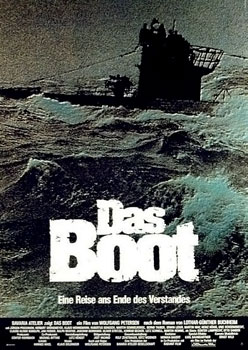
FINAL: #1 Das Boot vs. #2 Run Silent


VS.


                We have finally reached the end of the tournament.  I have to admit it was not a thrilling one.  There were a few minor upsets, but nothing shocking.  In the end, the two movies that critics consider the best of the subgenre ended up in the finals.   That was fairly predictable, especially for “Das Boot”.  Although suspense was missing, I enjoyed the opportunity to visit this subgenre and pass on some information about the various movies that comprise it.  It is a subgenre that was once a thriving one and occasionally returns as a branch of the action genre.  In my process of preparing for the tournament, I learned a lot about the history of WWII submarine warfare.  It is fascinating to me and it was interesting to see how submarine movies pass on that history.  Unfortunately, knowledge of how submarines fought makes enjoyment of the movies problematical.  Submarine movies exist mainly because movie makers see the potential for drama in a confined space.  They usually are not concerned with tactical or historical accuracy.  This means that what makes them entertaining for the masses makes them less so for history buffs like me.  As you can perceive by following the tournament, I do not think there are very many good submarine movies.  However, the tournament did give some recognition to some forgotten gems like “Above Us the Waves”, “We Dive at Dawn”, and “Hell and High Water”.  Although there is only one great movie in the subgenre, there are some other must-sees. 

                                                                             
PLOT:  Boot =  A  Run  =  C 
                                     
ACTING:  Boot  =  A+     Run  =  A
                                                
TACTICS:  Boot  =  B      Run  =  F
       
CLICHES:  Boot  =  B      Run  =  D
       
DIALOGUE:  Boot  =  B      Run  =  B 
  
ACTION:  Boot  =  B      Run  =  B 
           
SPECIAL EFFECTS:  Boot  =  C       Run  =  B
     
ACCURACY:  Boot  =  B      Run  =  C

CHARACTERS:  Boot  =  A       Run  =  B
  
REALISM:  Boot  =  A+      Run  =  D
                                               
SAILOR BEHAVIOR:  Boot  =  A+  Run  =  C

ENTERTAINMENT:  Boot  =  B  Run  =  B                                             

DAS BOOT  =  102
RUN SILENT  =  81

ANALYSIS:  No one should be surprised by the winner of the tournament.  “Das Boot” is an acclaimed movie that created quite a stir when it came out in 1981.  It is an adaptation of one of the best submarine novels and it was in the hands of a great director (Wolfgang Petersen) who was obsessed with the quality of the production.  The effort that went into the film was amazing and it shows.  The production costs were very high.  Petersen assembled an ace cast and one hell of a great cinematographer (Jost Vacano).  The movie was nominated for six Academy Awards including Director and Adapted Screenplay.  It still holds the record for most nominations for a German film.  It has a 98% rating on Rotten Tomatoes.  Most importantly, as far as war movie buffs are concerned, it avoided the clichés that make the subgenre so tiresome.  It also avoided the requirements of the action genre.  Even though it came late in the subgenre, it is a unique film.

                “Run Silent, Run Deep” should have been a worthy opponent.  It is also based on a great novel, but in this case the adaptation was poor.  It does have a decent cast and certainly star power with Gable and Lancaster.  However, the director (Robert Wise) was not sterling.  The big problem with the film is that in making the movie entertaining for the average viewer, it insults war movie lovers.  Not played for laughs, it still provides them if you know submarine warfare.  It is noteworthy that in spite of its flaws, it made it to the finals.  This speaks volumes for the weakness of the subgenre.


                Thank you to everyone who followed the tournament.  I am self-motivated, but it is still nice to know someone is following.  Now I have one year to ponder what the next tournament will be.  

Friday, August 18, 2017

#1 Das Boot vs. #4 Crimson Tide


VS.


CHARACTER DEVELOPMENT:  “Das Boot” is outstanding in this category.  The Captain is enigmatic, but we know why he is cynical and jaded.  He is a veteran of numerous patrols.  Each of the officers is distinct.  They are recognizable archetypes - the fanatical Nazi, the naïve rookie, the well-respected chief engineer, the frat boy Second Watch Officer, etc.  Since it’s a long patrol fraught with boredom broken by intense stress, there is time and opportunity to develop even some of the minor characters.  When the camera pans over the dead at the end, you know these men.  GRADE  =  A

“Crimson Tide” is dominated by Capt. Ramsey and Lt. Commander Hunter.  It is clear through dialogue where each man is coming from.  They are stereotypes, but in the hands of Hackman and Washington, you don’t mind it.  Ramsey is given a dog (which the Navy was not happy about) as part of his character.  Hunter jogs on the sub.  (Try that, u-boat captain!)  Some of the officers get a little development and some of them are interesting, like the Chief of the Boat who idolizes Ramsey but sides with Hunter.  This contrasts with Weps (Viggo Mortensen) who is Hunter’s best friend and yet inexplicably joins the Ramsey faction.  There is virtually no crew development except we know two of them are big Silver Surfer fans.  GRADE  =  C+

FIRST QUARTER SCORE:  Das Boot  =  9
                                             Crimson Tide  =  7

REALISM:  No sub movie comes close to “Das Boot” when it comes to realism.  If you want to know what life was like on a German u-boat in particular and any WWII submarine in general, it is a must-see.  There is not a lot of action, which is appropriate for a typical patrol.  Most people do not realize that most subs returned home with torpedoes unfired.  It is the only sub movie that depicts the role mother nature plays in submarine warfare.  It is the gold standard in showing the effects of life in a cramped setting aggravated by lack of success.  The movie leads off with a title card that points out that the u-boat service had a 75% casualty rate and then proceeds to show you why.  GRADE  =  A+

“Crimson Tide” is based on a far-fetched scenario.  Considering the situation in the former Soviet Union when the movie was made, it is plausible that nuclear weapons could fall into the wrong hands.  However, the U.S. government responding with a preemptive strike goes against established doctrine.  It is also highly unlikely a mutiny as depicted in the movie would take place in the modern U.S. Navy. (The Navy absolutely refused to cooperate with the film.  It did cooperate with “Hunt for Red October”.)  The turmoil that takes place on board the Alabama is classic cinematic license and must be taken with a grain of salt.  GRADE  =  C

HALFTIME SCORE:  Das Boot  =  19
                                   Crimson Tide  =  13

SAILOR BEHAVIOR:  “Das Boot” does an outstanding job in depicting submariner behavior on a u-boat.  The men go through a lot and all of their reactions are genuine.  Other than Bengsch, no one is a hard-core Nazi.  This accurately reflects the make-up of the u-boat service.  These are young men who volunteered for a very dangerous, yet at times exhilarating job.  They run the gamut of emotions appropriate to the various stresses they encounter.  The movie is particularly adept at rendering the crude nature of sailor interaction.  This is the only sub movie that shows someone flicking boogers on a mate.  GRADE  =  A+

“Crimson Tide” requires the officers on a US nuclear sub to divide into two factions to battle for control of the sub.  It is no wonder the Navy refused to cooperate with the movie.   A captain and his exec yelling at each other in front of the crew?  Highly unlikely.  Two groups pointing guns at each other?  Only Hollywood could conjure up such foolishness.  The submarine service has the historical reputation of being a bit lax in discipline, but this movie takes that to an extreme.  As far as exhibiting submariner behavior, the movie concentrates on the officers so we get almost know crew behavior.  They don’t even discuss dames.

THIRD QUARTER SCORE:  Das Boot  =  29
                                              Crimson Tide  =  18

ENTERTAINMENT VALUE:  Although any submarine movie fan will find “Das Boot” mesmerizing, it was not designed to entertain the masses.  It avoids most of the clichés that most sub movies rely on to gin up excitement.  Just like the voyage, there are long stretches where nothing much happens.  The tedium of u-boat life is painstakingly recreated.  If you love great acting in confined spaces, this is the movie for you.  It is far from an action picture, but when it does get hinky it is pulse-pounding.  GRADE  =  B

“Red October” was probably created in a lab where scientists put together all the ingredients that please 18-45 year-old males.  Alpha males, turf warfare, sub duel, clock ticking to an explosion, etc.  And this is all done with a straight face and with no shame.  It is well crafted and if this is what a modern sub movie will have to be like to be made in the modern cinematic universe, so be it.  Better this than an embarrassing throwback like “U-571”.  GRADE  =  A

FINAL SCORE:  Das Boot  =  37
                           Crimson Tide  =  27


ANALYSIS:  “Das Boot” (1981) and “Crimson Tide” (1995) are part of the fourth wave of sub movies.  The first was the rare movie made between the world wars, the second were the ones made during WWII, the third was the fertile 1950s period, and then we have the modern ones that basically began with “Das Boot”.  “Crimson Tide” is a better example of the modern sub film.  It and “The Hunt for Red October” have taken the sub film into the action genre.  Better to be there than nowhere at all, I suppose.  The cramped environment does lend itself to drama.  And with CGI you can even make a sub chase film!  “Das Boot” is the best sub movie ever made because it bridges the third and fourth wave adroitly. It keeps some of the clichés from the third wave and adds technical proficiency.  Some of its tropes are well-worn, but it manages to do them better than ever before.  No surprise it took a foreign film to accomplish this.  No American studio would have greenlit this movie.  

Tuesday, August 15, 2017

SEMI-FINALS


VS.

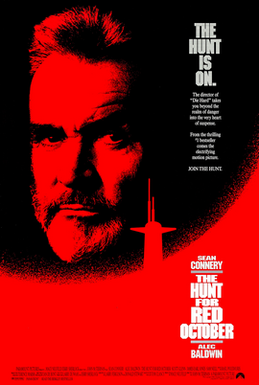
#2  Run Silent, Run Deep  vs.  #3  Hunt for Red October

CHARACTER DEVELOPMENT:   “Run Silent, Run Deep” is in many ways a two man show.  It has the classic command dysfunction dynamic we see in several sub movies.  It set the template for that.  Richardson and Bledsoe are well developed.  In fact, Richardson is perhaps too well developed as he comes off as insane with his obsession with Bungo Pete.  The movie includes a scene where he is desk-bound but continually war gaming revenge against his Japanese nemesis.    Bledsoe is clearly upset that he is not promoted to command the Nerka and justifiably so.  The movie also develops two crew members.  Mueller (Jack Warren) is Richardson’s toadie and Cartwright (Brad Dexter) is the boat’s blowhard.  There is little development of the enlisted men.    GRADE  =  B

“The Hunt for Red October” revolves around two men also.  CIA analyst Jack Ryan (Alec Baldwin) gets a back-story of being a family man.  We know he is an intellectual and a neophyte when it comes to international crises.  Soviet skipper Ramius (Sean Connery) is a bit more enigmatic.  The movie is unclear as to his motivations.  It floats the idea that he is upset with his wife’s death.  He is obviously very highly respected, but it is unclear why his officers have decided to risk execution for him.  The script does an excellent job developing the sonar operator Jones (Courtney Vance) and there are several other memorable characters.  GRADE  =  B

FIRST QUARTER SCORE:  Run Silent  =  8
                                             Red October  =  8

REALISM:  The biggest flaw in “Run Silent” is its lack of realism.  This starts with the opening scene.  Richardson’s boat is sunk and the next thing we see is he is in a lifeboat.  Where did the lifeboat come from?  He is given a desk job and (with apparently no psychological review) a new boat over the obviously more qualified Bledsoe.  Then the Navy tells this Ahab not to go after Bungo Pete!  His whole tactic of working for a bow shot on a destroyer is ridiculous.  The crew’s chicken reaction to being sent to a dangerous patrol area is demeaning.  Richardson’s death and burial at sea is just bizarre.  One the plus side, the firing procedures are well done.  It’s a movie that can be picked apart if you want.  GRADE  =  D

“Red October” tries to be realistic within the parameters of an action thriller that is totally fictional.  However, if you are going to make a crowd-pleasing blockbuster set on a submarine, logic will have to take a back seat.  The whole defection scenario would be unbelievable if set in the US Navy, much less the Soviet Navy.  The sub chasing and cat-and-mouse elements are brain cell reducing.  A lowly CIA analyst becoming an action hero could only happen in Hollywood.  And the big finish is rousing, but laughable.  GRADE  =  D

HALFTIME SCORE:  Run Silent  =  13
                                   Red October  =  13

SAILOR BEHAVIOR:  My big problem with the behavior of the crew in “Run Silent” is their reaction to word that they are being sent to Area 7.  They are uniformly upset about the news.  It seems to me that at this stage of the war they would at least pretend to be tough guys.  When Richardson declines to attack a convoy, there are rumblings of discontent which change to hero-worship when he sinks a destroyer.  Later, they are happy when the sub is going to return to Pearl Harbor with almost a full load of torpedoes.  This makes little sense.  The decision of Bledsoe, supported by the other officers, to depose Richardson is believable given the situation posited by the plot.  GRADE  =  C

“Red October” is very shaky when it comes to the behavior of the Soviet officers.  It defies reason that they would all (aside from the doctor and the political officer) go along with Ramius’ suicidal plan.  The movie has little time for the crews of either sub.  Jones is the only enlisted on the Dallas that gets any significant screen time, but he does represent the modern Navy’s recruitment of the video game generation.  GRADE  =  C

THIRD QUARTER SCORE:  Run Silent  =  19
                                              Red October  =  19

ENTERTAINMENT VALUE:   “Run Silent” has two superstars going head-to-head.  This is almost enough to overcome the numerous clichés and ridiculous plot twists.  For the time it was released, it was crackerjack entertainment, but it does not hold up very well when compared to the entire subgenre.  A modern remake would fit in well in our current movie mentality since we now expect the kitchen sink approach to plotting.  You get the clash of alpha types, the mutiny, and several combat scenes for your viewing pleasure.  Unless you are a stickler for logic, it’s entertaining.  GRADE  =  B

“Red October” is based on a best-seller and has an all-star cast.  It is just as implausible as “Run Silent”, but not as laughably so.  It is more edge of your seat than the earlier film.  The hopping between various locales keeps things moving at a rapid clip.  It manages to aid chase elements to a thriller plot.  Unfortunately, in its attempt at a big finish, it ends with a preposterous sub on sub on sub encounter that exemplifies the worst of the modern Hollywood action pictures.  GRADE  =  B

FINAL SCORE:  Run Silent  =  27
                           Red October  =  27


ANALYSIS:  “Run Silent” is a classic and was appropriately seeded at #2.  Most would say it is second only to “Das Boot” in the canon of submarine warfare movies. But clear-eyed analysis can’t help but reveal that it has significant flaws.  If it would have been made with any other actors in the lead roles, its reputation would be much lower.  it is also helped by its attachment to the most famous submarine novel.  However, it is not an accurate rendering of Beach’s book.  “Red October” is modern updating of the submarine film.  Hollywood’s attempt to revive the sub film within the action movie genre was successful.  It has possibly the best cast of any sub movie and all the bells and whistles you can get with modern cinematic technology and a huge budget.  Both movies are a product of their times and reflect what was expected in a sub movie from its era.  I personally think neither is a very good movie.  Since we ended with a tie, I am going to advance “Run Silent” because it is more of a traditional sub movie.

Monday, August 14, 2017

#1 Das Boot vs. #9 Above Us the Waves


VS.


DIALOGUE:  “Das Boot” has a good mixture of dialogue and action.  The dialogue is divided between the officers and the crew.  The officers are a heterogeneous lot and their conversations offer a variety of takes.  The captain in particular offers a cynical, war-weary view of the war.  When he observes the men carousing before they go on patrol, he says:  “Scared f***ers.  They need sex as much as the infantry needs alcohol.”  He is not a man of many words, however.  His facial expressions do his talking for him.  The sailor banter is crude as you would expect.  GRADE  =  B

There is nothing special about the dialogue in “Above Us the Waves”.  It’s a very British movie so the dialogue is sparse.  There are no speeches and little exposition.  There is some humor of the British ilk.  Very dry.  GRADE  =  C

FIRST QUARTER SCORE:  Das Boot  =  8
                                             Above Us the Waves  =  6

SPECIAL EFFECTS:  “Das Boot” is not famous because of it special effects.  There is little undersea footage.  The depth charge scenes eschew the descending cans imagery.  The explosions themselves are well-done and the effects on the sub interior are the best of any sub movie.  The sound effects are also the acme.  The effects for the burning tanker are awesome and there is a bomb laden final scene that saved the best pyrotechnics for last.  GRADE  =  B

“Above Us the Waves” has some fine underwater camerawork.  It was obviously done in a pool in daylight, but I am fine with that considering when it was made and for how much.  These shots include a sequence that includes the cutting of a submarine net, going under a torpedo net, and then placing some limpet mines on the hull of a ship.  However, the scene where one of the subs gets trapped under the Tirpitz is underwhelming.   GRADE  =  C+

HALFTIME SCORE:  Das Boot  =  16
                                   Above Us the Waves  =  13

ACTION:   One of the things that makes “Das Boot” so realistic is that it is not nonstop action.  There are long stretches where the sub sees no action.  It is frustrating for them, but not for us.  The reaction of the officers and crew are fascinating.  The action we get is pretty much confined to depth chargings and the efforts of the crew dealing with the damages from them.  GRADE  =  C

 “Above Us the Waves” is light on action.  It’s more of a claustrophobic thriller. It’s as slow moving as the mini-subs.  But no one advertised it as an adrenalin rush.  It does build well to the attack on the Tirpitz.  GRADE  =  C

THIRD QUARTER SCORE:  Das Boot  =  22
                                              Above Us the Waves  =  19

ACCURACY:  It is hard to judge the accuracy of “Das Boot” because it is based on a novel that is based on an actual u-boat patrol.  The movie is more realistic than accurate.  It gets the details and vibe right.  The attitudes and behavior of the submariners are authentic.  It lays the frustration and cynicism on a bit thick considering this was not the low moment in the war for the u-boats.  There was an actual u-boat and the book author is represented by the naval correspondent Werner.  However, the actual U-96 did not experience the incidents covered in the movie.  Since it does not claim to be a true story, I am going to grade it mainly on its accuracy in depicting life on a u-boat.  GRADE  =  B

“Above Us the Waves” is based on Operation Source which was the attempt by Royal Navy mini-subs to sink the German battleship Tirpitz at its anchorage in Norway.  It also covers the original plan which was to try to use Chariot manned torpedoes to attach mines.  That mission failed as depicted in the film.  The action by the X-craft is pretty close to what happened.  One of the subs was lost mysteriously, probably to fire from the Tirpitz.  The other two placed their side cargoes under the warship and two of them exploded causing significant damage that put it out of action for six months.  The two successful craft tried to escape, but were taken under fire and had to surrender.  Six men were captured and two were lost.  GRADE  =  A

FINAL SCORE:  Das Boot  =  30
                           Above Us the Waves =  28 


ANALYSIS:   “Above Us the Waves” is not a traditional sub movie.  It might not have made the tournament if I could have found another movie where a torpedo was fired.  I’m glad I did this tournament because I might not have run across this little gem.  And it is admirably accurate in dramatizing an operation that I had not been familiar with.  Still, it’s hard to pit it against possibly the most acclaimed sub movie.  The categories this round did not really play into the strengths of “Das Boot”.  It is no doubt the better of the two movies so it deserves to move on.

Sunday, August 13, 2017

#4 Crimson Tide vs. #12 Hell and High Water


VS.


DIALOGUE:  The dialogue in “Crimson Tide” is not flowery.  It does lack in sailor jargon since the movie concentrates on the officers.  There are some philosophical discussions between Ramsey (Gene Hackman) and Hunter (Denzel Washington) on topics like Hiroshima and von Clausewitz.  The confrontations between the two mutineers (that’s right, each leads a mutiny) are pretty intense.  Quentin Tarantino was brought in to add pop cultural references to the script.  GRADE  =  A 

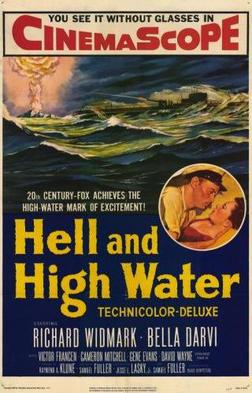
“Hell and High Water” puts a scientist and his comely assistant on board a boat with a motley crew and a hard-boiled skipper.  Much of the dialogue pits science against the military mind.  There are no memorable lines, but the actors are not forced to embarrass themselves by what comes out of their mouths.  GRADE  =  C

FIRST QUARTER SCORE:  Crimson Tide  =  9
                                             Hell and High Water  =  7

SPECIAL EFFECTS:  “Crimson Tide” had the benefit of cutting edge technology and a big budget.  It did not have the cooperation of the US Navy.  It tends to frown on plots involving mutinies.  The director did manage to film the actual USS Alabama at sea and submerging.  Everything else was CGI.  There is a duel between subs that is better than in “The Hunt for Red October”.  The movie manages to get a fire into a sub movie.  This is truly a Hollywood production.  The sound effects were worthy of an Academy Award nomination.  GRADE  =  A

“Hell and High Water” had a budget of less than $2 million. Denzel Washington was paid $7 million to make “Crimson Tide”.  Not exactly a level playing field.  The littler movie did well with what it had.  The underwater scenes are better than average and the film was nominated for Best Effects.  GRADE  =  B

HALFTIME SCORE:  Crimson Tide  =  18
                                   Hell and High Water  =  15

ACTION:  “Crimson Tide” has a galley fire and a sub duel, but it’s mostly the threat of violence that dominates the latter part of the film.  The level of action would have gone off the meter if all those guns had been used in the final confrontation between the opposing sides.  As it is, we had to be content with verbal fisticuffs.  The movie is more of a thriller than an action movie.  GRADE  =  C

“Hell and High Water” has a tangle with a Chinese sub and two shore landings.  In the sub encounter, they ram the enemy under the water.  Well, that’s different.  The first commando raid is your typical blow things up type.  The second gives the sexy female scientist the chance to shoot a guard.  That is also something you don’t see in every sub movie.  Oh, and they shoot down a B-29.  GRADE  =  B

THIRD QUARTER SCORE:  Crimson Tide  =  24
                                              Hell and High Water  =  23

ACCURACY:  “Crimson Tide” posits a doomsday scenario that cannot be judged for accuracy.  However, the way the sub handles the crisis can be judged based on American nuclear doctrine and procedures.  The scenario involves Russian rebels getting control of some ICBMs and possibly firing them at the U.S.  The clock-ticking nature of Hollywood thrillers requires the missiles to be fueled up before launched when in reality they would be ready to go immediately.  The biggest artistic license is with the central issue of the exec refusing to concur with the launch because he feels a second incomplete message is likely a cancel order.  In reality, the exec has only the power to confirm the authenticity of the message, not stop its implementation.  There were sub veterans, including the technical adviser who had skippered the real Alabama, who insisted the movie was essentially accurate.  A political adviser might have been nice since American nuclear doctrine is against a preemptive strike.  Not that a President might not violate that rule.  (Who are you picturing right now?)  All of the inaccuracies were classic artistic license to enhance the drama.  GRADE  =  C

“Hell and High Water” is totally fictitious.  It is very much a product of the early Cold War.  Although entertaining, it is totally preposterous.  The Red Chinese have a plan to use a purloined B-29 to drop an atomic bomb and blame it on the U.S.  International scientists hire a rogue sub to stop the bad guys.  Surely you read of this in your history textbook.  And a woman scientist in 1954 – come on!   As Capt. Jones says:  “So tell me Professor, what makes a girl who looks like that get mixed up in science?”  GRADE  =  D

FINAL SCORE:  Crimson Tide  =  30
                           Hell and High Water  =  28


ANALYSIS:  I consider myself pretty knowledgeable about war movies, but I have to admit I had never heard of “Hell and High Water” before starting work on this tournament.  When I began to hunt for 16 sub movies that fit my criteria I ran into it.  It almost did not make the cut because I was unsure that I would be able to get a copy.  It is not a well-known movie.  I am glad it worked out because it was an enjoyable movie to watch.  This matchup was one between an obscure B-movie and a blockbuster.  “Crimson Tide” could not be more different.  It is the better movie, but mainly because of all the resources available to it.  Still, “Hell and High Water” put up a good fight and hopefully its performance will encourage others to seek it out.

Saturday, August 12, 2017

#2 Run Silent, Run Deep vs. #10 Operation Pacific


VS.


DIALOGUE:  “Run Silent, Run Deep” gave us the famous line “dive, dive!” which Richardson repeats numerous times during drills.  The dialogue is good and there are some tense exchanges between the two superstar actors.  The crew banter is fine and is helped by the debut of Don Rickles.  He probably wrote some of his lines.  In spite of his involvement, the movie lacks a sense of humor.  There are few memorable lines, but it’s a manly movie and doesn’t need any.  GRADE  =  B

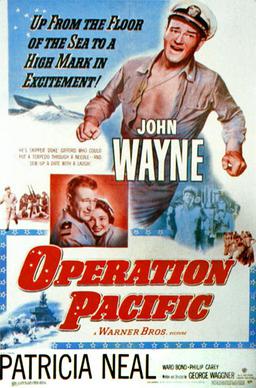
“Operation Pacific” has an awkward romance and the dialogue that goes with it.  There is little on sailor behavior so we don’t get much banter.   This is a very officer-centric film.  The only notable lines are some shots at the movie they watch on board – “Destination Tokyo”.  The movie is not overtly patriotic in its dialogue.  GRADE  =  C

FIRST QUARTER SCORE:  Run Silent  =  8
                                             Operation Pacific  =  6

ACTION:  “Run Silent” has three convoy attacks, two destroyer sinkings, a sub duel, and two airplane attacks.  And a brewing mutiny.  There is plenty of action, even if much of it is ridiculous.  GRADE  =  B

“Operation Pacific” has an average amount of action.  The love triangle and the torpedo testing takes up a good amount of the plot.  There is an encounter with a Q-ship, a brief encounter with an enemy sub, and a convoy battle.  None of it is believable.  GRADE  =  D

HALFTIME SCORE:  Run Silent  =  16
                                   Operation Pacific  =  11

SPECIAL EFFECTS:  “Run Silent” has some decent effects.  The Navy assisted in the production (surprising due to the mutinous plot) so there are a lot of surface shots of subs.  For the rare times that the USS Nerka is submerged, the model in a swimming pool technique is used.  The depth chargings are typical of the genre.  As usual, they are too accurate.  In WWII Pacific submarine movies, Japanese escorts never miss by much, but seldom sink their prey.  The sound effects are noteworthily outstanding.  GRADE  =  B

“Operation Pacific” has cheesy special effects.  The underwater shots are very fake and there are some hilarious shots of torpedoes boinking off ship hulls.  The sub looks like a model in an aquarium.  In fact, the Pacific Ocean looks about as deep as an aquarium.  GRADE  =  D

THIRD QUARTER SCORE:  Run Silent  =  24
                                               Operation Pacific  =  16

ACCURACY:  “Run Silent” has some of the most accurate firing sequence scenes in sub movie history.  This includes use of the Target Bearing Transmitter for surface attacks.  While being technically accurate, the movie comes up short in historical accuracy.  “Down the throat” shots that the movie is predicated on were rarely accomplished (or attempted) in the war.  Subs fighting each other submerged is virtually unheard of.  The legendary ability of Bungo Pete flies in the face of the established ineptitude of Japanese escorts.  GRADE  =  C

“Operation Pacific” deserves credit for depicting two historical incidents.  There was a significant problem with the Mark 14 torpedoes.  The torpedoes frustrated the submarine effort for the first two years of the war.  There was a problem with both the magnetic detonator and the firing pin of the contact detonator.  The movie highlights the solution to the firing pin problem.  The torpedoes were tested by dropping them from a crane as depicted by the movie, but this was not done by a sub crew.  It is instructive of how Hollywood deals with submarine warfare that most Pacific war movies do not allude to the torpedo problems.  In most films, every shot is deadly.  The death of Commander Perry (Ward Bond) is based on the death of Commander Howard Gilmore (probably the most famous submariner loss for the US Navy).  The USS Growler was making a surface attack when a patrol vessel attempted to ram.  The Growler rammed it instead, possibly in its attempt to avoid being rammed.  Gilmore was wounded by machine gun fire from the wounded escort and famously ordered “take her down!” to save the boat.  He was awarded the Medal of Honor posthumously.   The sighting of the Japanese fleet may have been inspired by the efforts of the Dace and Darter in the Battle of Leyte Gulf.  When the Thunderfish picks up downed fliers (although this is done purely to facilitate the lame love triangle), it accurately reflects a role subs played in the war in the Pacific.   GRADE  =  A

FINAL SCORE:  Run Silent  =  30
                           Operation Pacific  =  25


ANALYSIS:  “Run Silent” is considered the greatest American submarine movie.  Although overrated, it is certainly better than a movie that relies on John Wayne to make a splash.  “Operation Pacific” may do a service to the silent service by bringing to light a significant problem and a laud-worthy hero, but it is done in the guise of a “Destination Tokyo” wannabe.  “Run Silent” has two John Wayne’s and the tension between them.  It is even more far-fetched than “Operation Pacific”, but more entertaining.

Friday, August 11, 2017

#3 Hunt for Red October vs. #6 We Dive at Dawn

QUARTERFINALS

 #3  Hunt for Red October  vs.  #6  We Dive at Dawn

DIALOGUE:  The dialogue in “Red October” is above average, but it is mainly an action fature, so exposition is not key.  One interesting note on dialogue is that Sean Connery insisted on Ramius’ dialogue be rewritten to make it more clear that he is a “good Russian” who wants to end the Cold War.  GRADE  =  B

 “We Dive at Dawn” has decent dialogue, but there is too much of it.  There is a lot of sailor talk and it feels right.  It is very British, so use your British/English dictionary.  When the crew finds out they had sunk the German battleship, one of them exclaims “blimey!”  GRADE  =  B

FIRST QUARTER SCORE:  Hunt for Red October  =  8
                                             We Dive at Dawn  =  8 

SPECIAL EFFECTS:  “Red October” has a technology advantage over “We Dive” since it was made 47 years later.  The underwater scenes are very good.  Almost good enough to achieve the goal of making it an undersea “Fast and Furious”.  I refer to the underwater chase scenes between the subs.  Unfortunately, the CGI allows for some ridiculously close sub action.  GRADE  =  B

“We Dive at Dawn” was released in 1943, so no CGI.  It is not big on effects.  There is little underwater action.  Maybe this is to the good since modelwork back then tended to look very fake.  Better to leave it to the imagination.  GRADE  =  C

HALFTIME SCORE:  Hunt for Red October  =  16
                                   We Dive at Dawn  =  15

ACTION:  “Red October” has quite a bit of action.  Maybe too much considering some of it is reality-challenged.  It may have more action than any other movie in the tournament.  And this is done without a commando raid!  But it is done with a gun battle on a submarine. There is lots of chasing.  Subs chasing other subs.  Torpedoes chasing subs.  GRADE  =  A

“We Dive” closes with a nice set piece in a harbor as the sub has to steal fuel under the noses of the Germans.  This is not accomplished without copious expenditure of bullets.  It is one of the better commando type scenes you see so often in sub movies.  However, the quantity of action is pretty low in the film.  GRADE  =  C

THIRD QUARTER SCORE:  Hunt for Red October  =  25
                                              We Dive at Dawn  =  21

ACCURACY:  Surprisingly, there was a seed of truth to Clancy’s novel.  He was inspired by an article about the attempted defection of a Soviet anti-sub frigate named the Storozhevoy (Sentry).  The political officer named Sablin planned the defection on his own.  He was upset with the corruption of the Brezhnev government and wanted to start a revolution.  His plan was to sail to Leningrad, take over a radio station, and broadcast a call to arms!  The plot was discovered after he took over the ship and convinced most of the officers and crew to go along with him.  The ship fled the harbor and almost made it to international waters before it was halted by a hit from a Soviet bomber.  The loyal officers regained control and the mutiny was over.  Not much like the movie, but at least there is a seed of truth to the claim “based on a true story”.  GRADE  =  C

“We Dive at Dawn” does not claim to be based on a true story.  No German battleship was sunk by a submarine in WWII.  The movie does feature one historical accuracy in its portrayal of a German rescue buoy from which the sub picks up three German airmen.  The Germans put these buoys far offshore to be used by downed air crews.  They could provide accommodations and supplies for several days until the men were rescued.  GRADE  =  C

FINAL SCORE:  Hunt for Red October  =  31
                           We Dive at Dawn  =  27

ANALYSIS:  If you look at the interiors of the HMS Sea Tiger and the USS Dallas, you can tell a lot about this matchup.  “We Dive at Dawn” is a nice little British sub movie made during the war.  It deserved to win, but the tournaments are not always fair.  The categories tended to favor the behemoth.  “Red October” outpointed it due to it being an action movie doing its thing competently and its CGI which facilitated that action.  In both categories quantity bludgeoned “We Dive”.


Saturday, August 5, 2017

#1 Das Boot vs. #16 The Enemy Below


PLOT:  “Das Boot” is the story of a u-boat patrol in 1941.  It coincides with the downturn in u-boat fortunes.  The movie is based on the novel by a military correspondent who went on a patrol.  The U-96 leaves from a French harbor to hunt convoys.  It will be an eventful patrol, but not because of sinkings.  The plot covers everything bad that might happen to a u-boat.  But it’s not a kitchen sink movie.  It is realistic in depicting life on a u-boat.  The crew goes through some shit, including boredom.  All of it is believable and very instructional.  No movie does a better job putting you on a submarine for a war patrol.  GRADE  =  A

“The Enemy Below” is an odd duck.  It tries to tell both sides of the story -  the escort and the submarine.  A destroyer escort captained by Robert Mitchum plays cat and mouse with a u-boat skippered by Kurt Jurgens.  The plot jumps between the ship and the boat effectively.  Since the movie was released well into the Cold War, it takes into consideration that West Germany was now our ally so the movie has no villains.  Jurgens is a worthy adversary and far from a Nazi.  The fact that the two captains are interchangeable makes the movie a bit trite.  It is the rare war movie that ends in crowd pleasing (but hardly believable) tie.  GRADE  =  B

FIRST QUARTER SCORE:  Das Boot  =  9
                                             The Enemy Below  =  8

ACTING:   I don’t really know how good the cast of “Das Boot” is considering I am not German and would not recognize the actors.  I do know they are outstanding in this movie.  Having seen a lot of submarine movies, I can attest to the difficulty of fleshing out more than a few of the crew.  Usually the movie concentrates on the officers.  “Das Boot” creates a large number of indelible characters and this is due mainly to the uniformly great acting.  GRADE  =  A+

“The Enemy Below” is a two man show.  Mitchum and Jurgens dominate.  They are as solid as you would expect.  However, since their characters are flawless, they don’t have to display much acting chops.  The supporting cast is low rent, but capable.    GRADE  =  C 

HALFTIME SCORE:  Das Boot  =  19
                                   The Enemy Below  =  14

TACTICS:  “Das Boot” is tactically sound, with one major exception.  U-96 relies on radiograms to put it in contact with convoys.  The boat is submerged when it should be and on the surface when it makes sense (aside from that exception).  It makes a night surface attack on a convoy and marvel at the lack of escorts and then get surprised when a destroyer shows up.  Next time you wonder about why things are so easy, try scanning better.  The Captain refuses to pick up survivors of a tanker which would have been per doctrine.  The cat and mouse moves the Captain makes are realistic.  The movie (or maybe I should just blame the Captain) goes off the rails when the Captain decides to run the heavily defended Strait of Gibraltar on the surface.  Even at night, this is very questionable and has expected results.  GRADE  =  B

Tactically, “The Enemy Below” is more about anti-submarine warfare than submarine warfare.  To be fair, let’s concentrate on the tactics used by the USS Haynes.  The use of sonar to track the sub and depth charges to attack it are depicted in detail.  It’s a tutorial.  The ramming of the sub is also something that is realistic.  The problem is that the destroyer escort relies mainly on a captain who is an escort savant.  Murrell can guess exactly what the German will do and when he will do it.  He knows exactly when to feather torpedoes he lured von Solberg into firing at him.  Below the surface, von Stolberg is portrayed as a master tactician and yet he travels on the surface during daylight allowing a destroyer escort to sneak up on his boat and then later comes to the surface to finish the predator off with a torpedo.  But then, how would we end up with a tie if he did the safer thing?  There is also something about the sub emitting some substance that acts as a countermeasure to sonar.  That was a new one for me.  How else would the sub escape the relentless pinging?    GRADE  =  C

THIRD QUARTER SCORE:  Das Boot  =  27
                                               The Enemy Below  =  20

CLICHES:  “Das Boot” has every opportunity to ladle on the clichés and you might have expected a German equivalent to “U-571”.  However, it is admirably original for a sub movie released in 1981.  U-96 does go way below crush depth, but that is surprisingly not a common cliché.  There is a depth charging that is amazingly accurate, although the movie avoids showing the depth charges floating down.  It has the emergency repair trope.  Actually, repairs plural.  Hell, virtually everything on the boat has to be repaired!  GRADE  =  B

Once again, I must remind that “The Enemy Below” is more of a destroyer escort movie than a submarine movie, so it does not have a full 1:37 to fit in clichés.  Kudos for getting a black mess mate onto the USS Hayne.  We do get a depth charging from the sub perspective.  There is some minor jostling and some easily sealed leaks.  They go below crush depth to rest on the bottom, but it’s not suspenseful.  GRADE  =  B

FINAL SCORE:  Das Boot  =  35
                           The Enemy Below  =  28

ANALYSIS:  “The Enemy Below” is a good movie that manages to be fair to both the sub and the destroyer escort pursuing it.  It is different than all the other sub movies in this respect.  It is also significant that it depicts the u-boat captain as being as heroic and honorable as the ship captain.  This makes the movie entertaining, but too simplistic.  Interestingly, von Stolberg (“The Enemy Below”) and Lehmann-Willenbrock (“Das Boot”) are similar in their cynicism, but the latter is much more realistically war-weary.  And so is his boat.  After you watch “Das Boot”, it is hard to watch the interior views in “The Enemy Below” without shaking your head.  The interior of the u-boat in “The Enemy Below” could not be more different than the U-96.  It is pristine and spacious.  This is one sub movie that eschews claustrophobia.  It makes you realize just how realistic “Das Boot” is.     

Wednesday, August 2, 2017

#4 Crimson Tide vs. #13 Torpedo Run


VS.


PLOT:  Crimson Tide” is a post-Cold War submarine flick.  A rogue politician has gotten control of some nukes In Russia and is threatening to launch them.  The USS Alabama is a ballistic missile submarine that the movie makes a point of describing as one hell of a powerful instrument of international relations.   And this weapon is run by the old schooler Capt. Ramsey (Gene Hackman).  Ramsey is breaking in a new exec, Lt. Commander Hunter (Denzel Washington) and they don’t see eye to eye.  Ramsey is a Republican and Hunter is a Democrat, so to speak.  When the sub receives a launch order, it’s time to do what they exist for.  But wait, here comes an incomplete message that possibly rescinds the order to end the world as we know it.  And the clock is running.  Dial up the command dysfunction to ten.  The plot is thought-provoking and fairly balanced except that it’s obvious we are to root for the black guy.  It tends to be your basic action plot of dominoes dropping to build to the desired climax and is a bit redundant with two takeovers of the boat.  It is slickly done, if you like your entertainment that way.  GRADE  =  B

  “Torpedo Run” is a WWII submarine movie.  It also revolves around command dysfunction.   Commander Doyle (Glenn Ford) is best friends with his exec “Archie” Sloan (Ernest Borgnine), but they have a falling out when Doyle decides a Japanese carrier is more valuable than his own family’s life.  Don’t ask about the details, they are too unbelievable.  Even though Archie remains loyal to his mentally unstable skipper, Doyle feels Archie has stabbed him in the back with their superiors.  Incredibly, the two get a second shot at the aircraft carrier in a harbor.  The tension is high as you wonder if the plot can get any more ridiculous.    GRADE  =  F

FIRST QUARTER SCORE:  Crimson Tide  =  8
                                             Torpedo Run  =  4

ACTING:  “Crimson Tide” has Denzel Washington and Gene Hackman, ‘nuff said.  But there is also an outstanding supporting cast that includes Viggo Mortensen and James Gandolfini.  Everyone is fine, especially the two leads.  The situation lends itself to scene chewing, but the cast is mostly under control.  Washington and Hackman do not appear to be trying to top each other.  Unlike their characters.  GRADE  =  A

The strength of “Torpedo Run” should be its acting.  Ford and Borgnine are not Washington and Hackman, but they are a better duo than almost any other sub movie.  (Third behind Gable and Lancaster in “Run Silent”.)   Borgnine is good as the saintly Archie, but Ford is disappointing as he pouts or smirks his way through the role of the Ahab-like captain.  The supporting cast is low rent with Dean Jones and L.Q. Jones.  Unlike “Crimson Tide”, this movie has a female in Doyle’s doomed wife (Diane Brewster).  She makes little impression in a couple of home-life bliss flashbacks.  It’s a shame she was not allowed to emote through her husband sinking her ship.  As Archie assuages Doyle with “she would have wanted you to take the shot”, you wonder what the toddler-laden spouse really was thinking.  GRADE  =  C

HALFTIME SCORE:  Crimson Tide  = 17
                                   Torpedo Run  =  10

TACTICS:  You would think that considering the action movie plot of “Crimson Tide”, there would be no opportunity to display modern sub tactics.  If so, you underestimate Hollywood.  A submarine movie has to have torpedo firings so an enemy sub shows up to accommodate.  There sure are a lot of submerged sub duels in sub movies.  Don’t give too much thought to how a rogue politician got control of a sub or how it located the USS Alabama or why it opens fire.  Just enjoy.  The first torpedo attack is handled with countermeasures to assure potential recruits that American boomers are not easy to sink.  The Alabama survives another attack mainly through luck and suffers damage so we can have some clichés.  As far as the central conflict over the orders, the script incorrectly deems that the exec has to concur with the order to launch.  GRADE  =  C

“Torpedo Run” makes a mockery of submarine tactics.  The great white whale of an aircraft carrier is being screened by a transport carrying prisoners (including Doyle’s family, of course).  I know the Japanese were evil in WWII movies, but this movie was made in 1958.  Keep in mind that Doyle knows his family is on board and still takes the shot.  Later, the Grey Fish gets a shot at the sitting duck carrier, but Doyle does not wait for an enemy destroyer to pass by and instead the destroyer blocks all six torpedoes.  They fire torpedoes to break a hole in a submarine net!  Doyle travels on the surface even during daytime in dangerous waters.  It could be argued that he is insane.  GRADE  =  F

THIRD QUARTER SCORE:  Crimson Tide  =  23
                                               Torpedo Run  =  14

CLICHES:  “Crimson Tide” certainly has the command dysfunction cliché covered.  In fact, the crew picks sides.  The bout with the mystery sub allows them to flirt with hull crush depth and deal with leaks, although the movie avoids a depth charging.  Congratulations, blacks in sub movies, you’ve been promoted to Executive Officer.  There is a revolutionary scene where Hunter eats with the other officers instead of serving them!  There is no unexploded bomb, but they do have a fire in the galley that causes problems.  Nobody is left on deck, but some men are sealed in a flooded compartment.  So basically, some tweaking of the classic clichés and avoidance of most.  GRADE  =  B

Are you expecting a clean sheet for “Torpedo Run”?   The skipper and the exec have major conflicts.  The sub is sent on an emergency mission to get the carrier.  The boat passes through a sub net and a minefield.  One of the mine cables drags along the side.  They suffer two depth chargings.  The second one is so intense they are sent to the bottom.  In spite of this, the captain gets redemption through revenge.  There is a black mess mate.  GRADE  =  C

FINAL SCORE:  Crimson Tide  =  31
                           Torpedo Run  =  20


ANALYSIS:  This match was no contest.  “Crimson Tide” was a big budget action picture that was smart enough to place a classic action scenario into the claustrophobic confines of a modern sub.  (Although it is the least claustrophobic submarine movie in the tournament.  For example, Hunter jogs on board to stay in shape.)  While it is stocked with predictable action tropes, it avoids for the most part the temptation to make a WWII submarine movie using a nuclear sub.  “Torpedo Run”, on the other hand, is a half-ass dinosaur trying to get in bed with “Destination Tokyo”.  For a Glenn Ford fan, it’s embarrassing.  

Tuesday, August 1, 2017

#5 U-571 vs. #12 Hell and High Water


VS.


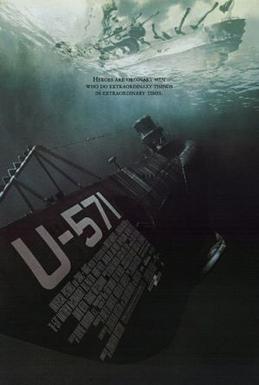
PLOT:  U-571” is based on the true story of the capture of an Enigma machine from a German u-boat.  It is very fictionalized, especially the part where the Americans are the heroes instead of the British.  An American sub is sent on a special mission to intercept a damaged u-boat and purloin the code machine by way of faking that it is a milch cow.  Unfortunately, the real supply sub arrives at an inopportune moment and now a few surviving Americans must take the u-boat back home.  The plot piles every cliché and implausibility that it can so if you have never seen a sub movie, you won’t ever have to see another one.  GRADE  =  D

Hell and High Water” is set in the Cold War.  An ex-sub skipper (Richard Widmark) is hired by a group of scientists to recon an island in the northern Pacific due to a mysterious nuclear explosion.  The motley crew of mercenaries will travel on a ramshackle old Japanese sub.  Widmark is forced to carry the lead scientist on board as well as his comely assistant scientist.  Having a woman on board causes dysfunction and romance for Widmark.  The movie manages to justify a duel with another sub and a shore raid.  The plot is certainly unique, but not as silly as you would expect considering the premise.  GRADE  =  B

FIRST QUARTER SCORE:  U-571  =  5
                                             Hell and High Water  =  8

ACTING:   The problem with “U-571” is not with the acting.  It’s a fine cast of veterans and newcomers.  Matthew McConaughey is admirably restrained as the exec who has command thrust upon him.  It’s not exactly a ground-breaking role, but he is a good anchor for the film.  Harvey Keitel is perfect for the crusty Chief Gunner’s Mate.  The movie is essentially an ensemble piece and the actors work well together.  Too bad there is no character development.  GRADE  =  B

“Hell and High Water” is a vehicle for Richard Widmark.  He is his usual snarky self as the captain.  He also plays the amorous Jones as something of a hypocrite and predator.  The most interesting character is Bella Darvi as the hot scientist.  This role could have been sexist, but she is an egg-head who proves to be an asset to the mission.  She also puts up with the condescending sexism with aplomb.  The crew does not make much of an impression.  GRADE  =  B

HALFTIME SCORE:  U-571  =  13     
                                   Hell and High Water  =  16

TACTICS:  You may learn a lot about submarine clichés from “U-571”, but you won’t be tutored on tactics.  The movie has a scene where two subs duel submerged.  I’m not saying that might not have happened once or twice, but it would have been very rare.  There is also a successful duel with a German destroyer (alone in the mid-Atlantic?!) on the surface.  They use their deck gun to take out the destroyer’s radio antenna with one lucky shot from a German deck gun.  These guys’ learning curve is incredibly high.  GRADE  =   C

“Hell and High Water” is not really a movie about submarine warfare.  However, it must have wanted to be one because it throws in a duel with a Chinese (?) sub that make little sense for the narrative, but puts some action into the middle section.  The two subs are tracking each other through passive sonar and both go silent on the bottom.  first, but that does not justify offending our intelligence.  Not to mention the tactic of using a sub’s anti-aircraft guns (and assorted machine guns) to shoot down a bomber that is taking off.  GRADE  =  D

THIRD QUARTER SCORE:  U-571  =  19
                                               Hell and High Water  =  21

CLICHES:  “U-571” brought submarine movies into the 20th Century, but it is very much a throwback to the 1940s style.  The director made no bones about throwing the kitchen sink in.  That might have worked with viewers who were unfamiliar with the subgenre and its well-established tropes, but for war movie lovers, it comes off as insulting.  This movie has more clichés than any submarine movie ever made.  The American sub has to cut short its leave to go on a special mission.  There is a conflict between the skipper and his exec.  They have to go below crush depth with resulting leaks and rivets popping.  There is a black mess mate, but he is given a major role.  They jettison debris and a dead body to fool a destroyer.  There is a commando on board although not for a shore mission.  The sub has to make an emergency dive leaving crew in the water.  There is a repair necessary, but costly to a crew member.    GRADE  =  F

The plot of “Hell and High Water” does not really lend itself to clichés.  This makes it the exact opposite of “U-571”.  There is a bit of a conflict between Jones and the scientist, but it doesn’t raise the temperature of the boat.  The mission is definitely special – to save the world from nuclear annihilation.  There is a commando raid to blow stuff up.  GRADE  =  B

FINAL SCORE:  U-571  =  23
     Hell and High Water  =  29


ANALYSIS:   “U-571” did well at the box office and got favorable reviews.  This attests to the entertainment value of a submarine movie even as recently as 2000.  If you haven’t seen many sub movies (and who has?) it can seem like a fresh approach to an action movie confined to the claustrophobic interiors of a sub.  The cast is attractive and there is plenty of action of the modern variety (meaning to hell with reality).  However, this is a submarine movie tournament involving only sub movies.  In comparison to its brethren, it comes off as an attempt to be the quintessential example of its ilk.  It tries too hard.  “Hell and High Water” is obviously less known.  It is also reality-challenged, but does not try to be everything you expect in a sub movie.  It does try to bring the sub movie into the Cold War and while not as good as “The Bedford Incident” (another Widmark film), it does keep the subgenre vibrant.