Showing posts with label submarine. Show all posts

Tuesday, July 2, 2019

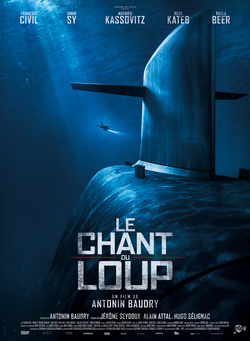
NETFLIX STREAMING: The Wolf’s Call (2019)


                        “The Wolf’s Call” (Le Chant du Loup) is a French submarine movie.  It was written and directed by Antonin Baudry.  He seems to have read some Tom Clancey.  The film is set in the near future and fits in with  recent modern sub movies.  It is currently appearing on Netflix streaming.  Unfortunately, it is dubbed, although not badly.

                          The movie leads with: “Humans come in three types:  the living, the dead, and those who go to sea.”  If you are the first type and want to see a movie about the third, this may be the movie for you.  Or just watch “Jaws”.  The Titan is on a mission to recover some French commandoes who are doing some business in Syria.  Complications ensue when an Iranian frigate arrives and starts pinging them using a sonar boom lowered by a helicopter.  They refer to the sonar as “the wolf’s call”.  A depth charging forces them to the surface, but not to worry, they happen to carry an RPG on board.  It’s not as silly as it sounds.  It turns out the main character is the acoustics expert Chanteraide (Francois Civil).  He’s like an acoustics savant.  He can tell you if a dolphin is male or female.  He could swear he was picking up a stealthy Russian sub aiding the frigate, but no one believes him.  He’s in need of some redemption.  But first he’s in need for some romance and some skullduggery.

                        When they return to port, Capt. Grandchamp (Reda Kateb) is promoted to skipper of a new ballistic sub called Formidable.  His exec D’Orsi (Omar Si) takes command of the Titan.  This is going to get awkward as the Russians invade Finland (again) and the Formidable is sent just in case and the Titan is its escort.  Things get hairy when a Russian sub launches a nuke at France and the Formidable is ordered to retaliate.  If you’ve seen “Fail Safe”, you know where this is headed.

                        “The Wolf’s Call” avoids most of the submarine clichés.  There is a commando raid, but it is not a big part of the plot and is merely an excuse to introduce future plot elements and lead off with some action.  There’s no significant depth charging.   There’s no command dysfunction.  What it does have is the ridiculously over the top action of modern sub movies.  And this escalates in silliness to reach a blazing finale.  It’s no more ridiculous than “Hunt for Red October” and “Crimson Tide”, and much better than “Phantom”. 

                        Baudry does a competent job directing.  He must have gotten some cooperation from the French navy because those are real subs surfacing and diving.  The underwater CGI is fine and not distracting.  The interiors are realistic and operational procedures are nicely done.  The acting is adequate.  Apparently, Omar Si is a major star in France.  Civil is hunky, but you won’t mistake him for Tom Cruise.  He spends a good bit of time listening on ear phones and looking like a student who is trying hard to look like he is thinking about the correct answer.  Everyone keeps a straight face throughout the escalating mayhem.  The movie has no humor in it.  Not intentional humor, anyway.  I’m pretty sure we’re not supposed to laugh when D’Orsi approaches the Formidable using a diver propulsion device and carrying a hammer for communication purposes.

                        If you found “Fail Safe” to be too cerebral, “The Wolf’s Call” may be for you.  It has some nice twists and is not totally predictable.  It also differs from most of its ilk by not being afraid to kill off major characters.  I won’t tell you whether it kills off France.

GRADE  =  B-   


Tuesday, August 1, 2017

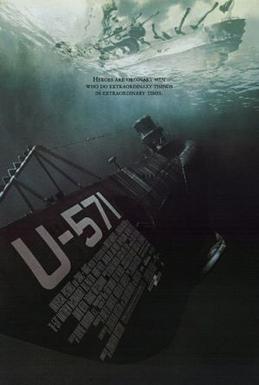
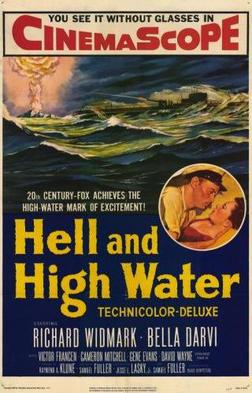
#5 U-571 vs. #12 Hell and High Water


VS.


PLOT:  “U-571” is based on the true story of the capture of an Enigma machine from a German u-boat.  It is very fictionalized, especially the part where the Americans are the heroes instead of the British.  An American sub is sent on a special mission to intercept a damaged u-boat and purloin the code machine by way of faking that it is a milch cow.  Unfortunately, the real supply sub arrives at an inopportune moment and now a few surviving Americans must take the u-boat back home.  The plot piles every cliché and implausibility that it can so if you have never seen a sub movie, you won’t ever have to see another one.  GRADE  =  D

“Hell and High Water” is set in the Cold War.  An ex-sub skipper (Richard Widmark) is hired by a group of scientists to recon an island in the northern Pacific due to a mysterious nuclear explosion.  The motley crew of mercenaries will travel on a ramshackle old Japanese sub.  Widmark is forced to carry the lead scientist on board as well as his comely assistant scientist.  Having a woman on board causes dysfunction and romance for Widmark.  The movie manages to justify a duel with another sub and a shore raid.  The plot is certainly unique, but not as silly as you would expect considering the premise.  GRADE  =  B

FIRST QUARTER SCORE:  U-571  =  5
                                             Hell and High Water  =  8

ACTING:   The problem with “U-571” is not with the acting.  It’s a fine cast of veterans and newcomers.  Matthew McConaughey is admirably restrained as the exec who has command thrust upon him.  It’s not exactly a ground-breaking role, but he is a good anchor for the film.  Harvey Keitel is perfect for the crusty Chief Gunner’s Mate.  The movie is essentially an ensemble piece and the actors work well together.  Too bad there is no character development.  GRADE  =  B

“Hell and High Water” is a vehicle for Richard Widmark.  He is his usual snarky self as the captain.  He also plays the amorous Jones as something of a hypocrite and predator.  The most interesting character is Bella Darvi as the hot scientist.  This role could have been sexist, but she is an egg-head who proves to be an asset to the mission.  She also puts up with the condescending sexism with aplomb.  The crew does not make much of an impression.  GRADE  =  B

HALFTIME SCORE:  U-571  =  13     
                                   Hell and High Water  =  16

TACTICS:  You may learn a lot about submarine clichés from “U-571”, but you won’t be tutored on tactics.  The movie has a scene where two subs duel submerged.  I’m not saying that might not have happened once or twice, but it would have been very rare.  There is also a successful duel with a German destroyer (alone in the mid-Atlantic?!) on the surface.  They use their deck gun to take out the destroyer’s radio antenna with one lucky shot from a German deck gun.  These guys’ learning curve is incredibly high.  GRADE  =   C

“Hell and High Water” is not really a movie about submarine warfare.  However, it must have wanted to be one because it throws in a duel with a Chinese (?) sub that make little sense for the narrative, but puts some action into the middle section.  The two subs are tracking each other through passive sonar and both go silent on the bottom.  first, but that does not justify offending our intelligence.  Not to mention the tactic of using a sub’s anti-aircraft guns (and assorted machine guns) to shoot down a bomber that is taking off.  GRADE  =  D

THIRD QUARTER SCORE:  U-571  =  19
                                               Hell and High Water  =  21

CLICHES:  “U-571” brought submarine movies into the 20th Century, but it is very much a throwback to the 1940s style.  The director made no bones about throwing the kitchen sink in.  That might have worked with viewers who were unfamiliar with the subgenre and its well-established tropes, but for war movie lovers, it comes off as insulting.  This movie has more clichés than any submarine movie ever made.  The American sub has to cut short its leave to go on a special mission.  There is a conflict between the skipper and his exec.  They have to go below crush depth with resulting leaks and rivets popping.  There is a black mess mate, but he is given a major role.  They jettison debris and a dead body to fool a destroyer.  There is a commando on board although not for a shore mission.  The sub has to make an emergency dive leaving crew in the water.  There is a repair necessary, but costly to a crew member.    GRADE  =  F

The plot of “Hell and High Water” does not really lend itself to clichés.  This makes it the exact opposite of “U-571”.  There is a bit of a conflict between Jones and the scientist, but it doesn’t raise the temperature of the boat.  The mission is definitely special – to save the world from nuclear annihilation.  There is a commando raid to blow stuff up.  GRADE  =  B

FINAL SCORE:  U-571  =  23
     Hell and High Water  =  29


ANALYSIS:   “U-571” did well at the box office and got favorable reviews.  This attests to the entertainment value of a submarine movie even as recently as 2000.  If you haven’t seen many sub movies (and who has?) it can seem like a fresh approach to an action movie confined to the claustrophobic interiors of a sub.  The cast is attractive and there is plenty of action of the modern variety (meaning to hell with reality).  However, this is a submarine movie tournament involving only sub movies.  In comparison to its brethren, it comes off as an attempt to be the quintessential example of its ilk.  It tries too hard.  “Hell and High Water” is obviously less known.  It is also reality-challenged, but does not try to be everything you expect in a sub movie.  It does try to bring the sub movie into the Cold War and while not as good as “The Bedford Incident” (another Widmark film), it does keep the subgenre vibrant.

Monday, July 31, 2017

#6 We Dive at Dawn vs. #11 Up Periscope


VS.


PLOT:  “We Dive at Dawn” is a British submarine movie released in 1943.  The Sea Tiger, commanded by Lt. Taylor (John Mills), returns from an unstellar cruise so we can get some soap operaish plot developments involving the crew.  Once these human interest stories have been initiated, the boat gets a secret mission to sink a German battleship.  Once this is possibly accomplished the sub has to land a shore party to blow some stuff up.  The plot does a good job balancing character development, the home front, and the action.  It builds to a rousing conclusion.  GRADE  =  B+

“Up Periscope” was released in 1959 which makes it the last of the post-WWII sub movies.  It concentrates on a secret mission which involves landing a frogman (James Garner) on a Japanese island to steal a code book.  Unfortunately, Commander Stevenson (Edmund O”Brien) is a by the book type who does not want to endanger his boat even if it means winning the war.  There is a romance to bookend the movie and a duel with a destroyer.  The mission is fairly suspenseful, if predictable.  There is little character development and it lacks crew perspective.   Basically, it’s nothing special.  GRADE  =  B-

FIRST QUARTER SCORE:  We Dive at Dawn  =  8
                                             Up Periscope  =  7

ACTING:   “We Dive at Dawn” has a good cast of Brits who you probably don’t know except John Mills.  In a bit of a a twist, he plays the ladies’ man instead of a member of the crew.  This is a bit of a stretch but he of course is perfect as the imperturbable captain when at sea.  The acting honors go to Eric Portman as the sad sack Hobson who is dealing with a wayward wife, but still finds it in himself to become an action hero.  It actually is believable. 
GRADE  =  A

Much of the entertainment value for “Up Periscope” comes from the acting.  Garner and O’Brien are appropriately feisty towards each other.  It was Garner’s second significant role after “Darby’s Rangers” and he was still appearing in “Maverick”.  He was coming into his own as a leading man.  O’Brien was at the top of his career.  The supporting cast is fine and dominated by Alan Hale, Jr.  as the boat’s resident wolf!  Believe it or not.  He also provides the little comic relief in an otherwise serious movie.  GRADE =  B

HALFTIME SCORE:  We Dive at Dawn  =  17
                                   Up Periscope  =  15

TACTICS:  “We Dive at Dawn” has the Sea Tiger traveling on the surface during the daytime because they are in a rush to intercept the battleship.  However, it does crash dive when a plane is spotted.  “Looked like one of ours, so we dived immediately.”  That line alone tells you the screenwriter knows the dangers of sub warfare.  The sub easily goes through a mine field and rams its way through a net.  They fire six torpedoes at the battleship and have to dive before knowing what the effects were.  It was a lucky fire situation, however.  They get out of a depth charging by broaching which was nuts.  GRADE  =  D

“Up Periscope” is a strange bird when it comes to tactics.  Commander Stevenson loses the faith of his crew by staying on the bottom while a fleet passes over even though he has a crewman who is grievously injured in an accident.  This makes little sense because the Japanese are not even pinging for him.  Later, he risks the boat by traveling on the surface to get to the target island sooner, but when he gets there he refuses to risk the sub by going into the lagoon.  He changes his mind because there is a ship outside, which makes little sense.  GRADE  =  C

THIRD QUARTER SCORE:  We Dive at Dawn  =  22
                                               Up Periscope  =  21

CLICHES:  In “We Dive at Dawn” leave is cut short because of a special mission.  A depth charging results in leaks.  They fool the Germans by jettisoning oil, debris, and a conveniently dead German.  They send a shore party ashore to wreck s*** and steal some fuel.  They don’t follow a ship through a net, they bash their way through!  GRADE  =  B-

In “Up Periscope”, the skipper and the frogman butt heads.  The sub is sent on a special mission.  Garner conducts a one-man commando raid to get a code book.  A man is left on deck during a dive.  Diesel oil is released to fool a Japanese destroyer that is depth charging them.  The sub has a black mess mate.  GRADE  =  C

FINAL SCORE:  We Dive at Dawn  =  29
                           Up Periscope  =  27


ANALYSIS:  Because of the categories, this matchup ended up closer than it should have been.  “We Dive at Dawn” is the much better movie.   It has better acting and develops the characters well, including some of the crew.  The dialogue is more realistic (provided you can wade through the accents) and the behavior on board more genuine.  It has a superior set piece that is one of the better shore party scenes in a sub movie.  On the other hand, “Up Periscope” has too many holes in the plot.  It also has a lame romance thrown in.

Saturday, July 15, 2017

SUB MOVIE: Hell and High Water (1954)


                “Hell and High Water” is a Samuel Fuller (“The Steel Helmet”) film.  He did not really want to make the film, but he owed Darryl Zanuck because he had stood up to FBI Director J. Edgar Hoover when he wanted to squash the release of Fuller’s film noir “Pickup on South Street”.  Hoover did not like Fuller’s movies and felt the movie was not patriotic enough.  Zanuck told him tough luck.  Fuller insisted on rewriting the script and agreed to use cinemascope to prove that it could work in a submarine setting.  The movie was nominated for an Oscar for Best Special Effects.  The movie was a big hit and is one of Steven Spielberg’s favorite films.

                The movie begins with a narrator telling us that there has been a mysterious nuclear explosion in the North Pacific.  The year is 1953 and the world is stuck in the Cold War.  This ominous development has brought a team of international scientists together and they hire an ex-sub skipper named Jones (Richard Widmark) to go on a special mission to save the world from nuclear destruction.  Jones is provided with an old WWII Japanese sub that he accurately describes as a “sewer pipe”.  But he at least gets to pick his motley crew.  However, he will also have to bring aboard the lead scientist Professor Montel (Victor Francen) and his comely assistant scientist Denise Gerard (Bella Darvi).  Once they get their wolfish comments out of the way, the crew realizes that they are supposed to be upset about having a woman on board.  Jones quells the mutiny by pointing out that it is impossible to have a romance without a female.  As with all submarine special missions, the sub has to sail prematurely.  It follows a Chinese freighter that is delivering supplies to a mysterious island.  And it is being followed by a Chinese sub.  Queue the sub duel.  When they reach their destination they have to make two shore party landings.  Double the fun! 

                I have to admit that I was not familiar with “Hell and High Water” until I did my Submarine Movie Tournament.  This is surprising because it is a Sam Fuller film and it was a box office success.  The movie has possibly been forgotten because it is something of a curio from the Cold War era.  It is the only sub movie that I can recall that features a Red Chinese sub.  The plot is unique (although not immune from sub movie clichés), but not outlandish.  The idea of the Communist Chinese possessing a nuclear bomb would have been a scary specter in 1954, but the how the movie posits they might use it is James Bondsian.  Jones is no secret agent, but he does have Bond’s snarky nature and gets to bed the sexy scientist.  Widmark is perfect for the role and could play it in his sleep.  The rest of the cast is fine.  Even Darvi, who did not have to win the role by out-auditioning others.  She was Zanuck’s mistress.  The rogue invented her stage name from a hybrid of Darryl and his wife’s name, Virginia.  (War movie fans might recall that Zanuck also put his current mistress, Irina Demick, into “The Longest Day” eight years later.)  She does not embarrass her mentor/lover. She is the rare strong female character in a war movie.  She is a hot egg head who can fight.  Her character gets to kill a commie – surely the only female kill in a sub movie.  The big three get some character development (Jones lost his boat in WWII to a mine), but other than drooling and bitching about the dame, the crew is just along for the ride.

                “Hell and High Water” is one of the better sub movies.  This is mainly because it is a Sam Fuller film.  It has his gritty, no nonsense style.  This is crucial because there are plot developments that are nonsensical.  He avoids most sub clichés.  The most common cliché, the sub is depth charged, does not occur.  It can’t avoid the special mission and commando raid tropes.  The first landing has a lot of “Crash Dive” in it.  The effects are fine and deserved an Oscar nod.  The underwater effects are fine, but hardly revolutionary.  It is certainly a must-see for war movie lovers and Sam Fuller fans.


GRADE  =  B

Thursday, July 13, 2017

SUB MOVIE: Crash Dive (1943)


                “Crash Dive” is a mid-WWII sub movie directed by Archie Mayo (his only war movie).  It starred Tyrone Power who had enlisted in the Marine Corps.  His trip to boot camp was delayed so he could finish the film.  He did not make another movie until 1946.  The sacrifices women had to make for the war effort!   Power would eventually retire as a Major in the Marine Corps Reserve.  The movie had the full cooperation of the Pentagon which hoped for a recruiting boost from it.  Mayo was allowed to film at New London Submarine Base, but no newer subs were allowed to appear on film.  The film was made in technicolor, which indicates its importance as far as the studio was concerned.

                The movie raises a red flag immediately when it plops a PT boat in the middle of the Atlantic.  Lt. Stuart (Power) picks up survivors of a u-boat sinking, spots the u-boat, and sinks it with depth charges.  None of those things happened in the Atlantic during the entire war.  Stuart is a huge fan of PT boats.  If he could, he would marry one.  However, his admiral uncle persuades him (for the good of recruitment) to join the silent service.  He is sent to New London, Connecticut and assigned exec to Lt. Commander Dewey Connors (Dana Andrews).  While on leave he puts the moves on a teacher named Jean (Anne Baxter) who is taking some girls on a field trip to Washington.  At first, Jean is turned off by the wolfish Stuart, but he persists in a predatory way.  He is so successful that the school marm goes out on the town with him, leaving the girls alone in a hotel room.  Then she guiltily rushes home, thus ending the girls’ trip early.  Did I mention she is engaged to Connors?  That’s right, she’s a slutty school teacher.  Stuart may be a sexual predator, but at least he does not know that Jean is engaged to his CO.

                The USS Corsair (with black mess mate on board) goes on patrol in the Atlantic.  Apparently it is the entire Atlantic sub fleet as every other boat should be in the Pacific.  They encounter a Swedish freighter, but it opens fire.  It’s a Q-ship!  Those dastardly Nazis.  Luckily, the Q-ship is a terrible shot and cannot hit a stationary sub before it crash dives.  Instead of putting a torpedo in the helpless ship, Connors hides on the bottom.  He uses the classic expelling debris trickery to escape.  He and Stuart bond through the depth charge experience.  They are best friends when they return to base for a binge of fruits, vegetables, and milk!  This all becomes awkward when they found out that they have something in common – Jean.  She’s in love with Stuart by now, for plot purposes.  The command dysfunction cliché kicks in just in time for their special mission to destroy the Q-ship base.  If you think the love triangle is ridiculous, wait for one of the most ludicrous commando raids in sub movie history.  Try to stick around for Stuart’s paean to every type of ship in the US Navy.  Young men, I may love PT-boats and submarines, but there are other options.  Buy war bonds!

                “Crash Dive” is a propaganda and patriotic soufflé.  It is very fluffy and looks good in its glorious technicolor, but it is not very filling.  In fact, the technicolor is the only thing that stands out.  Everything else is second-rate.  The script could hardly have been worse.  It attaches the dusty love triangle to unbelievable sub action.  It does reinvent the love triangle a bit by having the female be the weak leg and having all three legs intact at the end.  I do not think the screenwriters (and most of the audience) bothered to consider that Jean betrays Connors for a man that manipulated her and she falls in love with that guy.  But he’s Tyrone Power, so it’s okay.  Even Connors accepts that fact.  With the love triangle sucking the air out of the movie, there is no room for depiction of sailor life.  The film does develop an interesting relationship between the black steward and the crusty Chief.  And it gives the steward some action.  This for a 1943 movie.  Kudos!  The acting is not a detriment.  Power, Baxter, and Andrews are solid, although Power is forced to give that gag-inducing speech at the end. 

                “Crash Dive” is in the “one Oscar club” of sub movies along with “The Enemy Below”, “Torpedo Run”, “U-571”, and “Hunt for Red October”.  In this case the award was for Best Visual Effects and maybe they were awesome in 1943, but they are underawesome today.  The Q-ship base set is particularly fake-looking.  And the raid on that base is so full of pyrotechnics and expenditure of ammo that you would swear you were watching a John Woo film.  A bad John Woo film.  The fire and explosions build to one of the most laughable scenes in sub movie history as Connors pilots the semi-submerged sub past a shore battery.  Try not to chortle.  And try not to believe that anything in the movie is historically accurate.  The movie insults my intelligence.  Why place PT-boats and subs in the Atlantic?  I can understand putting the smoochy stuff in New London, but all oceans look alike so why isn’t the Corsair in the Pacific with its brethren?  The Germans had Q-ships, but so did the Japanese and the idea of an island base in the Atlantic is crazy.  I can only assume the studio felt the public wanted roasted Nazis more than dead Japs in 1943.

GRADE  =  D

Wednesday, July 12, 2017

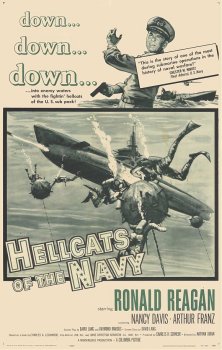
SUB MOVIE: Hellcats of the Navy


                “Hellcats of the Navy” claims to be based on the nonfiction book by ComSubPac Charles Lockwood and Hans Christian Adamson.  The book is about Operation Barney which was the attempted infiltration of Japanese waters with the American equivalent of a wolfpack.  The movie is loosely based on the mission. It was directed by Nathan Juran and starred Ronald Reagan in his second to last movie role.  The movie is famous for the pairing of Reagan and his second wife Nancy (billed as Nancy Davis).  It was their only movie together.  The screenplay was by blacklisted Bernard Gordon, which is ironic considering Reagan’s pro-blacklist stance.  The production had the full cooperation of the Navy.  It was allowed to film at the San Diego naval base and on board a submarine.  To emphasize the cooperation, Chester Nimitz introduces the film with some vague reference to America taking the war to Japanese home waters. 

                The USS Starfish is off the coast of Japan on a mission to disarm a mine and bring it back.  A frogman named Barton (Harry Lauter) is abandoned when Commander Abbott (Reagan) has to crash dive because of a Japanese destroyer.  It’s the right decision, but it is complicated by the fact that Lauter was putting the moves on Abbott’s ex-girlfriend.  The exec, Lt. Commander Landon (Arthur Franz), feels Abbott was personally motivated by his decision to leave Lauter.   When they return to Guam, Abbott is reunited with nurse Helen (Nancy) who is not upset that her new beau is gone.  She prefers the mule to the wolf.  The Starfish’s next mission is to take out an island via commando raid.  Ridiculous explosions ensue.  Explosions for explosions sake. They have an ill-fated encounter with a Japanese sub, but Abbott manages to bring back charts of a mine field so it’s all good.  Back at base, Abbott turns in a scathing fitness report that wrecks Landon’s career due to the belief that he is a wimp who cannot make tough decisions.  This from the man who just lost his boat and sixteen men because he disobeyed orders.  In spite of the bad blood, Landon will continue as his exec so he can redeem himself. 
                The brass sends a trio of three-sub wolfpacks to Japan’s inner waters.  Abbott’s sub traverses a mine field with the obligatory cable scraping.  He sinks seven ships in five minutes in a harbor.  Elect this guy President!  But wait, there’s more.  On the way out, the boat gets a net wrapped around the propeller.  Guess who strips down to untangle the net?  And yet Nancy has to keep her starched white nurse’s uniform buttoned to the chin throughout the movie (and probably through the production).   While Ronnie may have thought of himself as being the equivalent of Burt Lancaster, he would be damned if Nancy was going to be Deborah Kerr.  In one of the silliest scenes in war movie history, Abbott gets caught in the net.  An approaching destroyer gives Landon the chance to redeem himself by diving with Abbott still entangled.  Just doing what you dared me to do, skipper.  Plus payback, sweet!  In a “screw you, cliché” development, Abbott survives to continue his zombielike romance with Helen.  Hurray?

                In my recent binging of sub movies, I have come to the conclusion that the percentage of sub movies that are below average war movies is very high.  This is surprising because you would think the cramped confines of a sub would lend themselves to dramatic tension, character development, and ensemble acting.  Interiors should be relatively easy to recreate, although filming in cramped quarters can be hell.  The special effects are a problem and it is difficult to avoid the look of fakery, but the audience is usually understanding of that.  The subgenre lends itself well to the action followed by exposition format of many war movies.  It has the advantage of combining the visceral thrill of sneaking up on an enemy and stabbing them by way of a torpedo and land combat in the form of commando raids. In other words, you can see ships blow up and stuff blow up.  And depth chargings work much better for drama than artillery bombardments.  And yet, so many sub movies blow it.  Since there are so many well-established clichés, it is difficult for a sub movie to be original and high quality.  Most sub movies do not achieve either of these. “Hellcats of the Pacific” is especially bad because it does not even try to be creative or top-notch.

                There is nothing quality about the film.  If not for the pairing of the Reagans, it would be totally forgettable.  The acting is terrible.  Reagan is stiff and Nancy matches him.  You can see why Helen was attracted to Barton, but not what he saw in her.  This love triangle is reminiscent of the equally lame one in “Operation Pacific”. The Reagans’ scenes together are hard to bear.  The dialogue is atrocious.  The plot makes little sense.  In this case, the movie cribs from “Torpedo Run”.  Don’t ask why you would want to steal from two bad sub movies.  The effects fit the film well.  They are terrible, too.  The models are particularly fake looking.   As usual, the depth charges are incredibly accurate.  They result in “Star Trek” type jostling of the crew.

                There would be some compensation if the movie was historically accurate.  You would think the involvement of Lockwood as technical adviser would have insured an acceptable degree of accuracy.  Not to  mention the rare appearance of Chester Nimitz himself.  So how accurate is it?  There was an Operation Barney.  In July, 1943, Lockwood sent three subs in to the La Perouse Strait and then into the Sea of Japan.  They charted the mine fields, but did not find much to hunt.  Later the acclaimed Wahoo under the command of the famous “Mush” Morton was sunk in the area.  It was assumed the loss was due to a mine.  Lockwood vowed revenge and put Operation Barney into motion.  Hydeman’s Hellcats (a trio of three-sub wolfpacks) would take advantage of the new FM sonar tech that allowed them to detect mines.  The operation took place in June, 1945 and resulted in a disappointingly low total of 28 Japanese ships sunk.  One sub, the Bonefish, was lost.   As you can deduce, the movie is not exactly a documentary. 
  
                If you have not seen “Hellcats of the Navy”, only watch it if you are insane enough to try to watch every sub movie.  Who would do something like that?  You might also watch it if you want to get drunk.  Take a drink every time you groan.


GRADE  =  F

Tuesday, July 11, 2017

SUB MOVIE: Up Periscope (1959)


                “Up Periscope” came at the end of the boom in sub films in the 1950s.  It was directed by the prolific Gordon Douglas (“Bombers B-52”).  It was based on the novel by Robb White.  The technical adviser was Adm. Charles Lockwood who commanded our sub force in the Pacific in WWII.  All of the underwater scenes were from “Destination Tokyo”.  The movie was James Garner’s second big dip into movies after “Darby’s Rangers”.  He was still appearing in the TV series “Maverick”.

                The movie is set in the South Pacific in 1942.  Lt. Braden (Garner), a frogman, is wooing a gal named Sally.  Before he is rousted for a secret mission, he finds out Sally is actually an intelligence agent who was checking him out for security purposes.  Ouch!  That marriage proposal sure seems awkward now.  Meanwhile, the sub Barracuda is returning from a failed patrol with an unhappy crew.  it seems Commander Stevenson (Edmund O’Brien) followed orders and stayed on the bottom as a juicy Jap fleet passed by.  Adding to the crew’s frustration is the belief that an injured mate died because the sub stayed on the bottom.  Stevenson gets a chance at redemption when Braden’s secret mission comes along.  He is ordered to deliver Braden to a Japanese held island so he can steal a code book and thus win the war.  When they arrive, the by-the-book Stevenson is averse to going in close so Braden is not on a suicide mission.  He and Braden butt heads over Stevenson’s cautious approach.  On the way to the island the sub has encounters with a plane and a destroyer.  Braden gets to swim ashore and steal the code book and blow stuff up.  Spoiler alert: We win the war!

                I have seen a lot of sub movies in the last month.  It never ceases to amaze me how often common sense sub tactics are tossed out the window either for entertainment purposes or just out of plain apathy.  “Up Periscope” is a good example of this.  There was no reason for the Barracuda to stay on the bottom as the Japanese fleet passed by (other than to get the injured sailor killed for dramatic purposes).  There was no indication the Japanese were aware of the sub’s presence, so why could it not simply leave the area?  Later, when a destroyer attacks, the Captain releases oil to fool it, but he does this while still viewing through the periscope!  He also releases a “false target shell” which is described as “an explosion of bubbles” to fool sonar.  This was a new one on me.  Stevenson decides to enter the lagoon because there is a ship outside.  Shouldn’t that have had the opposite effect?
                Aside from the bull crap, the movie is weak in most aspects.  The special effects are disappointing.  Are you telling me that sixteen years after “Destination Tokyo”, director Douglas had to rely on footage from that film?  Talk about lazy.  The interiors are too modern looking and far from claustrophobic.  There is little sailor behavior or banter.  Only two characters are developed.  Luckily, these characters are in capable hands.  Garner shows the wit and charisma of the leading man that he would evolve into.  O’Brien is good as the unlikeable captain.  His blockheaded insistence on following orders does not fit the most celebrated sub captains, but maybe he is going to be one of the numerous ones who were canned early in the war.  His redemption arc is typical Hollywood, but having him report himself for violating orders is a silly post script.

                “Up Periscope” is a fairly entertaining movie if you are not familiar with the submarine subgenre.  If you have seen a lot of sub movies, it comes off as almost a parody of the subgenre due to its overload of clichés.  It ties “U-571” for most clichés in a sub movie.  At least it does not take them to ridiculous extremes like “U-571”.  It does not pile them into a bonfire of ludicrousness.  Although I give it credit for restraint in its unoriginality, it is still an average film that should have been much better.  The 1950s were a fertile period for sub movies and yet the last of the run did not advance the subgenre at all.  Hell, it had to borrow from a 1943 movie.


GRADE  =  C


Saturday, July 8, 2017

SUB MOVIE: We Dive at Dawn (1943)


                “We Dive at Dawn” is possibly the best British sub movie.  It was directed by Anthony Asquith and released mid-war.  The Admiralty gave full cooperation and the exterior views are of two S-class boats.  The interiors are reconstructions of those boats.  Star John Mills went on a training run on a sub, much to the discomfort of his innards when the sub crash dived.  The movie has been overshadowed by films like “49th Parallel”, “In Which We Serve”, and “The Cruel Sea”, but belongs in their company.

                The HMS Sea Tiger returns from an uneventful patrol and the crew is looking forward to leave.  As with “In Which We Serve”, the movie concentrates on three of the men.  Lt. Taylor (Mills) is the skipper and he has a little black book that he plans on utilizing for recreation over rest.  That’s right – John Mills as a ladies’ man.  Corrigan (Niall MacGinnis) provides comic relief as the sailor who is scheming to avoid his impending nuptials to the Coxswain’s sister.  Hobson (Eric Portman) is attempting to repair his broken marriage.  All this will have to wait when the sub gets an emergency mission to sink a German battleship.  “Leave?  I nearly ran into myself coming back”.  On their way to intercept the warship, they have to crash dive to avoid a plane.  Taylor records the following in the log:  “Spotted plane approaching.  Looked like one of ours.  So dived immediately.”  Sly smile.  They rescue three German airmen from a rescue buoy.  Surely the only time this device has appeared in a movie.  I discovered that these buoys were placed by the Germans for succor for downed crews.  They were like a floating dorm room with supplies and a radio.  Interesting.  The sub has to pass through a mine field with the obligatory mine cable scraping along the side.  They ram their way through a submarine net.  Another unique moment.  They find their target, fire at it, get depth charged and escape with the usual cinematic trickery.  Unfortunately, running low on fuel, it looks like they will have to scuttle the boat and accept internment.  Unless some jilted seaman with no will to live, a captured German’s uniform, and an ability to speak German comes up with a bold plan.

                “We Dive at Dawn” is one of the better sub movies.  And it was made in 1943.  Frankly, the only weakness of the film is the sub warfare.  The special effects are rudimentary.  You don’t see the depth charges, but the jostling about is nicely done.  The traversing of the minefield lacks suspense and the ramming of the net is on the silly side.  The movie’s big set piece in the enemy harbor is equally silly, but rousing.  It is probably the best commando scene in any sub movie.  The post script of the sub returning to the acclaim of the fleet is the cherry on top.  The strengths of the movie are in its characters.  The movie has an excellent cast.  Everyone knows Mills’ work in war movies, but it is easy to forget what a player Portman was back then.  He was coming off of “49th Parallel” and “One of Our Aircraft is Missing” and would later appear in “The Colditz Story” and “The Bedford Incident”.  Hobson is a great character who goes from being a jerk to a hero realistically.  The decision to introduce the main characters by way of the shore leave was a good one and it is a shame the leave was cut short because those scenes are among the best in the movie.  The dialogue is excellent, although unless (and even if) you watch a lot of British films, you might wish for subtitles.  The sailor banter is fun, provided you can decipher the accents.  Speaking of which, you can tell a lot about the intelligence level of a movie by whether it subtitles the Germans.  This movie does not.

                Although the movie has a documentary look to it, it is not based on a true story.  There was no German battleship named Brandenburg.  No German battleships were lost to subs in WWII.  The commando raid is clearly fictional.  This means the movie is pure entertainment and achieves its goal of being a crowd-pleaser.  Especially if it’s a British crowd during the war.


GRADE  =  B+    

Tuesday, October 25, 2016

HOLLYWOOD vs. THE PENTAGON: Crimson Tide (1995)


                One of my favorite books is Guts and Glory by Lawrence Suid.  The book is about the military’s cooperation with Hollywood.  A theme of the book is that the military is very protective of its image and will not cooperate with movie producers if it feels the movie has even a slightly negative portrayal of the military.  Why does Hollywood care?  Because producers save a lot of money if it has access to military equipment and sites.  This adds verisimilitude to the movie.  But with military cooperation comes strings.  The Pentagon must vet the script and approve it in order to grant access.  Almost always the military asks for changes in the script.  It is up to the producers to decide whether the cooperation is worth the changes.  Common reasons for nixing a script include profanity, which is of course ridiculous because soldiers swear and the public knows this.  Another is when officers are depicted in a negative way.  The military is also concerned with unrealistic procedures.  Obviously it frowns on atrocities being depicted.  Why does the Pentagon give out free stuff?  Because war movies can be good for recruiting.  “Top Gun” is the classic example of this.  That was some major cooperation and boy did it pay off for both sides!  On the other end of the spectrum was “Crimson Tide”.

                “Crimson Tide” was a Jerry Bruckheimer and Don Simpson production.  It was directed by Tony Scott.  This is the same team that made “Top Gun”.  They hoped for the same level of cooperation, but did not get it.  The screenwriter Michael Schiffer did his research and talked to a lot of captains.  The ex-skipper of the USS Alabama, Skip Beard, was the technical adviser.  However, the Navy was upset with several aspects of the submitted script.   As usual, they did not like the profanity, but that was not a deal breaker.  The biggest problem was the mutiny scenario.  The Navy is very protective of its “we’ve never had a mutiny” record.  Some of the procedures were also questioned.  Since the “adjusted” procedures were crucial to building suspense and the mutiny was the key to the plot, the filmmakers refused to make significant changes.  Simpson/Bruckheimer had to use a French submarine and Scott managed to get a helicopter shot of the actual USS Alabama submerging after leaving Pearl Harbor.  The interior scenes were a mock-up on a huge hydraulic gimbal, so no problem there.

                The movie is set in the post-Cold War period, but could easily fit into the Cold War subgenre.  It opens with a title card that proclaims:  “The three most powerful men in the world:  the President, the President of the Russian Republic, and the captain of a U.S. nuclear missile submarine.”  In Chechnya, a Russian ultra-nationalist named Radchenko calls for war with the U.S. because of American sanctions.  He seizes some nuclear missiles and some of the military is in his corner for an attempted overthrow of the government.  Meanwhile, the USS Alabama (a nuclear missile submarine) is welcoming a new executive officer.  Capt. Ramsey (Gene Hackman) has picked Lt. Commander Hunter (Denzel Washington) because of his resume, but it is obvious from the start that there will be the submarine cliché of dysfunctional command.  The two men’s philosophies differ.  Ramsey is basically old school.  He reminisces about the good old days when you just pushed the button without asking why.  Hunter is from the new breed who asks “why?”  He’s an intellectual who says things like:  “In the nuclear world, the true enemy is war itself”.  They remind of the two types of captains that existed in the Royal Navy in Nelson’s time.  Ramsey is the strict disciplinarian whose word is law.  Hunter is the humane leader who takes the crew’s welfare into consideration.  One believes in a kick in the ass, the other in a pat on the back.  It was possible in the Royal Navy to be either and be successful.

                The men are locked in to their archetypes when a fire breaks out on the sub.  Hunter deals with the danger to the crew and Ramsey calls for a drill immediately after the fire to test the crew’s ability to deal with a crisis.  In the ensuing “discussion”, Ramsey makes it clear he will not brook any second-guessing from Hunter.  While this personality clash is taking place, the world is careening towards nuclear war. Radchenko is threatening to use his nukes.  When he begins to fuel them up, the Alabama receives orders to launch its missiles.  Before this can be done they are attacked by a rogue Russian sub and they receive a follow up message that is interrupted by failure of their radio communications.  Hunter insists the message may be a cancel order and refuses to concur with Ramsey’s decision to launch anyhow.  The missiles cannot be launched unless both men agree.  They don’t and hence the suspense.  Keep in mind there is still an enemy sub lurking around.  Queue the clichés of a threatening leak and a trip to “crush depth”.  Throw in a mutiny that devolves into shirts versus skins with weapons in a metal tube underwater with a possible nuclear war starting above.

                “Crimson Tide” is cracking entertainment, but not so great for recruiting.  It’s easy to see why the Navy preferred “Top Gun”, but not so easy to understand why the public preferred it.  This movie is much better than “Top Gun”.  The acting is top notch from a great cast.  Hackman is too old for a sub captain, but age has never been a factor in casting for war movies.  John Wayne in the “Green Berets”, Robert Mitchum in “The Winds of War”, and the list is endless.  He is perfectly cast as the Queegish captain, but he has not lost his marbles.  In fact, one of the strengths of the screenplay is that Ramsey may be right about the launch.  Washington is also well cast, but his Hunter is clearly meant to be in the right.  Another example of Hollywood being liberal, some would say.  It is fun to watch the two great actors as adversaries and in tight spaces at that.  They are given high-level dialogue to chew on.  Some of the pop culture references in the script were written in by an uncredited Quentin Tarantino.  This is the only submarine film with a discussion on Lippizaner stallions.

                The plot does not really reinvent the sub subgenre.  It has several dusty tropes that might have seemed new to a 1995 audience.  Once the enemy sub arrives, the action gets increasingly preposterous as each crisis tops the last.  Hell, there are two takeovers of the boat!  Some of the crew actions make little sense, but it’s all for the greater goal of entertaining the masses.  This also can be said of the plot devices that defy U.S. submarine logic.  For instance, when a boomer would receive launch orders, the exec would have to confirm the order, but would not have to concur with the captain’s decision.  No conflict, no movie – so let’s not quibble about that.  If the movie had stuck to Navy protocol, Hunter would have been shot and the crew would have unanimously backed the captain.  Every captain Schiffer interviewed claimed he would have launched.  That is scary since the second, incomplete message would likely be a change in orders!  Speaking of which, Russian nukes don’t have to fuel up to be ready to launch so no clock-ticking.  And torpedoes don’t need a thousand yards to arm.  And subs have a back-up radio, of course. And anyone who has watched a submarine movie knows they can go well below crush depth.  None of those turned me off.

                The movie may not be factually sound, but it is technically sound.  It was nominated for three technical Oscars.  The interior and underwater effects are excellent.  The interior is authentic and the use of a gimbal gives a feel for being on a sub.  The torpedo scenes are among the best.  Hans Zimmer’s score enhances the action and he won a Grammy.  That is unusual for a score that was not even nominated for an Oscar.

                “Crimson Tide” is among the better submarine movies.  It takes the tired captain versus exec cliché, but is thought-provoking because if you think about it (and I’m not sure we are supposed to), both men could be right and both could be wrong.  When you watch it, cut Ramsey some slack.


GRADE  =  B     
Monday, October 10, 2016

CRACKER? Gray Lady Down (1978)


                “Gray Lady Down” was an addition to the venerable submarine subgenre of war movies.  It was based on the novel by David Lavalee entitled Event 1000.  That title refers to U.S. Navy terminology for a rescue of a sunken submarine’s crew.  It was directed by David Greene (“Friendly Fire”).  It attempted to tap in to the craze for disaster films in the 1970s, but barely made a blip at the box office.  The movie stars Charleston Heston sporting his Moses beard.  The production got cooperation from the Navy and the Department of Defense.  The USS Trout was loaned to stand in for the movies USS Nautilus.  Footage and a full-scale model were provided by “Ice Station Zebra”.

                It’s Commander Blanchard’s (Heston) last cruise before a desk job.  Should be a piece of cake, right?  On a foggy night, the sub is running on the surface when they encounter a Russian freighter that lacks radar.  Since the Nautilus does have radar, you would think it could easily avoid a freighter.  However, what would be entertaining about that?  The resulting collision tears a giant hole in the engine room and the sub goes down in deep water.  Well below crush depth, of course.  The American-built sub withstands the pressure, but settles precariously on a ledge.  The angle makes rescue by a DSRV (Deep Submergence Rescue Vehicle) problematical.  The DSRV goes down and it looks like the rescue will go off without a hitch until a “gravity slide” covers the escape hatch.  Complications, complications.  What we need here is an iconoclastic genius!  Keith Carradine - enter stage right.  Carradine plays Lt. Gates.  Gates commands an experimental mini-sub named after him.  It’s called the Snark.  Fresca product placement!  Leaks, mechanical breakdowns, command dysfunction, etc. ensue.  The dominoes elicit the following line from Heston:  “I’m beginning to feel like a one-legged man in an ass-kicking contest.”  (A line recycled probably from the uncut version of “The Ten Commandments”.)  Somehow the movie manages to throw in an underwater explosion.  If you have seen any disaster movies, you know there will be survivors and some who sacrifice so there will be.  Did you think the Navy cooperated with a movie that showed its DSRV as a failure? Do you think recruitment to the submarine service would be improved by having the crew perish?  Cooperation comes with some script vetting, after all.

                “Gray Lady Down” is not as bad as you would expect.  It is middle of the road for the subgenre.  And, by the way, I’m not sure it really is a war movie.  Unless you want to believe my conspiracy theory that the Soviet freighter meant to sink our sub.  (Or how about this one?  Commander Blanchard purposely disregarded his radar in order to provoke World War III so he would be able to avoid the desk job.)  Regardless, it certainly is a submarine movie.  This is proved by the escalating series of crises common to this subgenre.  You get many of the greatest hits -  flooding compartments, lack of communication, fear of crushing, and so forth.  All of this drama is competently performed.  The cast is fine.  The recognizable stars are strong, especially Carradine.  His character is stock, but he brings a twinkle to it.  He balances Heston’s pomposity.  I have to admit that Heston does not chew the scenery as a much as usual.  However, the supporting cast is weak.  It includes Christopher Reeve in his film debut.  (You know you are in trouble if Moses and Superman can’t save you.)  The special effects are those of a made-for-TV movie.  But at least they are not laughable.  The music also reminds of a TV movie.

                Will “Gray Lady Down” crack my 100 Best War Movies list?  Obviously not.  But it is a fairly entertaining movie. 

GRADE  =  C      

Wednesday, August 15, 2012

CLASSIC OR ANTIQUE? Destination Tokyo


            Part of the ever popular submarine subgenre, “Destination Tokyo” firmly takes its place in the middle of the pack.  Released in 1943, it has to be viewed with the ongoing war as context.  Part of the fun in watching it is to look for overt propaganda.
                A narrator sets the stage by outlining a secret mission that the U.S.S. Copperfin is going to undertake.  It will have to pick up a commando crew that includes meteorologist Lt. Raymond (John Ridgely) which they will proceed to drop off in Tokyo Bay to send weather reports to the Doolittle Raiders.  Did I mention that this is not based on a true story?
                The sappy alarm comes off early as Capt. Cassidy (Cary Grant) writes home to his wife.  This is followed by the first bout of lame sailor banter that is embarrassingly inauthentic.  The pummeling continues with Christmas carols by the crew.  Gag!  It is fun to see the Skipper’s father (Alan Hale, Sr.) as Santa.  One of the crew is a wolf named Wolf (John Garfield) who we see putting the moves on a babe via flashback.  Live vicariously, males in the audience.  In what seems like an unorthodox script move, a discussion (there are a lot of discussions) on God leads to the revelation that the pharmacists mate named Pills (William Prince) is an atheist!
                The first action piece is an attack by two Japanese float planes.  What are the chances that the sub shoots down both?  100%  A Japanese parachutes and when Mike (Tom Tully) tries to help him aboard, the Jap stabs him.  Dirty Nip!  This is who we are fighting, audience.  An unexploded bomb nestled in the sub is defused by Cassidy who apparently is a bomb defusing expert.  Its suspenseful, but I was confident the bomb would not blow up the sub at this point in the movie.
Cassidy being debonair
                Back to the schmaltz, Cassidy plays a recording from his wife.  He gives a speech about how Japanese kids are given a dagger at age 5 and can field strip a machine gun at age 13.  We’re fighting to put roller skates (not ice skates - you could slash someone with those) in their hands at age 5.  The speech seems to have been influenced by lack of oxygen.  More talking, more carbon dioxide.  Crossing the Pacific montage.
                They sneak into Tokyo Bay behind a Japanese cruiser and land the commando team.  Wolf goes along in case they meet any ladies.  We get the obligatory Tokyo Rose appearance.  Meanwhile a sailor has appendicitis and dies a horrible and painful death.  Just kidding – Pills uses a book and makeshift instruments to remove it.  (This is based on several actual incidents.)  Good scene.  In a big letdown, they escape the bay with little trouble.  Cassidy watches the Doolittle Raid through his periscope.  Front row seat.  The bombers bomb some models of a city. 
                Lucky for Jimmy Doolittle and his boys, the Copperfin sinks a carrier which is launching fighters to attack the Raiders. (I am not making this up.)  You don’t suppose there is a depth charging in store for our plucky crew, do you?  Guess who is converted from being an atheist?  In a departure from clichés, there are no rivets popping, leaks springing, going below the maximum depth, releasing a dead body, etc.  The sub sinks a destroyer with a straight on bow shot thus inspiring future submarine movie captains.
                Next thing we know the sub is back in San Francisco.  Why not finish up with more talking as all the main characters discuss their future plans?  Cassidy’s wife is waiting for him, naturally.  Smoochy, smoochy.
                “Destination Tokyo” is an average sub movie.  The acting is good although Grant underplays a bit.  The dialogue is sappy, but not cringe-worthy.  There is a lot of it, however.  The plot is ridiculous and yet the movie was nominated for Best Original Screenplay!  Anyone who disagreed with that was a Jap-lover.  The movie drags and saves most of the action for the last half hour.  We get little of the dysfunctionality among the crew so common in sub movies, but the movie could have used some.  The Jap-baiting is not overboard.  The special effects are not bad for 1943.  The shipboard routines were so authentic that the Navy used the movie as a training film.  Kudos for that.
                Classic or Antique?  Antique
Grade =  C

the trailer


the full movie