Sunday, January 8, 2012

BOOK / MOVIE: Starship Troopers


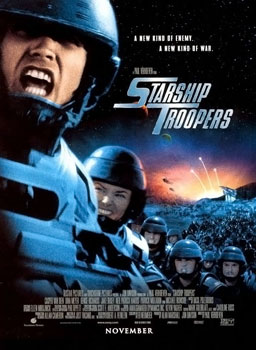
     “Starship Troopers" is set in the future when planet Earth (called “Terra”) is at war with a planet of badass arachnids from the planet Klendathu. The “Bug War” is the big picture, but the story concentrates on the soldier level. The novel is by Robert Heinlein and was published in 1959. The movie came out in 1997 and was directed by Paul Verhoeven. The book and movie differ greatly. Let’s find out which is better.


       The novel concentrates on one character – Juan Rico. In fact, the story is told in first person by him. It opens with a raid by the Mobile Infantry on a planet allied to the “bugs”. Heinlein’s imagination has conjured up remarkable “power armor” suits which makes these modern grunts really armies of one. They can leap tall buildings, etc. After a brief taste of combat (a foreshadowing of the teasing to come), the book flashes back to enlistment and basic training. A recruiter tries to discourage Rico from enlisting. It seems that being soldier is a privilege, but necessary if you want full political rights.

        Rico’s high school “History and Moral Philosophy” teacher Mr. Dubois (a veteran) channels Heinlein by preaching that only people who have served in the military deserve to be full citizens. He also argues that violence solves problems. In a later chapter, we are updated on how “Terra” got to this state. To simplify, juvenile delinquents were roaming the parks terrorizing society because their parents refused to spank them. The militarization of society was a necessary solution to the chaos. You would swear the book was written in the sixties and Heinlein was ranting at the hippies.  He was a prophet!

      The book traces Rico’s career. He is a survivor and thus rises through the ranks. He participates in a disastrous invasion of Klendathu. Heinlein (thinking of Korea?) opines that “the trouble with lessons from history is that we usually read them best after falling flat on our chins”. He goes to officer training school which gives Heinlein a second opportunity to give his political views in another History and Moral Philosophy class. Only soldiers should vote. The views may be fascist, but they make sense.

      The book concludes with the implementation of a new strategy of getting to the brains of the bug world. Rico is wounded in his last battle and ends the book in the hospital. There is no reason to believe the war is close to ending.

      The book is highly regarded, if controversial. It won the Hugo Award as best science fiction novel. More amazingly, it is on the reading list for Marine officers. It is very pro-military and all the officers are positive role models. As a predictor of future war, it could very well be prescient. The power armor is certainly in the early stages today. It does a good job in the evolution of the warrior Rico. The boot camp and OCS chapters are well done, but there is not much on soldier recreation. Heinlein is stronger on the science part of future war than on the human dimension.

     I enjoyed the numerous references to past history, especially military history. Heinlein throws in references to Carthage, Napoleon, Horatius, the Bonhomme Richard, and Sargon the Great. Even two poems by Kipling – “Danny Deever” and “Gentlemen-Rankers”.

     The book has weaknesses that made it a disappointing read for me. There is shockingly little actual combat and what there is is usually inconclusive. Two of the potential main characters, Rico’s high school friends Carl and Deladier are dropped from the narrative early. The first person narrative leaves us with only Rico as a fleshed out character. The book is also very male. Heinlein’s future does not include women in the infantry (although they make the best pilots). Another flaw is it is hard to know what is happening in the war. He is purposely (?) vague on the big picture.

      The movie opens with a commercial for the army and news about the bug war. (In a bit of unorthodoxy, the movie has no opening credits.) These satirical commercials and news reels will reappear throughout the movie. They harken back to propaganda films of WWII like the “Why We Fight Series”. The commercials strengthen the theme of a fascist society and the news reels give a clearer view of the war than you get in the book. Like the book, the movie thrusts us into battle early, but in this case it is the disastrous invasion of Klendathu (which will be returned to later in the movie). We are quickly immersed in graphic violence well beyond what the book posited. The bugs (malevolent spiders) are awesomely rendered by the CGI. They are not easily killed. This movie expends a lot of bullets.

     We flash back to Rico (hunky Casper Van Dien) and his high school friends and follow their paths into the military. One armed vet Mr. Rasczak (a well-cast Michael Ironsides) effectively emotes the books preachings on violence and the primacy of the military caste in his History and Moral Philosophy class. Several characters briefly mentioned in the book get full billing in the movie and it strengthens the story. This is especially true for the two main females. Carmen (Deladier in the book, portrayed by the acting-challenged Denise Richards) is made Rico’s girlfriend who becomes a pilot and jilts him for another pilot. The love triangle is trite but gives the movie a dimension the book lacks. The other female, Dizzy (Dina Meyer), was a male in the book and died early. In the movie she has a crush on Rico and follows him into the infantry which is coed so Ver Hoeven can have a shower scene (the actors insisted he direct in the nude, which he did). Carl (Neil Patrick Harris) goes into military intelligence.

      The movie jumps back and forth between Carmen and Rico’s training. She is a hot shot pilot trainee and he is part of a heterogeneous group of recruits. The contrast of the pristine pilot atmosphere and the rollicking soldier barracks is cool. The movie does not avoid clichĂ©s. For example, Rico and Zander (Patrick Muldoon) meet in a bar and being from different branches and romantic rivals at that, guess what breaks out? Rico wants to wash out after a training accident, but stays on when his home town of Buenos Aires is destroyed. (In the book, his pacifist, disapproving dad survives, enlists, and encounters him later.)

       The rest of the movie is basically battles interspersed with breathing spells. The invasion of Klendathu is spectacularly rendered including the destruction of the fleet from bug flak. Another planet witnesses a Fort Apache type defense of an outpost against a horde of bugs. The action is so intense the grunts have no time to reload. Now the bugs have a flying variety and giant tank-like beetles! Major characters are killed. Later, the fleet gets hit again. It’s scary to realize that in the future our military leaders still don’t learn from their mistakes (close formations do lead to cool collisions, however). Guess what couple survives and crash lands on the bug planet where Rico’s unit is hunting a “brain bug”? It’s a small universe, apparently. Moreso because Carl makes an appearance, too. Insert traditional happy ending.

       The film is popcorn entertainment of an incredibly gory variety. The action is spectacular. The special effects are extraordinary. The bugs do not look fake. The CGI is flawless. The weaknesses include the predictable plot (albeit with some surprise deaths). There are a lot of coincidences. The acting is spotty. Casper Van Dien is surprisingly good and Dina Meyer belts it out. Michael Ironsides dominates his scenes. However, Denise Richards is cardboard.

       Verhoeven claimed he did not finish the book because he was “bored and depressed”. It shows in that the movie differs radically from the book. This includes the overall political theme. Where Heinlein takes a sympathetic view toward a fascist solution to society’s problems, Verhoeven fills the movies with anti-fascist satire. He is pretty heavy-handed with his Nazi style uniforms. We get it, Paul.

        The movie should not be on the Marine Corps watch list. The tactics are unrealistic. There is no recon. There are no flankers even when marching through a canyon. There are frontal assaults against a more numerous enemy. Pre-assault bombardment is too brief. A more acceptable flaw is the movie cannot duplicate the futuristic weaponry and equipment of the book. The budget did not allow for “power armor” so the soldiers are still very much “foot soldiers”. I would think that in the distant future we would be beyond souped-up machine guns firing bullets.

      Which is better? Definitely the movie. It improves on the book which is what you want from a movie based on a book. The book did not have enough action – mission accomplished! The book concentrated too much on one character – mission accomplished. The book is too preachy – mission accomplished. With that said, I will say that the book and movie are a good pairing because if you read the book first you get more background about how Earth got to the way it is and you follow Rico’s career. The movie then fleshes it out and adds action.

Wednesday, January 4, 2012

BOOK / MOVIE: Cold Mountain


       I have already reviewed "Cold Mountain", the movie. This essay is on which is better – the book or the movie.


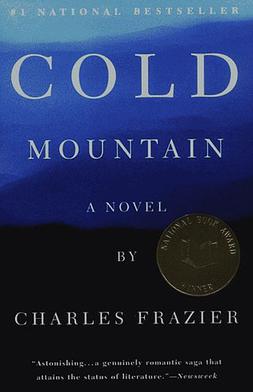
      Cold Mountain is an acclaimed novel by Charles Frazier which was a smash bestseller and multiple award winner. It is set in North Carolina during the Civil War. It tells the dual and parallel stories of an upper class woman named Ada and her farmer beau Inman. After a brief courtship that ends in a kiss that implies their future bliss, Inman is off to war. The book alternates chapters of Ada coping with adjusting to surviving without her preacher father and Inman’s Odyssey-like trek back to her. Her story is the story of a woman totally unprepared for rural life and running a farm who is transformed with the help of a women who is her opposite – Ruby. Meanwhile, Inman is encountering a series of eccentric characters and perilous incidents. They reunite at the end of the book.

      The book is wonderful. Frazier is a great writer. His prose is the kind that makes you savor every sentence. The alternating chapter approach really works because Ada and Inman’s stories are equally interesting and the end of each chapter brings anticipation of rejoining the other story line. The two leads are endearing in a non-schmaltzy way and the supporting characters are fascinating. It is not a flawless book, however. Given the bizarre nature of some of Inman’s adventures, there are some elements that strain credulity. In particular, two characters survive shootings that are nothing short of miraculous. Frazier also tends to throw in every variety of flora and fauna that existed in rural North Carolina. This is the perfect book for romantic botanists. These are minor criticisms, however.

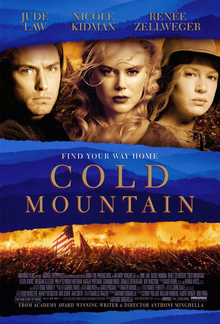
      How does the movie compare? My provocative premise will be that any movie that does not improve on its literary source is either poorly made or trying to bring to screen a book that cannot be recreated. It would have taken incompetence to not have made a movie that was better than the book in this case. Considering the director (Anthony Minghella) and the star-studded cast and the amount of money that went into production, it should not be surprising the movie is better than the book. It is also no shame for the book that this is true.

       Think about it. Minghella starts with a great book which is ripe for film adaptation. The book has nothing in it that cannot be recreated on film (with the possible exception of the passage at Junior’s cabin). That cannot be said for all books. The director starts with a great “script” (the book) and can pick which scenes to incorporate into the movie and can change the scenes to improve them. He can use dialogue from the book and improve on the lines where he sees fit. Even a great book can be improved. The problem is when screenwriters and directors make poor decisions on changes they make, when they throw in elements that are not in the book, or they leave out key things from the book. These problems do not apply to the movie version of “Cold Mountain”.

       I know this will be an unpopular opinion, but the movie is better than the book. It is faithful to the book and even keeps the same structure. It does leave out some scenes, but none are crucial and it has all the key scenes and characters from the book. In significant ways, some of the scenes are improved and some of the characters are fleshed out. Here is a list of the improvements:

1. The book makes you wonder if Ada and Inman are really in love, the kiss in the film makes it obvious they are.

2. Teague and Boosie are much more integral to the plot and their malevolence makes Ada’s homefront experience more realistically fraught with peril than the book which limits her problems to running the farm.

3. The raid on the Swangers (in the book it is a raid on a different farm) personalizes the atrocities that occurred.

4. In the movie, Veasey’s death is not only more realistic, but implies that Inman’s obsession with getting home to Ada resulted in the deaths of the men.

5. In the movie, the scene with Sara (the widow with the baby) is much better. Having Sara shoot the soldier who was actually caring for the baby was a powerful comment on the war.

6. The Battle of the Crater gives a clearer picture of what Inman went through and why he is a different man who is worried about how Ada will feel towards him. Plus these scenes at Petersburg include Swimmer, Inman’s Cherokee Indian friend.

7. The final battle with Teague has Ada and Ruby heavily involved in defending themselves.

8. Ada and Inman’s “honeymoon” is much more romantic than in the book. Plus there’s some nudity.

      Some will argue that the movie is an aggravating hodgepodge of accents and nationalities of the actors (I’m talking about you, Caroline), but the acting in the movie is quite good (the worst actor got an Academy Award) and I do not care how the words sound as long as the sentences are good. I also don’t think most people care that Ada is a brunette in the book and a blonde in the movie.

      Most importantly, the movie has sound which means we can hear the music. Music plays a role in the book, but it is bumped to a higher level in the film. Minghella even adds a musician by fleshing out the role of Georgia (and then he puts Jack White into the role – genius). The score and two of the songs were nominated for Academy Awards.

       In conclusion, always read the book first because it will give you a fuller story and then the movie will probably improve on the basics.

Sunday, January 1, 2012

#45 - The Story of G.I. Joe


BACK-STORY: “The Story of G.I. Joe” was released in 1945 and is based on the columns of war correspondent Ernie Pyle. It was directed by William Wellman who had been a pilot in the Lafayette Escadrille in WWI and at first refused to do a movie about the despised infantry until he met Pyle and saw the adoration the infantry had for him. Once on board, Wellman insisted on realism and convinced the Army to loan him 150 soldiers training near the production. The movie also used several actual war correspondents. So the actors would not look foolish alongside real soldiers, Wellman put them through the first actors’ boot camp. Sadly, Pyle was killed before the opening of the movie and many of the real soldiers were killed on Okinawa. For this reason, Wellman never watched the movie after its release. The movie was a hit and is considered one of the most realistic war films. It was nominated for four Oscars (Supporting Actor - Mitchum, Song, Score, and Screenplay).


OPENING: The 42 year old Pyle (Burgess Meredith) attaches himself to Company C, 18th Infantry as it prepares to go by truck into action in Tunisia. He meets Lt. Walker (Robert Mitchum) who agrees to let him accompany them all the way to the front. The men are rookies with a nervous bravado about them. The hound in the group named Dondaro (Wally Cassell) greets Pyle by saying: “Hey Pops, why wasn’t you born a beautiful dame? Or even an ugly one?” That night they lounge in their pup tents and listen to Artie Shaw as played by Axis Sally. Her taunting about their girls back home registers various facial reactions in a series of close-ups. The soldier talk is tame, but realistic.

SUMMARY: The first death occurs soon after as a plane strafes and one of the men dies off screen. Walker: “The first death is always the hardest.” The Company mascot, a cute little dog named Arab (“Squirt”), is passed on to one of the survivors.

      Next thing we see is the unit facing defeat at Kasserine Pass (although not mentioned by name). The defeat is seen through Pyle’s eyes as he follows the degeneration at headquarters. A montage of columns follows. The film skips Sicily and has Pyle reuniting with the now seasoned unit in Italy. The men are genuinely glad to see Pyle and give him the typical gentle ribbing. At mail call, Sgt. Warnicki (Bobby Steele) receives a recording of his son “Junior”, but will spend the rest of the movie trying to listen to it.

     The only battle scene has the men taking an Italian town house to house. The assault culminates with Walker and Sgt. Warnicki cat-and-mousing with German snipers in a bombed out church. The scene is bereft of dialogue, but has great sound effects (but no music). It really sounds like a WWII battle. The tactics of covering fire and maneuver are also realistically portrayed. After the liberation of the town, the men settle down for a while. The movie is true to the stop and go nature of war. During this interlude, Murphy (John Reilly) weds his nurse fiancĂ© (played by Wellman’s wife Dorothy). In the honeymoon suite/ambulance, he falls asleep before the camera has to cut away.

     The next big set piece involves the capture of a monastery on a hill (obviously meant to be Monte Cassino). This is one of the grubbiest scenes in war movie history. The men are dirty and unshaven and living in caves surrounded by a sea of mud due to the incessant rain. Patrols go out and return with less than they started with. One of the victims is Murphy. The men take the deaths in stride, but clearly the strain mounts. We see this attrition through Pyle (“The G.I. lives so miserably and dies so miserably”) and Walker (who agonizes over being a “murderer”). Everyone is weary, but they do what they have to do. “Every step forward is a step closer to home.” They maintain their sardonic G.I. humor throughout. After another vicious artillery barrage, a soldier says “Gee, a guy could get killed around here”. Warnicki snaps when he finally hears Junior’s voice. Finally, Eisenhower bombs the religious site and although the movie alludes to this making the monastery a tougher nut, the movie moves on after a brief final assault that includes actual war footage.

CLOSING: The last scene is a reenactment of Pyle’s most famous column “The Death of Captain Waskow”. The men are resting when a mule train arrives from the front carrying dead bodies. One of them is Capt. Walker. The men are stunned and their facial expressions reflect the love of soldiers for a well-respected officer. One by one members of the unit pay their last respects laconically. “I’m sorry, old man” is a typical eulogy. But the war must go on so they march past into the sunset. Pyle: “For those beneath the wooden crosses, there is nothing we can do except perhaps to pause and murmur “Thanks pal, thanks”.

     As a post script, we see actual footage of Pyle interviewing a soldier. Cool.

the real Ernie Pyle


RATINGS:


Acting - 9


Action - 6


Accuracy - 6


Realism - 8


Plot - 8


Overall - 8


WOULD CHICKS DIG IT? Probably. It is bloodless and not graphic. There is a sweet wedding scene. The soldier language is toned down. The acting is stellar.

HISTORICAL ACCURACY: The movie starts with a disclaimer that the “characters and events are fictional”. Several of the main characters are based on soldiers that figured prominently in Pyle’s columns. Walker is based on Henry Waskow and sentiments voiced by Sgt. Frank Eversole. Warnicki was based on Sgt. Jack Peterson who had a son named “Junior”.  There was a dog named "Squirt".

     The main divergence from truth is the fact that although Pyle travelled with Company C, 18th Infantry in Tunisia, the unit did not fight in Italy. Pyle accompanied a different unit in Italy. This Hollywoodizing of the facts is totally justifiable for the continuity of the film. After all, the movie and Pyle were interested in boosting the G.I.s in general, not in particular.

     The two battles – San Pietro and Monte Cassino – are simplified and not meant to accurately depict actual battles. This is not a movie about strategy and tactics. It does not give the big picture. A minor flub is having Eisenhower order the bombing of Monte Cassino when it was actually done by Gen. Harold Alexander.

      The final scene is close to the famous column except that the incident actually occurred at night. It is well done and quietly poignant.

CRITIQUE: “The Story of G.I. Joe” has a reputation as one of the best of the circa-WWII movies. That reputation is well-deserved. It holds up well partly because it does not have to compete with the recent crop of hyper-realistic combat films started by “Saving Private Ryan”. It is a simpler soldier slice of life picture. As such, it is better than most modern attempts to depict soldier life. The dialogue is sparse and rings true. The only flaw being the language constraints of 1940s cinema. A remake would undoubtedly have a lot of f-words.

      The acting stands out. Meredith is perfect as Pyle. He met Pyle before filming and spent time with him. He looks like the famed war correspondent, but more importantly he portrays Pyle’s ambiguous feelings about war and the men who had to fight it. Meredith was an Army Captain at the time of the filming and was given an honorable discharge by Gen. Marshall so he could do the movie. MItchum is superb in perhaps his best performance. He earned his only Academy Award nomination. Ex-boxer Bobby Steele is another who puts in his best effort as Warnicki. (His other recognizable role was in “Hail the Conquering Hero”, but he is more central in this one.) The rest of the cast is fine and “Squirt” is adorable.

      The cinematography is outstanding. There are lots of close-ups of facial expressions. These are often more powerful than the dialogue they replaced. The landscapes are appropriately stark. The soundstage for the monastery scenes is one of the muddiest in movie history. The sound and soundtrack are very good.

       The film is true to the reality of war being mostly downtime followed by brief periods of terrorizing violence. This makes it reminiscent of another great WWII film – "A Walk in the Sun". Like that film, it avoids dysfunctionality within the unit, but that was typical of that era’s war movies.

CONCLUSION: Dwight Eisenhower called “The Story of G.I. Joe” the best war film made on WWII. That is high praise and may have been true at the time. Although it does not stand up to modern films like “Saving Private Ryan” and “Enemy at the Gates”, it holds up better than most 1940s WWII films. The only real complaint I have is there is still a movie about Ernie Pyle waiting to be made. Watch it if you can find it – it ain’t easy.

Thursday, December 29, 2011

BEST AND WORST OF 2011


All About War Movies gave me the idea of a list of the best and worst war movies I reviewed  in 2011.  To qualify, I could not have seen the movie in the last five years.  I saw a lot of war movies in 2011.  Few were great and few were terrible.

THE BEST

10.  Cross of Iron - great performance by James Coburn as one of my favorite characters - Steiner;  gritty combat; very anti-war; set on the Eastern Front in WWII

9.  Army of Crime- the best of the French Resistance movies;  concentrates on the French Communist Resistance in WWII

8.  Beau Geste - old school entertainment; a rare war movie mystery and it works;  great cast

7.  Battle of Haditha - true story of an atrocity in Iraq seen through both perspectives;  thought-provoking and fair-minded

6.  The Train - Burt Lancaster at his peak;  very suspenseful;  Resistance protecting art treasures

5.  Born on the 4th of July -  Tom Cruise's greatest performance;  goes from pro-war to anti-war in a realistic way;  true story of Ron Kovic

4.  Where Eagles Dare -  the best of its type - war/action/adventure;  a kick-ass movie with some great twists and a lot of dead Germans

3.  Three Kings -  a modern war film for modern audiences;  great ensemble cast;  personalizes the Persian Gulf War

2.  Oh, What a Lovely War! -  WWI set to period music;  a remarkable movie with great songs;  very hard on the brass - justifiably so

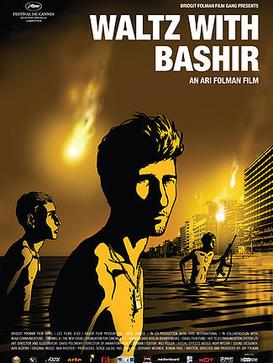
1.  Waltz with Bashir - the most incredible movie I saw last year of any type;  set in Israel's invasion of Lebanon;  the visuals are jaw-dropping

THE WORST

5.  In Harm's Way - bloated star-studded soap opera set around Pearl Harbor;  even John Wayne and Kirk Douglas

4.  Hanover Street -  sappy romance set in WWII with a ridiculous spy plot thrown in

3.  Journey to Shiloh - some friends trek to join the Confederate Army;  series of lame adventures ensue

2.  Tin Drum -  a bizarre movie about a malevolent little boy set in WWII;  many critics patted themselves on the back for praising this piece of crap

1.  Braveheart - my mission to watch the top 100 war movies forced me to watch this abomination again;  the small hope that I had been too hard on it in the past did not come to fruition;  the most egregious falsification of history ever put on film