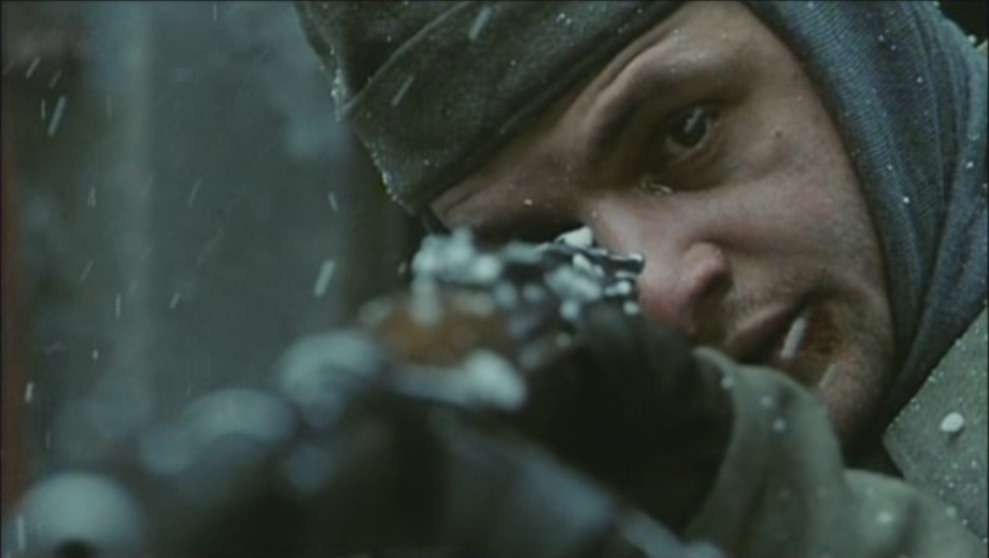
“Kanal” (sewer) is a Polish
movie set in Warsaw during the Warsaw Uprisingagainst the German occupiers in 1945.It was directed by Andrzej Wajda (“Ashes and Diamonds”).It is the second in a trilogy that began with
“A Generation” and was followed by “Ashes and Diamonds”.He was a member of the Polish Resistance in
WWII and wove some of his remembrances into the film.The script was written by a survivor of the
sewers.It was released in 1957.It was awarded the Special Jury Prize at the
Cannes Film Festival.
The film begins with narration
that explains the Warsaw Uprising is nearing its tragic end.(The date is Sept. 25, 1944 and it is day 56
out of 63.)Lt. Zadra leads a company of
the Home Army that is down to 43 members.“These are the tragic heroes.Watch them closely, for these are the last hours of their lives.”So this is going to be a “who will survive?”
small unit movie and the answer to the question is 0%.So much for suspense.You might try guessing who will be the last
to go.
A masterful tracking shot shows
us we are in the hands of an auteur.To
the sounds of gunfire, the camera tracks our tragic heroes from front to
back.A fatalistic attitude permeates
the film.A German attack using
Goliaths (remote-contolled tracked mines) is defeated and a sudden lull in the
fighting allows for character development.The unit spends some time in a fairly intact bourgeoisie house.We meet several of the doomed unit including
two females:Helinka the messenger girl
and Daisy the sluttish blonde.Most
bizarre is a composer named Michal who has attached himself to the unit to
provide music, apparently.After this
interlude in Purgatory, its down into Hell (the sewers) to relocate to the
center of the city since the Germans are closing in.
Daisy offers to guide the
remaining 27 and assures Zadra it will be a piece of cake (which by the way,
you do not want to eating for the rest of this movie).You know, the same thing Athenian youth were
told when they entered the Labyrinth.Except the Labyrinth was not flowing with human waste.Surprise, the group is soon lost and divided
into sub-groups.The sewers are
claustrophobic, eerie, and confusing.The music matches them.It and
the scenes become increasingly surreal.We already know this will not end well, but it is interesting to see how
each character will meet his or her end.One of them reaches the end of a pipe emptying into the Vistula River,
but bars block the exit.This is not the
feel good movie of 1957.Michal goes
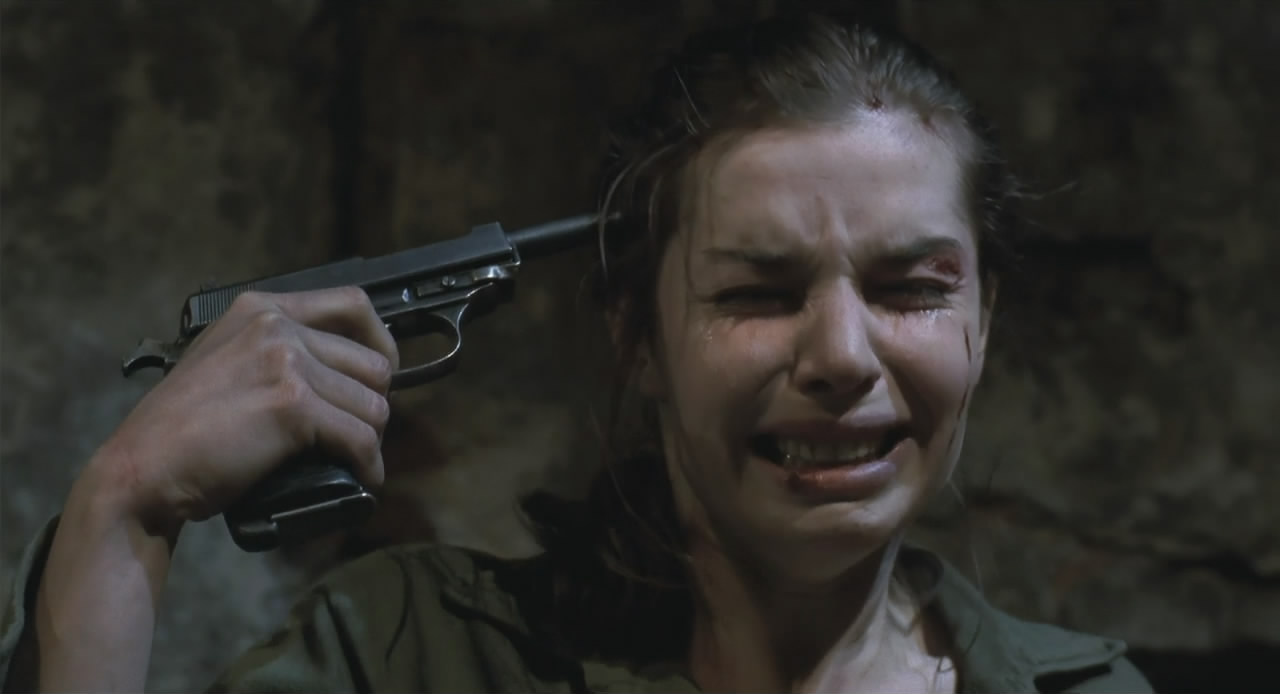
insane and starts playing an ocarina like the Pied Piper.One of the girls commits suicide when she
learns her sewage soaked boy-friend is married.Another member dies from a booby-trapped grenade.At the last minute, Stalin orders his armies
forward and they rescue the Home Army and expel the Germans from Warsaw.Just kidding.
This is a fascinating
movie.It is the kind that you watch
mesmerized by the skill of the director.The cinematography is amazing.The music is riveting.The
characters are interesting (especially Daisy) and the acting is good.These are not heroes, they are just humans
who refuse to quit even though they have no optimism.The dialogue is simple.(You don’t have to read much!)No patriotic speeches.The sets are outstanding.The outdoor scenes are appropriately rubble-strewn.And the sewers are sewers.This is one of the slimiest movies ever.Thank God it’s not available in smellovision!
The movie has educational
value.Most Americans know little of the
Warsaw Uprising.The Polish Resistance
timed the uprising with the approach of the Soviet Army.The Germans would be caught between the anvil
and the hammer.The very valiant Poles
took over much of central Warsaw and were on their way to success when…Josef Stalin decided he preferred to have the
Nazis kill the valiant Poles and save him the trouble later.The Germans were quite capable of doing the
dirty work.Barricades slowed them, but
they had the firepower as we say.They
did use Goliaths as depicted in the film.They also used Stukas wantonly.25 % of the buildings in the city were destroyed.After 63 days, it was over.
The themes are fairly
obvious.The futility of war.The fog of war.The hopelessness of being Polish in warfare.I read it described as hopeless heroism.You know, the kind that gets you to charge
tanks on horseback.Something else
apparent is how tiring warfare can be.These Poles drip (sorry) exhaustion.If you think you could never fall asleep in a sewer, think again.I like that kind of realism.Too many war movies dispense with the effects
the elements have on soldiers.
This is a must see movie.It is also a must not eat before seeing
movie.Oh, and don’t watch it if you are
already depressed.
BACK-STORY:“Stalingrad” was a major German
production released in 1993.It was
directed by Joseph Vilsmaier.It is in
the German language.I found nothing of
particular interest anecdotally
OPENING:Words on the screen tell us that
it is the summer of 1942.The Germans
are in the middle of their second major summer offensive in the Soviet
Union.The goal is the Caspian Sea and
the Caucasian oil fields.The Sixth Army
under Gen. Von Paulus is advancing on Stalingrad which will result in the “most
brutal battle of the century”.While
these momentous events are taking place, a squad of veterans from North Africa
are enjoying an Italian beach.Their
beloved Lt. is being replaced by a Lt. Witzland (Thomas Kretschmann) who is
green, an aristocrat, and gung-ho.He
makes an immediate impression on his new charges when he denies the seasoned
Sgt. “Rollo” Rohleder a medal because he refuses to button his collar at the
decoration ceremony.We could be looking
at a Stransky vs. Steiner dynamic ala “Cross of Iron”.
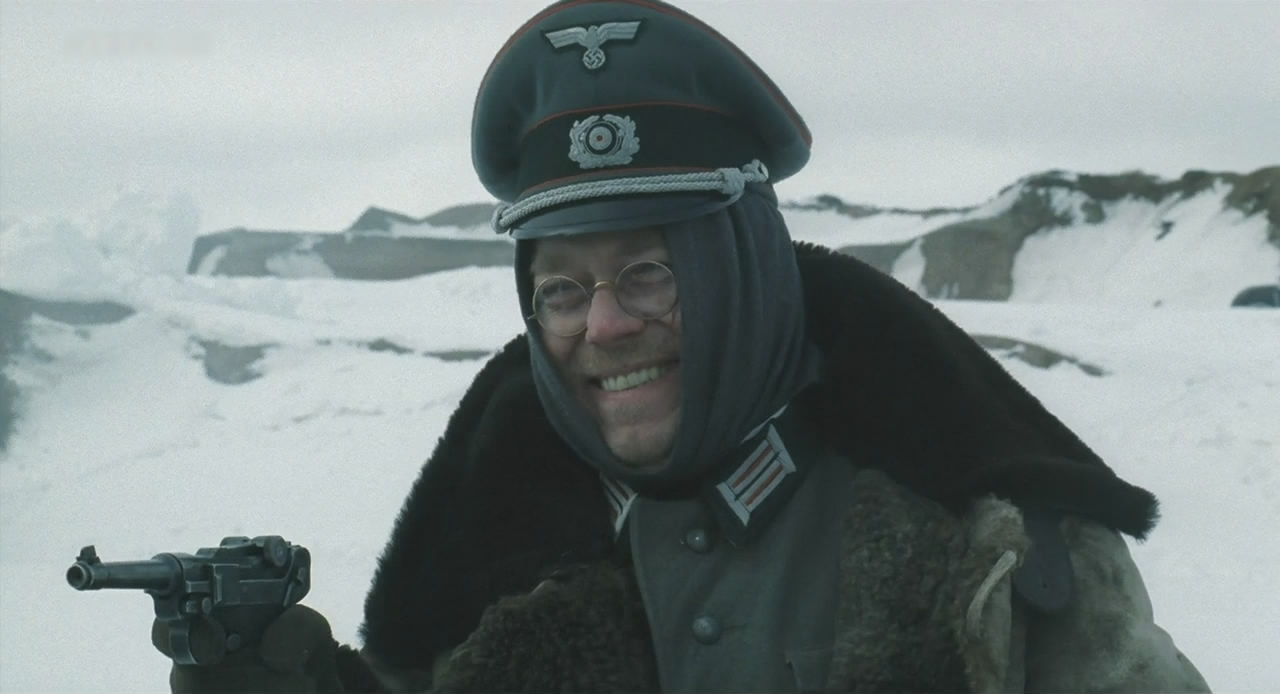
Witzland rethinking his career path
SUMMARY:The squad must have done
something bad off screen because next thing you know they are being sent to the
Eastern Front.On the train, they are
overconfident and brag about kicking Russkie ass.This attitude is probably due to having
recently tangled with the British.They
are about to find out that the Russians are tougher than the Brits and freezing
cold is rougher than desert heat.
When
they arrive, we have the obligatory ”in with the new, out with the old
loading-the-wounded-on-the- vacated-railway-cars” scene.The actors are told to be sobered by this
sight when in reality these veterans would have seen plenty of death in North
Africa.Speaking of “Cross of Iron”,
Witzland has a run in with a sadistic Nazi officer named Haller who is abusing
prisoners.This ‘bad German” will
reappear several times throughout the film.
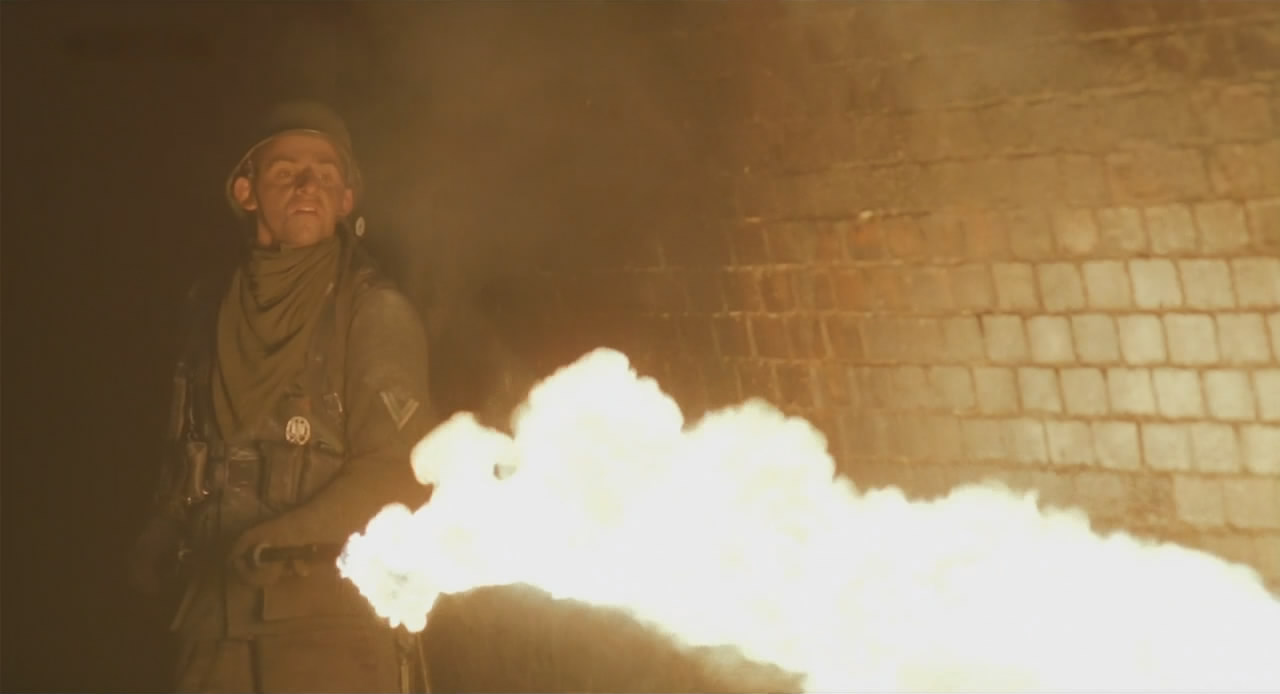
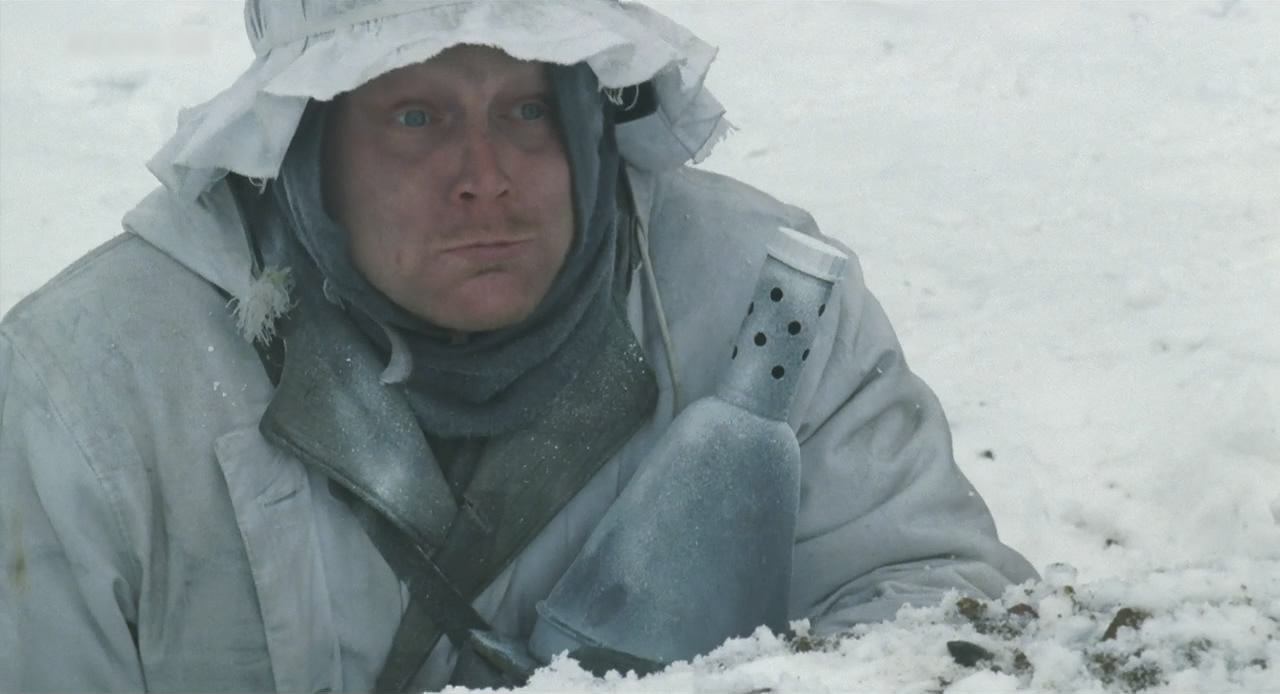
Reiser with a flammenwerfer
The
squad is attached to a unit commanded by the charismatic Capt. Musk (Karel
Hermanek).They are tasked to capture a
factory.The first death elicits the
shock and disbelief you would expect from rookies, not North African vets.They capture the factory with the aide of
flame throwers.There is confusion (“the
fog of war”) and a friendly fire death.One of the men admits he “shit his pants”.Only 162 of the original 400 man unit survive
to try to hold the position.
With
Soviets just a block away, our boys show typical cameraderie.The most introspective is Reiser (Dominique
Horwitz) who tells a newbie “If you start to think, you go crazy; so I don’t
think”.Witzland decides to defy
standing orders and offer a truce to recover the wounded from “no man’s
land”.Humaneness comes to a shattering
close when one of the Germans opens fire.In the chaos, Witzland captures a Russian boy-soldier named Kolya in a
move that makes no sense other than as a plot point.
Still
holed up in the factory, Rollo receives a “Dear Johan” letter.Witzland decides to lead a patrol to find a
way out.This command decision makes no
sense (why would he leave his unit behind?), but soon becomes clearly a method
to advance the plot. He gets separated
from the rest and runs into a female Soviet soldier named Irina.Witzland takes her captive, but she pushes
him into a sewage pool (including bobbing corpses) and gets away.What was the point of this encounter?
Bad German is armed and evil
Reunited
with the group, Witzland and the others make it to the hospital where they
force an orderly to work on a wounded friend.“Bad German” suddenly arrives and puts them under arrest.What are the odds?They are put in a penal battalion and four
weeks later are hunting for mines.Capt.
Musk arrives and offers them a chance for redemption.All they have to do is defeat a large force
of Soviet tanks.Piece of cake!
You want me to do what with this anti-tank mine?
They
are in fox holes defending a perimeter when the tanks arrive.Their main weapon is sticky bombs that they
have to attach to the tank’s undercarriage.Lucky for them the tankers are either out of ammunition or feel it’s
unsporting to use their main guns!Kind of
like in “Saving Private Ryan” when the tanks did not use their machine guns in
the bridge scene.In a huge upset, the
Germans beat off the attack and then abandon the position to return to their
hut for some more exposition.Apparently
no need to worry about another attack in that sector.
Sorry, Kolya: orders are orders
They
are put under Bad German’s command and are ordered to act as a firing squad for
some Russian prisoners.Oh, no!Is that Kolya?They reluctantly obey orders.This is the last straw.Reiser decides to desert and Witzland and
Muller join him.They make it to the
airport and fake being wounded, but in the chaos they are not able to board the
last plane out.They return to the hut.
Irina did not enjoy being a sex slave
CLOSING:As they await the inevitable surrender, a
plane drops a crate of supplies in a nearby field.The guys are gorging on food when Bad German
arrives out of the blue and
threatens to shoot them as looters.He shoots Muller and seems to think his Naziness
will cow the desperate, feral, vengeance-minded men.Wrong!Before he dies, he reveals that he has a man-cave replete with goodies
nearby.The boys hasten to the lair
where they find a mountain of looted goods and a sex-slave tied to a bed.OMG – it’s Irina!No wonder the script allowed her to escape in
the sewer.Witzland frees her and plays
the gentleman.He prevents the others
from raping her (although they don’t seem very keen on it anyhow).Suddenly, Capt. Musk starts ranting about
them being deserters and wants to return to the front.Otto commits suicide.Reiser and Witzland head off with Irina
leading.Rollo sticks around with the
dying Musk.The trio encounter Soviet
soldiers and those expecting a happy ending will be disillusioned.
RATINGS:
Acting =C
Action =7/10
Accuracy =B
Plot =C
Realism =B
Overall =C
WOULD CHICKS DIG
IT?The film is not
aimed at a female audience, but it does have a major female character and it is
not graphic in violence or language.Not
exactly a date movie, but more appealing than most war movies.
HISTORICAL
ACCURACY:The Battle of
Stalingrad was the turning point in Europe in the Second World War.It was the decisive battle on the Eastern
Front.It was precipitated by Hitler’s
attempt to finish off the Soviet Union with a grand offensive that would
capture the Caucasian oil fields and the strategic city of Stalingrad.The Sixth Army commanded by General Von
Paulus was tasked with capturing the “city of Stalin” on the Volga River.Things went well at first with the army
sledge-hammering its way into the city and eventually controlling 90 % of
it.The losses were enormous on both
sides.Although the Germans cut their
way to the banks of the Volga and thus divided the city, the Red Army put up a
spirited resistance.The Soviets created
strongpoints and forced the Germans to come to grips which negated their tanks,
artillery, and air power.Buildings,
including factories, changed hands numerous times.The city was turned into rubble which
naturally favored the defenders.
In
November, 1942, Marshal Zhukov launched Operation Uranus which entailed pincer
offensives north and south of the city that resulted in the encirclement of the
Sixth Army within the city.The Germans
were gradually whittled down.Rations
were cut to a bare minimum.The soldiers
were forced to make a watery soup using the bones of dead horses that they dug
up.The winter added to the
hardships.Hitler refused to allow any
thought of a breakout, especially after Luftwaffe commander Goering promised to
supply the city via air drops.Goering’s
bravado was a pipe dream as the actual tonnage of supply drops was woefully
short of the minimum requirements.
Hitler
approved an attempt to break through to the city led by General Von
Manstein.Manstein’s spearhead got to
within thirty miles of the city, but Von Paulus (sensing Hitler’s disapproval)
refused to launch a break out attempt to link up with the relief force.The Sixth Army’s fate was sealed.Eventually 91,000 Germans surrendered.
The
movie is fictional and does not attempt to give an overview of the battle.It could be set in any number of urban combat
scenarios.As a depiction of the trials
of a typical squad of Germans caught up in the battle, it is fairly
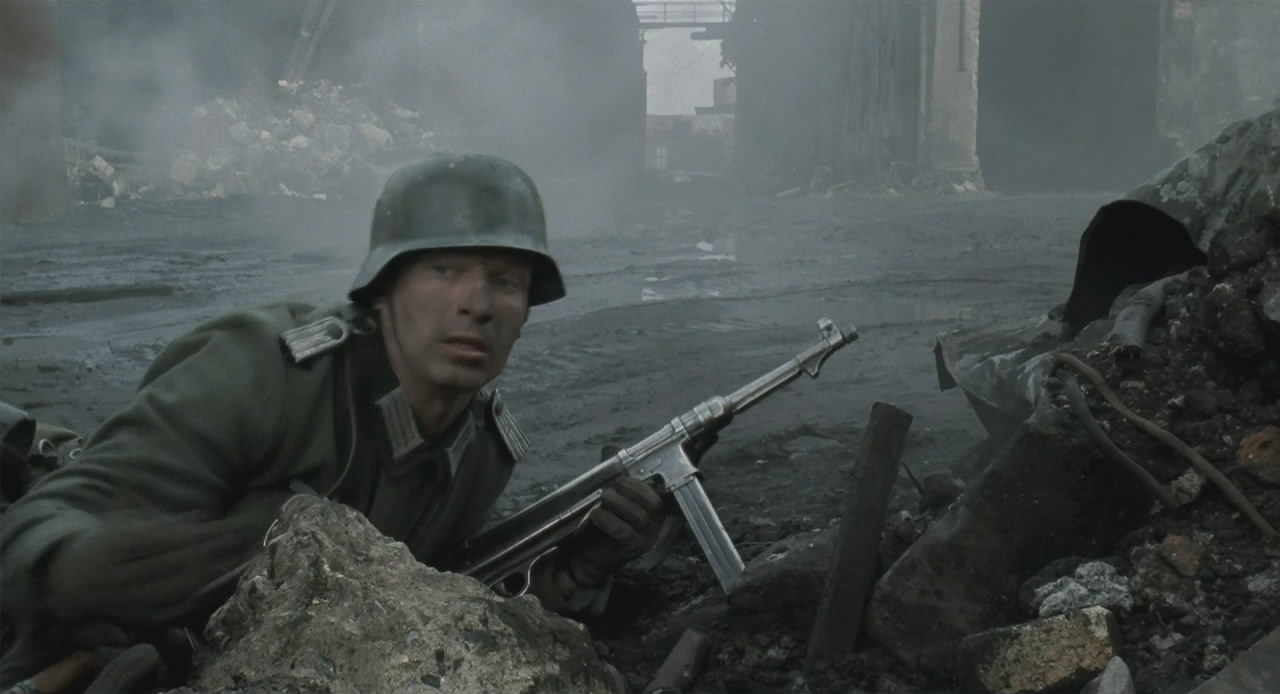
accurate.The weapons and equipment are
authentic.
CRITIQUE:“Stalingrad” an admirable attempt
to depict the battle from the perspective of a squad of the losers.We follow them from the sunny beach in Italy
to the frozen rubble of Stalingrad.They
become recognizable personalities.The
unit is heterogeneous, but not too stereotypically so.It reminded me of “Platoon” in this respect.However, it does have some archetypes like
the cynical veteran sergeant (Rohleder), the idealist (Reiser), the naïve
novice (Muller), and the ambitious officer (Witzland).Unfortunately, the acting is pedestrian and
the character development is flawed.Rollo should have been a strong character, but he does not develop into
the insubordinate anti-hero he could have been.This was disappointing.Perplexing is more the word for Witzland’s evolution.He starts as a martinet, becomes an officer
on the make, and then suddenly gets sensitive towards the enemy and ends up a
deserting pacifist.While unorthodox,
this arc is ridiculous.The small unit
dynamics are realistic and the soldier talk seems true to form.The interaction between the soldiers is not
forced.It is instructive to see that
the non-S.S. soldiers behaved like soldiers from any World War II army.Remember that not all German soldiers were
Nazi fanatics.The movie also throws in
a female Soviet soldier and a boy soldier, but the roles come off as attempts
to humanize the Germans because they treat these enemy well.In reality, the Wehrmacht was not exactly
sensitive toward those two types.Plus
their appearances in the narrative are too plot enhancing.Speaking of which, the whole Bad German role
was dripping with cliché.
The
movie is technically sound.The
cinematography is average after the opening battle which featured some
hand-held and point of view.The music
is sadly trite.The movie does get the look of
Stalingrad.The dead bodies.The rubble.The sewer system.However, much
of the movie is set outside the city on snowy plains.I feel the movie wimped out on showing the
real hellish nature of the battlefield. Showing a character in a sewer with bobbing
corpses was not enough.
The
plot is not smooth.It does not
integrate the big picture into the small world of the squad.It is one thing to depict the “fog of war”,
but the audience should have an idea of why things are disintegrating.Too many incidents in the plot foreshadow
future developments.This is the kind of
movie that when an enemy character suddenly is injected into the plot and then
exits, you know they will be reappearing.It was apparently a small world in Stalingrad.
The
themes are appropriate.Vilsmaier is
interested in filming the futility of war.What better way to make this point than focus on a German squad at
Stalingrad?There’s no debating the
movie is solidly anti-war.It also tends
to be anti-military.Although Witzland
and Musk are shown in a positive light, Haller (Bad German) is meant to
represent the German officer corps.The
other theme is comradeship.In this
respect, the film does not break any new ground and does not compare well to
movies like “Platoon”.The interplay is
average in realism.
CONCLUSION:I bought a DVD copy of
“Stalingrad” before I started this blog project and held off watching it until
I reached its place on the Greatest 100 list.This means I had been looking forward to viewing it for over two
years.I had every reason to believe I
would enjoy it.It appeared on the
surface to be my kind of war movie.Plus
I am fascinated by the Battle of Stalingrad and have read books on the
subject.I was shocked at how
disappointing the movie was.It is very
overrated.Sources that I trust rated it
as a great war movie.They are wrong!The best way to prove my point is to compare
it to its closest equivalents.It is
absolutely inferior to “Cross of Iron” and “Enemy at the Gates”.COI is much better at small unit dynamics and
has much more vivid characters.Rollo
cannot carry Steiner’s boots.As far as
EATG, the plot is much stronger and the rubble is more rubblier.Not to mention the female and youth characters
are much more compelling.
I
think a case can be made for “Stalingrad” being in the 100 Best War Movies
mainly because of its subject matter – a German squad in the Battle of
Stalingrad.However, the execution of
the concept is flawed.
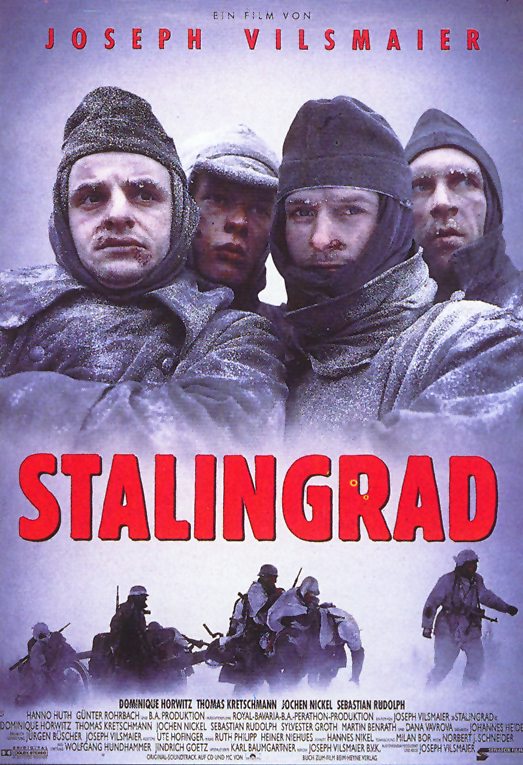
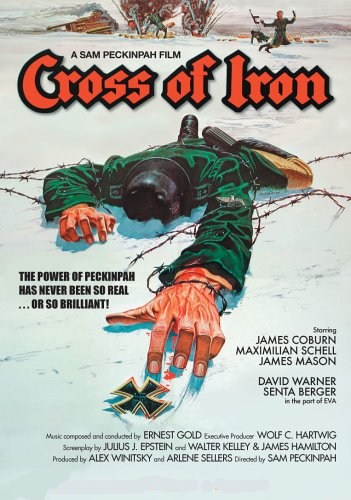
POSTER: The poster does convey the fact that it is hard to distinguish the various characters. You alos get the impression that it is not the feel good movie of the year. Grade = B
BACK-STORY: “Cross of Iron” is a war movie set on the Eastern Front in World War II. It is told from a German point of view. The action takes place in the Taman Peninsula in the Caucasus in 1943. The Germans are in the midst of their retreat from Stalingrad. The film was Sam Peckinpah’s last great feature and his only war movie. He supposedly was heavily drinking during the shoot. The movie is based on the novel The Willing Flesh by Willi Heinrich. The movie follows the book fairly closely. The movie was filmed on location in Yugoslavia with the cooperation of the Yugoslavian army. Because the production ran out of money, the ending had to be improvised. The release met with mixed reviews and it did not do well at the box office. It’s reputation has been rising over the years, however.
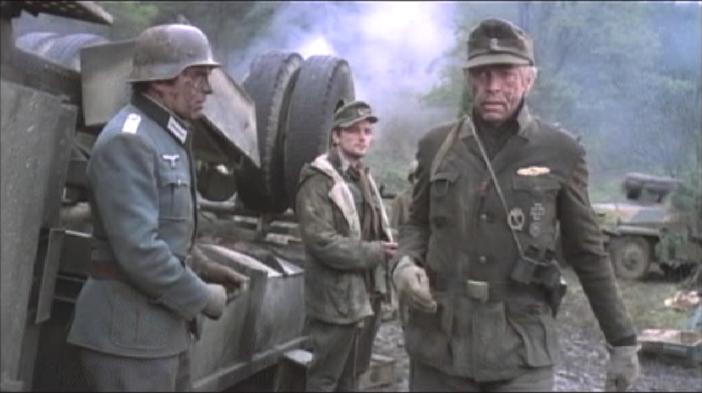
OPENING: The opening credits roll over German war footage with a German children’s song in the background. Corporal Steiner (James Coburn) and his squad sneak up on a Russian mortar post and kill their opponents in the slow motion typical of a Peckinpah film. They capture a Russian boy and bring him back.
SUMMARY: Capt. Stransky (Maximilian Schell) arrives to take command of the battalion and meets with Gen. Brandt (James Mason) and Capt. Kiesel (David Warner). Stransky is an aristocratic Prussian who has requested a transfer from France specifically so he can win an Iron Cross. Brandt is disillusioned and points out that the German soldier is simply fighting for his life, not for medals. They recommend Stransky make use of Steiner. The cynical, embittered Keisel says “Steiner is a myth. Men like him are our last hope and in that sense he is truly a dangerous man.”
Stransky, Meyer, and Steiner
When Stransky meets Steiner, he is angered by Steiner’s lack of respect for his “superior” (in rank and social status) officer. Steiner simply tolerates Stransky as the latest in a long line of clueless officers. When Stransky insists the orders to take no prisoners be carried out by shooting the boy, Steiner refuses, but the confrontation is diffused when one of the squad members promises to do it. He lies and later Steiner releases the boy and points homeward. The boy is immediately killed by attacking Russians. Oh, the irony.
The attack is a major one with frantic battle action. There are more slow motion deaths and lots of explosions. There is hand-to-hand combat and Steiner is wounded. His respected platoon leader Lt. Meyer is killed leading a counterattack. Later, Stransky (who cowered in his bunker during the battle) claims he led the successful counterattack and deserves the Iron Cross.
Steiner ends up in a hospital which results in some surreal scenes as he hallucinates and sees old comrades. He has an affair with a nurse (Senta Berger). In a telling scene, a general arrives with propaganda film crew to show the wonderful treatment of the men, but once the shots are done the banquet is reserved for the visiting officers. When Steiner is recovered enough (in his opinion), he abandons the nurse in favor of a return to his unit (cliché alert).
When Steiner returns to the squad’s bunker, he finds some of his men are dead and they now have a Nazi Party member attached to them. In a great scene, Steiner is called before Brandt to verify Stransky’s leading the counterattack. Stransky has two eyewitnesses – Steiner and a homosexual adjutant named Treibig who he is blackmailing. Brandt suspects Stransky is lying and wants Steiner to confirm his suspicions. Steiner surprises him by asking for more time. Brandt peevishly points out that he has tolerated a lot of insubordination from Steiner, prompting an outburst from Steiner in which he proclaims that he does not care that Brandt is “enlightened”. He hates all officers and, in fact, the whole army.
The Germans are forced to retreat, but Stransky sees an opportunity to silence Steiner by not passing on the order. The Russians move in with tanks. The squad takes refuge in a factory, but a tank simply plows through the wall. They escape through a tunnel. The action is intense.
They are on the run and moving cross country to try to reach German lines. They reach a village and take a unit of Russian female soldiers captive. The Party worm attempts to rape one of the women, but gets his genitalia bitten off and kills her. The scene is unique in that the women are treated sympathetically. When they kill one of the Germans who was distracted, Steiner does not retaliate. They would have done the same, I suppose. Steiner even gives them the Party guy as a parting gift.
They reach the German lines but still have to cross no man’s land. They send a message warning the Germans not to shoot as they are coming in, but Stransky gets his toadie Treibig to open fire on these “Russians” coming through the wire. Several members are killed in graphic, slow motion deaths. Steiner guns down Treibig and goes looking for Stransky.
CLOSING: The Russians choose this moment to launch an attack. Lots of explosions and flying debris. It’s as though Peckinpah added an Indian attack to the showdown scene of a one of his westerns. Steiner tracks down Stransky amidst all the chaos, but decides not to kill him. Instead, they go out together to fight. Steiner has shamed Stransky into earning the Iron Cross. The movie ends with Stransky fumbling with reloading his machine gun and Steiner laughing at him.
RATINGS:
Action - 9
Acting - 9
Accuracy - 8
Realism - 8
Plot - 8
Overall – 8
WOULD CHICKS DIG IT? This is a very manly movie. It is unlikely your significant other will enjoy it. There is only one significant female character and she is treated like a piece of meat. The movie is very grimy and gritty. It pulls no punches. The scene with the Russian female soldiers is admirably nonsexist, but most women would find it discomforting. Besides, how many women are Sam Peckinpah fans?
ACCURACY: Willi Heinrich was a veteran of the Eastern Front and was wounded five times so he knew of which he wrote. The book is probably partly autobiographical. It is also claimed the book is based on the experiences of the decorated soldier Johannsch Werdfeger who won two Iron Crosses.
The movie does not claim to be a true story. The battles are generic and represent typical battles during the Taman Peninsula campaign. The fighting is realistic in a Hollywood sort of way. Peckinpah does stage chaos well. The sets are appropriately decimated. The deaths appropriately random.
The movie is helped in its realism by the authentic weapons. The Russian tanks are T34/85’s on loan from the Yugoslavian Army. I won’t quibble with the fact that that particular model was not in use in 1943. The small arms are accurate. One flaw is the use of F4U Corsairs to represent Russian fighter-bombers. Gull wings – did they think we would not notice?
The small unit dynamics of the squad, especially in the bunker scenes ring true. The soldier banter is realistic. The comradery is what you expect for a squad that had gone through all they went through. The attitudes of the enlisted and the officers in the German army circa 1943 are well displayed. The cynicism and defeatism is apparent.
CRITIQUE: “Cross of Iron” is a special movie. There is no other war movie quite like it. It has the Peckinpah touch throughout it – the trademark slow motion violence, the iconoclastic anti-hero, the lack of respect for authority. An American war movie concentrating on Germans on the Eastern Front is unique.
The movie is certainly action-packed with lots of explosions. It is a great combat movie and has several combat scenes that are among the best filmed. It does have its exposition parts (which are necessary to develop the conflict between Steiner and Stransky and to explain Brandt’s role in the triangle), but the movie is definitely not wordy.
The movie is an excellent depiction of small unit warfare, but it also gives a taste of command. Brandt is a sympathetic soldiers-general and Keisel represents another type – the cynical staff officer. Stransky is yet another type – the chicken-hearted glory hound. Steiner portrays the hardened NCO who cares more for the survival of his men than the “big picture”. The movie is refreshingly free of the stereotyped evil Nazis. Stransky is not a Nazi – he is an aristocrat who is fighting for his family honor, not Hitler.
The acting is outstanding. Coburn deserved an Academy Award nomination and has one of his best roles. He is perfect as Steiner. He is ably supported by Mason, Warner, and Schell. I especially enjoyed Warner’s cynical Keisel. He is riveting whenever he appears. Schell is appropriately loathsome. The unknown actors who make up the squad also do a good job.
The ending has drawn mixed reviews. I personally did not like it. I found it out of character that after killing Treibig, Steiner does not kill the more despicable Stransky. Why would he suddenly change his mind? Then Stransky in a character-flip does not kill Steiner when he turns his back on him. Either one of these character shifts would be hard to swallow, but both? I did not mind the abrupt halt to the movie.
CONCLUSION: If you want a war movie that is adrenalin-fueled and well-acted, try “Cross of Iron”. It is not subtle, but it is not one-dimensional either. It is definitely underrated at #64. It seems incredible that it is only two places higher than “Castle Keep”! I feel confident it will be in the top fifty of my 100 Best War Movies list. By the way, that is a great movie poster.
COMING UP:I will be reviewing the History Channel special on "Gettysburg" on May 30 at 9 EST.
.jpg)