Showing posts with label Iraq. Show all posts

Monday, November 30, 2020

NOW STREAMING: Mosul (2020)


                    “Mosul” is currently playing on Netflix.  It is the latest from Joe and Anthony Russo of Captain America and Avengers fame.  It was directed by Matthew Carnahan in his debut.  He wrote “World War Z”.  “Mosul” was based on a New Yorker article entitled “The Desperate Battle to Destroy ISIS” by Luke Mogelson.  This film is the first international film in the Iraqi dialect.  It was filmed in Morocco with a cast from the Middle East and North Africa.  Most were unknowns, but Suhail Dubbach (who plays Major Jaseem) was a well-known actor in Iraq before the overthrow of Saddam.  The cast was put through a three-week boot camp.

                    In 2017, an odd coalition of anti-ISIS forces attempted to take back the city of Mosul.  In the coalition was the Nineveh SWAT team that had worked in the city before its fall in 2014.  A flyover reveals that the city was destroyed in the fighting.  At this point, ISIS is in the process of evacuating the city.  The SWAT team is attempting to kill any Daesh (the Iraqi name for ISIS) still in the city.  The movie opens with them rescuing a pair of policemen who are besieged by Daesh gunmen.  Major Jasem recruits the younger of the two.  Kawa meets the qualification of either having been wounded by Daesh or having lost a loved one.  Kawa is the cherry who will have to earn the respect of the hardened SWAT members.  The unit starts with 12, but it is clear early on that this will be a “who will survive?” movie.  But it is not a last stand or a lost patrol movie.  They are not lost, but they are constantly moving through the rubble.  They have a “mission” that they will not let Kawa, or us, in on.  As they move, they encounter some of the other forces in the coalition and duel with Daesh. 

                    The movie covers a few hours in one day.  It does not attempt to retell the Battle of Mosul.  It concentrates on a small group of Iraqis who are personally committed to liberating their city.  But they are mainly motivated by revenge.  They and their foes give no quarter.  It is hard to tell at the start if they are any different than Daesh, but the movie is clearly an homage to the Nineveh SWAT team.  Although only Jasem and Kawa are developed as characters, the other men are typical of a gritty small unit movie.  They are battle-weary and sometimes question orders.  There is a rough camaraderie.  Jasem is the most fascinating.  He is a father figure for his men and really cares for them.  He has a gruff exterior and can be ruthless, but he does not fit the one-dimensional martinet stereotype from most Western war movies.  On the other hand, Kawa goes from naïve cop to hard core avenger too quickly.  It’s the only weak characterization in the unit.  The cast is solid, especially Dubbach. 

                    Is it a war movie?  I would say yes.  Although it tells the story of a police unit, they are participating in house-to-house fighting in a war.  They do move like a SWAT team and the boot camp must have concentrated on that type of training.  The combat is intense, but not combat porn.  It is episodic as the movie takes time for exposition and humanizing incidents.  At one point, they watch a soap opera.  The combat scenes break no new ground.  There is no slo-mo and it is not graphic.  It is intimate as the camera takes us down the alleys with them.  It is realistic in its depiction of the chaotic nature of a counterinsurgency in an urban environment.  Action breaks out suddenly and the deaths are random and unpredictable.  There is some FUBAR as at least one death is from friendly fire.  The enemy is faceless and there is no central hissable villain as you commonly find in these movies.  However, although the men do make some cracks about America’s role, it is easy to root for these guys and it is easy to feel empathy, although hard to imagine what a situation like that would be like.

                    As far as accuracy, I read the article and the screenplay appears to be based on it, rather than an adaptation of it.  The article has the Nineveh SWAT team playing a role in the liberation of Mosul, but does not mention any mission as depicted in the movie.  In fact, being a SWAT unit, the men are not really geared for taking neighborhoods, as they are assigned to do.  The movie forgoes the lack of success the unit had.  It does a better job portraying the men as the resilient victims of a sectarian civil war.  It also does a good job showing the casualties they had to overcome.  It is great at putting the unit in action movie situations, but as entertaining as the scenes are, they are only loosely related to the incidents in the article.

                    The movie is certainly watchable and a must-see for war movie fans who have Netflix.  There are plenty of mindless shoot ‘em ups streaming.  “Mosul” is set apart from most because it does not try to get the entire male demographic.  Teenage boys will probably not like it.  It may not realistically chronicle the team’s participation in the battle, but what happens feels real and you will care about Iraqis fighting for their country.  Maybe after the can of worms America opened up, we should see the victims trying to clean up the mess like an American hero would.


GRADE  =  B

Thursday, January 4, 2018

NETFLIX ORIGINAL: Sand Castle (2017)


                “Sand Castle” is an appropriately named movie about the war in Iraq.  It is a Netflix original.  The movie was directed by up and coming Fernando Coimbra.  It was written by Chris Roessner based on his experiences as a machine gunner in the Sunni Triangle.  He was inspired by the movie “Platoon”.  The movie was released directly to Netflix customers in 2017.
 
                The movie centers on a young rifleman named Matt Ocre (Nicholas Hoult).  Ocre joined the Army Reserves to pay for college.  He enlisted before 9/11 and had no intention of becoming a patriotic warrior.  In fact, the first thing he does in the movie is attempt to injure himself so he can be sent back to the States.  He does not succeed and the day his cast comes off, his unit gets orders to participate in the invasion of Iraq.  He is the only one in his squad who is not gung-ho about seeing the elephant.  In the rubble of Baghdad, they run into a sniper so they call in an air strike to kill one man.  A hammer to swat a gnat. The American way of war.  They are billeted in a palace with running water and a swimming pool for three months before they get orders to fix a water pumping station in the city of Baqubah.  Ocre does not want to volunteer, but his commander needs someone smart on board.  When they reach Baqubah, they link up with a special forces unit led by a badass named Capt. Syverson (Henry Cavill).  He explains that the job is to distribute water from the station.  Each day they will have to escort a water truck to the desperate people.  Those people are not desperate enough to be appreciative.  And the insurgents are not interested in allowing the Americans to become appreciated.  Ambushes ensue leading to a raid on a suspected terrorist lair.  Someone gets the logical (except for this being Iraq) idea of having local workers fix the pumping station.  Like building a sand castle before the inevitable tide.

                “Sand Castle” is very good for a Netflix original.  That bodes well for war movie lovers.  Coimbra does well with a limited budget.  It is a small movie concentrating on one character.  Hoult is good as Ocre, who is the only character that is developed.  Ocre reminds me a bit of Henry Fleming of “The Red Badge of Courage” – a reluctant warrior.  Henry Cavill gives the movie a second recognizable star as Syverson.  Syverson is the stereotypical operative.  The squad is also stereotypical.  All but Ocre are enthusiastic about living out their video games and proving their manhood.  Their attitudes are realistically macho and their behavior as soldiers shows that Roessner lived what he wrote about. The men are naïve, but there is a lot of that spread through the movie.  The Americans are naïve to think good works will make a difference.  The Iraqis who help the Americans are naïve to believe that the Americans will be able to protect them.  This theme is embodied in the school master who is so desperate for water for his students that he works with the Americans to repair the station.  Do I need to tell you that he is a tragic figure?  Besides naivete, the movie also explores the theme of futility.  Again, note the title.  The movie makes clear parallels to Vietnam.  We control the day, the enemy controls the night.  Civilians are caught in the middle.  Winning hearts and minds is a pipe dream.  The movie makes you wonder if the American high command ever saw a Vietnam War movie or read any books on the war before committing us to overthrowing Saddam Hussein.  If you have never seen an Iraqi War movie or read a book on it, “Sand Castle” is a good primer.  I do not know of any other Iraqi War movie that concentrates on the huge problem with infrastructure that resulted from our conquest of Iraq.  The commendable American philosophy of “we broke it, so we’ll fix it” is rendered with the typical result for Iraq.  It was not post-WWII Germany or Japan.  The movie tosses in some brief combat, but you get the impression that America will never be comfortable with counterinsurgency.

                If you are a Netflix subscriber, give “Sand Castle” a look.  Even if you are not a war movie lover, you’ll enjoy it and learn a little.  For instance, you’ll learn that when you invade a country and bomb the hell out of it, they might not give you much credit for rebuilding what you destroyed.


GRADE  =  B

Sunday, November 5, 2017

NOW SHOWING: Thank You for Your Service (2017)


                “Thank You for Your Service” is the newest war movie to examine PTSD.  It is based on the nonfiction book by journalist David Finkel.  Finkel’s book was a sequel to his “The Good Soldiers” in which he wrote about the 2nd Battalion, 16th Infantry Regiment’s deployment in Iraq in 2007-8.  The sequel deals with the readjustment of the men to life back in America.  It is telling that Hollywood decided to make a movie out of that book instead of his book about combat deployment during the Surge.  I suppose there is more drama in PTSD than in combat.  The movie was directed and written by Jason Hall.  He had written the Academy Award nominated script for “American Sniper”.  This movie is his directorial debut.

                The movie opens with the spongy “Inspired by a true story”.  A squad gets ambushed in an Iraqi city.  One of the men is shot in the head by a sniper.  Staff Sergeant Adam Schumann (Miles Teller) drops the body on his way down the stairs.  That’s got to have a lasting mental effect.  The unit is returned home not long after the incident.  Schumann’s weapon is checked in by a soldier played by the real Schumann in a cameo.  He is confronted by a war widow (Amy Schumer) who wants to know the circumstances of her husband’s death.  Apparently Schumann is going to be tormented by two deaths.  The movie focuses on the adjustment of three soldiers.  Schumann is readjusting to life with his wife Saskia (Haily Bennett) and young daughter.  They are financially challenged and have lost their house.  His best buddies are Specialist Tausolo “Solo” Aieti (Beulah Koale) and PFC Billy Walker (Joe Cole).  Solo is married without kids.  Billy is expecting to get married, but his fiancé is not home when he gets there.  Their arcs will intertwine. 

                Solo is suffering from memory loss.  Schumann is suffering from the inability to communicate that he is torn up by the two incidents.  They visit the Veterans Hospital in a scene that is mandatory for showing the lack of empathy of the System.  Most of the extras waiting interminably in the waiting area are actual veterans.  I’m sure they did not have to be instructed how to act in the situation.  Solo will have to wait 6-9 months to see a psychiatrist.  To add insult to injury, Schumann ex-CO basically calls him a pussy for being there.  “Don’t fold like this.” This is a tipping point for Adam and Solo.  Each takes a typical PTSD Hollywood path.  One will have to confront his demons and the other will get in bed with demons.

                “Thank You for Your Service” is a sincere effort to cover the effects of PTSD on veterans.  It does not break new ground on this topic, but it is entertaining and I will assume not everyone has seen numerous movies on this topic.  If this will be your first one, you could do worse.  Like “Billy Lynn’s Long Halftime Walk”.  Although the scenarios depicted in the movie are not really original, some of the dots that are connected are unpredictable.  The movie is not heavy-handed.  There is a fairly subtle use of a wounded pit bull as symbolic of wounded veterans.  We are reminded of the crass treatment of vets, but not bludgeoned by it.  The movie assumes the audience already knows about the flaws in the system.  This movie is not “Born on the Fourth of July” or “Coming Home”.  But it does make it clear we have not improved much from the Vietnam era.  In an interesting discussion, Adam and Solo debate whether it is better to be wounded physically (like Ron Kovic) or mentally (like Adam and Solo).  Solo argues that an amputation at least results in medals and hero status. 

                The movie reminded me a little of an Afternoon Special for adults.  This week’s film is on PTSD.  Three besties deal with the stress of war and readjusting to their families.  The movie has the pat ending of one of those specials, but it is definitely a worthy effort and just as informative.  The acting is very good.  Teller anchors the film as the stoically tortured Schumann.  His interaction with his wife (Bennett) feels authentic, albeit deja-vuish.  Koale matches him as the stereotypical vet who goes over to the dark side.  You care about these comrades.  You may look back at the movie and realize you had seen all of it before, but while you are watching it, you will be drawn into their story.

GRADE  =  A  


Tuesday, June 13, 2017

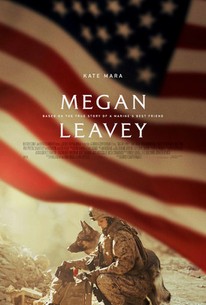
NOW SHOWING: Megan Leavey (2017)


“Megan Leavey” is this summer’s feel-good war dog movie.  In a summer full of super heroes, we have here a real hero.  And heroine.  The movie is “’based on a true story” about a Marine Corporal and her Military Police K9 dog.  It was directed by Gabrilla Cowperthwaite.  It took four screenwriters to finish the script which is never a good sign.  However, that is not likely to discourage the viewing public.

The movie opens in New York state in 2001.  Megan Leavey (Kate Mara) is living a dead-end life after the death of her best friend.  Her family life is a mess and then one day she gets a wild hair and joins the Marines.  It’s off to Parris Island for a short training montage.  A graduation celebratory pee in the bushes gets the PFC put on a **** detail which is literal because she has to clean out the kennels of the K9 unit.  There she meets a dog named Rex who is not looking to make any friends.  As in most cinematic romances, you just know these two will get together.  Thankfully the movie eschews the lover’s triangle.  Before you know it, the duo is off to Iraq.  After a couple of routine missions to establish the resumé of a military working dog, Meagan and Rex reach their epiphany by way of an IED.  Is this the end of a great friendship?

I wanted to like “Megan Leavey”.  I love war movies and I love dogs, so it seemed like a natural fit for me.  And I am not saying I disliked it.  It is a nice little movie and deserves to do well at the box office.  My problem is that it has an unsatisfactory feel to it.  The word that comes to mind is “shallow”.  Although it clocks in at almost two hours, parts of it seem cursory.  Even the montages are truncated.  Megan develops a reputation as a problem with no evidence presented.  Megan bonds with Rex with little difficulty.  Training is barely touched on.  The divorced parents pop up to assure us that Megan is better off risking her life in Iraq than being around them.  In Iraq, we get only brief tastes of the hazardous duties of Megan and Rex.  The movie has some giant time jumps that give the false impression that war for a bomb-sniffing dog team is long stretches between cinematic-worthy suspense.  To tell you the truth, the movie does not make a strong case for Megan and/or Rex being a hero.   The movie throws in a romantic interest for Megan which is perfunctory.  I could best describe the movie as the Cliff’s Notes version of the story.

I’m not trying to be the grinch who stole your feel-good movie of the summer.  The movie is nicely made with decent acting.  Obviously,  Kate Mara is solid and the unidentified dog actor is fine.  Does it make sense to say they lacked chemistry?  Rex usually appears less than thrilled to see her.  Probably that soldier thing where they don’t want to get too invested in a friendship.  The cast is fine, but wastes three as the father, mother, and stepfather (Bradley Whitford, Edie Falco, and Will Patton).  More time with the dog and less with the glum-inflictors would have been a good decision.  The dialogue does not stand out and there are no memorable lines.  However, the movie is not schmaltzy and does not jerk tears.  It certainly had the potential to require tissues if it had carried the “true story” to its completion (see below).   While I am not a big fan of tearjerkers, this movie would have been better if it stuck to the true story better.  Or fleshed out what it decided to cover.

Take a break from the usual bombastic summer fare and you’ll leave the theater feeling good.  Just don’t expect an Academy Award nominations.  And don’t go home and shame your dog.  

GRADE  =  C

HISTORICAL ACCURACY: Megan Leavey did not escape a dead-end life by joining the Marines.  She was not depressed over the loss of her best friend.  In fact, she was in college when she was inspired by 9/11 to serve her country.  She was not punished by being sent to the K9 unit.  She volunteered for the Military Police and was assigned Rex.  He was not a problem dog.  He had already been to Iraq with his original handler.  Sgt. Mike Dowling took Rex to Iraq in the first deployment of military dogs since the Vietnam War.  He later wrote a well-received book entitled Sergeant Rex:  The Unbreakable Bond Between a Marine and his Military Working Dog.  The book chronicles their adventures In Iraq and covers how Dowding helped Rex overcome his fear of explosions and gunfire.  (Although Dowling has publicly expressed his support for the movie, I have to wonder about his feelings about being written out of it.)   I am unclear how Leavey became the dog’s handler, but she must have taken over in Iraq.  They did not meet when Leavey was training to be a dog handler.  The two spent two tours together.  First in Fallujah in 2005 and the second in Ramadi in 2006.  The IED incident occurred during the second tour.  The movie accurate depicts it.  Leavey and Rex both took about a year to recover.  Leavey decided not to reenlist and wanted to adopt Rex at this point, but the Marines logically turned her down because Rex had recovered to the point where he could resume his duties.  The adoption was not foiled by a bitchy veterinarian as shown in the movie.  Several years passed (much longer than the movie implies) and Rex developed a facial palsy that ended his working career.  It was at this point that Leavey reinitiated her adoption attempts.  She did contact Sen. Schumer from New York, although not personally as shown in the movie.  The Senator did facilitate the reunion.  Leavey and Rex made the national news and were honored at Yankee Stadium.  Unfortunately, they had only a few months together before Rex passed away in 2012.  Now you can break out those hankies.

I think most would agree that the movie would have been better if it had adhered to the real story.  Remove the lame plotting about Leavey escaping her crappy family and substitute her having to take over a dog that was already bonded to a male handler.  I think that cinematic dynamic would have worked better.  And add more from the one hundred plus missions the trio did in Iraq.  Close with the big finish of Rex dying.  Not a dry eye in the house.


Saturday, August 20, 2016

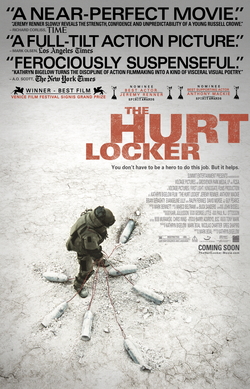
The Hurt Locker (2008)


       “The Hurt Locker” was the last war movie to win the Best Picture Oscar.  It continued a long tradition of war movies being honored by the Academy Awards.  The other winners were “Wings”, “All Quiet”, “Mrs. Miniver”, “Casablanca”, “Best Years of Our Lives”, “From Here to Eternity”, “Bridge on the River Kwai”, “Lawrence of Arabia”, “Patton”, “Deer Hunter”, “Platoon”, “Schindler’s List”, “Braveheart”, and “The English Patient”.  That’s a lot more war movies than comedies or horror movies.  It took a war movie to give a female the first Best Director award.  Kathryn Bigelow achieved this first with her direction.  The idea and screenplay came from her friend Mark Boal.  Boal had been embedded with a bomb disposal unit in Iraq and the movie was based on incidents and individuals from his experience.  He won the Best Original Screenplay.  The pair teamed up again for “Zero Dark Thirty”.  The title was used by bomb disposal teams to mean being wounded or in bad shape (it goes back to the Vietnam War).

                “The Hurt Locker” has one of the greatest openings of any war movie.  The theme is set by a quote from Chris Hedges who wrote War Is a Force That Gives Us Meaning.  “The rush of battle is often a potent and lethal addiction, for war is a drug.”  We are dropped onto a Baghdad street for the disposal of a IED made from a 155 mm howitzer shell.  You know you are watching a special movie when one of the marquee actors does not survive the opening scene.  It’s a very suspenseful scene that culminates with an incredible explosion effect.  The replacement is Sgt. First Class James (Jeremy Renner).  He is a veteran who has disarmed 873 devices, but he is not stressed out about it.  In truth, he is an adrenalin junkie, gambler, and a loose cannon.  In other words, he is our anti-hero.  The rest of the trio consists of Sgt. Sanborn (Anthony Mackie) and Specialist Eldridge (Brian Geraghty).  Sanborn is a by the book type who just wants to get through his tour and return home.  Eldridge is the youngster who is open to a new leadership style.  Once this dynamic is established, the movie becomes very episodic.  I have decided it would be appropriate to deal with each in order.

1.  James uncovers six artillery shells are rigged to one primacord.  Since he’s a maverick, he doesn’t just cut the cord.  GRADE  =  A

2.  James is confronted with a car bomb.  He treats it like a puzzle.  GRADE  =  B

3.  The trio hook up with a band of mercenaries and they get ambushed by some insurgents.  There is a sniper duel between an insurgent and Sanborn.  GRADE  =  B

4.  They are sent in to a bomb factory.  A corpse was being prepared as an IED.  James recognizes the corpse as a boy he had befriended.  GRADE  =  B

5.  James makes a foray into town seeking revenge for the boy.  GRADE  =  D

6.  There is an explosion in the Green Zone at night.  James gets a wild hair and convinces the others to split up and rove the alleyways.  He don’t need no stinkin’ standard operating procedures.  GRADE  =  B-

7.  James has to deal with a human bomb.  An innocent civilian has been rigged with explosives and needs a reckless, but insanely lucky expert.  GRADE  =  A+

                “The Hurt Locker” is the type of movie where the screenwriter can claim that all of the incidents happened, but of course, not to one person.  It is also the type of movie, like “Platoon”, that enhances the incidents to advance the theme.  In this case the theme is clear.  War is addictive.  This is not exactly news.  However, it has not really become an American phenomenon until relatively recently.  It was commonly mentioned in oral histories from the Vietnam War.  It explains why some grunts re-upped.  And many had trouble adjusting to the boredom of the home front.  (That’s why the grocery store cereal aisle scene is the most iconic from the movie.)  Our recent wars in the Middle East have had a similar vibe, except that our video game generation actively seeks the thrill of combat.  “Generation Kill” does an excellent job with this.  “The Hurt Locker”  is probably the best movie set in the Iraqi War, but “Generation Kill” is the go-to source for the soldier experience.  James is thankfully not a realistic portrayal of a typical soldier.  This is a problem because he fits comfortably into our anti-hero tradition, but the audience might get the impression he is a typical bomb disposal tech.  In fact, many actual experts were offended by the portrayal.  James is a Hollywood character and the liberties are justified.  However, just be aware that James does several silly things and much of his actions would never be allowed.  Our anti-heroes are expected to rock the boat, but they usually are not a-holes.  James is grade A.  Kudos to Boal, but  I wonder if the audience gets this.  Especially the current generation.  It doesn’t help that the last incident humanizes him.  The real heroes are Sanborn and Eldridge.  The guys who seriously considered fragging James and perhaps should have.

                “The Hurt Locker” is very competently done. Bigelow certainly deserved the accolades.  For a relatively low budget film, it has big production values. It was filmed in the heat of Jordan which added to the verisimilitude.  The cinematography is visceral.  The movie features multiple perspectives.  There is some strategic use of POV.  The opening explosion is special and sets the tone of danger for the rest of the film.  The movie is well-acted by an outstanding cast.  It’s basically a three man show and all are strong.  Renner was nominated for Best Actor and he is great.  He is perfect as the unlikeable James.  Mackie and Geraghty stay with him.  The dynamics between the trio are the foundation of the movie.  There is not a lot of dialogue, but what they say is true to soldier talk.  But it’s their interaction that is key.  Sanborn represents proper procedure and clashes with the rule-breaking James.  The bemused Eldridge is caught in the middle and is the designated PTSD casualty.  It is refreshing that he sides mostly with Sanborn.

                Surprisingly, “The Hurt Locker” is not really anti-war.  Bigelow and Boal were not interested in weighing in on the war.  The movie concentrates on the effects of war on men.  The only way to comprehend James is to go back to the opening quote.  What keeps the movie from being great is the impression that an Explosive Ordinance Disposal Team leader could get away with flouting the rules like James does.  What revs up the entertainment for the mass audience reduces it for a war movie fan that can discern bull crap when he sees it.


GRADE  =  A-

Wednesday, June 18, 2014

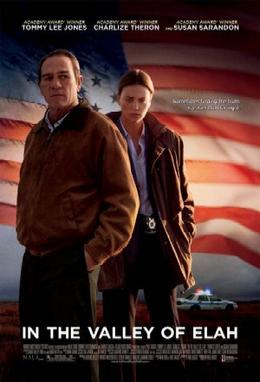
In the Valley of Elah (2007)


                “In the Valley of Elah” is based on the true story of the death of Richard Davis.  Davis was killed by fellow soldiers upon his return from Iran.  His father, a retired military policeman, investigated the case.  The story first appeared in an article entitled “Death and Dishonor” by Mark Boals.  It was adapted by Paul Haggis (“Crash”) who also directed.  The movie was a box office flop, but garnered positive critical reviews.
                In Nov. 1, 2004, Hank Deerfield (Tommy Lee Jones) gets a call that his son is back in the States, but AWOL. He goes off to find out what is up.  He passes by the local high school which has the American flag hanging upside down (a distress signal that is foreshadowing and a clear metaphor).  The son’s body is found dismembered and stabbed numerous times.  Naturally, the military is not obsessed with investigating it, so Hank sinks his teeth into it.  He forms a partnership with a local cop named Emily Sanders (Charlize Theron).  The clichés start flying as the grieving mother (Susan Sarandon) blames Hank for encouraging their son to join the military.  All of Mike’s mates claim he was a great guy and they all have the same story about the night’s events.  Of course the military tries to cover-up the details.  There are a couple of false leads to advance themes of prejudice and post-traumatic stress disorder.  PTSD is the major theme and is used even in a subplot where a veteran kills his wife after Sanders was unable to intervene.  It is the explanation for what actually happened that fateful night.  Somebody with a knife snapped.   Stuff happens due to stress.  It just happens.  Deerfield returns home and raises the flag upside down.

                “In the Valley of Elah” is a message movie.  The message is delivered undeftly.  War corrupts youth and the effects of war can lead to tragedy at home.  This theme is wrapped around a mystery which is unsatisfying.  The obligatory twist is that Mike was not as innocent as the official record would have shown if his dad didn’t poke his nose into the perfunctory investigation.  Be careful when you start turning over rocks, Hank.  The twist is unrealistic, as is the motive for the killing.  How Haggis gets to his moral is built on a weak foundation.  Where the movie succeeds is in the acting department.  Jones is solid, as is to be expected.  Theron holds her own and there is some chemistry there.  The supporting cast is full of recognizable stars, but Sarandon is criminally underused.  The military family dynamic between the Deerfields is realistic and instructional.  Hank dominates their marriage like Jones dominates the screen.  Their relationship is unfortunately genuine, which is more than can be said of the inter-unit relationships in Mike’s squad.

                The movie is well made.  The bells and whistles in the cinematography come by way of cell phone videos from the front.  This gives the film an immediacy and a modern war feel.  The problem is the videos don’t really pan out as the key to solving the mystery.
 
                SPOILER ALERT:  How accurate is the movie?  It is based on a story by Mark Boals that appeared in Playboy magazine.  Haggis read the story and was inspired to write the screenplay, with input from Boals.  The names are changed in the film, but the basic story is the same.  However, the role of the father is substantially enhanced and there was no female cop involved.  Richard Davis was from a family with a strong military heritage.  His father was a veteran and had been a military policeman.  Richard was a good soldier who relished being a warrior and played the part as his generation imagined it.  When his unit was deployed to Iraq to participate in Operation Iraqi Freedom, he looked forward to seeing action that would provide him some "war stories" to tell his father when he returned home.  Eventually he got his wish in a firefight in Baghdad.  In the aftermath of the intense urban combat, Richard tortured a prisoner he was guarding by poking his wound.  Later, when his unit was guarding a large number of tractor-trailers containing munitions, he participated in the wanton swiss-cheesing of any vehicle that approached the site suspiciously.  After the adrenalin rush of the early days, the occupation period brought mainly frustration.  Long patrols in the heat with 60 pounds of equipment, lack of showers, and lack of rations resulted in frustration and a decline in morale for Davis and his mates.  Another torturing of a prisoner indicated the impact of the war on the typically American Davis.  He started to go on one man raids to acquire souvenirs.  Meanwhile, B Company became increasingly dysfunctional.  Davis was just one of many that were suffering from PTSD.
 
                Within a few days of returning to the States, Richard was declared AWOL from Fort Benning, Ga.  After more than a month of no news, Lanny Davis made the trip to Georgia to start his own investigation.  He met stone walls from the Army and returned home after three days.  He contacted his Congressman who got the Department of Defense involved.  Soon Army detectives got the first break when one B Comany member broke the silence to tell of scuttlebutt that Richard's body was in an isolated location.  The body was located and the four soldiers who were with him the night of his death were arrested.  Interrogations brought out the story of what happened.  Davis and four of his comrades went out drinking and got thrown out of a strip club (most likely because Davis was being obnoxious).  In the parking lot, Jacob Burgoyne started punching Richard, but things calmed down and the five got back into the car and drove off aimlessly.  Eventually they stopped in an isolated area and the fight resumed with Mario Navarette joining Burgoyne.  Suddenly, Alberto Martinez advanced with a knife and before he was finished Davis had been stabbed over 30 times.  The body was burned and hidden until found months later.  Burgoyne turned state's evidence and although Lanny Davis disagrees with the official version of the crime, it seems likely that the prosecution got it right.

                Although a bit heavy-handed, “In the Valley of Elah” is so sincere you can’t dislike it.  Unless you are an arch-conservative hawk, you have to admit the movie covers a serious issue.  The war in Iraq was so unconventional that American boys brought up partly on conventional war movies came back messed up, sometimes.  The American public needs to know that and this movie helps.  America is like the elder Deerfield – living in the black and white past.  Iran and Afghanistan are grey.

Grade =  B-

Wednesday, January 1, 2014

Day 8 - Bravo Two Zero (1999)


  On the eighth day of Christmas, my true love gave to me – eight commandoes a scud-hunting

                “Bravo Two Zero” is the true story of an ill-fated SAS (British special forces) mission during the Persian Gulf War.  It was a BBC production and was based on the book by one of the members of the squad who wrote under the pseudonym Andy McNab.  The movie fits clearly into the lost patrol subgenre and the “who will survive?” scenario.

                The film begins with a cursory introduction to the men as they go off to war.  Andy (Sean Bean) speaks for all of them when he says:  “Every soldier hopes for a major war in his lifetime.”  They are elite soldiers, but have that good ole boys vibe.  This means they party hard, prank each other, and love their mates more than their mates.  Their mission is to be dropped behind Iraqi lines to disrupt the MSR (main supply route) and hunt Scuds.  Piece of cake, right?  Wrong.  First, radio problems create foreboding.  Second, they are discovered by a patriotic shepherd boy and the trek is on.  They are chased by an Iraqi unit that includes armored personnel carriers.  The ensuing firefight proves that eight British commandoes can handle ten times their number in Iraqis (with no losses to the good guys).    Hell, they even counterattack to force the enemy to run!   A decision is made to head for the Syrian border.

                During a sand storm, three of the unit get separated from the other five.  McNab’s five hijack a taxi in a ridiculous move that just happens to be based on the truth, so there.  The funniest moment in the film occurs in the cab as Dinger (Steve Nicolson) interprets an Iraqi song playing on the radio:  “My husband has breath like a goat / His penis is small and covered with black heads / Nowadays I sleep with the goats / They have much bigger penises and are twice as intelligent.”  This is typical of the humor found in the film.  I personally found the movie to be effectively humorous and true to the crude humor of soldiers.  When the taxi reaches a checkpoint, we get another fire-fight with no losses.  That is about to change, unfortunately. The five’s next obstacle is an enemy camp adjacent to a bridge.  Complications ensue resulting in us following only Andy.  He is sniffing the border when he is captured.  The last third of the film deals with his interrogation/torture by the Nazis, I mean Iraqis.  The questioning is brutal because he is suspected of being a demon, I mean Israeli.  Will he crack?

                I watched this movie thinking I was getting the straight dope (or as close as a war movie can dish it) about a famous military incident.  An incident that the British public is apparently well-appraised of.  Well, it turns out this is just one version of what happened because the McNab book was just the first telling of the story.  Two other members of the squad wrote conflicting accounts and then a reporter weighed in with the “true story”.  Now I’m confused.  It does seem likely that McNab “enhanced” his story almost as though he was writing a screenplay for a war movie “based on a true story”.

                As entertainment, the movie is pretty good for a made for TV production.  The acting is good by the ensemble with Sean Bean being his usual dependable self.  The other guys are appealing and the camaraderie is sincere.  They behave and talk like soldiers.  In fact, the soldier talk is so slang intensive that you have to be familiar with British military slang to understand a lot of it.  To make matters worse for your average American viewer, the accents are quite thick.  The action is good with realistic small unit tactics.  They use covering fire and advance in sections, for instance.  The movie is accurate in how many of the eight survived, but quite possibly exaggerated the expendable nature of the enemy soldiers.  This is fine for the action lovers.  There are plenty of Iraqi deaths to not feel guilty about.  Speaking of which, the movie actually has a sympathetic Iraqi character in the form of a general who chases the unit and then shows his respect with some green hard candies (a running gag – in a war movie!)

                Christmas present?  It’s jolly good, chap.  I enjoyed it, but then I’m not neutral because it has Sean Bean in it.  I have a bromance for him.  Thus I can understand why his men would follow McNab into an Iraqi desert.
Grade =  B

Thursday, April 7, 2011

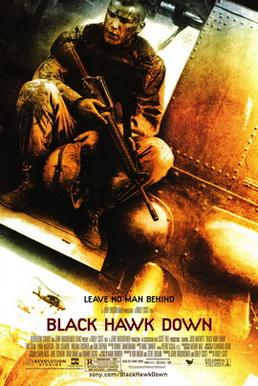
SEMIFINAL: Black Hawk Down (4) vs. The Hurt Locker (1)


ACTION: “Black Hawk Down” is one of the most action-packed war movies you can find. Once the Battle of Mogadishu begins, there is hardly a dull moment. The fact that the Somalians were high on khat probably explains the intensity of their action. The movie is like watching the results of hitting a bee hive if the bees are on drugs. “The Hurt Locker” is more suspenseful than action-packed. The set pieces mostly involve men vs. inanimate objects (IEDs). Sadly, the bombs are not on khat. There is the sniper scene, but it is, after all, a sniper duel. Great scene, but not much action. If we accept suspense substituting for action, we can appreciate THL more.


Score at the end of the first period: BHD – 10 THL – 8

SOUND AND SPECIAL EFFECTS: BHD is a big budget movie by Ridley Scott who knows something about blockbusters. The helicopter ingress is an homage to “Apocalypse Now” with all the best sound effects available. The use of satellite imagery to bring variety to the views is well done. The shots of the Black Hawks going down are amazing. The movie won the Academy Award for Best Sound. It was nominated for Best Cinematography. THL had a much smaller budget, but the effects are still outstanding. The opening bomb explosion is jaw dropping. It won for Best Sound Editing and Best Sound Mixing. It was nominated for Best Cinematography. However, it is more character driven than effects-laden.

Half time score: BHD – 19 THL – 16

SOLDIER BEHAVIOR: BHD spends a good bit of time with the soldiers before the battle. The banter seems realistic. The emotions as they prepare for potential combat rings true. The chaos of urban combat is reflected in different coping mechanisms. Not everyone is Rambo. The role of peer pressure and comradeship in motivating American soldiers is clearly apparent. The film also does a great job depicting the natural tensions between different units. The Delta Force and Rangers have different philosophies and SOPs. This is reflected in the leadership conflicts between Steele and Fichtner. THL confines itself to a limited range of soldiers – bomb disposal techs. The main character is supposed to represent a typical maverick, adrenaline junky of a bomb disposer. His loose cannon behavior and disregard for common sense safety protocols makes his actions seem unrealistic. The other two members of the team are more believable. Mackie is justifiably incensed by James’ recklessness and even considers fragging him. Eldridge is appropriately confused by the power struggle going on between his superiors. This dysfunctional team is probably not typical.  I hope.

Score at the end of three periods: BHD – 28 THL – 23

EDUCATIONAL VALUE: BHD tells the story of the Battle of Mogadishu. This battle was fought in Somalia which is in Africa. Strike one as far as American knowledge. It was part of a humanitarian effort involving the United Nations. Strike two. We lost. Strike three. This was a battle that deserved historical recognition. In particular, Shugart and Gordan (Medal of Honor recipients) deserved their portrayal. The movie is also outstanding as a lesson in what not to do in urban combat. THL gives the audience a look into the world of bomb disposal. These incredibly brave soldiers deserve recognition. The film does an excellent job depicting the situation in Iraq in the period after major combat operations ceased. You learn a lot about IEDs. However, as a tutorial on how bomb disposal works, it takes some liberties for character development.

FINAL SCORE: Black Hawk Down – 38 The Hurt Locker - 31

the sniper scene from BHD


the sniper scene from THL