“Home of the Brave” was an
Oscar-bait movie about Iraqi War veterans who return to the US with serious
PTSD problems. It was co-written and directed by Irwin Winkler. It opened in
Dec., 2006 so it would be eligible for awards. The experience probably gave the
producers PTSD because the movie was a major bomb and was excuriated by the
critics.
The film focuses on four Army
National Guardsmen who are all mentally and/or physically scarred by one day in
the Iraqi War. Two weeks before their unit was scheduled to return home. They
are part of a convoy doing that “hearts and minds” thing. The trucks are
carrying medical supplies to a clinic. The convoy is ambushed. The attack starts
with an IED hidden in a dead dog. Sgt. Price (Jessica Biel) goes home with a
prosthetic hand. Specialist Aiken (Curtis “50 Cent” Jackson) suffers a back
injury. Specialist Yates (Brian Presley) has a friend die in his arms. Lt. Col.
Marsh (Samuel L. Jackson) is traumatized by dealing with all the wounded on
that day. Not only is there an influx of casualties (and several amputations
are needed), but the clinic comes under mortar fire.
The four return home to various
scenarios. Price gets her teaching job back, but having a prosthetic hand is
not optimal for a physical education teacher. Yates does not get his old job at
the gun store back. (Ironic right.) He turns to drugs to numb his recollection
of the death of his friend. His father discourages him from seeing a shrink.
One theme of the movie is the public is clueless about mental damages war
causes. Marsh is having trouble reintegrating with his family. He is the vet
who takes to drinking. His son is the clicheish anti-war child who thinks his
father fought for a bad cause. He gets in trouble at school, of course. Aiken
is the vet who is bitter and angry towards the Veteran’s Administration for
denying him benefits. The four paths cross. One of them is going to die in a
hostage-taking situation.
It is not surprising that on the
surface the movie was hopeful of awards consideration. It has a good cast and
emotionally scarred characters. However, it tries to hard be a message picture.
There have been some excellent films that have addressed PTSD. “The Best Years
of Their Lives” is outstanding partly because it brought the problem to
audiences back when it was called “combat fatigue”. That movie set a high
standard for what “Home of the Brave” attempts. Both movies show multiple
character arcs. “Home of the Brave” adds a fourth veteran, but sometimes
quantity is not quality. There have been more recent movies that have addressed
veterans returning from Vietnam, Afghanistan, and Iraq. Some have been very
good (“Thank You For Your Service”) and one is outstanding (“Born on the Fourth
of July”). “Home of the Brave” is a sincere effort to join the better movies in
the subgenre, but it tries to do too much. Four arcs intersecting is too artificial.
And each character has an arc that has been done before. They are all
stereotypes. It’s almost as though the movie was made to be required viewing at
VA hospitals. And I hope that it helped relatives and friends of Iraq and
Afghanistan to understand why their son, husband, or father returned changed.
The movie is ironically at its best
when it is depicting that horrible day in Iraq. The combat scenes stand out
which means a movie that wants to be very anti-war is at its best when it is
showing the cause, not the effect. The movie can be tough viewing because all
the characters had legitimate problems. But that is diluted by the ending which
is too hopeful. The solutions to some of their problems are the cliched loving
wife or new understanding boyfriend. Oddly, the most interesting character
(Aiken) gets the least coverage and is the only one of the quartet who does not
overcome his trauma.
SYNOPSIS:In the aftermath of the Persian Gulf War,
a quartet of bored American soldiers (George Clooney, Mark Wahlburg, Ice Cube,
Spike Jonze) find a map to a horde of Iraqi gold and decided to pull a heist
behind enemy lines.In the process, they
encounter Iraqi soldiers still loyal to Saddam Hussein and dissidents intent on
his overthrow.The trek is fraught with
escapades and ends with the newly altruistic Americans helping some refugees
find haven.
BACK-STORY: “Three Kings” is a black comedy directed
by David O. Russell.It is his only war
film.He made it for $48 million and it
made over $100 million.He filmed in the
deserts of Arizona, California, and Mexico.The movie used numerous Iraqi refugees as extras.
TRIVIA:Wikipedia, imdb, mental floss
The movie
originated with John Ridley challenging himself to write and sell a script in a
short time.He wrote “Spoils of War” in
a week and sold it in eighteen days.Director David O. Russell was intrigue by the description “heist set in
the Gulf War” and claimed he never actually read the script.Apparently he used just the concept and wrote
the movie’s script from scratch.He did
not consult with Ridley which created some bad blood.Ridley had to settle for a “story by” credit.
Russell wrote the Ving character with Spike Jonze in
mind, even though Jonze had never acted in a movie.
The first
thought for Gates was Clint Eastwood, but he was too old.Nicholas Cage was going to do it, but ended
up doing “Bringing Out the Dead” instead.Clooney campaigned for the role so he could break out of “ER”.Russell was skeptical, but got worn down.
There was a lot
of conflict between Russell and Clooney on the set.Russell tended to be hard on the crew and
extras and Clooney took on the role of defender of the little guys.It got so bad that they got into a fist-fight
towards the end.
The show-stopping
shot of a bullet going through a body originated from a conversation Russell
had with a doctor. Russell asked him
what the worst wound he ever saw was.
Russell went a little loopy during an interview and
told Newsweek that the shot used a real corpse.The studio got a complaint from a mortician’s organization.
Clooney loves to play pranks and one was catapulting
an apple using a car antenna which hit Nora Dunn in the face.
Pres. Clinton requested and got a private screening at
the White House.
Belle and Blade=N/A
Brassey’s=N/A
Video Hound=N/A
War Movies=N/A
Military History=not on list
Channel 4=#50
Film Site=no
101 War Movies=yes
Rotten Tomatoes=#37 (100 rating)
OPINION:The movie is very
entertaining. It came out after “Saving Private Ryan” and “The Thin Red Line”
and joined them in juicing up the war movie genre for modern audiences.
It is different and more unorthodox than those other films. It is the MTV
version of war. It’s a war movie for the new generation, "Three
Kings" is the modern equivalent of "Kelly's Heroes".The movie is not just eye candy. The acting
is stellar from the ensemble. Even the novice Jonze holds his own. Clooney’s
charismatic performance conclusively proves that his decision to jump from TV
was a wise one. Wahlberg cemented his status as a major star. More importantly,
the screenplay is thought-provoking. It does not preach, but makes it clear
that the period at the end of the Persian Gulf War was a messed up situation
and the U.S. should not be proud of our role in the Iraqi Insurrection. In some
ways it is a biting satire of the military and the media. Although the bigger
picture is conveyed, the movie dwells at the human interest level. It depicts
how government decisions affect civilians.
“Sand
Castle” is an appropriately named movie about the war in Iraq. It is a Netflix original. The movie was directed by up and coming Fernando
Coimbra. It was written by Chris
Roessner based on his experiences as a machine gunner in the Sunni
Triangle. He was inspired by the movie
“Platoon”. The movie was released
directly to Netflix customers in 2017.
The
movie centers on a young rifleman named Matt Ocre (Nicholas Hoult). Ocre joined the Army Reserves to pay for
college. He enlisted before 9/11 and had
no intention of becoming a patriotic warrior.
In fact, the first thing he does in the movie is attempt to injure
himself so he can be sent back to the States.
He does not succeed and the day his cast comes off, his unit gets orders
to participate in the invasion of Iraq.
He is the only one in his squad who is not gung-ho about seeing the
elephant. In the rubble of Baghdad, they
run into a sniper so they call in an air strike to kill one man. A hammer to swat a gnat. The American way of
war. They are billeted in a palace with
running water and a swimming pool for three months before they get orders to
fix a water pumping station in the city of Baqubah. Ocre does not want to volunteer, but his
commander needs someone smart on board.
When they reach Baqubah, they link up with a special forces unit led by
a badass named Capt. Syverson (Henry Cavill).
He explains that the job is to distribute water from the station. Each day they will have to escort a water
truck to the desperate people. Those
people are not desperate enough to be appreciative. And the insurgents are not interested in
allowing the Americans to become appreciated.
Ambushes ensue leading to a raid on a suspected terrorist lair. Someone gets the logical (except for this
being Iraq) idea of having local workers fix the pumping station. Like building a sand castle before the inevitable
tide.
“Sand
Castle” is very good for a Netflix original.
That bodes well for war movie lovers.
Coimbra does well with a limited budget.
It is a small movie concentrating on one character. Hoult is good as Ocre, who is the only
character that is developed. Ocre
reminds me a bit of Henry Fleming of “The Red Badge of Courage” – a reluctant
warrior. Henry Cavill gives the movie a second recognizable star as
Syverson. Syverson is the stereotypical
operative. The squad is also
stereotypical. All but Ocre are
enthusiastic about living out their video games and proving their manhood. Their attitudes are realistically macho and
their behavior as soldiers shows that Roessner lived what he wrote about. The
men are naïve, but there is a lot of that spread through the movie. The Americans are naïve to think good works
will make a difference. The Iraqis who
help the Americans are naïve to believe that the Americans will be able to
protect them. This theme is embodied in
the school master who is so desperate for water for his students that he works
with the Americans to repair the station.
Do I need to tell you that he is a tragic figure? Besides naivete, the movie also explores the
theme of futility. Again, note the
title. The movie makes clear parallels
to Vietnam. We control the day, the
enemy controls the night. Civilians are
caught in the middle. Winning hearts and
minds is a pipe dream. The movie makes
you wonder if the American high command ever saw a Vietnam War movie or read any
books on the war before committing us to overthrowing Saddam Hussein. If you have never seen an Iraqi War movie or
read a book on it, “Sand Castle” is a good primer. I do not know of any other Iraqi War movie
that concentrates on the huge problem with infrastructure that resulted from
our conquest of Iraq. The commendable
American philosophy of “we broke it, so we’ll fix it” is rendered with the typical
result for Iraq. It was not post-WWII Germany
or Japan. The movie tosses in some brief
combat, but you get the impression that America will never be comfortable with
counterinsurgency.
If
you are a Netflix subscriber, give “Sand Castle” a look. Even if you are not a war movie lover, you’ll
enjoy it and learn a little. For
instance, you’ll learn that when you invade a country and bomb the hell out of
it, they might not give you much credit for rebuilding what you destroyed.
SPOILER ALERT: Because of the nature of this post (comparing the movie to the actual facts), I will cover the whole plot of the movie.
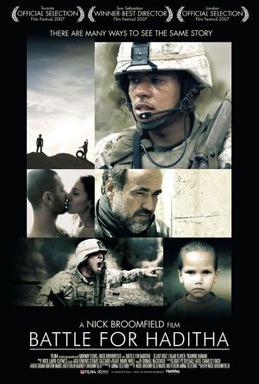
“The Battle for Haditha” is
misnamed as it is actually about the Haditha Incident (alternately called the
Haditha Massacre or Haditha Killings).It was probably the most infamous atrocity (or so it was claimed) of the
Iraqi War.The reenactment was filmed in
documentary style by British filmmaker Nick Broomfield.Broomfield cut his teeth on documentaries and
used the minimalist approach for his second feature film.He produced, directed, and co-wrote the
movie.Broomfield filmed in the city of
Jerash, Jordan and used some ex-Marines in the cast and Iraqi refugees.The cast was allowed to improvise some of
their lines.The finished product is
controversial, to say the least.
The film opens with a montage of
several Marines describing their feelings about being in Iraq.One says he’s only interested in surviving
and does not know what he is there for.Another mentions the problem of having civilians turn into combatants.A third likens the situation to being similar
to hunting because you have to think like the enemy.Cpl. Ramirez (Elliott Ruiz) likens Iraq to
the asshole of the world and the insurgents are like dingleberries.
Words on the screen preview that
the movie is about an incident in 2005 that involved an IED (improvised explosive device) killing a Marine
and then subsequently the Marines killed 24 civilians.(The perceptive viewer gets an inkling of
what is to come by noting that the word “marines” is not capitalized.)The Marines of Kilo Company, 3rd
Battalion, 1st Marines are young and immature.They listen to heavy metal in their Humvees
and delight in pranking each other.The
barracks banter feels authentic.The
video game generation goes to war.
The movie has three
threads.The second revolves around
Ahmad (Falah Flayla) who is a disgruntled Iraqi Army vet who is now
unemployed.He does not like the foreign
Al Qaeda jihadists, but agrees to plant a command-detonated IED for
$500.He is assisted by a younger man
who is just as immature as the Marines.They plant the bomb in broad daylight along a road.
The other thread follows a
typical Iraqi family that is preparing to celebrate a toddler’s
circumcision.Hiba (Yasmine Hanani) is
pregnant and in love with Rasheid.The
family and neighbors are aware of the bomb, but try to go about their lives and
do not take sides.One remarks that if
they tell the Americans about the bomb, the jihadists will kill them.If they don’t tell, the Americans will blame
them.Spoken like a South Vietnamese
civilian.The party is a good taste of
Iraqi culture, but there is a heavy layer of dread.
On Nov. 9, 2005, Ramirez’s squad
of eleven Marines in four Humvees are hit by the IED.The last Humvee is destroyed and a Marine is
killed.At the same time a white car is
stopped on the other side of the road.Ramirez, who is deeply affected by the death of his mate, executes the
occupants.A relative of the men opens
fire from a nearby home.Ramirez is
given permission to take out the house, but it’s not the house the fire came
from.He interprets the “Rules of Engagement”
to justify shooting first and asking questions later.
House 1 is greeted with a
fragmentation grenade.Ramirez and a few
comrades indiscriminately kill most of the occupants although they are clearly
noncombatants and none are armed.Hiba
and her boyfriend survive by hiding behind a chest.The Marines move on to House 2 with similar
results.The “battle” is being monitored
back at headquarters where a colonel orders a helicopter strike on a group of
individuals walking together.Hibas’
boyfriend is shot by a sniper because he is running (as per the ROEs = rules of engagement).He high-fives his mates.House 3 yields prisoners, but the killing is
finally over.A captain arrives and in a
prayer for Cpl. Terrazas mentions the battle they have won.He gives Ruiz a field promotion and
recommends him for a Bronze Star.
The Marine Corps issues a press
release that 15 civilians were killed by the IED and another 8 were insurgents
that opened fire on the convoy.The
story drew little media attention until a video made by the jihadists was
released.It contains eyewitness
accounts which force the military to investigate.Ramirez and three others are charged with
murder.
Taken at face value the movie is
entertaining.It’s definitely low
budget, but Broomfield overcomes the vibe by giving it a vibrant documentary
feel.This is through mostly hand-held
cinematography.The negative side of
this is some might swallow all of it as a factual documentary, although I am
not accusing Broomfield of trying to put something over on the audience.However, it is clearly apparent that
Broomfield is offering an alternative view to the Marine Corps version.The movie is obviously pro-Iraqi and
anti-Marine Corps, but it is somewhat balanced.Ramirez is depicted as suffering from stress and the rest of his squad
are not evil.The acting is adequate and
does not get in the way of the story.Ruiz is good, if a bit too earnest.Hanani seems to have a future in the business.
The movie has some noteworthy
themes that could be enlightening to anyone with little knowledgeof the Iraqi War.Civilians get caught in the crossfire in a
conflict like this.Rules end up being
bent sometimes in stressful combat situations.Atrocities happen.Young
Americans who view war as a game sometimes react outside the rules when
confronted with its realities.
I spent the whole movie
wondering how much was true and looking forward to finding out.It had some head-scratching moments like the
planting of the bomb in plain sight.Earlier, the bombers had gone through a check point without the Marines
bothering to check the back of the truck where the bomb was hidden.I suppose that was possible.When running away from the scene, the bombers
open fire for no good reason.There is a
scene where Ramirez goes to his commanding officer to admit to stress and ask
to see a doctor.The officer denies the
request and cites Marine Corps policy.I
could not determine if this was factual, but it does not seem so.
I did a lot of research on the
Haditha Incident and still cannot say definitively where the truth lies.Although it is compared to the My Lai
Massacre, it is a lot less clear exactly what happened here.The movie presents the Iraqi version of what
happened.The American version goes
something like this.Ramirez represents Frank
Wuterich.The IED explosion is the same
in both versions, but from there the stories diverge.When the white car is stopped it is suspected
of being involved in the ambush.One of
the men runs so Wuterich shoots him and then proceeds to shoot the others. Fire
comes from the direction of House 1 and Wuterich leads a fire team in.He did apparently tell them to shoot first,
but it was dark and confusing inside.It
was unclear the victims were unarmed and supposedly an AK-47 was heard being
“racked”.The second house was taken
because it was assumed someone from the first house ran there.The group admitted to firing through the door
which happened to have a man on the other side.The situation inside this house was basically a replay of the
first.Only prisoners were taken in
House 3 ( as per the film ).At House 4,
two men with AKs were shot and two others that were using the house as a
refuge.This incident was surprisingly
not depicted in the film, but the Iraqi version contends that the four were
innocent and were executed.
The film adds a few things that
even the Iraqis don’t claim.The bombers
were fictionalized.There was no
helicopter strike on a group.No one was
shot by a sniper while running. The
video was not by jihadists, it was done by a journalism student (who granted
may have sympathized with the insurgents).
At the time the film was made
the latest development was the charging of Wuterich and three others for murder
and the charging of several higher officers for a cover-up and non-investigation.In the subsequent trial, all but Wuterich got
off.He was found guilty of a much
lesser charge and basically given a slap on the wrist.This lack of justice aggravated many, but
NCIS did put 65 agents on the case and although the prosecution may have done a
less than stellar job, it was understandably difficult to prove a case like
this.For instance, no Iraqis would
testify.Forensics tended to disprove
the two execution scenarios and lenient interpretation of the ROEs left
reasonable doubt as to premeditation or revenge.It is instructive to note that the military
tightened up the Rules of Engagement after this to no longer condone shooting
of clearly unarmed civilians.
So who is telling the truth –
Broomfield and the liberal press or the military and Fox News?As usual in cases like this the truth is
somewhere in between.Although I cannot
discount the possibility that Broomfield is accurate, I lean towards the Marine version.With that said, I do not feel that even under a flexible
interpretation of the ROEs, what happened in Houses 1 &2 and with the white
car was justified.Like an ex-Marine
said, the Marines were the baddest asses in this situation and they should have
been capable of asking questions first and then shooting.To shoot civilians in two houses where they
had not taken any fire from within indicated either payback or the desire to
take no chances whatsoever.As far as
the white car, it seems logical that confronted with a group of very pissed off
Americans, one might run and Wuterich would have snapped.I do feel Wuterich got off easy.In this respect he reminds of Lt.
Calley.The coverup also is reminiscent
of My Lai and again the higher ups got off.The press release was ridiculously false and there was no attempt to get
to the truth until Time magazine broke the story.
So, what to make of
the film?I recommend it provided you
realize it is one point of view about an historical incident.I also suggest that you watch the Front Line
documentary "Rules of Engagement" afterwards.Then keep in mind that the truth is somewhere in the middle and we may
never know what actually happened that day.
On the third day of Christmas, my
true love gave to me… three Cain-marked Brits
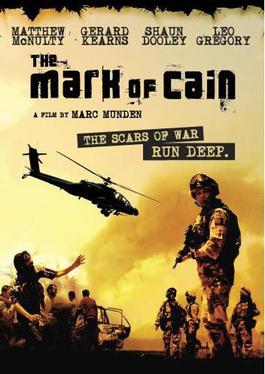
“The Mark of Cain” is “based on
extensive research, but is a dramatic work of fiction.”I assume the research was about Abu
Ghraib and similar incidents.The made-for-TV British drama
won a BAFTA and Amnesty International recognized it as a “Movie That
Matters”.It is a tale set in Basra,
Iraq and then back home in Britain.
When Mark (Gerard Kearns) and
his buddy Shane (Matthew McNulty) arrive in Iraq, they and the other newbies
are counseled on the need to avoid violations of the rules of war.Their commander states that any unjustifiable
killing of civilians will result in the “mark of Cain”.A well-staged ambush results in the fiery
death of their commander.Vengeance is
in the air and a “search and detain vigorously” raid nabs some suspects.Cpl. Gant (Shaun Dooley) tells the men to lay
off the detainees, but has a change of heart and leads the
“interrogation”.The reluctant Mark is
peer pressured into joining in the “fun”.Shane is a picture-taking participant.
Upon return to Britain, Mark
suffers from PTSD and guilt feelings which result in convenient
flash-backs.Shane suffers from picture
showing-off and a snitching girl friend.The two and Gant are charged with war crimes.Gant and everyone up the chain of command
scapegoat the two privates.Mark admits
he was caught between moral courage (the ability to report atrocities) and
loyalty to his unit mates.He now feels
he chose unwisely and is torn apart by it.Shane eventually comes to this conclusion as well.He is pressured to plead guilty at his
court-martial and take one for the team.What will he do?
The film is meant to be
thought-provoking and basically succeeds although how we are to think is pretty
much shoved down your throat.Anyone
unaware of the Abu Ghraib-type activities would be informed by this movie.I think that was the point.(What I learned was that the Brits pointed at
wieners, too.)It is not as heavy-handed
as the Amnesty International endorsement would imply.
The movie is balanced cinematically.The ambush scene is of the new school
variety.Hand-held.Quick cuts.Realistic soldier reactions (ex.one guy freezes).The movie does
a fine job setting up the torture by showing the stress (e.g., that coke can could be
an IED) and fog of war (is having a lot of cash proof of insurgency?) the
soldiers went through.You are forced to
wonder how you would have reacted if some of your mates were killed by faceless
insurgents.Iraq = Vietnam.The home front scenes are also
realistic.Mark and Shane represent two extremes
of soldier post-combat reactions.
The movie is well made,
especially for a TV production.The
cinematography is interesting.The
flashbacks work in teasing out the torture.The acting is fine.The three
leads are effective although Gant’s switch from warning against atrocities to
leading them is implausible.Dooley does
play slime-ball well.Kearns is
particularly poignant as the tortured torturer.
The movie attacks some easy targets.The military has a code of silence similar to
the police.Young men do bad things
under war stress.Military authorities
tend to cover up crimes that they encouraged. Hey British society, you have the mark of
Cain.Ours is way bigger than yours,
however.USA! USA!USA!
Good gift?Sure, and
it’s so Christmasy.Actually I should
throw in a Genesis reference here.