BACK-STORY:
“Patton” was based on the books
Patton: Ordeal and Triumph by Ladislas
Farago and A Soldier’s Story by Omar Bradley (who served as a technical
adviser). The screenwriters were Francis
Ford Coppola and Edward North (who shared the Academy Award, but had never
met before the ceremony). Coppola wrote the first draft, but
was fired partly because the studio did not like the opening speech! The speech was a composite of remarks Patton
made at various times. The use of words
like "bastard", "shit", "sons of bitches", and "Hell" were groundbreaking for a major
feature. Rod Steiger, Lee Marvin, Robert
Mitchum, and Burt Lancaster turned down the role and the studio nixed John
Wayne. George C. Scott was reluctant to
take the role because he disliked Patton.
He was upset about the positioning of the speech at the beginning
feeling it was too powerful and the rest of the film would be a letdown. The movie was shot in Spain to take advantage
of all its circa WWII equipment. The
movie was a huge success and the Patton family loved it. It won Academy Awards for Best Picture,
Director (Franklin J. Schaffner), Actor,
Original Screenplay, Editing, Sound, and Art Direction. It was nominated for Cinematography, Visual
Effects, and Score. It is ranked #89 on
AFI’s list of greatest movies and Patton is #29 on the list of heroes.
OPENING:
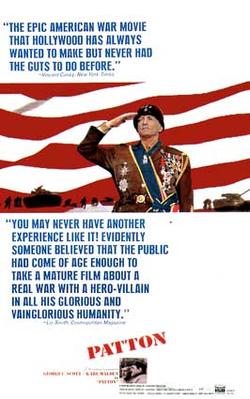
The movie opens with the iconic
speech. Patton stands before a huge
American flag in full regalia and addresses the audience. He uses language many viewers had never heard
in a movie before. The speech has many
memorable lines including “We are not only going to shoot the bastards , we are
going to cut out their living guts and use them to grease the treads of our tanks.” Another gem was: “Now I want you to remember
that no bastard ever won a war by dying for his country. He won it by making
the other poor dumb bastard die for his country.” Hell, virtually every line is dynamic.
SUMMARY:
The body of the film opens with the
aftermath of the Battle of Kasserine Pass.
We see the debris of battle and it could be any battle throughout
history. This includes the looting of
the bodies by the natives. After the
disaster, Patton is given command of the undisciplined and dispirited II
Corps. He arrives with sirens blaring
and proceeds to crack the whip. He
insists that the soldiers wear leggings and ties and declares that there will
be no such thing as “battle fatigue”.
The movie takes little time fleshing out Patton’s fascinating personality
which was a mixture of pomposity, profanity, and brilliance. Omar Bradley is his second in command and his
polar opposite.
 |
| Bradley and Patton |
One of the movies themes is
Patton’s adversarial relations with both the American high command and British
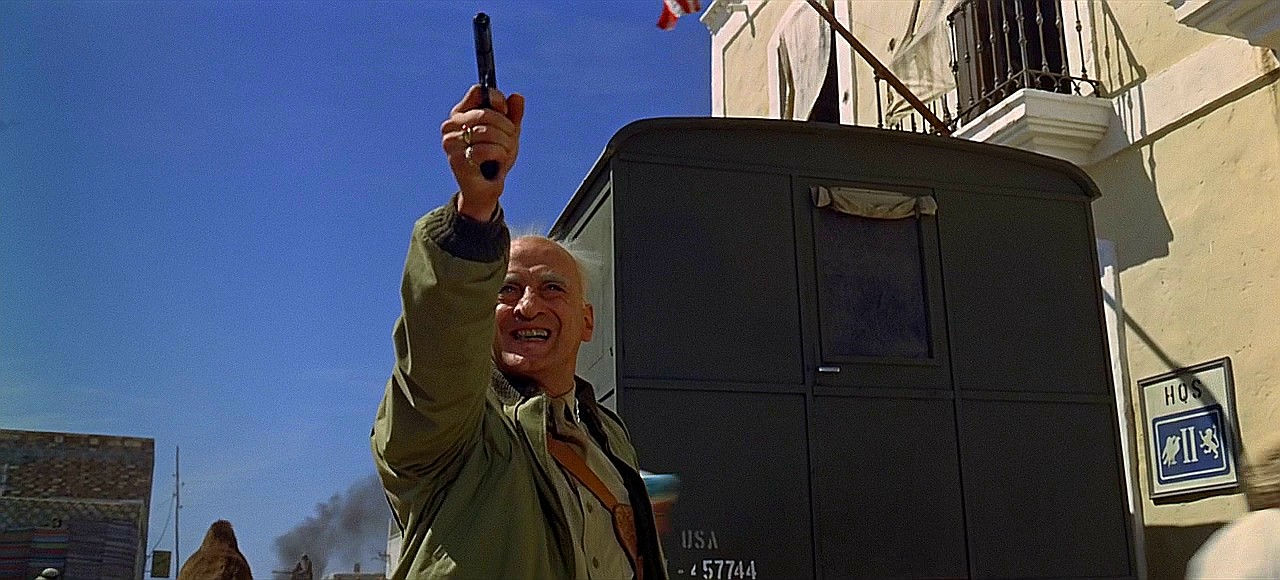
generals, especially Montgomery (Michael Bates). When he is gruffly complaining to RAF General
Coningham about lack of air cover, on queue two German HE-111 bombers attack his
headquarters. Never one to pass up a
chance at grandiosity, Patton uses his pearl-handled revolvers to fire at them
as they strafe the street he is straddling.
The quest for glory is another recurring theme.
 |
| Patton - anti-aircraft gunner |
Patton (who believes he has
lived several warrior lives previously) is a man not of his time. “God, I hate the twentieth century”. He daydreams of a tank duel between Rommel in
his Tiger and Patton in his Sherman to decide the war. The movie may be ambiguous about Patton’s
personality, but it absolutely idolizes his military genius. It creates a German staff officer named
Steiger to give Patton’s background and to give insight into the German high
command’s respect for him.
 |
| Battle of El Qatar |
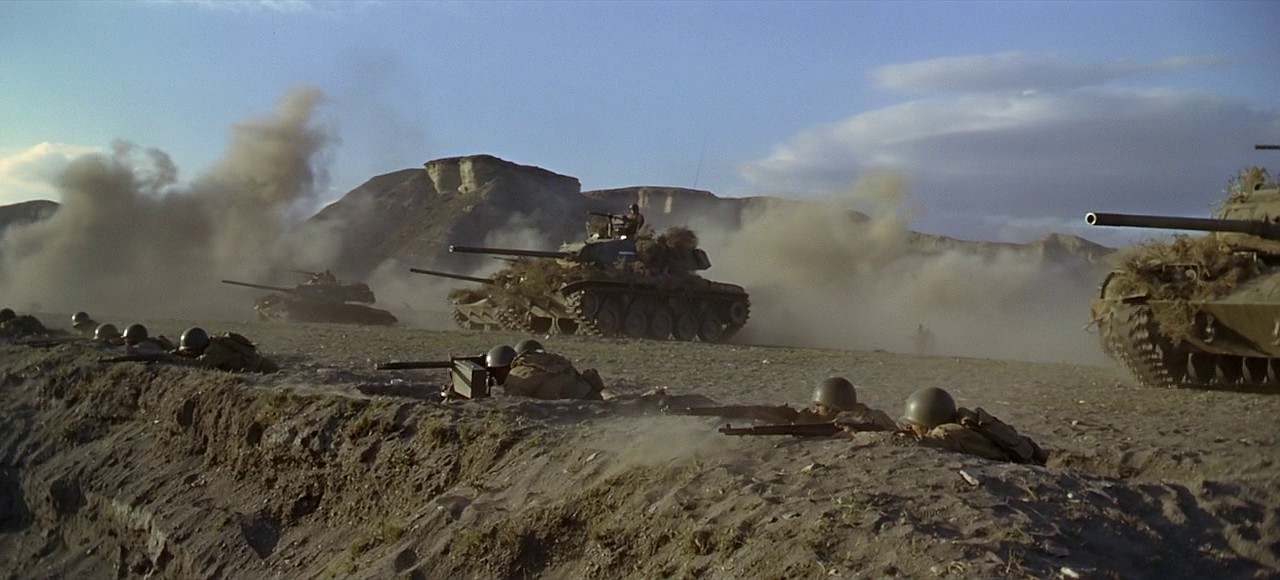
The first combat set piece is
the Battle of El Qatar. Patton lays an
ambush for the Afrika Korps. It is grand
scale and very noisy, but not exactly suspenseful. It also lacks realism and is marred by surprisingly old
schoolish deaths for a movie that clearly wants to be of the Violingo School. The deaths are the silly twirling,
touchdown-signaling variety. Those pesky
He 111’s make another appearance. Patton
watches from the hills and relishes the competition. He exults “Rommel, you magnificent bastard I
read your book!” (Actually The Tank in Battle was never published.) One of Patton’s aides named Jenkins is killed
by a random shell which allows Patton to show his sensitive side.
The campaigning shifts to Sicily
and the Monty dueling begins. Monty is
portrayed as an insufferably pompous general as opposed to our sufferably pompous Patton.
Plus Monty has the slows.
Although he has defeated their common adversary Rommel, he didn’t read
the magnificent bastard’s book. Patton
goes full megalomaniac on Sicily as he becomes obsessed with beating the Brits
to Messina. Although bereft of combat in
the movie, the race is very entertaining and crucial to the character
development arc. Patton wins the race,
of course. Unfortunately, the
destructive nature of his personality comes through when he slaps a
shell-shocked soldier in a military hospital.
This leads to his suspension by Ike and an apology speech that is as
grudging as the opening speech was sincere.
To make matters worse, the slap to the face is followed by a foot in the
mouth moment in England that digs a deeper hole for the frustrated warrior who
will have to sit out the big show (D-Day).
 |
| the Normandy breakout |
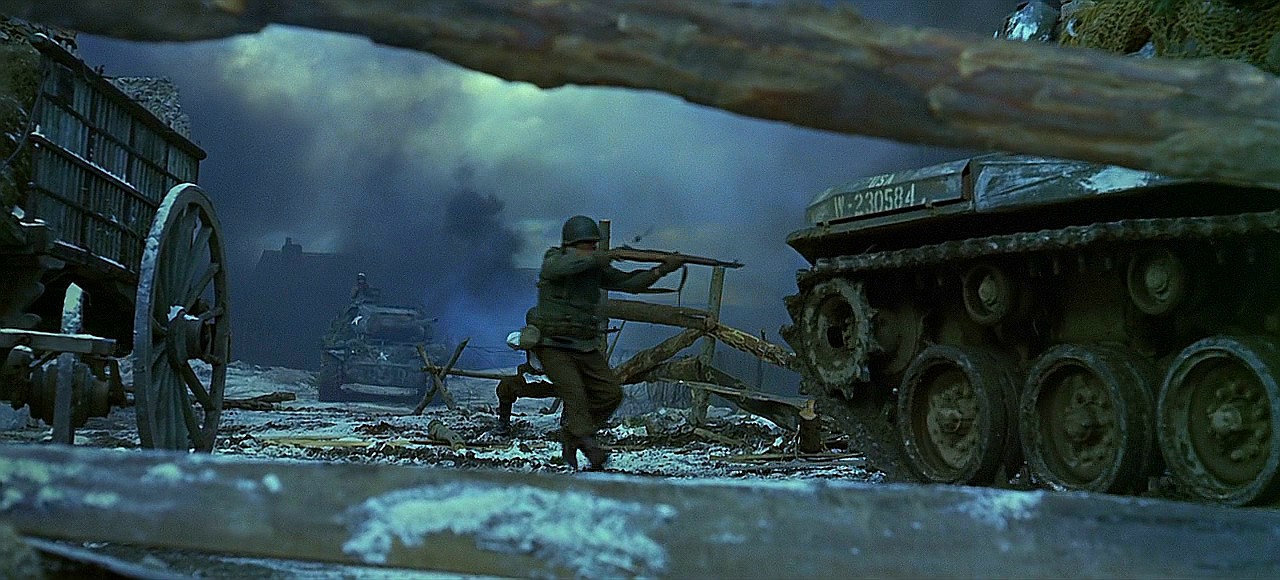
When he is given command of the
Third Army in France, Patton is now under the command of the skeptical
Bradley. The “Soldier’s General” is not
enamored of Patton’s loose cannon personality or his you have to spend men to
save men philosophy, but recognizes that if channeled he could be indispensable
to the Allies. Patton promises to
behave himself. He leads the breakout
from the Normandy beachhead in a dazzling show of aggressive maneuvering that
mirrors his personality. As usual, he
has more problems with his superiors than his opponents. Patton is constantly carping about Ike’s
favoritism towards the British when it came to supplies and planning. The movie gives new appreciation of Eisenhower’s
role as coalition commander as has to deal with two huge prima donnas in Patton
and Monty. Patton pushes his army on in
spite of the lack of supplies and a scene depicts a night battle when American
tanks literally run out of fuel and have to fight for their lives. Patton tenderly kisses the head of a
survivor, but of course it was Patton’s thirst for glory that caused his
comrades deaths.
 |
| War is Hell |
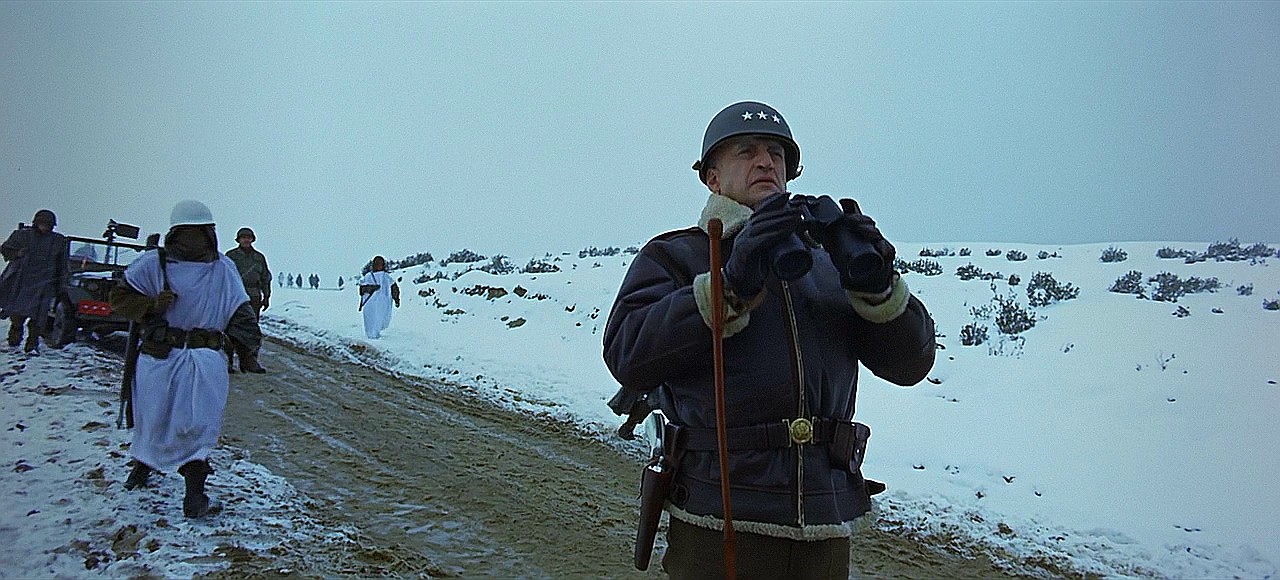
The movie builds to the Battle
of the Bulge. A battle that movie
audiences would have been familiar with from movies like “Battleground” and
“Battle of the Bulge”, but probably not familiar with Patton’s role in it. The film suspensefully depicts Patton’s tour
de force of turning his army to strike the German flank and relief Bastogne
(naturally there has to be a reference to “Nuts!”). At one point Patton orders a Chaplain to
concoct a weather prayer to halt the snowy conditions. (Ironically, at this time the producers were
praying for snow in Spain during the shooting.)
A montage shows Christians killing each other as Patton reads the
prayer. Irony.
 |
| Battle of the Bulge |
After the triumph in the
Ardennes, the film jumps to the end of the war in Europe. Patton almost provokes an international
incident with the Soviets and rants about going to war with them. It seems that with the slim likelihood of his
being given command in the Pacific, he is hoping for the war in Europe to
continue. He clearly does not relish
peace and there is no equivalent of a stud farm for victorious generals.
CLOSING:
Unbelievably, Patton is assigned to be
military governor of Bavaria instead of being sent to that secret island in the
Pacific that was reserved for Marines that could not be put back in society. If anyone was never cut out for politics it
was this shoot-from-the-lip general. Sure
enough, he spouts off to reporters that it was okay to keep some Nazis in
positions of power because being a Nazi was akin to being a Democrat or
Republican in America. Last straw
time. One last trip to the principal’s
office.
RATINGS:
Acting
= A+
Action
= B-
Accuracy
= A
Plot
= A
Realism
= A
Overall
= A
WOULD CHICKS DIG IT?
Although it is very much a guy movie, women should enjoy it
because of the great acting and the plot is very entertaining. The movie is also what you make of it so most
females can view it as a cautionary tale about the male military psyche. Viewing it with a male could lead to an
interesting discussion or argument about whether Patton was a positive or negative
role model. The violence is far from
graphic.
HISTORICAL ACCURACY:
The use of two acclaimed books makes
“Patton” above average in historical accuracy.
Plus the hands-on participation of Omar Bradley is a huge plus. In spite of this there are some Hollywood
moments to enhance the plot. The most
important point is that the movie gets Patton’s personality down pat. He was the multi-layered person that Scott
portrays. He could be profane,
sensitive, religious, glory-hungry, charismatic, insufferable, etc.
Physically
Scott looks like Patton, but Patton had a high voice which obviously would not
have worked in the film. You can’t blame
Hollywood for that.
The screenwriters decided to
play around a bit with the Patton – Bradley relationship, but Bradley
apparently had no problems with this. In
the movie, Bradley is basically portrayed as shaking his head at Patton’s antics
when he is subordinate to Patton and then keeping him on a short leash after
their role reversal. They are depicted
as respectful arch-friends. In
actuality, Bradley disliked Patton mostly because of his over the top
personality. Patton’s profanities
rattled the moralistic Bradley.
The movie makes the conscious
decision to leave out some significant events in Patton’s career because they
would have tampered with the plot themes.
The campaign in Lorraine was a tough slog that would have disrupted the
flow and did not have the exhilaration of the Battle of the Bulge segment. Patton’s disastrous Hammelburg Raid to rescue
his son- in-law from a POW camp would have lessened the portrayal of the
military genius. His visits to
concentration camps would have suddenly introduced the Holocaust towards the
end of the film.
History or Hollywood:
1. Patton did bring strict discipline to II
Corps and did give a lot of fines for uniform violations.
2. The strafing incident occurred during a
meeting with RAF officials, but Coningham was not there. Patton did not have time to fire his pistols,
but he did make the remark about decorating the Luftwaffe pilots.
3. Patton did believe in reincarnation, but
probably did not visit the Zama battlefield with Bradley.
4. The Steiger character was a Hollywood
invention, but a good one.
5. The Battle of El Qatar was substantially as
depicted. The movie does not show that
Patton was almost killed by a shell that hit where he had just been. The death of Jenkins was close, but there was no funeral like in the movie.
6. The movie overdoes the race with Monty to
Messina. In fact the movie consistently
exaggerates the animosity between the men although Patton had a tendency to
demonize Monty in his imagination. The
confrontation with Truscott over the risky landing was true and the landing was
almost a disaster (which the movie glosses over). The arrival of the British army in Messina
and its subsequent embarrassment is pure Hollywood.
7. The killing of the mules blocking the road
did happen.
8. The slapping incident is well done including
the dialogue. The movie actually depicts
the second of two slapping incidents.
The apologies did occur.
9. He did have a bull terrier named Willie.
10. The Knutsford Incident where he got in
trouble for a speech to British ladies was basically true except that he did
mention the Russians. The press left
that part out and this got Patton in hot water with Ike.
11. The movie has Patton visiting Bradley in
Normandy and begging for command of the Third Army. That is pure bull shit as Ike had always
planned for Patton to be in command of that army for the Normandy breakout and
Patton was not kept in the dark.
12. Patton had actually begun to plan for the
Battle of Bulge shift a couple of weeks before the meeting at Verdun. Ike was at that meeting, but not in the
movie.
13. The weather prayer was originally to stop
rain during the Lorraine campaign.
14. Patton’s comments about denazification were
accurate .
CRITIQUE:
“Patton” is a significant movie in the
canon of war films. It had a major
impact on the development of the VioLingo School (as I call modern as opposed
to Old School war movies). Although it
does not push the boundaries of combat violence, it is certainly more realistic
in soldier language than Old School movies.
In fact, the opening speech with its profanities was considered to be
shocking to an audience weaned on movies like “The Desert Fox”. 1970 was a watershed year with other genre-changing
films like "MASH" and "Kelly’s Heroes".
“Patton” was the one that scored 8 Academy Awards and brought tremendous
prestige to the genre. It combined the
hero and anti-hero in one person and thus acted as a bridge between Old School
heroes and the modern anti-heroes.
The movie has only one
weakness. Although some laud its combat
scenes, they are actually pretty lame and brief. Since this is a biopic, combat depiction is
not crucial. However, given the big
budget nature of the film, the action should have been better. It is particularly distressing to see the
silly deaths that are associated with inferior films.
The acting makes up for the lack
of combat fireworks. In a sense, Patton
supplies the fireworks himself. Scott’s
performance is magnificent. Only Peter
O’Toole’s performance in “Lawrence of Arabia” is comparable. Scott was one of the most deserving Best
Actor winners ever which is ironic because he refused to accept the Oscar. He totally dominates the movie from opening
speech to ending line. (“All glory is fleeting”.) Karl Malden is very good as Bradley. Michael Bates does such a wonderful parody of
Montgomery that his portrayal has become fixed in the American perception of
him. The rest of the cast is fine.
The movie is technically
sound. The score by Jerry Goldsmith is
very memorable. Surprisingly there is
only 32 minutes of music in the film.
The sound effects are also well done.
The battles may not be that exhilarating, but they sound amazing. The cinematography is top notch. The scenery is nice, but it’s the interiors
that are remarkable. They are expansive and baroque, like Patton. The decisions by the director to subtitle the
Germans and use newsreels copiously as background to the war’s events were
wise.
The screenplay is almost perfect
for a biography and character study.
Coppola/North did their home work and managed to include Patton’s
greatest hits with the exception of incidents like the Hammelburg Raid that
just did not fit the narrative. They
earned the Best Original Screenplay Oscar.
The movie could have been either idolizing or scornful given the subject. The screenplay skirts the extremes so well
that some people criticize the film as hero-worshipping and others insist it
besmirches a great American. The themes
are well-developed. One is that Patton
was a man out of his time. Another is
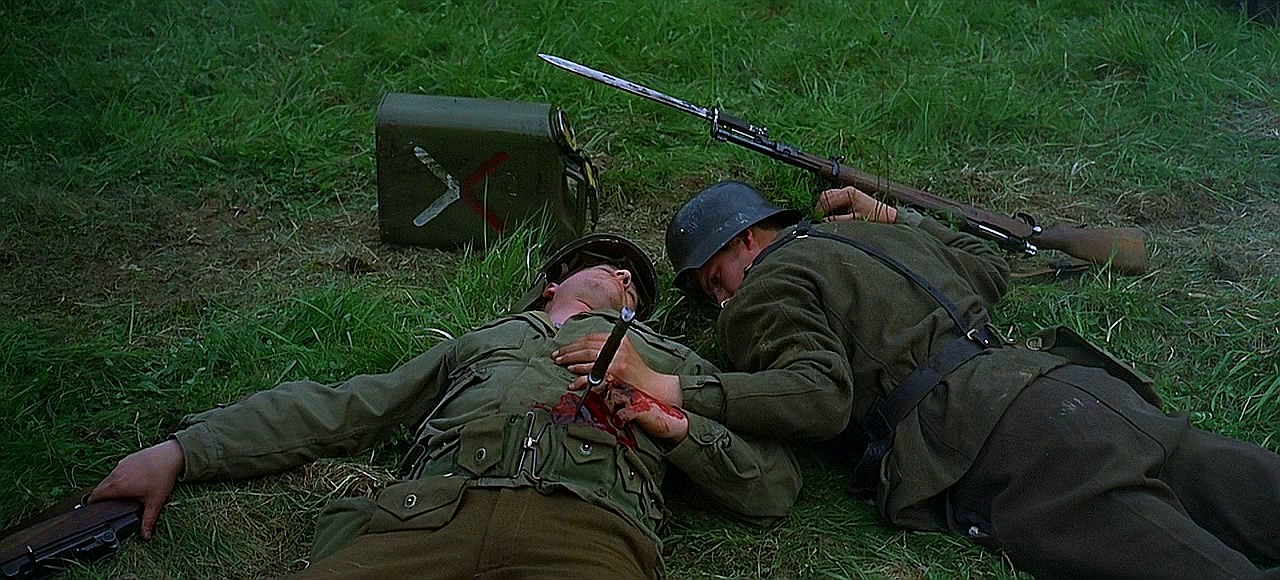
that it is possible to love war and treat it is as a profession. Patton would not have agreed with Sherman’s
“war is Hell”. On a personal note, the
movie made me wonder if war movie lovers are Pattonesque in their views. A minor subtheme is that Patton was religious
(he read the Bible “every God damned day”) and yet reveled in the killing of
Germans.
CONCLUSION:
“Patton” was the perfect movie for its
time. 1970 was ripe for a movie that
changed the game. “Patton” reinvigorated
the war film because it brought in huge audiences and opened people’s minds to
a more realistic depiction of warfare and command in warfare. The movie cannily tapped in to the country’s
Vietnam War psyche. The hawks saw Patton
as the kind of general we needed to win a just cause. Doves could sneer at the type of mentality
that had gotten us into the mess. You
saw what you wanted to see. Even today
it is unclear whether Patton should be seen as a role model.