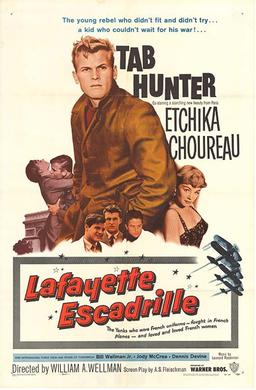
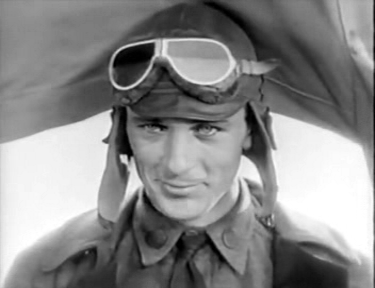
“Lafayette Escadrille” was
supposed to be William Wellman’s (“Wings”) homage to the unit he was a member
of in WWI. The Lafayette Escadrille
consisted of American’s who volunteered to fight for France before the U.S.
entered the war. Wellman, who started
out in the French Foreign Legion and switched to the flying unit, was credited
with three kills and was awarded with the Croix de Guerre. He was shot down and survived the crash
landing, but walked with a limp the rest of his life. He wrote the story the movie was inspired
by. It was based on his
experiences. Several characters in the
film are based on members of Wellman’s squadron. The main character was a friend of his who
kicked out of the unit for hitting a French officer. He became a pimp and fell in love with one of
his prostitutes. He met Gen. Pershing
and talked his way into the Air Service.
(In the movie, Thad Walker escorts a general to a brothel. This was based on an experience Wellman had
involving Pershing during the war.) He
was shot down and killed, his wife jumped into the Seine. This was ending Wellman shot, but Jack Warner
and Warner Brothers decided the film needed an upbeat ending so the studio took
the film away from Wellman and reshot the ending. It also changed the title. Wellman intended
for the movie to be entitled “C’est la Guerre”.
He also intended for Paul Newman to play the lead with Clint Eastwood as
his pal. Newman became unavailable and
the studio insisted on teen idol Tab Hunter and bumped Eastwood down to a minor
role in favor of David Janssen. You
can’t have a teen idol die. The studio
was not interested in making the film and insisted Wellman make “Darby's Rangers” to get the greenlight. And then
it saddled Wellman with a low budget.
Wellman was so pissed by the whole experience that he gave up making
movies.
The movie opens with Wellman
narrating as the Lafayette Escadrille memorial fills the screen.He proclaims that this will be the story of a
man whose name is not on the memorial.Flashback to Thad Walker (Hunter) stealing a car and hitting a kid on a
bike.He escapes only to have his father
slap him around.Next thing we know,
he’s a stowaway on a ship to France.He
hooks up with a trio of Americans that includes William Wellman (played by his
son William, Jr.) and decides to join them in enlisting in the Lafayette
Escadrille.Before that, he locks eyes
with a girl ina bar and it’s love at
first sight (probably due to the sappy romantic music).Renee (Etchika Choureau) is a whore with a
heart of gold.At the barracks, the
narrator identifies Walker’s bunkmates (one of whom is a very young Eastwood)
and proceeds to tell us most of them are going to die.Hey, spoiler alert!They are trained on a French monoplane by a
French pilot who only speaks French.No
wonder so many die. (In fact, the French
speak without subtitles, as though the movie is a serious work of art.)The training montage features silly comic
relief with silly music.Walker ends up going AWOL after slugging a
French officer.He shacks up with
Renee.This dude is in desperate need of
redemption and we’ve been promised some dogfighting, so you know where this is
heading.
It’s hard to assign blame
for this fiasco.Wellman basically
disowned the movie, so obviously he blamed the studio for the final
product.But even if you factor in the
low budget and the amended ending, he controlled the story for the most
part.He accepted the poor performances
by the actors.Tab Hunter is no Paul
Newman.He created the insipid romance.He vetted the terrible soundtrack and the
silly, slapstick humor.The humor is
absolutely painful to watch, especially in the 21st Century. Wellman is the one who decided to honor his
unit by focusing on a character who is a jerk and did not deserve
redemption.It must have been
heartbreaking to have most of his fellow fliers criticize the film, but at
least he could argue it was not his fault.
There have been some good
dogfighting films set in WWI.It almost
deserves its own subgenre.In 1958
(actually the movie was finished in 1956, but the studio held its release in
anticipation of Hunter’s anticipated music stardom), it was gutsy to come out
with a movie to challenge Wellman’s own “Wings”, but also “Hell's Angels”, and
“The Dawn Patrol”.In fact, “Lafayette
Escadrille” marks the last of the old-style WWI air combat films.You would expect that the last of the
old-school would go out with a lot of dogfighting and you would be wrong.Nobody fires a tracer until the 1:24 mark and
ends with a total of three minutes of forgettable action.The next significant film in the subgenre was
“The Blue Max”.Talk about a huge
jump!There is not a single pratfall in
“The Blue Max”.
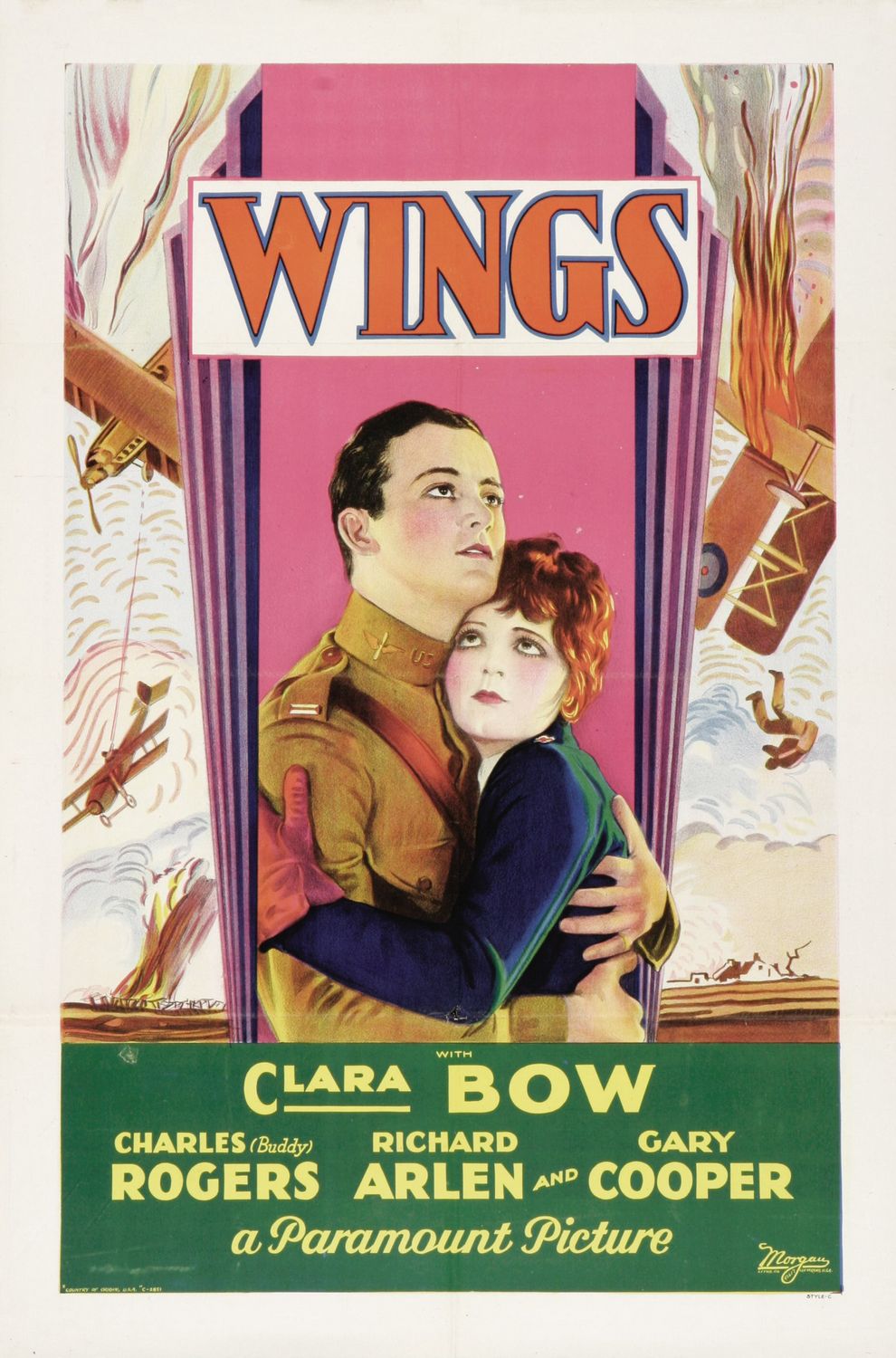
BACK-STORY:“Wings” was a movie that was
loaded with firsts.First aerial combat
movie.First male kiss.First Best Picture (and the only silent movie
until “The Artist”).It set the template
for future air combat movies.The
director was William “Wild Bill” Wellman (“Beau Geste”, “The Story of G.I.
Joe”, “Battleground”) who had been a pilot with the Lafayette Escadrille in
WWI.He had three confirmed kills,
survived a crash landing that left him with a limp, and was awarded the Croix
de Guerre.Sadly, he is one of the few
directors who were not even nominated for his Best Picture efforts (tell that
to Ben Affleck).The movie was filmed at
Kelly Field in San Antonio with full cooperation of the U.S. military.The planes provided were mainly Thomas-Morse
MB-3s and Curtiss PW-8s.The German
fighters were played by Curtiss P-1 Hawks.One stunt flier broke his neck in a crash and another was a fatality.
OPENING:The movie is dedicated to the air
warriors of WWI.Jack Powell (Charles
Rogers) dreams of flying.The girl next
door, Mary (Clara Bow), dreams of kissing him.They rebuild a car together and she suggests he name it “Shooting Star”
and hints that when you see a shooting star you should kiss the one you
love.She puckers up but he is lusting
after the new girl in town, Sylvia (Jobyna Ralston – Rogers’ future wife).Unfortunately (or fortunately for the plot),
she is in love with David Armstrong (Richard Arlen).War comes and the two men enlist.Sylvia gives Jack the impression she is in
love with him by allowing him to mistakenly take a picture locket intended for
David. Mary goes off to France as a
truck driver.
the girl next door
SUMMARY:Thereis a brieftraining
montage that leads up to a frenetic boxing match between Jack and David.They throw more punches in two minutes than a
normal fifteen round bout.The result of
the match is respect and friendship, naturally.It’s off to their first billet where they are bunked with a veteran
named White (Gary Cooper in his very brief, but star-making turn. Added bonus –
he started an affair with Clara Bow).White goes off to do his quota of figure eights and does not
return.It’s a dangerous game.
A
nifty split screen reminds us there’s a war going on in Europe and suddenly
Jack and David are in the thick of it at an air base.It’s time for their first dawn patrol and
thus their first dog fight.The audience
gets the iconic front cowling view of the pilots.Their death throes are creepy and
unforgetable.The other thing that
stands out is the colorized flames.One
of the themes that emerges is that the air war is clean and chivalrous (a
German ace named Kellerman lets Jack live when he sees that the American’s guns
have jammed) and the ground war is dirty and gruesome.Jack crash lands in no man’s land in the
middle of a battle.It seems that it is
better to be in the air than on the ground.
Jack, Mary, and David
The
next scene is a Gotha (large German bomber) raid on a French village.David and Jack scramble.The bombing raid is well done with cool
aerial views of the bombing, including shots through the bomb bay doors.The explosions are realistic.Mary gets caught in the raid and hides under
her truck.She does not realize it is
Jack who is shooting down the bomber.
Jack
and David get leave in Paris.They go to
the Folies Bergere and get drunk.Jack
is so sousled that he is seeing imaginary bubbles.(Check out these special effects, 1920s
audiences!)At first this is a cute
effect, but it becomes interminable as the scene drags.Mary arrives (it’s a small world … war) and
finds Jack with a floozy.Jack does not
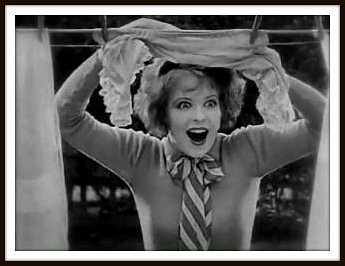
recognize Mary because he is only seeing bubbles.She manages to get him into bed, but he
passes out and she gets caught by MPs while changing clothes (use the pause
button if you want to see the “It Girl’s” its) and they ship her back to America
for being sexual.
the "it" girl
Back
at the front, Jack and David have a falling out over the locket picture.David is so flummoxed that he forgets his
lucky stuffed bear when they are scrambled to attack some observation
balloons.David takes on four German fighters
to protect his wing man Jack.Jack
shoots down two balloons in an excellent scene.David is hit and crashes in a stream.German infantry opens fire on him and presume they have killed him.Kellerman delivers a note to Jack’s base to
let him know that David is dead.Jack
vows revenge, not knowing David is actually on the lam.
The “big
push” comes and Jack takes off intending to take on the enemy all by
himself.The movie blends the ground
attack by American infantry with Jack’s one man air war. There are realistic aerial views of the trench
systems.Doughboys assault the Germans
across no man’s land with the help of tanks.The deaths are tepid, but accurately random.There is a really keen shot of a tank
crushing a German machine gun bunker. Jack is on a strafing rampage which includes
an incredibly accurate swoop on a German machine gun nest that has American
soldiers yards away.A dying Yank
(played by Wellman himself) yells skyward:“Atta boy.Them buzzards are some
good after all.”
Meanwhile
David is sneaking through the swamps until he reaches a German air base where
he incredibly steals a plane and shoots down a German fighter attempting to
take off.The German airman’s death is
laugh out loud funny.On the
battlefield, the Germans are literally running away from the Amis while
fighters strafe them.Jack takes time
off from strafing to stalk a lone German plane.Guess who is flying that German plane?No, it’s not Mary!Arlen finally
gets into the flow of the silent movie emoting as his David tries to identify
himself.He even yells “Fuck the
Kaiser!”(I think I read his lips
correctly.)Actually, one subtitle is
“Jack – don’t you know me?!”Jack
stitches David’s plane which means bullets in the back are next.David crashs into a house (owned by French
played by Wellman’s wife and kid).Jack
lands to back-slapping in the yard.Hey,
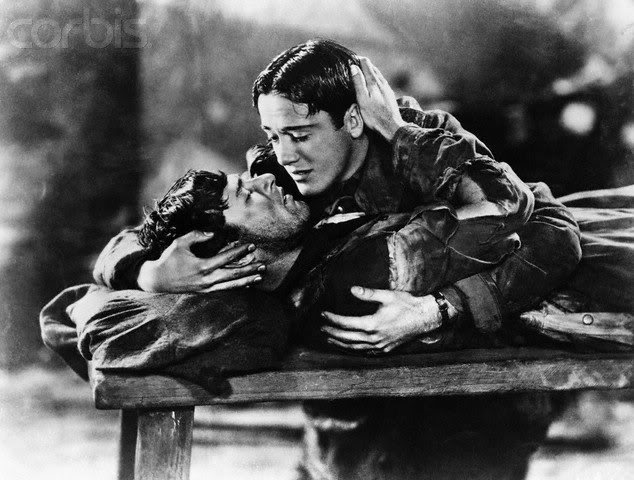
Yank, come be chivalrous and say good bye to the guy you killed.There is a tearful reunion and reconciliation
where the actors are so intimately close you swear they are about to kiss.Holy crap, that’s exactly what they do!Cut to a propeller coming to a stop.
you don't think they're going to...do you?
CLOSING:In packing up David’s kit, Jack
learns that Sylvia was actually in love with David.His bad.Jack returns home as a “conquering hero”.He goes to David’s parent’s home to bookend
the painfully melodramatic scene of David going to war.Even the family dog is pissed at him, but
Mother Armstrong forgives him because it was the war that was to blame.Unlike the earlier scene, this one is
effectively tearjerking.That stuffed
bear is powerful.Jack passes Mary on
the street and does not even recognize her.Just kidding.He has finally come
to his senses and decides he will hook up with the sexiest woman in
America.The movie comes full circle
with a kiss as a shooting star sweeps across the sky.Awwwww.
WOULD CHICKS DIG
IT?Certainly.It has a heavy dose of romance.Bow plays the girl next door so her sexuality
is not intimidating.She is very
likeable.Surprisingly, the Sylvia
character is not a vamp.The romance
subplot almost did not come off because Bow was not happy with her role.She felt the character was shoe-horned in to
create a romance.Wow, imagine that.
HISTORICAL
ACCURACY:Obviously the
movie is fictional so accuracy is not an issue.The “big push” is supposedly the St. Mihiel Offensive although it is not
identified by name.The movie clearly
indicates that the attack finishes off the Germans (which would more accurately
have been the Meuse-Argonne Offensive.)The combat is as realistic as could be expected for a 1927 film.Not on the level of “All Quiet on the Western
Front” mind you, but the overhead shots are actually quite extraordinary.The use of tanks stands out. Amazingly, the movie depicts the use of
Bangalore Torpedoes to blast holes through barbed wire.I am pretty sure this is the only WWI movie
to show their use.
The
aerial combat is accurate, which is to be expected from a Wellman film.The balloon attack is particularly well
done.The balloons are on cables.The observers are in a basket with a
telephone link-up.The balloons are
protected by anti-aircraft guns (but no fighters).The observers parachute out.The balloons go up in flames.The strafing is a bit too perfect, but that is
de rigeuer for war movies.Jack even
gets to kill a German general in his car.
CRITIQUE:“Wings” probably deserved the
Best Picture award, although I don’t have the foggiest notion of the other
contenders.It is epic in scale and
execution.Wellman had access to 60
planes and 3,500 extras.He also had a
bevy of intrepid stunt men who were willing to risk life and limb to depict the
thrills of air combat.The acrobatics of
the doomed planes are particularly impressive.In this film even the planes ham it up.The restored 2012 version has a crisp look to it and one can see why
audiences would have found it rousing.The use of the Handsghiegel Color Process to add flames adds some pizazz
to the black and white.The
cinematography is classic with some bells and whistles in the form of the split
screen scene and the neverending bubbles.POV enhances some of the cockpit scenes.Speaking of which, the air combat shots seem to be either close-ups or
far range.
The
acting is problematical.Clara Bow
dominates when she is on screen.I know
our perceptions of what is hot has changed greatly from the 1920s, but she has
“it” even in today’s climate.I can’t
think of too many other actresses from that era that I stare at when they are
on screen.Unfortunately, she is off
screen for much of the film.The movie
is more of a bromance than a romance.Charles Rogers does the typical emoting expected of a silent movie
star.His drunken Folies Bergere scene
is not cringeworthy, just tedious.It’s
probably best that we can’t hear his cockpit rantings (or read most of
them).The biggest problem in this area
is with Arlen.He is a stiff.Plus he is way too old looking for the part.The supporting cast is adequate.The movie throws in a German-American
mechanic with an American flag tattoo for some hammy comic relief.Armstrong’s mother and father look like they
belonged in the Addam’s family, but the stuffed bear requits itself admirably.
make this man a star!
The
plot eschews a love triangle for the rarer love quartet.More unusually, all four characters are
likeable.It is obvious that Jack and
Mary will end up together, but the rest of the arc is not so predictable.It’s a nice touch that Mary is sent all the
way to France and then does not really hook up with Jack.The whole locket thing was a classic
contrivance, but you see that sort of thing all the time in old movies (like
“Beau Geste”).Not to mention the
shooting down of David by Jack.Ridiculous, but inevitable.
The
movie is melodramatic and patriotic, especially in the title cards, but not
overly propagandistic.It does not
demonize the enemy.Kellerman is not a
villain.The enemy is faceless as are
the squadron mates.Cooper gets his
fifteen seconds, but no one else makes a dent.The plot is rife with contrivances to push it to the happy ending, but
the contrivances are mostly endearing.The buttons are pushed effectively.I did not throw up in my mouth even once.I can not say the same for the similar “Pearl
Harbor”.
The
movie is justifiably famous for its aerial sequences.They are among the best from that era.Better than most, but not superior to “Hell’s
Angels” (which was greatly influenced by it).Amazingly, the trench sequences are actually stronger than the air
combat and they get much more coverage than in similar films.
CONCLUSION:I wasn’t sure going into this movie and the
first half tended to confirm my suspicions that it would be too Old School to
hold up.If it weren’t for Bow, the
romance would be a loser.The movie is
slow pacedand the Folies Bergere
scene brings the movie to a thudding halt.Surprisingly, the movie takes off (get it) when Mary goes home and the
boys have their falling out.The balloon
scene foreshadows the kick-ass St. Mihiel third.The pace picks up considerably and the blend
of air combat and trench warfare is deft.The resolution of the quartet is pleasing, if predictable.It’s one third of a very good movie.Overall, I would have to say it may belong at
#11 if you are basing the ranking on importance of the film.However, if you are basing rankings simply on
how good the film is, it is far from being the 11th best war movie
ever made.I can see it making my 100
Best, but not in the top fifty.It’s
definitely a must see and I must admit embarrassment at having seen it for the
first time for this project.