Sunday, December 25, 2011

NOW SHOWING: War Horse


     Steven Spielberg’s “War Horse” opened on Christmas day and I attended the first feature. Being a war movie buff, I have eagerly awaited this movie, but with trepidation because Spielberg has been known to get juvenile in his movies, especially recently. The movie is based on a children’s novel and an acclaimed stage play. The movie has generated numerous awards nominations and could end up as one of the more important films of the year. But how is it as a war movie?


     The movie opens with the birth of a colt in Great Britain. The birth is witnessed by a farm boy named Albert (Jeremy Irvine). Albert falls in love with the horse and in a happy coincidence his father decides to outbid his evil landlord for the horse at an auction where his farm desperately needs a work-horse. “Joey” (as Alby calls him) is no work-horse and his mother Rosie (Emily Watson) rightfully thinks her husband is daft. They can’t get rid of the horse because Alby really wants a pony. In a cliché-busting scene, Joey proves to be easily trainable and very smart. When the landlord (David Thewlis) threatens to take back the farm if the drunken, loser father (Peter Mullan) does not make a rock-strewn field productive, Alby hitches him to a plow and (with the help of a fortuitous rainstorm that quickly softens the ground) the horse earns his keep.

     The father’s love of the bottle is explained by his soldiering in the Boer War. He was decorated, but does not talk about it. Rosie theorizes that “he refuses to be proud of killing”. He is so down on his luck that when the plowed turnip field is ruined by rain, he is forced to sell Joey to the military. The horse goes off to war as the underage Alby stays home.

     The movie from this point on is basically another take-off on Homer’s “Odyssey” with Joey meeting several interesting new owners and facing dangers. Here is a summary:

1. Captain Nicholls rides Joey in a cavalry charge which represents every cavalry charge of the Great War in that machine guns > horses.

2. Two German brothers acquire the horse who is to be used as an artillery-puller, but instead is used as a getaway horse as the elder brother rescues the younger from a column heading for the front.

3. A feisty young French girl named Emilie is the next owner. Before she can break her brittle bones riding recklessly, the German army requisitions the horse and its back to the artillery.

4. An animal-loving German lets Joey escape when his usefulness is approaching bullet-in-the-head time. In the process, in a scene of heavy-handed symbolism, Joey escapes from a tank and then runs down a trench and then through no man’s land. Unfortunately, Joey gets entangled in barbed wire.

5. A Tommy and a Fritz use wire-cutters to free Joey and he rejoins the British Army.

6. Joey is reunited with Alby at a hospital where Alby barely convinces a doctor not to put his wounded horse out of his misery.

7. Joey is bought at auction by Emilie’s grandfather, outbidding Alby (and a butcher).

     I’ll stop right there to and let you wonder if the movie has an ‘Old Yeller” ending. Don’t read the next paragraph if you do not care if a movie has ridiculous moments.

     Where do I start? Joey becomes BFFs with another cavalry horse named Blackthorn. They are captured together and after it is unsubtly made clear that if you don’t work you die, Joey “volunteers” to take Blackthorn’s place pulling a cannon. The whole scene with the German brothers is laughable. When the deserting brothers are captured, the older brother does not insist he forced his unwilling brother to come along and they face the firing squad together. Or why would a tank chase after a lone horse? You have to suspend disbelief a bit in this movie.

     Historically speaking, the movie is based on a children’s book so what do you expect. However, since Speilberg had to assume some adults might want to see it, he could have at least read one WWI history book. (This is his first WWI movie after six about WWII.) Before the big cavalry charge scene, the British commander references famous successful charges, including Pickett’s Charge. Surely, even an Englishman would know Pickett’s Charge should not be mentioned to boost morale. The charge itself adequately depicts the suicidal nature of WWI cavalry attacks. I assume the attack is fictional and it is possible that the Germans could have been stupid enough to camp in a field with no entrenching or even guards posted because its early in the war. It is also possible they may have emplaced a line of machine guns behind their tents. Highly unlikely, however. By the way, that line of machine guns is incredibly accurate as they knock off riders without hitting horses.

     The “Saving Private Ryan” moment comes two-thirds of the way through the movie. Incredibly, Spielberg decided to label the battle “1918 – The Somme”. You don’t have to be a military historian to know the very famous Battle of the Somme was in 1916. Alby is now at the front in a Pals’ Battalion with his best friend and a snooty rich kid acquaintance. The trench sets are realistic and no man’s land is appropriately hellish. The British assault is bloody (without blood) and violent (but not graphic). Alby reaches the German trench first and it is empty with all the Germans dead. Wait, what? To make matters worse, Alby is blinded by a poison gas bombardment that hits directly in the trench. What accuracy! This works out for plot purposes as Alby needs to be sightless for his reunion with Joey.

     Being a Spielberg movie, certain things are guaranteed. The cinematography is lush in the bucolic British countryside scenes and colorless in the muddy Western Front scenes. John Williams’ score plays on the audiences emotions throughout. You don’t have to think much, Williams will let you know how to feel. For example, plowing the field – cue the inspirational music. The acting is satisfactory, if unspectacular. The horse (actually eight horses to portray the adult “Joey”) is amazing and its accent does not change, unlike some of the humans. The film does avoid some obvious clichés. The horse is not hard to train. Alby’s potential rivalry with the rich boy over a local girl ends up on the cutting room floor. Emilie does not have an accident. It’s not unorthodox in its cartoonish villains, however. The evil landlord. The martinet German officers. Hiss him, cheer that, cry now. The movie very effectively manipulates the audience’s emotions. Most people will get what they paid for.

     The problem is that Spielberg has made the kids’ version of a war movie. He even includes a goose for comic relief. How Disneyesque! The “it’s a small world” on the Western Front aspect is to be expected from any mainstream movie, I suppose. For those expecting the WWI equivalent of SPR in the combat scenes, consult the movie’s rating and target audience. Even the cavalry sabers (inaccurately called “swords” in the movie) remain unbloodstained. Realism is not a forte of this movie. “War Horse” is a good movie for civilians, but it is not a good war movie.


Friday, December 23, 2011

A CHRISTMAS WAR MOVIE: A Midnight Clear


     I thought with Christmas approaching I would suggest an X-Mas themed war flick. “A Midnight Clear” was released in 1992. Its cast consisted of several up and coming actors like Ethan Hawke, Peter Berg, Kevin Dillon, John McGinley, Frank Whaley, and Gary Sinise (his film debut). The ensemble cast is strong and the movie is a little gem that is not well-known. It cost less than $5 million to produce and made less than $2 million. It is based on the novel by William Wharton.


     The movie is set in the Ardennes Forest before the Battle of the Bulge. It is not a big picture movie. You get no idea how the battle is going. There is a “fog of war” surrounding the intelligence squad that is sent out to observe enemy movements from an abandoned mansion.  They are scared and unclear about what they are supposed to do. The mission is seemingly suicidal and their ex-mortician, current martinet Major Griffin (McGinley) has a habit of putting them in precarious positions. Speaking of a previous patrol, Will (the narrator Ethan Hawke) makes the following telling remark: “We lost half of our squad attempting one of [Griffin’s] map-inspired, ill-conceived recon patrols. When I say ‘lost’, I mean ‘killed’. Nobody in the Army ever admits that someone on our side is killed. They’re either ‘lost’ like Christopher Robin… ‘hit’, as in a batter hit by a pitched ball… or get ‘it’ like in hide and go seek. Or maybe they “get it”, as with an ambiguous joke.” Well said and true. In fact, much of the narration is cynical and critical of the Army.

     We get to know the squad well. They are typically heterogeneous except there is no country hick because this is an “intelligence” squad. They care about each other, but are not all BFFs. There is a flashback scene from boot camp as several of the boys attempt to lose their virginity with a good girl down on her luck. It is a sweet scene and tastefully done.

     The setting and mood of the movie could have easily fit a horror movie. On the way to the mansion, they come upon the corpses of a G.I. and a German in a death embrace. The chalet is eerie. It is empty except for a deer. The nights are particularly spooky. The first night Germans yell unintelligibly from the woods and the next day the Americans discover a German squad encamped in a hut nearby. That night the Germans come again to yell “Fuck Hitler” (later they insist they are not Nazis, just German soldiers – an accurate description of the dilemma of many German soldiers) and throw snow balls. The third night they rig up a Christmas tree and sing carols. Although fictional, the film harkens back to the famous Christmas Truce of WWI. (That reminds me to suggest "Joyeux Noel" as a companion to your Christmas viewing.) The perplexed Americans finally realize the Germans want to surrender, but they need for it to look like they put up a fight. Since “Mother” (Sinise) has recently suffered a breakdown, the guys decide to make him the “hero” of the skirmish so he can be sent home. Mother is to be kept in the dark about the whole affair. Nice plan, disastrous results. Watch the movie and see what happens.

     This is a remarkable movie. It is unlike any other war movie I have seen. It is spiritual (helped by the New Age musical score) and has a heart-tugging scene involving the bathing of a dead comrade that is hard to forget (and slightly homoerotic). It is also overtly religious in spots. Although a Christmas movie, there is also a strong reference to the Crucifixion. Some will not like this aspect of the movie, but I found it refreshing. Keep in mind that soldiers tend to be religious for obvious reasons, so why shouldn’t war movies occasionally have religious themes?

     The movie is very well acted. The squad is likeable and relateable. Each has a distinct personality. Each actor gets a chance to shine. No one dominates. The small unit dynamics are realistic. Their behavior rings true. McGinley is appropriately loathsome as the clichéd commanding officer. (By the way, McGinley and Dillon went on to appear in another great small unit movie – “Platoon”.) The Germans are shown in a sympathetic light. What happens to them is truly tragic.

     This is a very snowy movie. Watch it with a mug of hot chocolate by a fire place if you can. It was shot in Utah and the temperatures at night were frigid. The cinematography is crisp and clear like the locale.

     In conclusion, “A Midnight Clear” is one of the two greatest war movies set at Christmas. Are there others? Let me know. It will make my 100 Best War Movies list when I get done with my journey.


Wednesday, December 21, 2011

Taegukgi (The Brotherhood of War)


     “Taegukgi” is the most famous war movie to come out of South Korea. It was released in 2004 and was South Korea’s answer to “Saving Private Ryan”. It was written and directed by Kang Je-gyu and set attendance records in South Korea. The name comes from the name of the pre-war flag of Korea. It is an epic.


     The film opens at an excavation of a battle site (similar to the grave site opening in “Saving Private Ryan”) which leads to the contacting of an old Korean who is linked to one of the corpses. This leads to a flashback to Seoul in 1950 right before the war. Jin-Seok (Jang Gong-gun) and Jin-Tae (Won Bin) are brothers. Tae (that’s what I’ll call him) dreams of being a shoemaker and Seok hopes to go to college. Their happy family life comes to a screeching halt when Seok is press ganged and Tae enters the army to protect him.

     They join a unit in the trenches near the Naktong River in the Pusan Perimeter. On a mine-laying operation in no man’s land, the squad is ambushed and Tae goes Rambo (even pulling a grenade pin with his teeth). He is a natural born great shot. The violence is SPResque and the wounds are very graphic. A later attack at night ups the adrenalin with Molotov cocktails and hand-to-hand combat. Tae takes out a machine gun and then the command bunker. Tae has made a deal with his commanding officer that if he wins the Taeguk Cordon of the Order of Military Merit (the South Korean equivalent of the Medal of Honor), his brother will be discharged. The problem is that Tae becomes addicted to combat and the subsequent glory that comes with it. Meanwhile, Seok’s attitude is heading in the opposite direction as his experiences have disgusted him and he is becoming estranged from his brother.

     In October, 1950, the fighting shifts to Pyongyang for some urban combat. Tae captures an enemy captain and Seok accuses him of being a glory-hound. At a nearby village, the squad encounters countless bodies, some of which are booby-trapped. It’s retaliation time at the next town as they kill prisoners with only Seok refraining. Seok has to intervene to save the life of a friend of their’s who was forced into the North Korean army. Later, in a strange character development, Seok beats the tar out of a prisoner in a gladiator style pit.

      When Seok returns home he has a brief reunion with his fiancé Yong-shin before she is carted off by anti-communist zealots. They bring Seok, too. Yong-shin gets a great death scene as she is killed during a mutiny by the political prisoners. Seok is held captive and then dies when the “Communist” prisoners are burned alive in their jail. An enraged Tae kills the officer who gave the order and then defects to the enemy not knowing that Seok has survived.

     Tae is now a North Korea Rambo and heads an elite squad called the Flag Unit. Seok returns to the front to try to reconvert his brother. There is a huge set piece battle involving 15,000 bullets, 3,000 extras, and 500 stuntmen. There are numerous minor injuries in the 3 weeks of shooting, mostly from the fist-fighting. Director Kang Je-gyu throws in the kitchen sink in one of the most remarkable battle scenes ever filmed. There is a strafing attack by CGI Corsairs. A plane is hit and crashes into a machine gun nest. The fighting is hand-to-hand as Seok runs through the trenches seeking his brother. The Flag Unit enters the battle to boost the carnage to a peak. The brothers meet, but Tae does not recognize the ghost of his brother and is in a zone anyway. He is about to kill Seok when he is stabbed. Tae finally recognizes Seok and agrees to return with him but urges Seok to go on ahead while he holds off the North Korean army with a machine gun. His bones are found many years later.

     This is an amazing movie. I did not expect much from a South Korean film. I have to assume South Korea is a macho society because the film has more blood and guts than a vast majority of war movies. The violence is a bit over the top, but you have to admire the sheer quantity of the killing. It is “Saving Private Ryan” on meth. It is very gory. If shown in splatter-vision, you would have to burn your clothes.

     The movie has its flaws. The two leads are excellent, but the character arc of Seok is not believable. He goes from being frail to buff too quickly. His whipsawing from pacifist to pugilist is also hard to swallow. The family scenes are touching and the relationship between Seok and his fiancé is well done. Her death is heart-tugging. The rest of the roles are not fleshed out enough. We do not get to know the squad very well, unlike other small unit movies like “Platoon”. It does have a few clichés. One soldier shows off a picture of his family.  Can you guess what happens to him soon after? I wonder if this cliché seemed fresh to the South Korean audience. The score is sappy, but at least you can hear it above the explosions.  This is one loud, badass movie.

      Will it crack the 100 Best? Certainly. It could definitely kick the crap out of movies like “Guadalcanal Diary”.

8/10

the trailer


trench warfare

Saturday, December 17, 2011

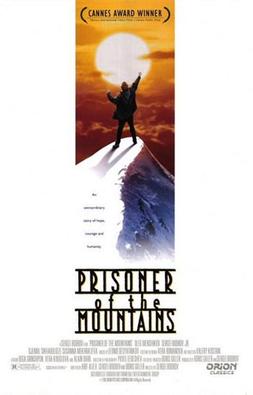
SHOULD I READ IT? Prisoner of the Mountains


      “Prisoner of the Mountains” is a Russian film released in 1996. It is based on a short story by Leo Tolstoy entitled “The Prisoner of the Caucasus”. It is set in the First Chechen War and in fact was filmed in the area at the time fighting was still taking place nearby. The movie was critically acclaimed and was nominated for the Best Foreign Film Oscar.


     Although fictional, the film gives the viewer a feel for the First Chechen War. The war began in 1994 after Chechnya seceded from Russia and declared independence. Boris Yeltsin decided to invade and reacquire control. The war was a foreign policy disaster for Russia. The Russian army of mainly untrained conscripts was marked by poor morale and lack of support from the home front. The Russian military resorted to sledgehammer tactics like carpet bombing and rocket artillery attacks on civilians. Thousands of civilians were killed. The capital of Grozny was destroyed in the taking. Next the Russians attempted to pacify the mountainous areas and were confronted by guerrilla war tactics that included ambushes, IEDs, and hostage taking. Eventually, in 1996, Yeltsin cried uncle and agreed to a cease-fire and pulled out of Chechnya.

     In the movie, a Russian unit is ambushed and two soldiers are taken captive. They are taken to a Chechen village in the mountains. Vanya (Sergei Budrov, Jr.) and Sasha (Oleg Menshikov) are given to an elderly man named Abdul. He plans to exchange them for his son who is being held in a Russian stockade. Abdul has them write home to get their parents to put pressure on the Russians to make the deal. Vanya’s mother (a school teacher) makes the journey to the local Russian occupied town. Meanwhile, Vanya and Sasha are being held under guard by a man named Hassan who lost his tongue to the Russians.

     Vanya and Sasha are polar opposites. Vanya is a young naïve soldier and Sasha is a cynical officer and all-around jerk. He torments Vanya, but gradually they bond and Sasha becomes less of a jerk. Vanya developes a relationship with Abdul’s teenage daughter Gina. Vanya is also interested in the local culture and endears himself to the locals by fixing clocks. Sasha is only interested in escaping.

     Vanya’s mother tries to broker the deal, but the Russian commander doesn’t trust the Chechens. Rebels come and take Vanya and Sasha. They are forced to walk through a mine field at night to clear a path. At the rebel camp, Vanya is forced to fight a rebel, but the Chechen backs down when Vanya yells at him. This bit of bizarreness is followed by them being returned to Abdul. Apparently, they were taken only to clear the mine field.

     They manage to escape with Sasha killing poor Hassan. Later, he kills a shepherd. Unfortunately(?), they are recaptured. Vanya is returned to Abdul, but Sasha is taken away to have his throat cut. Vanya is chained in a hole. At the stockade, a father of a son who turned traitor and joined the Russian army kills him touching off an escape attempt by Abdul’s son. The son is shot and killed.

     Gina wants to help Vanya, but he refuses because he knows she will be punished. Abdul takes him off to be shot, but instead lets him go. As he flees the village, Russian helicopters ominously pass overhead on their way to the village.

     This is an intriguing movie. It forced me to learn a little about the First Chechen War. That was one messed up war. Worse than Afghanistan (which obviously influenced the average Russian’s adverse reaction to it). The movie does not do justice to the atrocities, but you do get the impression that some really bad things have happened on both sides. Abdul, for instance, not only has a son being held captive, but had lost two other sons in the war. The villagers have a strong desire to take revenge against Sasha and Vanya for Russian offenses. Given that it is a Russian production, the film is admirably sympathetic toward the Chechen point of view. This probably reflects the guilt feelings of many Russians toward the conflict.

     The movie is slow-moving and introspective in spots. It is not an action film and does not have a lot of war violence. Maybe this is a good thing because in the ambush scene, the actors look like actors playing soldier. The lead actors are excellent, especially Menshikov. I hated his character at first, but he grows on you. Budrov matches him in what is in some ways a buddy film. The music is effective and includes some traditional Russian songs. The scenery is beautiful. The slice of village life is tasty.

      “Prisoner of the Mountains” is a thought-provoking film. It explores the theme of how distrust in war between enemies can lead to tragedy. Civilized human emotions can be overcome by our more animal instincts, like revenge. When a minority of warriors are empathetic to their enemy’s motivations, it usually leads to more tragedy instead of less.

Overall – 7/10

Sorry about the poster, it's the only one I could find.  It has little to do with the movie.

I could not find a trailer, so here is the first part of the movie on You Tube.