A BRIDGE TOO FAR
(5) vs. CROSS OF IRON (7)
REALISM:
“A Bridge Too Far” is the true story of the ill-fated Operation Market Garden. The movie focuses on the command level and is based on a well-researched book by Cornelius Ryan. The movie gives balanced coverage to the opposing sides. It is very realistic in portraying how plans do not survive the initiation of battle. It also does a good job of depicting that the worst case scenario will often trump wishful thinking. On an historical note, the movie proves that Montgomery was very unrealistic when he assumed a British armored unit could bash its way to Arnhem over one road.
“Cross of Iron” attempts to portray combat on the Eastern Front during the period when things were collapsing for the Wehrmacht. The nature of the combat is realistically portrayed. It is desperate and nightmarish. The main characters are stock, but they did exist in the German army. The movie does include a highly unrealistic (although entertaining) scene involving Russian women soldiers. Steiner’s unit treats them as respected enemies when in reality the German army was particularly vile towards female combatants. The ending confrontation between Steiner and Stransky is also unrealistic.
FIRST QUARTER SCORE:
Bridge 10
Cross 7
DIALOGUE:
Much of the dialogue in “Bridge” is straight from the book. This means it is true to what the historical persons said. William Goldman, an Academy Award winning screenwriter adapted the book. The dialogue is not pompous although much of it comes from the mouths of generals. Best line: “Ah, I suppose you're wondering why I called you here. I want to tell you that I've decided to cross the river like George Washington; standing in the prow of the boat.” (Maj. Cook (Robert Redford) before the river crossing)
“Cross” had three screenwriters. The dialogue takes a back seat to the action, but the verbal confrontations between the main characters are well done. Steiner has some cynical gems, Stransky gets to be upper class snobbish, and Kiesel is wearily realistic about the war. Best line: “I believe God is a sadist, but probably doesn't even know it.” (Steiner)
FIRST HALF SCORE:
Bridge 18
Cross 15
SOLDIER BEHAVIOR:
“Bridge” does not have a lot of soldier behavior. If you are looking for how generals behave, this is the movie for you. The only notable enlisted man is Sgt. Eddie Dohun (James Caan). Supposedly director Richard Attenborough put the extras through the first pre-war movie boot camp and it shows as the actions by the soldiers is a big improvement over Old School movies. Although mostly anonymous, the soldiers act like soldiers in battle
“Cross” is a small unit movie and quite a bit of time is spent with German grunts. It turns out they are pretty much like regular soldiers in any army in WWII (well, maybe not the Japanese). Their interaction in their dugout rings true. They love each other (except for the Nazi stoolie). They do their duty resignedly and are fighting for each other, not for Hitler. Steiner makes a point of saying he hates all officers.
THIRD QUARTER SCORE:
Bridge 25
Cross 23
ENTERTAINMENT VALUE:
“Bridge” is an epic war movie about one of the most fascinating campaigns of WWII. It has an all-star cast and the acting is very good. There are big, well-staged battle scenes and if you don’t already know the story, some suspense. The only drawback is that it does cover a loss which means there is no happy ending. If you are not a war movie fan or admire historical accuracy, the movie could leave you cold.
“Cross” is a very different movie than “Bridge”. It is not as clinical. It is grimy and gritty like war can be. It is also packed with amazingly visceral combat and a great central character. Steiner is one of war movies’ best anti-heroes. The problem is that you have to be into Peckinpah style violence. The movie is certainly not aimed at females.
FINAL SCORE:
A BRIDGE TOO FAR 32
CROSS OF IRON 31
COLOR ANALYSIS:
Very interesting match-up between two very different movies. Basically “Bridge” won because it was slightly better at being an epic battle reenactment than “Cross” is at being a combat film. If you like both films, you are a true war movie lover.
REALISM:
“A Bridge Too Far” is the true story of the ill-fated Operation Market Garden. The movie focuses on the command level and is based on a well-researched book by Cornelius Ryan. The movie gives balanced coverage to the opposing sides. It is very realistic in portraying how plans do not survive the initiation of battle. It also does a good job of depicting that the worst case scenario will often trump wishful thinking. On an historical note, the movie proves that Montgomery was very unrealistic when he assumed a British armored unit could bash its way to Arnhem over one road.
“Cross of Iron” attempts to portray combat on the Eastern Front during the period when things were collapsing for the Wehrmacht. The nature of the combat is realistically portrayed. It is desperate and nightmarish. The main characters are stock, but they did exist in the German army. The movie does include a highly unrealistic (although entertaining) scene involving Russian women soldiers. Steiner’s unit treats them as respected enemies when in reality the German army was particularly vile towards female combatants. The ending confrontation between Steiner and Stransky is also unrealistic.
FIRST QUARTER SCORE:
Bridge 10
Cross 7
DIALOGUE:
Much of the dialogue in “Bridge” is straight from the book. This means it is true to what the historical persons said. William Goldman, an Academy Award winning screenwriter adapted the book. The dialogue is not pompous although much of it comes from the mouths of generals. Best line: “Ah, I suppose you're wondering why I called you here. I want to tell you that I've decided to cross the river like George Washington; standing in the prow of the boat.” (Maj. Cook (Robert Redford) before the river crossing)
“Cross” had three screenwriters. The dialogue takes a back seat to the action, but the verbal confrontations between the main characters are well done. Steiner has some cynical gems, Stransky gets to be upper class snobbish, and Kiesel is wearily realistic about the war. Best line: “I believe God is a sadist, but probably doesn't even know it.” (Steiner)
FIRST HALF SCORE:
Bridge 18
Cross 15
SOLDIER BEHAVIOR:
“Bridge” does not have a lot of soldier behavior. If you are looking for how generals behave, this is the movie for you. The only notable enlisted man is Sgt. Eddie Dohun (James Caan). Supposedly director Richard Attenborough put the extras through the first pre-war movie boot camp and it shows as the actions by the soldiers is a big improvement over Old School movies. Although mostly anonymous, the soldiers act like soldiers in battle
“Cross” is a small unit movie and quite a bit of time is spent with German grunts. It turns out they are pretty much like regular soldiers in any army in WWII (well, maybe not the Japanese). Their interaction in their dugout rings true. They love each other (except for the Nazi stoolie). They do their duty resignedly and are fighting for each other, not for Hitler. Steiner makes a point of saying he hates all officers.
THIRD QUARTER SCORE:
Bridge 25
Cross 23
ENTERTAINMENT VALUE:
“Bridge” is an epic war movie about one of the most fascinating campaigns of WWII. It has an all-star cast and the acting is very good. There are big, well-staged battle scenes and if you don’t already know the story, some suspense. The only drawback is that it does cover a loss which means there is no happy ending. If you are not a war movie fan or admire historical accuracy, the movie could leave you cold.
“Cross” is a very different movie than “Bridge”. It is not as clinical. It is grimy and gritty like war can be. It is also packed with amazingly visceral combat and a great central character. Steiner is one of war movies’ best anti-heroes. The problem is that you have to be into Peckinpah style violence. The movie is certainly not aimed at females.
FINAL SCORE:
A BRIDGE TOO FAR 32
CROSS OF IRON 31
COLOR ANALYSIS:
Very interesting match-up between two very different movies. Basically “Bridge” won because it was slightly better at being an epic battle reenactment than “Cross” is at being a combat film. If you like both films, you are a true war movie lover.
SAVING PRIVATE RYAN
(1) vs. MERRILL’S MARAUDERS (13)
REALISM:
“Saving Private Ryan” was lauded as the most realistic combat film ever made. The opening scene on Omaha Beach is truly the closest audiences have come to the realities of an amphibious assault. Actual amputees were used for the numerous dismemberments. The closing scene is similar in its attempts to put you in the middle of combat and although it has some flaws (the tanks not using their machine guns, for instance), it is also better than any previous cinematic combat. The FUBAR nature of the mission certainly rings true. The movie has some problems with plausibility (e.g., the recurring German).
“Merrill’s Marauders” is actually pretty realistic for a 1962 Old School movie. The soldiers are sweaty, grimy, and exhausted (although not enough). However, the deaths are silly and the combat is tactically unsound.
FIRST QUARTER SCORE:
Saving Private Ryan 9
Merrill’s Marauders 7
DIALOGUE:
“Saving Private Ryan” is not remembered for its dialogue. In fact, in one of the most powerful scenes (when Mrs. Ryan is notified about her sons’ deaths), there is not a spoken word. The movie does have some nice dialogue. Robert Rodat’s script was nominated for Best Original Screenplay. Much of the dialogue is terse and the most famous line is simply: “Earn this.” The monologues are well done, especially when Wade describes pretending to be asleep when his mother would come home and when Miller finally reveals his previous life. Best line: “This Ryan better be worth it. He'd better go home and cure some disease or invent a longer-lasting lightbulb or something. 'Cause the truth is, I wouldn't trade 10 Ryans for one Vecchio or one Caparzo.” (Miller)
“Merrill’s Marauders” is average in dialogue. Although Samuel Fuller wrote some of it, it is not as gritty as you would hope. In fact, some of it is pretty trite. The movie closes with the doctor saying: “What sort of men are these? How can they do it? But they did it”. Gag! The soldier chatter is particularly lame, but thankfully sparse. The most memorable line is Merrill’s inspirational: “When you’re at the end of your rope all you have to do is have one foot step out in front of the other.”
FIRST HALF SCORE:
Saving Private Ryan 18
Merrill’s Marauders 14
SOLDIER BEHAVIOR:
SPR is famous for the boot camp the actors were put through by Dale Dye in preparation for their roles. Matt Damon (Ryan) was purposely left out so he would be treated subconsciously as an outsider. For a movie that attempts to be as close to reality as possible, the actors do not come off as like they are playing army men. They gripe a lot and question the mission. They do not want to accept the new guy (Upham) and never really bond with him. They respect Capt. Miller, but only grudgingly follow him when he issues questionable orders.
MM also highlights the typical soldier grousing. Both films include the realistic “why us again?” whining. The best scene is when Lt. Stockton reveals to his platoon that they are not going on R&R and instead have a long slog ahead of them. The men wander off dejectedly. Their interaction has some forced dysfunctionality involving a jerk named “Chowhound”. The lack of noise discipline is a disconcerting behavior.
THIRD QUARTER SCORE:
Saving Private Ryan 26
Merrill’s Marauders 20
ENTERTAINMENT VALUE:
SPR was a huge success. It was the highest grossing domestic film of the year. It’s appeal cut across many demographic groups. Although there are no female characters, many women enjoyed the movie. Although some have complained about plot contrivances, there is no debate that Spielberg is a master at manipulating the emotions of his audiences. Unlike many of his later efforts, SPR is fairly constrained in this aspect. The blend of intense combat with a human interest story was masterful.
MM is above average entertainment, but is mainly aimed at war movie lovers. The film wears well in a classic war film way. It does not break any new ground and what it does to entertain the audience is standard, but effective. Viewing it will leave you satisfied, but unlikely to stay in the theater for a second viewing. And I doubt there was much buzz surrounding the film.
FINAL SCORE:
Saving Private Ryan 35
Merrill’s Marauders 27
COLOR ANALYSIS:
This match-up went as expected. SPR is just too talent-laden for a mid-major like MM. In virtually any category, SPR is easily superior. It will take a special film to take down the #1 seed, not an above average Old School classic.
REALISM:
“Saving Private Ryan” was lauded as the most realistic combat film ever made. The opening scene on Omaha Beach is truly the closest audiences have come to the realities of an amphibious assault. Actual amputees were used for the numerous dismemberments. The closing scene is similar in its attempts to put you in the middle of combat and although it has some flaws (the tanks not using their machine guns, for instance), it is also better than any previous cinematic combat. The FUBAR nature of the mission certainly rings true. The movie has some problems with plausibility (e.g., the recurring German).
“Merrill’s Marauders” is actually pretty realistic for a 1962 Old School movie. The soldiers are sweaty, grimy, and exhausted (although not enough). However, the deaths are silly and the combat is tactically unsound.
FIRST QUARTER SCORE:
Saving Private Ryan 9
Merrill’s Marauders 7
DIALOGUE:
“Saving Private Ryan” is not remembered for its dialogue. In fact, in one of the most powerful scenes (when Mrs. Ryan is notified about her sons’ deaths), there is not a spoken word. The movie does have some nice dialogue. Robert Rodat’s script was nominated for Best Original Screenplay. Much of the dialogue is terse and the most famous line is simply: “Earn this.” The monologues are well done, especially when Wade describes pretending to be asleep when his mother would come home and when Miller finally reveals his previous life. Best line: “This Ryan better be worth it. He'd better go home and cure some disease or invent a longer-lasting lightbulb or something. 'Cause the truth is, I wouldn't trade 10 Ryans for one Vecchio or one Caparzo.” (Miller)
“Merrill’s Marauders” is average in dialogue. Although Samuel Fuller wrote some of it, it is not as gritty as you would hope. In fact, some of it is pretty trite. The movie closes with the doctor saying: “What sort of men are these? How can they do it? But they did it”. Gag! The soldier chatter is particularly lame, but thankfully sparse. The most memorable line is Merrill’s inspirational: “When you’re at the end of your rope all you have to do is have one foot step out in front of the other.”
FIRST HALF SCORE:
Saving Private Ryan 18
Merrill’s Marauders 14
SOLDIER BEHAVIOR:
SPR is famous for the boot camp the actors were put through by Dale Dye in preparation for their roles. Matt Damon (Ryan) was purposely left out so he would be treated subconsciously as an outsider. For a movie that attempts to be as close to reality as possible, the actors do not come off as like they are playing army men. They gripe a lot and question the mission. They do not want to accept the new guy (Upham) and never really bond with him. They respect Capt. Miller, but only grudgingly follow him when he issues questionable orders.
MM also highlights the typical soldier grousing. Both films include the realistic “why us again?” whining. The best scene is when Lt. Stockton reveals to his platoon that they are not going on R&R and instead have a long slog ahead of them. The men wander off dejectedly. Their interaction has some forced dysfunctionality involving a jerk named “Chowhound”. The lack of noise discipline is a disconcerting behavior.
THIRD QUARTER SCORE:
Saving Private Ryan 26
Merrill’s Marauders 20
ENTERTAINMENT VALUE:
SPR was a huge success. It was the highest grossing domestic film of the year. It’s appeal cut across many demographic groups. Although there are no female characters, many women enjoyed the movie. Although some have complained about plot contrivances, there is no debate that Spielberg is a master at manipulating the emotions of his audiences. Unlike many of his later efforts, SPR is fairly constrained in this aspect. The blend of intense combat with a human interest story was masterful.
MM is above average entertainment, but is mainly aimed at war movie lovers. The film wears well in a classic war film way. It does not break any new ground and what it does to entertain the audience is standard, but effective. Viewing it will leave you satisfied, but unlikely to stay in the theater for a second viewing. And I doubt there was much buzz surrounding the film.
FINAL SCORE:
Saving Private Ryan 35
Merrill’s Marauders 27
COLOR ANALYSIS:
This match-up went as expected. SPR is just too talent-laden for a mid-major like MM. In virtually any category, SPR is easily superior. It will take a special film to take down the #1 seed, not an above average Old School classic.
THE BIG RED ONE (3)
vs. WHEN TRUMPETS FADE (9)
REALISM:
Although semi-autobiographical, “The Big Red Line” is chock full of implausibilities. It is not realistic that a competent sergeant would not have been promoted after three years of combat. It is unrealistic that the four main squad members would not even suffer a wound in three years. Helping a woman give birth in a tank. Old German villagers blocking the path of armed American soldiers. A soldier eating with them in the Ardennes turns out to be a German plant. Their paths cross several times with the same bad Nazi. Not to mention virtually all the combat scenes. Compare BR1’s Huertgen Forest scene with the one’s in “When Trumpets Fade”.
“When Trumpets Fade” is billed as a grittily realistic view of the Battle of Huertgen Forest. While BR1 takes a decidedly light approach to the war, WTF (just a coincidence) is relentlessly grim. The war in Europe for a rifle squad was somewhere in the middle, but certainly closer to what is depicted in “Trumpets” than what is shown in BR1. It is probably unrealistic for an openly reluctant warrior like Manning to get promoted, much less for him to lead daring missions behind enemy lines. However, the hellish nature of the terrain and the attritive combat is close to what one of the most horrendous battles of WWII was like. Compare the artillery fire here to that of BR1. This movie also has a bad Nazi character, but his appearances are limited and plausible.
FIRST QUARTER SCORE:
The Big Red One 6
When Trumpet’s Fade 8
DIALOGUE:
BR1’s dialogue could best be described as sappy. Watch the tank birthing scene and see if you don’t cringe. The movie includes such gems as “Did I kill the guy who killed me?” (Kaiser – the dead meat replacement who survived long enough for you to wonder.) “Ben Franklin was never in a rifle squad”. (Griff) And of course the crème de la crème is: “You’re gonna live even if I have to blow your brains out.” (Moe Howard - I mean the Sarge) Much of the soldier dialogue is satisfactory and Zab’s narration is appropriate for a hack writer. Best line: “I’m sane… I’m one of you.” (one of the insane asylum inmates as he sprays bullets from a machine gun)
“Trumpets” is from the VioLingo school which means it tries to get soldier lingo down. You hear lines like “get your s*** together” and “I’m not taking a bullet for anybody” (Manning). The dialogue would best be described as cynical. The interplay between the soldier’s is the opposite of Old School films like “A Walk in the Sun” (which has great dialogue) although interestingly “Trumpets” cribs the “nobody dies” mantra. Best line: “This is your first big chance to stay alive; don’t f*** it up.” (Manning to Sanderson)
HALF TIME SCORE:
The Big Red One 12
When Trumpets Fade 17
SOLDIER BEHAVIOR:
One of the strengths of BR1 is the way the soldiers behave seems authentic. The bond between the “four horsemen” is typical of those forged in battle. They rib each other a lot and look out for each other. This is typical of American soldiers in any war. Their ostracism of replacements is a common attitude for seasoned vets. One of the men (Griff) can’t kill in combat (studies have shown this was common). Another (Vinci) gets upset when he, a veteran, is put on point. Overall, not bad.
“Trumpets” has a lot of Vietnam-type soldier behavior which may seem anachronistic until you realize that the Battle of Huertgen Forest probably caused the kind of cynical, survivalistic behavior we normally associate with Vietnam. The soldier’s realize they are cannon fodder, but they grudgingly follow orders. Sometimes they panic and run. Some of them crack under the stress of combat (another similarity to the otherwise tonally opposite “Walk in the Sun”).
THIRD QUARTER SCORE:
The Big Red One 20
When Trumpets Fade 25
ENTERTAINMENT VALUE:
If you can suspend reality, BR1 is a pretty entertaining movie. It is a series of vignettes involving some likeable characters. It has a good blend of combat, camaraderie, and corn pone. It takes the comfort of Old School and adds a little bit of modern so it can appeal to the Baby Boomers. For those with limited attention spans the scenes are bite sized and varied.
“Trumpets” is a made for HBO movie and is not well known. I saw it when it was originally put in HBO rotation and was amazed at how good it was considering the limited budget. The movie is clearly not aimed at a mass audience. No female appears in the film. It’s main character is a modern anti-hero who is not likeable. If you are a war movie lover, it is a revelation. It is different and passionate in its desire to be iconoclastic. The opening and closing are powerful. In between, it packs in great performances and visceral action.
FINAL SCORE:
The Big Red One 27
When Trumpets Fade 34
COLOR ANALYSIS:
On paper this was an upset, but it should not come as a surprise as BR1 was clearly overrated at #3 and “Trumpets” was equally underrated at #9. Members of the war movie lovers’ community will probably not be shocked by the results and some probably won a lot of money from rubes who were taken in by Fuller’s magnus opus and were not familiar with the obscure “Trumpets”.
REALISM:
Although semi-autobiographical, “The Big Red Line” is chock full of implausibilities. It is not realistic that a competent sergeant would not have been promoted after three years of combat. It is unrealistic that the four main squad members would not even suffer a wound in three years. Helping a woman give birth in a tank. Old German villagers blocking the path of armed American soldiers. A soldier eating with them in the Ardennes turns out to be a German plant. Their paths cross several times with the same bad Nazi. Not to mention virtually all the combat scenes. Compare BR1’s Huertgen Forest scene with the one’s in “When Trumpets Fade”.
“When Trumpets Fade” is billed as a grittily realistic view of the Battle of Huertgen Forest. While BR1 takes a decidedly light approach to the war, WTF (just a coincidence) is relentlessly grim. The war in Europe for a rifle squad was somewhere in the middle, but certainly closer to what is depicted in “Trumpets” than what is shown in BR1. It is probably unrealistic for an openly reluctant warrior like Manning to get promoted, much less for him to lead daring missions behind enemy lines. However, the hellish nature of the terrain and the attritive combat is close to what one of the most horrendous battles of WWII was like. Compare the artillery fire here to that of BR1. This movie also has a bad Nazi character, but his appearances are limited and plausible.
FIRST QUARTER SCORE:
The Big Red One 6
When Trumpet’s Fade 8
DIALOGUE:
BR1’s dialogue could best be described as sappy. Watch the tank birthing scene and see if you don’t cringe. The movie includes such gems as “Did I kill the guy who killed me?” (Kaiser – the dead meat replacement who survived long enough for you to wonder.) “Ben Franklin was never in a rifle squad”. (Griff) And of course the crème de la crème is: “You’re gonna live even if I have to blow your brains out.” (Moe Howard - I mean the Sarge) Much of the soldier dialogue is satisfactory and Zab’s narration is appropriate for a hack writer. Best line: “I’m sane… I’m one of you.” (one of the insane asylum inmates as he sprays bullets from a machine gun)
“Trumpets” is from the VioLingo school which means it tries to get soldier lingo down. You hear lines like “get your s*** together” and “I’m not taking a bullet for anybody” (Manning). The dialogue would best be described as cynical. The interplay between the soldier’s is the opposite of Old School films like “A Walk in the Sun” (which has great dialogue) although interestingly “Trumpets” cribs the “nobody dies” mantra. Best line: “This is your first big chance to stay alive; don’t f*** it up.” (Manning to Sanderson)
HALF TIME SCORE:
The Big Red One 12
When Trumpets Fade 17
SOLDIER BEHAVIOR:
One of the strengths of BR1 is the way the soldiers behave seems authentic. The bond between the “four horsemen” is typical of those forged in battle. They rib each other a lot and look out for each other. This is typical of American soldiers in any war. Their ostracism of replacements is a common attitude for seasoned vets. One of the men (Griff) can’t kill in combat (studies have shown this was common). Another (Vinci) gets upset when he, a veteran, is put on point. Overall, not bad.
“Trumpets” has a lot of Vietnam-type soldier behavior which may seem anachronistic until you realize that the Battle of Huertgen Forest probably caused the kind of cynical, survivalistic behavior we normally associate with Vietnam. The soldier’s realize they are cannon fodder, but they grudgingly follow orders. Sometimes they panic and run. Some of them crack under the stress of combat (another similarity to the otherwise tonally opposite “Walk in the Sun”).
THIRD QUARTER SCORE:
The Big Red One 20
When Trumpets Fade 25
ENTERTAINMENT VALUE:
If you can suspend reality, BR1 is a pretty entertaining movie. It is a series of vignettes involving some likeable characters. It has a good blend of combat, camaraderie, and corn pone. It takes the comfort of Old School and adds a little bit of modern so it can appeal to the Baby Boomers. For those with limited attention spans the scenes are bite sized and varied.
“Trumpets” is a made for HBO movie and is not well known. I saw it when it was originally put in HBO rotation and was amazed at how good it was considering the limited budget. The movie is clearly not aimed at a mass audience. No female appears in the film. It’s main character is a modern anti-hero who is not likeable. If you are a war movie lover, it is a revelation. It is different and passionate in its desire to be iconoclastic. The opening and closing are powerful. In between, it packs in great performances and visceral action.
FINAL SCORE:
The Big Red One 27
When Trumpets Fade 34
COLOR ANALYSIS:
On paper this was an upset, but it should not come as a surprise as BR1 was clearly overrated at #3 and “Trumpets” was equally underrated at #9. Members of the war movie lovers’ community will probably not be shocked by the results and some probably won a lot of money from rubes who were taken in by Fuller’s magnus opus and were not familiar with the obscure “Trumpets”.
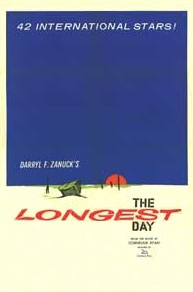
THE LONGEST DAY (2)
vs. ATTACK! (11)
REALISM:
“The Longest Day” was constrained in reality because of what was acceptable in 1962. Because it closely covers a non-fiction war classic, the events are realistically depicted, but the combat is too tame. Just compare TLD’s Omaha Beach landing to the gold standard set by “Saving Private Ryan”. Still, if you added blood, the combat scenes could fit well in a modern war movie. The action scenes are a bit simplistic and not as chaotic and confusing as the real thing, but at least the film tries to show this in a 1962 sort of way.
“Attack!” is based on a play which means it was not originally designed to be realistic in its action scenes. It does a pretty good job in spite of that. The attack on the house on the edge of town is realistic in tactics. The German counterattack (supposedly during the Battle of the Bulge) is not representative of that battle, but that was not the point. One would hope the dysfunctionality in the unit is exaggerated and not typical of the Army. However, you have to assume there were officers like Cooney and Bartlett. Nepotism and incompetence can be found in any job. You can see why the Army would have felt the depiction of the officers was unrealistic. I don’t think fragging was a common solution to officer problems in WWII. That part of the plot would have been more comfortable in a Vietnam War movie.
FIRST QUARTER SCORE:
The Longest Day 8
Attack! 6
DIALOGUE:
Much of the dialogue in TLD comes directly from the book which means the screenwriters (who included Cornelius Ryan) were often directly quoting the real persons depicted in the movie. Since soldiers (even generals) are not noted for their speaking ability, much of the dialogue can best be described as workmanlike. This movie is far from being a play. The good thing is there is little pontificating in the film. It was made long enough after the war to where it did not have to be patriotic or propagandistic. Best line: "He's dead. I'm crippled. You're lost. Do you suppose it's always like that? I mean war." (Flight Officer Campbell)
The two biggest strengths of “Attack!” are the acting and the dialogue. Since it was based on a play, the words have to do some heavy lifting. The dialogue can best be described as biting, especially coming from Costa. “ Listen to me, Cooney! If you put me and my men in a wringer - -if you send us out there and let us hang - -I swear, I swear by all that's holy, I'll come back. I'll come back and take this grenade and shove it down your throat and pull the pin!”
FIRST HALF SCORE:
The Longest Day 16
Attack! 15
SOLDIER BEHAVIOR:
Once again I have to come back to TLD being based on an admirably well researched book that used many interviews with both the decision makers and the doers. This means the behavior of both the brass and the boots rings true. The pressures of command are a theme that is explored well. The pre-battle activities of the soldiers is realistically depicted. Combat behavior is also well done although since it’s a 1962 film, we see little of the grimier side. The movie is not overly anti-war.
“Attack!” chooses an unusual situation to create dramatic tension. The main characters are caricatures that service the cynicism of the plot. Within the parameters of the plot, the men behave realistically. A veteran like Costa could have easily said and did the things he did if confronted by a leader like Cooney. The behavior of the unit members, who were in a sense caught in the middle, makes sense.
THIRD QUARTER SCORE:
The Longest Day 25
Attack! 22
ENTERTAINMENT VALUE:
“The Longest Day” was a huge box office success and is fondly recalled fifty years later. It does not underestimate the intelligence of the viewers. The first 53 minutes are background to the invasion. That opening third flows smoothly and is not pedantic. The jumping around between the two sides and the brief introductions of the grunts that will be focused on is very effective. Once the combat kicks in the movie masterfully blends the brass perspective with the enlisted views. The common soldiers that the film follows (e.g., Schultz, Pluskat, Fuller, Steele) are all appealing characters. It is one of the few Old School movies that you can say would not be improved with a modern treatment.
“Attack!” is entertaining partly because it is different. The combat is pedestrian, but the acting and dialogue make up for it. Jack Palance as Costa is mesmerizing and he is ably supported by some other capable actors like Lee Marvin and Eddie Albert (who also appears in TLD). The rest of the cast that includes Buddy Ebsen, Robert Strauss, William Smithers, and Richard F’in Jaekel (of course) add to the entertainment value. It is a movie that stays with you and few war movie lovers would regret seeing it.
FINAL SCORE:
The Longest Day 35
Attack! 30
COLOR ANALYSIS:
This was a very intriguing match-up. A epic versus what would pass today for an independent film. A movie that could almost be described as pro-war versus a movie that was not only anti-war, but anti-Army. It is a testament to the war movie genre that two movies so drastically different can coexist and be loved by the same people. There is a place for both in the canon. “Attack!” had a good run in the tournament, but midnight finally gonged for the Cinderella. It can take some consolation from the recognition it got and hopefully more people will become acquainted with this must-see film.
REALISM:
“The Longest Day” was constrained in reality because of what was acceptable in 1962. Because it closely covers a non-fiction war classic, the events are realistically depicted, but the combat is too tame. Just compare TLD’s Omaha Beach landing to the gold standard set by “Saving Private Ryan”. Still, if you added blood, the combat scenes could fit well in a modern war movie. The action scenes are a bit simplistic and not as chaotic and confusing as the real thing, but at least the film tries to show this in a 1962 sort of way.
“Attack!” is based on a play which means it was not originally designed to be realistic in its action scenes. It does a pretty good job in spite of that. The attack on the house on the edge of town is realistic in tactics. The German counterattack (supposedly during the Battle of the Bulge) is not representative of that battle, but that was not the point. One would hope the dysfunctionality in the unit is exaggerated and not typical of the Army. However, you have to assume there were officers like Cooney and Bartlett. Nepotism and incompetence can be found in any job. You can see why the Army would have felt the depiction of the officers was unrealistic. I don’t think fragging was a common solution to officer problems in WWII. That part of the plot would have been more comfortable in a Vietnam War movie.
FIRST QUARTER SCORE:
The Longest Day 8
Attack! 6
DIALOGUE:
Much of the dialogue in TLD comes directly from the book which means the screenwriters (who included Cornelius Ryan) were often directly quoting the real persons depicted in the movie. Since soldiers (even generals) are not noted for their speaking ability, much of the dialogue can best be described as workmanlike. This movie is far from being a play. The good thing is there is little pontificating in the film. It was made long enough after the war to where it did not have to be patriotic or propagandistic. Best line: "He's dead. I'm crippled. You're lost. Do you suppose it's always like that? I mean war." (Flight Officer Campbell)
The two biggest strengths of “Attack!” are the acting and the dialogue. Since it was based on a play, the words have to do some heavy lifting. The dialogue can best be described as biting, especially coming from Costa. “ Listen to me, Cooney! If you put me and my men in a wringer - -if you send us out there and let us hang - -I swear, I swear by all that's holy, I'll come back. I'll come back and take this grenade and shove it down your throat and pull the pin!”
FIRST HALF SCORE:
The Longest Day 16
Attack! 15
SOLDIER BEHAVIOR:
Once again I have to come back to TLD being based on an admirably well researched book that used many interviews with both the decision makers and the doers. This means the behavior of both the brass and the boots rings true. The pressures of command are a theme that is explored well. The pre-battle activities of the soldiers is realistically depicted. Combat behavior is also well done although since it’s a 1962 film, we see little of the grimier side. The movie is not overly anti-war.
“Attack!” chooses an unusual situation to create dramatic tension. The main characters are caricatures that service the cynicism of the plot. Within the parameters of the plot, the men behave realistically. A veteran like Costa could have easily said and did the things he did if confronted by a leader like Cooney. The behavior of the unit members, who were in a sense caught in the middle, makes sense.
THIRD QUARTER SCORE:
The Longest Day 25
Attack! 22
ENTERTAINMENT VALUE:
“The Longest Day” was a huge box office success and is fondly recalled fifty years later. It does not underestimate the intelligence of the viewers. The first 53 minutes are background to the invasion. That opening third flows smoothly and is not pedantic. The jumping around between the two sides and the brief introductions of the grunts that will be focused on is very effective. Once the combat kicks in the movie masterfully blends the brass perspective with the enlisted views. The common soldiers that the film follows (e.g., Schultz, Pluskat, Fuller, Steele) are all appealing characters. It is one of the few Old School movies that you can say would not be improved with a modern treatment.
“Attack!” is entertaining partly because it is different. The combat is pedestrian, but the acting and dialogue make up for it. Jack Palance as Costa is mesmerizing and he is ably supported by some other capable actors like Lee Marvin and Eddie Albert (who also appears in TLD). The rest of the cast that includes Buddy Ebsen, Robert Strauss, William Smithers, and Richard F’in Jaekel (of course) add to the entertainment value. It is a movie that stays with you and few war movie lovers would regret seeing it.
FINAL SCORE:
The Longest Day 35
Attack! 30
COLOR ANALYSIS:
This was a very intriguing match-up. A epic versus what would pass today for an independent film. A movie that could almost be described as pro-war versus a movie that was not only anti-war, but anti-Army. It is a testament to the war movie genre that two movies so drastically different can coexist and be loved by the same people. There is a place for both in the canon. “Attack!” had a good run in the tournament, but midnight finally gonged for the Cinderella. It can take some consolation from the recognition it got and hopefully more people will become acquainted with this must-see film.