Sunday, December 29, 2013

Day 5: El Alamein - The Line of Fire (2002)


On the fifth day of Christmas, my true love gave to me:  5 bronzed Italians
 
 
             “El Alamein – The Line of Fire” is an Italian war movie set in North Africa at the start of the Battle of El Alamein.  It was released in 2002.  It follows five Italian soldiers from the Pavia Division.

                In October, 1942 a newbie named Serra (Paolo Briguglia) arrives at the front.  He’s a college boy who has dropped out to do his duty (ala Taylor in “Platoon”).  His guide is disintegrated by an artillery shell.  Too soon with the “war is hell” theme!  The depressed men are appropriately living in trenches near the Qattara Depression.  Serra is informed that the two biggest problems are thirst and dysentery.  Sgt. Rizzo (Pierfrancesco Favino) becomes his mentor and tells him every soldier gets three miracles and then fate comes knocking.  Some of those miracles come from surviving the random, intense, and amazingly accurate British bombardments.

                The central core of the movie is a series of vignettes that include going in minefield to loot a British truck, sparing the life of Mussolini’s horse, frolicking at a beach, and a mortar versus sniper duel.  You know, the usual war movie stuff.  This leads up to the big set piece which has the unit defending a sector of the front against the British onslaught.  They are given amphetamines to keep awake.  This is the first time I have seen reference to this WWII practice.  The assault occurs at night so the British tanks have their headlights on.  Did British tanks use headlights?  The combat is visceral with slo-mo, of course.  Although the British break through, when dawn breaks the Italians have held the position.  Without researching yet, I will call a foul on this.  From” last stand” the film transitions to “lost patrol” as Serra, Rizzo, and Lt. Fiore wander through the desert.

                “El Alamein” is pretty good for an Italian war movie, about the WWII Italian army.  Not exactly my favorite subgenre.  It can be boring at times, but so is war from a soldier’s viewpoint.  The movie is realistic about soldier life (privations and dysentery) and the randomness of death.  You definitely get the microview as the five main characters don’t have a clue about the big picture and neither does the audience.  You won’t learn much about the Battle of El Alamein from this movie.  You do learn that the Italian soldiers were human beings.  The main characters are well-played and appealing.  In fact, there are no villains in the film.  Serra may remind of Chris Taylor background-wise, but that is where the “Platoon” parallels cease.  Serra is welcomed into the unit and there is no hazing.  By the way, Rizzo reminded me of Sgt. Elias.

                The movie is well made.  The cinematography is average, but the music is outstanding.  It is eerie and foreboding at times.  The themes are pretty thick.  Abandonment, survival against the odds, soldiers are pawns, the role of luck (or miracles as the movie proclaims) in warfare.  Certainly the experiences of Italian soldiers in North Africa were rife for exploring these themes.  It is important to note that the movie is sad, but not maudlin.  I did not feel contempt for the Italians, like I have when reading about the war in North Africa.  The movie develops sympathy for them.  I guess they deserved that.

Christmas cheer?  It’s not bad, but I doubt I will remember it.

Grade =  B-

Saturday, December 28, 2013

Christmas Day 4: Never So Few (1959)


On the fourth day of Christmas, my true love gave to me:  four guerrilla Kachin
 

                “Never So Few” is a WWII movie set in Burma in 1943.  It was directed by John Sturges (“The Great Escape”) and released in 1959, one year before his vastly superior “Magnificent Seven”.  It is loosely based on OSS Detachment 101 which operated behind enemy lines in Burma and made use of the anti-Japanese Kachin warriors.  The unit was tasked with ambushing patrols, rescuing downed pilots, and setting up landing strips.  The movie is highly fictionalized, however.

                The film has a recognizable cast led by Frank Sinatra as the unit leader, Capt. Reynolds.  The movie gets a head-scratching start as the men lounge around in a jungle camp even though they are warned that the Japanese are sneaking up on them.  Supposedly they are luring the enemy into a trap, but one character is still reading a comic book when the Japanese open fire.  They then proceed to dash into the foliage and then counterattack.  Wouldn’t they have been waiting in concealment?  WTF  The movie makes no attempt to recover from this perplexing opening.  One theme is established as Reynolds puts his caddy (the Kachin that is tasked with handing Reynolds an appropriate weapon in combat) out of his stomach-wound misery even though he is unconscious and not screaming in pain or begging to be killed.  We now know Reynolds is a bad-ass who doesn’t care what his wimpy subordinates want.

                Reynolds makes a trip back to civilization (well, India anyway) so we can get an exotic locale and some romance in the form of Clara (Gina Lollobrigida).  She waltzes in on the arm of a three-finger cigarette smoking rich snob and proceeds to stomp on Reynolds tongue which happens to be lying on the floor.  She is so brutally condescending to the Yank that you can be sure they will hook up by the end of the film.  Lucky for anyone hoping to see some acting in this movie, Reynolds meets Cpl. Ringa (Steve McQueen) and enlists him to bring some life into the film.

                From here the movie drunkenly sways from Old School combat action of the no blood, no enemy wounded variety to Old School romantic interludes between Reynolds and Clara.  These interludes are like speed bumps.  The feisty Clara is frosty until she suddenly isn’t.  She is always well-dressed and well-coiffed, but so is Sinatra.  There is a scene where Reynolds is wounded and is gleeful when it is suggested he return back to India (John Wayne, he ain’t).

                The big set piece is a raid on a Japanese base.  The action is ridiculous with drive-by shooting via trucks and Reynolds tossing jerry cans that explode on contact.  There are plenty of gasoline barrels to make for pretty explosions in the night.  Hollywood!  Reynold’s old Kachin liaison gets a good death scene (this comes on the heels of the Japanese killing Reynold’s monkey during a Christmas ambush – Jap bastards!).

                Reynolds defies orders by infiltrating China to track Chinese bandits who ambushed an Allied convoy.  They sneak up on the camp in broad daylight because all the enemy are sleeping.  When Reynold’s BFF Danny is treacherously gunned down, Reynolds orders the execution of all the prisoners.  When he returns he faces court-martial.  Guess who is waiting for him?  Hint:  well-coiffed.  She’s like a big-breasted bad penny.  Queue the swelling music.

                This is a typical Sinatra war movie.  It’s all about him.  He gets to spend half the movie romancing Lollobrigida because he could.  The movie has a low ratio of macho to smoochie.  The combat, when it sporadically arrives, is poorly staged and unrealistic.  The acting is average which allows McQueen to stand out.  Sinatra plays himself which means Reynolds is a jerk and a poor leader.  The theme of leaders having to make tough decisions is diluted a bit by Reynolds’ decision to commit a war crime.  But they’re just Chinese bandits.  Note the year of the movie’s release to figure out why the Chinese are bigger villains than the Japanese.  Another flaw is that for a movie dedicated to the Kachin, there is little lauding going on. 

                Good Christmas viewing?  Only if you would like to see a monkey get killed at a Christmas celebration – you sick bastard!
                P.S.  Look at the poster. "Kiss by kiss the time ran out and never so few were the moments left for love."  If that got you into the theater, I hope you were a female.

Grade =  D 

Friday, December 27, 2013

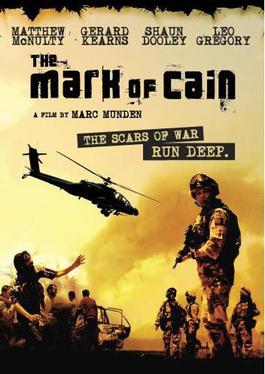
Christmas Day 3 - The Mark of Cain


On the third day of Christmas, my true love gave to me… three Cain-marked Brits


                “The Mark of Cain” is “based on extensive research, but is a dramatic work of fiction.”  I assume the research was about Abu Ghraib and similar incidents.  The made-for-TV British drama won a BAFTA and Amnesty International recognized it as a “Movie That Matters”.  It is a tale set in Basra, Iraq and then back home in Britain.

                When Mark (Gerard Kearns) and his buddy Shane (Matthew McNulty) arrive in Iraq, they and the other newbies are counseled on the need to avoid violations of the rules of war.  Their commander states that any unjustifiable killing of civilians will result in the “mark of Cain”.  A well-staged ambush results in the fiery death of their commander.  Vengeance is in the air and a “search and detain vigorously” raid nabs some suspects.  Cpl. Gant (Shaun Dooley) tells the men to lay off the detainees, but has a change of heart and leads the “interrogation”.  The reluctant Mark is peer pressured into joining in the “fun”.  Shane is a picture-taking participant.

                Upon return to Britain, Mark suffers from PTSD and guilt feelings which result in convenient flash-backs.  Shane suffers from picture showing-off and a snitching girl friend.  The two and Gant are charged with war crimes.  Gant and everyone up the chain of command scapegoat the two privates.  Mark admits he was caught between moral courage (the ability to report atrocities) and loyalty to his unit mates.  He now feels he chose unwisely and is torn apart by it.  Shane eventually comes to this conclusion as well.  He is pressured to plead guilty at his court-martial and take one for the team.  What will he do?

                The film is meant to be thought-provoking and basically succeeds although how we are to think is pretty much shoved down your throat.  Anyone unaware of the Abu Ghraib-type activities would be informed by this movie.  I think that was the point.  (What I learned was that the Brits pointed at wieners, too.)  It is not as heavy-handed as the Amnesty International endorsement would imply. 

The movie is balanced cinematically.  The ambush scene is of the new school variety.  Hand-held.  Quick cuts.  Realistic soldier reactions (ex.  one guy freezes).  The movie does a fine job setting up the torture by showing the stress (e.g., that coke can could be an IED) and fog of war (is having a lot of cash proof of insurgency?) the soldiers went through.  You are forced to wonder how you would have reacted if some of your mates were killed by faceless insurgents.  Iraq = Vietnam.  The home front scenes are also realistic.  Mark and Shane represent two extremes of soldier post-combat reactions.

                The movie is well made, especially for a TV production.  The cinematography is interesting.  The flashbacks work in teasing out the torture.  The acting is fine.  The three leads are effective although Gant’s switch from warning against atrocities to leading them is implausible.  Dooley does play slime-ball well.  Kearns is particularly poignant as the tortured torturer. 

The movie attacks some easy targets.  The military has a code of silence similar to the police.  Young men do bad things under war stress.  Military authorities tend to cover up crimes that they encouraged.  Hey British society, you have the mark of Cain.  Ours is way bigger than yours, however.  USA!  USA!  USA!

Good gift?  Sure, and it’s so Christmasy.  Actually I should throw in a Genesis reference here.

Grade =  B-

Thursday, December 26, 2013

Christmas #2 - The Vikings (1958)


On the second day of Christmas, my true love gave to me, two feuding Vikings …
 

                “The Vikings” has been called a “Norse opera” because it combines Western elements with a soap opera feel.  It was directed by Richard Fleischer with much input from his star Kirk Douglas.  It was filmed in Norway to take advantage of the lovely fjords.  The film makes efforts to throw in a greatest hits of Viking warrior culture - for entertainment purposes.

                The story begins with Ragnar (Ernest Borgnine) raiding England, killing a king, and impregnating the queen.  The new King Aella sends the baby off into exile and years later Erik (Tony Curtis) arrives in Norway as a slave.  Ragnar’s legitimate son Einar (Douglas) is a vain playa, but great warrior.  He and Erik take an instant dislike to each other which is aggravated by the fact that Erik’s falcon takes out one of Einar’s eyes.  Ragnar sentences Erik to death-by-high-tide, but Odin saves him.  Later, Erik rescues the kidnapped princess Morgana (Janet Leigh as Aella’s bride) from the lusty Einar.  Strike two.  Erik sails to England using a magic metal that points the way through a fog which causes Ragnar’s ship to crash into rocks.  Strike three.  Erik rescues Ragnar and turns him over to Aella for death-by-wolf-pit (but Erik gets major Viking props for slipping Ragnar a sword so he can die a Viking’s death).  Erik is kicked out of England sans left hand and forms an awkward alliance with Einar to get Morgana back.  They’ll figure out who gets her later.  This leads to the big castle-storming scene and inevitable duel.  Both of which are rousing.

                Before I go any further, this is not really a war movie.  With that said, it is entertaining, if implausible.  Lots of things have to fall into place to reach the action-packed finale.  The acting is okay, but Douglas is not his usual outstanding self.  He tries too hard, as does the movie which vainly tries to reach epic status.  This includes the pompous epic wannabe score.  Borgnine has a fine time, Curtis is handsomely noble, and Leigh is ravishing (and ravish-worthy).  Speaking of out-standing: Leigh’s breasts.  (see below)  The locales are awesomely scenic and we get a lot of local color in the form of manly Viking activities.  Fleischer crams in as many as the film can hold.  The Vikings are caricatured.  They spend most of their time getting drunk and engaging in manly contests like “Running the Oars” (that’s really my man Kirk risking his life!) and cutting the braids of an adulteress with throwing axes.  These are the same carousing berserkers who are so afraid of the fog they always sail within sight of land. The Vikings were such wimps.  Unless they have a magical metal England-finder.  Kudos for the accurately constructed longboats and for not putting horns on their helmets.  Beware:  this movie has extreme violence for a 1958 movie.  (Some critics were shocked by the wolf pit scene and Ragnar was not even shown in the pit!  Quaint.)  So if you are a grandma, you should avoid it.
 
                Merry Christmas?  It’s so fluffy, it’s more Easterish.
Grade =  C-