The Hurt Locker (1) vs. The Great Raid (14)
CHARACTER DEVELOPMENT: “The Hurt Locker” develops only three characters – the lone wolf Sgt. Will James, the by the book Sgt. J.T. Sanborn, and typical grunt Specialist Owen Eldridge. This trio is fleshed out over the course of the film. We know their attitudes and emotions. The key to the movie is the conflict between James and Sanborn, with Eldridge caught in the middle. “The Great Raid” has more characters to juggle because of the trio of story lines. The movie develops nurse/resistance member Margaret Utinsky, POW Joseph Fiennes, and mission leaders Henry Mucci and Robert Prince. The romance between Utinsky and Fiennes is thrown in and ill-fitting. Mucci is your typical gruff disciplinarian and Prince is the idealistic subordinate. Nothing special about them.
Score at the end of the first period: Hurt – 9 Raid – 7
DIALOGUE: Hurt won the Academy Award for Original Screenplay and deserved it. The dialogue is cracking. The dialogue between James and Sanborn seethes. The dialogue is sparse which is consistent with soldier talk. Raid is an old school style movie in many ways, including the dialogue. There is nothing special here. The words placed in the characters mouths are words a Hollywood screenwriter thinks a soldier would say. That is not to say the dialogue is laughable, it’s just not noteworthy.
Half-time score: Hurt – 18 Raid – 14
PLAUSIBILITY: Hurt has been criticized for making James too much of a adrenalin junkie who gets his fix by flouting common sense safety protocols. There is some truth to this. Although the movie is fictional and thus can go beyond reason to make its case that war is a drug, there are events in the movie that are highly implausible. For example, three bomb techs taking separate alleys at night to chase insurgent bomber(s) makes no sense. It is apparent that bomb disposal experts must be different than normal people, but someone as mentally unstable as James would not last long in the military in that specialty. Raid is based on an actual commando mission and is sourced from two excellent books. The love story is implausible, but the events in the raid itself are close to the real deal. So real, that many viewers probably were disappointed with its “tell it like it was” instead of “rev it up” plot.
Score after three periods: Hurt – 24 Raid – 22
PLOT: “The Hurt Locker” won the Best Picture award. It flows from action scene to action scene propelling the arc of James as an increasingly loose cannon. The suspense is palpable. The opening is memorable in its unorthodoxy. The close book ends it well. In between we learn to admire as well as abhor the main character. The plot of “The Great Raid” reads more like a history lesson with a pedestrian romance throw in. The movie lacks pizzazz, but the build-up to the attack is smooth and the attack itself is well-written and accurate.
Final score: The Hurt Locker – 33 The Great Raid – 29
Black Hawk Down (4) vs. Flags of Our Fathers (5)
CHARACTER DEVELOPMENT: BHD is not really character driven. It develops the character of the Rangers versus the Delta Force more than individual soldiers. It is a true ensemble cast with Josh Hartnett as the lead, but certainly he does not dominate. We do not get to know the soldiers very well, but the movie does not have time for that. We do recognize some tried and true stereotypes. The gruff sergeant (in this case actually a Lt. Col. McKnight), the sad sack Blackburn, the desk jockey turned warrior Grimes, the lone wolf Hooten, etc. Flags does an excellent job developing the three surviving flag raisers. They are distinct personalities. The tragic decline of Ira Hayes is particularly poignant. The other members of the unit are also well drawn. The government officials are stock characters, however.
Score after first period: BHD – 7 Flags – 9
DIALOGUE: Both movies come from well-respected best sellers and are true to their sources. The conversations feel real and unforced. They also reflect how soldiers talk in and out of combat. If you watch both movies you will get a clear impression of how soldier talk and interact. It is fascinating to see how soldier dialogue has changed from Iwo Jima to Somalia. Slight edge to BHD because it does not have the cynically patriotic handlers that Flags has.
Half-time score: BHD – 16 Flags 17
PLAUSIBILITY: Both movies make sense and have no laughable scenes. They are true to books that have not been criticized for overhyping their topics, Slight edge to BHD for showing the fog of war and the difficulty of hitting moving targets in urban combat.
Score at the end of three: BHD – 26 Flags – 25
PLOT: Flags is a nonlinear retelling of the men who raised the flag as well as the bond tour the survivors went on. the back and forth scenes are effectively arranged. This means the audience is whiplashed from high intensity combat action scenes influenced by Saving Private Ryan and the introspective scenes on the home front. This makes the movie more interesting, but a bit bipolar. BHD is linear in structure. It builds to the battle which dominates the second half of the movie. The shifts from the command centers to the boots on the ground are instructive in clearing up the fog of war for the audience. The Battle of Mogadishu could not have been handled better, unless you question the lack of coverage of the enemy point of view. But then again, Clint Eastwood had to film an entire separate movie to accomplish that for the Battle of Iwo Jima.
Final score: Black Hawk Down – 35 Flags of Our Fathers - 33
Tuesday, April 5, 2011


Monday, April 4, 2011
QUARTERFINAL MATCHES I
QUARTERFINALS:
Letters from Iwo Jima (2) vs. We Were Soldiers (7)
CHARACTER DEVELOPMENT: “Letters” develops four main characters – Gen. Kurabayashi, Col. Nishi, Private Saigo, and Private Shimuzu. There are brief flashback scenes that explain motivation. Too brief. Even the letters that the movie is about are brief and do not tell us much about the men. “Soldiers” tries to juggle several characters, including their wives. The build-up to the Battle of Ia Drang allows the viewer to get to know Col. Moore, Sgt. Plumley, Lt. Geoghegan, and Maj. Crandall. We certainly learn more about Moore than Kuribayashi.
Score at the end of the first period: Soldiers – 8 Letters – 7
DIALOGUE: “Flags” has more dialogue than you would think. It is true to the Japanese personality and the soldier talk is realistic. We find that the Japanese soldiers were in some ways similar to our soldiers through their conversations. “Soldiers” is more conventional in its dialogue. It tries hard to be even-handed in its treatment of the NVA. In fact, the NVA commander talks a lot like Kurabayashi. The Americans, especially Moore, speak like American soldiers talk in war movies. Some of the dialogue is corny.
Halftime score: Soldiers – 15 Letters – 15
PLAUSIBILITY: Both movies are based on actual battles featuring real persons. “Letters” loses some credibility by downplaying the hardships the soldiers encountered. One soldier dies of dysentery, but it is quick and off camera. Life in the tunnels is not pleasant, but not horrifyingly disgusting as it should have been. The survival of the most likeable character is extremely unlikely considering only 296 of over 20,000 survived. His crossing paths with Kuribayashi several times is also hard to believe. “Soldiers” is excellent in its depiction of the Battle of Ia Drang, but some of the smaller details stretch credulity. At one point during training in America, they pick up a fire-fight in Vietnam on their unit radio. The final showdown is pure Hollywood.
Score after three periods: Soldiers – 23 Letters – 22
PLOT: “Letters” tells the story of several participants in the Battle of Iwo Jima. The story is linear with some brief flashbacks to their lives before arriving on the island. Although the plot is interesting in showing us the other side of the conflict, it does underdevelop several themes. It introduces the theme of dissension in the high command, but drops it. It does not fully compare the fanatical soldiers to the ones who are just wanting to survive. It neglects the families on the other ends of the letters. “Soldiers” basically uses the book as its screenplay, but with a religious subplot and the wives added in. The wives dealing with the deaths of their husbands adds depth to the picture. The battle follows the book closely, except for the ridiculous ending. By giving fair treatment to the enemy and to the Americans, it is different than most one-sided war movies.
FINAL SCORE: Soldiers – 31 Letters - 29
QUARTERFINALS: Master and Commander (6) vs. 300 (9)
CHARACTER DEVELOPMENT: “Master” fully develops the relationship between Aubrey and Maturin. They are friends, but have honest disagreements based on different philosophies. We learn that Aubrey is a firm, but understanding captain. He usually puts the good of the navy ahead of everything, although he makes an exception to save his friends life. Maturin is a secular humanist who is on the ship as a doctor, not a warrior. He clashes with his friend on the nature of discipline and the corruption of power. The rest of the cast come off as distinct characters. “300” does a good job developing the relationship of Leonidas and his wife, but Queen Gorgo is like a male version of her husband. There is little nuance. The rest of the 300 are all buff warriors, but interchangeable.
Score after the first period: Master - 9 300 – 7
DIALOGUE: “Master” is based on a book by a master story-teller. The dialogue is very true to the characters in the books by Patrick O’Brien. Nautical terms are thrown in, but not in a way that would perplex the audience. The conversations between Aubrey and Maturin are interesting. They make you wonder who is right. “300” is based on a graphic novel. The dialogue is appropriate for that genre which means it is a bit pompous. Try reading the script out loud and you will see what I mean. Unless the words are coming from a hunky Spartan warrior, they might seem silly.
Half-time score: Master – 18 300 – 14
PLAUSIBILITY: “Master” is not based on a true story and it does throw in some incidents that might have happened on several different ships, but each of the main plot developments are plausible. I have read a lot on Napoleonic naval warfare and there was nothing in the movie that made me cringe. “300” is at a disadvantage in this respect because it is supposed to be part fantasy. However, in the area of human behavior, it does not ring true in some key areas. The betrayal of Sparta by the ephors and Theron for Persian bribes makes no sense in a society that was indifferent to wealth. The Queen being raped by Theron and then killing him at an Assembly meeting is a huge stretch of credulity. The attitude of the 300 warriors is plausible, however.
Score at the end of three: Master – 26 300 – 21
PLOT: Both movies are based on well-written source novels. You could argue that the screenplays for both improved on the originals. Master and Commander actually culls plot developments from more than one O’Brien book. Check out the long, official title of the movie. It comes off as a “best of” compilation of scenes. 300 (the movie) fleshes out some characters, most notably the Queen. This converts the very macho novel into a more balanced action/romance/political intrigue plot. The plot of Master is reflective of a ship voyage with its variety of incidents. The plot of 300 is less complex as it drives toward the climax of the battle with side trips to see what is going on back in Sparta with the Queen versus Theron.
FINAL SCORE: Master – 35 300 - 28
Letters from Iwo Jima (2) vs. We Were Soldiers (7)
CHARACTER DEVELOPMENT: “Letters” develops four main characters – Gen. Kurabayashi, Col. Nishi, Private Saigo, and Private Shimuzu. There are brief flashback scenes that explain motivation. Too brief. Even the letters that the movie is about are brief and do not tell us much about the men. “Soldiers” tries to juggle several characters, including their wives. The build-up to the Battle of Ia Drang allows the viewer to get to know Col. Moore, Sgt. Plumley, Lt. Geoghegan, and Maj. Crandall. We certainly learn more about Moore than Kuribayashi.
Score at the end of the first period: Soldiers – 8 Letters – 7
DIALOGUE: “Flags” has more dialogue than you would think. It is true to the Japanese personality and the soldier talk is realistic. We find that the Japanese soldiers were in some ways similar to our soldiers through their conversations. “Soldiers” is more conventional in its dialogue. It tries hard to be even-handed in its treatment of the NVA. In fact, the NVA commander talks a lot like Kurabayashi. The Americans, especially Moore, speak like American soldiers talk in war movies. Some of the dialogue is corny.
Halftime score: Soldiers – 15 Letters – 15
PLAUSIBILITY: Both movies are based on actual battles featuring real persons. “Letters” loses some credibility by downplaying the hardships the soldiers encountered. One soldier dies of dysentery, but it is quick and off camera. Life in the tunnels is not pleasant, but not horrifyingly disgusting as it should have been. The survival of the most likeable character is extremely unlikely considering only 296 of over 20,000 survived. His crossing paths with Kuribayashi several times is also hard to believe. “Soldiers” is excellent in its depiction of the Battle of Ia Drang, but some of the smaller details stretch credulity. At one point during training in America, they pick up a fire-fight in Vietnam on their unit radio. The final showdown is pure Hollywood.
Score after three periods: Soldiers – 23 Letters – 22
PLOT: “Letters” tells the story of several participants in the Battle of Iwo Jima. The story is linear with some brief flashbacks to their lives before arriving on the island. Although the plot is interesting in showing us the other side of the conflict, it does underdevelop several themes. It introduces the theme of dissension in the high command, but drops it. It does not fully compare the fanatical soldiers to the ones who are just wanting to survive. It neglects the families on the other ends of the letters. “Soldiers” basically uses the book as its screenplay, but with a religious subplot and the wives added in. The wives dealing with the deaths of their husbands adds depth to the picture. The battle follows the book closely, except for the ridiculous ending. By giving fair treatment to the enemy and to the Americans, it is different than most one-sided war movies.
FINAL SCORE: Soldiers – 31 Letters - 29
QUARTERFINALS: Master and Commander (6) vs. 300 (9)
CHARACTER DEVELOPMENT: “Master” fully develops the relationship between Aubrey and Maturin. They are friends, but have honest disagreements based on different philosophies. We learn that Aubrey is a firm, but understanding captain. He usually puts the good of the navy ahead of everything, although he makes an exception to save his friends life. Maturin is a secular humanist who is on the ship as a doctor, not a warrior. He clashes with his friend on the nature of discipline and the corruption of power. The rest of the cast come off as distinct characters. “300” does a good job developing the relationship of Leonidas and his wife, but Queen Gorgo is like a male version of her husband. There is little nuance. The rest of the 300 are all buff warriors, but interchangeable.
Score after the first period: Master - 9 300 – 7
DIALOGUE: “Master” is based on a book by a master story-teller. The dialogue is very true to the characters in the books by Patrick O’Brien. Nautical terms are thrown in, but not in a way that would perplex the audience. The conversations between Aubrey and Maturin are interesting. They make you wonder who is right. “300” is based on a graphic novel. The dialogue is appropriate for that genre which means it is a bit pompous. Try reading the script out loud and you will see what I mean. Unless the words are coming from a hunky Spartan warrior, they might seem silly.
Half-time score: Master – 18 300 – 14
PLAUSIBILITY: “Master” is not based on a true story and it does throw in some incidents that might have happened on several different ships, but each of the main plot developments are plausible. I have read a lot on Napoleonic naval warfare and there was nothing in the movie that made me cringe. “300” is at a disadvantage in this respect because it is supposed to be part fantasy. However, in the area of human behavior, it does not ring true in some key areas. The betrayal of Sparta by the ephors and Theron for Persian bribes makes no sense in a society that was indifferent to wealth. The Queen being raped by Theron and then killing him at an Assembly meeting is a huge stretch of credulity. The attitude of the 300 warriors is plausible, however.
Score at the end of three: Master – 26 300 – 21
PLOT: Both movies are based on well-written source novels. You could argue that the screenplays for both improved on the originals. Master and Commander actually culls plot developments from more than one O’Brien book. Check out the long, official title of the movie. It comes off as a “best of” compilation of scenes. 300 (the movie) fleshes out some characters, most notably the Queen. This converts the very macho novel into a more balanced action/romance/political intrigue plot. The plot of Master is reflective of a ship voyage with its variety of incidents. The plot of 300 is less complex as it drives toward the climax of the battle with side trips to see what is going on back in Sparta with the Queen versus Theron.
FINAL SCORE: Master – 35 300 - 28
Sunday, April 3, 2011
MARCH MADNESS: The Hurt Locker (1) vs. Pearl Harbor (16)
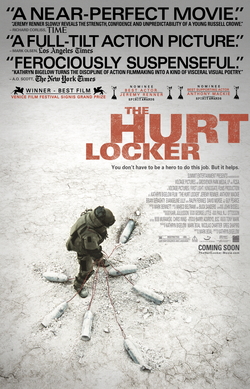
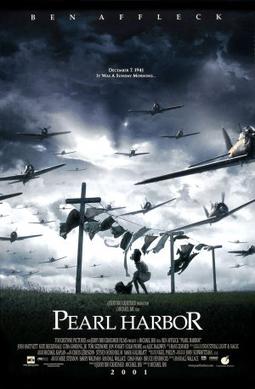
ACTING: I do not think Pearl Harbor was cast with acting in mind. The leads were obviously chosen for their attractiveness to a young audience. Ben Affleck as Rafe McCawley (just the name gives you an inkling of what you are in store for) and Josh Hartnett as Danny Walker have had inconsistent acting careers. This movie is not one of their better performances. But this is a CG-reliant, adrenaline-fueled excuse for multi-blasts by one of the kings of that genre – Michael Bay. You get what you paid for. “The Hurt Locker” is much better acted. Jeremy Renner as the mentally unstable bomb tech Will James is spectacular and deserved the Best Actor nomination. He makes the character fascinating and unlikeable at the same time. He is very ably matched by his team consisting of Anthony Mackie as “by the book” Sgt. J.T. Sanborn and Brian Geraghty as “stuck in the middle” Specialist Owen Eldridge.
Score at the end of first period: Hurt – 10 Pearl - 6
REALISM: Cliches are based on actual possibilities in real life, but when you cram a bunch into a movie you exit real life and enter the realm of ridiculous. Any one of the clichés that happened in Pearl Harbor might have happened to someone, but not all of them and not to a small group of airmen. The idea that Rafe would be presumed dead while flying for the Eagle Squadron in England long enough for his best friend to fall in love with his fiancé is a fantasy aimed at forcing a romantic dilemma into the picture. This is just one example. Even the heralded Japanese attack features numerous shots of Japanese Zeros flying between the battleships for no logical reason. Rafe and Danny play chicken to get two sets of Zeros to crash into each other – ‘nuff said. The Hurt Locker tries to give a realistic portrayal of the Iraqi War, but it has problems as well. We must totally buy into the Army having an unstable individual in charge of a bomb disposal unit. James does things that only someone with a death wish would do, but not just his own death. The movie does clearly indicate the feelings of his team, but could this loose cannon style be realistic? Two scenes make little sense. The team meets some mercenaries in the desert and engages in a sniper duel and when investigating a bombing in the Green Zone, James sends the group up separate alleys hunting the bombers. I cannot imagine either of these scenarios actually occurring. However, the main theme of war being an adrenaline rush is realistic for some soldiers, especially bomb techs. The scene with James chafing at being safe at home and being overwhelmed by the variety of cereals at the grocery store certainly rings true for many veterans of combat.
Half-time score: Hurt – 17 Pearl - 11
ACCURACY: Pearl Harbor is not exactly a history lesson that replaces having to read a book about it. The basics are okay, but some key plot points are laughable to anyone knowing even the basics of the attack. Rafe would not have been allowed to join the Eagle Squadron while on active duty, nor be reassigned back to his original squadron if he had gotten into the Eagle Squadron. It is ridiculous to have Rafe and Danny participating in the Doolittle Raid. Are audiences so ignorant about the differences between fighter pilots and bomber pilots? Bay thinks so. While their back-stories are pure Hollywood, at least Rafe and Danny could be said to based on real heroes George Welch and Kenneth Taylor who actually shot down 6 planes that day (not the twenty or so that Rafe and Danny shot down). Kudos on the fairly accurate portrayal of Dorie Miller. Although some historians sniff at the fact that he may not have shot down any planes, it was appropriate to show him shooting down one. By the way, no nurses were killed in the attack. THL is a more difficult film to analyze for accuracy. It does not claim to be a true story. It is based on Mark Boal’s reporting as an embedded journalist with an EOD unit. James is a composite character (thank goodness). The techniques used are apparently fairly accurate, but procedures are off. Teams did not go off by themselves in lone Humvees. No tech would be allowed to keep parts of bombs. None would have broken communications with their team nor put their men in unreasonable jeopardy.
Score after three periods: Hurt – 24 Pearl – 17
ENTERTAINMENT VALUE: Pearl Harbor was roasted by the critics, but made a lot of money. That tells you a lot about the movie-going public. However, since this blog is aimed at war movie lovers, the movie is a lot less entertaining to discerning viewers. The CGI is fake-looking, the characters’ emotions are phony, the love story is ridiculous, the clichés are overwhelming, the dialogue is corny, etc. It is the moron’s answer to “Tora! Tora! Tora!” The Hurt Locker won the Best Picture award and is considered one of the best movies of the decade and the best movie about the Iraqi War. It has great acting, some amazing set pieces, and suspense. it also gets into the heads of modern American soldiers and shows the stresses of warfare in an urban environment with potential enemies blending in with the population. Basing an entertaining movie in Iraq was a sizable accomplishment for Kathryn Bigelow and she deserved the Best Director award.
Final score: Hurt – 32 Pearl - 24
Jarhead (8) vs. 300 (9)
We Were Soldiers (7) vs. Defiance (10)
Master and Commander (6) vs. Troy (11)
Flags of Our Fathers (5) vs. Enemy at the Gates (12)
Black Hawk Down (4) vs. Kingdom of Heaven (13)
Inglorious Basterds (3) vs. The Great Raid (14)
Letters from Iwo Jima (2) vs. Flyboys (15)
QUARTERFINALS:
The Hurt Locker vs. The Great Raid
Letters from Iwo Jima vs. We Were Soldiers
300 vs. Master and Commander
Black Hawk Down vs. Flags of Our Fathers
*** The quarterfinal matches will be based on Character Development, Dialogue, Plausibility, and Action
Friday, April 1, 2011
MARCH MADNESS: Letters from Iwo Jima (2) vs. Flyboys (15)
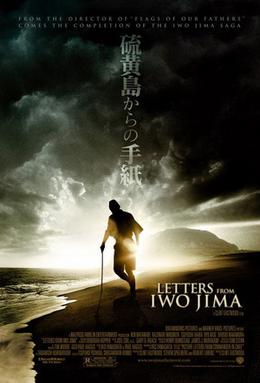
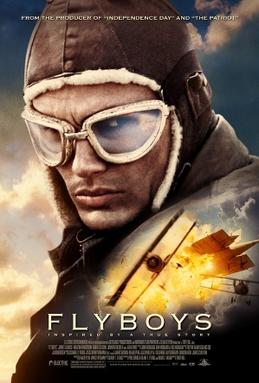
ACTING: “Flyboys” stars James Franco as rancher turned pilot Blaine Richards. It was his first action star turn. His performance is capable, but certainly not noteworthy. The other leads are Martin Henderson as the veteran ace Reed Cassidy and Jean Reno as French Capt. Thenault. No one stands out in this movie. There is a little chemistry between Franco and Jennifer Decker as Lucienne. “Letters” is anchored by Ken Watanabe as Gen. Kuribayashi. He was nominated for the Best Actor Oscar. Kazunari Ninomiya gives a touching performance as the sad sack Private Saigo. The rest of the cast is good.
Score at the end of the first period: Letters – 8 Flyboys – 6
REALISM: “Flyboys” is often ridiculous in its depiction of WWI air combat. It is the U-571 of air combat movies in that it piles every air combat cliché into one movie. The CGI effects are poor. It seems as though every German fighter plane is a red Fokker tri-plane. The squadron is impossibly heterogeneous and the deaths are predictable and foreshadowed clumsily. The scene where Richards lands in no man’s land to rescue a downed comrade is one of the most unrealistic scenes in war movie history. “Letters” is much more realistic, but does have its flaws. It admirably depicts the human frailties and fears of the Japanese soldiers, but probably downplays their fanaticism. The truth is somewhere between the movie and wartime propaganda. The conditions in the tunnels are much too spacious and not nearly appalling enough. The combat is okay, but not intense or brutal enough.
Half-time: Letters – 16 Flyboys – 11
ACCURACY: “Flyboys” purports to be the story of the Lafayette Escadrille which was a squadron of American volunteers who flew for the French air force before U.S. entry into WWI. Some of the characters are based on actual pilots. They are very loosely based on those individuals. For instance, Richards is supposed to be Frank Luke (who was not a member of the Lafayette Escadrille), but other than a western drawl there is little resemblance. Franco does not play him as the lone jerk that Luke was. Cassidy as Raoul Lufbery is closer, but his death is way off. The producers insisted on a black pilot so they jammed Eugene Bullard in as Eugene Skinner, a boxer who retires to be a pilot. The real Bullard was a boxer, but he served in the Lafayette Flying Corps, not the Escadrille. None of the events depicted appear to have happened. “Letters” features two historical figures – Gen. Kuribayashi and Col. Nishi. Their back-stories are accurate. Nishi was an Olympian and both had spent time in the U.S. However, unlike the movie, they were not friends on Iwo and actually were antagonists. Watanabe does a good job portraying the leadership and strategy of Kuribayashi. A key scene where Nishi gives the last of his unit’s morphine to a Marine prisoner surely is not accurate. The movie does not do a good job giving a sense of what is happening in the battle. The plight of the soldiers is accurate, but underplayed.
Score after three periods: Letters – 24 Flyboys – 17
ENTERTAINMENT VALUE: “Flyboys” is definitely aimed at the youth demographic. This explains James Franco as the lead. Since young people have not been exposed to all the clichés, maybe it seems fresh to them. The dialogue is poor. Much of it is ridiculous and some of it is laughable which does make it entertaining in a perverse way. “Letters” is aimed at the exact opposite audience. It attempts admirably to depict the Battle of Iwo Jima in a way sympathetic to the Japanese. The main characters are attractive and you care what happens to them. The combat is above average, but sparse. It does a better job on soldier life.
FINAL SCORE: Letters – 32 Flyboys - 23
Subscribe to:
Posts (Atom)