Showing posts with label Letters from Iwo Jima. Show all posts

Tuesday, June 10, 2014

#4 - Letters from Iwo Jima (2006)


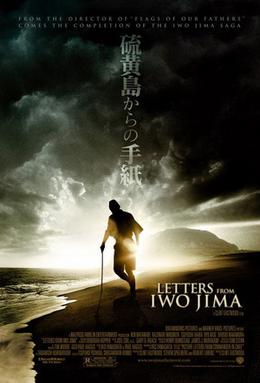
BACK-STORY:  “Letters from Iwo Jima” is Clint Eastwood’s companion piece to "Flags of Our Fathers".  They were filmed back to back.  It is the Battle of Iwo Jima from the Japanese perspective.  It is based on the letters of the Japanese commander Gen. Tadamichi Kuribayashi and the book So Sad to Fall in Battle by Kumiko Kakehashi.  The movie was filmed in California with a one day shoot on Iwo Jima.  The film was well received by critics and made numerous top ten lists.  It was a big hit in Japan, but did not do very well in the States (those damned subtitles!).  It was nominated for Academy Awards for Picture, Director and Original Screenplay and won for Sound Effects.  The original title was supposed to be “Red Sun, Black Sand” ( which was apparently too cool ).

OPENING:  A group of Japanese archeologists are excavating a cave on Iwo Jima in 2005.  They uncover letters written by members of the garrison, including Gen. Kuribayashi.

SUMMARY:  In 1944, a sad sack named Saigo (Kazunari Ninomiya) is digging a trench and cynically grousing about whether the island is worth fighting for.  A flashback reveals that he is a conscripted baker who was torn from his pregnant wife.  Not all Japanese soldiers were fanatics.  Lt. Tanida (Takumi Bando) starts caning him but is stopped by the newly arrived Kuribayashi (Ken Watanabe).  The general halts the digging of trenches on the beaches and changes the defense plan to reflect his belief that the Americans can not be stopped from establishing a beachhead.  He intends a defense in depth (literally, through caves and tunnels).  This change does not go over well with some of his subordinates who are more the banzai types.  Kuribayashi finds a kindred spirit in his tank commander.  Col. Nishi is an Olympic hero having competed in the equestrian events.
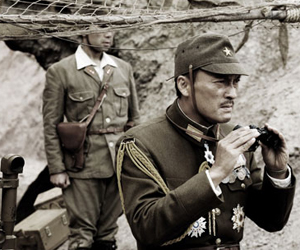
"I don't see a fleet.  What did you say
CGI means?"
                The movie balances the officers with the enlisted by introducing a foil for Saigo.  Shimizu (Ryo Kase) was a member of the Kempeitai (Japan’s equivalent of the Gestapo).  Better watch what you say around him.  He argues that the Japanese will win the battle because the Americans are undisciplined, inferior, and too emotional.  The ensuing bombing and strafing raid by Corsairs (which defy war movie clichés by actually having bombs to drop) sobers up the defenders.  The Americans may be inferior, but they have a lot of stuff and the garrison can expect no external help.  Kuribayashi outlines his plan to the enlisted.  They should be proud to be defending the homeland.  Your goal should be to take at least ten Americans with you.  You will not be going home.  In spite of this gloomy forecast, Saigo puts on his 1,000 stitch belt (senninbari) for protection.

                When the invasion commences, Saigo is an ammunition bearer on Mount Suribachi.  When Tanida orders his unit to commit suicide (against Kuribayashi’s orders), Saigo and Shimizu decide a grenade held to their chests is not for them.  They cross a bullet-infested no man’s land after dark to reach the other side of the island.  They are about to be executed by the fanatical Lt. Ito (Shido Nakamura) when Kuribayashi intervenes.  Later, Ito straps some land mines across his chest and goes out to suicide bomb an American tank.  Where’s a tank when you need one?  He returns frustrated.

                Saigo and Shimizu are now with the noble (literally, he was a baron) Nishi.  Nishi insists on treating a wounded American prisoner humanely.  He also reads aloud the soldier’s letter to his mother.  If it wasn’t for this war …    (Nishi has been outside Japan and flashbacks apprise us of Kuribayashi’s pleasant stay in America before the war – good Japanese officers are not zenophobic.)  This contrasts with an earlier scene where a G.I. (Iggy from “Flags of Our Fathers”?) was bayoneted to death after being captured.  Shimizu’s backstory (via flashback) reveals that he was thrown out of the Kampeitai because he refused to shoot a dog.  (In movies, the killing of dogs is the best measure of a characters morality.)  Nishi is blinded by shrapnel and orders his men to escape.  He commits suicide using his big toe to trigger his rifle.  (The movie is a good tutorial on the various methods of Japanese suicides.  Although it surprisingly leaves out seppuku.)

                Saigo and Shimizu decide to surrender.  Shimizu manages to get captured and is about to say “who needs a thousand stitch belt?” when the Americans guarding him decide they are bored.  Saigo meets up with Kuribayashi.  He saves Saigo’s life a third time by appointing him burner of documents including letters.  The general goes off to lead that banzai charge he had been reining in for the whole battle.

CLOSING:  Saigo buries the letters because he is a big fan of archeology.  Kuribayashi leads the attack but is wounded.  His loyal minion Lt. Fujita (Hiroshi Watanabe) carries him from the battlefield.  The next morning as the sun rises, Kuribayashi insists on beheading.  Unfortunately, Fujita is sniped mid-stoke.  Saigo arrives soon after and assists the general by giving him the .45 that Kuribayashi had been presented by his American hosts.  Saigo defies all odds (and the script?) to be taken alive.

WOULD CHICKS DIG IT?  Unlikely.  It is pretty grim and it is an almost all male cast.  The combat is not particularly graphic and the characters are well developed.  The movie does have less machismo than most war movies.

HISTORICAL ACCURACY:  Kuribayashi was from the samurai caste.  In the late 1920s, he was a military attaché in the United States.  He toured the country in a car and was impressed with America’s industrial capacity and felt it would fight hard in the event of war with Japan. He then served in the cavalry in China and then was Chief of Staff in Hong Kong.  In 1943, he was appointed commander of the Imperial Guard in Tokyo.  In 1944, Tojo summoned him and gave him command of Iwo Jima.  Some historians posit that this was punishment for a fire set in the barracks by one of his cadets.  When he arrived on the island in June, he was greeted by hundreds of school children waving flags and singing patriotic songs.  (The movie does not show this.)  A few days later, U.S. fighters attacked and returned the next day for more bombing and strafing.  A fortnight later, another raid resulted in the shooting down of 66 Japanese fighters.  Starting in August, the island was bombed almost daily (a fact that is not shown in the film).  By the time of the invasion, the consistent bombing had deprived the island of almost all its fighter planes, but had done little damage to the underground defenses. 

                In August, Rear Admiral Ichimaru arrived with 2,300 naval reinforcemnents and he took command of the island’s naval forces.  Ichimaru was a disciple of the standard Japanese doctrine of defending the beaches.  Kuribayashi looked at the results of Saipan and realized that without air and naval support, the beach defenses would not survive the bombardment and onslaught.  He ended up compromising a bit by allowing some pillboxes close to the beach.  The vast majority of the effort was put into caves, tunnels, and other underground defenses.  These were not only extensive and elaborate, but virtually bomb proof.  Nishi’s tanks were emplaced.

"Thanks, if I ever don't have a sword,
this will come in handy"


                The movie short-changes the two day pre-landing naval bombardment.  It was the heaviest of the war.  It does a good job of showing the Japanese soldiers surviving in the caves.  It also does a fair job of depicting the lack of food, water, and ammunition.  Also realistic is the undoubted fact that not all the Japanese were fanatics who wanted to die.  However, Saigo and Shimizu probably over-represent the soldiers who wanted to survive.  Just as the emphasis on Kuribayashi and Nishi tends to dilute the reality of Japanese officers being martinets.  The movie does an excellent job with Kuribayashi and Nishi.  The general’s tactics are proper.  The moment in the film where he pretends to defend a stretch of the beach while a staff officer runs around in front of him actually happened.  He did allow the Americans to land and held fire until they were inland.  He forbade human wave assaults and suicides.  He encouraged the men to give up ground as grudgingly as possible. 

                Nishi is a fascinating personage.  Colonel Baron Takeichi Nishi (and his famous horse Uranus) won the gold medal in show jumping at the 1932 Los Angeles Olympics.  He was a celebrity and was acquainted with movie stars like Mary Pickford and Douglas Fairbanks.  He went on to compete in the 1936 Munich Olympics, but fell from his horse (possibly to allow Japan’s future ally to win the event).  He naturally was in Japan’s cavalry and transitioned into the tank corps.  When he was a transferring to Iwo, all 26 of his tanks were sunk.  Later, he was able to get 22 in time for the battle.   

                The film is not meant to be instructive as to the battle.  In fact, it is difficult to tell what the big picture is and what the time frame is.  The movie is more on a personal level.  And many of the characters are actual figures from the battle.  I am referring to the officers, of course.  Several key incidents in the movie are based on reality.  Some officers like Tanida did encourage their men to use grenades to commit suicide (against Kuribayashi’s orders).  In the movie, Ito leads an aborted banzai attack.  Ito’s attempt at becoming a human bomb was based on Lt. Satoru Omagari who was unsuceesful in waiting for a tank to blow up.  In reality, Gen. Senda did lead an attack to try to recover Mt. Suribachi.  The song Kuribayashi listens to from Japanese school children during the battle really happened.  It was called “The Song of Iwo Jima”.

 The small details are accurate.  The Kempeitai, which means “Military Police Corps” was the Japanese secret police from 1881-1945.  It was noted for its brutality and certainly would have killed a dog for barking.  A Senninbari, or “thousand stitch belt”, was a strip of cloth that had stitches from one thousand different women.  It was an amulet that was supposed to protect the wearer.  The various methods of suicide are instructive.  Everyone is familiar with hari-kari, but the use of grenades and rifles is less well-known.  I first encountered these methods in reading about the Battle of Tarawa when I was younger.  After all, regular soldiers would not have had access to katanas and there rifles were too long to point and fire normally, hence having to use your big toe to pull the trigger.  
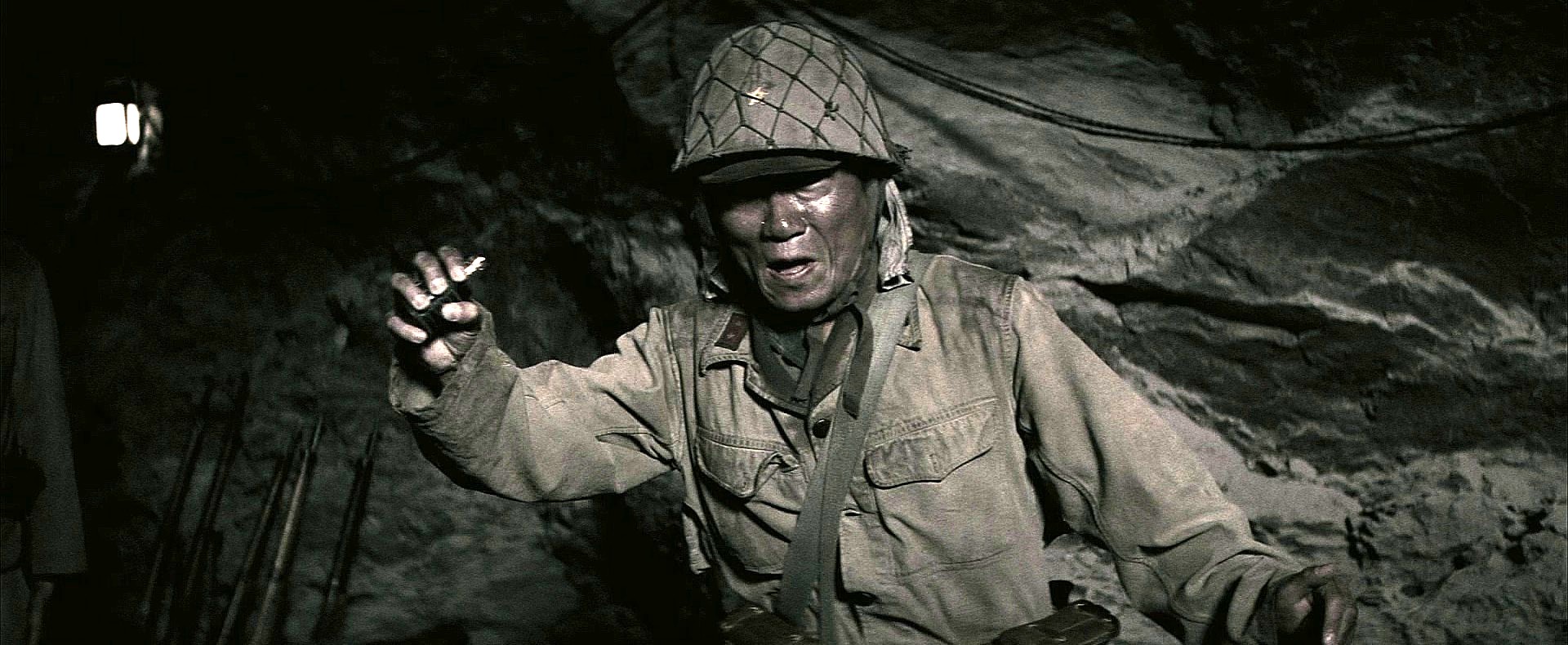
I am going to keep my helmet on for protection
while I hold this grenade to my chest
                The deaths of Nishi and Kuribayashi are problematical.  Nishi suffered burns to his eyes.  He did lead an attack but it was halted by severe fire and he then probably committed suicide by shooting himself.  He did not believe in seppuku.  It seems likely he would have used a pistol instead of a rifle.  Kuribayashi planned to lead the last attack with 500 men, but he changed his mind and instead led the men to a new position.  He apparently was wounded in the process.  It is unknown how he died, but the best guess is it was by way of seppuku at the mouth of the cave he was in.  It is extremely unlikely that it occurred as depicted in the film.  In fact, his death is one of the weakest moments in the film.

CRITIQUE:  “Letters from Iwo Jima” is an extremely well made film.  Eastwood obviously was intent on creating a masterpiece.  He does this in a non-Tarantino way.  The cinematography is a bit artsy with the now familiar washed out look.  Appropriate for a volcanic ash island.  The combat is of the “Band of Brothers” style, although the movie is light on action.  What there is is intense, but not particularly graphic.  The score conforms to this by being understated.  The opposite of the pompous music of most war epics.  You won’t remember the movie for its sound track.  In fact, there is a notable lack of music in the film.  The subterranean sets are amazing.  Very claustrophobic. 

The movie relies on characterizations to propel the narrative.  The main characters are well developed and appealing.  They are fleshed out and not just from the flashbacks.  This is especially significant because it is so rare to see the war through Japanese eyes.  Plus Eastwood balances the officers with the enlisted.  I feel I have to point out that all the major characters are noble, which is a pretty ridiculously high percentage for the Japanese Army.  The only typical Japanese soldiers are minor characters.  Hell even the kampeitai member turns out to be unfanatical.  Kuribayashi is virtually saintly.  Saigo is likeable and you want him to live to get back to his wife and newborn.  The fact that the audience gets its wish is evidence that Eastwood pulls his punches on the anti-war theme.  The dialogue is fine, but there are few lines that are memorable.  It was a nice touch to liberally quote from the actual letters.

                The acting by the ensemble is excellent.  Wattanabe is perfect as Kuribayashi and was a wise marketing choice.  If the movie had been made twenty years earlier, the role would have gone to Toshiro Mifune.  The surprise is Kazunari Ninomiya as Saigo.  He is a huge pop star in Japan.  He plays sad sack conscript well.  (His survival in the movie was probably a recognition of what his death’s impact would have had on Japan’s teenage girls.)


                The film has some obvious themes that are hard to miss.  One is that most of the soldiers just wanted to survive.  This is a bit of a stretch when it comes to the Japanese army, but it’s a nice change from the way their soldiers were depicted in previous movies.  The movie is very sympathetic toward the Japanese.  It’s revisionist in this respect.  (As a history buff I should mention that revisionism is often wrong.)  A related theme is that we’re all humans and have human needs and emotions.  The movie is quite humanistic.  Possibly more than the dirty war in the Pacific deserves.  An interesting aspect of the script is how it balances some of the scenes.  At one point a captured American soldier is bayoneted to death and then later, under similar circumstances, another is treated humanely.  The death of Shimizu and the capture of Saigo are also mirrored.  The plot is simplistic, but accomplishes its goal of retelling the battle from the Japanese perspective effectively.

CONCLUSION:  When you pair off “Flags of Our Fathers” and “Letters from Iwo Jima”, you have a magnificent achievement for Clint Eastwood.  Credit should also be given to the producers who bank-rolled these risky projects.  Only Eastwood could have pulled off dual films about the Battle of Iwo Jima.  They are so different, yet the pair cover the pivotal battle as well as could ever have been expected.  The dual perspective has been done before in movies like “Tora! Tora! Tora!” and “The Longest Day”, but “Flags” and “Letters” are unique in covering the same battle not only from different perspectives, but with totally different themes.  Both are commendable for bringing light to worthy historical topics.  So both fit one of my qualifications for great war movies.  The fact that neither is great simply means they fall a little short in execution.

                I am in the distinct minority who feel that “Letters” is overrated.  I admire it and think it is a significant addition to war movie history.  However, partly due to its humanistic themes and perspective, most critics wanted to love it more than it deserved.  As a person who has read a lot on the war in the Pacific, I can attest to the revisionist nature of the characterizations.  I am not saying that Kuribayashi and Nishi are unrealistically depicted, but I do feel that the movie gives an inaccurate depiction of the defenders of the island.  No wonder it did well in Japan.  It showed the way modern Japanese want to remember the defenders. 

                Now I’ll go further on a limb, I feel “Flags” is the better war movie. It is more accurate and has a more important story to tell.

RATINGS:

Acting  -  A
Action  -  7/10
Accuracy  -  B
Realism  -  B
Plot  -  B
Cliches  -  B

GRADE  =  B

THE TRAILER
   

Tuesday, April 5, 2011

QUARTERFINALS II

The Hurt Locker (1) vs. The Great Raid (14)


CHARACTER DEVELOPMENT: “The Hurt Locker” develops only three characters – the lone wolf Sgt. Will James, the by the book Sgt. J.T. Sanborn, and typical grunt Specialist Owen Eldridge. This trio is fleshed out over the course of the film. We know their attitudes and emotions. The key to the movie is the conflict between James and Sanborn, with Eldridge caught in the middle. “The Great Raid” has more characters to juggle because of the trio of story lines. The movie develops nurse/resistance member Margaret Utinsky, POW Joseph Fiennes, and mission leaders Henry Mucci and Robert Prince. The romance between Utinsky and Fiennes is thrown in and ill-fitting. Mucci is your typical gruff disciplinarian and Prince is the idealistic subordinate. Nothing special about them.

Score at the end of the first period: Hurt – 9 Raid – 7

DIALOGUE: Hurt won the Academy Award for Original Screenplay and deserved it. The dialogue is cracking. The dialogue between James and Sanborn seethes. The dialogue is sparse which is consistent with soldier talk. Raid is an old school style movie in many ways, including the dialogue. There is nothing special here. The words placed in the characters mouths are words a Hollywood screenwriter thinks a soldier would say. That is not to say the dialogue is laughable, it’s just not noteworthy.

Half-time score: Hurt – 18 Raid – 14

PLAUSIBILITY: Hurt has been criticized for making James too much of a adrenalin junkie who gets his fix by flouting common sense safety protocols. There is some truth to this. Although the movie is fictional and thus can go beyond reason to make its case that war is a drug, there are events in the movie that are highly implausible. For example, three bomb techs taking separate alleys at night to chase insurgent bomber(s) makes no sense. It is apparent that bomb disposal experts must be different than normal people, but someone as mentally unstable as James would not last long in the military in that specialty. Raid is based on an actual commando mission and is sourced from two excellent books. The love story is implausible, but the events in the raid itself are close to the real deal. So real, that many viewers probably were disappointed with its “tell it like it was” instead of “rev it up” plot.

Score after three periods: Hurt – 24 Raid – 22

PLOT: “The Hurt Locker” won the Best Picture award. It flows from action scene to action scene propelling the arc of James as an increasingly loose cannon. The suspense is palpable. The opening is memorable in its unorthodoxy. The close book ends it well. In between we learn to admire as well as abhor the main character. The plot of “The Great Raid” reads more like a history lesson with a pedestrian romance throw in. The movie lacks pizzazz, but the build-up to the attack is smooth and the attack itself is well-written and accurate.

Final score: The Hurt Locker  – 33    The Great Raid – 29

Black Hawk Down (4) vs. Flags of Our Fathers (5)

CHARACTER DEVELOPMENT: BHD is not really character driven. It develops the character of the Rangers versus the Delta Force more than individual soldiers. It is a true ensemble cast with Josh Hartnett as the lead, but certainly he does not dominate. We do not get to know the soldiers very well, but the movie does not have time for that. We do recognize some tried and true stereotypes. The gruff sergeant (in this case actually a Lt. Col. McKnight), the sad sack Blackburn, the desk jockey turned warrior Grimes, the lone wolf Hooten, etc. Flags does an excellent job developing the three surviving flag raisers. They are distinct personalities. The tragic decline of Ira Hayes is particularly poignant. The other members of the unit are also well drawn. The government officials are stock characters, however.

Score after first period: BHD – 7 Flags – 9

DIALOGUE: Both movies come from well-respected best sellers and are true to their sources. The conversations feel real and unforced. They also reflect how soldiers talk in and out of combat. If you watch both movies you will get a clear impression of how soldier talk and interact. It is fascinating to see how soldier dialogue has changed from Iwo Jima to Somalia. Slight edge to BHD because it does not have the cynically patriotic handlers that Flags has.

Half-time score: BHD – 16 Flags 17

PLAUSIBILITY: Both movies make sense and have no laughable scenes. They are true to books that have not been criticized for overhyping their topics, Slight edge to BHD for showing the fog of war and the difficulty of hitting moving targets in urban combat.

Score at the end of three: BHD – 26 Flags – 25


PLOT: Flags is a nonlinear retelling of the men who raised the flag as well as the bond tour the survivors went on. the back and forth scenes are effectively arranged. This means the audience is whiplashed from high intensity combat action scenes influenced by Saving Private Ryan and the introspective scenes on the home front. This makes the movie more interesting, but a bit bipolar. BHD is linear in structure. It builds to the battle which dominates the second half of the movie. The shifts from the command centers to the boots on the ground are instructive in clearing up the fog of war for the audience. The Battle of Mogadishu could not have been handled better, unless you question the lack of coverage of the enemy point of view. But then again, Clint Eastwood had to film an entire separate movie to accomplish that for the Battle of Iwo Jima.

Final score: Black Hawk Down – 35 Flags of Our Fathers - 33

Monday, April 4, 2011

QUARTERFINAL MATCHES I

QUARTERFINALS:
Letters from Iwo Jima (2) vs. We Were Soldiers (7)


CHARACTER DEVELOPMENT: “Letters” develops four main characters – Gen. Kurabayashi, Col. Nishi, Private Saigo, and Private Shimuzu. There are brief flashback scenes that explain motivation. Too brief. Even the letters that the movie is about are brief and do not tell us much about the men. “Soldiers” tries to juggle several characters, including their wives. The build-up to the Battle of Ia Drang allows the viewer to get to know Col. Moore, Sgt. Plumley, Lt. Geoghegan, and Maj. Crandall. We certainly learn more about Moore than Kuribayashi.

Score at the end of the first period: Soldiers – 8 Letters – 7

DIALOGUE: “Flags” has more dialogue than you would think. It is true to the Japanese personality and the soldier talk is realistic. We find that the Japanese soldiers were in some ways similar to our soldiers through their conversations. “Soldiers” is more conventional in its dialogue. It tries hard to be even-handed in its treatment of the NVA. In fact, the NVA commander talks a lot like Kurabayashi. The Americans, especially Moore, speak like American soldiers talk in war movies. Some of the dialogue is corny.

Halftime score: Soldiers – 15 Letters – 15

PLAUSIBILITY: Both movies are based on actual battles featuring real persons. “Letters” loses some credibility by downplaying the hardships the soldiers encountered. One soldier dies of dysentery, but it is quick and off camera. Life in the tunnels is not pleasant, but not horrifyingly disgusting as it should have been. The survival of the most likeable character is extremely unlikely considering only 296 of over 20,000 survived. His crossing paths with Kuribayashi several times is also hard to believe. “Soldiers” is excellent in its depiction of the Battle of Ia Drang, but some of the smaller details stretch credulity. At one point during training in America, they pick up a fire-fight in Vietnam on their unit radio. The final showdown is pure Hollywood.

Score after three periods: Soldiers – 23 Letters – 22

PLOT: “Letters” tells the story of several participants in the Battle of Iwo Jima. The story is linear with some brief flashbacks to their lives before arriving on the island. Although the plot is interesting in showing us the other side of the conflict, it does underdevelop several themes. It introduces the theme of dissension in the high command, but drops it. It does not fully compare the fanatical soldiers to the ones who are just wanting to survive. It neglects the families on the other ends of the letters. “Soldiers” basically uses the book as its screenplay, but with a religious subplot and the wives added in. The wives dealing with the deaths of their husbands adds depth to the picture. The battle follows the book closely, except for the ridiculous ending. By giving fair treatment to the enemy and to the Americans, it is different than most one-sided war movies.

FINAL SCORE: Soldiers – 31 Letters - 29

QUARTERFINALS: Master and Commander (6) vs. 300 (9)

CHARACTER DEVELOPMENT: “Master” fully develops the relationship between Aubrey and Maturin. They are friends, but have honest disagreements based on different philosophies. We learn that Aubrey is a firm, but understanding captain. He usually puts the good of the navy ahead of everything, although he makes an exception to save his friends life. Maturin is a secular humanist who is on the ship as a doctor, not a warrior. He clashes with his friend on the nature of discipline and the corruption of power. The rest of the cast come off as distinct characters. “300” does a good job developing the relationship of Leonidas and his wife, but Queen Gorgo is like a male version of her husband. There is little nuance. The rest of the 300 are all buff warriors, but interchangeable.

Score after the first period: Master - 9      300 – 7

DIALOGUE: “Master” is based on a book by a master story-teller. The dialogue is very true to the characters in the books by Patrick O’Brien. Nautical terms are thrown in, but not in a way that would perplex the audience. The conversations between Aubrey and Maturin are interesting. They make you wonder who is right. “300” is based on a graphic novel. The dialogue is appropriate for that genre which means it is a bit pompous. Try reading the script out loud and you will see what I mean. Unless the words are coming from a hunky Spartan warrior, they might seem silly.

Half-time score: Master – 18     300 – 14

PLAUSIBILITY: “Master” is not based on a true story and it does throw in some incidents that might have happened on several different ships, but each of the main plot developments are plausible. I have read a lot on Napoleonic naval warfare and there was nothing in the movie that made me cringe. “300” is at a disadvantage in this respect because it is supposed to be part fantasy. However, in the area of human behavior, it does not ring true in some key areas. The betrayal of Sparta by the ephors and Theron for Persian bribes makes no sense in a society that was indifferent to wealth. The Queen being raped by Theron and then killing him at an Assembly meeting is a huge stretch of credulity. The attitude of the 300 warriors is plausible, however.

Score at the end of three: Master – 26     300 – 21

PLOT: Both movies are based on well-written source novels. You could argue that the screenplays for both improved on the originals. Master and Commander actually culls plot developments from more than one O’Brien book. Check out the long, official title of the movie. It comes off as a “best of” compilation of scenes. 300 (the movie) fleshes out some characters, most notably the Queen. This converts the very macho novel into a more balanced action/romance/political intrigue plot. The plot of Master is reflective of a ship voyage with its variety of incidents. The plot of 300 is less complex as it drives toward the climax of the battle with side trips to see what is going on back in Sparta with the Queen versus Theron.

FINAL SCORE: Master – 35     300 - 28

Friday, April 1, 2011

MARCH MADNESS: Letters from Iwo Jima (2) vs. Flyboys (15)


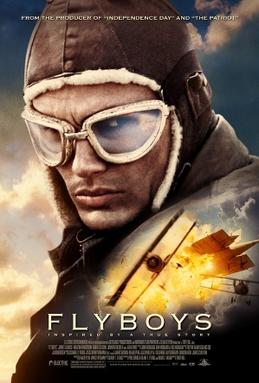
ACTING: “Flyboys” stars James Franco as rancher turned pilot Blaine Richards. It was his first action star turn. His performance is capable, but certainly not noteworthy. The other leads are Martin Henderson as the veteran ace Reed Cassidy and Jean Reno as French Capt. Thenault. No one stands out in this movie. There is a little chemistry between Franco and Jennifer Decker as Lucienne. “Letters” is anchored by Ken Watanabe as Gen. Kuribayashi. He was nominated for the Best Actor Oscar. Kazunari Ninomiya gives a touching performance as the sad sack Private Saigo. The rest of the cast is good.


Score at the end of the first period: Letters – 8 Flyboys – 6

REALISM: “Flyboys” is often ridiculous in its depiction of WWI air combat. It is the U-571 of air combat movies in that it piles every air combat cliché into one movie. The CGI effects are poor. It seems as though every German fighter plane is a red Fokker tri-plane. The squadron is impossibly heterogeneous and the deaths are predictable and foreshadowed clumsily. The scene where Richards lands in no man’s land to rescue a downed comrade is one of the most unrealistic scenes in war movie history. “Letters” is much more realistic, but does have its flaws. It admirably depicts the human frailties and fears of the Japanese soldiers, but probably downplays their fanaticism. The truth is somewhere between the movie and wartime propaganda. The conditions in the tunnels are much too spacious and not nearly appalling enough. The combat is okay, but not intense or brutal enough.

Half-time: Letters – 16 Flyboys – 11

ACCURACY: “Flyboys” purports to be the story of the Lafayette Escadrille which was a squadron of American volunteers who flew for the French air force before U.S. entry into WWI. Some of the characters are based on actual pilots. They are very loosely based on those individuals. For instance, Richards is supposed to be Frank Luke (who was not a member of the Lafayette Escadrille), but other than a western drawl there is little resemblance. Franco does not play him as the lone jerk that Luke was. Cassidy as Raoul Lufbery is closer, but his death is way off. The producers insisted on a black pilot so they jammed Eugene Bullard in as Eugene Skinner, a boxer who retires to be a pilot. The real Bullard was a boxer, but he served in the Lafayette Flying Corps, not the Escadrille. None of the events depicted appear to have happened. “Letters” features two historical figures – Gen. Kuribayashi and Col. Nishi. Their back-stories are accurate. Nishi was an Olympian and both had spent time in the U.S. However, unlike the movie, they were not friends on Iwo and actually were antagonists. Watanabe does a good job portraying the leadership and strategy of Kuribayashi. A key scene where Nishi gives the last of his unit’s morphine to a Marine prisoner surely is not accurate. The movie does not do a good job giving a sense of what is happening in the battle. The plight of the soldiers is accurate, but underplayed.

Score after three periods: Letters – 24 Flyboys – 17

ENTERTAINMENT VALUE: “Flyboys” is definitely aimed at the youth demographic. This explains James Franco as the lead. Since young people have not been exposed to all the clichés, maybe it seems fresh to them. The dialogue is poor. Much of it is ridiculous and some of it is laughable which does make it entertaining in a perverse way. “Letters” is aimed at the exact opposite audience. It attempts admirably to depict the Battle of Iwo Jima in a way sympathetic to the Japanese. The main characters are attractive and you care what happens to them. The combat is above average, but sparse. It does a better job on soldier life.

FINAL SCORE: Letters – 32 Flyboys - 23

Friday, March 25, 2011

MARCH MADNESS: "Flags of Our Fathers" (5) vs. "Enemy at the Gates" (12)


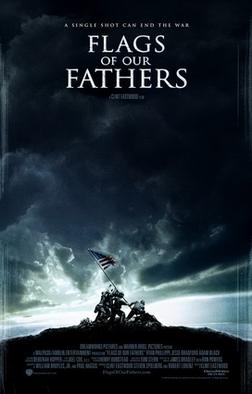
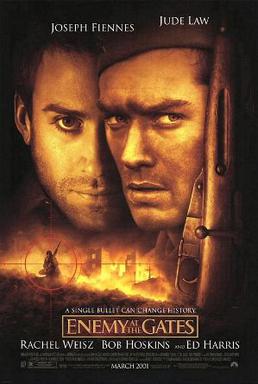
ACTING: “Flags” does not have an A-List cast. The main characters: Ryan Phillippe as James Bradley, Jesse Bradford as Rene Gragnon, and Adam Beach as Ira Hayes, are very good. Director Clint Eastwood made an excellent decision to not load the story down with famous stars. Beach is especially poignant in portraying the troubled Hayes. “Enemy” has showier leads. Jude Law as Vasily Zaitsev and Joseph Fiennes as Danilov are fine with Danilov being less believable. Bob Hoskins brings the proper bombast to the role of Nikita Khrushchev. Rachel Weisz as female sniper Tanya is too well-coiffed and beautiful for the role. She also makes no attempt at a Russian accent. Ed Harris steals the acting honors with the coldly efficient and malevolent Major Konig.


Score at the end of the first period: Flags – 9 Enemy – 8

REALISM: “Flags” attempts to authentically depict the terrors of combat in the Pacific and the media circus on the home front that confronted the flag-raising heroes. The combat has the feel of “Saving Private Ryan” and is appropriately chaotic, explosive, and graphic. The fighting is vicious and sometimes hand-to-hand with bayonets. The bond drive on the home front is a mixture of cynicism and ultrapatriotism. It’s laid on a bit thick, but not in a ridiculous way. “Enemy” has chosen to set a love triangle in the middle of the greatest battle of WWII. It’s small world approach to the character’s encounters defies credulity. The city of Stalingrad, while appropriately a shambles, appears to be empty save for the maneuverings of the featured characters. It also relies on some amazing pieces of luck to advance the two main foes to their final confrontation.

Score at half: Flags – 18 Enemy – 14

ACCURACY: “Flags” is based on the book by James Bradley and Ron Powers. The movie takes few liberties with the narrative. It is about as accurate as you can find. I could find no major flaws in it. The landing is true in its depiction of the Japanese allowing the Marines to come inland a bit before opening fire. Marine tactics are true to their style. The deaths of the three flag-raisers who did not survive are accurate. Even the small touches like Harlon Black’s mother recognizing his butt in the picture are true. “Enemy” has numerous problems with historical accuracy. The movie was inspired by a small portion of William Craig’s study of the battle. Craig added the legendary duel between Zaitsev and Konig to his story basing it on Soviet records which obviously were subject to communist propaganda. The movie takes this already dubious legend and ramps it up to a love triangle/snipers duel. I was surprised to find that there actually was a Sacha who was a double agent and was hanged by the Germans (of course not in the way depicted). I was stunned to find that there was a female sniper named Tanya and she apparently had a relationship with Zaitsev (although even the Soviet historians did not go as far as having them live happily ever after as the movie implies). Generally speaking, the movie does a poor job as a tutorial on the Battle of Stalingrad. You get no idea what the big picture is. It also goes overboard in showing Russian soldiers being forced to make suicide attacks.

Score at the end of three: Flags – 28 Enemy – 20

ENTERTAINMENT VALUE: “Flags” is an excellent blend of exciting action and character development. It manages to tell the story of the flag-raising while also giving a clear picture of what Iwo Jima was like and what the home front in 1945 was like. Eastwood examines the question: what is a hero? He indicts the government’s manipulation of heroes for morale-boosting and fund-raising purposes. He does not glamorize war and shows the randomness of death on the battlefield. The most respected soldier (Make Strank) is killed by friendly fire. The movie also explores post traumatic stress disorder through the tragedy of Hayes. Its nonlinear structure is effective. “Enemy” is stronger as pure entertainment. It is obvious the producers sacrificed accuracy for entertainment. The set pieces are well done. It has a strong female character. (There is a very erotic scene that has no nudity in it.) It has some very suspenseful cat and mouse scenes. It concentrates on snipers – the coolest of the cool. The soundtrack by James Horner fits the scenes perfectly. Unlike “Flags”, it is not trying to enlighten its audience. It is fun in a cliché-ridden, good guy wins, sort of way.

FINAL SCORE: Flags – 36 Enemy - 29

March Madness rules
Jarhead (8) vs. 300 (9)
We Were Soldiers (7) vs. Defiance (12) 
Master and Commander (6) vs. Troy (11)

Tuesday, March 15, 2011

"March Madness"

With the NCAA basketball tournament starting this week I got the idea to have a bracket to determine the best war movie made since 2001. I chose the competitors and seeded them based on Rotten Tomatoes. The first round matches will be based on acting, accuracy, entertainment value, and realism. Each category will be on a scale of 1-10. After the first round, victory will be based on my judgment. Here are the matchups:


1 - The Hurt Locker
16 - Pearl Harbor

3 - Inglorious Basterds
14 - The Great Raid

5 - Flags of Our Fathers
12 - Enemy at the Gates

7 - We Were Soldiers
10 - Defiance

8 - Jarhead
9 - 300

6 -  Master and Commander
11 - Troy

4 - Black Hawk Down
13 - Kingdom of Heaven

2 - Letters from Iwo Jima
15 - Flyboys

I will post the "game" summaries periodically starting Thursday. Feel free to make predictions and criticisms.