Showing posts with label Steve McQueen. Show all posts

Sunday, August 16, 2015

BOOK/MOVIE: The War Lover (1959/1962)


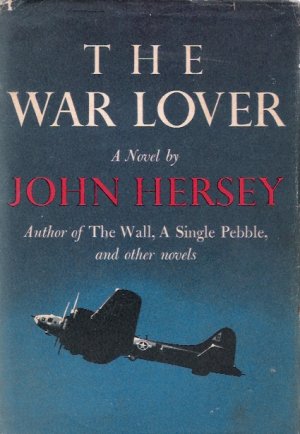
                “The War Lover” is a WWII aviation picture based on the best seller and Pulitzer Prize winning novel by John Hersey.  It was filmed in England and directed by Philip Leacock.  Two RAF bases were used for the exterior shots.  The producers found three B-17s in America.  Famous aviation writer Martin Caidin helped restore them and flew one across the Atlantic to be used in the film.  He wrote a book about the experience entitled Everything But the Flak.  A stuntman died during a stunt when he drowned parachuting into the English Channel.  Warren Beatty was first choice for the lead role but he turned it down because he had recently caused the breakup of Robert Wagner and Natalie Wood.  It would have been awkward if he acted with Wagner.  Steve McQueen got the part and was his usual difficult self.  He did not get along with Shirley Anne Field and once pushed so hard she went over a sofa and cut her lip.  In a subsequent kissing scene, she bit McQueen on his lip in revenge.  Director Leacock was lenient with McQueen’s contractual stipulation that he avoid racing cars during the filming.  McQueen proceeded to get into an accident, so those injuries from his fight with the Bolland character are not the result of make-up.
Awkward!

                The movie is set on an American bomber base in 1943.  “Buzz” Rickson (McQueen) is a hot shot pilot who rooms with his co-pilot “Bo” Bolland (Wagner).  Bo is your typical American airman who is just trying to survive the required 25 missions.  Buzz likes the war.  “The only trouble with this crummy war is it begins too early in the morning.”  Their bomber is nicknamed “The Body” and is on its seventh mission.  Their mission is to bomb submarine pens at Kiel.  By changing the nose art, the movie is able to make the three bombers look like a lot more on takeoff.  Due to cloud cover, the commanding officer aborts the mission, but Buzz goes below the cloud cover to bomb the target anyway.  He has an orgiastic look on his face as the bombs explode.  Back at the base, Buzz does not seem to care that one of the bombers that followed him ended up getting blown up.  The CO calls him on the carpet and accuses him of being insubordinate and irresponsible.  Since this is a war movie, his superiors put up with him because he’s such a crackerjack pilot.  The Air Force (actually Army Air Corps) loves mavericks.

                We have a maverick, how about a love triangle to go with that cliché?  Bo and Buzz meet a British bird at a dance.  Surprisingly, Daphne (Field) does not opt for the stereotypical brash American and instead chooses Buzz.  She realizes she would always be second best to the war in Buzz’s life.  Bo puts her first, but is she just a fling until he finishes his tour?  Although Bo will have to be like a sheep-dog watching out for the wolf, he idolizes Buzz as a pilot and leader.  So does the rest of the crew except the navigator Lynch who despises the amoral Rickson.   Buzz gets him transferred to a lesser pilot and as though that does not doom him enough, he proceeds to show Bo a picture of his wife and kids!  Why does the military give lectures on VD, but not on picture discipline?
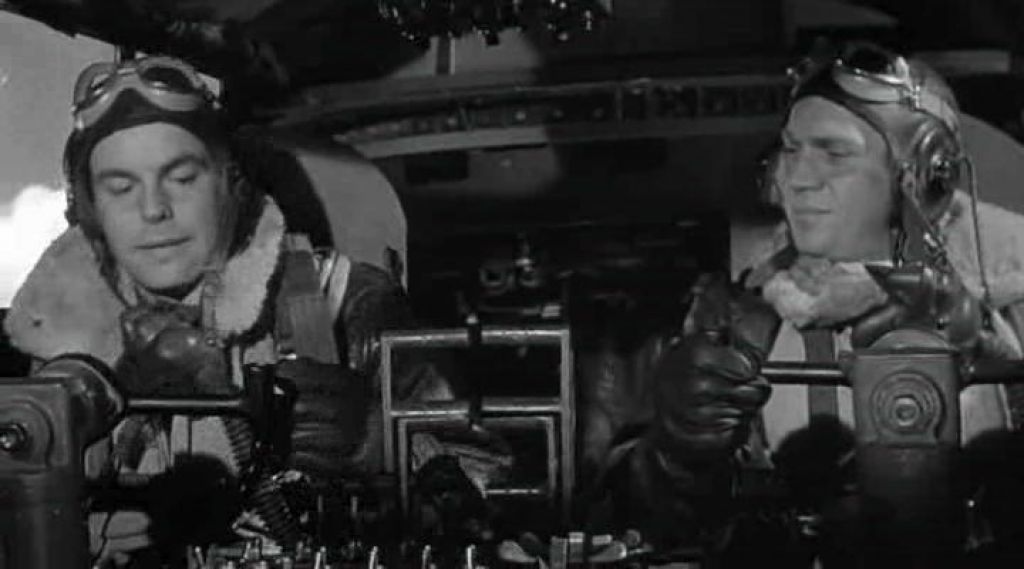
"I'll bet you 50 bucks our last
mission is a milk run"

                Buzz continues to be insubordinate.  When a mission requires them to drop leaflets instead of bombs to kill Germans, he buzzes the field several times at very low altitude to show his displeasure.  The Doctor states that “Rickson is a good example of the fine line that separates the hero from the psychopath.”  (I wonder how many Medal of Honor winners this statement would apply to.)   There is no talk of grounding such a loose cannon.

                Before the last mission, the predictable hook up between Buzz and Daphne occurs.  Buzz shows up at her apartment, but she sees right through his macho bull-shit.  He does not attempt to charm his way out of this assessment.  “In war time, you don’t fall in love.  You make love.”  She gives as well as she gets.  “You can’t make love.  You’re twisted.  You can only make hate.”  Ouch!  When he returns to base, he implies that something went on which makes the next mission very awkward.  They don’t have a lot of time to glare at each other as they have to try to avoid the kitchen sink on this mission.  I counted ten problems.  That’s “Memphis Belle” territory.  At least the love triangle problem gets solved by subtraction.


                “The War Lover” is an underrated war movie.  It is well made with good cinematography and effects.  The sound effects are also well done.  You do feel you are along for the ride.  The interior of the bomber is realistic.  The flight procedures are rendered accurately.  As is usual for an air combat movie, the film takes off when it is in the air.  There is some good stunt work in the buzzing of the field, but the obligatory belly landing was borrowed from “Twelve O’Clock High”.  The plot is a little leaden on the ground. 
the real star of the film

The central theme that some warriors are in it for the thrill is worth exploring and this was a rare theme for a movie from the early 60s.  There aren’t that many war movies that have the hero as a psychopath.  Coincidentally, I also watched “The Hurt Locker” this week and the main characters in both movies have similar personalities and motivations.  McQueen’s performance has been criticized, but I found his style to be perfect for the role.  Who better to play a jerk than a jerk?  He’s the kind of actor who can act with just his eyes, which is helpful when you are wearing an oxygen mask.  Wagner is fine in a role that is not fully fleshed out.  It is never clear why he and Buzz are best friends considering their views on the war are opposite.  Field is the wild card and her performance is hard to analyze.  Daphne is not your usual pilot groupie.  Although she falls in love with Bo, she is realistic about the temporary nature of the relationship.  She is probably the strongest character among the three.  Her reaction to Buzz’ “seduction” is interesting.  The rest of the characters are not really fleshed out.  Lynch should have been more of a foil to Buzz.  The rest of the crew is nondescript.  There is no dysfunction.
“The War Lover” is probably not going to make my 100 Best War Movies list.  It is still a nicely entertaining war movie mainly because of the theme and the fact that it is not very predictable.  There is one death that you will not see coming (and two that you will see from a mile away).  The last mission, although crammed with “what next?”, is exciting and not head-shaking.  It is certainly a better movie than its closest companion – the pious “Memphis Belle”.  And it stars Steve McQueen.

How does it compare to the novel?  Needless to say, the novel is much more wordy.  Scratch that if you are going to cast McQueen.  For instance, in the book, when Buzz barges in on Daphne he ends up telling his life story.  The book is told from the perspective of Bo and he can be a bit of a whiner.  He also is less likeable because we see so much more of his personality.  The romance is of course fleshed out and the book makes Daphne out to be a more sympathetic girl who is truly in love, but also trying to make the best of the war situation.  Bo’s inability to fully commit to her is frustrating.  Hersey uses the Bo character as his device to make the point that there is nothing good about war and those that buy into it have either drank the propaganda kool-aid or they love war for its own sake.  The main incidents in the movie are from the book with some changes for the better.  Lynch is much more important in the book.  Bo is simpatico with him and is really broken up when he dies.   The movie makes the wise decision to put Lynch on the crew, but downplays his relationship to Bo.  Another good decision was to have Bo imagining the worst about Buzz’ visit to Daphne.  In the book, Daphne tells Bo what happened and he is upset more with finding out just how loathsome his former best friend is rather than seething over his sleeping with his girl.  Most importantly, the movie substantially changes the last mission for the better.  Not giving away the move ending for those of you who have not seen it, but here is what happens in the book.  They get hit in the nose and the bombardier loses a leg and his life.  The tail gunner bails out without telling anyone.  Buzz cracks up and Bo ends up flying the plane for the rest of the time.  They decide to ditch in the Channel, but Junior asks to bail out and does.  When the plane hits the water, Buzz decides to go down with the ship.

BOOK  =  B-

MOVIE  =  B+


Tuesday, February 17, 2015

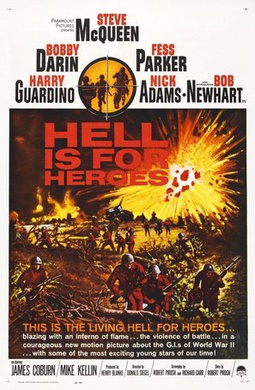
Hell is for Heroes (1962)


                “Hell is for Heroes” is an anti-war movie released in 1962.  The movie originated with writer Robert Pirosh who had already scored with “Battleground”.  Pirosh was a veteran of WWII.  He had been a Master Sergeant in the 35th Division and served in the Battle of the Bulge.  He was awarded the Bronze Star.  The incident in the movie was supposedly based on his experiences.  Unfortunately his war experiences did not prepare him for working with Steve McQueen.  McQueen arrived on set unhappy and stayed that way.  He did not want to be in the film and made it clear to everyone involved.  It was not method acting.  He was a huge pain in the ass and Pirosh (who was supposed to direct) walked out on the production.  Don Siegel (his only war movie) replaced him which was probably for the better as he was able to stand up to the obstinate star.  The filming was an unpleasant experience for all involved with his fellow actors being nettled by McQueen’s surliness.  Siegel put his stamp on the movie by insisting that it be bleakly anti-war.  He took all of Pirosh’s black comedy out, but the studio forced him to include the Bob Newhart telephone monologue. 


                The movie is set near the Siegried Line in 1944.  A squad is sent to an outpost to deceive the Germans into remaining on the defensive.  It is your typical heterogeneous unit of potential survivors.  Thrown into the mix is the recent replacement named Reese (McQueen).  He comes with a chip on his shoulder the size of a log.  He was recently demoted and is surly about it.  It seems he is a decorated warrior who “cracks up when the pressure is off.” On the other hand, his comrades are not happy with the advent of new pressure.  Their mission is to maintain a stretch of the front line and make the more numerous Germans across no man’s land think they are a much larger unit.  This involves stunts like rigging up a jeep to sound like a tank.  When they discover a listening device in their bunker, this gives Newhart (who plays clerk PFC Driscoll) to do one of his popular telephone routines pretending they have a much larger force.  This is one of the most bizarre moments in war movie history. 

                The attempts at deception are only semi-successful because the Germans raid during the night and let the whittling begin.  We started with eight and won’t end up with eight.  For some faux tactical reason, Reese convinces the men that tit deserves tat.  He leads a raid on a German pill box.  This involves a suspenseful crawl through a mine-field (suicidally using their hands instead of knives to probe).  Reese sets himself up for redemption in the climactic assault against the Siegfried Line.


                “Hell is for Heroes” has developed a cultish reputation over the years.  This is in spite (or due to) its limited budget and Siegel’s direction.  The movie was filmed mainly at the studio and they should have been thankful they did not have to film in Siegel’s back yard since the suits were very stingy.  The cast was constantly angry about things like malfunctioning weapons.  The movie ends abruptly because they ran out of film!  The obstacles overcome (including McQueen) adds to the mystique of the movie.

                The cast is first rate with James Coburn, Bobby Darin, Fess Parker, and Nick Adams.  McQueen dominates as was his wont, but he gives a remarkable performance as one of the iconic anti-heroes.  Of course, you could argue that he was not actually acting.  He was acting out.  He certainly has the thousand yard stare down pat.  It was Newhart’s debut and his phone routine, while hilarious, is out of place in this particular film.  Unfortunately, other than the Reese character, there is little character cdevelopment. 


                The movie has a made-for-television feel to it -  specifically, “Combat!” (which Pirosh went on to create).  The movie even has music straight out of that TV series.  The dialogue is sparse with little of the soldier banter you would expect from men awaiting possible death.  The action is well-staged with some good combat scenes.  At one point Reese is fighting hand-to-hand and throws his helmet at a German.  Most of the action takes place at night which adds to the vibe.  This was not a Siegel touch, but instead was called for because of the brutally hot daytime temperatures.  The cinematography has some bells and whistles and the sound is good for a low budget effort.  The set is nice with authentic looking dragon’s teeth and fox holes.  The weapons are fine with Reese using a grease gun (a very cranky M3), but not carrying the correct ammunition.  The technical adviser must have slept through most of the production.

                Pirosh’s script was reworked a bit and ended up being Siegel-worthy bleak.  It does not avoid clichés as it has a fallen hero who finds redemption.  The old heel to hero arc.  It is firmly in the “who will survive?” subgenre.  It lacks in realism as some of the deceptions are borderline silly, but it’s hard to get upset with a movie that does not care what you think about Newhart doing one of his comedy routines.
               Does it crack my 100 Best Movies list?  I doubt it, but it is a must-see for war movie buffs 

GRADE  =  B- 
  

Saturday, March 30, 2013

CROSS OF IRON (7) vs. HELL IS FOR HEROES (10)

 
VS.
 
 
Cross of Iron (7) vs. Hell is for Heroes (10)
ACTING:


        “Hell is for Heroes” (1962) is a small unit movie with a good ensemble cast of solid actors. The film is dominated by Steve McQueen’s portrayal of the loner Pvt. Reese (broken down from Sergeant presumably for infractions outside of combat). It may have been method acting or his displeasure with involvement with the production, but McQueen is quite convincing as the dislikeable jerk. He also has the “thousand yard stare” down pat. The rest of the cast (James Coburn, Harry Guardino, Bobby Darin, Fess Parker, Nick Adams) are solid.

        “Cross of Iron” (1977) is anchored by James Coburn’s portrayal of Sgt. Steiner. He is outstanding as the cynical, anti-authority figure. It is one of his greatest performances. It is not a one-note performance like McQueen’s. He gives Steiner some humanity and compassion for his men. The other stars (James Mason, Maximilian Schell, and David Warner) do good work, but the unknowns who make up Steiner’s squad are only adequate.

FIRST QUARTER SCORE:
Cross of Iron             8
Hell is for Heroes      8


CLICHES:

        “Hell is for Heroes” is a typical small unit, “who will survive?” movie. The unit is heterogeneous as it consists of the surly Reese, the scrounger Corby, the mechanic Henshaw, the kid Cumberly, the no-nonsense Sergeant Larkin, the noncombatant clerk Driscoll, etc. There is a mascot-type in the Polish soldier-wanna-be Homer. These characters are not really developed and are not particularly stereotypes. Nobody is from Brooklyn. You do get the cliché of who will get killed next and how. The hero (actually anti-hero) Reese does have leadership thrust upon him, but rather than complain, uses it to launch an ill-conceived mission against a pill box. There is no real conflict within the group and no rituals. The movie falls nicely into the "last stand" subgenre. There is a redemption theme, but Reese’s climactic action is more to avoid another court-martial than to redeem himself.

        “Cross of Iron” is also a small unit movie, but it is much more complex. The final half of the movie has the standard hero leading his unit on a mission that involves making it back to friendly lines. The unit is heterogeneous, but the characters are given little back-story and only have small quirks to identify them. The clichés are mainly reserved for the officers. Steiner is the anti-hero, anti-establishment stereotype. Stransky is the cowardly, glory-hound. This movie’s mascot takes the form of a Russian boy taken prisoner and adopted by the squad.  The movie also throws in Steiner abandoning a comely nurse (Senta Berger) to return to his comrades because in war movies its always "bros before hoes".  There is no conflict within the group, but there is a major command conflict that is strangely left unresolved. There is no redemption. That would be an out of place theme in a movie that does not believe in redemption.

HALF TIME SCORE:
Cross        15
Hell           15


PLOT:

         “Hell is for Heroes” was written by Robert Pirosh who also did “Battleground” and went on to create the TV series “Combat!” (which has a very similar tone to the movie). The plot moves from the rest area to the combat zone pretty quickly. Enough time for the usual grousing about “why us?!” Reese arrives during the rest time and goes off with his new unit after making quite an impression as an ass hole. The rest of the plot involves the stretched thin squad’s attempt to defend an outpost on the Siegfried Line. There are plot contrivances like a German listening device that gives the producers the chance to shoe-horn a Bob Newhart telephone routine that is funny, but ridiculously out of place in a gritty combat film. It is not the only bit of comic relief as Corby fills the wisecracker role. From here it’s the plot’s job to kill off most of the squad in a variety of ways and then leave us with a big set piece.

        “Cross of Iron” is based on an excellent novel entitled The Willing Flesh by German WWII veteran Willi Heinrich. It follows the plot of the book closely. The movie opens and closes with battle. In between there is some good solders-in-the-bunker comradeship and some tense headquarters debates. A subplot involves whether Stransky lied about his bravery in battle in order to get the Iron Cross and his attempts to eliminate Steiner because Steiner could torpedo the decoration. The first half plays the Steiner/Stransky conflict out punctuated by desperate defense of the front line. The bridge between the first and second halves is Steiner’s often surrealistic stay in a hospital. The second half is more of a trek film as the survivors of Steiner’s unit work their way back to their own lines. A unique encounter with female Soviet soldiers highlights this section. This half of the movie also picks off the men as we near the climactic showdown between Stransky and Steiner.

THIRD QUARTER SCORE:
Cross        23
Hell           22


COMBAT:

         “Hell is for Heroes” has some pretty gritty combat for a 1962 film. The first is a German night raid that has Reese using his helmet and a bowie knife to kill a German and Henshaw roasting another with a flame-thrower and letting him burn. The next big scene is the attempt to crawl up on the German bunker at night through a mine field. It’s more suspenseful than violent. It takes an unexpected turn. Finally we get the frontal assault across no man’s land that ends with Reese literally take out the pill box by himself. That last scene is marred by some silly old school deaths. The combat is satisfactory for a low budget film.

         “Cross of Iron” is loaded with combat. I am hard pressed to think of another war movie that has a higher percent of actual fighting. (Actually, I just thought of “Black Hawk Down”.) The action is very Peckinpahish. It was his only war film and he basically channels “The Wild Bunch” in the cinematography. The big battle scenes are mixtures of explosions, slo-mo, quick cuts, chaos, and violence. The combat scenes also are more extended than in most war films. Pekinpah may abhor war, but he revels in the violence. Although not a big budget film, Pekinpah makes great use of his limited resources to deliver some large battle scenes. This is especially true in his use of the three Yugoslavian T-34 tanks. Seldom have tanks been used more effectively. There are two huge set pieces sandwiched by two more intimate combat episodes involving the squad by itself. Peckinpah’s way of composing the violence was to have an impact on war films for the next two decades (see “Hamburger Hill”, for instance).

FINAL SCORE:
Cross of Iron          33
Hell is for Heroes   29


COLOR ANALYSIS:

         This was an excellent match-up that came down to the last quarter. It was obvious that if "Cross" could hold off the game "Hell" until the combat section kicked in, "Cross" could cruise to victory. The surprising thing had to be the lack of advantage "Cross" had in the cliche sphere. It seems Peckinpah was not as iconoclastic in his characterizations and plotting as one might expect and "Hell" was less clicheish than one would expect from a glorified made-for-TV looking vehicle. In the match-up of the superstars, both performed well, but the edge has to go to Coburn (in Cross, not Hell).      

Thursday, January 12, 2012

#44 - The Great Escape


BACK-STORY: “The Great Escape” is a WWII prisoner of war movie. It was released in1963 and was a huge hit and has grown in popularity over the years. It is the most famous movie in its subgenre. The film was directed by John Sturges and is based on the nonfiction book by Paul Brickhill. Brickhill was a prisoner in Stalag Luft III and helped with the escape although he was not one of the escapees. His book and the movie are dedicated to the fifty escapees who did not survive. The main screenwriter was James Clavell who spent time in a Japanese prison camp and the book “King Rat”. One of the tunnelers (Wally Floody) served as a technical advisor. Donald Pleasance was a prisoner in Stalag Luft 1 during the war. Steve McQueen insisted the motorcycle scenes be written in and did the stunts, not including the last jump (for insurance reasons).


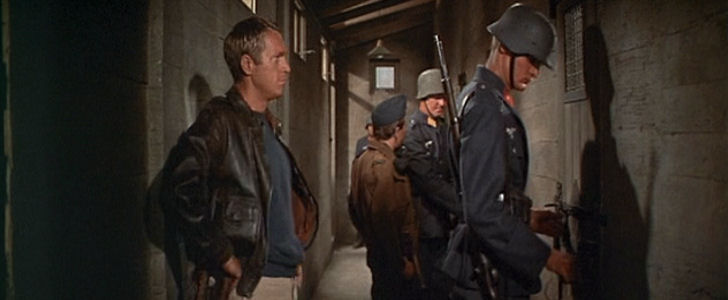
Hilts' first trip to the cooler
OPENING: With the iconic opening theme playing in the background, truckloads of Allied POWs arrive at a brand new prison camp. Most of the main characters are briefly introduced as they case the new camp already plotting escape. The POW leader, Wing Commander Ramsey, is welcomed by the commandant who tersely explains that the camp is designed to hold all the most troublesome escape artists held by the Germans. Within minutes there are escape attempts that fail, but show that the prisoners are not impressed with the impossibility of breaking out.

SUMMARY: The movie has three distinct parts: the planning and execution of the escape, the escape, and the attempts to reach safety. The first part concentrates on the plan and each main character's role in it. The leader of the escape organization is Roger Bartlett (Richard Attenborough) who is known as “Big X”. He has been warned by the Gestapo that his next attempt will be his last. His plan is to create turmoil in the Third Reich by busting out 250 prisoners. It’s a massive undertaking involving three tunnels. Besides the digging of the tunnels, there are special jobs like forging documents and making disguised clothing. The main characters each have a specialty and gets screen time to demonstrate their prowess. These include the “Forger” Blythe (Donald Pleasance), the “Manufacturer” Sedwick (James Coburn), and the “Scrounger” Henley (James Garner). To break from the “grunt” work of escape preparation, the screenplay adds a cocky American named Hilts (Steve McQueen) to spice things up. He becomes the “Cooler King” for his frequent trips to isolation for insubordination and escape attempts.

      The digging of the tunnel is in the hands of Willy (John Leyton) and Danny (Charles Bronson). The movie chronicles the problems and solutions to the tunneling. Example: problem – disposal of all the dirt / solution- bags containing dirt concealed in pants legs and then deposited on the camp grounds. Meanwhile everyone else is doing their job including uncredited actors acting as lookouts to watch for “ferrets” – Germans who tried to discover tunnels.

      The tunneling follows a typical Hollywood story arc of smooth sailing, then numerous problems develop, followed by success. The problems start with the discovery of the main tunnel (Tom) while the camp is celebrating the 4th of July with American-made moonshine. A tragic death moves the movie into a darker direction. Some of the problems that now appear include Blythe going blind, Danny developing claustrophobia, and dangerous cave-ins. This leads up to the climactic break-out.

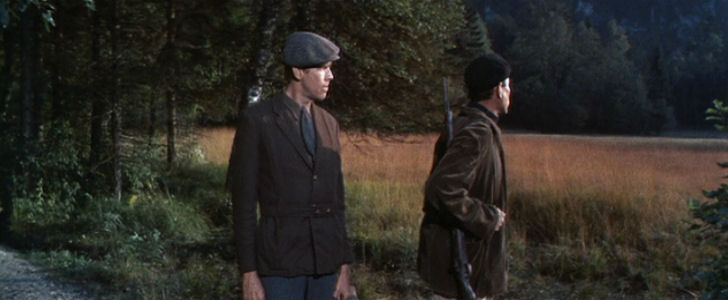
oops, this is not the woods
      The buildup of problems culminates in the tunnel being twenty yards short of its destination – the safety of the woods. Hilts rigs up a rope tug system to get the escapees out whenever a nearby guard is not looking. 76 escape before the inevitable screw-up. Luckily, all the main characters were written in as getting out before #77.

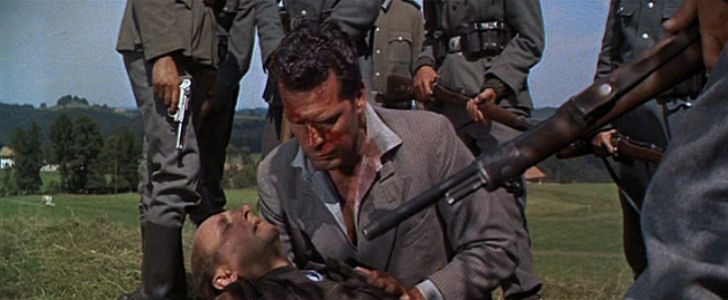
Blythe dies in Hendley's arms
The rest of the movie follows the main characters in their attempts to elude their pursuers and return to Allied lines. The movie stays in chronological time by effectively skipping between characters. The individual stories are varied and unpredictable. Unfortunately, most of the men are unsuccessful. Hilts story dominates this section. He steals a German motorcycle and leads the Germans on a merry chase that ends with one of the most famous scenes in movie history.

CLOSING: Fifty of the recaptured men are executed by the Gestapo/S.S. The lucky ones who are returned to the camp are informed about their comrades. Henley pointedly asks Ramsey if it was worth it (a question the movie does not consider until this brief exchange and based on the underlying vibe definitely answers “yes!” to). Hilts steals one more scene as he is the last to get back. He taunts the ousted commandant and goes to the Cooler for some more throwing a baseball against the wall action.


one of the three that made it

RATINGS:


Acting – 9


Action – 7


Accuracy – 8


Realism – 8


Plot – 9


Overall – 9


WOULD CHICKS DIG IT? Although there is not a single female that has a speaking role in it, I would think most women would enjoy it but wonder what all the fuss is about. It is certainly aimed at the male audience (specifically 14 year old boys). However, the actors are appealing and the action is not graphic. It is undoubtedly entertaining.

HISTORICAL ACCURACY: The movie opens with the claim that it is based on a true story, but with composite characters and time compression. It boldly proclaims that every detail of the escape is true. That statement is too strong, but the movie is commendably close to the facts.

      There was a Stalag Luft III and the Germans did put all their “bad eggs in one basket”. The attempted escapes on the first day actually occurred in the way depicted. The “X organization” did plan an escape of 250 men involving the construction of three tunnels named Tom, Dick, and Harry. Weirdly, the movie changes the names around for no discernible reason. Harry was actually the one under the stove and Dick was in the washroom. (It was abandoned and used for dirt storage after the Germans cleared the area it was to pop out in.) Tom was discovered by ferrets, but not during a celebration of the 4th of July. There was a moonshine celebration on a different day.

      All the activities surrounding the escape are accurate. The forging of papers, disposal of the dirt, making of clothing, creation of the ventilation system, the singing of Christmas carols to hide the sounds of digging, the shoring up the tunnels with bunk bed boards, etc. The movie is extremely strong in depicting how the plan was put into effect.

      The escape was essentially like the film shows. The tunnel was twenty feet short of the woods. There was an air raid that shut the lights down for a while. I could find no evidence that a rope was rigged up, but seventy-six men did escape before the exit was discovered by a sentry (probably not because someone fell). It is important to note that none of the seventy-six were Americans. The Americans had been moved to another camp before the escape. Gee, I wonder why the filmmakers decided to leave Steve McQueen and James Garner in the escape?

      The third of the film dedicated to the main characters on the lam is substantially Hollywoodized. There was no theft of a plane or a motorcycle, for instance. The movie is close to the truth in its depiction of the success of Sedgwick (actually Dutchman Bram van der Stok) in reaching Spain (although the Resistance drive-by shooting is surely artistic license) and Willy and Danny (Per Bergsland and Jens Muller) stowing away on a ship to reach Sweden. The execution of fifty recaptured men is a fact, but they were not killed in a large group as shown in the movie.

       Where the movie takes most of its liberties is in the characters, but it is up front in the composite nature of them. Some are close to a real person like Roger Bartlett representing Roger Bushell. Bushell was the leader of the X Committee and played an essential role in the escape. Ramsey was actually Herbert Massey and he did have a leg injury. Ives (the real Jimmy Kiddell) did die on the wire. Willy and Danny and Sedgwick were differently named and of different nationalities than their counterparts, but their escapes were true. The rest take some creative thinking to determine who they are supposed to be. The important thing is the roles they represent (scrounger, forger, manufacturer, etc.) were real and accurately depicted.

CRITIQUE: I have to be up front about the fact that this was my favorite movie when I was growing up. This was back when I and my brothers got to see it once a year on network TV. That was always a great night in our house. I may have seen it more than any other movie (not counting movies I have shown in class for decades). Sometimes our childhood favorites do not hold up when we watch them through adult eyes. This is not the case with “The Great Escape”. It was and still is one of the classic war movies.

      The iconic nature of the film starts with the opening credits as we listen to the stirring theme music which every man of my generation instantly recognizes. Elmer Bernstein wrote the musical score and it is perfect. It dwells in the background of every scene and defines the moods. In this respect, the movie is very similar to another great guy movie – “The Magnificent Seven”. Speaking of which, the two movies also shared Sturges, McQueen, Coburn, and Bronson.

      The movie is an expert blend of suspense, action, and humor. The humor works very well. It is dry and used sparingly, but effectively. Some of the lines are memorable. For instance, the ferrets bust in to the washroom and narrowly miss the trap door to Harry being sealed. Danny hustles into the shower and when the guard asks Sedgwick what he is doing there he responds “Watching him. I’m the life guard.”

      The camp was constructed near Munich and accurately recreates a Stalag in layout, if not in atmosphere. The tunnel set allows for a cutaway view of the digging. The scenes are truly claustrophobic and the ever present danger of cave-ins adds to the suspense. The scenes outside the camp are authentic-looking since the movie was filmed in Europe. There is even some beautiful Alpine scenery.

      The movie does a great job in its structure. The buildup to the escape concentrates on character development and is tutorial on the work that went on. This could have been tedious, but the injection of humor and Steve McQueen keep the narrative flowing. The movie, to its credit does not have a prolonged denouement after the escape. The alternating getaways are deftly juggled and suspenseful. Hilts motorcycle capers dominate, but they are edited such that we have to come back to him at least four times before the famous climactic jump sequence.

       The movie ends on a sober note with the murders and the question – was it worth it? However, if ever there were a war movie that is not anti-war, this is it. Life in the camp is portrayed like it would be if you went to a POW fantasy camp. It seems like fun, which it assuredly was not. This is the biggest factor in keeping the movie from being a 10.

       Finally, the acting is stellar. Whoever did the casting gets a gold star. The mix of dependable British thespians with cocky Americans is stimulating. This is an actors’ movie. In particular, watch Steve McQueen steal every scene with little eye-catching movements including shameful mugging. His co-stars either had sharing natures or were infuriated. Whatever, McQueen became a superstar based on his performance.

CONCLUSION: You might say I’m prejudiced, but “The Great Escape” is woefully underrated at #44. It is a better movie than its most obvious competitor – Stalag 17 (#18). It has everything that makes a war movie great, in my opinion. It is entertaining. It tells a story that deserves to be told. It teaches. It is accurate enough. It is realistic. Sometimes 14 year old boys are right.  This movie rocks!


the famous bike ride