Showing posts with label Tobruk. Show all posts

Saturday, May 2, 2020

FINALLY – Ice Cold in Alex (1959)


                    “Ice Cold in Alex” appears on some lists of the best war movies of all time.  I have been wanting to see it for years as part of my project to come up with my 100 Best War Movies.  Although seen often on British TV, it is not well-known in America.  Possibly because it got off to a rough start in the States as it was cut to only 79 minutes and shown under the ridiculous title “Desert Command”.  It was a big hit in Great Britain and was nominated for BAFTA’s for Best Film (losing to “Ben Hur”), Best British Film (losing to “Room at the Top”), Best Supporting Actor (Anthony Quayle), and Best British Screenplay.  The screenplay was based on a novel by Christopher Landon.  It was directed by J. Lee Thompson (Guns of Navarone), mostly in Libya.  It was a difficult shoot for the actors with the desert playing the role intended for it in the screenplay.  The copious sweating is real.  There was also a fly problem which was solved by dousing the cast with DDT.  The title comes from the desire of Capt. Anson (John Mills) to have a cold lager when they reach Alexandria.  That scene took fourteen takes and Mills was drunk by the end.  The scene was used forty years later in a Carlsberg lager commercial.  The actors made more from the commercial than from the film.

                    The movie opens up with narration outlining the situation in North Africa between the British 8th Army and Rommel’s Afrika Korps.  “The Desert Rats” is a good companion movie.  Places like Tobruk “paid for their brief fame in piles of rubble and smoking ruins as the grim struggle surged to and fro…. This is one of two million stories -  it happens to be true.”  With Tobruk about to be besieged, Capt. Anson is ordered to evacuate most of his RASC Motor Ambulance Company.  He will take an ambulance (called a Katy) and is joined by Sergeant Major Pugh (Harry Andrews) and two nurses.  Denise is panicky and Diana (Sylvia Syms) is made of sterner stuff.   They pick up a South African solder named van der Poel (Quayle) who is charming, but suspicious.  Their trek to Alexandria and that cold brew will become an odyssey.  It’s them versus the desert.  The plot is a series of obstacles that they have to overcome.  These include two encounters with Germans, a trip through a minefield, a muddy quicksand scene, and the crossing of a depression.  Along the way, personalities are fleshed out and a mystery is solved.

                    There aren’t too many WWII movies giving credit to the ambulance corps, so “Ice Cold in Alex” is pretty unique.  However, it is not really about the ambulance corps, although a Katy plays a leading role.  It is more about a quartet who takes on the desert.  It fits firmly in the lost patrol subgenre, but avoids most of the well-worn clichés.  It manages to stay fresh by putting the lost group in some unique situations like the encounters with the Germans and the quicksand scene.  There are several edge of the seat moments enhanced by the “who will survive?” vibe you have in movies like this.  The main draw is the interaction between a fine ensemble.  While Syms is in over her head (her nicely coiffed head), the male leads are outstanding.  Mills is great as the burnt-out, alcoholic Anson.  He drinks six times in the first fifteen minutes.  Andrews is perfect as his level-headed exec.  But it’s Quayle who steals the show as the jolly giant Poel.  He has great fun with the role as Poel may be a spy, but he is still a valuable member of the quartet.

                    A strength of the film is its unpredictability.  It has the requisite romance for poster purposes, but the relationship between Anson and Diana is refreshingly mature.  The ending is satisfying (like the lager) and is partly responsible for the fondness the movie engenders in Brits.  As far as it being a true story, that certainly is artistic license as in reality they would not have survived the journey depicted in the movie.

                    The movie was worth the wait.  I had purposely avoided reading a lot about it and was unaware of even the basics of the plot.  I was surprised how different it was from most of the movies set in the North African campaign.  When you have seen as many war movies as I have, different is always welcome.  The unusual aspects of the plot and characters set it a cut above, but are not enough to propel it to greatness.  I would not place it among the 100 best war movies.  However, it is a must-see and justifiably well-loved.

GRADE  =  B

Tuesday, March 26, 2013

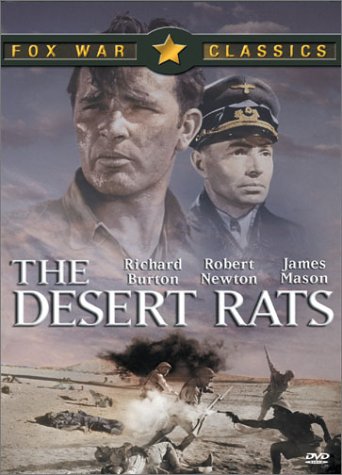
THE BIG RED ONE (3) vs. THE DESERT RATS (14)

 
VS.
 
 
THE BIG RED ONE (3) vs. THE DESERT RATS (14)
ACTING:


     “The Big Red One” is essentially a five actor movie. Lee Marvin plays a grizzled sergeant (he was 56 years old at the time) in charge of a squad that consists of four guys who can not be killed (or even wounded) and a series of cannon fodder replacements. Marvin is very good, as usual. He has the weary father-figure down pat. Unfortunately, he completely dominates the other four who range from barely registering (Kelly Ward as Johnson) to inconsistent (Robert Carradine as Zab ) to semi-charismatic (Bobby Di Cicco as Vinci) and earnestly bad (Mark Hammill as Griff).

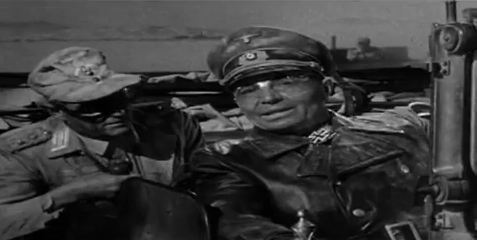
     “The Desert Rats” is a Richard Burton movie. He plays British Capt. MacRoberts who given the task of cracking the whip on an undisciplined Australian unit. Burton is above this kind of material but he is game and takes the role seriously. The only other actor that makes an impression is Robert Newton as MacRoberts ex-scholmaster Bartlett. Newton plays a cowardly drunkard who refuses to run because it would be dishonorable. It is a poignantly effective performance. James Mason makes a welcome appearance as Rommel to (A) showcase an exchange between Mason and Burton (well done) and to (B) scuff up his portrayal from “The Desert Fox” (this Rommel is less likeable).

FIRST QUARTER SCORE:
The Big Red One     7
The Desert Rats       8


CLICHES:

     “The Big Red One” is a small unit (very small unit) movie. The squad (actually 1/3 of a squad) is heterogeneous. Johnson is a farm boy, Vinci is the wise-cracking Italian-American, Zab is the budding writer from Brooklyn, and Griff is the sharpshooter who can’t kill. The group is led by a hero (the Sarge), but they are not moving forward to accomplish a particular objective. There is a chronicler in the form of the narrator Zab (who represents Samuel Fuller). The movie does not alternate between opposites like action and rest, instead it is a series of vignettes. There is a redemption figure in Griff, but that subplot is surprisingly incomplete. There is no conflict within the group or over command. In conclusion, other than the stock characters the film avoids clichés.

     “The Desert Rats” has some familiar characters and situations. There are two redemption arcs: Carstairs who is almost court-martialed by MacRoberts and Bartlett. Both resolutions are predictable. MacNamara is the stock character who builds a unit using tough love which at first causes resentment but eventually results in respect. The unit is not clichely heterogeneous because few characters are developed. MacNamara is the hero and leader, but the role is not really forced upon him. The movie alternates combat with exposition.

HALF TIME SCORE:
The Big Red One       14
The Desert Rats         14


PLOT:

     The plot of BR1 can best be described as: a small squad led by an old sergeant go from Operation Torch to the end of the war while experiencing a series of incidents. The vignettes range from interesting (the liberation of the death camp) to bizarre (the insane asylum) to ridiculous (the ambush at the crucifix). It’s like Samuel Fuller kept a notebook of ideas for war movie scenes and then made a movie that included all of those ideas, good and bad. The scenes could have been put in any order. The movie is entertaining, but several of the mini-stories are painful for an intelligent war movie fan to watch. It’s one of those movies that tends to fall apart upon repeat viewing, but kudos for being different.

      The plot of TDR is much more standard. It flows from green, undisciplined unit being broken and trained by a tough leader to become confident, disciplined veterans led by a more understanding leader. Throw in combat sequences to prove the evolution and to add action. Nothing you haven’t seen before, but well done and not hackneyed. Very predictable, however.

THIRD QUARTER SCORE:
The Big Red One          20
The Desert Rats            21


COMBAT:

     BR1 has surprisingly little combat for such a long movie (I watched the extended version) and the scale is small because of budget constraints. You get the impression this squad is fighting the war by itself. Most of the scenes are the “guns and grenades” variety. When the movie moves into a combat sequence it is usually PG intense, but brief. Compare it to “Cross of Iron” that was made three years earlier and you can see that Fuller was still clinging to Old School combat. There is a fire-fight for the Torch landing, an extended attack on an African town that features a French cavalry charge (WTF) and the smallest tank in war movie history, the D-Day landing featuring a Bangalore Torpedo relay, the ambush at the crucifix, the insane asylum shoot-out, and the liberation of the death camp. Each is fairly intense, but most are too brief. The tactics and weaponry are fine.

      TDR has only two battle set pieces, but they are both excellent. The first is defense against a German Panzer attack during a sand-storm. The artillery barrage is realistic (the movie has great sound and explosion effects). The deaths are reasonable. There is a cool duel between a German tank and an anti-tank gun. The other action sequence involves a commando raid on a German munitions dump. A “guns and grenades” at night spectacle. Both scenes are better than anything in BR1, but BR1 puts the unit in combat more frequently.

SCORE AT THE END OF REGULATION:
The Big Red One        27
The Desert Rats          27


OVERTIME: Director

      BR1 was directed by Samuel Fuller. It is semi-autobiographical as Fuller served in the 1st Division and participated in Operations Torch, Husky, and Overlord. His unit fought through France, Belgium, and Czechoslovakia. He was involved in the liberation of the Falkenau concentration camp. He was awarded the Bronze Star, Silver Star, and Purple Heart. He went on to a legendary career as a filmmaker. He was noted for gritty B-movies which he made with low budgets. These included “Steel Helmet”, “Fixed Bayonets!”, and “Merrill’s Marauders”. “The Big Red One” has many of the attributes of a B-movie even though it was by far his biggest film.

       TDR was directed by Robert Wise. Wise was a much more mainstream director than Fuller. He was also much more highly acclaimed. He won two Best Director Oscars. His other war movies were “Run Silent, Run Deep” and “The Sand Pebbles” (for which he was nominated for Best Director).

FINAL SCORE:
The Big Red One       36
The Desert Rats         33

COLOR ANALYSIS:

      This was a shocker. BR1 has a strong reputation among critics and war movie fans and TDR has been largely forgotten. But the tournament is all about the match-ups. Plot and combat did not play to BR1’s strengths and TDR had just enough talent to take the match to overtime. In the end, Samuel Fuller pulls his movie through to the second round.

Saturday, September 25, 2010

#88 - The Desert Rats

BACKSTORY:   “The Desert Rats” is a black and white old-school war film released in 1953. It is an unofficial sequel to the biopic “The Desert Fox” and James Mason portrayed Rommel in both. “Rats” is set in the siege of Tobruk in 1941. It lauds the 9th Australian Division’s role in the defense of the port. It was directed by Robert Wise who later won Oscars for “The Sound of Music” and “West Side Story”. It stars Richard Burton in only his seventh film.


OPENING SCENE:   The movie opens in the Libyan desert in 1941. Rommel arrives at headquarters and plots the conquest of the Suez Canal, but the port of Tobruk must be taken first. The narrator informs us that we are about to witness the story of Tobruk and the “Desert Rats” who defended it.

SUMMARY:  At the headquarters of the 9th Australian Division, the general (never identified as Major General John Lavarack) goes over his plan. He thinks he knows where the next attack will come and plans to let the German tanks penetrate then hold them with infantry and counterattack with his tanks. He sends “Tammy” MacRoberts (Burton) to take command of a newly arrived green company.

Richard Burton as MacRoberts
MacRoberts finds that his new unit is ill-disciplined and is shocked to be reunited with his old schoolmaster Tom Bartlett who was canned for alcoholism and ended up enlisting although he has neither the mentality nor the skills to be a good soldier.

Our first big set piece is a German tank attack set in a sand storm. The audience can feel the grit in their teeth. The sound effects are also good. The Australians allow the Germans to penetrate as per the plan and then open fire. The movie blends actual footage with the action. Burton gets to play action hero as MacRoberts gets in a damaged tank and destroys a German tank to force the enemy to retreat.

MacRoberts is hard on the men and they gripe about it. He wants to court-martial an officer named Carstairs who left his position to try to rescue another officer. He believes you must follow orders with no sentiment. The schoolmaster informs MacRoberts that he is a coward (as well as a drunkard), but he wants to stay with the unit. He argues that the officer should not be court-martialed, but should be given another chance. Mac reconsiders. This is an interesting scene with its debate of orders versus human nature.

Mac is promoted to command over the battalion. The film shows a montage of raids behind enemy lines to keep the Germans off guard. These are small affairs until Mac proposes a raid on an ammunition dump to foil an anticipated offensive. 53 men in captured Italian trucks sneak into the depo. There is lots of action. MacRoberts is wounded and Carstairs comes back to him set off an explosion but is killed. (War movie cliché #2 – redemption of the shamed soldier) Mac is captured.

James Mason as Rommel
Mac is being treated by a German doctor when a wounded Rommel (Mason) arrives. They discuss the siege and the British captive cheekily argues that the Germans will not take Tobruk. Rommel is irritated by MacRobert’s gall, but respects him. This scene was supposedly put in the movie after the backlash from veterans over the sympathetic treatment of Rommel in “The Desert Fox”. This explains why Mason plays Rommel as a villain here and gives him a thicker German accent.

The truck transporting MacRoberts and other prisoners is strafed allowing him and Sgt. “Blue” Smith to escape. They walk back to friendly lines through the desert.

The narrator informs us that the siege has now gone well past the two months the Australians had been told they would have to last. MacRoberts’ battalion is given the task of taking and holding a hill that is the key to keeping the anticipated relief route open. The movie skips over the first eight days of the fight on the hill and focuses on the ninth day. The men have been under intense pressure and Mac is given the option by headquarters to withdraw if he sees fit. He sees fit, but Bartlett argues that the men will stay and fight for him even though they don’t like him. Here we encounter once again the war movie theme of a tough disciplinarian earning the respect of his men. Not surprisingly, the men refuse to leave the hill.

FINAL SCENE: The Germans open a ferocious barrage on the hill. The men take refuge in their holes which is realistic to what actually happened at Tobruk when German artillery opened fire. The film shows how men can survive under bombardment. When the explosions end, the men fix bayonets to meet the attack, but they hear bagpipes signifying the arrival of the relief column and a happy ending.

RATINGS:

Action - 7

Acting - 7 Burton is good, the rest are average

Accuracy - 7

Realism - 7

Plot - 7

Overall - 7

WOULD CHICKS DIG IT?    Highly unlikely. There are no female characters. It is an old-school, guy action film.

CRITIQUE: “The Desert Rats” is a classic of its type, but does not hold up well over time. It does its best with the effects available back then. The bombardments are realistic and the sounds are appropriate. Your ears feel like they are in a battle.  The cinematography is very good and the fact that the movie is black and white makes no difference since there would have been little color in the scenes anyway.

The soldiers and their situation are portrayed realistically, although the movie does not violate cliché #9 (soldiers do not sweat). Especially commendable is how the movie shows that humans can survive a vicious bombardment by burrowing.

MacRoberts is a typical movie officer and his transformation from hard-ass to a leader who is willing to listen is believable. He exemplifies clichés #18 and 19. #18 insists that a strict officer will soften at the critical moment of the film. #19 holds that harsh disciplinarians will earn the grudging respect of their men by the end of the film. He also serves as something of a role model for future officers. Not West Point study-worthy, but I could see myself highlighting his evolution as a leader in my Military History class.. Having the schoolmaster thrown in is a bit of a stretch, but necessary for Mac’s transformation. The character fits well into the wise, elderly noncom stereotype. If you are older than the rest of the unit usually you kept getting demoted for misbehavior, but here he enters old as a result of alcoholism. Nice touch.

As a history lesson, the movie has its flaws – beginning with the title! The “Desert Rats” were the British 7th Armoured Division. I wonder what their veterans thought of the movie. When Rommel laid siege to Tobruk, the Germans referred to the British/Australian forces as being “caught like rats in a trap”. The 9th Australians proudly adopted the name “Rats of Tobruk”. Obviously the producers felt “Desert Rats” had a better ring to it and evoked “The Desert Fox”.

The raiding is accurate and did result in preempting several attempts at penetration. However, I could find no evidence of a large raid on an ammo depot. As to the ending, the relief that came from Operation Crusader arrived after the 9th Australian Division had been withdrawn from Tobruk for much needed R&R.

Other than the unnamed Australian general and Rommel, none of the characters are real people (as far as I can tell). MacRoberts is a stock movie character, but carried off with panache by Burton.

CONCLUSION:   “The Desert Rats” is an entertaining old school WWII movie. The acting is pretty good and Richard Burton shows why he was such a big star. It is fairly realistic and does not go over the line on historical accuracy. Given the available war movie effects technology, it does an okay job depicting combat. However, if you are expecting “Saving Private Ryan”, forget it.

It is a good example of how pre-1960’s war movies rarely hold up. There are numerous recent war movies that did not make the Top 100 that are better movies than “Rats”. Once again, I must insist that just because it’s old does not make it better than “Enemy at the Gates”, for instance. And I can assure you from personal experience that no audience of today’s youth would prefer to watch “The Desert Rats” over “Enemy” or “When Trumpets Fade” or “300” or pick a recent war movie that did not make the Top 100.

You will note I skipped #89 - Dunkirk.  I can not find a copy of it to watch.

Next up - #87 - The Life and Death of Colonel Blimp

Coming soon:  Dueling Movies:  "The Desert Fox" vs. "The Desert Rats"